
All Topics  
English Renaissance

 
English Renaissance

   Email Print
   Bookmark   Link


English Renaissance


The English Renaissance was a cultural
Cultural movement

A cultural movement is a change in the way a number of different disciplines approach their work. This embodies all art forms, the sciences, and philosophies....
 and artistic movement
Art movement

An art movement is a tendency or style in art with a specific common philosophy or goal, followed by a group of artists during a restricted period of time, or, at least, with the heyday of the movement more or less strictly so restricted ....
 in England
England

native_name =|conventional_long_name = England|common_name = England|image_flag = Flag of England.svg|image_coat = England COA.svg|symbol_type = Royal Coat of Arms...
 dating from the early 16th century to the early 17th century. It is associated with the pan-European Renaissance
Renaissance

The Renaissance was a cultural movement that spanned roughly the 14th to the 17th century, beginning in Italy in the late Middle Ages and later spreading to the rest of Europe....
 that many cultural historians believe originated in northern Italy
Italy

Italy , officially the Italian Republic , is a country located on the Italian Peninsula in Southern Europe and on the two largest islands in the Mediterranean Sea, Sicily and Sardinia....
 in the 14th century. This era in English cultural history is sometimes referred to as "the age of Shakespeare" or "the Elizabethan era
Elizabethan era

The Elizabethan era is associated with Elizabeth I of England's reign and is often considered to be the Golden Age in History of England. It was the height of the English Renaissance and saw the flowering of English poetry and English literature....
", the first period in English and British history to be named after a reigning monarch.

Poets such as Edmund Spenser
Edmund Spenser

Edmund Spenser was an important England poet best known for The Faerie Queene, an epic poem celebrating, through fantastical allegory, the Tudor dynasty and Elizabeth I....
 and John Milton
John Milton

John Milton II was an English poet, author, polemicist and civil servant for the Commonwealth of England. He is best known for his Epic poetry Paradise Lost and for his treatise condemning censorship, Areopagitica....
 produced works that demonstrated an increased interest in understanding English Christian beliefs, such as the allegorical representation of the Tudor Dynasty
Tudor dynasty

The House of Tudor was a prominent European royal house that ruled the Kingdom of England and its realms from 1485 until 1603. Founded by Henry VII of England, who, though his paternal family was Welsh people ?his grandfather was Owen Tudor? was himself also a legitimized descendent of the royal House of Lancaster....
 in The Faerie Queen and the retelling of mankind’s fall from paradise in Paradise Lost
Paradise Lost

Paradise Lost is an epic poem in blank verse by the 17th-century England poet John Milton. It was originally published in 1667 in ten books....
; playwrights, such as Christopher Marlowe
Christopher Marlowe

Christopher "Kit" Marlowe was an Kingdom of England Playwright, poet and translator of the Elizabethan era. The foremost English Renaissance theatre tragedy next to William Shakespeare, he is known for his blank verse, his overreaching protagonists, and his own mysterious and untimely death....
 and William Shakespeare
William Shakespeare

William Shakespeare was an English people poet and playwright, widely regarded as the greatest writer in the English language and the world's preeminent dramatist....
, composed theatrical representations of the English take on life, death, and history.


Discussion
Ask a question about 'English Renaissance'
Start a new discussion about 'English Renaissance'
Answer questions from other users
Full Discussion Forum


Recent Posts


Encyclopedia


The English Renaissance was a cultural
Cultural movement

A cultural movement is a change in the way a number of different disciplines approach their work. This embodies all art forms, the sciences, and philosophies....
 and artistic movement
Art movement

An art movement is a tendency or style in art with a specific common philosophy or goal, followed by a group of artists during a restricted period of time, or, at least, with the heyday of the movement more or less strictly so restricted ....
 in England
England

native_name =|conventional_long_name = England|common_name = England|image_flag = Flag of England.svg|image_coat = England COA.svg|symbol_type = Royal Coat of Arms...
 dating from the early 16th century to the early 17th century. It is associated with the pan-European Renaissance
Renaissance

The Renaissance was a cultural movement that spanned roughly the 14th to the 17th century, beginning in Italy in the late Middle Ages and later spreading to the rest of Europe....
 that many cultural historians believe originated in northern Italy
Italy

Italy , officially the Italian Republic , is a country located on the Italian Peninsula in Southern Europe and on the two largest islands in the Mediterranean Sea, Sicily and Sardinia....
 in the 14th century. This era in English cultural history is sometimes referred to as "the age of Shakespeare" or "the Elizabethan era
Elizabethan era

The Elizabethan era is associated with Elizabeth I of England's reign and is often considered to be the Golden Age in History of England. It was the height of the English Renaissance and saw the flowering of English poetry and English literature....
", the first period in English and British history to be named after a reigning monarch.

Poets such as Edmund Spenser
Edmund Spenser

Edmund Spenser was an important England poet best known for The Faerie Queene, an epic poem celebrating, through fantastical allegory, the Tudor dynasty and Elizabeth I....
 and John Milton
John Milton

John Milton II was an English poet, author, polemicist and civil servant for the Commonwealth of England. He is best known for his Epic poetry Paradise Lost and for his treatise condemning censorship, Areopagitica....
 produced works that demonstrated an increased interest in understanding English Christian beliefs, such as the allegorical representation of the Tudor Dynasty
Tudor dynasty

The House of Tudor was a prominent European royal house that ruled the Kingdom of England and its realms from 1485 until 1603. Founded by Henry VII of England, who, though his paternal family was Welsh people ?his grandfather was Owen Tudor? was himself also a legitimized descendent of the royal House of Lancaster....
 in The Faerie Queen and the retelling of mankind’s fall from paradise in Paradise Lost
Paradise Lost

Paradise Lost is an epic poem in blank verse by the 17th-century England poet John Milton. It was originally published in 1667 in ten books....
; playwrights, such as Christopher Marlowe
Christopher Marlowe

Christopher "Kit" Marlowe was an Kingdom of England Playwright, poet and translator of the Elizabethan era. The foremost English Renaissance theatre tragedy next to William Shakespeare, he is known for his blank verse, his overreaching protagonists, and his own mysterious and untimely death....
 and William Shakespeare
William Shakespeare

William Shakespeare was an English people poet and playwright, widely regarded as the greatest writer in the English language and the world's preeminent dramatist....
, composed theatrical representations of the English take on life, death, and history. Nearing the end of the Tudor Dynasty, philosophers like Sir Thomas More
Thomas More

Saint Thomas More was an English lawyer, author, and statesman who in his lifetime gained a reputation as a leading Renaissance humanist scholar, and occupied many public offices, including Lord Chancellor ....
 and Sir Francis Bacon
Francis Bacon

Francis Bacon, 1st Viscount St Alban King's Counsel , son of Nicholas Bacon by his second wife Anne Bacon, was an English philosopher, statesman, scientist, lawyer, jurist, and author....
 published their own ideas about humanity and the aspects of a perfect society, pushing the limits of metacognition
Metacognition

Metacognition is knowledge of one's cognitive processes and the efficient use of this self-awareness to self-regulate these cognitive processes ....
 at that time. England came closer to reaching modern science with the Baconian Method
Baconian method

The Baconian method is the investigative method developed by Francis Bacon . It is an early forerunner of the scientific method. The method was put forward in Bacon's book Novum Organum, or 'New Instrument', and was supposed to replace the methods put forward in Aristotle's Organon....
, a forerunner of the Scientific Method
Scientific method

Scientific method refers to techniques for investigating phenomenon, acquiring new knowledge, or correcting and integrating previous knowledge. To be termed scientific, a method of inquiry must be based on gathering observable, empirical and Measure evidence subject to specific principles of reasoning....
.

Slow transition and mixture


The steadfast English mind clung to the old order of things, and relinquished with reluctance the last relics of a style that had been for centuries a part of its life. If it must have the Egg-and-dart
Egg-and-dart

Egg-and-dart is an Ornament device often carved in wood, stone, or plaster quarter-round ovolo mouldings, consisting of an egg-shaped object alternating with an element shaped like an arrow, anchor or dart....
, it would keep the Tudor rose
Tudor rose

The Tudor rose is the traditional floral heraldic badge of England and takes its name and origins from the Tudor dynasty....
 too. Thus all the Renaissance that came into England, after the bloody Wars of the Roses
Wars of the Roses

The Wars of the Roses were a series of dynastic civil wars fought in England between supporters of the Houses of House of Lancaster and House of York....
 made it possible to think of art and luxury, paid toll to the Gothic on the way, and the result was a singular miscellany, for its Gothic had now forgotten, and its Renaissance had never known why it had existed. It is rather the talent with which the medley of material was handled, the broad masses, yet curious elaboration, and the scale of magnificence, that give the style its charm rather than anything in its original and bastard composition.

Something of this same charm is to be found in most of the literature of the era, in accordance with that subtle relationship existing between the literature and the art of any period. It is in the lawless mixture of Gothic and Grecian characterizing the Elizabethan that Shakespeare peoples his A Midsummer Night's Dream
A Midsummer Night's Dream

A Midsummer Night's Dream is a romantic love Shakespearean comedies by William Shakespeare, suggested by "The Knight's Tale" from Geoffrey Chaucer's The Canterbury Tales, written around 1594 to 1596....
 with Gothic fairies reveling in the Athenian forest, and poet Edmund Spenser
Edmund Spenser

Edmund Spenser was an important England poet best known for The Faerie Queene, an epic poem celebrating, through fantastical allegory, the Tudor dynasty and Elizabeth I....
 fills his pages with a pageantry of medieval monsters and classic masks. Shakespeare is a peculiar product of the Renaissance. The machinery of The Tempest
The Tempest

The Tempest is a play by William Shakespeare, probably written in 1610?11, although some researchers have argued for an earlier dating. Its protagonist is the banished sorcerer Prospero, rightful Duke of Milan, who uses his magical powers to punish and forgive his enemies when he raises a tempest that drives them ashore....
 and the setting of The Merchant of Venice
The Merchant of Venice

The Merchant of Venice is a play by William Shakespeare, believed to have been written between 1596 and 1598. Although classified as a Shakespearean comedies in the First Folio, and while it shares certain aspects with Shakespeare's other romantic comedy, the play is perhaps more remembered for its dramatic scenes, and is best known for...
 are direct results of its spirit.

Comparison of the English and Italian Renaissances

The English Renaissance is different from the Italian Renaissance
Italian Renaissance

The Italian Renaissance began the opening phase of the Renaissance, a period of great cultural change and achievement in Europe that spanned the period from the end of the 13th century to about 1600, marking the transition between Medieval and Early Modern Europe....
 in several ways. First, the dominant art forms of the English Renaissance were literature
Literature

Literature is the art of written works. Literally translated, the word means "acquaintance with letters" . In Western culture the most basic written literary types include fiction and non-fiction....
 and music
Music

Music is an art form whose media is sound organized in time. Common elements of music are pitch , rhythm , dynamics , and the sonic qualities of timbre and texture ....
, and the Visual arts
Visual arts

The visual arts are Art#Art forms that focus on the creation of works which are primarily visual in nature, such as drawing, painting, photography, printmaking, and filmmaking....
 were much less significant than in the Italian Renaissance. The English period began far later than the Italian, which is usually considered to begin with Dante
Dante Alighieri

Durante degli Alighieri , commonly known as Dante Alighieri, was a Florence poet of the Middle Ages. His Magnum opus, the Divine Comedy , is often considered the greatest literary work composed in the Italian language and a masterpiece of world literature....
, Petrarch
Petrarch

Francesco Petrarca , known in English language as Petrarch, was an Italy scholar, poet and one of the earliest Renaissance humanism. Petrarch is often popularly called the "Father of Humanism"....
 and Giotto
Giotto

Giotto may refer to:* Giotto di Bondone an Italian painter.* Giotto mission, an European Space Agency space mission for the observation of Comet Halley...
 in the early 1300s, and was moving into Mannerism
Mannerism

Mannerism is a Art periods of European art which emerged from the later years of the Italian High Renaissance around 1520. It lasted until about 1580 in Italy, when a more Baroque style began to replace it, but continued into the seventeenth century throughout much of Europe....
 and the Baroque by the 1550s or earlier. In contrast, the English Renaissance can only be said to begin, shakily, in the 1520s, and continued until perhaps 1620.

The Italian and English Renaissances were similar in sharing a specific musical aesthetic. In the late 16th century Italy was the musical center of Europe, and one of the principal forms which emerged from that singular explosion of musical creativity was the madrigal
Madrigal (music)

A madrigal is a type of secular vocal music composition, written during the Renaissance music and early Baroque music eras. Throughout most of its history it was Polyphony and unaccompanied by instruments, with the number of voices varying from two to eight, but most frequently three to six....
. In 1588, Nicholas Yonge
Nicholas Yonge

Nicholas Yonge was an England singer and publisher. He is most famous for publishing the Musica transalpina , a collection of Italy madrigal with their words translated into English....
 published in England the Musica transalpina—a collection of Italian madrigals that had been Anglicized — an event which began a vogue of madrigal in England which was almost unmatched in the Renaissance in being an instantaneous adoption of an idea, from another country, adapted to local aesthetics. (In a delicious irony of history, a military invasion from a Catholic country – Spain – failed in that year, but a cultural invasion from another Catholic county, Italy, succeeded). English poetry was exactly at the right stage of development for this transplantation to occur, since forms such as the sonnet
Sonnet

The sonnet is one of the Poetry that can be found in lyric poetry from Europe.The term "sonnet" derives from the Occitan word sonet and the Italian language word sonetto, both meaning "little song"....
 were uniquely adapted to setting as madrigals: indeed, the sonnet was already well-developed in Italy. Composers such as Thomas Morley
Thomas Morley

Thomas Morley was an England composer, music theory, editor and organ of the Renaissance music, and the foremost member of the English Madrigal School....
, the only contemporary composer to set Shakespeare, and whose work survives, published collections of their own, roughly in the Italian manner but yet with a unique Englishness; many of the compositions of the English Madrigal School
English Madrigal School

The English Madrigal School was the brief but intense flowering of the musical madrigal in England, mostly from 1588 to 1627, along with the composers who produced them....
 remain in the standard repertory in the 21st century.

The colossal polychoral productions of the Venetian School
Venetian School

In music history, the Venetian School is a term used to describe the composers working in Venice from about 1550 to around 1610; it also describes the music they produced....
 had been anticipated in the works of Thomas Tallis
Thomas Tallis

Thomas Tallis was an English composer. Tallis flourished as a church musician in Tudor period. He occupies a primary place in anthologies of English church music, and is considered among the best of its earliest composers....
, and the Palestrina
Giovanni Pierluigi da Palestrina

Giovanni Pierluigi da Palestrina was an Italy composer of the Renaissance music. He was the most famous sixteenth-century representative of the Roman School of musical composition....
 style from the Roman School
Roman School

In music history, the Roman School was a group of composers of predominantly church music, in Rome, during the 16th and 17th centuries, therefore spanning the late Renaissance music and early Baroque music eras....
 had already been absorbed prior to the publication of Musical transalpina, in the music of masters such as William Byrd
William Byrd

William Byrd was an English composer of the Renaissance music. He cultivated many of the forms current in England at the time, including various types of sacred and secular polyphony, Keyboard instrument and consort music...
.

While the Classical revival led to a flourishing of Italian Renaissance architecture, architecture in Britain took a more eclectic approach. Elizabethan architecture
Elizabethan architecture

Elizabethan architecture is the term given to early Renaissance architecture in England, during the reign of Elizabeth I of England. Historically, the period corresponds to the Cinquecento in Italy, the French Renaissance architecture in France, and the Plateresque style in Spain....
 retained many features of the Gothic, even while the occasional building such as the tomb in the Henry VII Lady Chapel
Henry VII Lady Chapel

The Henry VII Lady Chapel, now more often known just as the Henry VII Chapel, is a large Lady chapel at the far eastern end of Westminster Abbey built in the Perpendicular Gothic style....
 at Westminster Abbey
Westminster Abbey

The Collegiate Church of St Peter at Westminster, which is almost always referred to popularly and informally as Westminster Abbey, is a large, mainly Gothic architecture Church , in Westminster, London, just to the west of the Palace of Westminster....
, or the French-influenced architecture of Scotland showed interest in the new style.

Criticisms of the idea of the English Renaissance

The notion of calling this period "The Renaissance" is a modern invention, having been popularized by the historian Jacob Burckhardt
Jacob Burckhardt

Carl Jacob Christoph Burckhardt was a Switzerland historian of art history and cultural history, and an influential figure in the historiography of each field....
 in the nineteenth century. The idea of the Renaissance has come under increased criticism by many cultural historians
Cultural history

The term cultural history refers both to an academic discipline and to its subject matter.Cultural history, as a discipline, at least in its common definition since the 1970s, often combines the approaches of anthropology and history to look at popular culture traditions and cultural interpretations of historical experience....
, and some have contended that the "English Renaissance" has no real tie with the artistic achievements and aims of the northern Italian artists (Leonardo
Leonardo da Vinci

Leonardo di ser Piero da Vinci was an Italy polymath, being a scientist, mathematician, engineer, inventor, anatomist, Painting, sculptor, architect, botanist, musician and writer....
, Michelangelo
Michelangelo

Michelangelo di Lodovico Buonarroti Simoni , commonly known as Michelangelo, was an Italian Renaissance Painting, sculptor, architect, poet, and engineer....
, Donatello
Donatello

Donatello was a famous early Renaissance Italy artist and sculpture from Florence. He is, in part, known for his work in bas-relief, a form of shallow relief sculpture that, in Donatello's case, incorporated significant 15th-century developments in perspectival illusionism....
) who are closely identified with the Renaissance. Indeed, England had already experienced a flourishing of literature over 200 years before the time of Shakespeare when Geoffrey Chaucer
Geoffrey Chaucer

Geoffrey Chaucer was an English author, poet, philosopher, Bureaucracy, Noble court and diplomat. Although he wrote many works, he is best remembered for his unfinished frame narrative The Canterbury Tales....
 was working. Chaucer's popularizing of English as a medium of literary composition rather than Latin
Latin

Latin is an Italic language, historically spoken in Latium and Ancient Rome. Through the Military history of the Roman Empire, Latin spread throughout the Mediterranean and a large part of Europe....
 was only 50 years after Dante
Dante Alighieri

Durante degli Alighieri , commonly known as Dante Alighieri, was a Florence poet of the Middle Ages. His Magnum opus, the Divine Comedy , is often considered the greatest literary work composed in the Italian language and a masterpiece of world literature....
 had started using Italian for serious poetry. At the same time William Langland
William Langland

William Langland is the conjectured author of the 14th-century English dream-vision Piers Plowman....
, author of Piers Plowman
Piers Plowman

Piers Plowman or Visio Willelmi de Petro Ploughman is the title of a Middle English allegorical narrative poem by William Langland. It is written in unrhymed alliterative verse divided into sections called "passus" ....
, and John Gower
John Gower

John Gower was an English poet, a contemporary of William Langland and a personal friend of Geoffrey Chaucer. He is remembered primarily for three major works, the Mirroir de l'Omme, Vox Clamantis, and Confessio Amantis, three long poems written in French, Latin, and English respectively, which are united by common moral and po...
 were also writing in English. The Hundred Years' War
Hundred Years' War

The Hundred Years' War was a prolonged conflict lasting from 1337 to 1453 between two royal houses for the French throne, which was vacant with the extinction of the senior House of Capet line of French kings....
 and the subsequent civil war in England known as the Wars of the Roses
Wars of the Roses

The Wars of the Roses were a series of dynastic civil wars fought in England between supporters of the Houses of House of Lancaster and House of York....
 probably hampered artistic endeavor until the relatively peaceful and stable reign of Elizabeth I
Elizabeth I of England

Elizabeth I was List of English monarchs and Queen of Ireland from 17 November 1558 until her death. Sometimes called The Virgin Queen, Gloriana, or Good Queen Bess, Elizabeth was the fifth and last monarch of the House of Tudor....
 allowed drama in particular to develop. Even during these war years, though, Thomas Malory
Thomas Malory

Sir Thomas Malory was an English people writer, the author or compiler of Le Morte d'Arthur. The antiquary John Leland believed him to be Welsh, but most modern scholarship assumes that he was Sir Thomas Malory of Newbold Revel in Warwickshire....
, author of Le Morte D'Arthur
Le Morte d'Arthur

Le Morte d'Arthur is Sir Thomas Malory's compilation of some French language and English language Arthurian Romance . The book contains some of Malory's own original material and retells the older stories in light of Malory's own views and interpretations....
, was a notable figure. For this reason, scholars find the singularity of the period called the English Renaissance questionable; C. S. Lewis
C. S. Lewis

Clive Staples Lewis , commonly referred to as C. S. Lewis and known to his friends and family as Jack, was an academic, medievalist, literary critic, essayist, lay theologian and Christian apologist....
, a professor of Medieval
Medieval literature

Medieval literature is a broad subject, encompassing essentially all written works available in Europe beyond and during the Middle Ages . The literature of this time was composed of religious writings as well as secular works....
 and Renaissance literature at Oxford and Cambridge
University of Cambridge

The University of Cambridge , located in Cambridge, England, is the List of oldest universities in continuous operation university in the Anglosphere....
, famously remarked to a colleague that he had "discovered" that there was no English Renaissance, and that if there had been one, it had "no effect whatsoever"

Historians have also begun to consider the word "Renaissance" as an unnecessarily loaded word that implies an unambiguously positive "rebirth" from the supposedly more primitive Middle Ages
Middle Ages

File:Karl 1 mit papst gelasius gregor1 sacramentar v karl d kahlen.jpgThe Middle Ages of European history are a period in history which lasted for roughly a millennium, commonly dated from the fall of the Roman Empire in the 5th century to the beginning of the Early Modern Period in the 16th century, marked by the division of Western Christi...
. Some historians have asked the question "a renaissance for whom?," pointing out, for example, that the status of women in society arguably declined during the Renaissance. Many historians and cultural historians now prefer to use the term "early modern
Early modern Europe

Early modern is the term used by historians to refer to a period in the history of Western Europe and its first colony which spanned the centuries between the end of the Middle Ages and the beginning of the Industrial Revolution, roughly the late 15th century to the late 18th century....
" for this period, a neutral term that highlights the period as a transitional one that led to the modern world, but does not have any positive or negative connotations.

Other cultural historians have countered that, regardless of whether the name "renaissance" is apt, there was undeniably an artistic flowering in England under the Tudor monarchs
Tudor dynasty

The House of Tudor was a prominent European royal house that ruled the Kingdom of England and its realms from 1485 until 1603. Founded by Henry VII of England, who, though his paternal family was Welsh people ?his grandfather was Owen Tudor? was himself also a legitimized descendent of the royal House of Lancaster....
, culminating in Shakespeare and his contemporaries.

Major English Renaissance figures

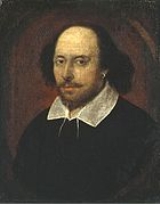
Shakespeare
The major literary figures in the English Renaissance include:
  • Francis Bacon
    Francis Bacon

    Francis Bacon, 1st Viscount St Alban King's Counsel , son of Nicholas Bacon by his second wife Anne Bacon, was an English philosopher, statesman, scientist, lawyer, jurist, and author....
  • Thomas Dekker
  • John Donne
    John Donne

    John Donne was an England Literature in English#Jacobean literature poet, preacher and a major representative of the metaphysical poets of the period....
  • John Fletcher
    John Fletcher

    John Fletcher may refer to:* Sir John Aubrey-Fletcher, 7th Baronet, 7th Baronet * John Robert Aubrey-Fletcher, heir-apparent * Ecstacy , American rapper of Whodini fame ...
  • John Ford
    John Ford (dramatist)

    John Ford was an English Literature in English#Jacobean literature and Literature in English#Caroline and Cromwellian literature playwright and poet born in Ilsington, Devon in Devon in 1586....
  • Ben Jonson
    Ben Jonson

    Benjamin Jonson was an England English Renaissance dramatist, poet and actor. A contemporary of William Shakespeare, he is best known for his satire plays, particularly Volpone, The Alchemist , and Bartholomew Fair, which are considered his best, and his Lyric poetry poems....
  • Thomas Kyd
    Thomas Kyd

    Thomas Kyd was an England dramatist, the author of The Spanish Tragedy, and one of the most important figures in the development of Elizabethan drama....
  • Christopher Marlowe
    Christopher Marlowe

    Christopher "Kit" Marlowe was an Kingdom of England Playwright, poet and translator of the Elizabethan era. The foremost English Renaissance theatre tragedy next to William Shakespeare, he is known for his blank verse, his overreaching protagonists, and his own mysterious and untimely death....
  • Phillip Massinger
  • Thomas Middleton
    Thomas Middleton

    Thomas Middleton was an England English Renaissance theatre and poet. Middleton stands with John Fletcher and Ben Jonson as among the most successful and prolific of playwrights who wrote their best plays during the Jacobean period....
  • John Milton
    John Milton

    John Milton II was an English poet, author, polemicist and civil servant for the Commonwealth of England. He is best known for his Epic poetry Paradise Lost and for his treatise condemning censorship, Areopagitica....
  • Sir Thomas More
    Thomas More

    Saint Thomas More was an English lawyer, author, and statesman who in his lifetime gained a reputation as a leading Renaissance humanist scholar, and occupied many public offices, including Lord Chancellor ....
  • Thomas Nashe
    Thomas Nashe

    Thomas Nashe was an England Elizabethan pamphleteer, poet and satirist. He was the son of the minister of religion William Nashe and his wife Margaret ....
  • William Rowley
    William Rowley

    William Rowley was an England Jacobean dramatist, best known for works written in collaboration with more successful writers. His date of birth is estimated to have been c....
  • William Shakespeare
    William Shakespeare

    William Shakespeare was an English people poet and playwright, widely regarded as the greatest writer in the English language and the world's preeminent dramatist....
  • James Shirley
    James Shirley

    James Shirley , was an England dramatist.He belonged to the great period of English dramatic literature, but, in Charles Lamb words, he "claims a place among the worthies of this period, not so much for any transcendent genius in himself, as that he was the last of a great race, all of whom spoke nearly the same language and had a set of...
  • Sir Philip Sidney
  • Edmund Spenser
    Edmund Spenser

    Edmund Spenser was an important England poet best known for The Faerie Queene, an epic poem celebrating, through fantastical allegory, the Tudor dynasty and Elizabeth I....
  • John Webster
    John Webster

    John Webster was an England Literature in English#Jacobean literature dramatist best known for his tragedies The White Devil and The Duchess of Malfi, often regarded as masterpieces of the early 17th-century English stage....
  • Sir Thomas Wyatt


Thomas Tallis
Thomas Tallis

Thomas Tallis was an English composer. Tallis flourished as a church musician in Tudor period. He occupies a primary place in anthologies of English church music, and is considered among the best of its earliest composers....
, Thomas Morley
Thomas Morley

Thomas Morley was an England composer, music theory, editor and organ of the Renaissance music, and the foremost member of the English Madrigal School....
, and William Byrd
William Byrd

William Byrd was an English composer of the Renaissance music. He cultivated many of the forms current in England at the time, including various types of sacred and secular polyphony, Keyboard instrument and consort music...
 were the most notable English musicians of the time, and are often seen as being a part of the same artistic movement that inspired the above authors. Elizabeth herself, a product of Renaissance humanism
Renaissance humanism

Renaissance humanism was a European intellectual movement that was a crucial component of the Renaissance, beginning in Florence in the last years of the 14th century....
 trained by Roger Ascham
Roger Ascham

Roger Ascham , England scholar and didactic writer, famous for his prose style, his promotion of the vernacular, and his theories of education....
, wrote occasional poems such as On Monsieur’s Departure
On Monsieur’s Departure

On Monsieur?s Departure is an Elizabethan literature poem by Elizabeth I of England herself. It is written in the form of a meditation on the failure of her marriage negotiations with Fran?ois, Duke of Anjou....
 at critical moments of her life.

See also