
Home      Discussion      Topics      Dictionary      Almanac
Signup       Login
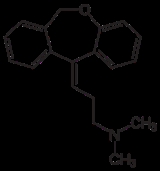
Doxepin

Doxepin

Overview
Doxepin is a psychotropic agent
Psychoactive drug
A psychoactive drug, psychopharmaceutical or psychotropic substance is a chemical substance that acts primarily upon the central nervous system where it alters brain function, resulting in changes in perception, mood, consciousness and behavior...

 with tricyclic antidepressant
Tricyclic antidepressant
Tricyclic antidepressants are a class of psychoactive drugs used primarily as antidepressants, which were first discovered in the early 1950s, and subsequently introduced later in the decade...

 and anxiolytic
Anxiolytic
An anxiolytic is a drug used for the treatment of symptoms of anxiety. Anxiolytics have been shown to be useful in the treatment of anxiety disorders, as have antidepressants such as the selective serotonin reuptake inhibitors .Though not anxiolytics, beta-receptor blockers such as propranolol and...

 properties, known under many brand-names such as Aponal, the original preparation by Boehringer-Mannheim, now part of the Roche
Hoffmann-La Roche
F. Hoffmann–La Roche Ltd. is a Swiss global health-care company that operates worldwide under two divisions: Pharmaceuticals and Diagnostics. Its holding company, Roche Holding AG, has shares listed on the SIX Swiss Exchange ....

 group; Adapine, Deptran, Sinquan and Sinequan (Pfizer
Pfizer
Pfizer Incorporated is a pharmaceutical company, ranking number one in sales in the world. The company is based in New York City, with its research headquarters in Groton, Connecticut...

). As doxepin hydrochloride
Hydrochloride
In chemistry, hydrochlorides are salts resulting, or regarded as resulting, from the reaction of hydrochloric acid with an organic base...

, it is the active ingredient
Active ingredient
An active ingredient , is the substance in a drug or a pesticide that is pesticidal or pharmaceutically active. Terms in similar use include: active pharmaceutical ingredient and bulk active in medicine, or in pesticide formulations active substance may be used. Some medications and pesticide...

 in cream-based preparations (Zonalon and Xepin) for the treatment of dermatological itch. Doxepin is currently investigated for the treatment of insomnia, and the proposed tradename of doxepin for this indication is Silenor.

Doxepin inhibits the reuptake of serotonin
Serotonin
Serotonin is a monoamine neurotransmitter. It is found extensively in the gastrointestinal tract of animals, and about 80 to 90 percent of the human body's total serotonin is located in the enterochromaffin cells in the gut, where it is used to regulate intestinal movements...

 and noradrenaline from the synaptic cleft (dual action).
Discussion
Ask a question about 'Doxepin'
Start a new discussion about 'Doxepin'
Answer questions from other users
Full Discussion Forum
 
Encyclopedia
Doxepin is a psychotropic agent
Psychoactive drug
A psychoactive drug, psychopharmaceutical or psychotropic substance is a chemical substance that acts primarily upon the central nervous system where it alters brain function, resulting in changes in perception, mood, consciousness and behavior...

 with tricyclic antidepressant
Tricyclic antidepressant
Tricyclic antidepressants are a class of psychoactive drugs used primarily as antidepressants, which were first discovered in the early 1950s, and subsequently introduced later in the decade...

 and anxiolytic
Anxiolytic
An anxiolytic is a drug used for the treatment of symptoms of anxiety. Anxiolytics have been shown to be useful in the treatment of anxiety disorders, as have antidepressants such as the selective serotonin reuptake inhibitors .Though not anxiolytics, beta-receptor blockers such as propranolol and...

 properties, known under many brand-names such as Aponal, the original preparation by Boehringer-Mannheim, now part of the Roche
Hoffmann-La Roche
F. Hoffmann–La Roche Ltd. is a Swiss global health-care company that operates worldwide under two divisions: Pharmaceuticals and Diagnostics. Its holding company, Roche Holding AG, has shares listed on the SIX Swiss Exchange ....

 group; Adapine, Deptran, Sinquan and Sinequan (Pfizer
Pfizer
Pfizer Incorporated is a pharmaceutical company, ranking number one in sales in the world. The company is based in New York City, with its research headquarters in Groton, Connecticut...

). As doxepin hydrochloride
Hydrochloride
In chemistry, hydrochlorides are salts resulting, or regarded as resulting, from the reaction of hydrochloric acid with an organic base...

, it is the active ingredient
Active ingredient
An active ingredient , is the substance in a drug or a pesticide that is pesticidal or pharmaceutically active. Terms in similar use include: active pharmaceutical ingredient and bulk active in medicine, or in pesticide formulations active substance may be used. Some medications and pesticide...

 in cream-based preparations (Zonalon and Xepin) for the treatment of dermatological itch. Doxepin is currently investigated for the treatment of insomnia, and the proposed tradename of doxepin for this indication is Silenor.

Pharmacology


Doxepin inhibits the reuptake of serotonin
Serotonin
Serotonin is a monoamine neurotransmitter. It is found extensively in the gastrointestinal tract of animals, and about 80 to 90 percent of the human body's total serotonin is located in the enterochromaffin cells in the gut, where it is used to regulate intestinal movements...

 and noradrenaline from the synaptic cleft (dual action). The reuptake-inhibition of dopamine
Dopamine
Dopamine is a neurotransmitter occurring in a wide variety of animals, including both vertebrates and invertebrates. In the brain, this phenethylamine functions as a neurotransmitter, activating the five types of dopamine receptors — D1, D2, D3, D4, and...

 is very weak.

It has antagonistic effects (blockade) on a variety of postsynaptic receptors:
  • Extremely strong : histaminic H1, H2
  • Strong : serotonergic 5-HT2
    5-HT receptor
    The serotonin receptors are a group of G protein-coupled receptors and ligand-gated ion channels found in the central and peripheral nervous system. They mediate both excitatory and inhibitory neurotransmission. The serotonin receptors are activated by the neurotransmitter serotonin, which acts...

    , adrenergic alpha1
    Adrenergic receptor
    The adrenergic receptors are a class of G protein-coupled receptors that are targets of the catecholamines, especially noradrenaline and adrenaline ....

    , muscarinic
    Muscarinic acetylcholine receptor
    Muscarinic receptors, or mAChRs, are G protein-coupled acetylcholine receptors found in the plasma membranes of certain neurons and other cells...

  • Moderate : serotonergic 5-HT1
    5-HT receptor
    The serotonin receptors are a group of G protein-coupled receptors and ligand-gated ion channels found in the central and peripheral nervous system. They mediate both excitatory and inhibitory neurotransmission. The serotonin receptors are activated by the neurotransmitter serotonin, which acts...

  • Weak : dopaminic D2
    Dopamine receptor
    Dopamine receptors are a class of metabotropic G protein-coupled receptors that are prominent in the vertebrate central nervous system . The neurotransmitter dopamine is the primary endogenous ligand for dopamine receptors....

    , adrenergic alpha2
    Adrenergic receptor
    The adrenergic receptors are a class of G protein-coupled receptors that are targets of the catecholamines, especially noradrenaline and adrenaline ....


These effects account for the actions as well for most side-effects (sedation
Sedation
Sedation is a medical procedure involving the administration of sedative drugs, generally to facilitate a medical procedure with local anaesthesia.- Uses :...

, hypotension
Hypotension
In physiology and medicine, hypotension refers to an abnormally low blood pressure. This is best understood as a physiologic state, rather than a disease. It is often associated with shock, though not necessarily indicative of it. Hypotension is the opposite of hypertension, which is high blood...

, anticholinergic
Anticholinergic
An anticholinergic agent is a substance that blocks the neurotransmitter acetylcholine in the central and the peripheral nervous system. An example of an anticholinergic is dicyclomine....

 side-effects, weight gain). Doxepin shows strong antagonism against the effects of reserpine
Reserpine
Reserpine is an indole alkaloid antipsychotic and antihypertensive drug that has been used for the control of high blood pressure and for the relief of psychotic behaviors, although because of the development of better drugs for these purposes and because of its numerous side-effects, it is rarely...

 (amine depletion) in the animal model. Like other 'classical' antidepressants, it has a sodium channel-blocking activity, possibly accounting for its analgesic action. Additionally, Doxepin exerts a strong local-anesthetic action.

Peak plasma levels are seen 2 to 3 hours after oral dosing.

Toxicology


Acute toxicity:
  • Mouse : i.v. 15 – 20 mg/kg body weight, oral 148 - 178 mg/kg body weight
  • Rat : i.v. 13 – 19 mg/kg body weight, oral 346 - 460 mg/kg body weight
  • Human : Not exactly known. Clinical experience indicates a rather high acute toxicity, as is the case with other tri-/tetracyclics. Fatal dose in sensitive adults may be as low as 500 to 1,000 mg oral (7 to 14 mg/kg). In children below 12 yrs. of age any oral intake is to be considered as serious.


Chronic toxicity
  • Dog and Rat : Fat deposits in liver cells and decrease of triglyceride
    Triglyceride
    is a glyceride in which the glycerol is esterified with three fatty acids. It is the main constituent of vegetable oil and animal fats.- Chemical structure :...

     levels in plasma
  • Human : Data not available

Indications


Approved uses may vary by country. In the United States, the only FDA
Food and Drug Administration
The Food and Drug Administration is a Government agency of the United States Department of Health and Human Services and is responsible for regulating and supervising the safety of foods, tobacco products, dietary supplements, Medication drugs, vaccines, Biopharmaceutical, blood transfusion,...

-approved use of doxepin is in the treatment of depression. All other uses are considered off-label.
  • Major depression
  • Anxiety disorder
    Anxiety disorder
    Anxiety disorder is a blanket term covering several different forms of abnormal and pathological fears and anxieties which only came under the aegis of psychiatry at the very end of the 19th century. Current psychiatric diagnostic criteria recognize a wide variety of anxiety disorders...

  • Insomnia
    Insomnia
    Insomnia is a symptom of any of several sleep disorders, characterized by persistent difficulty falling asleep or staying asleep despite the opportunity. Insomnia is a symptom, not a stand-alone diagnosis or a disease. By definition, insomnia is "difficulty initiating or maintaining sleep, or both"...

  • Alleviation of the symptoms of alcohol and drug withdrawal (N.B.: Doxepin does not suppress seizure activity in alcoholics (delirium tremens
    Delirium tremens
    Delirium tremens is an acute episode of delirium that is usually caused by withdrawal from alcohol, first described in 1813...

    ). Cotreatment with benzodiazepines or barbiturates is needed to treat seizures effectively.
  • Gastrointestinal ulceration
    Peptic ulcer
    A peptic ulcer, also known as ulcus pepticum, PUD or peptic ulcer disease, is an ulcer of an area of the gastrointestinal tract that is usually acidic and thus extremely painful...

     and other GI-problems (e.g. irritable bowel syndrome), whether part of depression or not. The action is due to strong H2-receptor antagonism. The efficiacy is comparable to H2-Receptor-Inhibitors.
  • Chronic pain, particular tension headaches, whether associated with depression or not
  • Topical (external) treatment of itching skin disease with Zonalon and Xepin
  • low dose doxepin (3 to 6 mg) is currently on phase 3 as "new" treatment for insomnia.

Contraindications


Absolute:
  • known hypersensitivity to doxepin or other dibenzoxepines or other ingredients of the drug
  • acute intoxication with alcohol, sedative
    Sedative
    A sedative is a substance that induces sedation by reducing irritability or excitement.At higher doses it may result in slurred speech, staggering gait, poor judgment, and slow, uncertain reflexes...

    s, analgesic
    Analgesic
    An analgesic is any member of the diverse group of drugs used to relieve pain . The word analgesic derives from Greek an- and algos...

    s and other psychoactive drugs
  • acute delirium tremens
    Delirium tremens
    Delirium tremens is an acute episode of delirium that is usually caused by withdrawal from alcohol, first described in 1813...

  • untreated closed angle glaucoma
    Glaucoma
    Glaucoma is a group of diseases that affect the optic nerve and involves a loss of retinal ganglion cells in a characteristic pattern. It is a type of optic neuropathy. Raised intraocular pressure is a significant risk factor for developing glaucoma...

  • hypertrophy of the prostate with urine retention
  • paralytic ileus


Relative:
  • hypertrophy of the prostate without urine retention
  • reduced function of the bone marrow
  • organic brain disorders
  • increased risk of seizure
    Seizure
    An epileptic seizure is a transient symptom of excessive or synchronous neuronal activity in the brain. It can manifest as an alteration in mental state, tonic or clonic movements, convulsions, and various other psychic symptoms...

    s, preexisting epilepsy
    Epilepsy
    Epilepsy is a common chronic neurological disorder characterized by recurrent unprovoked seizures...

  • preexisting cardiac damage, particular some arrhythmias (e.g. sinoatrial blockage)


Special cautions needed:
  • other forms of preexisting cardiac damage (other arrhythmias, insufficience)
  • MAO-Inhibitors of the irreversible type (tranylcypromine
    Tranylcypromine
    Tranylcypromine is a psychoactive drug of the phenethylamine and amphetamine chemical classes which acts as a monoamine oxidase inhibitor —it is a nonselective and irreversible inhibitor of the enzyme monoamine oxidase...

     among others) : These drugs should normally be stopped at least 2 weeks before therapy with doxepin is started.


Children under 12 years of age should not be treated, because no sufficient clinical experience exists for this group of age.
Tricyclic antidepressant drugs, particularly when given in high doses, can induce sinus tachycardia, changes in conduction time, and arrhythmias. A few instances of unexpected death have been reported in patients with cardiovascular disorders. Myocardial infarction and stroke have also been reported with drugs of this class. Therefore, doxepin should be administered with extreme caution to patients with a history of cardiovascular disease, those with circulatory lability, and elderly patients. In such cases, treatment should be initiated with low doses with progressive increases only if required and tolerated, and the patients should be under close surveillance at all dosage levels.
Since tricyclic agents are known to reduce the seizure threshold, doxepin should be used with caution in patients with a history of convulsive disorders. Concurrent administration of ECT and doxepin may be hazardous and, therefore, such treatment should be limited to patients for whom it is essential.
Close supervision is required when doxepin is given to hyperthyroid patients or those receiving thyroid medication because of the possibility of cardiovascular toxicity. At doses above 150 mg/day, it may block the antihypertensive effect of guanethidine and related compounds.

Precautions


Before initiation of treatment a complete and differentiated blood count should be taken. If any value is pathologic, the blood count should be monitored closely under therapy with doxepin. If values are normal, blood counts should be taken during therapy in regular intervals (recommended: weekly during first month of therapy, monthly during the next 2 months, every 3 months afterwards).

Liver-function studies should be performed periodically.

Pregnancy and lactation


If Doxepin is used chronically during pregnancy, the newborn may show a withdrawal syndrome with agitation, impaired cardio-respiratory functions, disturbed urination and defecation. Caution should be exerted in treating pregnant women on a regular basis.

Doxepin is found in significant amounts in the milk of lactating women. If therapy is necessary, breastfeeding should be interrupted during treatment. In order to maintain supply, the mother may pump and discard the milk during her treatment.

Side-effects

  • Central Nervous System : fatigue
    Fatigue (physical)
    Fatigue is a state of awareness. It can describe a range of afflictions, varying from a general state of lethargy to a specific work-induced burning sensation within one's muscles. It can be both physical and mental...

    , dizziness, drowsiness, lightheadedness, confusion, nightmares, agitation, increased anxiety, insomnia, seizures (infrequently), delirium
    Delirium
    Delirium is an acute and debilitating decline in attention-focus, perception, and cognition that produces an altered form of semi-consciousness. It is a systemic syndrome caused by a chemical or disease-process which is disrupting the neurons of the cerebral cortex...

    , rarely induction of hypomania
    Hypomania
    Hypomania is a mood state characterized by persistent and pervasive elevated or irritable mood, and thoughts and behaviors that are consistent with such a mood state. An unequivocal change in functioning that is uncharacteristic when asymptomatic...

     and schizophrenia
    Schizophrenia
    Schizophrenia , from the Greek roots skhizein and phrēn, phren- is a psychiatric diagnosis that describes a mental disorder characterized by abnormalities in the perception or expression of reality...

     (stop medication immediately), extrapyramidal side-effects (rarely), abuse in patients with polytoxikomania (rarely), tinnitus
    Tinnitus
    Tinnitus is the perception of sound within the human ear in the absence of corresponding external sound....

  • Anticholinergic : dry mouth, obstipation, even ileus
    Ileus
    Ileus is a disruption of the normal propulsive gastrointestinal motor activity due to non-mechanical causes. In contrast, motility disorders that result from structural abnormalities are termed mechanical bowel obstruction...

     (rarely), difficulties in urinating, sweating, precepitation of glaucoma
    Glaucoma
    Glaucoma is a group of diseases that affect the optic nerve and involves a loss of retinal ganglion cells in a characteristic pattern. It is a type of optic neuropathy. Raised intraocular pressure is a significant risk factor for developing glaucoma...

  • Antiadrenergic : hypotension
    Hypotension
    In physiology and medicine, hypotension refers to an abnormally low blood pressure. This is best understood as a physiologic state, rather than a disease. It is often associated with shock, though not necessarily indicative of it. Hypotension is the opposite of hypertension, which is high blood...

    , postural collapse (if patient arises too fast from lying/sitting position to standing), arrhythmias (sinus-tachycardia, bradycardia, av-blockade)
  • Allergic/toxic : skin rash, photosensitivity
    Photosensitivity
    Photosensitivity is the amount to which an object reacts upon receiving photons, especially visible light.-Interpretation in medicine:Sensitivity of the skin to a light source can take various forms. People with particular skin types are more sensitive to sunburn...

    , liver damage of the cholostatic type (rarely), hepatitis
    Hepatitis
    Hepatitis implies injury to the liver characterized by the presence of inflammatory cells in the tissue of the organ. The name is from ancient Greek hepar , the root being hepat- , meaning liver, and suffix -itis, meaning "inflammation"...

     (extremely rare), leuko- or thrombopenia (rarely), agranulocytosis
    Agranulocytosis
    Agranulocytosis, also known as agranulosis, is an acute condition involving a severe and dangerous leukopenia, most commonly of neutrophils, causing a neutropenia in the circulating blood. It represents a severe lack of one major class of infection-fighting white blood cells...

     (very rarely), hypoplastic anemia (rarely)
  • Others : frequently increased appetite, massive weight gain, rarely nausea, frequently impaired sexual function in men (impotence, ejaculation-difficulties), rarely hypertension
    Hypertension
    Hypertension is a chronic medical condition in which the blood pressure is elevated. It is also referred to as high blood pressure or shortened to HT, HTN or HPN. The word "hypertension", by itself, normally refers to systemic, arterial hypertension.Hypertension can be classified as either...

    , rarely polyneuropathy, in both sexes breast-enlargement and galactorrhea
    Galactorrhea
    Galactorrhea or galactorrhoea is the spontaneous flow of milk from the breast, unassociated with childbirth or nursing.Contemporary Maternal-Newborn Nursing Care defines galactorrhea as "nipple discharge." -Causes:...

     (rarely)

Suicidal patients


Patients with suicidal thoughts, or those with previous suicidal attempts, should be monitored closely under treatment with Doxepin. Perhaps, the decision is made to hospitalize high-risk patients until remission or to prescribe an additional sedating drug like a benzodiazepine or chlorprothixene
Chlorprothixene
Chlorprothixene is a typical antipsychotic drug of the thioxanthene class. It has a low antipsychotic potency . Its principal indications are the treatment of psychotic disorders Chlorprothixene is a typical antipsychotic drug of the thioxanthene class. It has a low antipsychotic potency (half to...

 for 2–4 weeks of initial treatment with Doxepin (until significant remission). At least, the smallest amount of Doxepin should be prescribed at one time to minimize the risk of deliberate overdose.

Drug abuse and dependence


Doxepin has an extremely low potential for abuse and psychological dependence (mostly noted with polytoxicomaniacs, possibly due to the strong anxiolytic action of Doxepin).

Withdrawal symptoms frequently seen when treatment with doxepin is stopped abruptly (agitation, anxiety, insomnia, sometimes activation of mania or rebound depression) can be avoided by reducing the daily dose of Doxepin gradually by approximately 25% each week. If treatment has to be stopped at once due to medical reasons, the use of a benzodiazepine (e.g. Lorazepam, Clonazepam, or Alprazolam) for a maximum of 4 weeks as needed will usually suppress withdrawal symptoms.

Other remarks


Doxepin may worsen psychotic conditions like schizophrenia and should be given with caution. The antipsychotic treatment should be continued.

With Zonalon and Xepin; in most countries an external form (cream) is available for the treatment of itching skin disease; the effect is probably due to the affinity of doxepin for H1 and H2 receptors and action on muscarininc receptors.

Interactions

  • Irreversible MAO-Inhibitors: agitation, delirium, rundred coma, hyperpyrexia (high fever), seizures and severe changes in blood pressure. potentially fatal. N.B. Treatment-resistant hospitalized patients may be treated concomitantly with an MAO-inhibitor, if they are closely monitored by an expert and the initial dose of both drugs is low.
  • Increased drug actions:
  • other antidepressants, barbiturates, narcotics, sedating antihistaminics, anticonvulsive drugs, alcohol - resulting in increased central depression
  • anticholinergics (antiparkinsonian agents, tri- and tetracyclic antidepressants) - resulting in increased anticholinergic action (dry mouth, obstipation etc.)
  • Cimetidine: impairs the excretion of Doxepin - increased central depression and anticholinergic effects
  • Sympathomimetics (also those used in local anesthetics like Noradrenaline): sympathomimetic effects increased (increased blood pressure, pulse rate, paleness of skin etc)
  • Nitrates and Antihypertensives (e.g. Beta-Blockers) - increased antihypertensive action with pronounced fall in blood pressure
  • Decreased drug actions:
  • Guanethidine, Reserpine, Guanfacine: antihypertensive effects decreased
  • Clonidine: antihypertensive effects decreased and risk of (massive) rebound hypertension.

Dosage

  • Depending on the disease to be treated, clinical condition, age, weight and liver function :

Initial doses may be as low as 5 mg in the evening for treatment of insomnia or as high as 100 mg oral as bedtime single dose or in divided doses in severely agitated depressive patients. Patients with severe opioid withdrawal symptoms often even require 150 mg or more in the first few days. Generally, initial doses should be low and increased step by step. Outpatients should not receive more than 150 mg daily. Hospitalized patients may receive up to 300 mg orally in divided doses. Up to 150 mg may be given as single bedtime dose. The dose for i.m.-injections and i.v.-infusions is usually 1/2 or less of the oral dose. Infusions should be given very slowly and the patient should lie during the infusion and for some hours afterwards in order to avoid severe postural hypotension.

It has been shown that Doxepin is able to decrease the risk of relapse of serious depression when given as long-term treatment after the remission is stable. If this applies for the patient, the physician will determine as well the daily dose and the duration of long-term treatment. The daily dose might be lower than the dose needed for full remission of depression.
  • External use : As directed by physician.

Overdose


If overdose is suspected, local poison control center
Poison control center
A poison control center or poison information center is a medical facility that is able to provide immediate, free, and expert treatment advice and assistance over the telephone in case of exposure to poisonous or hazardous substances...

s or emergency departments can provide advice. United States
United States
The United States of America is a federal constitutional republic comprising fifty states and a federal district...

residents can call the US national poison hotline at 1-800-222-1222. Other worldwide poison centers can be found at the World directory of poisons centers.

The symptoms and the treatment of an overdose are largely the same as for the other tricyclic antidepressants.

History


Doxepin was synthesized by Stach and Spingler from the German drug manufacturer C. F. Boehringer & Söhne GmbH in Mannheim. It was tested from 1963 to 1968 in different German and Swiss psychiatric institutions and was approved in Germany and elsewhere thereafter. The antidepressive effects were found to be excellent. Strong anxiolytic and sedative properties were also demonstrated. Doxepin has been in clinical use for several decades. The drug plays an important role in many indications today, not only in psychiatry/neurology.