
|
|
|
|
Dimethylformamide
|
| |
|
| |
Dimethylformamide is the organic compound with the formula (CH3)2NC(O)H. Commonly abbreviated DMF, this colourless liquid is miscible with water and the majority of organic liquids. DMF is a common solvent for chemical reactions. Pure dimethylformamide is odorless whereas technical grade or degraded dimethylformamide often has a fishy smell due to impurity of dimethylamine. Its name is derived from the fact that it is a derivative of formamide, the amide of formic acid.
Dimethylformamide is a polar (hydrophilic) Aprotic solvent with a high boiling point.

Discussion
Ask a question about 'Dimethylformamide'
Start a new discussion about 'Dimethylformamide'
Answer questions from other users
|
Encyclopedia
Dimethylformamide is the organic compound with the formula (CH3)2NC(O)H. Commonly abbreviated DMF, this colourless liquid is miscible with water and the majority of organic liquids. DMF is a common solvent for chemical reactions. Pure dimethylformamide is odorless whereas technical grade or degraded dimethylformamide often has a fishy smell due to impurity of dimethylamine. Its name is derived from the fact that it is a derivative of formamide, the amide of formic acid.
Dimethylformamide is a polar (hydrophilic) Aprotic solvent with a high boiling point. It facilitates reactions that follow polar mechanisms, such as SN2 reactions. Dimethylformamide can be synthesized from methyl formate and dimethyl amine or reaction of dimethyl amine and carbon monoxide. Dimethylformamide is not stable in the presence of strong bases like sodium hydroxide or strong acids such as hydrochloric acid or sulfuric acid and is hydrolyzed back into formic acid and dimethylamine, especially at elevated temperatures.
Structure and properties
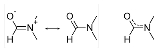
Due to the contribution of the two possible resonance structures of an amide, the bond order of the carbonyl C=O bond is reduced, while that of the carbon-nitrogen bond is increased. Thus the infrared spectrum of DMF shows a lower C=O stretching frequency at 1675 cm-1 than an unsubstituted C=O bond. Also, because of the partial double bond character, the rotation about the C-N axis is slow at room temperature, making the two methyl groups inequivalent on the NMR time scale, giving rise to two singlets of 3 protons each at d 2.97 and 2.88, instead of one singlet of 6 protons in the proton NMR spectrum.
Applications
The primary use of dimethylformamide is as a solvent with low evaporation rate. Dimethylformamide is used in the production of acrylic fibers and plastics. It is also used as a solvent in peptide coupling for pharmaceuticals, in the development and production of pesticides, and in the manufacture of adhesives, synthetic leathers, fibers, films, and surface coatings.
It is used as a reagent in the Bouveault aldehyde synthesis and in the Vilsmeier-Haack reaction, another useful method of forming aldehydes.
DMF penetrates most plastics and makes them swell. It therefore frequently occurs as a component of paint strippers.
DMF is very effective at separating and suspending carbon nanotubes, and is recommended by the NIST for use in Near infrared spectroscopy of such.
It is also used in the manufacturing of solvent dyes as an important raw material. It is consumed during reaction.
Production
Dimethyl formamide is produced either with catalyzed reaction of dimethyl amine and carbon monoxide in methanol or the reaction of methyl formate with dimethyl amine. It may also be prepared on a laboratory scale by reacting dimethylamine with formic acid.
Precautions
Reactions including the use of sodium hydride in DMF as a solvent are somewhat hazardous; exothermic decompositions have been reported at temperatures as low as 26 °C. On a laboratory scale any thermal runaway is (usually) quickly noticed and brought under control with an ice bath and this remains a popular combination of reagents. On a pilot plant scale, on the other hand, several accidents have been reported.
Toxicity
DMF has been linked to cancer in humans, and it is thought to cause birth defects. In some sectors of industry women are banned from working with DMF. For many reactions, it can be replaced with dimethyl sulfoxide. Most manufacturers of DMF list (Life) or (Chronic) as a health hazard in their MSDS since DMF is not readily disposed of by the body. According to IARC, DMF is a possible carcinogen, although EPA does not consider it a cancer risk.
External links
- Dimethylformamide usage on
- for DMF
- (PDF)
|
| |
|
|