
All Topics  
Tyrosinemia

 
Tyrosinemia

   Email Print
   Bookmark   Link


Tyrosinemia


Tyrosinemia (or "Tyrosinaemia") is an error of metabolism
Metabolism

Metabolism is the set of chemical reactions that occur in living organisms in order to maintain life. These processes allow organisms to grow and reproduce, maintain their structures, and respond to their environments....
, usually inborn, in which the body cannot effectively break down the amino acid
Amino acid

In chemistry, an amino acid is a molecule containing both amine and carboxyl functional groups. These molecules are particularly important in biochemistry, where this term refers to alpha-amino acids with the general formula H2NCHRCOOH, where R is an organic substituent....
 tyrosine
Tyrosine

Tyrosine or 4-hydroxyphenylalanine, is one of the 20 amino acids that are used by cell to protein biosynthesis proteins. This is a non-essential amino acid and it is found in casein....
. Symptoms include liver and kidney disturbances and mental retardation.

Most inborn forms of tyrosinemia produce hypertyrosinemia (high levels of tyrosine).
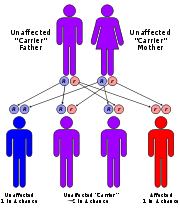
re are three types of tyrosinemia, each with distinctive symptoms and caused by the deficiency of a different enzyme.


tment varies depending on the specific type.


Discussion
Ask a question about 'Tyrosinemia'
Start a new discussion about 'Tyrosinemia'
Answer questions from other users
Full Discussion Forum


Encyclopedia


Tyrosinemia (or "Tyrosinaemia") is an error of metabolism
Metabolism

Metabolism is the set of chemical reactions that occur in living organisms in order to maintain life. These processes allow organisms to grow and reproduce, maintain their structures, and respond to their environments....
, usually inborn, in which the body cannot effectively break down the amino acid
Amino acid

In chemistry, an amino acid is a molecule containing both amine and carboxyl functional groups. These molecules are particularly important in biochemistry, where this term refers to alpha-amino acids with the general formula H2NCHRCOOH, where R is an organic substituent....
 tyrosine
Tyrosine

Tyrosine or 4-hydroxyphenylalanine, is one of the 20 amino acids that are used by cell to protein biosynthesis proteins. This is a non-essential amino acid and it is found in casein....
. Symptoms include liver and kidney disturbances and mental retardation.

Most inborn forms of tyrosinemia produce hypertyrosinemia (high levels of tyrosine).

Types

There are three types of tyrosinemia, each with distinctive symptoms and caused by the deficiency of a different enzyme.

  • Type I tyrosinemia
    Type I tyrosinemia

    Type I tyrosinemia is the most severe form of this disorder and is caused by a shortage of the enzyme fumarylacetoacetate hydrolase , encoded by the gene FAH gene found on chromosome number 15....
  • Type II tyrosinemia
  • Type III tyrosinemia
    Type III tyrosinemia

    Type III tyrosinemia is a rare disorder caused by a deficiency of the enzyme 4-hydroxyphenylpyruvate dioxygenase , encoded by the gene HPD. This enzyme is abundant in the liver, and smaller amounts are found in the kidneys....


Treatment

Treatment varies depending on the specific type. A low protein diet may be required in the management of tyrosinemia. Recent experience with NTBC has shown to be very effective. The most effective treatment in patients with tyrosinemia type I seems to be full or partial liver transplant.

See also

  • Alkaptonuria
    Alkaptonuria

    Alkaptonuria is a rare inherited genetic disorder of phenylalanine and tyrosine metabolism. This is an autosomal dominance relationship that is due to a defect in the enzyme homogentisate 1,2-dioxygenase , which participates in Tyrosine#Degradation tyrosine....
  • Ochronosis
    Ochronosis

    Ochronosis, often called alkaptonuric ochronosis, is an autosomal recessive metabolic disorder that causes an excess of homogentisic acid, resulting in adverse pigmentation, calcification, and inflammation of cartilagenous and related Tissue throughout the body....
  • Inborn error of metabolism
    Inborn error of metabolism

    Inborn errors of metabolism comprise a large class of genetics diseases involving disorders of metabolism. The majority are due to defects of single genes that code for enzymes that facilitate conversion of various substances into others ....


External links