
All Topics  
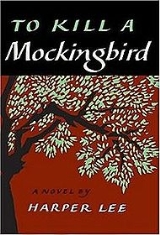
To Kill a Mockingbird

 
To Kill A Mockingbird

   Email Print
   Bookmark   Link


To Kill a Mockingbird


To Kill a Mockingbird is a Pulitzer Prize
Pulitzer Prize

The Pulitzer Prize is an United States award regarded as the highest national honor in newspaper journalism, literary achievements and musical composition....
-winning novel
Novel

File:2009 stapelweise Neuerscheinungen im Buchladen.JPGA novel is today a long narrative in literary prose. The genre has historical roots both in the fields of the medieval and early modern Romance and in the tradition of the novella....
 by Harper Lee
Harper Lee

Nelle Harper Lee is an United States author known for her 1960 novel To Kill a Mockingbird. She was awarded the Presidential Medal of Freedom of the United States for her contribution to literature in 2007....
 published in 1960
1960 in literature

The year 1960 in literature involved some significant events and new books....
. It was instantly successful and has become a classic of modern American
American literature

American literature refers to written or literature produced in the area of the United States and Colonial America. For more specific discussions of poetry and theater, see Poetry of the United States and Theater in the United States....
 fiction. The novel is loosely based on the author's observations of her family and neighbors, as well as on an event that occurred near her hometown in 1936, when she was 10 years old.

The novel is renowned for its warmth and humor, despite dealing with serious issues of rape and racial inequality.


Discussion
Ask a question about 'To Kill a Mockingbird'
Start a new discussion about 'To Kill a Mockingbird'
Answer questions from other users
Full Discussion Forum


Recent Posts


Encyclopedia


To Kill a Mockingbird is a Pulitzer Prize
Pulitzer Prize

The Pulitzer Prize is an United States award regarded as the highest national honor in newspaper journalism, literary achievements and musical composition....
-winning novel
Novel

File:2009 stapelweise Neuerscheinungen im Buchladen.JPGA novel is today a long narrative in literary prose. The genre has historical roots both in the fields of the medieval and early modern Romance and in the tradition of the novella....
 by Harper Lee
Harper Lee

Nelle Harper Lee is an United States author known for her 1960 novel To Kill a Mockingbird. She was awarded the Presidential Medal of Freedom of the United States for her contribution to literature in 2007....
 published in 1960
1960 in literature

The year 1960 in literature involved some significant events and new books....
. It was instantly successful and has become a classic of modern American
American literature

American literature refers to written or literature produced in the area of the United States and Colonial America. For more specific discussions of poetry and theater, see Poetry of the United States and Theater in the United States....
 fiction. The novel is loosely based on the author's observations of her family and neighbors, as well as on an event that occurred near her hometown in 1936, when she was 10 years old.

The novel is renowned for its warmth and humor, despite dealing with serious issues of rape and racial inequality. The narrator's father, Atticus Finch
Atticus Finch

Atticus Finch is a fictional character in Harper Lee's Pulitzer Prize-winning novel To Kill a Mockingbird. Atticus is a lawyer and resident of Maycomb County, Alabama, and the father of Jeremy Atticus "Jem" Finch and Jean Louise "Scout" Finch....
, has served as a moral hero for many readers and as a model of integrity for lawyers. One critic explained the novel's impact by writing, "In the twentieth century, To Kill a Mockingbird is probably the most widely read book dealing with race in America, and its protagonist, Atticus Finch, the most enduring fictional image of racial heroism."

As a Southern Gothic
Southern Gothic

Southern Gothic is a Subgenre of the Gothic novel writing style, unique to American literature. Like its parent genre, it relies on supernatural, ironic, or unusual events to guide the plot....
 novel and a Bildungsroman
Bildungsroman

A bildungsroman is a novelistic genre that arose during the German Enlightenment, in which the author presents the psychological, moral and social shaping of the personality of a protagonist....
, the primary themes of To Kill a Mockingbird involve racial injustice and the destruction of innocence. Scholars have noted that Lee also addresses issues of class, courage and compassion, and gender roles in the American Deep South
Deep South

The Deep South is a descriptive category of cultural and geographic subregions in the Southern United States. Historically, it is differentiated from the "Upper South" as being the states which were most dependent on plantation type agriculture during the antebellum period....
. The book is widely taught in schools in English-speaking countries with lessons that emphasize tolerance and decry prejudice. Despite its themes, To Kill a Mockingbird has been subject to campaigns for removal from public classrooms. Often the book is challenged
Challenge (literature)

In United States literature, a challenge is defined by the American Library Association [ALA] as an attempt by a person or group of people to have materials such as books removed from a library or from a school curriculum or otherwise restricted....
 for its use of racial epithets, and writers have noticed that regardless of its popularity since its publication, some readers are displeased by the novel's treatment of black characters.

Lee's novel was initially reviewed by at least 30 newspapers and magazines, whose critics varied widely in their assessments. More recently, British librarians ranked the book ahead of the Bible
Bible

The Bible is the central religious text of Judaism and Christianity. The exact Books of the Bible is dependent on the religious traditions of specific denominations....
 as one "every adult should read before they die". The book was adapted into an Oscar-winning film
To Kill a Mockingbird (film)

To Kill a Mockingbird is an Cinema of the United States drama film based on the To Kill a Mockingbird by Harper Lee. It was directed by Robert Mulligan and stars Gregory Peck in the role of Atticus Finch ....
 in 1962 by director Robert Mulligan
Robert Mulligan

Robert Mulligan was an Academy Award-nominated United States film and television director....
, with a screenplay by Horton Foote
Horton Foote

Albert Horton Foote, Jr. was an United States of America playwright and screenwriter, perhaps best known for his screenplay for the 1962 film To Kill a Mockingbird , for which he received an Academy Award....
. Since 1990, a play based on the novel has been performed annually in Harper Lee's hometown of Monroeville, Alabama
Monroeville, Alabama

Monroeville is a city in Monroe County, Alabama, Alabama, United States. At the 2000 census the population was 6,862. The city is the county seat of Monroe County, Alabama....
. To date, it is Lee's only published novel, and although she continues to respond to the book's impact, she has refused any personal publicity for herself or the novel since 1964.

Biographical background and publication

Born in 1926, Harper Lee
Harper Lee

Nelle Harper Lee is an United States author known for her 1960 novel To Kill a Mockingbird. She was awarded the Presidential Medal of Freedom of the United States for her contribution to literature in 2007....
 grew up in the Southern town of Monroeville, Alabama
Monroeville, Alabama

Monroeville is a city in Monroe County, Alabama, Alabama, United States. At the 2000 census the population was 6,862. The city is the county seat of Monroe County, Alabama....
, where she became close friends with the soon-to-be famous writer Truman Capote
Truman Capote

Truman Capote was an United States writer whose short stories, novels, plays, and non-fiction are recognized literary classics, including the novella Breakfast at Tiffany's and In Cold Blood , which he labeled a "non-fiction novel"....
. She attended Huntingdon College
Huntingdon College

Huntingdon College, founded in 1854, is a coeducational liberal arts college in Montgomery, Alabama, Alabama. Affiliated with the United Methodist Church, the college is known for its business and science programs....
 in Montgomery
Montgomery, Alabama

Montgomery is the Capital , second most populous city, and the fourth most populous metropolitan area in the Southern United States United States state of Alabama, and is the county seat of Montgomery County, Alabama....
 (1944–45), and then studied law at the University of Alabama
University of Alabama

The University of Alabama is a state university coeducational university located in Tuscaloosa, Alabama, Alabama, United States. Founded in 1831, UA is the flagship university of the University of Alabama System....
 (1945–49). While attending college, she wrote for campus literary magazines: Huntress at Huntingdon and the humor magazine Rammer Jammer at the University of Alabama. At both colleges, she wrote short stories and other works about racial injustice, a rarely mentioned topic on such campuses at the time. In 1950, Lee moved to New York City
New York City

The City of New York is the List of United States cities by population in the United States, while the New York metropolitan area ranks among the List of urban areas by population....
, where she worked as a reservation clerk for British Overseas Airways Corporation
British Overseas Airways Corporation

The British Overseas Airways Corporation was the United Kingdom state airline from 1939 until 1946 and the long-haul British state airline from 1946....
; there, she began writing a collection of essays and short stories about people in Monroeville. Hoping to be published, Lee presented her writing in 1957 to a literary agent
Literary agent

A literary agent is an Agent who represents writers and their written works to publishers, theatrical producers and film producers and assists in the sale and deal negotiation of the same....
 recommended by Capote. An editor at J. B. Lippincott advised her to quit the airline and concentrate on writing. Donations from friends allowed her to write uninterrupted for a year.

Lee spent two and a half years writing To Kill a Mockingbird. A description of the book's creation by the National Endowment for the Arts
National Endowment for the Arts

The National Endowment for the Arts is a United States federally funded and donation assisted program that offers support and funding for projects exhibiting artistic excellence....
 relates an episode when Lee became so frustrated that she tossed the manuscript out the window into the snow. Her agent made her retrieve it. The book was published on July 11, 1960. It was initially titled Atticus, but Lee renamed it to reflect a story that went beyond a character portrait. The editorial team at Lippincott warned Lee that she would probably sell only several thousand copies. In 1964, Lee recalled her hopes for the book when she said, "I never expected any sort of success with 'Mockingbird.' ... I was hoping for a quick and merciful death at the hands of the reviewers but, at the same time, I sort of hoped someone would like it enough to give me encouragement. Public encouragement. I hoped for a little, as I said, but I got rather a whole lot, and in some ways this was just about as frightening as the quick, merciful death I'd expected." Instead of a "quick and merciful death", Reader's Digest Condensed Books
Reader's Digest Condensed Books

The Reader's Digest Condensed Books were a series of hardcover anthology collections, published by Reader's Digest and distributed via direct mail....
 chose the book for reprinting in part, which gave it a wide readership immediately. Since the original publication, the book has never been out of print.

Plot summary


The story takes place during three years of the Great Depression
Great Depression

File:International depression.pngThe Great Depression was a worldwide economic Recession starting in most places in 1929 and ending at different times in the 1930s or early 1940s for different countries....
 in the fictional "tired old town" of Maycomb, Alabama. The narrator, six-year-old Scout Finch, lives with her older brother Jem and their widowed father Atticus, a middle-aged lawyer. Jem and Scout befriend a boy named Dill who visits Maycomb to stay with his aunt for the summer. The three children are terrified of, and fascinated with, their neighbor, the reclusive
Recluse

A recluse is someone in Solitude who hides away from the attention of the public, a person who lives in solitude, i.e. seclusion from intercourse with the world....
 "Boo" Radley. The adults of Maycomb are hesitant to talk about Boo and for many years, few have seen him. The children feed each other's imaginations with rumors about his appearance and reasons for remaining hidden, and they fantasize about how to get him out of his house. Following two summers of friendship with Dill, Scout and Jem find that someone is leaving them small gifts in a tree outside the Radley place. Several times, the mysterious Boo makes gestures of affection to the children, but, to their disappointment, never appears in person.

Atticus is appointed by the court to defend a black man named Tom Robinson, who has been accused of raping Mayella Ewell, a young white woman. Although many of Maycomb's citizens disapprove, Atticus agrees to defend Tom to the best of his ability. Other children taunt Jem and Scout for Atticus' actions, calling him a "nigger-lover". Scout is tempted to stand up for her father's honor by fighting, even though he has told her not to. For his part, Atticus faces a group of men intent on lynching
Lynching

Lynching is an extrajudicial punishment meted out by a mob. It is an enumerated felony in all states of the United States, defined by some codes of law as "Any act of violence inflicted by a mob upon the body of another person which results in the death of the person," with a 'mob' being defined as "the assemblage of two or more persons, with...
 Tom. This danger is averted when Scout, Jem, and Dill shame the mob into dispersing by forcing them to view the situation from Atticus's and Tom's points of view.

Because Atticus does not want them to be present at Tom Robinson's trial, Scout, Jem, and Dill watch in secret from the colored balcony
Racial segregation

File:Segregated cinema entrance3.jpgRacial segregation is the separation of different Race s in daily life, such as eating in a restaurant, drinking from a drinking fountain, using a rest room, attending school, going to the movies, or in the rental or purchase of a home....
. Atticus establishes that the accusers—Mayella and her father, Bob Ewell, the town drunk
Town drunk

The town drunk is a stock character, almost always male, who is drunk more often than sobriety.The town drunk typically dwells in a small enough town that he is the only conspicuous alcoholism....
—are lying. It also becomes clear that the friendless Mayella was making sexual advances towards Tom and her father caught her in the act. Despite significant evidence of Tom's innocence, the jury convicts him. Jem's faith in justice is badly shaken, as is Atticus', when a hopeless Tom is shot and killed while trying to escape from prison.

Humiliated by the trial, Bob Ewell vows revenge. He spits in Atticus' face on the street, tries to break into the presiding judge's house, and menaces Tom Robinson's widow. Finally, he attacks the defenseless Jem and Scout as they walk home from the school Halloween
Halloween

Halloween is a holiday celebrated on October 31. It has roots in the Celtic mythology of Samhain and the Christian holy day of All Saints. It is largely a Secularity celebration, but some Christians and Paganism have expressed strong feelings about its religious overtones....
 pageant. Jem's arm is broken in the struggle, but amid the confusion, someone comes to the children's rescue. The mysterious man carries Jem home, where Scout realizes that he is the reclusive Boo Radley.

Maycomb's sheriff arrives and discovers that Bob Ewell has been killed in the struggle. The sheriff argues with Atticus about the prudence and ethics of holding Jem or Boo responsible. Atticus eventually accepts the sheriff's story that Ewell simply fell on his own knife. Boo asks Scout to walk him home, and after she says goodbye to him at his front door, he disappears again. While standing on the Radley porch, Scout imagines life from Boo's perspective and regrets that they never repaid him for the gifts he had given them.

Autobiographical elements

Lee has said that To Kill a Mockingbird is not an autobiography
Autobiography

An autobiography is a biography written by its subject . The term was first used by the poet Robert Southey in 1809 in the English language Periodical publication Quarterly Review, but the form goes back to antiquity....
, but rather an example of how an author "should write about what he knows and write truthfully". Nevertheless, several people and events from Lee's childhood parallel those of the fictional Scout. Lee's father, Amasa Coleman Lee, was an attorney, similar to Atticus Finch, and in 1919, he defended two black men accused of murder. After they were convicted, hanged, and mutilated, he never tried another criminal case. Lee's father was also the editor and publisher of the Monroeville newspaper. Although more conservative than Atticus with regard to race, he gradually became more liberal in his later years. Though Scout's mother died when she was a baby, and Lee was 25 when her mother died, her mother was prone to a nervous condition
Neurosis

Neurosis , also known as psychoneurosis or neurotic disorder, is a term that refers to any mental imbalance that causes distress, but, unlike a psychosis or some personality disorders, does not prevent or affect rational thought....
 that rendered her mentally and emotionally absent. Lee had a brother named Edwin, who — like the fictional Jem — was four years older than his sister. As in the novel, a black housekeeper came daily to care for the Lee house and family.

The character of Dill was modeled on Lee's childhood friend, Truman Capote
Truman Capote

Truman Capote was an United States writer whose short stories, novels, plays, and non-fiction are recognized literary classics, including the novella Breakfast at Tiffany's and In Cold Blood , which he labeled a "non-fiction novel"....
, known then as Truman Persons. Just as Dill lived next door to Scout during the summer, Capote lived next door to Lee with his aunts while his mother visited New York City. Like Dill, Capote had an impressive imagination and a gift for fascinating stories. Both Lee and Capote were atypical children: both loved to read. Lee was a scrappy tomboy
Tomboy

Tomboy is a girl who behaves according to the gender role of a boy.This social phenomenon typically manifests itself through some of these characteristics:...
 who was quick to fight, but Capote was ridiculed for his advanced vocabulary and lisp. She and Capote made up and acted out stories they wrote on an old Underwood typewriter Lee's father gave them. They became good friends when both felt alienated from their peers; Capote called the two of them "apart people". In 1960, Capote and Lee traveled to Kansas together to investigate the multiple murders that were the basis for Capote's nonfiction novel In Cold Blood
In Cold Blood

In Cold Blood is a 1966 book by Truman Capote.In Cold Blood may also refer to:* In Cold Blood , a 1967 film and 1996 miniseries, both based on the book...
.

Down the street from the Lees lived a family whose house was always boarded up; they served as the models for the fictional Radleys. The son of the family got into some legal trouble and the father kept him at home for 24 years out of shame. He was hidden until virtually forgotten and died in 1952.

The origin of Tom Robinson is less clear, though many have speculated that his character was inspired by several models. When Lee was 10 years old, a white woman near Monroeville accused a black man named Walter Lett of raping her. The story and the trial were covered by her father's newspaper, and Lett was convicted and sentenced to death. After a series of letters appeared claiming Lett had been falsely accused, his sentence was commuted to life in prison. He died there of tuberculosis
Tuberculosis

Tuberculosis is a common and often deadly infectious disease caused by mycobacterium, mainly Mycobacterium tuberculosis . Tuberculosis usually attacks the lungs but can also affect the central nervous system, the lymphatic system, the circulatory system, the genitourinary system, the gastrointestinal system, bones, joints, and even the...
 in 1937. Scholars believe that the plot may have also been influenced by the notorious case of the Scottsboro Boys
Scottsboro Boys

The Scottsboro Boys case was among the most important in the history of American jurisprudence. It went to the United States Supreme Court twice and established the principles that, in the United States, criminal defendants are entitled to effective assistance of counsel and that people may not be de facto excluded from juries due to the...
, in which nine black men were convicted of raping two white women on very poor evidence. However, in 2005 Lee stated that she had in mind something less sensational, although the Scottsboro case served "the same purpose" to display Southern prejudice
Prejudice

The word prejudice refers to prejudgment: making a decision about before becoming aware of the relevant facts of a case or event. The word has commonly been used in certain restricted contexts, in the expression 'racial prejudice'....
s. Emmett Till
Emmett Till

Emmett Louis "Bobo" Till was an African American boy from Chicago, Illinois who was murdered at the age of 14 in Money, Mississippi, a small town in the state's Mississippi Delta....
, a black teenager who was murdered for flirting with a white woman in Mississippi
Mississippi

Mississippi is a U.S. state located in the Deep South of the United States. Jackson, Mississippi is the state capital and largest city. The state's name comes from the Mississippi River, which flows along its western boundary, and takes its name from the Anishinaabe language word misi-ziibi ....
 in 1955, and whose death is credited as a catalyst for the Civil Rights Movement, is also considered a model for Tom Robinson.

Style

Writing about Lee's style and use of humor in a tragic story, scholar Jacqueline Tavernier-Courbin states: "Laughter ... [exposes] the gangrene under the beautiful surface but also by demeaning it; one can hardly ... be controlled by what one is able to laugh at." Scout's role as a girl who beats up boys, hates wearing dresses, and swears for the fun of it provides humor, but Tavernier-Courbin notes that Lee uses parody
Parody

A parody , in contemporary usage, is a work created to mock, comment on, or poke fun at an original work, its subject, or author, or some other target, by means of humorous, satiric or ironic imitation....
, satire
Satire

Satire is often strictly defined as a literary genre; although, in practice, it is also found in the graphic arts and performing arts. In satire, human or individual vices, follies, abuses, or shortcomings are held up to censure by means of ridicule, derision, burlesque, irony, or other methods, ideally with the intent to bring about improv...
, and irony
Irony

Irony is a Literary technique or rhetorical device, in which there is an wiktionary:incongruous or wiktionary:discordance between what one says or does and what one means or what is generally understood....
 to address complex issues, especially by using a child's perspective. After Dill promises to marry her, then spends too much time with Jem, Scout reasons the best way to get him to pay attention to her is to beat him up, which she does several times. Lee employs satire in describing Scout's first day in school, a frustrating experience; her teacher says she must undo the damage Atticus has wrought in teaching her to read and write, and forbids Atticus from teaching her further. Scout tries to converse with Atticus's client, Mr. Cunningham, about what she understands as his "entailment", after he arrives to lynch Tom Robinson. However, Lee treats the most unfunny situations with irony, as Jem and Scout try to understand how Maycomb embraces racism and still tries sincerely to remain a decent society. Satire and irony are used to such an extent that Tavernier-Courbin suggests one interpretation for the book's title: Lee is doing the mocking—of education, the justice system, and her own society by using them as subjects of her humorous disapproval.

Critics also note the entertaining methods used to drive the plot. When Atticus is out of town, Jem locks a Sunday school
Sunday school

"Sunday school" is the generic name for many different types of religious education pursued on Sundays by various denominations....
 classmate in the church basement with the furnace during a game of Shadrach
Shadrach, Meshach, and Abednego

Shadrach, Meshach, and Abednego were three friends of Daniel in the Bible whose Hebrew names were Hananiah, Mishael and Azariah, respectively....
. This prompts their black housekeeper Calpurnia to escort Scout and Jem to her church, which allows the children a glimpse into her personal life, as well as Tom Robinson's. Scout falls asleep during the Halloween pageant and makes a tardy entrance onstage, causing the audience to laugh uproariously. Scout is so distracted and embarrassed that she prefers to go home in her ham costume, which saves her life.

Genres

Scholars have characterized To Kill a Mockingbird as both a Southern Gothic
Southern Gothic

Southern Gothic is a Subgenre of the Gothic novel writing style, unique to American literature. Like its parent genre, it relies on supernatural, ironic, or unusual events to guide the plot....
 novel and a Bildungsroman
Bildungsroman

A bildungsroman is a novelistic genre that arose during the German Enlightenment, in which the author presents the psychological, moral and social shaping of the personality of a protagonist....
. The grotesque and near-supernatural qualities of Boo Radley and his house, and the element of racial injustice involving Tom Robinson contribute to the aura of the Gothic
Gothic fiction

Gothic fiction is a genre of literature that combines elements of both Horror fiction and Romance . As a genre, it is generally believed to have been invented by the English author Horace Walpole, 4th Earl of Orford, with his 1764 novel The Castle of Otranto....
 in the novel. Lee used the term "Gothic" to describe the architecture
Gothic architecture

Gothic architecture is a style of architecture which flourished during the high and late Middle Ages. It evolved from Romanesque architecture and was succeeded by Renaissance architecture....
 of Maycomb's courthouse and in regard to Dill's exaggeratedly morbid performances as Boo Radley. Outsiders are also an important element of Southern Gothic texts. One scholar notes that Lee challenges every authority in Maycomb: the school and its teachers, the criminal justice system, and the religious establishments. Yet Scout still reveres Atticus as an authority above all others, because he believes that following one's conscience is the highest priority, even when the result is social ostracism. However, scholars debate about the Southern Gothic classification, noting that Boo Radley is in fact human, protective, and benevolent. Furthermore, in addressing themes such as alcoholism, incest
Incest

Incest refers to any sexual activity between closely related persons that is illegal or socially taboo. The type of sexual activity and the nature of the relationship between persons that constitutes a breach of law or social taboo vary with culture and jurisdiction....
, rape, and racial violence, Lee wrote about her small town realistically
Literary realism

Literary realism most often refers to the trend, beginning with certain works of French literature of the 19th century and extending to late-nineteenth- and early-twentieth-century authors in various countries, towards depictions of contemporary life and society 'as they were'....
 rather than melodramatically. She portrayed the problems of individual characters as universal underlying issues.

As children, Scout and Jem face hard realities and learn from them in To Kill a Mockingbird, leading critics to categorize the novel as a Bildungsroman, which typically describes the coming-of-age of the main character. Lee seems to examine Jem's sense of loss about how his neighbors have disappointed him more than Scout's. As Jem says to their neighbor Miss Maudie the day after the trial, "It's like bein' a caterpillar wrapped in a cocoon ... I always thought Maycomb folks were the best folks in the world, least that's what they seemed like". This leads him to struggle with understanding the separations of race and class. Just as the novel is an illustration of the changes Jem faces, it is also an exploration of the realities Scout must face as an atypical girl on the verge of womanhood. As one scholar writes, "To Kill a Mockingbird can be read as a feminist Bildungsroman, for Scout emerges from her childhood experiences with a clear sense of her place in her community and an awareness of her potential power as the woman she will one day be."

Themes

Harper Lee has remained famously detached from interpreting the novel since the mid-1960s. However, she gave some insight into her themes when, in a rare letter to the editor, she wrote in response to the passionate reaction her book caused: "Surely it is plain to the simplest intelligence that To Kill a Mockingbird spells out in words of seldom more than two syllables a code of honor and conduct, Christian in its ethic, that is the heritage of all Southerners."

Southern life and racial injustice

When the book was released, reviewers noted that it was divided into two parts, and opinion was mixed about Lee's ability to connect them. The first part of the novel concerns the children's fascination with Boo Radley and their feelings of safety and comfort in the neighborhood. Reviewers were generally charmed by Scout and Jem's observations of their quirky neighbors. One writer was so impressed by Lee's detailed explanations of the people of Maycomb that he categorized the book as Southern romantic regionalism
Regionalism (literature)

In literature, regionalism or local color fiction refers to fiction or poetry that focuses on specific features - including characters, dialects, customs and topography - of a particular region....
. This sentimentalism can be seen in Lee's representation of the Southern caste system to explain almost every character's behavior in the novel. For example, Aunt Alexandra explains Maycomb's inhabitants' faults and advantages through genealogy
Genealogy

Genealogy is the study of families and the tracing of their lineages and history. Genealogists use oral traditions, historical records, genetic analysis, and other records to obtain information about a family and to demonstrate kinship and pedigree of its members....
 (families that have gambling streaks and drinking streaks), whereas the narrator describes the Finch family history and the history of Maycomb in detail. This regionalist theme is further reflected in Mayella Ewell's apparent powerlessness to admit her advances toward Tom Robinson, and Atticus' definition of "fine folks" being people with good sense who do the best they can with what they have. The South
Southern United States

The Southern United States—commonly referred to as the American South, Dixie, or simply the South—constitutes a large distinctive region in the southeastern and south-central United States....
 itself, with its traditions and taboos, seems to affect the plot more than the characters.

The second part of the novel deals with what book reviewer Harding LeMay termed "the spirit-corroding shame of the civilized white Southerner in the treatment of the Negro". In the years following its release, many reviewers considered To Kill a Mockingbird a novel primarily concerned with race relations
Race relations

Race relations is the area of sociology that studies the social, political, and economic relations between Race at all different levels of society....
. Claudia Durst Johnson considers it "reasonable to believe" that the novel was shaped by two events involving racial issues in Alabama: Rosa Parks
Rosa Parks

Rosa Louise McCauley Parks was an African American civil rights activism whom the Congress of the United States later called the "Mother of the Modern-Day African-American Civil Rights Movement ."...
's refusal to sit at the back of the bus, which sparked the 1955 Montgomery Bus Boycott
Montgomery Bus Boycott

The Montgomery Bus Boycott was a political and social boycott campaign started in 1955 in Montgomery, Alabama, intended to oppose the city's policy of racial segregation on its public transit system....
, and the 1956 riots at the University of Alabama
University of Alabama

The University of Alabama is a state university coeducational university located in Tuscaloosa, Alabama, Alabama, United States. Founded in 1831, UA is the flagship university of the University of Alabama System....
 after Autherine Lucy
Autherine Lucy

Autherine Juanita Lucy was the first black student to attend the University of Alabama, in 1956.She was born on October 5 1929 in Shiloh, Alabama and graduated from the high school of Linden Academy in 1947....
 and Polly Myers were admitted (Myers eventually withdrew her application and Lucy was expelled). In writing about the historical context of the novel's construction, two other literary scholars remark: "To Kill a Mockingbird was written and published amidst the most significant and conflict-ridden social change in the South since the Civil War and Reconstruction. Inevitably, despite its mid-1930s setting, the story told from the perspective of the 1950s voices the conflicts, tensions, and fears induced by this transition." The novel's impact on race relations in the United States was noted as a factor in its success, that it "arrived at the right moment to help the South and the nation grapple with the racial tensions (of) the accelerating civil rights movement". Its publication is so closely associated with the Civil Rights Movement that many studies of the book and biographies of Harper Lee include descriptions of important moments in the movement, despite the fact that she had no direct involvement in any of them.

Scholar Patrick Chura, who suggests Emmett Till was a model for Tom Robinson, enumerates the injustices endured by the fictional Tom that Till also faced. Chura notes the icon of the black rapist causing harm to the representation of the "mythologized vulnerable and sacred Southern womanhood". Any transgressions by black males that merely hinted at sexual contact with white females during the time the novel was set often resulted in a punishment of death for the accused. Tom Robinson's trial was juried by poor white farmers who convicted him despite overwhelming evidence of his innocence, as more educated and moderate white townspeople supported the jury's decision. Furthermore, the victim of racial injustice in To Kill a Mockingbird was physically impaired, which made him unable to commit the act he was accused of, but also crippled him in other ways. Roslyn Siegel includes Tom Robinson as an example of the recurring motif among white Southern writers of the black man as "stupid, pathetic, defenseless, and dependent upon the fair dealing of the whites, rather than his own intelligence to save him". Although Tom is spared from being lynched, he is killed with excessive violence during an attempted escape from prison, being shot seventeen times.

The theme of racial injustice appears symbolically
Symbolism

Symbolism is the applied use of symbols: iconic representations that carry particular meanings.The term "symbolism" is limited to use in contrast to "representationalism"; defining the general directions of a linear spectrum - where in all symbolic concepts can be viewed in relation, and where changes in context may imply systemic changes...
 in the novel as well. For example, Atticus must shoot a rabid
Rabies

Rabies is a virus zoonotic neurotropic virus disease that causes acute encephalitis in mammals. It is most commonly caused by a bite from an infected animal, but occasionally by other forms of contact....
 dog, even though it is not his job to do so. Carolyn Jones argues that the dog represents prejudice within the town of Maycomb, and Atticus, who waits on a deserted street to shoot the dog, must fight against the town's racism without help from other white citizens. He is also alone when he faces a group intending to lynch Tom Robinson and once more in the courthouse during Tom's trial. Lee even uses dreamlike imagery
Imagery

Imagery is used in literature to refer to descriptive language that evokes sensory experience....
 from the mad dog incident to describe some of the courtroom scenes. Jones writes, "[t]he real mad dog in Maycomb is the racism that denies the humanity of Tom Robinson.... When Atticus makes his summation to the jury, he literally bares himself to the jury's and the town's anger."

Despite the novel's thematic focus on racial injustice, its black characters are rarely explored as fully as the white characters. In its use of racial epithets, stereotype
Stereotype

A stereotype is a preconceived idea that attributes certain characteristics to all the members of class or set. The term is often used with a negative connotation when referring to an oversimplified, exaggerated, or demeaning assumption that a particular individual possesses the characteristics associated with the class due to his or her me...
d depictions of superstitious
Superstition

Superstition is a belief or notion, not based on reason or knowledge. The word is often used pejoratively to refer to supposedly irrational beliefs of others, and its precise meaning is therefore subjective....
 blacks, and the character of Calpurnia, who seems to be an updated version of the "contented slave
Uncle Tom

Uncle Tom is a pejorative for a Black people who is perceived by others as behaving in a subservient manner to White American authority figures, or as seeking ingratiation with them by way of unnecessary accommodation....
" character, the book can be viewed as marginalizing black characters. One writer asserts that the use of Scout's narration serves as a convenient mechanism for readers to be innocent and detached from the racial conflict. Scout's voice "functions as the not-me which allows the rest of us – black and white, male and female – to find our relative position in society".

Although the novel has had a generally positive impact on race relations for white readers, it has received a more ambiguous reception by black readers. A teaching guide for the novel published by The English Journal cautions, "what seems wonderful or powerful to one group of students may seem degrading to another". A Canadian language arts consultant found that the novel resonated well with white students, but that black students found it "demoralizing". A student who played Calpurnia in a school performance summed up her reaction this way: "It is from the white perspective, from a racist kind of view. You don't see much about the African American characters; you don't get to know them on a personal level.... But it definitely has a [universal] message behind it. I know it's basically about racism but that's not all that you can get out of it."

Class

In a 1964 interview, Lee remarked that her aspiration was "to be ... the Jane Austen of South Alabama." Both Austen
Jane Austen

Jane Austen was an English novelist whose Literary realism, biting social commentary and masterful use of free indirect speech, Burlesque , and irony have earned her a place as one of the most widely read and most beloved writers in English literature....
 and Lee challenged the social status quo and valued individual worth over social standing. For example, Scout embarrasses her poorer classmate, Walter Cunningham, at the Finch home one day; Calpurnia, their black cook, chastises and punishes her for doing so. Atticus respects Calpurnia's judgment, and later in the book even stands up to his sister, the formidable Aunt Alexandra, when she strongly suggests they fire Calpurnia. One writer notes that Scout, "in Austenian fashion", satirizes women with whom she does not wish to identify. Literary critic Jean Blackall lists the priorities shared by the two authors: "affirmation of order in society, obedience, courtesy, and respect for the individual without regard for status".

Courage and compassion

The novel has been noted for its poignant exploration of different forms of courage
Courage

Courage, also known as bravery, will, intrepidity, and fortitude, is the ability to confront fear, pain, Risk, uncertainty, or intimidation....
. For example, Scout's impulsive inclination to fight students who insult Atticus reflects her attempt to stand up for him and defend him. Atticus is the moral center of the novel, however, and he teaches Jem one of the most significant lessons of courage. In a statement that foreshadows
Foreshadowing

Foreshadowing is a technique used by authors to provide clues for the reader to be able to predict what might occur later in the story. In other words, it is a Literary technique in which an author drops subtle hints about Plot developments to come later in the narrative....
 Atticus' motivation for defending Tom Robinson and describes Mrs. Dubose, who is determined to break herself of a morphine
Morphine

Morphine is a highly potent opiate analgesic Medication, is the principal active agent in opium, and is considered to be the prototypical opioid....
 addiction, Atticus tells Jem that courage is "when you're licked before you begin but you begin anyway and you see it through no matter what".

Charles Shields, who has written the only book-length biography of Harper Lee to date, offers the reason for the novel's enduring popularity and impact is that "its lessons of human dignity and respect for others remain fundamental and universal". Atticus' lesson to Scout that "you never really understand a person until you consider things from his point of view — until you climb around in his skin and walk around in it" exemplifies his compassion. She ponders the comment when listening to Mayella Ewell's testimony. When Mayella reacts with confusion to Atticus' question if she has any friends, Scout offers that she must be lonelier than Boo Radley. Having walked Boo home after he saves their lives, Scout stands on the Radley porch and considers the events of the previous three years from Boo's perspective. One writer remarks, "... [w]hile the novel concerns tragedy and injustice, heartache and loss, it also carries with it a strong sense [of] courage, compassion, and an awareness of history to be better human beings."

Gender roles

Just as Lee explores Jem's development in coming to grips with a racist and unjust society, Scout realizes what being female means, and several female characters influence her development. Scout's primary identification with her father and older brother allows her to describe the variety and depth of female characters in the novel both as one of them and as an outsider. Scout's primary female models are Calpurnia and her neighbor Miss Maudie, both of whom are strong willed, independent, and protective. Mayella Ewell also has an influence; Scout watches her destroy an innocent man in order to hide her own desire for him. The female characters who comment the most on Scout's lack of willingness to adhere to a more feminine role are also those who promote the most racist and classist points of view. For example, Mrs. Dubose chastises Scout for not wearing a dress and camisole
Camisole

File:Camisole.pngHistorically, camisole referred to jackets of various kinds, including overshirts , women's Negligee and sleeved jackets worn by men....
, and indicates she is ruining the family name by not doing so, in addition to insulting Atticus's intentions to defend Tom Robinson. By balancing the masculine influences of Atticus and Jem with the feminine influences of Calpurnia and Miss Maudie, one scholar writes, "Lee gradually demonstrates that Scout is becoming a feminist in the South, for with the use of first-person narration, she indicates that Scout/ Jean Louise still maintains the ambivalence about being a Southern lady she possessed as a child."

Absent mothers and abusive fathers are another theme in the novel. Scout and Jem's mother died before Scout could remember her, Mayella's mother is dead, and Mrs. Radley died before Boo was confined to the house. Apart from Atticus, the fathers described are abusers. Bob Ewell, it is hinted, molested his daughter, and Mr. Radley imprisons his son in his house until Boo is remembered only as a phantom. Bob Ewell and Mr. Radley represent a form of masculinity that Atticus does not, and the novel suggests that such men as well as the traditionally feminine hypocrites at the Missionary Society can lead society astray. Atticus stands apart from other men as a unique model of masculinity; as one scholar explains: "It is the job of real men who embody the traditional masculine qualities of heroic individualism, bravery, and an unshrinking knowledge of and dedication to social justice and morality, to set the society straight."

Laws, written and unwritten

To Kill a Mockingbird is noted for its extensive allusion
Allusion

An allusion is a figure of speech that makes a reference to, or representation of, a place, event, literary work, mythology, or work of art, either directly or by implication....
s to legal issues, particularly in those scenes outside of the courtroom, and has drawn the attention of legal scholars. Claudia Durst Johnson notes that "a greater volume of critical readings has been amassed by two legal scholars in law journals than by all the literary scholars in literary journals". The opening quote by the 19th-century essayist Charles Lamb reads: "Lawyers, I suppose, were children once." Johnson notes that even in Scout and Jem's childhood world, compromises and treaties are struck with each other by spitting on one's palm and laws are discussed by Atticus and his children: is it right that Bob Ewell hunts and traps out of season? Many social codes are broken by people in symbolic courtrooms: Mr. Dolphus Raymond has been exiled by society for marrying a black woman and having interracial children; Mayella Ewell is beaten by her father in punishment for kissing Tom Robinson; by being turned into a non-person, Boo Radley receives a punishment far greater than any court could have given him. Scout repeatedly breaks codes and laws and reacts to her punishment for them. For example, she refuses to wear frilly clothes, saying that Aunt Alexandra's "fanatical" attempts to place her in them made her feel "a pink cotton penitentiary closing in on [her]". Johnson states, "[t]he novel is a study of how Jem and Scout begin to perceive the complexity of social codes and how the configuration of relationships dictated by or set off by those codes fails or nurtures the inhabitants of (their) small worlds."

Death of innocence

Songbirds and their associated symbolism appear throughout the novel. For example, the family's last name is Finch. The titular mockingbird
Northern Mockingbird

The Northern Mockingbird, Mimus polyglottos, is the only mockingbird commonly found in North America. This species was first described by Carolus Linnaeus in his Systema naturae in 1758 as Turdus polyglottos....
 is a key motif of this theme, which first appears when Atticus, having given his children air-rifles for Christmas, allows their Uncle Jack to teach them to shoot. Atticus warns them that, although they can "shoot all the bluejays they want", they must remember that "it's a sin to kill a mockingbird". Confused, Scout approaches her neighbor Miss Maudie, who explains that mockingbirds never harm other living creatures. She points out that mockingbirds simply provide pleasure with their songs, saying, "They don't do one thing but sing their hearts out for us." Writer Edwin Bruell summarized the symbolism when he wrote in 1964, "'To kill a mockingbird' is to kill that which is innocent and harmless—like Tom Robinson." Scholars have noted that Lee often returns to the mockingbird theme when trying to make a moral point.

Tom Robinson is the chief example among several innocents destroyed carelessly or deliberately throughout the novel. However, scholar Christopher Metress connects the mockingbird to Boo Radley: "Instead of wanting to exploit Boo for her own fun (as she does in the beginning of the novel by putting on gothic plays about his history), Scout comes to see him as a 'mockingbird' – that is, as someone with an inner goodness that must be cherished." The last pages of the book illustrate this as Scout relates the moral of a story Atticus has been reading to her, and in allusions to both Boo Radley and Tom Robinson states about a character who was misunderstood, "when they finally saw him, why he hadn't done any of those things ... Atticus, he was real nice," to which he responds, "Most people are, Scout, when you finally see them."

The novel exposes the loss of innocence (and innocents) so frequently that reviewer R. A. Dave claims it is inevitable that all the characters have faced or will face defeat, giving it elements of a classical tragedy
Tragedy

Tragedy is a form of The arts based on human suffering that offers its audience pleasure. While most cultures have developed forms that provoke this paradoxical response, tragedy refers to a specific Poetic tradition of drama that has played a unique and important role historically in the self-definition of Western culture....
. In exploring how each character deals with his or her own personal defeat, Lee builds a framework to judge whether the characters are heroes or fools. She guides the reader in such judgments, alternating between unabashed adoration and biting irony
Irony

Irony is a Literary technique or rhetorical device, in which there is an wiktionary:incongruous or wiktionary:discordance between what one says or does and what one means or what is generally understood....
. For example, irony is employed by Lee as Scout witnesses the Missionary Society meeting, whose members mock Scout, gossip, and "reflect a smug, colonialist attitude toward other races" while giving the "appearance of gentility, piety, and morality". Conversely, when Atticus loses Tom's case, he is last to leave the courtroom, except for his children and the black spectators in the colored balcony, who rise silently as he walks underneath them, to honor his efforts.

Reception


Despite her editors' warnings that the book might not sell well, it quickly became a sensation, bringing acclaim to Lee not only in literary circles, but also in her hometown of Monroeville and throughout Alabama. The book went through numerous subsequent printings and became widely available through its inclusion in the Book of the Month Club
Book of the Month Club

The Book of the Month Club is a United States mail-order business, customers of which are offered a new book each month.The Book of the Month Club is part of a larger company that runs many book clubs in the United States and Canada....
 and editions released by Reader's Digest Condensed Books.

Initial reactions to the novel were varied. The New Yorker
The New Yorker

The New Yorker is an United States magazine that publishes reportage, commentary, criticism, essays, fiction, satire, cartoons, and poetry. Starting as a weekly in the mid-1920s, the magazine is now published 47 times per year, with five of these issues covering two-week spans....
 declared it "skilled, unpretentious, and totally ingenious", and The Atlantic Monthly
The Atlantic Monthly

The Atlantic is an United States magazine founded in Boston in 1857. Originally created as a literature and culture commentary magazine, its current format is of a general editorial magazine....
's reviewer rated it as "pleasant, undemanding reading", but found the narrative voice—"a six-year-old girl with the prose style of a well-educated adult"—to be implausible. Time
Time (magazine)

Time is a weekly United States newsmagazine, similar to Newsweek and U.S. News & World Report. A European edition is published from London....
 magazine's 1960 review of the book states that it "teaches the reader an astonishing number of useful truths about little girls and about Southern life" and calls Scout Finch "the most appealing child since Carson McCullers
Carson McCullers

Carson McCullers was an United States writer. She wrote novels, short stories, and two plays, as well as essays and some poetry. Her first novel The Heart is a Lonely Hunter explores the spiritual isolation of misfits and outcasts of the U.S....
' Frankie got left behind at the wedding
The Member of the Wedding

The Member of the Wedding is a 1946 novel by Southern United States writer Carson McCullers. It took McCullers five years to complete -- though she interrupted the work for a few months to write the short novel The Ballad of the Sad Cafe....
". The Chicago Sunday Tribune noted the even-handed approach to the narration of the novel's events, writing: "This is in no way a sociological novel. It underlines no cause... To Kill a Mockingbird is a novel of strong contemporary national significance."

Not all comments were enthusiastic, however. Some reviews lamented the use of poor white Southerners, and one-dimensional black victims, and Granville Hicks labeled the book "melodramatic and contrived". When the book was first released, Southern writer Flannery O'Connor
Flannery O'Connor

Mary Flannery O'Connor was an United States novelist, short-story writer and essayist....
 commented, "I think for a child's book it does all right. It's interesting that all the folks that are buying it don't know they're reading a child's book. Somebody ought to say what it is." Carson McCullers apparently agreed with the Time magazine review, writing to a cousin: "Well, honey, one thing we know is that she's been poaching on my literary preserves."

One year after being published, To Kill a Mockingbird had been translated into ten languages. In the years since, it has sold over 30 million copies and been translated into over 40 languages. To Kill a Mockingbird has never been out of print in hardcover or paperback and has become part of the standard literature curriculum. A 2008 survey of secondary books read by students between grades 9–12 in the U.S. indicates the novel is ranked first. A 1991 survey by the Book of the Month Club and the Library of Congress
Library of Congress

The Library of Congress is the de facto national library of the United States and the research arm of the United States Congress. Located in three buildings in Washington, D.C., it is the largest library in the world by shelf space and holds the largest number of books....
 Center for the Book found that To Kill a Mockingbird was rated behind only the Bible
Bible

The Bible is the central religious text of Judaism and Christianity. The exact Books of the Bible is dependent on the religious traditions of specific denominations....
 in books that are "most often cited as making a difference", and has appeared on numerous other lists that describe its impact.

Atticus Finch and the legal profession


One of the most significant impacts To Kill a Mockingbird has had is Atticus Finch's model of integrity for the legal profession. As scholar Alice Petry explains, "Atticus has become something of a folk hero in legal circles and is treated almost as if he were an actual person." Morris Dees
Morris Dees

Morris Seligman Dees, Jr. is the co-founder and chief trial counsel for the Southern Poverty Law Center and former Direct marketing for book publishing....
 of the Southern Poverty Law Center
Southern Poverty Law Center

The Southern Poverty Law Center is an United States non-profit legal organization, internationally known for its tolerance education programs, its legal victories against White supremacy and its tracking of organizations it calls hate groups....
 cites Atticus Finch as the reason he became a lawyer, and Richard Matsch, the federal judge who presided over the Timothy McVeigh
Timothy McVeigh

Timothy James McVeigh was a United States Army veteran and security guard who Oklahoma City bombing the Alfred P. Murrah Federal Building in Oklahoma City on the second anniversary of the Waco Siege, April 19, 1995, as revenge against what he considered to be a tyrannical federal government....
 trial, counts Atticus as a major judicial influence. One law professor at the University of Notre Dame
University of Notre Dame

The University of Notre Dame du Lac is a private Roman Catholic Church University located in Notre Dame, Indiana, USA. It was founded by Father Edward Sorin, Congregation of Holy Cross, who was also the school's first president....
 stated that the most influential textbook he taught from was To Kill a Mockingbird, and an article in the Michigan Law Review claims, "No real-life lawyer has done more for the self-image or public perception of the legal profession," before questioning whether, "Atticus Finch is a paragon of honor or an especially slick hired gun".

In 1992, an Alabama editorial called for the death of Atticus, saying that as liberal as Atticus was, he still worked within a system of institutionalized racism
Racism

Racism, by its simplest definition is the belief that Race is the primary determinant of human traits and capacities and that racial differences produce an inherent superiority of a particular race....
 and sexism
Sexism

Sexism, a term coined in the late 20th century, refers to the belief or attitude that one gender or sex is inferior to or less valuable than the other....
 and should not be revered. The editorial sparked a flurry of responses from attorneys who entered the profession because of him and esteemed him as a hero. Critics of Atticus maintain he is morally ambiguous and does not use his legal skills to challenge the racist status quo in Maycomb. However, in 1997, the Alabama State Bar
Alabama State Bar

The Alabama State Bar is the Bar association#Mandatory, integrated or unified bar associations bar association of the U.S. state of Alabama.The Alabama State Bar was established in 1923 and is part of the 1975 Alabama Code, ?? 34-3-1 to 34-3-89....
 erected a monument to Atticus in Monroeville, marking his existence as the "first commemorative milestone in the state's judicial history". In 2008, Lee herself received an honorary special membership to the Alabama State Bar for creating Atticus who "has become the personification of the exemplary lawyer in serving the legal needs of the poor".

Controversy


Challenges and bans
To Kill a Mockingbird has been a source of significant controversy since its being the subject of classroom study as early as 1963. The book's racial slurs, profanity, and frank discussion of rape have led people to challenge its appropriateness in libraries and classrooms across the United States. The American Library Association
American Library Association

The American Library Association is a group based in the United States that promotes library and library education internationally. It is the oldest and largest library association in the world, with more than 65,000 members....
 reported that To Kill a Mockingbird was #23 of the 100 most frequently challenged
Challenge (literature)

In United States literature, a challenge is defined by the American Library Association [ALA] as an attempt by a person or group of people to have materials such as books removed from a library or from a school curriculum or otherwise restricted....
 books of 2000–2007.

One of the first incidents of the book being challenged was in Hanover, Virginia, in 1966: a parent protested that the use of rape as a plot device was immoral. Johnson cites examples of letters to local newspapers, which ranged from amusement to fury; those letters expressing the most outrage, however, complained about Mayella Ewell's attraction to Tom Robinson over the depictions of rape. Upon learning the school administrators were holding hearings to decide the book's appropriateness for the classroom, Harper Lee sent $10 to The Richmond News Leader suggesting it to be used toward the enrollment of "the Hanover County School Board in any first grade of its choice". The National Education Association
National Education Association

The National Education Association is the largest professional organization and largest trade union in the United States, representing public school teachers and other support personnel, faculty and staffers at colleges and universities, retired educators, and college students preparing to become teachers....
 in 1968 placed the novel second on a list of books receiving the most complaints from private organizations—after Little Black Sambo
Little Black Sambo

The Story of Little Black Sambo, a children's book by Helen Bannerman, a Scotland who lived for 30 years in Madras in southern India, was first published in London in 1899....
.

With a shift of attitudes about race in the 1970s, To Kill a Mockingbird faced challenges of a different sort: the treatment of racism in Maycomb was not condemned harshly enough. In one high-profile case outside the U.S., school districts in the Canadian provinces of New Brunswick
New Brunswick

New Brunswick is one of Canada's three Maritime provinces and is the only Constitution of Canada bilingual province in the federation. The provincial capital is Fredericton....
 and Nova Scotia
Nova Scotia

Nova Scotia is a Canadian Provinces and territories of Canada located on Canada's southeastern coast. It is the most populous province in Atlantic Canada....
 attempted to have the book removed from standard teaching curricula in the 1990s, stating:

The terminology in this novel subjects students to humiliating experiences that rob them of their self-respect and the respect of their peers. The word 'Nigger' is used 48 times [in] the novel... We believe that the English Language Arts curriculum in Nova Scotia must enable all students to feel comfortable with ideas, feelings and experiences presented without fear of humiliation... To Kill a Mockingbird is clearly a book that no longer meets these goals and therefore must no longer be used for classroom instruction.


The response to these attempts to remove the book from standard teaching was passionate across Canada and the United States, and many of the initial complainants were labeled as overly sensitive and "benign censors." Isaac Saney, who supports attempts to ban the book, concludes that the media response to the removal effort was a form of institutionalized racism: "The media's editorialising against all 'censorship' and 'banning' includes vigorous hostility to the censorship and banning of racism. Its advocacy of freedom of speech includes freedom of speech for racists and fascists."

Canard of Capote authorship
Lee's childhood friend, author Truman Capote
Truman Capote

Truman Capote was an United States writer whose short stories, novels, plays, and non-fiction are recognized literary classics, including the novella Breakfast at Tiffany's and In Cold Blood , which he labeled a "non-fiction novel"....
, wrote on the dust jacket of the first edition, "Someone rare has written this very fine first novel: a writer with the liveliest sense of life, and the warmest, most authentic sense of humor. A touching book; and so funny, so likeable." This comment has been construed to suggest that Capote wrote the book or edited it heavily. The only supporting evidence for this rumor is the 2003 report of a Tuscaloosa
Tuscaloosa, Alabama

Tuscaloosa is a city in west central Alabama in the southern United States. Located on the Black Warrior River, it is the county seat of Tuscaloosa County, Alabama and the fifth-largest city in Alabama with a population of 83,052 ....
 newspaper, which quoted Capote's biological father, Archulus Persons, as claiming that Capote had written "almost all" of the book. The rumors were put to rest in 2006 when a Capote letter was donated to Monroeville's literary heritage museum. Writing to a neighbor in Monroeville in 1959, Capote mentioned that Lee was writing a book that was to be published soon. Extensive notes between Lee and her editor at Lippincott also refute the rumor of Capote's authorship. Lee's older sister Alice has responded to the rumor, saying: "That's the biggest lie ever told."

Honors

During the years immediately following the novel's publication, Lee enjoyed the attention its popularity garnered her, granting interviews, visiting schools, and attending events honoring the book. In 1961, when To Kill a Mockingbird was in its 41st week on the bestseller list, it was awarded the Pulitzer Prize
1961 Pulitzer Prize

The following are the Pulitzer Prizes for 1961....
, stunning Harper Lee. It also won the Brotherhood Award of the National Conference of Christians and Jews in the same year, and the Paperback of the Year award from Bestsellers magazine in 1962. Starting in 1964, Lee began to turn down interviews, complaining of monotonous questioning. She has declined ever since to talk with reporters about the book. She has also steadfastly refused to provide an introduction, writing in 1995: "Introductions inhibit pleasure, they kill the joy of anticipation, they frustrate curiosity. The only good thing about Introductions is that in some cases they delay the dose to come. Mockingbird still says what it has to say; it has managed to survive the years without preamble."

In 2001, Lee was inducted into the Alabama Academy of Honor. In the same year, Chicago
Chicago

Chicago is the largest city in the U.S. state of Illinois and the Midwestern United States, as well as the List of United States cities by population city in the United States with more than 2.8 million residents....
 mayor Richard M. Daley
Richard M. Daley

Richard Michael Daley is a United States politician, member of the national and local Democratic Party and current Mayor of Chicago of Chicago, Illinois....
 initiated a reading program throughout the city's libraries, and chose his favorite book, To Kill a Mockingbird, as the first title of the One City, One Book
One City One Book

One City One Book is a generic name for a community reading program that attempts to get everyone in a city to read and discuss the same book. The name of the program is often reversed to One Book One City, or is customized to name the city where it occurs....
 program. Lee declared that "there is no greater honor the novel could receive". By 2004, the novel had been chosen by 25 communities for variations of the citywide reading program, more than any other novel.

In 2006, Lee was awarded an honorary doctorate from the University of Notre Dame
University of Notre Dame

The University of Notre Dame du Lac is a private Roman Catholic Church University located in Notre Dame, Indiana, USA. It was founded by Father Edward Sorin, Congregation of Holy Cross, who was also the school's first president....
. During the ceremony, the graduating class and audience gave Lee a standing ovation, and the entire graduating class held up copies of To Kill a Mockingbird to honor her.

Lee was awarded the Presidential Medal of Freedom
Presidential Medal of Freedom

The Presidential Medal of Freedom is a decoration bestowed by the President of the United States and is, along with theequivalent Congressional Gold Medal bestowed by an act of United States Congress, the highest Civilian decorations of the United States in the United States....
 on November 5, 2007 by President George W. Bush
George W. Bush

George Walker Bush served as the List of Presidents of the United States President of the United States from 2001 to 2009. He was the 46th List of Governors of Texas from 1995 to 2000 before being United States presidential inauguration as President on January 20, 2001....
. In his remarks, Bush stated, "One reason To Kill a Mockingbird succeeded is the wise and kind heart of the author, which comes through on every page... To Kill a Mockingbird has influenced the character of our country for the better. It's been a gift to the entire world. As a model of good writing and humane sensibility, this book will be read and studied forever."

Adaptations


1962 film


Pakulalee
The book was made into the well-received 1962 film with the same title
To Kill a Mockingbird (film)

To Kill a Mockingbird is an Cinema of the United States drama film based on the To Kill a Mockingbird by Harper Lee. It was directed by Robert Mulligan and stars Gregory Peck in the role of Atticus Finch ....
, starring Gregory Peck
Gregory Peck

Gregory Peck was an American film actor. He was one of 20th Century Fox's most popular film stars, from the 1940s to the 1960s, and played important roles well into the 1990s....
 as Atticus Finch. The film's producer, Alan J. Pakula
Alan J. Pakula

Alan Jay Pakula was an United Statesn film director, writer and producer noted for his contributions to the conspiracy thriller genre....
, remembered Paramount Studios executives questioning him about a potential script: "They said, 'What story do you plan to tell for the film?' I said, 'Have you read the book?' They said, 'Yes.' I said, 'That's the story.'" The movie won three Oscars: Best Actor
Best Actor

Best Actor is the name of an award. It is presented by various film organizations, film festivals, and people's awards. It may also refer to the Best Actor award in theatre or on television....
 for Gregory Peck, Best Art Direction-Set Decoration, Black-and-White, and Best Writing, Screenplay Based on Material from Another Medium for Horton Foote. It was nominated for five more Oscars including Best Actress in a Supporting Role for Mary Badham
Mary Badham

Mary Badham is an American actress, best known for her portrayal of Jean Louise 'Scout' Finch in the Oscar-winning 1962 in film film To Kill a Mockingbird , for which she was nominated for a Academy Award for Best Supporting Actress Academy Award....
, the actress who played Scout.

Harper Lee was pleased with the movie, saying: "In that film the man and the part met... I've had many, many offers to turn it into musicals, into TV or stage plays, but I've always refused. That film was a work of art." Peck met Lee's father, the model for Atticus, before the filming. Lee's father died before the film's release, and Lee was so impressed with Peck's performance that she gave him her father's pocketwatch, which he had with him the evening he was awarded the Oscar for best actor. Years later, he was reluctant to tell Lee that the watch was stolen out of his luggage in London Heathrow Airport
London Heathrow Airport

London Heathrow Airport or Heathrow , located in the London Borough of Hillingdon, is the largest and Busiest airports in the United Kingdom by total passenger traffic airport in the United Kingdom....
. When Peck eventually did tell Lee, he said she responded, "'Well, it's only a watch.' Harper—she feels deeply, but she's not a sentimental person about things." Lee and Peck shared a friendship long after the movie was made. Peck's grandson was named "Harper" in her honor.

In May 2005, Lee made an uncharacteristic appearance at the Los Angeles Public Library
Los Angeles Public Library

The Los Angeles Public Library system serves the residents of Los Angeles, California, California, United States. With over 6 million volumes, LAPL is one of the largest public library systems in the world....
 for an event in her honor. It was hosted by Peck's widow Veronique, who said of Lee: "She's like a national treasure. She's someone who has made a difference...with this book. The book is still as strong as it ever was, and so is the film. All the kids in the United States read this book and see the film in the seventh and eighth grades and write papers and essays. My husband used to get thousands and thousands of letters from teachers who would send them to him."

Play

The book has also been adapted as a play by Christopher Sergel. It debuted in 1990 in Monroeville, a town that labels itself "The Literary Capital of Alabama". The play runs every May on the county courthouse grounds and townspeople make up the cast. White male audience members are chosen at the intermission to make up the jury. During the courtroom scene the production moves into the Monroe County Courthouse and the audience is racially segregated. Author Albert Murray said of the relationship of the town to the novel (and the annual performance): "It becomes part of the town ritual, like the religious underpinning of Mardi Gras
Mardi Gras

The terms "Mardi Gras" and "Mardi Gras season", in English language, refer to events of the Carnival celebrations, ending on the day before Ash Wednesday....
. With the whole town crowded around the actual courthouse, it's part of a central, civic education—what Monroeville aspires to be."

According to a National Geographic article, the novel is so revered in Monroeville that people quote lines from it like Scripture; yet Harper Lee herself has refused to attend any performances, because "she abhors anything that trades on the book's fame". To underscore this sentiment, Lee demanded that a book of recipes named "Calpurnia's Cookbook" not be published and sold out of the Monroe County Heritage Museum. Despite her discouragement, a rising number of tourists have come to Monroeville, hoping to see Lee's inspiration for the book, or Lee herself. Local residents call them "Mockingbird groupies", and although Lee is not reclusive, she refuses publicity and interviews with an emphatic "Hell no".

See also

  • Southern literature
    Southern literature

    Southern literature is defined as American literature about the Southern United States or by writers from this region. Characteristics of Southern literature include a focus on a common American history, the significance of family, a sense of community and one?s role within it, the region's dominant religion and the burdens/rewards religion...
  • To Kill a Mockingbird in popular culture
    To Kill a Mockingbird in popular culture

    Since the publication of To Kill a Mockingbird in 1960, there have been many references and allusions to it in popular culture....


Bibliography

  • Johnson, Claudia. To Kill a Mockingbird: Threatening Boundaries. Twayne Publishers: 1994. ISBN 0805780688
  • Johnson, Claudia. Understanding To Kill a Mockingbird: A Student Casebook to Issues, Sources, and Historic Documents. Greenwood Press: 1994. ISBN 0313291934
  • Lee, Harper. To Kill a Mockingbird. HarperCollins: 1960 (Perennial Classics edition: 2002). ISBN 0060935464
  • Mancini, Candice, ed. (2008). Racism in Harper Lee's To Kill a Mockingbird,  The Gale Group. ISBN 0737739046
  • Petry, Alice. "Introduction" in On Harper Lee: Essays and Reflections. University of Tennessee Press: 1994. ISBN 1572335785
  • Shields, Charles. Mockingbird: A Portrait of Harper Lee. Henry Holt and Co.: 2006. ISBN 080507919X


External links

  • in the