
All Topics  
Thomas Moore

 
Thomas Moore

   Email Print
   Bookmark   Link


Thomas Moore


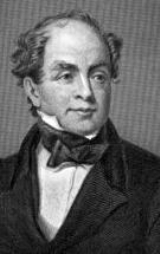
Thomas Moore (28 May 1779 – 25 February 1852) was an Irish poet, singer, songwriter, and entertainer, now best remembered for the lyrics of The Minstrel Boy
The Minstrel Boy

"The Minstrel Boy" is an Ireland patriotic song written by Thomas Moore who set it to the melody of The Moreen, an old Ireland air . It is widely believed that Moore composed the song in remembrance of a number of his friends, whom he met while studying at Trinity College, Dublin and who had participated in the Irish Rebellion of 1798 o...
 and the The Last Rose of Summer
The Last Rose of Summer

The Last Rose of Summer is a poem by Irish people poet Thomas Moore, who was a friend of George Byron, 6th Baron Byron and Percy Bysshe Shelley....
.

on the corner of Aungier Street in Dublin
Dublin

Dublin is both the largest city and capital of Republic of Ireland. It is located near the midpoint of Ireland's east coast, at the mouth of the River Liffey and at the centre of the Dublin Region....
, Ireland over his father's grocery shop, his father being from an Irish speaking Gaeltacht
Gaeltacht

is the Irish language word meaning an Irish-speaking region. In Republic of Ireland, The Gaeltacht, or An Ghaeltacht, refers to any of the districts where the government recognizes that the Irish language is the predominant language, that is, the vernacular spoken at home....
 in Kerry
County Kerry

County Kerry is a southwestern county in Republic of Ireland. Informally referred to as The Kingdom, it forms part of the provinces of Ireland of Munster....
 and his mother, Anastasia Codd, from Wexford
Wexford

Wexford is the county town of County Wexford in Republic of Ireland. It is situated near the south-eastern tip of Ireland, close to Rosslare Europort....
. He was educated at Trinity College
Trinity College, Dublin

Trinity College, Dublin , corporately designated as the Provost, Fellows and Scholars of the College of the Holy and Undivided Trinity of Queen Elizabeth near Dublin, was founded in 1592 by Queen Elizabeth I of England as the "mother of a university", and is the only constituent residential college of the University of Dublin....
, which had recently allowed entry to Catholic students and studied law at the Middle Temple
Middle Temple

The Honourable Society of the Middle Temple is one of the four Inns of Court exclusively entitled to call their members to the English Bar as barristers; the others being the Inner Temple, Gray's Inn and Lincoln's Inn....
 in London
London

London is the capital of both England and the United Kingdom, and the most populous municipality in the European Union. An important settlement for two millennia, History of London goes back to its founding by the Roman Empire....
.


Discussion
Ask a question about 'Thomas Moore'
Start a new discussion about 'Thomas Moore'
Answer questions from other users
Full Discussion Forum


Quotations


A Persian's heaven is easily made:'Tis but black eyes and lemonade.

Intercepted Letters; or The Two-Penny Post Bag, VI (1813)

And the best of all waysTo lengthen our daysIs to steal a few hours from the night, my dear!

The Young May Moon, st. 1

And the tear that we shed, though in secret it rolls,Shall long keep his memory green in our souls.

Oh Breathe Not His Name, st. 1

But there's nothing half so sweet in lifeAs love's young dream.

Love's Young Dream', st. 1

Eyes of unholy blue.

By That Lake Whose Gloomy Shore, st. 2

Faintly as tolls the evening chime,Our voices keep tune and our oars keep time.

Poems Relating to America. A Canadian Boat Song, st. 1


Encyclopedia


Thomas Moore (28 May 1779 – 25 February 1852) was an Irish poet, singer, songwriter, and entertainer, now best remembered for the lyrics of The Minstrel Boy
The Minstrel Boy

"The Minstrel Boy" is an Ireland patriotic song written by Thomas Moore who set it to the melody of The Moreen, an old Ireland air . It is widely believed that Moore composed the song in remembrance of a number of his friends, whom he met while studying at Trinity College, Dublin and who had participated in the Irish Rebellion of 1798 o...
 and the The Last Rose of Summer
The Last Rose of Summer

The Last Rose of Summer is a poem by Irish people poet Thomas Moore, who was a friend of George Byron, 6th Baron Byron and Percy Bysshe Shelley....
.

Biography

Born on the corner of Aungier Street in Dublin
Dublin

Dublin is both the largest city and capital of Republic of Ireland. It is located near the midpoint of Ireland's east coast, at the mouth of the River Liffey and at the centre of the Dublin Region....
, Ireland over his father's grocery shop, his father being from an Irish speaking Gaeltacht
Gaeltacht

is the Irish language word meaning an Irish-speaking region. In Republic of Ireland, The Gaeltacht, or An Ghaeltacht, refers to any of the districts where the government recognizes that the Irish language is the predominant language, that is, the vernacular spoken at home....
 in Kerry
County Kerry

County Kerry is a southwestern county in Republic of Ireland. Informally referred to as The Kingdom, it forms part of the provinces of Ireland of Munster....
 and his mother, Anastasia Codd, from Wexford
Wexford

Wexford is the county town of County Wexford in Republic of Ireland. It is situated near the south-eastern tip of Ireland, close to Rosslare Europort....
. He was educated at Trinity College
Trinity College, Dublin

Trinity College, Dublin , corporately designated as the Provost, Fellows and Scholars of the College of the Holy and Undivided Trinity of Queen Elizabeth near Dublin, was founded in 1592 by Queen Elizabeth I of England as the "mother of a university", and is the only constituent residential college of the University of Dublin....
, which had recently allowed entry to Catholic students and studied law at the Middle Temple
Middle Temple

The Honourable Society of the Middle Temple is one of the four Inns of Court exclusively entitled to call their members to the English Bar as barristers; the others being the Inner Temple, Gray's Inn and Lincoln's Inn....
 in London
London

London is the capital of both England and the United Kingdom, and the most populous municipality in the European Union. An important settlement for two millennia, History of London goes back to its founding by the Roman Empire....
. It was as a poet, translator, balladeer and singer that he found fame. His work soon became immensely popular and included The Harp That Once Through Tara’s Halls, Believe Me If All Those Endearing Young Charms, The Meeting of the Waters
River Avoca

The Avoca is a river in County Wicklow, Republic of Ireland. It is contained completely within the county.The Avoca starts life as two rivers, the River Avonmore and the River Avonbeg ....
 and many others. His ballads were published as Moore's Irish Melodies (commonly called Moore's Melodies) in 1846 and 1852.

Moore was far more than a balladeer, however. He had major success as a society figure in London
London

London is the capital of both England and the United Kingdom, and the most populous municipality in the European Union. An important settlement for two millennia, History of London goes back to its founding by the Roman Empire....
, and in 1803 was appointed registrar to the Admiralty
Admiralty

The Admiralty was formerly the authority in the United Kingdom responsible for the command of the Royal Navy. Originally exercised by a single person, the office of Lord High Admiral was from the 18th century onward almost invariably put "in commission", and was exercised by a Board of Admiralty....
 in Bermuda
Bermuda

Bermuda is a British overseas territory in the Atlantic Ocean. Located off the east coast of the United States, it is situated around 1770 kilometres northeast of Miami, Florida, and 1350 kilometres south of Halifax Regional Municipality, Canada....
. From there, he travelled in Canada and the United States. It was after this trip that he published his book, Epistles, Odes, and Other Poems, which featured a paean to the historic Cohoes Falls
Cohoes Falls

Cohoes Falls is a waterfall on the Mohawk River shared by Cohoes, New York and Waterford, New York, New York, United States. Discovered by the indigenous Mohawk tribe, the falls' original name was Ga-ha-oose, which is believed to mean "The Place of the Falling Canoe." Cohoes historian Arthur Masten also wrote in his 1880 history that the p...
 called Lines Written at the Cohos (sic), or Falls of the Mohawk River, among other famous verses. He returned to England and married an actress, Elizabeth "Bessy" Dyke, in 1811. Moore had expensive tastes, and, despite the large sums he was earning from his writing, soon got into debt, a situation which was exacerbated by the embezzlement of money by the man he had employed to deputise for him in Maine. Moore became liable for the £6000 which had been illegally appropriated. In 1819, he was forced to leave Britain -- in company with Lord John Russell
John Russell, 1st Earl Russell

John Russell, 1st Earl Russell, Order of the Garter, Order of St Michael and St George, Privy Council of the United Kingdom , known as Lord John Russell before 1861, was an England British Whig Party and Liberal Party politician who served twice as Prime Minister of the United Kingdom in the mid-19th century....
 -- and live in Paris
Paris

Paris is the Capital of France and the country's largest city. It is situated on the river Seine, in northern France, at the heart of the ?le-de-France Regions of France ....
 until 1822 (notably with the family of Martin de Villamil
Martin de Villamil

Felipe Martin de Villamil or Martin Villamil was a trader in the Caribbeans and in Europe....
), when the debt was finally paid off. Some of this time was spent with Lord Byron, whose literary executor
Literary executor

A literary executor is a person with decision-making power in respect of a literary estate.The literary estate of an author who has died will often consist mainly of the copyright and other intellectual property rights of published works, including for example film rights and translation rights....
 Moore became. He was much criticised later for allowing himself to be persuaded into destroying Byron's memoirs at the behest of Byron's family due to their damningly honest content. Moore did, however, edit and publish Letters and Journals of Lord Byron
George Gordon Byron, 6th Baron Byron

George Gordon Byron, later Noel, 6th Baron Byron Royal Society was a United Kingdom poet and a leading figure in Romanticism. Amongst Byron's best-known works are the brief poems She Walks in Beauty, When We Two Parted, and So, we'll go no more a roving, in addition to the narrative poems Childe Harold's Pilgrimage and...
, with Notices of his Life
(1830).

He finally settled in Sloperton Cottage at Bromham, Wiltshire
Bromham, Wiltshire

Bromham is a medium-sized village and civil parish in the England county of Wiltshire. Besides the main village of Bromham, there are five other settlements in the parish....
, England, and became a novelist and biographer as well as a successful poet. He received a state pension, but his personal life was dogged by tragedy including the untimely deaths of all of his five children within his lifetime and the suffering of a stroke in later life, which disabled him from performances - the activity at which he was most renowned. His remains are in the vault at St. Nicholas, Bromham.

Moore frequently visited Boyle Farm
Boyle Farm

Boyle Farm was the earlier name of the 'Home of Compassion', a mansion on the banks of the River Thames in Thames Ditton, Surrey. The house was built on the site of Forde's Farm by Charlotte Boyle Walsingham in the late 18th century....
 in Thames Ditton
Thames Ditton

Thames Ditton is a village in Surrey, England, bordering Greater London. It is situated 12.2 miles south-west of Charing Cross between the towns of Kingston upon Thames, Surbiton, Esher and East Molesey....
, Surrey
Surrey

Surrey is a counties of England in the South East England of England and is one of the Home Counties. The county borders Greater London, Kent, East Sussex, West Sussex, Hampshire, and Berkshire....
, as the guest of Lord Henry Fitzgerald
Lord Henry FitzGerald

Lord Henry FitzGerald was the fourth son of the James FitzGerald, 1st Duke of Leinster and the Lady Emily Lennox . A younger brother was the revolutionary Lord Edward FitzGerald....
 and his wife. One noteworthy occasion was the subject of Moore's long poem, 'The Summer Fete'.

Moore is considered Ireland's National Bard and is to it what Robert Burns is to Scotland. Moore is commemorated in several places; by a plaque on the house where he was born, a bust at The Meetings and one in Central Park, New York and by a large bronze statue near Trinity College Dublin.

  • Many composers have set the poems of Thomas Moore to music. They include Gaspare Spontini
    Gaspare Spontini

    Gaspare Luigi Pacifico Spontini was an Italy opera composer and conducting....
    , Robert Schumann
    Robert Schumann

    Robert Schumann, sometimes given as Robert Alexander Schumann, was a German composer, aesthete and influential music critic. He is one of the most famous Romantic music composers of the 19th century....
    , Hector Berlioz
    Hector Berlioz

    Louis Hector Berlioz was a French Romantic music composer and guitarist, best known for his compositions Symphonie fantastique and Requiem . Berlioz made great contributions to the modern orchestra with his Treatise on Instrumentation and by utilizing huge orchestral forces for his works; as a conductor, he performed several c...
    , Charles Ives
    Charles Ives

    Charles Edward Ives was an American musical modernism composer. He is widely regarded as one of the first American composers of international significance....
    , William Bolcom
    William Bolcom

    William Elden Bolcom is an United States composer and piano. He has received the Pulitzer Prize, the National Medal of Arts, three Grammy Awards, and the Detroit Music Award....
    , Lori Laitman
    Lori Laitman

    Lori Laitman is an acclaimed American composer of art songs that are performed widely in the United States and abroad. The Journal of Singing called her "one of the finest art song composers on the scene today, who deservedly stands shoulder to shoulder with Ned Rorem for her uncommon sensitivity to text, her loving attention to the human voi...
     and Benjamin Britten.


  • The song Believe Me If All Those Endearing Young Charms is often used in a famous gag in a number of Warner Brothers cartoons, usually involving a piano or Xylophone
    Xylophone

    The xylophone is a musical instrument in the percussion instrument family which probably originated in Slovakia. It consists of wooden bars of various lengths that are struck by plastic, wooden, or rubber drum stick#Malletss....
     rigged to explode when a certain note is played. The hero, typically Bugs Bunny
    Bugs Bunny

    Bugs Bunny is a fictional rabbit who appears in the Looney Tunes and Merrie Melodies series of animation films produced by Leon Schlesinger Productions, which became Warner Bros....
    , tries to play the melody line of the song, but always misses the rigged note (C above middle C). The villain or rival, finally exasperated, pushes the hero aside and plays the song himself, striking the correct note and blowing himself up. In one instance, however, the protagonist plays the melody on a xylophone and, upon striking the rigged note, the antagonist explodes in an "old gag, new twist."


List of Works

  • Odes of Anacreon (1800)
  • Poetical Works of the Late Thomas Little, Esq. (1801)
  • The Gypsy Prince (light opera; w/ Michael Kelly) (1801)
  • Epistles, Odes and Other Poems (1806)
  • A Selection of Irish Melodies, 1) and 2) (April 1808)
  • Corruption and Intolerance, Two Poems (1808)
  • The Sceptic: A Philosophical Satire (1809)
  • A Selection of Irish Melodies, 3) (January 1810)
  • A Letter to the Roman Catholics of Dublin (1810)
  • A Melologue upon National Music (1811)
  • M.P.: or, the Blue-Stocking, a Comic Opera (produced at the Lyceum 9 Sept) (1811)
  • A Selection of Irish Melodies, 4) (November, 1811)
  • Parody of a Celebrated Letter (privately printed and circulated; E, 8 March) (February, 1812)
  • To a Plumassier" ,Morning Chronicle
    Morning Chronicle

    'The Morning Chronicle' was a newspaper founded in 1769 in London, England, and published under various owners until 1862. It was most notable for having been the first employer of Charles Dickens, and for publishing the articles by Henry Mayhew which were collected and published in book format in 1861 as "London Labour and the London Po...
    , (16 March 1812)
  • Extracts from the Diary of a Fashionable Politician" ,Morning Chronicle
    Morning Chronicle

    'The Morning Chronicle' was a newspaper founded in 1769 in London, England, and published under various owners until 1862. It was most notable for having been the first employer of Charles Dickens, and for publishing the articles by Henry Mayhew which were collected and published in book format in 1861 as "London Labour and the London Po...
    , (30 March 1812)
  • The Insurrection of the Papers" ,Morning Chronicle
    Morning Chronicle

    'The Morning Chronicle' was a newspaper founded in 1769 in London, England, and published under various owners until 1862. It was most notable for having been the first employer of Charles Dickens, and for publishing the articles by Henry Mayhew which were collected and published in book format in 1861 as "London Labour and the London Po...
    , (23 April 1812)
  • Lines on the Death of Mr. P[e]rc[e]v[a]l" (May]], 1812)
  • The Sale of the Tools" ,Morning Chronicle
    Morning Chronicle

    'The Morning Chronicle' was a newspaper founded in 1769 in London, England, and published under various owners until 1862. It was most notable for having been the first employer of Charles Dickens, and for publishing the articles by Henry Mayhew which were collected and published in book format in 1861 as "London Labour and the London Po...
    , (21 December]], 1812)
  • Correspondence Between a Lady and a Gentleman ,Morning Chronicle
    Morning Chronicle

    'The Morning Chronicle' was a newspaper founded in 1769 in London, England, and published under various owners until 1862. It was most notable for having been the first employer of Charles Dickens, and for publishing the articles by Henry Mayhew which were collected and published in book format in 1861 as "London Labour and the London Po...
    , (6 January 1813)
  • Intercepted Letters, or, the Two-Penny Post-Bag (March, 1813)
  • Reinforcements for Lord Wellington,Morning Chronicle
    Morning Chronicle

    'The Morning Chronicle' was a newspaper founded in 1769 in London, England, and published under various owners until 1862. It was most notable for having been the first employer of Charles Dickens, and for publishing the articles by Henry Mayhew which were collected and published in book format in 1861 as "London Labour and the London Po...
    , (27 August 1813)
  • A Selection of Irish Melodies, 5) (December, 1813)
  • A Collection of the Vocal Music of Thomas Moore (1814)
  • A Selection of Irish Melodies, 6) (March, 1815)
  • Sacred Songs, 1)
  • Lines on the Death of Sheridan ,Morning Chronicle
    Morning Chronicle

    'The Morning Chronicle' was a newspaper founded in 1769 in London, England, and published under various owners until 1862. It was most notable for having been the first employer of Charles Dickens, and for publishing the articles by Henry Mayhew which were collected and published in book format in 1861 as "London Labour and the London Po...
    , (June, 1816)
  • Lalla Rookh, an Oriental Romance (May, 1817)
  • The Fudge Family in Paris (20 April 1818)
  • National Airs, 1) (23 April 1818)
  • To the Ship in which Lord C[A]ST[LE]R[EA]GH Sailed for the Continent ,Morning Chronicle
    Morning Chronicle

    'The Morning Chronicle' was a newspaper founded in 1769 in London, England, and published under various owners until 1862. It was most notable for having been the first employer of Charles Dickens, and for publishing the articles by Henry Mayhew which were collected and published in book format in 1861 as "London Labour and the London Po...
    , (22 September 1818)
  • Lines on the Death of Joseph Atkinson, Esq. of Dublin(25 September 1818)
  • Go, Brothers in Wisdom ,Morning Chronicle
    Morning Chronicle

    'The Morning Chronicle' was a newspaper founded in 1769 in London, England, and published under various owners until 1862. It was most notable for having been the first employer of Charles Dickens, and for publishing the articles by Henry Mayhew which were collected and published in book format in 1861 as "London Labour and the London Po...
    , (18 August 1818)
  • To Sir Hudson Lowe , Examiner
    Examiner

    The Examiner was a weekly paper founded by James Henry Leigh Hunt and John Hunt in 1808.John Forster became the magazine's literary editor in 1835, and succeeded Albany Fonblanque as editor from 1847 to 1855....
    ,(4 October 1818)
  • A Selection of Irish Melodies, 7) (October, 1818)
  • The Works of Thomas Moore (6 vols.) (1819)
  • Tom Crib's Memorial to Congress (January, 1819)
  • National Airs, 2) (1820)
  • Irish Melodies, with a Melologue upon National Music (1820)
  • A Selection of Irish Melodies, 8)(1821)
  • Irish Melodies, with an Appendix, containing the original advertisements and the prefatory letter on music (1821)
  • National Airs, 3) (June, (1822)
  • National Airs, 4) (1822)
  • The Loves of the Angels, a Poem (23 December 1822)
  • The Loves of the Angels, an Eastern Romance (5th ed. of Loves of the Angels) (1823)
  • Fables for the Holy Alliance, Rhymes on the Road, &c. &c. (7 May 1823)
  • Sacred Songs, 2) (1824)
  • A Selection of Irish Melodies, 9) (1 November 1824)
  • Memoirs of Captain Rock (9 April 1824)
  • Memoirs of the Life of Richard Brinsley Sheridan (2 vols.) (1825)
  • National Airs, 5) (1826)
  • Evenings in Greece, 1) (1826)
  • A Dream of Turtle, Times
    Times

    The Times is a UK daily newspaper. Times may also refer to:In newspapers:*The Times , a Chicago newspaper group*The Times *The Times , Louisiana...
    , (28 September, (1826)
  • The Epicurean, a Tale (1827)
  • National Airs, 6) (1827)
  • A Set of Glees (1827)
  • Odes upon Cash, Corn, Catholics, and other Matters (1828)
  • Letters & Journals of Lord Byron, with Notices of his Life (vol. 1) (15 January 1830)
  • Legendary Ballads (1830)
  • Letters & Journals of Lord Byron, with Notices of his Life (vol. 2) (January, 1831)
  • The Life and Death of Lord Edward Fitzgerald (2 vols.) (1831)
  • The Summer Fete (1831)
  • Evenings in Greece, 2) (1832)
  • Irish Antiquities, Times
    Times

    The Times is a UK daily newspaper. Times may also refer to:In newspapers:*The Times , a Chicago newspaper group*The Times *The Times , Louisiana...
    , (5 March 1832)
  • From the Hon. Henry ---, to Lady Emma ---, Times
    Times

    The Times is a UK daily newspaper. Times may also refer to:In newspapers:*The Times , a Chicago newspaper group*The Times *The Times , Louisiana...
    , (9 April 1832)
  • To Caroline, Viscountess Valletort, Metropolitan
    Metropolitan

    Metropolitan may refer to:* A metropolis* A metropolitan area* Metropolitan bishop or archbishop, leader of an ecclesiastical 'mother see'* Rapid transit system in an urban area ....
    , (June, 1832)
  • Ali's Bride... , Metropolitan
    Metropolitan

    Metropolitan may refer to:* A metropolis* A metropolitan area* Metropolitan bishop or archbishop, leader of an ecclesiastical 'mother see'* Rapid transit system in an urban area ....
    , (August, 1832)
  • Verses to the Poet Crabbe's Inkstand, Metropolitan
    Metropolitan

    Metropolitan may refer to:* A metropolis* A metropolitan area* Metropolitan bishop or archbishop, leader of an ecclesiastical 'mother see'* Rapid transit system in an urban area ....
    , (August, 1832)
  • Tory Pledges, Times
    Times

    The Times is a UK daily newspaper. Times may also refer to:In newspapers:*The Times , a Chicago newspaper group*The Times *The Times , Louisiana...
    , (30 August 1832)
  • Song to the Departing Spirit of Tithe, Metropolitan
    Metropolitan

    Metropolitan may refer to:* A metropolis* A metropolitan area* Metropolitan bishop or archbishop, leader of an ecclesiastical 'mother see'* Rapid transit system in an urban area ....
    , (September, 1832)
  • The Duke is the Lad, Times
    Times

    The Times is a UK daily newspaper. Times may also refer to:In newspapers:*The Times , a Chicago newspaper group*The Times *The Times , Louisiana...
    , (2 October 1832)
  • St. Jerome on Earth, First Visit, Times
    Times

    The Times is a UK daily newspaper. Times may also refer to:In newspapers:*The Times , a Chicago newspaper group*The Times *The Times , Louisiana...
    , (29 October 1832)
  • St. Jerome on Earth, Second Visit, Times
    Times

    The Times is a UK daily newspaper. Times may also refer to:In newspapers:*The Times , a Chicago newspaper group*The Times *The Times , Louisiana...
    , (12 November 1832)
  • Travels of an Irish Gentleman in Search of a Religion (2 vols.) (1833)
  • To the Rev. Charles Overton", Times
    Times

    The Times is a UK daily newspaper. Times may also refer to:In newspapers:*The Times , a Chicago newspaper group*The Times *The Times , Louisiana...
    , (6 November 1833)
  • Irish Melodies, 10) with Supplement (1834)
  • Vocal Miscellany, 1) (1834)
  • The Numbering of the Clergy, Examiner
    Examiner

    The Examiner was a weekly paper founded by James Henry Leigh Hunt and John Hunt in 1808.John Forster became the magazine's literary editor in 1835, and succeeded Albany Fonblanque as editor from 1847 to 1855....
    , (5 October 1834)
  • Vocal Miscellany, 2) 1835
  • The Fudge Family in England 1835
  • The History of Ireland (vol.1) 1835
  • The History of Ireland (vol. 2) 1837
  • The Song of the Box ,Morning Chronicle
    Morning Chronicle

    'The Morning Chronicle' was a newspaper founded in 1769 in London, England, and published under various owners until 1862. It was most notable for having been the first employer of Charles Dickens, and for publishing the articles by Henry Mayhew which were collected and published in book format in 1861 as "London Labour and the London Po...
    , (19 February 1838)
  • Sketch of the First Act of a New Romantic Drama ,Morning Chronicle
    Morning Chronicle

    'The Morning Chronicle' was a newspaper founded in 1769 in London, England, and published under various owners until 1862. It was most notable for having been the first employer of Charles Dickens, and for publishing the articles by Henry Mayhew which were collected and published in book format in 1861 as "London Labour and the London Po...
    , (22 March 1838)
  • Thoughts on Patrons, Puffs, and Other Matters(Bentley's Miscellany), 1839
  • Alciphron, a Poem, 1839
  • The History of Ireland (vol. 3) ,1840
  • The Poetical Works of Thomas Moore. Collected by himself (10 vols.) (1840-1841)
  • Thoughts on Mischief,Morning Chronicle
    Morning Chronicle

    'The Morning Chronicle' was a newspaper founded in 1769 in London, England, and published under various owners until 1862. It was most notable for having been the first employer of Charles Dickens, and for publishing the articles by Henry Mayhew which were collected and published in book format in 1861 as "London Labour and the London Po...
    , (2 May 1840)
  • Religion and Trade,Morning Chronicle
    Morning Chronicle

    'The Morning Chronicle' was a newspaper founded in 1769 in London, England, and published under various owners until 1862. It was most notable for having been the first employer of Charles Dickens, and for publishing the articles by Henry Mayhew which were collected and published in book format in 1861 as "London Labour and the London Po...
    , (1 June 1840)
  • An Account of an Extraordinary Dream,Morning Chronicle
    Morning Chronicle

    'The Morning Chronicle' was a newspaper founded in 1769 in London, England, and published under various owners until 1862. It was most notable for having been the first employer of Charles Dickens, and for publishing the articles by Henry Mayhew which were collected and published in book format in 1861 as "London Labour and the London Po...
    , (15 June 1840)
  • The Retreat of the Scorpion,Morning Chronicle
    Morning Chronicle

    'The Morning Chronicle' was a newspaper founded in 1769 in London, England, and published under various owners until 1862. It was most notable for having been the first employer of Charles Dickens, and for publishing the articles by Henry Mayhew which were collected and published in book format in 1861 as "London Labour and the London Po...
    , (16 July 1840)
  • Musings, suggested by the Late Promotion of Mrs. Nethercoat,Morning Chronicle
    Morning Chronicle

    'The Morning Chronicle' was a newspaper founded in 1769 in London, England, and published under various owners until 1862. It was most notable for having been the first employer of Charles Dickens, and for publishing the articles by Henry Mayhew which were collected and published in book format in 1861 as "London Labour and the London Po...
    , (27 August 1840)
  • The Triumphs of Farce ,1840
  • Latest Accounts from Olympus ,1840
  • A Threnody on the Approaching Demise of Old Mother Corn-Law, Morning Chronicle
    Morning Chronicle

    'The Morning Chronicle' was a newspaper founded in 1769 in London, England, and published under various owners until 1862. It was most notable for having been the first employer of Charles Dickens, and for publishing the articles by Henry Mayhew which were collected and published in book format in 1861 as "London Labour and the London Po...
     (23 February 1842)
  • Sayings and Doings of Ancient Nicholas, Morning Chronicle
    Morning Chronicle

    'The Morning Chronicle' was a newspaper founded in 1769 in London, England, and published under various owners until 1862. It was most notable for having been the first employer of Charles Dickens, and for publishing the articles by Henry Mayhew which were collected and published in book format in 1861 as "London Labour and the London Po...
     (7 April 1842)
  • "More Sayings and Doings of Ancient Nicholas,Morning Chronicle
    Morning Chronicle

    'The Morning Chronicle' was a newspaper founded in 1769 in London, England, and published under various owners until 1862. It was most notable for having been the first employer of Charles Dickens, and for publishing the articles by Henry Mayhew which were collected and published in book format in 1861 as "London Labour and the London Po...
    , (12 May 1842)
  • The History of Ireland (vol. 4) (1846)


External links