
All Topics  
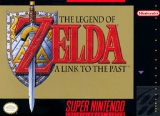
The Legend of Zelda: A Link to the Past

 
The Legend of Zelda: A Link To the Past

   Email Print
   Bookmark   Link


The Legend of Zelda: A Link to the Past


, is an action-adventure
Action-adventure game

An action-adventure game is a video game that combines elements of the adventure game computer and video game genres with various action game elements....
 video game developed and published by Nintendo
Nintendo

is a global company located in Kyoto, Japan founded on September 23, 1889 by Fusajiro Yamauchi to produce handmade hanafuda cards. By 1963, the company had tried several small niche businesses, such as a cab company and a love hotel....
 for the Super Nintendo Entertainment System
Super Nintendo Entertainment System

The Super Nintendo Entertainment System or Super NES is a History of video game consoles video game console that was released by Nintendo in North America, Europe, Australasia , and South America between 1990 and 1993....
 video game console
Video game console

A video game console is an game development that produces a video signal which can be used with a display device to display a video game. The term "video game console" is used to distinguish a machine designed for consumers to buy and use solely for playing video games from a personal computer, which has many other functions, or arcade machi...
, and the third installment in The Legend of Zelda series. It was first released in Japan in 1991, and was later released in North America and Europe in 1992. Shigeru Miyamoto
Shigeru Miyamoto

is a Japanese people video game designer. He created the Mario , Donkey Kong , The Legend of Zelda , F-Zero , Pikmin and Nintendogs franchises for Nintendo game consoles, and mostly works on games as a Game producer....
 and his team were solely responsible for this game's development.

A Link to the Pasts plot focuses on Link as he travels on a journey to save Hyrule, defeat Ganon
Ganon

, also known as in his human form, is a Character and the main antagonist of several games in Nintendo's The Legend of Zelda . He is the most commonly recurring antagonist in the series, frequently appearing as the final Boss ....
 and rescue the seven descendants of the Sages.


Discussion
Ask a question about 'The Legend of Zelda: A Link to the Past'
Start a new discussion about 'The Legend of Zelda: A Link to the Past'
Answer questions from other users
Full Discussion Forum


Quotations


Double, double toil and trouble, fire burn and cauldron bubble... Making mushroom brew, I am... ~Witch


Encyclopedia


, is an action-adventure
Action-adventure game

An action-adventure game is a video game that combines elements of the adventure game computer and video game genres with various action game elements....
 video game developed and published by Nintendo
Nintendo

is a global company located in Kyoto, Japan founded on September 23, 1889 by Fusajiro Yamauchi to produce handmade hanafuda cards. By 1963, the company had tried several small niche businesses, such as a cab company and a love hotel....
 for the Super Nintendo Entertainment System
Super Nintendo Entertainment System

The Super Nintendo Entertainment System or Super NES is a History of video game consoles video game console that was released by Nintendo in North America, Europe, Australasia , and South America between 1990 and 1993....
 video game console
Video game console

A video game console is an game development that produces a video signal which can be used with a display device to display a video game. The term "video game console" is used to distinguish a machine designed for consumers to buy and use solely for playing video games from a personal computer, which has many other functions, or arcade machi...
, and the third installment in The Legend of Zelda series. It was first released in Japan in 1991, and was later released in North America and Europe in 1992. Shigeru Miyamoto
Shigeru Miyamoto

is a Japanese people video game designer. He created the Mario , Donkey Kong , The Legend of Zelda , F-Zero , Pikmin and Nintendogs franchises for Nintendo game consoles, and mostly works on games as a Game producer....
 and his team were solely responsible for this game's development.

A Link to the Pasts plot focuses on Link as he travels on a journey to save Hyrule, defeat Ganon
Ganon

, also known as in his human form, is a Character and the main antagonist of several games in Nintendo's The Legend of Zelda . He is the most commonly recurring antagonist in the series, frequently appearing as the final Boss ....
 and rescue the seven descendants of the Sages. A Link to the Past uses a top-down perspective
Top-down perspective

Top-down perspective, also sometimes referred to as bird's-eye view, overhead view or helicopter view, is a camera angle used in computer and video games that shows the player and the area around them from above....
 similar to that of the original The Legend of Zelda
The Legend of Zelda

is a video game designed by Shigeru Miyamoto and developed and published by Nintendo. Set in the fantasy land of Universe of The Legend of Zelda#Hyrule, the plot centers on a boy named Link , the playable protagonist, who aims to rescue Princess Zelda from the primary antagonist, Ganon, by collecting eight fragments of the Universe of The Legend o...
. It added mechanics and concepts to the series that have become commonplace, including multi-level dungeons and new equipment (such as the hookshot and the Pegasus Boots). It was well-received since its release, and has been listed by GameSpot
GameSpot

GameSpot is a video game website that provides news, reviews, previews, downloads, and other information. The site was launched in May 1996 by Pete Deemer and Vince Broady....
 as one of the best installments of the series, as well as one of the greatest games of all time. To date, A Link to the Past has sold more than four million copies, and has been re-released for the Game Boy Advance
Game Boy Advance

The is a 32-bit Handheld game console developed, manufactured and marketed by Nintendo; resembling Sega's 8-bit Game Gear. It is the successor to the Game Boy Color....
 and the Wii
Wii

The Wii is a home video game console released by Nintendo. As a History of video game consoles console, the Wii primarily competes with Microsoft's Xbox 360 and Sony's PlayStation 3....
's Virtual Console
Virtual console

In computing, some operating systems such as UnixWare, Linux and BSD, feature a virtual console ? a conceptual combination of the keyboard and the display for a user interface....
.

Gameplay

Instead of continuing to use the side-scrolling perspective introduced to the series by Zelda II: The Adventure of Link
Zelda II: The Adventure of Link

is an action role-playing game developed and published by Nintendo for the Nintendo Entertainment System, and it is the second installment in The Legend of Zelda video game series....
, A Link to the Past reverts to an overhead perspective similar to that of the original. Despite using mechanics and concepts from the original, A Link to the Past introduces new elements and innovations. For instance, arrows are now separate items, as bombs are in the original, instead of using a Rupee to fire an arrow. A Link to the Past also takes concepts from The Adventure of Link, such as the magic meter, which is used by items such as the Lamp. Control of Link is more flexible than in previous games, as he can walk diagonally and can run with the aid of the Pegasus Shoes, an obtainable item. Link's sword attack was improved to swing sideways instead of merely stabbing forward; this gives his sword a broader range and makes combat easier. Link swings his sword as the default attack in future Zelda games, although stabbing is also possible in the later 3D
3D computer graphics

3D computer graphics are graphics that use a Cartesian coordinate system#Three-dimensional coordinate system representation of geometric data that is stored in the computer for the purposes of performing calculations and rendering 2D images....
 incarnations.

Recurring items and techniques were introduced for the first time in A Link to the Past, such as the Hookshot, the Master Sword, the Spin Attack technique, Ocarina, and the Pegasus Boots. Heart Containers that increase the player's maximum health
Health (game mechanic)

Health is a game mechanic used in computer game and video games to give value to player character, enemies, non-player character, and related objects....
 (hit points) in the earlier two games are present, but many are split into "Pieces of Heart", four of which comprise one Heart Container. Most of them are well hidden, adding replay value to the game. Many dungeons are multi-level, requiring Link to walk between floors and sometimes fall through holes to land on lower levels.

A Link to the Past is the first appearance of what would subsequently become a major Zelda trademark: the existence of two parallel worlds between which the player travels. The first, called the Light World, is the ordinary Hyrule where Link grew up with his uncle. The second is what was once the Sacred Realm, but became the Dark World when Ganon
Ganon

, also known as in his human form, is a Character and the main antagonist of several games in Nintendo's The Legend of Zelda . He is the most commonly recurring antagonist in the series, frequently appearing as the final Boss ....
 acquired the Triforce. The Dark World is a corrupted version of Hyrule; the water is a dark, unpleasant green colour, the grass is dead, skulls replace rocks and pots, and trees have faces. People change forms in the Dark World based on their nature; without an item to prevent it (in this case, the Moon Pearl), Link turns into a pink rabbit. Each location in the Light World corresponds to a similar location in the Dark World, usually with a similar physical structure but an opposite nature (e.g. a desert in the Light World corresponds to a swamp in the Dark World).

Link can travel from the Dark World to the Light World at almost any outside location by using a magic mirror (and back again from the same location using the portal
Portal (fiction)

A portal in fiction is a magical or technology doorway that connects two distant locations.Portals are a common concept in science fiction and fantasy fiction....
 left where he reappears in the Light World). There are also hidden warp locations throughout the Light World. This enables puzzles that exploit slight differences between the Light and Dark Worlds.

Synopsis


Characters

Players play as Link
Link (Legend of Zelda)

is a Character and the main protagonist in Nintendo's The Legend of Zelda of video games. Created by Shigeru Miyamoto, The Legend of Zelda is one of Nintendo's core franchises, and has sold over 47 million copies worldwide as of 2007....
 in A Link to the Past. He is a young boy living with his uncle in a house, south of Hyrule Castle. One night, he is telepathically contacted by Princess Zelda
Princess Zelda

is a Character in The Legend of Zelda of video games. She is a member of Universe of The Legend of Zelda#Hyrule's royal family and plays an integral role in Hyrule's history....
, a descendant of the seven sages who banished Ganon
Ganon

, also known as in his human form, is a Character and the main antagonist of several games in Nintendo's The Legend of Zelda . He is the most commonly recurring antagonist in the series, frequently appearing as the final Boss ....
 to the Golden Realm, and she pleads for his help rescuing her from the evil wizard, Agahnim. After his uncle fails to return from his own attempt to save Zelda, Link goes to the castle himself, and after escaping with Zelda he begins a quest to stop Agahnim. Link meets other helpful souls during his quest, such as Sahasrahla, a descendant of the sages that forged the Master Sword. Sahasrahla advises Link to find the Master Sword, and also speaks telepathically to Link to guide him through the game's various dungeons.

Plot

According to the text on the back of the game's packaging (US version), A Link to the Past precedes the events of the NES games The Legend of Zelda
The Legend of Zelda

is a video game designed by Shigeru Miyamoto and developed and published by Nintendo. Set in the fantasy land of Universe of The Legend of Zelda#Hyrule, the plot centers on a boy named Link , the playable protagonist, who aims to rescue Princess Zelda from the primary antagonist, Ganon, by collecting eight fragments of the Universe of The Legend o...
 and The Adventure of Link
Zelda II: The Adventure of Link

is an action role-playing game developed and published by Nintendo for the Nintendo Entertainment System, and it is the second installment in The Legend of Zelda video game series....
. This was contradicted by a 1998 interview with Zelda creator Shigeru Miyamoto
Shigeru Miyamoto

is a Japanese people video game designer. He created the Mario , Donkey Kong , The Legend of Zelda , F-Zero , Pikmin and Nintendogs franchises for Nintendo game consoles, and mostly works on games as a Game producer....
 (English translation), in which he stated: "Ocarina of Time is the first story, then the original The Legend of Zelda, then Zelda II: The Adventure of Link, and finally A Link to the Past."

At the beginning of A Link to the Past, a young boy named Link is awakened by a telepathic
Telepathy

Telepathy describes the purported transfer of information on thoughts or feelings between individuals by means other than the Senses#Five classical senses ....
 message from Princess Zelda
Princess Zelda

is a Character in The Legend of Zelda of video games. She is a member of Universe of The Legend of Zelda#Hyrule's royal family and plays an integral role in Hyrule's history....
, who says that she is locked in the dungeon of Hyrule Castle. As the message closes, Link finds his uncle ready for battle, telling Link to remain in bed. After his uncle leaves, however, Link ignores his uncle's command and follows him to Hyrule Castle. When he arrives, he finds his uncle seriously wounded. Link's uncle tells Link to rescue Princess Zelda from her prison, giving him a sword and shield. After his uncle passes out, Link navigates the castle and rescues Zelda from her cell, and the two escape into a secret passage through the sewers that leads to a sanctuary.

Link is told by a man in the sanctuary that Agahnim
Recurring characters in The Legend of Zelda series

This is a list of fictional recurring characters in The Legend of Zelda , a series of video games developed by Nintendo....
, a wizard who has usurped the throne, is planning to break a seal made hundreds of years ago by the Seven Sages. The seal was placed to imprison a dark wizard named Ganon
Ganon

, also known as in his human form, is a Character and the main antagonist of several games in Nintendo's The Legend of Zelda . He is the most commonly recurring antagonist in the series, frequently appearing as the final Boss ....
 in the Dark World, which was once the Sacred Realm before Ganon invaded, obtained the legendary Triforce and used its power to turn the realm into a land of darkness. Agahnim intends to break the seal by sending the descendants of the Seven Sages who made the seal into the Dark World. The only thing that can defeat him is the Master Sword, a sword forged to combat evil. To prove that he is worthy to wield it, Link needs three magic pendants. After retrieving the pendants, Link takes them to the resting place of the Master Sword. As Link draws the sword from its pedestal, Zelda telepathically calls him to the Sanctuary, informing him that soldiers of Hyrule Castle have arrived. Link arrives at the Sanctuary moments after the soldiers have vacated, where he learns from the dying man that Zelda has been taken to Hyrule Castle. Link goes to rescue her but arrives too late; Agahnim sends Zelda to the Dark World. Link then defeats Agahnim in battle but is subsequently also sent to the Dark World.

To save Hyrule, Link is required to rescue the seven descendants of the Seven Sages from dungeons scattered across the Dark World. Once the seven maidens are freed, they use their power to break the barrier around Ganon's Tower, where Link faces Agahnim again. After Link battles Agahnim for a second time, Ganon rises up from Agahnim's body, turns into a bat, and flies away. Link chases him, finally confronting him inside the Pyramid of Power in the Dark World. After a battle resulting in Ganon's demise, Link touches the Triforce and restores Hyrule to how it was before Ganon intervened.

Development

In 1988, development of a new NES
Nintendo Entertainment System

The Nintendo Entertainment System is an 8-bit video game console that was released by Nintendo in North America, Europe and Australia in . In most of Asia, including Japan , the Philippines, China, Vietnam and Singapore, it was released as the ....
 Zelda began, but one year later, the project was brought to Nintendo
Nintendo

is a global company located in Kyoto, Japan founded on September 23, 1889 by Fusajiro Yamauchi to produce handmade hanafuda cards. By 1963, the company had tried several small niche businesses, such as a cab company and a love hotel....
's next console; the Super Famicom in Japan, the Super Nintendo Entertainment System
Super Nintendo Entertainment System

The Super Nintendo Entertainment System or Super NES is a History of video game consoles video game console that was released by Nintendo in North America, Europe, Australasia , and South America between 1990 and 1993....
 in other regions. (In the early 2000s, a beta cartridge for the NES Zelda III was announced on eBay
EBay

eBay Inc. is an United States Internet company that manages eBay.com, an online auction and shopping website in which people and businesses buy and sell goods and services worldwide....
, but later proved to be a hoax.) Due to the success of previous titles in the series, Nintendo was able to invest a large budget and ample development time and resources into the game's production.

At the time, most SNES game cartridges had 4 Mbit (512 KB) of memory. This game broke the trend by using 8 Mbit (1 MB), allowing the Nintendo development team to create a remarkably expansive world for Link to inhabit. Like Super Mario World
Super Mario World

is a platform game developed and published by Nintendo as a pack-in game launch title for the Super Nintendo Entertainment System. It has gone on to become a tremendous critical and commercial success, becoming the best seller for the platform, with 20 million copies sold worldwide....
, this game used a simple graphic compression
Data compression

In computer science and information theory, data compression or source coding is the process of encoding information using fewer bits than an code representation would use through use of specific encoding schemes....
 method on the SNES
Super Nintendo Entertainment System

The Super Nintendo Entertainment System or Super NES is a History of video game consoles video game console that was released by Nintendo in North America, Europe, Australasia , and South America between 1990 and 1993....
 by limiting the color depth of many tiles to eight colors instead of the SNES's native 16-color tiles. The tiles were decompressed at runtime by adding a leading bit to each pixel's color index. Memory was also saved by eliminating duplication: The Light World and the Dark World are almost identical, and reverse engineering of the game's ROM contents has revealed that only the differences were saved; otherwise, they would have needed to wait for a 16 Mbit ROM.

The English language
English language

English is a West Germanic language that originated in Anglo-Saxon England and has lingua franca status in many parts of the world as a result of the military, economic, scientific, political and cultural influence of the British Empire in the 18th, 19th and early 20th centuries and that of the United States from the mid 20th century onwa...
 localization included changes to the original Japanese game. The most common change was the removal of religious references to conform with Nintendo of America's content guidelines
Video games censored by Nintendo of America

Nintendo of America has gained notoriety for its formerly strict censorship policy, particularly with regard to video games bearing religious symbols , violence, profanity and so forth....
. The most obvious change was made to the subtitle of the game, which was changed from Triforce of the Gods to A Link to the Past. The font used to represent an unreadable language, Hylian, originally had designs of a vulture and an ankh
Ankh

The ankh was the Egyptian hieroglyphic character that read "eternal life", a triliteral sign for the consonants Ayin-Nun -?a'. Egyptian gods are often portrayed carrying it by its loop, or bearing one in each hand, arms crossed over their chest....
. These designs were based on Egyptian hieroglyphs
Egyptian hieroglyphs

Egyptian hieroglyphs was a formal writing system used by the ancient Egyptians that contained a combination of logographic and alphabetic elements....
 which carry religious meanings, and they were altered in the English version. The localization also changed plot details included in the instruction manual. The priest
Priest

A priest or priestess is a person having the authority or power to administer religious rites; in particular, rites of sacrifice to, and propitiation of, a deity or deities....
 Agahnim became a wizard, and his background, which originally implied that he was sent by the gods, was altered to remove any celestial origin.

Music


The score to A Link to the Past was composed by Koji Kondo
Koji Kondo

is a Japanese composer and musician best known for his scores for various video games produced by Nintendo....
. The overworld
Overworld

File:Pokemon gb ashandpikachu.pngIn video games, the term overworld refers to a top-down view or a Perspective #Film, television and video games of the fictional world within the game....
 theme of The Legend of Zelda ("Hyrule Overture") returns in A Link to the Past, redone in SPC700
SPC700

The Sony SPC700 is the 8-bit sound integrated circuit designed by Ken Kutaragi and used in the Super Famicom/Super Nintendo Entertainment System video game console together with a digital signal processor....
 style. The theme is also featured in "Light World Overworld" and in "End Credits". A Link to the Past helped to establish the musical core of the Zelda series. While the first game originated the "Hyrule Overture", many recurring motifs of the Zelda scores come from A Link to the Past, including "Zelda's Lullaby" (Princess Zelda's Theme), "Ganondorf's Theme", "Hyrule Castle" (Royal Family Theme), "Kakariko Village" and "Select Screen / Fairy Cave". These themes have been used in subsequent The Legend of Zelda games.

A soundtrack
Soundtrack

The term soundtrack refers to three related concepts: recorded music accompanying and synchronized to the images of a motion picture, television program or video game; a commercially released soundtrack album of music as featured in the soundtrack of a film or TV show; and the physical area of a film that contains the synchronized recorded so...
 to A Link to the Past, entitled The Legend of Zelda: Sound and Drama, was released in Japan. Disc one is 44 minutes long and features rearranged versions of a selection of the game's themes, along with a bonus drama track. Disc two is 54 minutes of the original arrangements for the game and those of the original NES
Nintendo Entertainment System

The Nintendo Entertainment System is an 8-bit video game console that was released by Nintendo in North America, Europe and Australia in . In most of Asia, including Japan , the Philippines, China, Vietnam and Singapore, it was released as the ....
 game, The Legend of Zelda
The Legend of Zelda

is a video game designed by Shigeru Miyamoto and developed and published by Nintendo. Set in the fantasy land of Universe of The Legend of Zelda#Hyrule, the plot centers on a boy named Link , the playable protagonist, who aims to rescue Princess Zelda from the primary antagonist, Ganon, by collecting eight fragments of the Universe of The Legend o...
. Music from this game was remixed for Super Smash Bros. Brawl
Super Smash Bros. Brawl

, is the third installment in the Super Smash Bros. series of gaming crossover fighting games, developed by Sora Ltd. and published by Nintendo for the Wii video game console....
.

Reception

A Link to the Past is one of the best-selling SNES games, with 4.61 million units sold worldwide, and has had an exceptionally long stay on Nintendo Power
Nintendo Power

Nintendo Power magazine is a monthly news and strategy magazine formerly published in-house by Nintendo. As of issue #222 , Nintendo contracted publishing duties to Future US....
s top games list: when the SNES list was finally retired, A Link to the Past had more than five consecutive years in the number one spot. It was re-released as a Player's Choice
Player's Choice

Player's Choice is a marketing label used by Nintendo to promote video games on Nintendo game consoles which have sold well; Player's Choice titles are sold at a lower price point than other games....
 title in North America, indicating that it has sold a minimum of one million copies there.

A Link to the Past was critically acclaimed upon release for its graphics and gameplay, and has since been recognized by critics as one of the greatest video games of all time. In 2005, IGN editors placed it 11th in its "Top 100 Games", while readers voted it to 5th place. The following year Entertainment Weekly
Entertainment Weekly

Entertainment Weekly is a magazine published by Time Inc. in the United States which covers movies, television, music, Broadway stage productions, books, and popular culture....
 chose it as the best game of all-time. Members of GameFAQs
GameFAQs

GameFAQs is a website that hosts FAQs and walkthroughs for video games. It was created in November 1995 by Jeff "CJayC" Veasey and was bought by CNET Networks in May 2003....
 ranked it the 4th best, and readers of Japanese magazine Famitsu
Famitsu

is a Japanese video game magazine published by Enterbrain, Inc. and Tokuma Shoten. Currently, there are five console-only spin-off versions of Famitsu: Shukan Famitsu, Famitsu PS, Famitsu Xbox, Famitsu Wii+DS, and Famitsu Wave DVD....
 ranked it 31st in a 2006 poll. It also placed 3rd in Electronic Gaming Monthly
Electronic Gaming Monthly

Electronic Gaming Monthly was an United States video game magazine. It was published by Ziff Davis as part of the 1UP.com Network and released 12 issues a year ....
's list, 23rd in GameInformers, and 3rd in a best 200 Nintendo games list by Nintendo Power
Nintendo Power

Nintendo Power magazine is a monthly news and strategy magazine formerly published in-house by Nintendo. As of issue #222 , Nintendo contracted publishing duties to Future US....
. In July 2007, readers of the magazine Edge
Edge (magazine)

Edge is a multi-format computer and video game magazine published by Future Publishing in the United Kingdom. It is known for its industry contacts, editorial stance, distinctive anonymous third-person writing style, yearly awards, and longevity....
 voted it sixth in a poll of the 100 best games of all time. ScrewAttack
ScrewAttack

ScrewAttack is a video game-related website that showcases original entertainment for an audience of video game enthusiasts. Its content is also shown on GameTrailers and IGN....
 placed it 2nd on their list of top 20 Super Nintendo games. It was awarded Best Sequel of 1992 by Electronic Gaming Monthly
Electronic Gaming Monthly

Electronic Gaming Monthly was an United States video game magazine. It was published by Ziff Davis as part of the 1UP.com Network and released 12 issues a year ....
. The game placed eighth (the second-highest Zelda game on the list) in Official Nintendo Magazines "100 greatest Nintendo games of all time" list.

Legacy


Comics

A comic book
Comic book

A comic book is a magazine or book of narrative artwork and dialog and descriptive prose. The style was introduced in 1934. Despite the term, comic books do not necessarily feature humorous subject-matter; in fact, it is often serious and action-oriented....
 miniseries by Shotaro Ishinomori
Shotaro Ishinomori

was an influential figure in manga, anime and tokusatsu who created several immensely popular long-running series such as Cyborg 009 and the Kamen Rider Series....
 based on A Link to the Past appeared in Nintendo Power
Nintendo Power

Nintendo Power magazine is a monthly news and strategy magazine formerly published in-house by Nintendo. As of issue #222 , Nintendo contracted publishing duties to Future US....
 beginning in January 1992 and ran for 12 issues. Many portions of the game were omitted, and new story segments were added. In the manga, a new character named Roam was introduced who was a knight with the ability to take on an avian
Avian

Avian may refer to:* Bird* Avian , an American metal band* Avians, a fantasy race in several fantasy settings...
 form. While at first meeting Link as an enemy, the two quickly became allies and joined forces to help defeat Ganon.

Two other manga were released only in Japan: a three-volume manga by Ataru Cagiva (which previously adapted Link's Awakening), from 1995 to 1996 and a four-volume manga by the duo Akira Himekawa (which adapted Ocarina of Time, Majora's Mask, and Four Swords Adventures) released in 2005, following the plot of the Game Boy Advance version. Both follow the game's plot more closely, and the latter introduced a new character called "Ganty", a thief with a single devil's horn and a star under her eye.

Re-releases and sequels

On December 2, 2006 in Japan and January 22, 2007 in America, the game was added to the Wii Shop Channel
Wii Shop Channel

The Wii Shop Channel is an online shop for the Wii video game console that allows users to download Virtual Console and WiiWare games, extra game content, and new channels....
's Virtual Console. Players can download the game for 800 Wii Points
Wii Points

Nintendo Points is a currency that Nintendo uses for its Wii and Nintendo DSi consoles through the Wii Shop Channel and/or the DSi Shop, respectively....
, or US$
United States dollar

The United States dollar is the unit of currency of the United States and was defined by the Coinage Act of 1792 to be between 371 and 416 grains of silver ....
8. It is nearly identical to the SNES version, with none of the GBA additions or changes, though the Chris Houlihan room has been renamed the Top Secret Room.

The next Zelda title, Link's Awakening
The Legend of Zelda: Link's Awakening

The Legend of Zelda: Link's Awakening, known in Japan as , is an action-adventure game developed and published by Nintendo for the Game Boy handheld console....
 was released in 1993 for the Nintendo Game Boy
Game Boy

The is an 8-bit handheld game console developed and manufactured by Nintendo. It was released in Japan on , in North America in August , and in Europe in ....
. It retained many of A Link to the Pasts gameplay mechanics, including the top-down perspective. After traveling to train abroad, Link is shipwrecked and awakens on an island called Koholint.

A Link to the Past had one more follow-up, though it was only released in Japan. BS Zelda no Densetsu Kodai no Sekiban, often translated as "BS The Legend of Zelda: Ancient Stone Tablets" (or "Stone Tablets of Antiquity"). It was exclusively released for the Super Famicom's Satellaview
Satellaview

The was a satellite modem add-on for Nintendo's Super Nintendo Entertainment System system in Japan released in 1995. It retailed for Japanese yen18,000 ....
 peripheral and featured a voice broadcast system called Live Voice. The game takes place at around the same time as Link's Awakening since Link is on his journey. The game notably lacks a Link character, and instead the player characters are known as the Heroes of Light. They are actually the male and female Broadcast Satellaview mascots, which were previously in BS Zelda no Densetsu. Kodai no Sekiban was released in 1997.

In 1998 a simple unaltered re-release of the original Japanese version of A Link to the Past was broadcast via Satellaview under the name BS Zelda no Densetsu: Kamigami no Triforce. Unlike the two other Satellaview Zelda titles, Kamigami no Triforce lacked Live Voice support.

A Link to the Past/Four Swords

A Link to the Past was re-released for the Game Boy Advance
Game Boy Advance

The is a 32-bit Handheld game console developed, manufactured and marketed by Nintendo; resembling Sega's 8-bit Game Gear. It is the successor to the Game Boy Color....
 in 2002 in North America and 2003 in other countries as part of The Legend of Zelda: A Link to the Past/Four Swords (. It was developed jointly between Nintendo R&D2
Nintendo Research & Development 2

Nintendo Research and Development 2 was a team within Nintendo that developed software and peripherals. R&D2 did not develop any software titles for the first decade at Nintendo....
 and Flagship
Flagship (company)

Flagship was an independent Japan video game developer funded by Capcom, Nintendo and Sega that was founded by game designer Yoshiki Okamoto. Flagship has often created scenarios for new and existing products, and has video game developer for Nintendo several times recently on the Game Boy Color and Game Boy Advance....
, who had developed Oracle of Seasons and Oracle of Ages for the Game Boy Color
Game Boy Color

The is Nintendo's successor to the Game Boy and was released on October 21, 1998 in Japan and in November 19, 1998 in North America and November 23, 1998 in Europe....
 in 2001. The cartridge contains a port
Porting

In computer science, porting is the process of adapting software so that an executable Computer program can be created for a computing environment that is different from the one for which it was originally designed ....
 of A Link to the Past and a multiplayer-only game called Four Swords.

The port of A Link to the Past contains minor changes from the original, including the addition of vocal grunts and other sound effects taken from Ocarina of Time
The Legend of Zelda: Ocarina of Time

is an Action-adventure game video game developed by Nintendo's Nintendo Entertainment Analysis and Development division for the Nintendo 64 video game console....
 and Majora's Mask
The Legend of Zelda: Majora's Mask

is an action-adventure game developed by Nintendo Entertainment Analysis and Development and published by Nintendo for the Nintendo 64. It was released in Japan on April 27, 2000; in North America on October 26, 2000; and in Europe on November 17, 2000....
. Four Swords is a multi-player adventure that interacts with the single-player adventure. Accomplishments can be transferred between the two; for example, if the player learns a new sword technique, it is made available in both modes. By completing Four Swords, a new dungeon called the Palace of the Four Sword is unlocked in A Link to the Past. Dungeons are randomly generated and are affected by the number of players. If only two players are active, the game ensures that all puzzles generated do not require a third or fourth player to solve.

Four Swords was followed in 2004 by Four Swords Adventures
The Legend of Zelda: Four Swords Adventures

The Legend of Zelda: Four Swords Adventures, known in Japan as , is a video game in Nintendo's The Legend of Zelda . It was released for the Nintendo GameCube in Japan on March 18, 2004; in North America on June 7, 2004; in Europe on January 7, 2005; and in Australia on April 7, 2005....
 for the Nintendo GameCube
Nintendo GameCube

The , is Nintendo's fourth home video game console and is part of the History of video game consoles . It is the successor to the Nintendo 64 and predecessor to Nintendo's Wii....
. It continued the story and expanded upon the gameplay concepts while including a single-player adventure. The Four Swords prequel The Minish Cap
The Legend of Zelda: The Minish Cap

is the twelfth game in The Legend of Zelda of video games, developed by Flagship , with Nintendo overseeing the development process. It was released for the Game Boy Advance in 2004 in video gaming in Japan and Europe and 2005 in video gaming in North America....
, developed by Flagship for the Game Boy Advance, was released in 2005. A sequel was planned for the Nintendo DS
Nintendo DS

The is a dual-screen handheld game console developed and manufactured by Nintendo. It was released in 2004 in video gaming in Canada, the United States, and Japan....
 under the working title The Legend of Zelda: Four Swords DS
The Legend of Zelda: Phantom Hourglass

is the fourteenth game in Nintendo's The Legend of Zelda and a direct sequel to The Legend of Zelda: The Wind Waker. It is an action-adventure game developed by Nintendo Entertainment Analysis and Development and published by Nintendo for the Nintendo DS....
, but was canceled so that Eiji Aonuma
Eiji Aonuma

is a Japanese Game designer#Video game designer and video game director. He currently works for Nintendo, and has overseen several installments in The Legend of Zelda of video games....
 began development on The Legend of Zelda: Phantom Hourglass
The Legend of Zelda: Phantom Hourglass

is the fourteenth game in Nintendo's The Legend of Zelda and a direct sequel to The Legend of Zelda: The Wind Waker. It is an action-adventure game developed by Nintendo Entertainment Analysis and Development and published by Nintendo for the Nintendo DS....
.

The game received positive reviews and sold over 1.81 million units. IGN
IGN

IGN is a multimedia news and reviews website that focuses heavily on video games. Its corporate parent is IGN Entertainment, which owns and controls separate sites such as GameSpy, GameStats, Rotten Tomatoes and AskMen....
 praised it for being a faithful conversion of the original, but noted that the audio did not sound as crisp on the Game Boy Advance, and found the frequent sound effects tiresome. The game holds the top spot of Metacritic
Metacritic

Metacritic is a website that collates reviews of music albums, console game, film, television program, DVDs, and books. For each product, a numerical score from each review is obtained and the total is averaged....
's all-time high scores for Game Boy Advance games with a score of 95. In 2007, IGN named A Link to the Past & Four Swords the third best Game Boy Advance game of all time.

External links

  • ** has a line-by-line comparison of the game versions*