
Home      Discussion      Topics      Dictionary      Almanac
Signup       Login
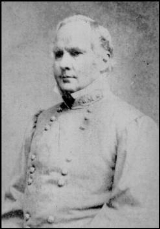
Sterling Price

Sterling Price

Overview
Sterling Price was a lawyer
Lawyer
A lawyer, according to Black's Law Dictionary, is "a person learned in the law; as an attorney, counsel or solicitor; a person who is practicing law." Law is the system of rules of conduct established by the sovereign government of a society to correct wrongs, maintain the stability of political...

, planter
Plantations in the American South
Plantations were an important aspect of the history of the American South, particularly the antebellum .-Planter :The owner of a plantation was called a planter...

, and politician
Politician
A politician, political leader, or political figure is an individual who is involved in influencing public policy and decision making...

 from the U.S. state
U.S. state
A U.S. state is any one of the 50 federated states of the United States of America that share sovereignty with the federal government. Because of this shared sovereignty, an American is a citizen both of the federal entity and of his or her state of domicile. Four states use the official title of...

 of Missouri
Missouri
Missouri is a US state located in the Midwestern United States, bordered by Iowa, Illinois, Kentucky, Tennessee, Arkansas, Oklahoma, Kansas and Nebraska. With a 2010 population of 5,988,927, Missouri is the 18th most populous state in the nation and the fifth most populous in the Midwest. It...

, who served as the 11th Governor of the state from 1853 to 1857. He also served as a United States Army
United States Army
The United States Army is the main branch of the United States Armed Forces responsible for land-based military operations. It is the largest and oldest established branch of the U.S. military, and is one of seven U.S. uniformed services...

 brigadier general
Brigadier General
Brigadier general is a senior rank in the armed forces. It is the lowest ranking general officer in some countries, usually sitting between the ranks of colonel and major general. When appointed to a field command, a brigadier general is typically in command of a brigade consisting of around 4,000...

 during the Mexican-American War, and a Confederate Army
Confederate States Army
The Confederate States Army was the army of the Confederate States of America while the Confederacy existed during the American Civil War. On February 8, 1861, delegates from the seven Deep South states which had already declared their secession from the United States of America adopted the...

 major general in the American Civil War
American Civil War
The American Civil War was a civil war fought in the United States of America. In response to the election of Abraham Lincoln as President of the United States, 11 southern slave states declared their secession from the United States and formed the Confederate States of America ; the other 25...

. Price is best known for his victories in New Mexico
New Mexico
New Mexico is a state located in the southwest and western regions of the United States. New Mexico is also usually considered one of the Mountain States. With a population density of 16 per square mile, New Mexico is the sixth-most sparsely inhabited U.S...

 and Chihuahua during the Mexican conflict, and for his losses at the Battles of Pea Ridge
Battle of Pea Ridge
The Battle of Pea Ridge was a land battle of the American Civil War, fought on March 6–8, 1862, at Pea Ridge in northwest Arkansas, near Garfield. In the battle, Union forces led by Brig. Gen. Samuel R. Curtis defeated Confederate troops under Maj. Gen. Earl Van Dorn. The outcome of the...

 and Westport
Battle of Westport
The Battle of Westport, sometimes referred to as the "Gettysburg of the West," was fought on October 23, 1864, in modern Kansas City, Missouri, during the American Civil War. Union forces under Major General Samuel R. Curtis decisively defeated an outnumbered Confederate force under Major General...

 during the Civil War–the latter being the culmination of his ill-fated Missouri Campaign of 1864. Following the war, Price took his remaining troops to Mexico
Mexico
The United Mexican States , commonly known as Mexico , is a federal constitutional republic in North America. It is bordered on the north by the United States; on the south and west by the Pacific Ocean; on the southeast by Guatemala, Belize, and the Caribbean Sea; and on the east by the Gulf of...

 rather than surrender, unsuccessfully seeking service with the Emperor Maximillian there. He ultimately returned to Missouri, where he died in poverty and was buried in St. Louis
St. Louis, Missouri
St. Louis is an independent city on the eastern border of Missouri, United States. With a population of 319,294, it was the 58th-largest U.S. city at the 2010 U.S. Census. The Greater St...

.
Discussion
Ask a question about 'Sterling Price'
Start a new discussion about 'Sterling Price'
Answer questions from other users
Full Discussion Forum
 
Unanswered Questions
Recent Discussions
Encyclopedia
Sterling Price was a lawyer
Lawyer
A lawyer, according to Black's Law Dictionary, is "a person learned in the law; as an attorney, counsel or solicitor; a person who is practicing law." Law is the system of rules of conduct established by the sovereign government of a society to correct wrongs, maintain the stability of political...

, planter
Plantations in the American South
Plantations were an important aspect of the history of the American South, particularly the antebellum .-Planter :The owner of a plantation was called a planter...

, and politician
Politician
A politician, political leader, or political figure is an individual who is involved in influencing public policy and decision making...

 from the U.S. state
U.S. state
A U.S. state is any one of the 50 federated states of the United States of America that share sovereignty with the federal government. Because of this shared sovereignty, an American is a citizen both of the federal entity and of his or her state of domicile. Four states use the official title of...

 of Missouri
Missouri
Missouri is a US state located in the Midwestern United States, bordered by Iowa, Illinois, Kentucky, Tennessee, Arkansas, Oklahoma, Kansas and Nebraska. With a 2010 population of 5,988,927, Missouri is the 18th most populous state in the nation and the fifth most populous in the Midwest. It...

, who served as the 11th Governor of the state from 1853 to 1857. He also served as a United States Army
United States Army
The United States Army is the main branch of the United States Armed Forces responsible for land-based military operations. It is the largest and oldest established branch of the U.S. military, and is one of seven U.S. uniformed services...

 brigadier general
Brigadier General
Brigadier general is a senior rank in the armed forces. It is the lowest ranking general officer in some countries, usually sitting between the ranks of colonel and major general. When appointed to a field command, a brigadier general is typically in command of a brigade consisting of around 4,000...

 during the Mexican-American War, and a Confederate Army
Confederate States Army
The Confederate States Army was the army of the Confederate States of America while the Confederacy existed during the American Civil War. On February 8, 1861, delegates from the seven Deep South states which had already declared their secession from the United States of America adopted the...

 major general in the American Civil War
American Civil War
The American Civil War was a civil war fought in the United States of America. In response to the election of Abraham Lincoln as President of the United States, 11 southern slave states declared their secession from the United States and formed the Confederate States of America ; the other 25...

. Price is best known for his victories in New Mexico
New Mexico
New Mexico is a state located in the southwest and western regions of the United States. New Mexico is also usually considered one of the Mountain States. With a population density of 16 per square mile, New Mexico is the sixth-most sparsely inhabited U.S...

 and Chihuahua during the Mexican conflict, and for his losses at the Battles of Pea Ridge
Battle of Pea Ridge
The Battle of Pea Ridge was a land battle of the American Civil War, fought on March 6–8, 1862, at Pea Ridge in northwest Arkansas, near Garfield. In the battle, Union forces led by Brig. Gen. Samuel R. Curtis defeated Confederate troops under Maj. Gen. Earl Van Dorn. The outcome of the...

 and Westport
Battle of Westport
The Battle of Westport, sometimes referred to as the "Gettysburg of the West," was fought on October 23, 1864, in modern Kansas City, Missouri, during the American Civil War. Union forces under Major General Samuel R. Curtis decisively defeated an outnumbered Confederate force under Major General...

 during the Civil War–the latter being the culmination of his ill-fated Missouri Campaign of 1864. Following the war, Price took his remaining troops to Mexico
Mexico
The United Mexican States , commonly known as Mexico , is a federal constitutional republic in North America. It is bordered on the north by the United States; on the south and west by the Pacific Ocean; on the southeast by Guatemala, Belize, and the Caribbean Sea; and on the east by the Gulf of...

 rather than surrender, unsuccessfully seeking service with the Emperor Maximillian there. He ultimately returned to Missouri, where he died in poverty and was buried in St. Louis
St. Louis, Missouri
St. Louis is an independent city on the eastern border of Missouri, United States. With a population of 319,294, it was the 58th-largest U.S. city at the 2010 U.S. Census. The Greater St...

.

Early life and career


Sterling "Old Pap" Price was born near Farmville
Farmville, Virginia
Farmville is a town in Prince Edward and Cumberland counties in the U.S. state of Virginia. The population was 6,845 at the 2000 census. It is the county seat of Prince Edward County....

, in Prince Edward County
Prince Edward County, Virginia
Prince Edward County is a county located in the Commonwealth of Virginia. As of 2010, the population was 23,368. Its county seat is Farmville.-Formation and County Seats:...

, Virginia
Virginia
The Commonwealth of Virginia , is a U.S. state on the Atlantic Coast of the Southern United States. Virginia is nicknamed the "Old Dominion" and sometimes the "Mother of Presidents" after the eight U.S. presidents born there...

, into a family of Welsh origin. His mother was Elizabeth Williamson, and his father was Pugh Price, whose ancestor John Price was born in Brecknock, Wales
Wales
Wales is a country that is part of the United Kingdom and the island of Great Britain, bordered by England to its east and the Atlantic Ocean and Irish Sea to its west. It has a population of three million, and a total area of 20,779 km²...

, in 1584 and settled in the Virginia Colony. Price attended Hampden-Sydney College
Hampden-Sydney College
Hampden–Sydney College is a liberal arts college for men located in Hampden Sydney, Virginia, United States. Founded in 1775, Hampden–Sydney is the oldest private charter college in the Southern U.S., the last college founded before the American Revolution, and one of only three four-year,...

 in 1826 and 1827, where he studied law and worked at the courthouse near his home. He was admitted to the Virginia bar
Bar (law)
Bar in a legal context has three possible meanings: the division of a courtroom between its working and public areas; the process of qualifying to practice law; and the legal profession.-Courtroom division:...

 and established a law practice.

In the fall of 1831, Price and his family moved to Fayette, Missouri
Fayette, Missouri
Fayette is a city in Howard County, Missouri, United States. The population was 2,793 at the 2000 census. It is the county seat of Howard County. It is in the Columbia, Missouri Metropolitan Statistical Area.-Geography:...

. A year later, he moved to Keytesville, Missouri
Keytesville, Missouri
Keytesville is a town in Chariton County, Missouri, United States. The population was 533 at the 2000 census. It is the county seat of Chariton County.-Geography:...

, where he ran a hotel
Hotel
A hotel is an establishment that provides paid lodging on a short-term basis. The provision of basic accommodation, in times past, consisting only of a room with a bed, a cupboard, a small table and a washstand has largely been replaced by rooms with modern facilities, including en-suite bathrooms...

 and mercantile. On May 14, 1833, Price married Martha Head from Randolph County, Missouri. They had seven children, five of whom survived to adulthood; Edwin Williamson, Herber, Celsus, Martha Sterling, and Quintus.

During the Mormon War of 1838, Price served as a member of a delegation sent from Chariton County, Missouri
Chariton County, Missouri
Chariton County is a county located in the U.S. state of Missouri. As of 2000, the population was 8,438. Its county seat is Keytesville. The county was organized in 1820 from part of Howard County and was named from the Chariton River.-History:...

 to investigate reported disturbances between Latter-day Saints and anti-Mormon mobs operating in the western part of the state. His report was favorable to the Mormons, stating that they were not guilty, in his opinion, of the charges levied against them by their enemies. Following the Mormon capitulation in November 1838, Price was ordered by Missouri governor Lilburn Boggs
Lilburn Boggs
Lilburn Williams Boggs was the sixth Governor of Missouri from 1836 to 1840. He is now most widely remembered for his interactions with Joseph Smith and Porter Rockwell, and Missouri Executive Order 44, known by Mormons as the "Extermination Order", issued in response to the ongoing conflict...

 to Caldwell County with a company of men to protect the Saints from further depredations following their surrender. He was elected to the Missouri State House of Representatives from 1836–1838, and again from 1840–1844, and was chosen as its speaker. He was then elected as a Democrat
Democratic Party (United States)
The Democratic Party is one of two major contemporary political parties in the United States, along with the Republican Party. The party's socially liberal and progressive platform is largely considered center-left in the U.S. political spectrum. The party has the lengthiest record of continuous...

 to the 29th United States Congress
29th United States Congress
-House of Representatives:During this congress, two House seats were added for each of the new states of Texas and Iowa.-Leadership:-Senate:* President: George M. Dallas * President pro tempore: Willie P. Mangum...

, serving from March 4, 1845, to August 12, 1846, when he resigned from the House
United States House of Representatives
The United States House of Representatives is one of the two Houses of the United States Congress, the bicameral legislature which also includes the Senate.The composition and powers of the House are established in Article One of the Constitution...

 to participate in the Mexican-American War.

Mexican-American War


Price raised the Second Regiment, Missouri Mounted Volunteer Cavalry and was appointed its colonel
Colonel (United States)
In the United States Army, Air Force, and Marine Corps, colonel is a senior field grade military officer rank just above the rank of lieutenant colonel and just below the rank of brigadier general...

 on August 12, 1846. He marched his regiment
Regiment
A regiment is a major tactical military unit, composed of variable numbers of batteries, squadrons or battalions, commanded by a colonel or lieutenant colonel...

 with that of Alexander Doniphan to Santa Fe
Santa Fe, New Mexico
Santa Fe is the capital of the U.S. state of New Mexico. It is the fourth-largest city in the state and is the seat of . Santa Fe had a population of 67,947 in the 2010 census...

, where he assumed command of the Territory of New Mexico after his superior, Gen. Stephen W. Kearny
Stephen W. Kearny
Stephen Watts Kearny surname also appears as Kearney in some historic sources; August 30, 1794 October 31, 1848), was one of the foremost antebellum frontier officers of the United States Army. He is remembered for his significant contributions in the Mexican-American War, especially the conquest...

, departed for California. Price served as military governor of New Mexico
New Mexico
New Mexico is a state located in the southwest and western regions of the United States. New Mexico is also usually considered one of the Mountain States. With a population density of 16 per square mile, New Mexico is the sixth-most sparsely inhabited U.S...

, where he put down the Taos Revolt
Taos Revolt
The Taos Revolt was a popular insurrection in January 1847 by Mexicans and Pueblo allies against the United States' occupation of present-day northern New Mexico during the Mexican–American War. In two short campaigns, United States troops and militia crushed the rebellion of the Mexicans and...

, an uprising of Native Americans
Native Americans in the United States
Native Americans in the United States are the indigenous peoples in North America within the boundaries of the present-day continental United States, parts of Alaska, and the island state of Hawaii. They are composed of numerous, distinct tribes, states, and ethnic groups, many of which survive as...

 and Mexicans in January 1847.

President
President of the United States
The President of the United States of America is the head of state and head of government of the United States. The president leads the executive branch of the federal government and is the commander-in-chief of the United States Armed Forces....

 James K. Polk
James K. Polk
James Knox Polk was the 11th President of the United States . Polk was born in Mecklenburg County, North Carolina. He later lived in and represented Tennessee. A Democrat, Polk served as the 17th Speaker of the House of Representatives and the 12th Governor of Tennessee...

 promoted Price to brigadier general
Brigadier general (United States)
A brigadier general in the United States Army, Air Force, and Marine Corps, is a one-star general officer, with the pay grade of O-7. Brigadier general ranks above a colonel and below major general. Brigadier general is equivalent to the rank of rear admiral in the other uniformed...

 of volunteers on July 20, 1847. Price was named as military governor of Chihuahua that same month, and commanded 300 men from his Army of the West
Army of the West (1846)
The Army of the West was the name of the United States force commanded by Stephen W. Kearny during the Mexican-American War, which played a prominent role in the conquest of New Mexico and California....

 at the Battle of Santa Cruz de Rosales
Battle of Santa Cruz de Rosales
The Battle of Santa Cruz de Rosales was an engagement of the Mexican-American War that took place after the Treaty of Guadalupe Hidalgo had been signed.-Background:...

 on March 16, 1848, where he defeated a Mexican force three times his size. The battle was the last battle of the war, taking place days after the Treaty of Guadalupe Hidalgo
Treaty of Guadalupe Hidalgo
The Treaty of Guadalupe Hidalgo is the peace treaty, largely dictated by the United States to the interim government of a militarily occupied Mexico City, that ended the Mexican-American War on February 2, 1848...

 had been ratified by the United States Congress on March 10. Although reprimanded by Secretary of War William L. Marcy
William L. Marcy
William Learned Marcy was an American statesman, who served as U.S. Senator and the 11th Governor of New York, and as the U.S. Secretary of War and U.S. Secretary of State.-Early life:...

 for his action and ordered to return with his army to New Mexico, Price was never court-martialed or otherwise punished; he was honorably discharged on November 25, 1848, and went home to Missouri a hero.

Governor of Missouri


Back in his home state, Price became a slave owner
Slavery
Slavery is a system under which people are treated as property to be bought and sold, and are forced to work. Slaves can be held against their will from the time of their capture, purchase or birth, and deprived of the right to leave, to refuse to work, or to demand compensation...

, and farmed tobacco
Tobacco
Tobacco is an agricultural product processed from the leaves of plants in the genus Nicotiana. It can be consumed, used as a pesticide and, in the form of nicotine tartrate, used in some medicines...

 on the Bowling Green
Bowling Green, Missouri
Bowling Green is a city in Pike County, Missouri, United States. The population was 3,260 at the 2000 census. It is the county seat of Pike County.Ameren's Peno Creek Power Plant, a combustion turbine generator power plant, is located in Bowling Green....

 prairie. Popular due to his war service, he was easily elected Governor of Missouri, serving from 1853 to 1857. During his tenure, Washington University in St. Louis
Washington University in St. Louis
Washington University in St. Louis is a private research university located in suburban St. Louis, Missouri. Founded in 1853, and named for George Washington, the university has students and faculty from all fifty U.S. states and more than 110 nations...

 was established, the state's public school system was restructured, the Missouri State Teachers Association was first initiated, the railroad network was expanded and a state geological survey
Geological survey
The term geological survey can be used to describe both the conduct of a survey for geological purposes and an institution holding geological information....

 was created. Although the state legislature passed an act during his tenure to increase the governor's salary, he refused to accept any more remuneration than he had been receiving prior to the law's adoption. After the expiration of his term, Price became the state's Bank Commissioner from 1857 to 1861. He also secured construction of a railroad through his home county, which now forms part of the Norfolk and Western Railway
Norfolk and Western Railway
The Norfolk and Western Railway , a US class I railroad, was formed by more than 200 railroad mergers between 1838 and 1982. It had headquarters in Roanoke, Virginia for most of its 150 year existence....

.

Civil War service


Early months


At the beginning of the Civil War, Price was personally opposed to secession
Secession
Secession is the act of withdrawing from an organization, union, or especially a political entity. Threats of secession also can be a strategy for achieving more limited goals.-Secession theory:...

. He was elected presiding officer of the Missouri State Convention on February 28, 1861, which voted against the state leaving the Union. Things changed drastically, however, when Francis Preston Blair, Jr.
Francis Preston Blair, Jr.
Francis Preston Blair, Jr. was an American politician and Union Army general during the American Civil War. He represented Missouri in both the House of Representatives and the Senate, and he was the Democratic Party's nominee for Vice President in 1868.-Early life and career:Blair was born in...

 and Brig. Gen. Nathaniel Lyon
Nathaniel Lyon
Nathaniel Lyon was the first Union general to be killed in the American Civil War and is noted for his actions in the state of Missouri at the beginning of the conflict....

 seized the state militia's Camp Jackson
Camp Jackson
Camp Jackson may refer to:* Camp Jackson a post located near Ione, Amador County, California during the American Civil War* Initial name for Fort Jackson, a US Army base in South Carolina...

 at St. Louis
St. Louis, Missouri
St. Louis is an independent city on the eastern border of Missouri, United States. With a population of 319,294, it was the 58th-largest U.S. city at the 2010 U.S. Census. The Greater St...

. Outraged by this act, Price threw in his lot with the Southerners, and was assigned by pro-Confederate Governor Claiborne Fox Jackson
Claiborne Fox Jackson
Claiborne Fox Jackson was a lawyer, soldier, and Democratic politician from Missouri. He was the 15th Governor of Missouri in 1861, then governor-in-exile for the Confederacy during the American Civil War.-Early life:...

 to command the newly reformed Missouri State Guard
Missouri State Guard
The Missouri State Guard was a state militia organized in the state of Missouri during the early days of the American Civil War. While not initially a formal part of the Confederate States Army, the State Guard fought alongside Confederate troops and, at times, under regular Confederate...

 in May 1861, leading his young recruits (who affectionately nicknamed him "Old Pap") in a campaign to secure Missouri for the Confederacy. One of the major engagements in this endeavor was fought at Lexington
Battle of Lexington I
The First Battle of Lexington also known as the Battle of the Hemp Bales, was an engagement of the American Civil War, occurring from September 13 to September 20, 1861, between the Union Army and the pro-Confederate Missouri State Guard, in Lexington, the county seat of Lafayette County, Missouri...

, where Price defeated Colonel James A. Mulligan
James A. Mulligan
James A. Mulligan was colonel of the 23rd Illinois Volunteer Infantry Regiment in the Union Army during the American Civil War. On February 20, 1865, the United States Senate confirmed the posthumous award to Colonel Mulligan of the rank of brevet brigadier general of U.S...

's Union force in the "battle of the hemp bales" and secured the city for the South—albeit only temporarily, as it turned out. An even greater victory was won by Price at the Battle of Wilson's Creek
Battle of Wilson's Creek
The Battle of Wilson's Creek, also known as the Battle of Oak Hills, was fought on August 10, 1861, near Springfield, Missouri, between Union forces and the Missouri State Guard, early in the American Civil War. It was the first major battle of the war west of the Mississippi River and is sometimes...

, which resulted in Lyon's death and temporary Confederate ascendancy in southwestern Missouri. However, growing Union numbers and power in the state ultimately negated his triumph.

Pea Ridge, Iuka, and Corinth


Still operating as a Missouri militia general (rather than as a commissioned Confederate officer), Price was unable to agree with his Wilson's Creek colleague, Brigadier General Benjamin McCulloch
Benjamin McCulloch
Benjamin McCulloch was a soldier in the Texas Revolution, a Texas Ranger, a U.S. marshal, and a brigadier general in the army of the Confederate States during the American Civil War.-Early life:...

, as to how to proceed following the battle; this led to the splitting of what might otherwise have become a sizable Confederate force in the West. Price and McCullough became bitter rivals, leading to the ultimate appointment of Maj. Gen. Earl Van Dorn
Earl Van Dorn
Earl Van Dorn was a career United States Army officer, fighting with distinction during the Mexican-American War and against several tribes of Native Americans...

 as overall commander of the Trans-Mississippi district. Van Dorn reunited Price's and McCullough's formations into a force he named the Army of the West, and set out to engage Unionist troops in Missouri under the command of Brig. Gen. Samuel R. Curtis. Now under Van Dorn's command, Price was commissioned in the Confederate States Army
Confederate States Army
The Confederate States Army was the army of the Confederate States of America while the Confederacy existed during the American Civil War. On February 8, 1861, delegates from the seven Deep South states which had already declared their secession from the United States of America adopted the...

 as a major general on March 6, 1862.

Outnumbering Curtis's forces, Van Dorn attacked the Northern army at Pea Ridge
Battle of Pea Ridge
The Battle of Pea Ridge was a land battle of the American Civil War, fought on March 6–8, 1862, at Pea Ridge in northwest Arkansas, near Garfield. In the battle, Union forces led by Brig. Gen. Samuel R. Curtis defeated Confederate troops under Maj. Gen. Earl Van Dorn. The outcome of the...

 on March 7–8. Although wounded in the fray, Price pushed Curtis's force back at Elkhorn Tavern
Elkhorn Tavern
Elkhorn Tavern is a two-story, wood-frame structure that served as a physical epicenter for the American Civil War Battle of Pea Ridge, also known as the Battle of Elkhorn Tavern, which was fought on March 7 and March 8, 1862, approximately five miles east of Pea Ridge, Arkansas, located in the...

 on the March 7, only to see the battle lost on the following day after a furious Federal counterattack. Price next crossed the Mississippi River
Mississippi River
The Mississippi River is the largest river system in North America. Flowing entirely in the United States, this river rises in western Minnesota and meanders slowly southwards for to the Mississippi River Delta at the Gulf of Mexico. With its many tributaries, the Mississippi's watershed drains...

 to reinforce Gen. P. G. T. Beauregard
P. G. T. Beauregard
Pierre Gustave Toutant Beauregard was a Louisiana-born American military officer, politician, inventor, writer, civil servant, and the first prominent general of the Confederate States Army during the American Civil War. Today he is commonly referred to as P. G. T. Beauregard, but he rarely used...

's army at Corinth, Mississippi
Corinth, Mississippi
Corinth is a city in Alcorn County, Mississippi, United States. The population was 14,054 at the 2000 census. It is the county seat of Alcorn County. Its ZIP codes are 38834 and 38835.- History :...

. Price was able to seize the Union supply depot at nearby Iuka
Iuka, Mississippi
Iuka is a city in Tishomingo County, Mississippi, United States. The population was 3,059 at the 2000 census. It is the county seat of Tishomingo County. Woodall Mountain, the highest point in Mississippi, is located just south of Iuka.- History :...

, but was driven back by Maj. Gen. William S. Rosecrans at the Battle of Iuka
Battle of Iuka
The Battle of Iuka was fought on September 19, 1862, in Iuka, Mississippi, during the American Civil War. In the opening battle of the Iuka-Corinth Campaign, Union Maj. Gen. William S. Rosecrans stopped the advance of the army of Confederate Maj. Gen. Sterling Price.Maj. Gen. Ulysses S...

 on September 19, 1862. A few weeks later, on October 3–4, Price (under Van Dorn's command once more) was defeated with Van Dorn at the Second Battle of Corinth
Second Battle of Corinth
The Second Battle of Corinth was fought October 3–4, 1862, in Corinth, Mississippi. For the second time in the Iuka-Corinth Campaign, Union Maj. Gen. William S...

.

Van Dorn was replaced by Maj. Gen. John C. Pemberton
John C. Pemberton
John Clifford Pemberton , was a career United States Army officer who fought in the Seminole Wars and with distinction during the Mexican–American War. He also served as a Confederate general during the American Civil War, noted for his defeat and surrender in the critical Siege of Vicksburg in...

, and Price, who had become thoroughly disgusted with Van Dorn and was eager to return to Missouri, obtained a leave to visit Richmond
Richmond, Virginia
Richmond is the capital of the Commonwealth of Virginia, in the United States. It is an independent city and not part of any county. Richmond is the center of the Richmond Metropolitan Statistical Area and the Greater Richmond area...

, the Confederate capital. There, he obtained an audience with Confederate President Jefferson Davis
Jefferson Davis
Jefferson Finis Davis , also known as Jeff Davis, was an American statesman and leader of the Confederacy during the American Civil War, serving as President for its entire history. He was born in Kentucky to Samuel and Jane Davis...

 to discuss his grievances, only to find his own loyalty to the South sternly questioned by the Confederate leader. Price only barely managed to secure Davis's permission to return to Missouri—minus his troops. Unimpressed with the Missourian, Davis pronounced him "the vainest man I ever met."

Arkansas and Louisiana


Price was not finished as a Confederate commander, however. He contested Union control over Arkansas
Arkansas
Arkansas is a state located in the southern region of the United States. Its name is an Algonquian name of the Quapaw Indians. Arkansas shares borders with six states , and its eastern border is largely defined by the Mississippi River...

 in the summer of 1863, and while he won some of his engagements, he was not able to dislodge Northern forces from the state. In early 1864, Confederate General Edmund Kirby-Smith, in command of the Western Louisiana campaign, ordered General Price in Arkansas to send all of his infantry to Shreveport
Shreveport, Louisiana
Shreveport is the third largest city in Louisiana. It is the principal city of the fourth largest metropolitan area in the state of Louisiana and is the 109th-largest city in the United States....

. Confederate forces in the Indian Territory
Indian Territory
The Indian Territory, also known as the Indian Territories and the Indian Country, was land set aside within the United States for the settlement of American Indians...

 were to join Price in the endeavor. General John B. Magruder
John B. Magruder
John Bankhead Magruder was a career military officer who served in the armies of three nations. He was a U.S. Army officer in the Mexican-American War, a Confederate general during the American Civil War, and a postbellum general in the Imperial Mexican Army...

 in Texas
Texas
Texas is the second largest U.S. state by both area and population, and the largest state by area in the contiguous United States.The name, based on the Caddo word "Tejas" meaning "friends" or "allies", was applied by the Spanish to the Caddo themselves and to the region of their settlement in...

 was instructed to send infantry toward Marshall
Marshall, Texas
Marshall is a city in Harrison County in the northeastern corner of Texas. Marshall is a major cultural and educational center in East Texas and the tri-state area. As of the 2010 U.S. Census, the population of Marshall was about 23,523...

, Texas, west of Shreveport. General St. John R. Liddell was instructed to proceed from the Ouachita River
Ouachita River
The Ouachita River is a river that runs south and east through the U.S. states of Arkansas and Louisiana, joining the Tensas River to form the Black River near Jonesville, Louisiana.-Course:...

 west toward Natchitoches
Natchitoches, Louisiana
Natchitoches is a city in and the parish seat of Natchitoches Parish, Louisiana, United States. Established in 1714 by Louis Juchereau de St. Denis as part of French Louisiana, the community was named after the Natchitoches Indian tribe. The City of Natchitoches was first incorporated on February...

. With a force of five thousand, Price reached Shreveport on March 24. However, Kirby-Smith detained the division and divided it into two smaller ones. He hesitated to send the men south to fight Union General Nathaniel P. Banks, whom he believed outnumbered the Confederate forces, a decision which drew the opposition of General Richard Taylor
Richard Taylor (general)
Richard Taylor was a Confederate general in the American Civil War. He was the son of United States President Zachary Taylor and First Lady Margaret Taylor.-Early life:...

. But the western campaign was nearing its conclusion.


Price's Missouri Raid


Despite his disappointments in Arkansas and Louisiana, Price managed to convince his superiors to permit him to invade Missouri
Price's Raid
Price's Missouri Expedition, also known as Price's Raid, was an 1864 Confederate cavalry raid through the states of Missouri and Kansas during the American Civil War. While Confederate Major General Sterling Price enjoyed some successes during this campaign, he was decisively beaten at the Battle...

 in the fall of 1864, hoping to yet seize that state for the Confederacy or at the very least imperil Abraham Lincoln
Abraham Lincoln
Abraham Lincoln was the 16th President of the United States, serving from March 1861 until his assassination in April 1865. He successfully led his country through a great constitutional, military and moral crisis – the American Civil War – preserving the Union, while ending slavery, and...

's chances for reelection that year. Confederate General Kirby Smith agreed, though he was forced to detach the infantry brigades originally detailed to Price's force and send them elsewhere, thus changing Price's proposed campaign from a full-scale invasion of Missouri to a large cavalry raid. Price amassed 12,000 horsemen for his army, and fourteen pieces of artillery.

The first major engagement in Price's Raid occurred at Pilot Knob
Pilot Knob, Missouri
Pilot Knob is a city in Iron County, Missouri, United States. The population was 697 at the 2000 census. It lies eight miles south of Belgrade and thirteen miles east of Centerville.-History:...

, where he successfully captured the Union-held Fort Davidson but needlessly slaughtered many of his men in the process, for a gain that turned out to be of no real value. From Pilot Knob, he swung west, away from St. Louis
St. Louis, Missouri
St. Louis is an independent city on the eastern border of Missouri, United States. With a population of 319,294, it was the 58th-largest U.S. city at the 2010 U.S. Census. The Greater St...

 (his primary objective) and towards Kansas City, Missouri
Kansas City, Missouri
Kansas City, Missouri is the largest city in the U.S. state of Missouri and is the anchor city of the Kansas City Metropolitan Area, the second largest metropolitan area in Missouri. It encompasses in parts of Jackson, Clay, Cass, and Platte counties...

 and nearby Fort Leavenworth, Kansas. Forced to bypass his secondary target at heavily-fortified Jefferson City
Jefferson City, Missouri
Jefferson City is the capital of the U.S. state of Missouri and the county seat of Cole County. Located in Callaway and Cole counties, it is the principal city of the Jefferson City metropolitan area, which encompasses the entirety of both counties. As of the 2010 census, the population was 43,079...

, Price cut a swath of destruction across his home state, even as his army steadily dwindled due to battlefield losses, disease and desertion. Although he defeated inferior Federal forces at Glasgow
Battle of Glasgow
The Battle of Glasgow was fought on October 15, 1864, in and near Glasgow, Missouri as part of Price's Missouri Expedition during the American Civil War...

, Lexington, the Little Blue River
Battle of Little Blue River
The Battle of Little Blue River was a minor battle of the American Civil War, occurring on October 21, 1864 in Jackson County, Missouri during Price's Missouri Expedition of that year. It became the opening round of the Second Battle of Independence, which began on this same day and was...

 and Independence
Second Battle of Independence
The Second Battle of Independence was a minor engagement of the American Civil War October 21–22, 1864 centered in Independence, Missouri, with some of the fiercest fighting taking place at the present-day United Nations Peace Plaza; the "Harry Truman" Railroad Depot; George Caleb Bingham's...

, Price was ultimately boxed in by two Northern armies at Westport
Battle of Westport
The Battle of Westport, sometimes referred to as the "Gettysburg of the West," was fought on October 23, 1864, in modern Kansas City, Missouri, during the American Civil War. Union forces under Major General Samuel R. Curtis decisively defeated an outnumbered Confederate force under Major General...

, located in today's Kansas City
Kansas City, Missouri
Kansas City, Missouri is the largest city in the U.S. state of Missouri and is the anchor city of the Kansas City Metropolitan Area, the second largest metropolitan area in Missouri. It encompasses in parts of Jackson, Clay, Cass, and Platte counties...

, and forced to fight against overwhelming odds. This unequal contest, known afterward as "The Gettysburg
Battle of Gettysburg
The Battle of Gettysburg , was fought July 1–3, 1863, in and around the town of Gettysburg, Pennsylvania. The battle with the largest number of casualties in the American Civil War, it is often described as the war's turning point. Union Maj. Gen. George Gordon Meade's Army of the Potomac...

 of the West", did not go his way, and he was forced to retreat into hostile Kansas
Kansas
Kansas is a US state located in the Midwestern United States. It is named after the Kansas River which flows through it, which in turn was named after the Kansa Native American tribe, which inhabited the area. The tribe's name is often said to mean "people of the wind" or "people of the south...

. A new series of defeats followed, as Price's battered and broken army was pushed steadily southward towards Arkansas, and then further south into Texas
Texas
Texas is the second largest U.S. state by both area and population, and the largest state by area in the contiguous United States.The name, based on the Caddo word "Tejas" meaning "friends" or "allies", was applied by the Spanish to the Caddo themselves and to the region of their settlement in...

, where Price remained until the war ended. Price's Raid would prove to be his last significant military operation, and the last significant Confederate campaign west of the Mississippi.

Notable battles


Some of Price's notable battles during the Civil War include (listed in order of occurrence, and indicating whether he was in overall command and where the battle was won or lost):
Battle Command Result
Battle of Carthage
Battle of Carthage (1861)
-References:* Lee, Guy Carlton, and Francis Newtun Thorpe, editors. The History of North America. Philadelphia: George Barrie and Sons, 1905.* Monhegan, Jay. Civil War on the Western Border: 1854-1865. Boston: Little, Brown, 1956.*...

, Missouri
not in command won
Battle of Wilson's Creek
The Battle of Wilson's Creek, also known as the Battle of Oak Hills, was fought on August 10, 1861, near Springfield, Missouri, between Union forces and the Missouri State Guard, early in the American Civil War. It was the first major battle of the war west of the Mississippi River and is sometimes...

, Missouri
in command won
First Battle of Lexington, Missouri in command won
Battle of Pea Ridge
Battle of Pea Ridge
The Battle of Pea Ridge was a land battle of the American Civil War, fought on March 6–8, 1862, at Pea Ridge in northwest Arkansas, near Garfield. In the battle, Union forces led by Brig. Gen. Samuel R. Curtis defeated Confederate troops under Maj. Gen. Earl Van Dorn. The outcome of the...

, Arkansas
not in command lost
Battle of Iuka
Battle of Iuka
The Battle of Iuka was fought on September 19, 1862, in Iuka, Mississippi, during the American Civil War. In the opening battle of the Iuka-Corinth Campaign, Union Maj. Gen. William S. Rosecrans stopped the advance of the army of Confederate Maj. Gen. Sterling Price.Maj. Gen. Ulysses S...

, Mississippi
in command lost
Second Battle of Corinth
The Second Battle of Corinth was fought October 3–4, 1862, in Corinth, Mississippi. For the second time in the Iuka-Corinth Campaign, Union Maj. Gen. William S...

, Mississippi
not in command lost
Battle of Helena
Battle of Helena
The Battle of Helena was a land battle of the American Civil War fought on July 4, 1863, at Helena, Arkansas. Overshadowed by the battles of Gettysburg and Vicksburg, the Battle of Helena secured eastern Arkansas for the Union.- Union forces :...

, Arkansas
not in command lost
Little Rock Campaign, Arkansas in command lost
Battle of Prairie D'Ane
The Battle of Prairie D'Ane was fought April 9–13, 1864, in Nevada County, Arkansas as part of the Camden Expedition of the American Civil War.-Opposing forces:...

, Arkansas
in command lost
Battle of Pilot Knob
Battle of Fort Davidson
The Battle of Fort Davidson, also known as the Battle of Pilot Knob, was the opening engagement of Price's Missouri Raid during the American Civil War. This engagement occurred on September 27, 1864, just outside of Pilot Knob in Iron County, Missouri...

, Missouri
in command lost—Price took the fort, but the Union force escaped
Battle of Glasgow
Battle of Glasgow
The Battle of Glasgow was fought on October 15, 1864, in and near Glasgow, Missouri as part of Price's Missouri Expedition during the American Civil War...

, Missouri
in overall command, though not commanding on the battlefield won
Battle of Little Blue River
The Battle of Little Blue River was a minor battle of the American Civil War, occurring on October 21, 1864 in Jackson County, Missouri during Price's Missouri Expedition of that year. It became the opening round of the Second Battle of Independence, which began on this same day and was...

, Missouri,
in command won
Second Battle of Independence
The Second Battle of Independence was a minor engagement of the American Civil War October 21–22, 1864 centered in Independence, Missouri, with some of the fiercest fighting taking place at the present-day United Nations Peace Plaza; the "Harry Truman" Railroad Depot; George Caleb Bingham's...

, Missouri
in command won
Battle of Westport
Battle of Westport
The Battle of Westport, sometimes referred to as the "Gettysburg of the West," was fought on October 23, 1864, in modern Kansas City, Missouri, during the American Civil War. Union forces under Major General Samuel R. Curtis decisively defeated an outnumbered Confederate force under Major General...

, Missouri
in command lost
Battle of Mine Creek
The Battle of Mine Creek, also known as the Battle of the Osage, was a battle that occurred on October 25, 1864 in Kansas as part of Price's Raid during the American Civil War...

, Kansas
in command lost

Post-war activities


Instead of surrendering at the war's end, Price led what was left of his army into Mexico, where he unsuccessfully sought service with the Emperor Maximilian
Maximilian I of Mexico
Maximilian I was the only monarch of the Second Mexican Empire.After a distinguished career in the Austrian Navy, he was proclaimed Emperor of Mexico on April 10, 1864, with the backing of Napoleon III of France and a group of Mexican monarchists who sought to revive the Mexican monarchy...

. This episode of Price's life later became an inspiration for the John Wayne
John Wayne
Marion Mitchell Morrison , better known by his stage name John Wayne, was an American film actor, director and producer. He epitomized rugged masculinity and became an enduring American icon. He is famous for his distinctive calm voice, walk, and height...

 and Rock Hudson
Rock Hudson
Roy Harold Scherer, Jr., later Roy Harold Fitzgerald , known professionally as Rock Hudson, was an American film and television actor, recognized as a romantic leading man during the 1950s and 1960s, most notably in several romantic comedies with Doris Day.Hudson was voted "Star of the Year",...

 film The Undefeated
The Undefeated (1969 film)
The Undefeated is a 1969 American Western film directed by Andrew V. McLaglen and John Wayne and starring John Wayne and Rock Hudson. The film portrays events surrounding the French Intervention in Mexico and is also loosely based on General J. O...

. Price became leader of a Confederate exile colony in Carlota, Veracruz
Veracruz
Veracruz, formally Veracruz de Ignacio de la Llave officially Estado Libre y Soberano de Veracruz de Ignacio de la Llave , is one of the 31 states that, along with the Federal District, comprise the 32 federative entities of Mexico. It is divided in 212 municipalities and its capital city is...

, but when the colony proved to be a failure, he returned to Missouri.

While in Mexico Price started having severe intestinal problems, which grew worse in August 1866 when he contracted typhoid fever
Typhoid fever
Typhoid fever, also known as Typhoid, is a common worldwide bacterial disease, transmitted by the ingestion of food or water contaminated with the feces of an infected person, which contain the bacterium Salmonella enterica, serovar Typhi...

. Impoverished and in poor health, Price died of cholera
Cholera
Cholera is an infection of the small intestine that is caused by the bacterium Vibrio cholerae. The main symptoms are profuse watery diarrhea and vomiting. Transmission occurs primarily by drinking or eating water or food that has been contaminated by the diarrhea of an infected person or the feces...

 (or "cholera-like symptoms") in St. Louis, Missouri
St. Louis, Missouri
St. Louis is an independent city on the eastern border of Missouri, United States. With a population of 319,294, it was the 58th-largest U.S. city at the 2010 U.S. Census. The Greater St...

. The death certificate listed the cause of death as "chronic diarrhea".

On October 3, 1867, the funeral of Price was held at the First Methodist Episcopal Church (on the corner of Eighth and Washington), and the funeral precession, with his body carried by a black hearse drawn by six matching black horses, was the largest funeral precession in St. Louis up to that point. He was buried in Bellefontaine Cemetery.

Modern assessment of Price's Missouri campaign


In his paper "Assessing Compound Warfare During Price's Raid", written as a thesis for the U.S. Army Command and General Staff College, Major
Major (United States)
In the United States Army, Air Force, and Marine Corps, major is a field grade military officer rank just above the rank of captain and just below the rank of lieutenant colonel...

 Dale E. Davis postulates that Price's Missouri Raid failed primarily due to his inability to properly employ the principles of "compound warfare", which requires an inferior power to effectively utilize regular and irregular forces in concert (such as was done by the North Vietnamese and Viet Cong against the French and Americans during the Vietnam War
Vietnam War
The Vietnam War was a Cold War-era military conflict that occurred in Vietnam, Laos, and Cambodia from 1 November 1955 to the fall of Saigon on 30 April 1975. This war followed the First Indochina War and was fought between North Vietnam, supported by its communist allies, and the government of...

) to defeat a superior army. He also blamed Price's slow rate of movement during his campaign, and the close proximity of Confederate irregulars to his regular force, for this outcome.

Davis observes that by wasting valuable time, ammunition and men in his relatively meaningless assaults on Fort Davidson, Glasgow, Sedalia
Sedalia, Missouri
Sedalia is a city located about south of the Missouri River in Pettis County, Missouri. U.S. Highway 50 and U.S. Highway 65 intersect in the city. As of 2006, the city had a total population of 20,669. It is the county seat of Pettis County. The Sedalia Micropolitan Statistical Area consists of...

 and Boonville
Boonville, Missouri
This page is about the city in Missouri. For other communities of the same name, see Boonville Boonville is a city in Cooper County, Missouri, USA. The population was 8,202 at the 2000 census. It is the county seat of Cooper County. The city was the site of a skirmish early in the American Civil...

, Price offered Union General Rosecrans time he might not otherwise have had to organize an effective response. Furthermore, he says, Price's insistence on guarding an ever-expanding wagon train
Wagon train
A wagon train is a group of wagons traveling together. In the American West, individuals traveling across the plains in covered wagons banded together for mutual assistance, as is reflected in numerous films and television programs about the region, such as Audie Murphy's Tumbleweed and Ward Bond...

 of looted military supplies
Materiel
Materiel is a term used in English to refer to the equipment and supplies in military and commercial supply chain management....

 and other items ultimately became "an albatross to [his] withdrawal". Price, said Davis, ought to have used Confederate bushwhackers to harass Federal formations, forcing the Unionists to disperse significant numbers of troops to pursue them over wide ranges of territory—which in turn would have reduced the number of effectives available to fight against Price's main force. Instead, Price kept many guerrillas close to his army, even incorporating some into his ranks, largely negating the value represented by their mobility and small, independent formations. This in turn allowed Union generals to ultimately concentrate a force large enough to trap and defeat Price at Westport
Battle of Westport
The Battle of Westport, sometimes referred to as the "Gettysburg of the West," was fought on October 23, 1864, in modern Kansas City, Missouri, during the American Civil War. Union forces under Major General Samuel R. Curtis decisively defeated an outnumbered Confederate force under Major General...

, effectively ending his campaign.

While the scope of Davis' research is necessarily limited to Price's Missouri expedition, it does provide some overall insight into his tactical and strategic mindset, together with a sense of some of his strengths and weaknesses as a general. While devoted to the Southern cause, Price generally saw Confederate military operations solely in terms of liberating his home state of Missouri. Although he achieved victories during all phases of the war, his strategically
Military strategy
Military strategy is a set of ideas implemented by military organizations to pursue desired strategic goals. Derived from the Greek strategos, strategy when it appeared in use during the 18th century, was seen in its narrow sense as the "art of the general", 'the art of arrangement' of troops...

 most important battles (other than Wilson's Creek) all ended in defeat.

The CSS/USS General Sterling Price


During the Civil War, a wooden river steamer
Steamboat
A steamboat or steamship, sometimes called a steamer, is a ship in which the primary method of propulsion is steam power, typically driving propellers or paddlewheels...

 built at Cincinnati, Ohio
Cincinnati, Ohio
Cincinnati is a city in the U.S. state of Ohio. Cincinnati is the county seat of Hamilton County. Settled in 1788, the city is located to north of the Ohio River at the Ohio-Kentucky border, near Indiana. The population within city limits is 296,943 according to the 2010 census, making it Ohio's...

, in 1856 as the Laurent Millaudon
Laurent Millaudon
Laurent Millaudon was a wooden side-wheel river steamboat launched at Cincinnati, Ohio, in 1856 operating in the New Orleans, Louisiana area, and captained by W.S. Whann. At the beginning of the American Civil War she was taken into service by the Confederate Navy as CSS General Sterling Price. On...

was taken into Confederate service and renamed the CSS General Sterling Price. Participating in actions near Fort Pillow, Tennessee
Fort Pillow State Park
Fort Pillow State Park is a state park in western Tennessee that preserves the American Civil War site of the Battle of Fort Pillow. The 1,642 acre Fort Pillow, located in Lauderdale County on the Chickasaw Bluffs overlooking the Mississippi River, is rich in both historic and archaeological...

 on May 10, 1862, she damaged two Federal gunboats before being temporarily put out of action. The General Price was sunk during the Battle of Memphis
Battle of Memphis
The First Battle of Memphis was a naval battle fought on the Mississippi River immediately above the city of Memphis on June 6, 1862, during the American Civil War. The engagement was witnessed by many of the citizens of Memphis. It resulted in a crushing defeat for the Rebels, and marked the...

, raised, repaired, and served in the Union Navy
Union Navy
The Union Navy is the label applied to the United States Navy during the American Civil War, to contrast it from its direct opponent, the Confederate States Navy...

 under the name USS General Price although she was still referred to as the "General Sterling Price" in Federal dispatches. As a Union ship, she served in the Vicksburg
Vicksburg Campaign
The Vicksburg Campaign was a series of maneuvers and battles in the Western Theater of the American Civil War directed against Vicksburg, Mississippi, a fortress city that dominated the last Confederate-controlled section of the Mississippi River. The Union Army of the Tennessee under Maj. Gen....

 and Red River
Red River Campaign
The Red River Campaign or Red River Expedition consisted of a series of battles fought along the Red River in Louisiana during the American Civil War from March 10 to May 22, 1864. The campaign was a Union initiative, fought between approximately 30,000 Union troops under the command of Maj. Gen....

 campaigns. Price was sold for civilian use after the war.

In memoriam

  • Sterling Price Camp #145, Sons of Confederate Veterans
    Sons of Confederate Veterans
    Sons of Confederate Veterans is an American national heritage organization with members in all fifty states and in almost a dozen countries in Europe, Australia and South America...

     (SCV), in St. Louis is named in Price's honor.
  • There is a statue of Price in Keytesville, Missouri
    Keytesville, Missouri
    Keytesville is a town in Chariton County, Missouri, United States. The population was 533 at the 2000 census. It is the county seat of Chariton County.-Geography:...

    , and a Sterling Price Museum. The tiny city park where it stands is named after him, and the town's chapter of the SCV Post #1743 annually hosts the Sterling Price Days, with a festival and parade.
  • Another monument to Price stands in the Springfield National Cemetery (Springfield, Missouri
    Springfield, Missouri
    Springfield is the third largest city in the U.S. state of Missouri and the county seat of Greene County. According to the 2010 census data, the population was 159,498, an increase of 5.2% since the 2000 census. The Springfield Metropolitan Area, population 436,712, includes the counties of...

    ). Dedicated August 10, 1901, the bronze figure honors all Missouri soldiers and General Price. It was commissioned by the United Confederate Veterans
    United Confederate Veterans
    The United Confederate Veterans, also known as the UCV, was a veteran's organization for former Confederate soldiers of the American Civil War, and was equivalent to the Grand Army of the Republic which was the organization for Union veterans....

     of Missouri.

In popular media

  • Price's exodus to Mexico together with that of his subordinate, General Jo Shelby, provided one inspiration for the plot of the Western film The Undefeated
    The Undefeated (1969 film)
    The Undefeated is a 1969 American Western film directed by Andrew V. McLaglen and John Wayne and starring John Wayne and Rock Hudson. The film portrays events surrounding the French Intervention in Mexico and is also loosely based on General J. O...

    , starring John Wayne and Rock Hudson.
  • In the 1968 novel True Grit
    True Grit (novel)
    True Grit is a 1968 novel by Charles Portis that was first published as a 1968 serial in The Saturday Evening Post. The novel is told from the perspective of a woman named Mattie Ross who recounts the time when she was 14 years old and sought retribution for the murder of her father by a scoundrel...

    by Charles Portis; and the subsequent 1969 feature film based on the novel and its 1975 sequel Rooster Cogburn one of the characters is a brindle cat named "General Sterling Price".

External links