
|
|
|
|
Star Alliance
|
| |
|
| |
Star Alliance is the world's first and largest airline alliance. Founded in 1997, its name and emblem represent the five founding airlines, Air Canada, Lufthansa, Scandinavian Airlines System, Thai Airways International, and United Airlines. Star Alliance has since grown considerably and now has 21 full and 3 regional members, with another four expected to become full members by 2009. Star Alliance is headquartered in Frankfurt am Main, Germany.
Customer service Codeshare flights between these airlines are, for the most part, seamless.

Discussion
Ask a question about 'Star Alliance'
Start a new discussion about 'Star Alliance'
Answer questions from other users
|
Encyclopedia
Star Alliance is the world's first and largest airline alliance. Founded in 1997, its name and emblem represent the five founding airlines, Air Canada, Lufthansa, Scandinavian Airlines System, Thai Airways International, and United Airlines. Star Alliance has since grown considerably and now has 21 full and 3 regional members, with another four expected to become full members by 2009. Star Alliance is headquartered in Frankfurt am Main, Germany.
Customer service Codeshare flights between these airlines are, for the most part, seamless. This tight cooperation led to suspicions of anti-competitive behavior, and the alliance was investigated by the European Union as a virtual merger of its members. Indeed, some speculated that if government regulations were relaxed, the members would merge into a single corporation, although no evidence has yet materialized. Prior to Star Alliance, Northwest Airlines and KLM were operating together as the forerunners of the modern airline alliance system since 1993, although there had been even earlier pairings and groupings of airlines for decades on a less formal level. The creation of Star Alliance was a milestone in airline history because of its size. It sparked the formation of rivals, notably SkyTeam and Oneworld.
The alliance developed the "regional" concept in 2004, which helps Star Alliance penetrate individual markets with the regional participation of smaller carriers. Regional Star Alliance members have to be sponsored by an existing full Star Alliance member.
Star Alliance members now fly 18,100 daily flights to 975 airports in 162 countries with a fleet of 3,359 aircraft. Its members carried a total of 405.7 million passengers with a turnover of US$95.3 billion in 2006. The alliance's market share is 28% of the global market based on revenue passenger kilometers (RPK). All Star Alliance carriers combined employ over 401,577 pilots, flight attendants, and other staff. Star Alliance was voted best airline alliance in the Skytrax 2007 World Airline Awards.
Membership history
- 1997 — The alliance is founded by Air Canada, Lufthansa, Scandinavian Airlines System, Thai Airways International, and United Airlines. Varig joins.
- 1999 — Ansett Australia, All Nippon Airways, and Air New Zealand become members.
- 2000 — Singapore Airlines, bmi, Mexicana, and the Austrian Airlines Group (Austrian Arrows, Tyrolean Airways and Lauda Air) join.
- 2001 — Ansett Australia folds under bankruptcy.
- 2003 — Asiana Airlines, LOT Polish Airlines, and Spanair join.
- 2004 — US Airways joins the alliance. Mexicana's membership ends. Adria Airways, Croatia Airlines, Blue1 inaugurate the alliance's regional network.
- 2005 — TAP Portugal joins the alliance. After merging with US Airways under the US Airways name, America West Airlines joins working through US Airways original membership.
- 2006 — Swiss International Air Lines and South African Airways join.
- 2007 — Varig was ejected from the alliance on 31 January. Air China and Shanghai Airlines joined on 12 December.
- 2008 — Turkish Airlines joined on 1 April to become the 20th member. EgyptAir joined on 11 July as the 21st member.
- 2009 — Air India is expected to join on March 29, 2009. Continental Airlines is expected to join on October 25, 2009. TAM Airlines is expected to join in late 2009. Brussels Airlines was invited to join Star Alliance on 11 December 2008. No timetable has been announced for its entry into Star alliance.
Co-location (move under one roof)
- In March 2008, some Star Alliance members started to move to Terminal 1 of London Heathrow Airport as part of a re-arrangement program. Star Alliance members Air New Zealand and United Airlines moved into Terminal 1 on 10 June 2008. Members Austrian Airlines, Croatia Airlines, Lufthansa, Swiss International Airlines, and TAP Portugal will move to Terminal on 1 June 2009. Asiana, bmi, LOT Polish Airlines, South African Airways and US Airways already operate from Terminal 1. All other members will remain at T3 (Except Continental and TAM Airlines who will remain in T4) until Heathrow East is completed, where all members will then move.
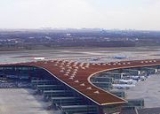
- On 26 March 2008, all Star Alliance members moved operations to the new Terminal 3 of Beijing Capital International Airport in order to maintain simple transfers with Air China and other Star Alliance airline members.Continental Airlines, which is currently at Terminal 2 of BCIA, will move to Terminal 3 in 2009 once regulatory approval has been granted. It is currently part of Skyteam.
- Since the remodeling of Mexico City International Airport's Terminal 1, all Star Alliance carriers were re-located to the Hall F2 of the terminal's International Building. United Airlines, Air Canada, Lufthansa, and US Airways now have their check-in facilities inside a single hall. The gate assignation for Star Alliance member airline varies, although they tend to operate into the 'F' gates. (F20-F28)
- At the same time as the move at Beijing Capital International Airport, all Star Alliance members are also expected to move to the new Terminal 2 at Shanghai Pudong International Airport to maintain simple transfers with Air China, Shanghai Airlines and other Star Alliance airline members.
- During the renovation of Paris-Charles de Gaulle Airport's Terminal 1, all Star Alliance members but Air Canada, Austrian Airlines, Swiss International Airlines and future members were re-located there, in order to "create" a Star Alliance Hub.
- International Star Alliance departures and arrivals serving San Francisco International Airport moved to Boarding Area G except for those of Air Canada and Asiana Airlines.
- In June 2006, all Star Alliance member airlines except Air New Zealand moved to the new South Wing in Terminal 1 of Narita International Airport to simplify transfers with All Nippon Airways.
- Star Alliance members serving Cairo International Airport will also move to the new Terminal 3 once the terminal opens in early 2009 to simplify transfers with EgyptAir.
- All Star Alliance members at Miami International Airport (Air Canada, United, US Airways, Lufthansa and Swiss) relocated to the newly built Concourse J, as part of the airport's "alliance co-location" program; Star Alliance was a major contributor to the new Concourse and overall Terminal construction.
- In June 2008, Star Alliance member airlines were relocated to the west side of Incheon International Airport as part of the airport's renewal program, followed by the opening of the new Concourse A.
- At Toronto Pearson International Airport in March 2008, US Airways joined Star Alliance Partners Air Canada, United, Lufthansa, Austrian and LOT Polish in Terminal 1, where all Star Alliance member airlines are now located.
- In March 2008, Star Alliance member airlines were relocated to Terminal 2 at Warsaw's Frederic Chopin Airport.
- At Rio de Janeiro Galeão Airport, all Star Alliance members: TAM airlines (future member),United Airlines, TAP and US Airways will be relocated to Terminal 2.
Logo on aircraft
Some Star Alliance members paint some of their planes with the Star Alliance livery, usually featuring a white fuselage with "Star Alliance" signature written across and a black tailfin with the Star Alliance logo. Singapore Airlines however, is the only member to not paint the tail of star alliance aircraft. Instead they paint it with the SIA logo. Asiana Airlines was the first Star Alliance member to paint their aircraft in Star Alliance livery.
Aircraft painted in the airlines' own livery have the Star Alliance logo painted behind the cockpit.
Member airlines Starting in 2004, Star Alliance has divided its member airlines into "full members" and "regional members". Before being accepted as a regional member, airline must be sponsored by a full member.
Full members may have some affiliate airlines (that either are owned by or are in a contractual relationship with a Star Alliance full member). Affiliate airlines fall under full member umbrella in respect to the Star Alliance rules, policies and benefits. All of the affiliate airlines grant Star Alliance frequent flyer benefits, and usually feature the Star Alliance logo on their aircraft, public relation materials and advertisement. In some cases (such as Air New Zealand Link airlines and bmi regional) the branding of the "parent" full member may be so strong as to mean passengers are unaware of the affiliate's independent existence.
Full members and their member & non-member affiliates
1 Founding member
2 Jointly owned by Lufthansa and Turkish Airlines
3 A partnership between Singapore Airlines and Temasek Holdings
Regional member airlines
Former member airlines
1 Collapsed in 2001
2 Left the alliance in 2004 after deciding not to renew a codeshare alliance with United Airlines and opted to codeshare with American Airlines and joined the Oneworld alliance in April 2008
3 Suspended its membership alliance on 31 January 2007 due to major restructuring, being involuntarily ejected, and failing to meet miminum qualifications
Future member airlines
1 Air India was invited to join Star Alliance on 13 December 2007, and is scheduled to be a full member by March 29, 2009. The combined entity has also confirmed that it has gained membership within Star Alliance and will expand its own network to be one of Asia's largest carriers. The formal announcement was made at the annual Star Alliance meeting on 13 December 2007. The mentoring airline for admission is Lufthansa.
2 On 19 June 2008 Continental Airlines and United Airlines signed an agreement which will lead to Continental's exit from SkyTeam and entry into Star Alliance as well as, pending government approval, an antitrust immunized alliance between Continental Airlines, United Airlines, Lufthansa, Air Canada and further Star Alliance member airlines . Scheduled transition will take place on October 25, 2009.
3 TAM Airlines announced on 7 October 2008 that it is the next airline in line to join Star Alliance. The mentoring airline for this admission is United Airlines and the airline is expected to join the alliance after completing the integration process, by end 2009. With this addition, South America will be once again widely covered by the Star Alliance network after previous member Varig was evicted in 2006.
4 On 15 September 2008 it was jointly announced by both airlines that Lufthansa will acquire a 45% stake in Brussels Airlines with an option to acquire the remaining 55% from 2011. As a part of this deal Brussels Airlines will join Star Alliance. On 11 December 2008, Brussels Airlines was invited to become a member of Star Alliance at the annual boardmeeting of the alliance. A date for the airline's entry into the alliance has yet to be determined.
Probable future members
- Copa Airlines On 21 November 2008, Copa chief executive Pedro Heilbron on the ALTA airline leaders forum in Cancun, expressed that Copa Airlines has decided to leave Skyteam and is in exclusive talks with the Star Alliance. According to Mr. Heilbron, Copa Airlines has not much choice since Continental Airlines will leave Skyteam for Star Alliance.
- Grupo Taca At the same meeting, where Copa Airlines expressed their interest in joing Star Alliance, Grupo Taca chief executive Robert Kriete informed that the airline has submitted an application to join Star Alliance. It is expected that the decision by Star will be at latest at the beginning of 2009, whereafter the implementation may take 6 to 12 months.
Possible future members
- Virgin Atlantic Virgin's involvement with Lufthansa's talks on BMI's future may lead to a possible merger on parts of the airlines' operations - this may well lead to Virgin's entrance into the Star Alliance to counter its major rival, oneworld alliance's strong presence on the very lucrative LHR-JFK route. In fact Virgin already has partnership agreements with 9 of the Star Alliance members, while having none with oneworld and SkyTeam members. Singapore Airlines currently has a 49% stake in shareholding on Virgin Atlantic.
- Ethiopian Airlines In an interview in 2008, the CFO of Ethiopian Airlines stated that the carrier could be ready to join Star Alliance in 3 to 5 years. Since October 2007, the frequent flier programs of Ethiopian Airlines (Sheba Miles) and Lufthansa (Miles & More) have been closely linked together. Sheba Miles can now be earned and redeemed on all Lufthansa flights.
Premium status Star Alliance has two premium levels, Silver and Gold, based on a customer's tier status in a member carrier's frequent flyer program. Each of the member and regional airlines recognizes Star Silver/Gold status, with a few exceptions (mainly pertaining to airport lounge access). The statuses have no specific requirements of their own; membership is based solely on the frequent flyer programs of individual member airlines. Many member airlines also have an additional premium status beyond Gold which is not recognised across Star Alliance.
Star Alliance Silver
Star Alliance Silver status is awarded to customers who have reached a premium level of a member carrier's frequent flyer program.
Benefits of Star Alliance Silver membership:
- Priority reservations waitlisting
- Priority airport stand-by
Some airlines also offer the following to Silver members:
- Priority boarding
- Priority airport check-in
- Priority baggage handling
- Preferred seating
- Additional checked luggage allowance
- Airport lounge access
Membership tiers granting Star Alliance Silver:
The lowest qualification criteria for a Star Alliance Silver status is 10,000 status miles earned during one calendar year with Thai's Royal Orchid Plus program awarding a status valid for a full two years.
Star Alliance Gold
Star Alliance Gold status is awarded to customers who have reached a high level of a member airline's frequent flyer program.
Benefits of Star Alliance Gold membership:
- Priority reservations waitlisting
- Priority airport stand-by
- Priority boarding
- Priority airport check-in
- Priority baggage handling
- Additional checked luggage allowance of 20kg (or one extra piece where the piece concept applies)
- Airport lounge access to designated Star Alliance Gold lounges on the day and at the place of departure, on presentation of a valid Star Alliance boarding pass.
Some airlines also offer the following to Gold members:
- Preferred seating (exit seat, or even on a special section on the plane on some carriers, which provides more leg room)
- Guaranteed seating on fully booked flights (subject to the booking class code and notice period)
- Free upgrade (in the form of voucher/certificate or automatic upgrade upon check-in)
Membership tiers granting Star Alliance Gold:
- Air Canada (Aeroplan) Super Elite, Elite
- Air China (Air China Companion) Platinum, Gold
- Air New Zealand (Airpoints) Gold Elite, Gold
- ANA (Mileage Club) Diamond, Platinum, Super Flyers
- Asiana (Asiana Club) Platinum, Diamond
- Adria/Austrian/Croatia Airlines/LOT/Lufthansa/SWISS (Miles & More) HON Circle, Senator
- BMI (Diamond Club) Gold
- Blue1/SAS (EuroBonus) Pandion, Gold
- EgyptAir () Platinum (Starting Jan 2009), Gold
- Shanghai Airlines (Flying Crane) Gold
- Singapore Airlines (KrisFlyer) Solitaire PPS Club, PPS Club, Elite Gold
- South African Airways (Voyager) Platinum, Gold
- Spanair (Spanair Plus) Gold
- TAP () Gold Winner
- Thai Airways International (Royal Orchid Plus) Gold
- Turkish Airlines (Miles and Smiles) Elite Plus, Elite
- United (Mileage Plus) Global Services, 1K, Premier Executive
- US Airways () Chairman's Preferred, Platinum Preferred, Gold Preferred
The lowest qualification criteria for a Star Alliance Gold status is 35,000 status miles earned during one calendar year with [https://www.aeroplan.com/en/collect/collect_status_miles.jsp Air Canada's Aeroplan program] awarding a status valid for one year from March of the next year.
Another carrier offering a similar level for Star Alliance Gold status qualification is Turkish Airlines. Turkish Airlines Miles and Smiles Classic Plus cardholders who earn 40,000 status miles within 12 consecutive months are eligible to become Elite members, thereby earning Star Alliance Gold status. Turkish Airlines Elite status is valid for two years. Miles and Smiles members who are residents of Turkey can renew their Elite level membership by earning 30,000 qualifying miles within one year of earning elite status or 45,000 miles within two years of earning elite status. Miles and Smiles members residing outside of Turkey are eligible for elite status renewal if they accrue 25,000 miles within one year of gaining elite status or 37,500 within two years the lowest re-qualification criteria for a Star Alliance Gold status.
Effective 1st October 2008, accumulating 40,000 miles over two calendar years in will gain Gold status, with a renewal requirement of 40,000 miles in two calendar years.
Photo gallery of the Star Alliance livery
External links
|
| |
|
|