
All Topics  
Sonnet

 
Sonnet

   Email Print
   Bookmark   Link


Sonnet


The sonnet is one of the poetic forms
Poetry

Poetry is a form of literature art in which language is used for its aesthetics and evocative qualities in addition to, or in lieu of, its apparent meaning ....
 that can be found in lyric poetry
Lyric poetry

Lyric poetry refers to a usually short poem that expresses personal feelings, which may or may not be set to music. Aristotle, in Poetics , contrasted lyric poetry with drama and epic poetry....
  from Europe
Europe

Europe is, conventionally, one of the world's seven continents. Comprising the westernmost peninsula of Eurasia, Europe is generally divided from Asia to its east by the water divide of the Ural Mountains, the Ural , the Caspian Sea, and by the Caucasus Mountains to the southeast....
. The term "sonnet" derives from the Occitan word sonet and the Italian
Italian language

Italian is a Romance languages spoken by about 63 million people as a first language, primarily in Italy. In Switzerland, Italian is one of four Linguistic geography of Switzerlands....
 word sonetto, both meaning "little song". By the thirteenth century, it had come to signify a poem
Poetry

Poetry is a form of literature art in which language is used for its aesthetics and evocative qualities in addition to, or in lieu of, its apparent meaning ....
 of fourteen lines that follows a strict rhyme scheme
Rhyme scheme

A rhyme scheme is the pattern of rhyming lines in a poem or song. It is usually referred to by using Letter s to indicate which lines rhyme. In other words, it is the pattern of end rhymes or lines....
 and specific structure. The conventions associated with the sonnet have evolved over its history.


Discussion
Ask a question about 'Sonnet'
Start a new discussion about 'Sonnet'
Answer questions from other users
Full Discussion Forum


Recent Posts


Encyclopedia


The sonnet is one of the poetic forms
Poetry

Poetry is a form of literature art in which language is used for its aesthetics and evocative qualities in addition to, or in lieu of, its apparent meaning ....
 that can be found in lyric poetry
Lyric poetry

Lyric poetry refers to a usually short poem that expresses personal feelings, which may or may not be set to music. Aristotle, in Poetics , contrasted lyric poetry with drama and epic poetry....
  from Europe
Europe

Europe is, conventionally, one of the world's seven continents. Comprising the westernmost peninsula of Eurasia, Europe is generally divided from Asia to its east by the water divide of the Ural Mountains, the Ural , the Caspian Sea, and by the Caucasus Mountains to the southeast....
. The term "sonnet" derives from the Occitan word sonet and the Italian
Italian language

Italian is a Romance languages spoken by about 63 million people as a first language, primarily in Italy. In Switzerland, Italian is one of four Linguistic geography of Switzerlands....
 word sonetto, both meaning "little song". By the thirteenth century, it had come to signify a poem
Poetry

Poetry is a form of literature art in which language is used for its aesthetics and evocative qualities in addition to, or in lieu of, its apparent meaning ....
 of fourteen lines that follows a strict rhyme scheme
Rhyme scheme

A rhyme scheme is the pattern of rhyming lines in a poem or song. It is usually referred to by using Letter s to indicate which lines rhyme. In other words, it is the pattern of end rhymes or lines....
 and specific structure. The conventions associated with the sonnet have evolved over its history. The writers of sonnets are sometimes referred to as "sonneteer
Sonneteer

Sonneteer is an archaic term for a poet who composes sonnets, though the individual may not necessarily write poetry exclusively in that particular poetic form....
s," although the term can be used derisively. One of the best-known sonnet writers is William Shakespeare
William Shakespeare

William Shakespeare was an English people poet and playwright, widely regarded as the greatest writer in the English language and the world's preeminent dramatist....
, who wrote 154 of them
Shakespeare's sonnets

Shakespeare's sonnets, or simply The Sonnets, is a collection of poems in sonnet form written by William Shakespeare that deal with such themes as love, beauty, politics, and death....
. A Shakespearean, or English sonnet consists of 14 lines, each line contains ten syllables, and each line is written in iambic pentameter
Iambic pentameter

Iambic pentameter is a type of meter that is used in poetry and drama. It describes a particular rhythm that the words establish in each Line ....
 in which a pattern of a non-emphasized syllable followed by an emphasized syllable is repeated five times. The rhyme scheme in a Shakespearean sonnet is ABAB CDCD EFEF GG in which the last two lines are a rhyming couplet.

Traditionally, English poets employ iambic pentameter
Iambic pentameter

Iambic pentameter is a type of meter that is used in poetry and drama. It describes a particular rhythm that the words establish in each Line ....
 when writing sonnets. In the Romance languages, the hendecasyllable
Hendecasyllable

Hendecasyllable Meter is a kind of verse used mostly in Italy poetry, defined by its having the last stress on the tenth syllable. When, as often happens, this stress falls on the penultimate syllable, the line has exactly eleven syllables ....
 and Alexandrine
Alexandrine

An alexandrine is a line of Meter comprising 12 syllables. Alexandrines are common in the German literature of the German literature of the Baroque period and in List of French language poets of the early modern and modern periods....
 are the most widely used metres
Meter (poetry)

In poetry, the meter is the basic rhythm of a verse . Many traditional verse forms prescribe a specific verse meter, or a certain set of meters alternating in a particular order....
.

Italian (Petrarchan) sonnet

The Italian sonnet was created by Giacomo da Lentini
Giacomo da Lentini

Giacomo da Lentini, also known as Gi?cumu da Lintini and Jacopo Notaro, was an Italy poet of the 13th century. He was a senior poet of the Sicilian School and was a notary at the court of the Holy Roman Empire Frederick II, Holy Roman Emperor....
, head of the Sicilian School
Sicilian School

The Sicilian School was a small community of Sicily, and to a lesser extent, mainland Italian poets gathered around Frederick II, Holy Roman Emperor, most of them belonging to his court, the Magna Curia....
 under Frederick II
Frederick II, Holy Roman Emperor

Frederick II , of the House of Hohenstaufen dynasty, was an Kingdom of Italy pretender to the title of King of the Romans from 1212 and unopposed holder of that monarchy from 1215....
. Guittone d'Arezzo
Guittone d'Arezzo

Guittone d'Arezzo was a Tuscany poet and the founder of the Tuscan School. In 1256, he was exiled from Arezzo due to his Guelf sympathies....
 rediscovered it and brought it to Tuscany
Tuscany

Tuscany is a region in Italy. It has an area of and a population of about 3.6 million inhabitants. The regional capital is Florence.Tuscany is known for its landscapes and its artistic legacy....
 where he adapted it to his language when he founded the Neo-Sicilian School (1235–1294). He wrote almost 300 sonnets. Other Italian poets of the time, including Dante Alighieri
Dante Alighieri

Durante degli Alighieri , commonly known as Dante Alighieri, was a Florence poet of the Middle Ages. His Magnum opus, the Divine Comedy , is often considered the greatest literary work composed in the Italian language and a masterpiece of world literature....
 (1265–1321) and Guido Cavalcanti
Guido Cavalcanti

Guido Cavalcanti was an Italians poet who was a role model for and a very close friend of Dante Alighieri. He was born in Florence and was the son of the Guelphs and Ghibellines Cavalcante de' Cavalcanti, whom Dante condemns to torment in the sixth circle of The Inferno, where the heretics are punished....
 (c. 1250–1300) wrote sonnets, but the most famous early sonneteer was Petrarca
Petrarch

Francesco Petrarca , known in English language as Petrarch, was an Italy scholar, poet and one of the earliest Renaissance humanism. Petrarch is often popularly called the "Father of Humanism"....
 (known in English as Petrarch). Other fine examples were written by Michelangelo.

The Italian sonnets included two parts. First, the octave
Octave (poetry)

An octave is a verse form consisting of eight lines of iambic pentameter or of hendecasyllables . The most common rhyme scheme for an octave is abba abba....
 (two quatrain
Quatrain

A quatrain is a poem composed of two rhyming couplets, or a stanza within a poem, that consists always of four lines. The rhyming patterns include aabb, abab, abba, abcb, aaba, or aaaa ....
s), which describe a problem, followed by a sestet
Sestet

A sestet is the name given to the second division of an Italian sonnet , which must consist of an octave , of eight lines, succeeded by a sestet, of six lines....
 (two tercet
Tercet

A tercet is three lines of poetry, forming a stanza or complete poem. Haiku is an example of an unrhymed tercet poem.Other types of tercet include an enclosed tercet where the lines rhyme in an a b a pattern and terza rima where the a b a pattern of a verse is continued in the next verse by making the outer lines of the next stanza...
s), which gives the resolution to it. Typically, the ninth line creates a "turn" or volta which signals the move from proposition to resolution. Even in sonnets that don't strictly follow the problem/resolution structure, the ninth line still often marks a "turn" by signaling a change in the tone, mood, or stance of the poem.

In the sonnets of Giacomo da Lentini
Giacomo da Lentini

Giacomo da Lentini, also known as Gi?cumu da Lintini and Jacopo Notaro, was an Italy poet of the 13th century. He was a senior poet of the Sicilian School and was a notary at the court of the Holy Roman Empire Frederick II, Holy Roman Emperor....
, the octave rhymed a-b-a-b, a-b-a-b; later, the a-b-b-a, a-b-b-a pattern became the standard for Italian sonnets. For the sestet there were two different possibilities, c-d-e-c-d-e and c-d-c-c-d-c. In time, other variants on this rhyming scheme were introduced such as c-d-c-d-c-d.

The first known sonnets in English, written by Sir Thomas Wyatt
Thomas Wyatt (poet)

Sir Thomas Wyatt was a 16th century English lyric poetry....
 and Henry Howard, Earl of Surrey
Henry Howard, Earl of Surrey

Henry Howard, Earl of Surrey Order of the Garter was an England aristocrat, and one of the founders of English Renaissance poetry....
, used this Italian scheme, as did sonnets by later English poets including John Milton
John Milton

John Milton II was an English poet, author, polemicist and civil servant for the Commonwealth of England. He is best known for his Epic poetry Paradise Lost and for his treatise condemning censorship, Areopagitica....
, Thomas Gray
Thomas Gray

Thomas Gray , was an England poet, classical scholar and professor at University of Cambridge....
, William Wordsworth
William Wordsworth

William Wordsworth was a major England Romantic poetry poet who, with Samuel Taylor Coleridge, helped to launch the Romanticism in English literature with the 1798 joint publication Lyrical Ballads....
 and Elizabeth Barrett Browning
Elizabeth Barrett Browning

Elizabeth Barrett Browning was one of the most respected poets of the Victorian era....
. Early twentieth-century American poet Edna St. Vincent Millay
Edna St. Vincent Millay

Edna St. Vincent Millay was an American lyric poetry and playwright and the first woman to receive the Pulitzer Prize for Poetry. She was also known for her unconventional, Bohemianism lifestyle and her many love affairs....
 also wrote most of her sonnets using the Italian form.

This example, On His Blindness
On His Blindness

On His Blindness is one of the most well known of the sonnets of John Milton, written about 1650.:"When I consider how my light is spent: Ere half my days in this dark world and wide,: And that one talent which is death to hide: Lodg'd with me useless, though my soul more bent: To serve therewith my Maker, and present: My true...
 by Milton
John Milton

John Milton II was an English poet, author, polemicist and civil servant for the Commonwealth of England. He is best known for his Epic poetry Paradise Lost and for his treatise condemning censorship, Areopagitica....
, gives a sense of the Italian; When I consider how my light is spent (a) Ere half my days, in this dark world and wide, (b) And that one talent which is death to hide, (b) Lodged with me useless, though my soul more bent (a) To serve therewith my Maker, and present (a) My true account, lest he returning chide; (b) "Doth God exact day-labor, light denied?" (b) I fondly ask; but Patience to prevent (a) That murmur, soon replies, "God doth not need (c) Either man's work or his own gifts; who best (d) Bear his mild yoke, they serve him best. His state (e) Is Kingly. Thousands at his bidding speed (c) And post o'er land and ocean without rest; (d) They also serve who only stand and wait." (e)

Occitan sonnet

The sole confirmed surviving sonnet in the Occitan language is confidently dated to 1284, and is conserved only in troubadour manuscript P, an Italian chansonnier
Chansonnier

A chansonnier is a manuscript or printed book which contains a collection of chansons, or polyphonic and Monophony settings of chansons. The most important chansonniers contain lyrics, poems and songs of the trouv?res or troubadours of the Middle Ages....
 of 1310, now XLI.42 in the Biblioteca Laurenziana in Florence
Florence

Florence is the Capital city of the Italy Regions of Italy of Tuscany and of the provinces of Italy Province of Florence. It is the most populous city in Tuscany and has a population of 364,779 ....
. It was written by Paolo Lanfranchi da Pistoia
Paolo Lanfranchi da Pistoia

Paolo Lanfranchi da Pistoia or Pistoja was a noted Italian people poet who wrote in both the Italian language and Occitan languages. He is thus sometimes described as a troubadour....
 and is addressed to Peter III of Aragon
Peter III of Aragon

Peter the Great was the King of Aragon of Kingdom of Valencia and of Majorca , and Sovereign Count of Barcelona from 1276 to his death. He conquered Kingdom of Sicily and became King of Sicily in 1282....
. This poem is historically interesting for its information on north Italian perspectives concerning the War of the Sicilian Vespers
War of the Sicilian Vespers

The 'War of the Vespers' started with the insurrection of the Sicilian Vespers against Charles I of Sicily in 1282 and finally ended with the peace of Caltabellotta in 1302....
, the conflict between the Angevins
Capetian House of Anjou

The Capetian dynasty House of Anjou, sometimes known as the House of Anjou-Sicily was an important European royal house and cadet branch of the direct House of Capet....
 and Aragonese
House of Barcelona

The House of Barcelona was a medieval dynasty that ruled the County of Barcelona continuously from 878 and the Crown of Aragon from 1137 . According to one proposed genealogy, they were the Bellonids; certainly since the twelfth century they have been regarded as the descendants of Wifred the Hairy....
 for Sicily
Kingdom of Sicily

The Kingdom of Sicily was a state that existed in the south of Italy from its founding by Roger II of Sicily in 1130 until 1816. The Kingdom of Sicily covered not only the island of Sicily itself, but also the whole Mezzogiorno region of southern Italy and, until 1530, the islands of Malta and Gozo....
. Peter III and the Aragonese cause was popular in northern Italy at the time and Paolo's sonnet is a celebration of his victory over the Angevins and Capetian
Capetian

Capetian is an adjective, used to describe either:* The House of Capet, also called the Direct Capetians - the ruling family of France between 987 and 1328...
s in the Aragonese Crusade
Aragonese Crusade

The Aragonese Crusade or Crusade of Arag?n, a part of the larger War of the Sicilian Vespers, was declared by Pope Martin IV against the King of Arag?n, Peter III of Aragon, in 1284 and 1285....
:
   Valenz Senher, rei dels Aragones
a qi prez es honors tut iorn enansa,
remembre vus, Senher, del Rei franzes
qe vus venc a vezer e laiset Fransa
   Ab dos sos fillz es ab aqel d'Artes;
hanc no fes colp d'espaza ni de lansa
e mainz baros menet de lur paes:
jorn de lur vida said n'auran menbransa.
   Nostre Senhier faccia a vus compagna
per qe en ren no vus qal[la] duptar;
tals quida hom qe perda qe gazaingna.
   Seigner es de la terra e de la mar,
per qe lo Rei Engles e sel d'Espangna
ne varran mais, si.ls vorres aiudar.
   Valiant Lord, king of the Aragonese
to whom honour grows every day closer,
remember, Lord, the French king
that has come to find you and has left France
   With his two sons and that one of Artois;
but they have not dealt a blow with sword or lance
and many barons have left their country:
but a day will come when they will have some to remember.
   Our Lord make yourself a company
in order that you might fear nothing;
that one who would appear to lose might win.
   Lord of the land and the sea,
as whom the king of England and that of Spain
are not worth as much, if you wish to help them.


An Occitan sonnet, dated to 1321 and assigned to one "William of Almarichi", is found in Jean de Nostredame
Jean de Nostredame

Jean de Nostredame was a Provence historian and writer. He was the younger brother of Michel de Nostredame.He was baptised at Saint-Remy-de-Provence on 19 February 1522....
 and cited in Giovanni Crescembeni, Storia della volgar Poesia. It congratulates Robert of Naples
Robert of Naples

Robert of Anjou, known as Robert the Wise was King of Naples from 1309 to 1343. He was also Duke of Calabria , titular King of Jerusalem, and Counts of Provence ....
 on his recent victory. Its authenticity is dubious. There are also two poorly-regarded sonnets by the Italian Dante de Maiano.

English sonnet

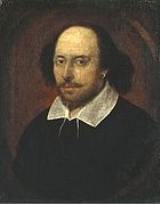
Shakespeare
English sonnets were introduced by Thomas Wyatt
Thomas Wyatt (poet)

Sir Thomas Wyatt was a 16th century English lyric poetry....
 in the early 16th century. His sonnets and those of his contemporary the Earl of Surrey
Henry Howard, Earl of Surrey

Henry Howard, Earl of Surrey Order of the Garter was an England aristocrat, and one of the founders of English Renaissance poetry....
 were chiefly translations from the Italian of Petrarch
Petrarch

Francesco Petrarca , known in English language as Petrarch, was an Italy scholar, poet and one of the earliest Renaissance humanism. Petrarch is often popularly called the "Father of Humanism"....
 and the French of Ronsard and others. While Wyatt introduced the sonnet into English, it was Surrey who gave them the rhyming meter, and division into quatrains that now characterizes the English sonnet. Having previously circulated in manuscript, both poets' sonnets were first published in Richard Tottel
Richard Tottel

Richard Tottel was an England publisher. His shop was located at Temple Bar, London on Fleet Street in London, and his original printing specialty was law....
's Songes and Sonnetts, better known as Tottel's Miscellany
Tottel's Miscellany

Songes and Sonettes, written by the ryght honorable Lorde Henry Haward late Earle of Surrey, and other, usually called Tottel's Miscellany, was the first printed anthology of English poetry....
 (1557).

It was, however, Sir Philip Sidney
Philip Sidney

Sir Philip Sidney became one of the Elizabethan era most prominent figures. Famous in his day in England as a poet, courtier and soldier, he remains known as the author of Astrophel and Stella , The Defence of Poetry , and The Countess of Pembroke's Arcadia ....
's sequence Astrophel and Stella
Astrophel and Stella

Likely composed in the 1580s by Philip Sidney, Astrophel and Stella is the first of the famous English sonnet sequences, and contains 108 sonnets and 11 songs....
 (1591) that started the English vogue for sonnet sequences: the next two decades saw sonnet sequences by William Shakespeare
William Shakespeare

William Shakespeare was an English people poet and playwright, widely regarded as the greatest writer in the English language and the world's preeminent dramatist....
, Edmund Spenser
Edmund Spenser

Edmund Spenser was an important England poet best known for The Faerie Queene, an epic poem celebrating, through fantastical allegory, the Tudor dynasty and Elizabeth I....
, Michael Drayton
Michael Drayton

Michael Drayton was an England poet who came to prominence in the Elizabethan era....
, Samuel Daniel
Samuel Daniel

Samuel Daniel was an England English poetry and History of England....
, Fulke Greville
Fulke Greville, 1st Baron Brooke

Fulke Greville, 1st Baron Brooke, de jure 13th Baron Latimer and 5th Baron Willoughby de Broke , known before 1621 as Sir Fulke Greville, was an Elizabethan era poet, dramatist, and statesman....
, William Drummond of Hawthornden
William Drummond of Hawthornden

William Drummond , called "of Hawthornden" was a Scotland poet....
, and many others. These sonnets were all essentially inspired by the Petrarchan tradition, and generally treat of the poet's love for some woman; the exception is Shakespeare's sequence. In the 17th century, the sonnet was adapted to other purposes, with John Donne
John Donne

John Donne was an England Literature in English#Jacobean literature poet, preacher and a major representative of the metaphysical poets of the period....
 and George Herbert
George Herbert

George Herbert was a Welsh poet, orator and priest. Being born into an artistic and wealthy family, he received a good education which led to his holding prominent positions at University of Cambridge and Parliament of the United Kingdom....
 writing religious sonnets, and John Milton
John Milton

John Milton II was an English poet, author, polemicist and civil servant for the Commonwealth of England. He is best known for his Epic poetry Paradise Lost and for his treatise condemning censorship, Areopagitica....
 using the sonnet as a general meditative poem. Both the Shakespearean and Petrarchan rhyme schemes were popular throughout this period, as well as many variants.

The fashion for the sonnet went out with the Restoration
English Restoration

The English Restoration, or simply The Restoration began in 1660 when the English monarchy, Scottish monarchy and Irish monarchy were restored under Charles II of England after the Interregnum that followed the English Civil War....
, and hardly any sonnets were written between 1670 and Wordsworth's
William Wordsworth

William Wordsworth was a major England Romantic poetry poet who, with Samuel Taylor Coleridge, helped to launch the Romanticism in English literature with the 1798 joint publication Lyrical Ballads....
 time. However, sonnets came back strongly with the French Revolution
French Revolution

The French Revolution was a period of political and social upheaval and radical change in the history of France, during which the French governmental structure, previously an absolute monarchy with feudalism for the aristocracy and Roman Catholic Church clergy, underwent radical change to forms based on Age of Enlightenment principles of cit...
. Wordsworth himself wrote several sonnets, of which the best-known are "The world is too much with us
The world is too much with us

"The world Is Too Much With Us" is a sonnet by the England Romanticism poet William Wordsworth. In it, Wordsworth criticizes the modern world for being absorbed in materialism and distancing itself from nature....
" and the sonnet to Milton; his sonnets were essentially modelled on Milton's. Keats
John Keats

John Keats was an England poetry who became one of the principal poets of the English Romanticism movement during the early nineteenth century....
 and Shelley
Percy Bysshe Shelley

Percy Bysshe Shelley was one of the major England Romantic poets and is widely considered to be among the finest Lyric poetry in the English language....
 also wrote major sonnets; Keats's sonnets used formal and rhetorical patterns inspired partly by Shakespeare, and Shelley innovated radically, creating his own rhyme scheme for the sonnet "Ozymandias
Ozymandias

I met a traveller from an antique landWho said: Two vast and trunkless legs of stoneStand in the desert. Near them on the sand,Half sunk, a shatter'd visage lies, whose frown...
". Sonnets were written throughout the 19th century, but, apart from Elizabeth Barrett Browning
Elizabeth Barrett Browning

Elizabeth Barrett Browning was one of the most respected poets of the Victorian era....
's Sonnets from the Portuguese
Sonnets from the Portuguese

Sonnets from the Portuguese, written ca. 1845–1846 and first published in 1850, is a collection of forty-four love sonnets written by Elizabeth Barrett Browning....
 and the sonnets of Dante Gabriel Rossetti
Dante Gabriel Rossetti

Dante Gabriel Rossetti was an English poet, illustrator, Painting and translator....
, there were few very successful traditional sonnets. Gerard Manley Hopkins
Gerard Manley Hopkins

Gerard Manley Hopkins , was an England poet, Roman Catholicism convert, and Society of Jesus priest, whose 20th-century fame established him posthumously among the leading Victorian poets....
 wrote several major sonnets, often in sprung rhythm
Sprung rhythm

Sprung rhythm is a poetic rhythm designed to imitate the rhythm of natural speech. It is constructed from Foot in which the first syllable is stressed and may be followed by a variable number of unstressed syllables....
, of which the greatest is "The Windhover," and also several sonnet variants such as the 10½-line curtal sonnet
Curtal sonnet

The curtal sonnet is a form invented by Gerard Manley Hopkins, and used in three of his poems.It is an eleven-line sonnet, but rather than the first eleven lines of a standard sonnet it consists of precisely ? of the structure of a Petrarchan sonnet shrunk proportionally....
 "Pied Beauty" and the 24-line caudate sonnet
Caudate sonnet

A caudate sonnet is an expanded version of the sonnet. It consists of 14 lines in standard sonnet forms followed by a coda .The invention of the form is credited to Francesco Berni....
 "That Nature is a Heraclitean Fire." By the end of the 19th century, the sonnet had been adapted into a general-purpose form of great flexibility.

This flexibility was extended even further in the 20th century. Among the major poets of the early Modernist period, Robert Frost
Robert Frost

Robert Lee Frost was an American poet. He is highly regarded for his realistic depictions of rural life and his command of American colloquial speech....
, Edna St. Vincent Millay
Edna St. Vincent Millay

Edna St. Vincent Millay was an American lyric poetry and playwright and the first woman to receive the Pulitzer Prize for Poetry. She was also known for her unconventional, Bohemianism lifestyle and her many love affairs....
 and E. E. Cummings
E. E. Cummings

Edward Estlin Cummings , popularly known as E. E. Cummings, was an Poetry of the United States, painter, essayist, author, and playwright....
 all used the sonnet regularly. William Butler Yeats
William Butler Yeats

File:William Butler Yeat by George Charles Beresford.jpgWilliam Butler Yeats was an Irish people poet and dramatist and one of the foremost figures of 20th century in literature....
 wrote the major sonnet Leda and the Swan
Leda and the Swan

Leda and the Swan is a Motif from Greek mythology, in which Zeus came to Leda in the form of a swan. According to later Greek mythology, Leda bore Helen and Castor and Polydeuces, children of Zeus while at the same time bearing Castor and Polydeuces and Clytemnestra, children of her husband Tyndareus, the King of Sparta....
,
which used half rhyme
Half rhyme

Half rhyme, sometimes called slant, sprung, near rhyme, oblique rhyme, off rhyme or imperfect rhyme is consonance on the final consonants of the words involved....
s. Wilfred Owen
Wilfred Owen

Wilfred Edward Salter Owen Military Cross was an England poet and soldier, regarded by many as one of the leading poets of the World War I. His shocking, realistic war poetry on the horrors of Trench warfare and Poison gas in World War I warfare was heavily influenced by his friend Siegfried Sassoon and sat in stark contrast to both the publ...
's sonnet Anthem for Doomed Youth
Anthem for Doomed Youth

Anthem for Doomed Youth is one of the best-known and most popular of Wilfred Owen's poems. It employs the traditional form of a Petrarchan sonnet, but it uses the rhyme scheme of an English sonnet ....
 was another sonnet of the early 20th century. W. H. Auden
W. H. Auden

Wystan Hugh Auden who signed his works W. H. Auden, was an Anglo-American poet, regarded by many as one of the greatest writers of the 20th century....
 wrote two sonnet sequences and several other sonnets throughout his career, and widened the range of rhyme-schemes used considerably. Auden also wrote one of the first unrhymed sonnets in English, "The Secret Agent" (1928). Half-rhymed, unrhymed, and even unmetrical sonnets have been very popular since 1950; perhaps the best works in the genre are Seamus Heaney
Seamus Heaney

Seamus Heaney is an Irish people poet, writer and lecturer who was awarded the Nobel Prize in Literature in 1995. He currently lives in Dublin....
's Glanmore Sonnets and Clearances, both of which use half rhymes, and Geoffrey Hill
Geoffrey Hill

For the British aeronautical engineer and professor, see Geoffrey T. R. HillGeoffrey Hill is an English people poet, professor emeritus of English literature and religion, and former co-director of the Editorial Institute, at Boston University....
's mid-period sequence 'An Apology for the Revival of Christian Architecture in England'. The 1990s saw something of a formalist revival, however, and several traditional sonnets have been written in the past decade.

Soon after the introduction of the Italian sonnet, English poets began to develop a fully native form. These poets included Sir Philip Sidney
Philip Sidney

Sir Philip Sidney became one of the Elizabethan era most prominent figures. Famous in his day in England as a poet, courtier and soldier, he remains known as the author of Astrophel and Stella , The Defence of Poetry , and The Countess of Pembroke's Arcadia ....
, Michael Drayton
Michael Drayton

Michael Drayton was an England poet who came to prominence in the Elizabethan era....
, Samuel Daniel
Samuel Daniel

Samuel Daniel was an England English poetry and History of England....
, the Earl of Surrey's nephew Edward de Vere, 17th Earl of Oxford
Edward de Vere, 17th Earl of Oxford

Edward de Vere, 17th Earl of Oxford was an Elizabethan era courtier, playwright, poet, sportsman, patron of numerous writers, and sponsor of at least two acting companies, Oxford's Men and Oxford's Boys, and a company of musicians....
 and William Shakespeare
William Shakespeare

William Shakespeare was an English people poet and playwright, widely regarded as the greatest writer in the English language and the world's preeminent dramatist....
. The form is often named after Shakespeare, not because he was the first to write in this form but because he became its most famous practitioner. The form consists of fourteen lines structured as three quatrains and a couplet. The third quatrain generally introduces an unexpected sharp thematic or imagistic "turn" called a volta. In Shakespeare's sonnets, the couplet usually summarizes the theme of the poem or introduces a fresh new look at the theme. The usual meter is iambic pentameter
Iambic pentameter

Iambic pentameter is a type of meter that is used in poetry and drama. It describes a particular rhythm that the words establish in each Line ....
, which means five iambic feet, i.e., ten-syllable lines in which even-numbered syllables are naturally accented—although few English sonnets do not take liberties with these formal constraints (e.g., lines ending with an extra-syllable feminine rhyme
Feminine rhyme

A feminine rhyme is a rhyme that matches two or more syllables, usually at the end of respective lines. Often the final syllable is unstressed....
, or a trochee
Trochee

A trochee or choree, choreus, is a metrical foot used in formal poetry. It consists of a stressed syllable syllable followed by an unstressed syllable one....
 at the beginning of a line rather than an iamb
Iamb

An iamb or iambus is a metrical foot used in various types of poetry. Originally the term referred to one of the feet of the quantitative meter of classical Greek prosody : a short syllable followed by a long syllable ....
). The usual rhyme scheme is end-rhymed a-b-a-b, c-d-c-d, e-f-e-f, g-g.

This example, Shakespeare's Sonnet 116
Sonnet 116

Shakespeare's sonnet 116, first published in 1609. One of Shakespeare's most romantic works; often quotes at weddings....
, illustrates the form (with some typical variances one may expect when reading an Elizabethan-age sonnet with modern eyes):

Let me not to the marriage of true minds (a) Admit impediments, love is not love (b)* Which alters when it alteration finds, (a) Or bends with the remover to remove. (b)* O no, it is an ever fixed mark (c)** That looks on tempests and is never shaken; (d)*** It is the star to every wand'ring bark, (c) Whose worth's unknown although his height be taken. (d)*** Love's not time's fool, though rosy lips and cheeks (e) Within his bending sickle's compass come, (f)* Love alters not with his brief hours and weeks, (e) But bears it out even to the edge of doom: (f)* If this be error and upon me proved, (g)* I never writ, nor no man ever loved. (g)*
* PRONUNCIATION/RHYME: Note changes in pronunciation since composition.
** PRONUNCIATION/METER: "Fixed" pronounced as two-syllables, "fix-ed."
*** RHYME/METER: Feminine-rhyme-ending, eleven-syllable alternative.
The Prologue to Romeo and Juliet
Romeo and Juliet

Romeo and Juliet is a Shakespearean tragedy written early in the career of playwright William Shakespeare about two young "Star-crossed" whose untimely deaths ultimately unite their feuding families....
 is also a sonnet, as is Romeo and Juliet's first exchange in Act One, Scene Five, lines 104-117, beginning with "If I profane with my unworthiest hand" (104) and ending with "Then move not while my prayer's effect I take." (117).

Spenserian sonnet

A variant on the English form is the Spenserian sonnet, named after Edmund Spenser
Edmund Spenser

Edmund Spenser was an important England poet best known for The Faerie Queene, an epic poem celebrating, through fantastical allegory, the Tudor dynasty and Elizabeth I....
 (c.1552–1599) in which the rhyme scheme is, abab, bcbc, cdcd, ee. In a Spenserian sonnet there does not appear to be a requirement that the initial octave
Octave (poetry)

An octave is a verse form consisting of eight lines of iambic pentameter or of hendecasyllables . The most common rhyme scheme for an octave is abba abba....
 set up a problem that the closing sestet
Sestet

A sestet is the name given to the second division of an Italian sonnet , which must consist of an octave , of eight lines, succeeded by a sestet, of six lines....
 answers, as is the case with a Petrarchan sonnet. Instead, the form is treated as three quatrains connected by the interlocking rhyme scheme and followed by a couplet. The linked rhymes of his quatrains suggest the linked rhymes of such Italian forms as terza rima
Terza rima

Terza rima is a rhyme Verse stanza form that consists of an interlocking three line rhyme scheme. It was first used by the Italian poetry poet Dante Alighieri....
. This example is taken from Amoretti.

Happy ye leaves! when those lily hands

Happy ye leaves! when those lily hands, (a) Which hold my life in their dead doing might, (b) Shall handle you, and hold in love's soft bands, (a) Like captives trembling at the victor's sight. (b) And happy lines on which, with starry light, (b) Those lamping eyes will deign sometimes to look,(c) And read the sorrows of my dying sprite, (b) Written with tears in heart's close bleeding book. (c) And happy rhymes! bathed in the sacred brook (c) Of Helicon, whence she derived is, (d) When ye behold that angel's blessed look, (c) My soul's long lacked food, my heaven's bliss. (d) Leaves, lines, and rhymes seek her to please alone, (e) Whom if ye please, I care for other none. (e)

Modern sonnet

With the advent of free verse
Free verse

Free Verse poetry does not have a strict pattern of rhyming. It does not have regular meter, rhyme, fixed line length, or a specific stanza pattern....
, the sonnet came to be seen as somewhat old-fashioned and fell out of use for a time among some schools of poets. However, a number of 20th-century poets, including Wilfred Owen
Wilfred Owen

Wilfred Edward Salter Owen Military Cross was an England poet and soldier, regarded by many as one of the leading poets of the World War I. His shocking, realistic war poetry on the horrors of Trench warfare and Poison gas in World War I warfare was heavily influenced by his friend Siegfried Sassoon and sat in stark contrast to both the publ...
, John Berryman
John Berryman

John Allyn Berryman was an United States poet, born in McAlester, Oklahoma, Oklahoma. He was a major figure in American poetry in the second half of the 20th century and often considered one of the founders of the Confessional poetry school of poetry....
, Edwin Morgan
Edwin Morgan

Edwin George Morgan OBE is a Scotland poet and translator who is associated with the Scottish Renaissance. He is widely recognised as one of the foremost Scottish poets of the 20th century....
, Robert Frost
Robert Frost

Robert Lee Frost was an American poet. He is highly regarded for his realistic depictions of rural life and his command of American colloquial speech....
, Edna St. Vincent Millay
Edna St. Vincent Millay

Edna St. Vincent Millay was an American lyric poetry and playwright and the first woman to receive the Pulitzer Prize for Poetry. She was also known for her unconventional, Bohemianism lifestyle and her many love affairs....
, E.E. Cummings, Jorge Luis Borges
Jorge Luis Borges

Jorge Francisco Isidoro Luis Borges was an Argentina writer born in Buenos Aires. He was brought up bilingual in Spanish and English. In 1914, his family moved to Switzerland where he attended school, then traveled around Spain....
, Pablo Neruda
Pablo Neruda

Pablo Neruda was the pen name and, later, legal name of the Chilean writer and politician Neftal? Ricardo Reyes Basoalto. Neruda assumed his pen name as a teenager, partly because it was in vogue, partly to hide his poetry from his father, a rigid man who wanted his son to have a "practical" occupation....
, Joan Brossa
Joan Brossa

Joan Brossa i Cuervo . Poet, playwright, graphic designer and plastic artist. He was one of the founders of both the group and the publication known as Dau-al-Set and one of the leading early proponents of visual poetry in catalan people literature....
, Vikram Seth
Vikram Seth

Vikram Seth , born June 20, 1952 is an Indian poet, novelist, travel writer, librettist, children's writer, biographer and memoirist....
, Rainer Maria Rilke
Rainer Maria Rilke

Rainer Maria Rilke is considered one of the German language's greatest 20th century poets. His haunting images focus on the difficulty of communion with the ineffable in an age of disbelief, solitude, and profound anxiety ? themes that tend to position him as a transitional figure between the traditional and the modernist poets....
, and Seamus Heaney
Seamus Heaney

Seamus Heaney is an Irish people poet, writer and lecturer who was awarded the Nobel Prize in Literature in 1995. He currently lives in Dublin....
 continued to use the form. The advent of the New Formalism
New Formalism

New Formalism is a late-twentieth and early twenty-first century movement in American poetry that has promoted a return to Meter and rhymed verse....
 movement in the United States has also contributed to contemporary interest in the sonnet.

See also


Types of sonnets

  • Caudate sonnet
    Caudate sonnet

    A caudate sonnet is an expanded version of the sonnet. It consists of 14 lines in standard sonnet forms followed by a coda .The invention of the form is credited to Francesco Berni....
  • Curtal sonnet
    Curtal sonnet

    The curtal sonnet is a form invented by Gerard Manley Hopkins, and used in three of his poems.It is an eleven-line sonnet, but rather than the first eleven lines of a standard sonnet it consists of precisely ? of the structure of a Petrarchan sonnet shrunk proportionally....
  • Pushkin sonnet
    Onegin stanza

    Onegin stanza refers to the verse form invented by Alexander Pushkin for his interpersonal epic Eugene Onegin. The work is written in verses of iambic tetrameter with the unusual rhyme scheme "aBaBccDDeFFeGG", where the lowercase letters represent rhyme#Types of rhymes and the uppercase representing rhyme#Types of rhymes ....


Groups of sonnets

  • Crown of sonnets
    Crown of sonnets

    A crown of sonnets or sonnet corona is a sequence of sonnets, usually addressed to some one person, and/or concerned with a single theme.Each of the sonnets explores one aspect of the theme, and is linked to the preceding and succeeding sonnets by repeating the final line of the preceding sonnet as its first line, and by having its fina...
  • Sonnet cycle
    Sonnet cycle

    A sonnet cycle is a group of sonnets, arranged to address a particular person or theme, and designed to be read both as a collection of fully-realized individual poems and as a single poetic work comprising all the individual sonnets....
  • Sonnet sequence
    Sonnet sequence

    A sonnet sequence is a group of sonnets thematically unified to create a long work, although generally, unlike the stanza, each sonnet so connected can also be read as a meaningful separate unit....


Forms commonly associated with sonnets

  • Quatorzain
    Quatorzain

    A quatorzain is a poem of fourteen lines. Historically the term has often been used interchangeably with the term 'sonnet'. Various writers have tried to draw distinctions between 'true' sonnets, and quatorzains....
  • Fourteener
    Fourteener (poetry)

    A Fourteener, in poetry, is a line consisting of 14 syllables, usually having 7 iambic feet, often used in 16th century English verse. Sometimes it also used to mean a poem of 14 lines, frequently a sonnet....


Bibliography

  • I. Bell, et al. A Companion to Shakespeare's Sonnets. Blackwell Pub., 2006. ISBN 1405121556.*T. W. H. Crosland. The English Sonnet. Hesperides Press, 2006. ISBN 1406796913.
  • J. Fuller. The Oxford Book of Sonnets. Oxford Univ. Press, 2002. ISBN 0192803891.
  • J. Fuller. The Sonnet. (The Critical Idiom: #26). Methuen & Co., 1972. ISBN 0416656900.
  • J. Hollander. Sonnets: From Dante to the Present. Everyman's Library, 2001. ISBN 0375411771.
  • P. Levin. The Penguin Book of the Sonnet: 500 Years of a Classic Tradition in English. Penguin, 2001. ISBN 0140589295.
  • J. Phelan. The Nineteenth Century Sonnet. Palgrave-Macmillan, 2005. ISBN 1403938040.
  • S. Regan. The Sonnet. Oxford Univ. Press, 2006. ISBN 0192893076.
  • M. R. G. Spiller. The Development of the Sonnet: An Introduction. Routledge, 1992. ISBN 0415087414.
  • M. R. G. Spiller. The Sonnet Sequence: A Study of Its Strategies. Twayne Pub., 1997. ISBN 0805709703.


External links