
All Topics  
Second law of thermodynamics

 
Second Law of Thermodynamics

   Email Print
   Bookmark   Link


Second law of thermodynamics


The second law of thermodynamics
Thermodynamics

In physics, thermodynamics is the study of the conversion of heat energy into different forms of energy ; different energy conversions into heat energy; and its relation to macroscopic variables such as temperature, pressure, and volume....
 is an expression of the universal law of increasing entropy
Entropy

In many branches of science, entropy is a measure of the disorder of a system. The concept of entropy is particularly notable as it is applied across physics, information theory and mathematics....
, stating that the entropy of an isolated system
Isolated system

In the natural sciences an isolated system, as contrasted with a Open system , is a physical system that does not interaction with its surroundings....
 which is not in equilibrium
Thermodynamic equilibrium

In thermodynamics, a thermodynamics#Thermodynamic system is said to be in thermodynamic equilibrium when it is in thermal equilibrium, mechanical equilibrium, and chemical equilibrium....
 will tend to increase over time, approaching a maximum value at equilibrium.

The second law traces its origin to French physicist Sadi Carnot
Nicolas Léonard Sadi Carnot

Nicolas L?onard Sadi Carnot was a France physicist and military engineer who, in his 1824 Reflections on the Motive Power of Fire, gave the first successful theoretical account of heat engines, now known as the Carnot cycle, thereby laying the foundations of the second law of thermodynamics....
's 1824 paper Reflections on the Motive Power of Fire
Reflections on the Motive Power of Fire

In the history of thermodynamics, Reflections on the Motive Power of Fire and on Machines Fitted to Develop that Power is an 1824, 65-page book by French people physicist Nicolas L?onard Sadi Carnot on a generalized theory of heat engines and is considered the founding work in the science of thermodynamics....
, which presented the view that motive power
Motive power

In thermodynamics, motive power is an agency, as water or steam, used to impart Motion . Generally, motive power is defined as a natural agent, as water, steam, wind, electricity, etc., used to impart motion to machinery; a motor; a mover....
 (work
Mechanical work

In physics, mechanical work is the amount of energy transferred by a force acting through a distance. Like energy, it is a scalar quantity, with SI of joules....
) is due to the fall of caloric (heat
Heat

In physics and thermodynamics, heat is any transfer of energy from one body or thermodynamic system to another due to a difference in temperature....
) from a hot to cold body (working substance).


Discussion
Ask a question about 'Second law of thermodynamics'
Start a new discussion about 'Second law of thermodynamics'
Answer questions from other users
Full Discussion Forum


Recent Posts


Encyclopedia


The second law of thermodynamics
Thermodynamics

In physics, thermodynamics is the study of the conversion of heat energy into different forms of energy ; different energy conversions into heat energy; and its relation to macroscopic variables such as temperature, pressure, and volume....
 is an expression of the universal law of increasing entropy
Entropy

In many branches of science, entropy is a measure of the disorder of a system. The concept of entropy is particularly notable as it is applied across physics, information theory and mathematics....
, stating that the entropy of an isolated system
Isolated system

In the natural sciences an isolated system, as contrasted with a Open system , is a physical system that does not interaction with its surroundings....
 which is not in equilibrium
Thermodynamic equilibrium

In thermodynamics, a thermodynamics#Thermodynamic system is said to be in thermodynamic equilibrium when it is in thermal equilibrium, mechanical equilibrium, and chemical equilibrium....
 will tend to increase over time, approaching a maximum value at equilibrium.

The second law traces its origin to French physicist Sadi Carnot
Nicolas Léonard Sadi Carnot

Nicolas L?onard Sadi Carnot was a France physicist and military engineer who, in his 1824 Reflections on the Motive Power of Fire, gave the first successful theoretical account of heat engines, now known as the Carnot cycle, thereby laying the foundations of the second law of thermodynamics....
's 1824 paper Reflections on the Motive Power of Fire
Reflections on the Motive Power of Fire

In the history of thermodynamics, Reflections on the Motive Power of Fire and on Machines Fitted to Develop that Power is an 1824, 65-page book by French people physicist Nicolas L?onard Sadi Carnot on a generalized theory of heat engines and is considered the founding work in the science of thermodynamics....
, which presented the view that motive power
Motive power

In thermodynamics, motive power is an agency, as water or steam, used to impart Motion . Generally, motive power is defined as a natural agent, as water, steam, wind, electricity, etc., used to impart motion to machinery; a motor; a mover....
 (work
Mechanical work

In physics, mechanical work is the amount of energy transferred by a force acting through a distance. Like energy, it is a scalar quantity, with SI of joules....
) is due to the fall of caloric (heat
Heat

In physics and thermodynamics, heat is any transfer of energy from one body or thermodynamic system to another due to a difference in temperature....
) from a hot to cold body (working substance). In simple terms, the second law is an expression of the fact that over time, ignoring the effects of self-gravity, differences in temperature, pressure, and density tend to even out in a physical system that is isolated from the outside world. Entropy is a measure of how far along this evening-out process has progressed.

There are many versions of the second law, but they all have the same effect, which is to explain the phenomenon of irreversibility
Irreversibility

In science, a process that is not reversible is called irreversible. This concept arises most frequently in thermodynamics, as applied to thermodynamic processes....
 in nature.

Introduction


Versions of The Law

There are many ways of stating the second law of thermodynamics, but all are equivalent in the sense that each form of the second law logically implies every other form. Thus, the theorems of thermodynamics can be proved using any form of the second law and third law.

The formulation of the second law that refers to entropy directly is as follows:
In a system
System

System is a set of interacting or interdependent entities, real or abstract, forming an integrated whole.The concept of an "integrated whole" can also be stated in terms of a system embodying a set of relationships which are differentiated from relationships of the set to other elements, and from relationships between an element of the se...
, a process that occurs will tend to increase the total entropy of the universe.


Thus, while a system can undergo some physical process that decreases its own entropy, the entropy of the universe (which includes the system and its surroundings) must increase overall. (An exception to this rule is a reversible or "isentropic" process, such as frictionless adiabatic compression.) Processes that decrease total entropy of the universe are impossible. If a system is at equilibrium, by definition no spontaneous processes occur, and therefore the system is at maximum entropy.

Also, due to Rudolf Clausius
Rudolf Clausius

Rudolf Julius Emanuel Clausius , was a Germany physicist and mathematician and is considered one of the central founders of the science of thermodynamics....
, is the simplest formulation of the second law, the heat formulation or Clausius statement:
Heat
Heat

In physics and thermodynamics, heat is any transfer of energy from one body or thermodynamic system to another due to a difference in temperature....
 generally cannot spontaneously flow from a material at lower temperature to a material at higher temperature.


Informally, "Heat doesn't flow from cold to hot (without work input)", which is obviously true from everyday experience. For example in a refrigerator, heat flows from cold to hot, but only when aided by an external agent (i.e. the compressor). Note that from the mathematical definition of entropy
Entropy

In many branches of science, entropy is a measure of the disorder of a system. The concept of entropy is particularly notable as it is applied across physics, information theory and mathematics....
, a process in which heat flows from cold to hot has decreasing entropy. This can happen in a non-isolated system if entropy is created elsewhere, such that the total entropy is constant or increasing, as required by the second law. For example, the electrical energy going into a refrigerator is converted to heat and goes out the back, representing a net increase in entropy.

The exception to this is in statistically unlikely events where hot particles will "steal" the energy of cold particles enough that the cold side gets colder and the hot side gets hotter, for an instant. Such events have been observed at a small enough scale where the likelihood of such a thing happening is large enough. The mathematics involved in such an event are described by fluctuation theorem
Fluctuation theorem

The fluctuation theorem is a theorem from statistical mechanics dealing with the relative probability that the entropy of a system which is currently away from thermodynamic equilibrium will increase or decrease over a given amount of time....
.

A third formulation of the second law, by Lord Kelvin
William Thomson, 1st Baron Kelvin

William Thomson, 1st Baron Kelvin , Order of Merit , Royal Victorian Order, Privy Council of the United Kingdom, Presidents of the Royal Society, Royal Society of Edinburgh, was an Ireland-born United Kingdom of Great Britain and Ireland Mathematical physics and engineer....
, is the heat engine formulation, or Kelvin statement:
It is impossible to convert heat completely into work
Work (thermodynamics)

In thermodynamics, work is the quantity of energy transferred from one system to another without an accompanying transfer of entropy. It is a generalization of the concept of mechanical work in mechanics....
 in a cyclic process.


That is, it is impossible to extract energy by heat from a high-temperature energy source and then convert all of the energy into work. At least some of the energy must be passed on to heat a low-temperature energy sink. Thus, a heat engine with 100% efficiency is thermodynamically impossible.

Microscopic systems

Thermodynamics is a theory of macroscopic systems and therefore the second law applies only to macroscopic systems with well-defined temperatures. For example, in a system of two molecules, there is a non-trivial probability that the slower-moving ("cold") molecule transfers energy to the faster-moving ("hot") molecule. Such tiny systems are outside the domain of classical thermodynamics, but they can be investigated in quantum thermodynamics by using statistical mechanics
Statistical mechanics

Statistical mechanics is the application of probability theory, which includes Mathematics tools for dealing with large populations, to the field of mechanics, which is concerned with the motion of particles or objects when subjected to a force....
. For any isolated system with a mass of more than a few picograms
Kilogram

The kilogram or kilogrammeThe spelling kilogram is used by the International Committee for Weights and Measures and the U.S....
, probabilities of observing a decrease in entropy approach zero.

Energy dispersal

The second law of thermodynamics
Thermodynamics

In physics, thermodynamics is the study of the conversion of heat energy into different forms of energy ; different energy conversions into heat energy; and its relation to macroscopic variables such as temperature, pressure, and volume....
 is an axiom of thermodynamics concerning heat, entropy, and the direction in which thermodynamic processes can occur. For example, the second law implies that heat does not spontaneously flow from a cold material to a hot material, but it allows heat to flow from a hot material to a cold material. Roughly speaking, the second law says that in an isolated system, concentrated energy disperses over time, and consequently less concentrated energy is available to do useful work. Energy dispersal also means that differences in temperature, pressure, and density even out. Again roughly speaking, thermodynamic entropy
Entropy

In many branches of science, entropy is a measure of the disorder of a system. The concept of entropy is particularly notable as it is applied across physics, information theory and mathematics....
 is a measure of energy dispersal, and so the second law is closely connected with the concept of entropy.

Overview

In a general sense, the second law says that temperature differences between systems in contact with each other tend to even out and that work can be obtained from these non-equilibrium differences, but that loss of heat occurs, in the form of entropy, when work is done. Pressure differences, density differences, and particularly temperature differences, all tend to equalize if given the opportunity. This means that an isolated system
Isolated system

In the natural sciences an isolated system, as contrasted with a Open system , is a physical system that does not interaction with its surroundings....
 will eventually come to have a uniform temperature. A heat engine
Heat engine

A heat engine is a physical or theoretical device that converts thermal energy to mechanical output. The mechanical output is called Mechanical work, and the thermal energy input is called heat....
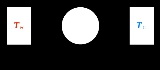
 is a mechanical device that provides useful work from the difference in temperature of two bodies:

During the 19th century, the second law was synthesized, essentially, by studying the dynamics of the Carnot heat engine
Carnot heat engine

File:Carnot-engine-1824.pngA Carnot heat engine is a hypothetical engine that operates on the reversible Carnot cycle. The basic model for this engine was developed by Nicolas L?onard Sadi Carnot in 1824....
 in coordination with James Joule's Mechanical equivalent of heat
Mechanical equivalent of heat

In the history of science, the mechanical equivalent of heat was a concept that had an important part in the development and acceptance of the conservation of energy and the establishment of the science of thermodynamics in the 19th century....
 experiments. Since any thermodynamic engine requires such a temperature difference, it follows that no useful work can be derived from an isolated system
Isolated system

In the natural sciences an isolated system, as contrasted with a Open system , is a physical system that does not interaction with its surroundings....
 in equilibrium; there must always be an external energy source and a cold sink. By definition, perpetual motion
Perpetual motion

The term perpetual motion, taken literally, refers to movement that goes on forever. However, the term more generally refers to any closed system that produces more energy than it consumes....
 machines of the second kind
would have to violate the second law to function.

History


The first theory on the conversion of heat into mechanical work is due to Nicolas Léonard Sadi Carnot
Nicolas Léonard Sadi Carnot

Nicolas L?onard Sadi Carnot was a France physicist and military engineer who, in his 1824 Reflections on the Motive Power of Fire, gave the first successful theoretical account of heat engines, now known as the Carnot cycle, thereby laying the foundations of the second law of thermodynamics....
 in 1824. He was the first to realize correctly that the efficiency of this conversion depends on the difference of temperature between an engine and its environment.

Recognizing the significance of James Prescott Joule
James Prescott Joule

James Prescott Joule Fellow of the Royal Society was an English physicist and brewing , born in Salford, Lancashire. Joule studied the nature of heat, and discovered its relationship to mechanical work ....
's work on the conservation of energy, Rudolf Clausius
Rudolf Clausius

Rudolf Julius Emanuel Clausius , was a Germany physicist and mathematician and is considered one of the central founders of the science of thermodynamics....
 was the first to formulate the second law in 1850, in this form: heat does not spontaneously flow from cold to hot bodies. While common knowledge now, this was contrary to the caloric theory
Caloric theory

The caloric theory is an obsolete scientific theory that heat consists of a fluid called caloric that flows from hotter to colder bodies. Caloric was also thought of as a weightless gas that could pass in and out of pores in solids and liquids....
 of heat popular at the time, which considered heat as a liquid. From there he was able to infer the law of Sadi Carnot and the definition of entropy (1865).

Established in the 19th century, the Kelvin
Kelvin

The kelvin is a Units of measurement of temperature and is one of the seven SI base units. The Kelvin scale is a Thermodynamic temperature scale where absolute zero, the theoretical absence of all thermal energy, is zero ....
-Planck statement of the Second Law says, "It is impossible for any device that operates on a cycle to receive heat from a single reservoir
Heat reservoir

In thermodynamics a heat reservoir is considered as a constant temperature source. The temperature of the reservoir does not change irrespective of whether heat is added or extracted to or from it....
 and produce a net amount of work." This was shown to be equivalent to the statement of Clausius.

The Ergodic hypothesis
Ergodic hypothesis

The quick definition of ergodic is that given sufficient time, a system will return to states that it has previously experienced. The text below explains this basic premise in detail....
 is also important for the Boltzmann approach. It says that, over long periods of time, the time spent in some region of the phase space of microstates with the same energy is proportional to the volume of this region, i.e. that all accessible microstates are equally probable over long period of time. Equivalently, it says that time average and average over the statistical ensemble are the same.

It has been shown that not only classical systems but also quantum mechanical
Quantum mechanics

Quantum mechanics is a set of principles underlying the most fundamental known description of all physical systems at the microscopic scale . Notable amongst these principles are both a dual wave-like and particle-like behavior of matter and radiation, and prediction of probabilities in situations where classical physics predicts certaintie...
 ones tend to maximize their entropy over time. Thus the second law follows, given initial conditions with low entropy. More precisely, it has been shown that the local von Neumann entropy
Von Neumann entropy

In quantum statistical mechanics, von Neumann entropy refers to the extension of classical entropy concepts to the field of quantum mechanics....
 is at its maximum value with an extremely high probability. The result is valid for a large class of isolated quantum systems (e.g. a gas in a container). While the full system is pure and has therefore no entropy, the entanglement
Entanglement

Entanglement may refer to:* Quantum entanglement* Orientation entanglement* Wire entanglement* By-catch, the unintended capture of animals in fishing nets...
 between gas and container gives rise to an increase of the local entropy of the gas. This result is one of the most important achievements of quantum thermodynamics
Quantum thermodynamics

In the physical sciences, quantum thermodynamics is the study of heat and Work dynamics in quantum systems. Approximately, quantum thermodynamics attempts to combine thermodynamics and quantum mechanics into a coherent whole....
.

Today, much effort in the field is to understand why the initial conditions early in the universe were those of low entropy, as this is seen as the origin of the second law (see below).

Informal descriptions

The second law can be stated in various succinct ways, including:
  • It is impossible to produce work in the surroundings using a cyclic process connected to a single heat reservoir (Kelvin
    William Thomson, 1st Baron Kelvin

    William Thomson, 1st Baron Kelvin , Order of Merit , Royal Victorian Order, Privy Council of the United Kingdom, Presidents of the Royal Society, Royal Society of Edinburgh, was an Ireland-born United Kingdom of Great Britain and Ireland Mathematical physics and engineer....
    , 1851).
  • It is impossible to carry out a cyclic process using an engine connected to two heat reservoirs that will have as its only effect the transfer of a quantity of heat from the low-temperature reservoir to the high-temperature reservoir (Clausius
    Rudolf Clausius

    Rudolf Julius Emanuel Clausius , was a Germany physicist and mathematician and is considered one of the central founders of the science of thermodynamics....
    , 1854).
  • If thermodynamic work
    Work (thermodynamics)

    In thermodynamics, work is the quantity of energy transferred from one system to another without an accompanying transfer of entropy. It is a generalization of the concept of mechanical work in mechanics....
     is to be done at a finite rate, free energy
    Thermodynamic free energy

    In thermodynamics, the term thermodynamic free energy refers to the amount of Work that can be extracted from a system, and is helpful in engineering applications....
     must be expended.


Mathematical descriptions

In 1856, the German physicist Rudolf Clausius
Rudolf Clausius

Rudolf Julius Emanuel Clausius , was a Germany physicist and mathematician and is considered one of the central founders of the science of thermodynamics....
 stated what he called the "second fundamental theorem in the mechanical theory of heat" in the following form:

where Q is heat, T is temperature and N is the "equivalence-value" of all uncompensated transformations involved in a cyclical process. Later, in 1865, Clausius would come to define "equivalence-value" as entropy. On the heels of this definition, that same year, the most famous version of the second law was read in a presentation at the Philosophical Society of Zurich on April 24th, in which, in the end of his presentation, Clausius concludes:

The entropy of the universe tends to a maximum.


This statement is the best-known phrasing of the second law. Moreover, owing to the general broadness of the terminology used here, e.g. universe
Universe

The universe is defined as everything that physically exists: the entirety of space and time, all forms of matter, energy and momentum, and the physical laws and physical constants that govern them....
, as well as lack of specific conditions, e.g. open, closed, or isolated, to which this statement applies, many people take this simple statement to mean that the second law of thermodynamics applies virtually to every subject imaginable. This, of course, is not true; this statement is only a simplified version of a more complex description.

In terms of time variation, the mathematical statement of the second law for an isolated system
Isolated system

In the natural sciences an isolated system, as contrasted with a Open system , is a physical system that does not interaction with its surroundings....
 undergoing an arbitrary transformation is:

where
S is the entropy and
t is time
Time

Time is a component of the measurement used to sequence events, to compare the durations of events and the intervals between them, and to quantify the motions of objects....
.


It should be noted that statistical mechanics
Statistical mechanics

Statistical mechanics is the application of probability theory, which includes Mathematics tools for dealing with large populations, to the field of mechanics, which is concerned with the motion of particles or objects when subjected to a force....
 gives an explanation for the second law by postulating that a material is composed of atoms and molecules which are in constant motion. A particular set of positions and velocities for each particle in the system is called a microstate
Microstate (statistical mechanics)

In statistical mechanics, a microstate describes a specific detailed microscopic configuration of a system, that the system visits in the course of its temperature....
 of the system and because of the constant motion, the system is constantly changing its microstate. Statistical mechanics postulates that, in equilibrium, each microstate that the system might be in is equally likely to occur, and when this assumption is made, it leads directly to the conclusion that the second law must hold in a statistical sense. That is, the second law will hold on average, with a statistical variation on the order of 1/vN where N is the number of particles in the system. For everyday (macroscopic) situations, the probability that the second law will be violated is practically zero. However, for systems with a small number of particles, thermodynamic parameters, including the entropy, may show significant statistical deviations from that predicted by the second law. Classical thermodynamic theory does not deal with these statistical variations.

Available useful work


An important and revealing idealized special case is to consider applying the Second Law to the scenario of an isolated system (called the total system or universe), made up of two parts: a sub-system of interest, and the sub-system's surroundings. These surroundings are imagined to be so large that they can be considered as an unlimited heat reservoir at temperature TR and pressure PR — so that no matter how much heat is transferred to (or from) the sub-system, the temperature of the surroundings will remain TR; and no matter how much the volume of the sub-system expands (or contracts), the pressure of the surroundings will remain PR.

Whatever changes dS and dSR occur in the entropies of the sub-system and the surroundings individually, according to the Second Law the entropy Stot of the isolated total system must not decrease:

According to the First Law of Thermodynamics
First law of thermodynamics

In thermodynamics, the first law of thermodynamics is an expression of the more universal physical law of the conservation of energy. Succinctly, the first law of thermodynamics states:...
, the change dU in the internal energy of the sub-system is the sum of the heat dq added to the sub-system, less any work dw done by the sub-system, plus any net chemical energy entering the sub-system d ?µiRNi, so that:

where µiR are the chemical potential
Chemical potential

In thermodynamics, physics and chemistry, chemical potential, symbolized by ?, is a term introduced by the American engineer, chemist and mathematical physicist Willard Gibbs, which he defined as follows:...
s of chemical species in the external surroundings.

Now the heat leaving the reservoir and entering the sub-system is

where we have first used the definition of entropy in classical thermodynamics (alternatively, the definition of temperature in statistical thermodynamics); and then the Second Law inequality from above.

It therefore follows that any net work dw done by the sub-system must obey

It is useful to separate the work dw done by the subsystem into the useful work dwu that can be done by the sub-system, over and beyond the work pR dV done merely by the sub-system expanding against the surrounding external pressure, giving the following relation for the useful work that can be done:

It is convenient to define the right-hand-side as the exact derivative of a thermodynamic potential, called the availability or exergy
Exergy

In thermodynamics, the exergy of a System is the maximum Mechanical work possible during a Thermodynamic process that brings the system into Thermodynamic equilibrium with a heat reservoir....
 X of the subsystem,

The Second Law therefore implies that for any process which can be considered as divided simply into a subsystem, and an unlimited temperature and pressure reservoir with which it is in contact,

i.e. the change in the subsystem's exergy plus the useful work done by the subsystem (or, the change in the subsystem's exergy less any work, additional to that done by the pressure reservoir, done on the system) must be less than or equal to zero.

Special cases: Gibbs and Helmholtz free energies

When no useful work is being extracted from the sub-system, it follows that

with the exergy
Exergy

In thermodynamics, the exergy of a System is the maximum Mechanical work possible during a Thermodynamic process that brings the system into Thermodynamic equilibrium with a heat reservoir....
 X reaching a minimum at equilibrium, when dX=0.

If no chemical species can enter or leave the sub-system, then the term ? µiR Ni can be ignored. If furthermore the temperature of the sub-system is such that T is always equal to TR, then this gives:

If the volume V is constrained to be constant, then

where A is the thermodynamic potential called Helmholtz free energy
Helmholtz free energy

In thermodynamics, the Helmholtz free energy is a thermodynamic potential which measures the ?useful? work obtainable from a closed system thermodynamic thermodynamic system at a constant temperature and volume....
, A=U-TS. Under constant-volume conditions therefore, dA = 0 if a process is to go forward; and dA=0 is the condition for equilibrium.

Alternatively, if the sub-system pressure p is constrained to be equal to the external reservoir pressure pR, then

where G is the Gibbs free energy
Gibbs free energy

In thermodynamics, the Gibbs free energy is a thermodynamic potential that measures the "useful" or process-initiating Work obtainable from an isothermal, Isobaric process thermodynamic system....
, G=U-TS+PV. Therefore under constant-pressure conditions, if dG = 0, then the process can occur spontaneously, because the change in system energy exceeds the energy lost to entropy. dG=0 is the condition for equilibrium. This is also commonly written in terms of enthalpy
Enthalpy

In thermodynamics and chemistry, the enthalpy is a quotient or description of thermodynamic potential of a system, which can be used to calculate the heat transfer during a quasistatic process taking place in a closed system thermodynamic system under constant pressure....
, where H=U+PV.

Application

In sum, if a proper infinite-reservoir-like reference state is chosen as the system surroundings in the real world, then the Second Law predicts a decrease in X for an irreversible process and no change for a reversible process. is equivalent to

This expression together with the associated reference state permits a design engineer
Design engineer

Design engineer is a general term that covers multiple engineering disciplines including but not limited to electrical engineering, mechanical engineering and civil engineer engineering, architectural engineering in the U.S....
 working at the macroscopic scale (above the thermodynamic limit
Thermodynamic limit

In physics and physical chemistry, the thermodynamic limit is reached as the number of particles in a system N approaches infinity ? or in practical terms, one mole or Avogadro's number ? 6 x 1023....
) to utilize the Second Law without directly measuring or considering entropy change in a total isolated system. (Also, see process engineer). Those changes have already been considered by the assumption that the system under consideration can reach equilibrium with the reference state without altering the reference state. An efficiency for a process or collection of processes that compares it to the reversible ideal may also be found (See second law efficiency
Exergy efficiency

Exergy efficiency computes the efficiency of a process taking the second law of thermodynamics into account....
.)

This approach to the Second Law is widely utilized in engineering
Engineering

Engineering is the discipline and profession of applying Technology and science knowledge and utilizing natural laws and physical resources in order to design and implement materials, structures, machines, devices, systems, and process that safely realize a desired objective and meet specified criteria....
 practice, environmental accounting, systems ecology
Systems ecology

Systems ecology is an interdisciplinary field of ecology, taking a holism approach to the study of ecological systems, especially ecosystems. Systems ecology can be seen as an application of general systems theory to ecology....
, and other disciplines.

Criticisms

Owing to the somewhat ambiguous nature of the formulation of the second law, i.e. the postulate that the quantity heat
Heat

In physics and thermodynamics, heat is any transfer of energy from one body or thermodynamic system to another due to a difference in temperature....
 divided by temperature increases in spontaneous natural processes, it has occasionally been subject to criticism as well as attempts to dispute or disprove it. Clausius himself even noted the abstract nature of the second law. In his 1862 memoir, for example, after mathematically stating the second law by saying that integral of the differential of a quantity of heat divided by temperature must be greater than or equal to zero for every cyclical process which is in any way possible: ,

Clausius then stated:
Although the necessity of this theorem admits of strict mathematical proof if we start from the fundamental proposition above quoted it thereby nevertheless retains an abstract form, in which it is with difficulty embraced by the mind, and we feel compelled to seek for the precise physical cause, of which this theorem is a consequence.


Recall that heat
Heat

In physics and thermodynamics, heat is any transfer of energy from one body or thermodynamic system to another due to a difference in temperature....
 and temperature
Temperature

In physics, temperature is a physical property of a Physical system that underlies the common notions of hot and cold; something that feels hotter generally has the greater temperature....
 are statistical, macroscopic quantities that become somewhat ambiguous when dealing with a small number of atoms.

Perpetual motion of the second kind

Before 1850, heat
Heat

In physics and thermodynamics, heat is any transfer of energy from one body or thermodynamic system to another due to a difference in temperature....
 was regarded as an indestructible particle of matter. This was called the “material hypothesis”, as based principally on the views of Isaac Newton. It was on these views, partially, that in 1824 Sadi Carnot formulated the initial version of the second law. It soon was realized, however, that if the heat particle were conserved, and as such not changed in the cycle of an engine, that it would be possible to send the heat particle cyclically through the working fluid of the engine and use it to push the piston and then return the particle, unchanged, to its original state. In this manner perpetual motion
Perpetual motion

The term perpetual motion, taken literally, refers to movement that goes on forever. However, the term more generally refers to any closed system that produces more energy than it consumes....
 could be created and used as an unlimited energy source. Thus, historically, people have always been attempting to create a perpetual motion machine so to disprove the second law.

Maxwell's Demon

In 1871, James Clerk Maxwell
James Clerk Maxwell

James Clerk Maxwell was a Scotland Mathematical physics. His most significant achievement was the development of the classical electromagnetic theory, synthesizing all previous unrelated observations, experiments and equations of electricity, magnetism and even optics into a consistent theory....
 proposed a thought experiment
Thought experiment

A thought experiment , sometimes called a Gedanken experiment, is a proposal for an experiment that would test or illuminate a hypothesis or theory....
, now called Maxwell's demon
Maxwell's demon

Maxwell's demon was an 1867 thought experiment by the Scotland physicist James Clerk Maxwell, meant to raise questions about the possibility of violating the second law of thermodynamics....
, which challenged the second law. This experiment reveals the importance of observability in discussing the second law. In other words, it requires a certain amount of energy to collect the information necessary for the demon to "know" the whereabouts of all the particles in the system. This energy requirement thus negates the challenge to the second law. This apparent paradox can also be reconciled from another perspective, by resorting to a use of information entropy
Information entropy

In information theory, entropy is a measure of the uncertainty associated with a random variable. The term by itself in this context usually refers to the Shannon entropy, which quantifies, in the sense of an expected value, the self-information contained in a message, usually in units such as bits....
.

Time's Arrow and the Origin of the Second Law

The second law is a law about macroscopic irreversibility, and so may appear to violate the principle of T-symmetry
T-symmetry

T Symmetry is the symmetry in physics under a time reversal Transformation —Although in restricted contexts one may find this symmetry, the universe itself does not show symmetry under time reversal due to the second law of thermodynamics....
. Boltzmann first investigated the link with microscopic reversibility. In his H-theorem
H-theorem

In thermodynamics, the H-theorem, introduced by Ludwig Boltzmann in 1872, describes the increase in the entropy of an ideal gas in an irreversible process, by considering the Boltzmann equation....
 he gave an explanation, by means of statistical mechanics
Statistical mechanics

Statistical mechanics is the application of probability theory, which includes Mathematics tools for dealing with large populations, to the field of mechanics, which is concerned with the motion of particles or objects when subjected to a force....
, for dilute gases in the zero density limit where the ideal gas
Ideal gas

The ideal gas model is a model of matter in which the molecules are treated as non-interacting point particles which are engaged in a random motion that obeys conservation of energy....
 equation of state holds. He derived the second law of thermodynamics not from mechanics alone, but also from the probability arguments. His idea was to write an equation of motion for the probability that a single particle has a particular position and momentum at a particular time. One of the terms in this equation accounts for how the single particle distribution changes through collisions of pairs of particles. This rate depends on the probability of pairs of particles. Boltzmann introduced the assumption of molecular chaos
Molecular chaos

In kinetic theory in physics, molecular chaos is the assumption that the velocities of colliding particles are uncorrelated, and independent of position....
 to reduce this pair probability to a product of single particle probabilities. From the resulting Boltzmann equation
Boltzmann equation

The Boltzmann equation, also often known as the Boltzmann transport equation, devised by Ludwig Boltzmann, describes the Probability distribution of one particle in a fluid....
 he derived his famous H-theorem
H-theorem

In thermodynamics, the H-theorem, introduced by Ludwig Boltzmann in 1872, describes the increase in the entropy of an ideal gas in an irreversible process, by considering the Boltzmann equation....
, which implies that on average the entropy of an ideal gas can only increase.

The assumption of molecular chaos in fact violates time reversal symmetry. It assumes that particle momenta are uncorrelated before collisions. If you replace this assumption with "anti-molecular chaos," namely that particle momenta are uncorrelated after collision, then you can derive an anti-Boltzmann equation and an anti-H-Theorem which implies entropy decreases on average. Thus we see that in reality Boltzmann did not succeed in solving Loschmidt's paradox
Loschmidt's paradox

Loschmidt's paradox, also known as the reversibility paradox, is the objection that it should not be possible to deduce an irreversible process from time-symmetric dynamics....
. The molecular chaos assumption is the key element that introduces the arrow of time
Arrow of time

In the natural sciences, arrow of time, or time?s arrow, is a term coined in 1927 by British astronomer Arthur Eddington used to distinguish a direction of time on a four-dimensional relativistic map of the world, which, according to Eddington, can be determined by a study of organizations of atoms, molecules, and bodies....
.

The origin of the arrow of time is today usually thought to be the smooth, uncorrelated (and hence low enthropy) initial conditions that existed in the very early universe.

Applications to living systems

The second law of thermodynamics has been proven mathematically for thermodynamic systems, where entropy is defined in terms of heat
Heat

In physics and thermodynamics, heat is any transfer of energy from one body or thermodynamic system to another due to a difference in temperature....
 divided by the absolute temperature. The second law is often applied to other situations, such as the complexity of life
Life

Life is a characteristic of organisms that exhibit certain biological processes such as chemical reactions or other events that results in a transformation....
, or orderliness. However it is incorrect to apply the closed-system expression of the second law of thermodynamics to any one sub-system connected by mass-energy flows to another ("open system"). In sciences such as biology
Biology

Biology is a branch of the natural sciences concerned with the study of living organisms and their interaction with each other and their environment ....
 and biochemistry
Biochemistry

Biochemistry is the study of the chemistry processes in living organisms. It deals with the structure and function of cellular components such as proteins, carbohydrates, lipids, nucleic acids and other biomolecules....
 the application of thermodynamics is well-established, e.g. biological thermodynamics
Biological thermodynamics

Biological thermodynamics is a phrase that is sometimes used to refer to bioenergetics, the study of energy transformation in the biological sciences....
. The general viewpoint on this subject is summarized well by biological thermodynamicist Donald Haynie; as he states: "Any theory claiming to describe how organisms originate and continue to exist by natural causes must be compatible with the first and second laws of thermodynamics."

This is very different, however, from the claim made by many creationists that evolution
Evolution

In biology, evolution is change in the heritability trait of a population of organisms from one generation to the next. These changes are caused by a combination of three main processes: variation, reproduction, and selection....
 violates the second law of thermodynamics. Evidence indicates that biological systems and evolution of those systems conform to the second law, since although biological systems may become more ordered, the net change in entropy for the entire universe is still positive as a result of evolution. Additionally, the process of natural selection responsible for such local increase in order may be mathematically derived from the expression of the second law equation for non-equilibrium connected open systems, arguably making the Theory of Evolution itself an expression of the Second Law.

Complex systems

It is occasionally claimed that the second law is incompatible with autonomous self-organisation, or even the coming into existence of complex systems. This is a common creationist argument against evolution. The entry self-organisation explains how this claim is a misconception. In fact, as hot systems cool down in accordance with the second law, it is not unusual for them to undergo spontaneous symmetry breaking
Spontaneous symmetry breaking

In physics, spontaneous symmetry breaking occurs when a system that is symmetry in physics with respect to some symmetry group goes into a vacuum state that is not symmetric....
, i.e. for structure to spontaneously appear as the temperature drops below a critical threshold. Complex structures, such as Bénard cells
Bénard cells

B?nard cells are convection cells that appear spontaneously in a liquid layer when heat is applied from below. They can be obtained using a simple experiment first conducted by Henri B?nard, a French physicist, in 1900....
, also spontaneously appear where there is a steady flow of energy from a high temperature input source to a low temperature external sink.

Furthermore, a system that energy flows into and out of may decrease its local entropy provided the increase of the entropy to its surrounding that this process causes is greater than or equal to the local decrease in entropy. A good example of this is crystallization
Crystallization

Crystallization is the process of formation of solid crystals Precipitation from a solution, melting or more rarely Deposition directly from a gas....
. As a liquid cools, crystals begin to form inside it. While these crystals are more ordered than the liquid they originated from, in order for them to form they must release a great deal of heat, known as the latent heat of fusion. This heat flows out of the system and increases the entropy of its surroundings to a greater extent than the decrease of energy that the liquid undergoes in the formation of crystals.

An interesting situation to consider is that of a supercooled liquid perfectly isolated thermodynamically, into which a grain of dust is dropped. Here even though the system cannot export energy to its surroundings, it will still crystallize. Now however the release of latent heat will contribute to raising its own temperature. If this release of heat causes the temperature to reach the melting point before it has fully crystallized, then it shall remain a mixture of liquid and solid; if not, then it will be a solid at a significantly higher temperature than it previously was as a liquid. In both cases entropy from its disordered structure is converted into entropy of disordered motion.

Quotes

"The law that entropy always increases holds, I think, the supreme position among the laws of Nature. If someone points out to you that your pet theory of the universe
Universe

The universe is defined as everything that physically exists: the entirety of space and time, all forms of matter, energy and momentum, and the physical laws and physical constants that govern them....
 is in disagreement with Maxwell's equations
Maxwell's equations

In electromagnetism, James Clerk Maxwell equations are a set of four partial differential equations that describe the properties of the electric field and magnetic field fields and relate them to their sources, charge density and current density....
 — then so much the worse for Maxwell's equations. If it is found to be contradicted by observation — well, these experimentalists do bungle things sometimes. But if your theory is found to be against the second law of thermodynamics I can give you no hope; there is nothing for it but to collapse in deepest humiliation." — Sir Arthur Stanley Eddington
Arthur Stanley Eddington

Sir Arthur Stanley Eddington, Order of Merit was an English people astrophysicist of the early 20th century. The Eddington limit, the natural limit to the luminosity of stars, or the radiation generated by accretion onto a compact object, is named in his honour....
, The Nature of the Physical World (1927)
The tendency for entropy to increase in isolated systems is expressed in the second law of thermodynamics — perhaps the most pessimistic and amoral formulation in all human thought. — Greg Hill and Kerry Thornley
Kerry Thornley

Kerry Wendell Thornley is perhaps best-known as the co-founder of Discordianism, in which context he is usually known as Omar Khayyam Ravenhurst or simply Lord Omar....
, Principia Discordia
Principia Discordia

Principia Discordia is a Discordianism religious text written by Gregory Hill and Kerry Thornley . It was originally published under the title "Principia Discordia or How The West Was Lost" in a limited edition of 5 copies in 1965....
 (1965)
There are almost as many formulations of the second law as there have been discussions of it. — Philosopher / Physicist P.W. Bridgman
Percy Williams Bridgman

Percy Williams Bridgman was an American List of physicists who won the 1946 Nobel Prize in Physics for his work on the physics of high pressures....
, (1941)


Miscellany

  • Flanders and Swann
    Flanders and Swann

    The British duo "Flanders and Swann" were the actor and singer Michael Flanders and the composer, pianist and linguist Donald Swann who collaborated in writing and performing comedy....
     produced a setting of a statement of the Second Law of Thermodynamics to music, called "".
  • The economist Nicholas Georgescu-Roegen
    Nicholas Georgescu-Roegen

    Nicholas Georgescu-Roegen, born Nicolae Georgescu was a Romanian mathematician, statistician and economist, best known for his 1971 magnum opus The Entropy Law and the Economic Process, which situated the view that the second law of thermodynamics, i.e., that usable "free energy" tends to disperse or become lost in the form of "bou...
     showed the significance of the Entropy Law in the field of economics (see his work The Entropy Law and the Economic Process (1971), Harvard University Press).
  • Creationist Duane Gish
    Duane Gish

    Duane Tolbert Gish is an united States biochemist who is one of the most prominent and outspoken members of the Creationism. Gish was formerly vice-president of the Institute for Creation Research and the author of numerous publications on the subject of creation science....
     incorrectly used the Second Law of Thermodynamics to argue that evolution was impossible, although stand-up comedian Dave Gorman
    Dave Gorman

    David James Gorman is an England author, list of humorists, filmmaker and radio presenter. He performs comedy shows on stage in which he tells stories of extreme adventures and presents the evidence to the audience in order to prove to them that, unlike in most other stage presentations, they are true stories....
     has pointed out that Gish misunderstood the definition of a closed system.
  • The Last Question
    The Last Question

    "The Last Question" is a science fiction short story by Isaac Asimov. It first appeared in the November 1956 issue of Science Fiction Quarterly and was reprinted in the collections Nine Tomorrows , The Best of Isaac Asimov and Robot Dreams , as well as the retrospective Opus 100 ....
    , a science fiction short story by Isaac Asimov, is centered around the question of how to reverse the Second Law of Thermodynamics, or entropy.
  • One of acclaimed comic writer Alan Moore
    Alan Moore

    Alan Moore is an English writer most famous for his influential work in comics, including the acclaimed graphic novels Watchmen, V for Vendetta and From Hell....
    's short stories, chronicled in a collection called Wild Worlds, depicts indestructible and/or immortal characters facing down the unstoppable entropy at the end of the universe.


See also

  • Clausius-Duhem inequality
    Clausius-Duhem inequality

    The Clausius-Duhem inequality is a way of expressing the second law of thermodynamics that is used in continuum mechanics. This inequality is particularly useful in determining whether the constitutive relation of a material is thermodynamically allowable....
  • Entropy
    Entropy

    In many branches of science, entropy is a measure of the disorder of a system. The concept of entropy is particularly notable as it is applied across physics, information theory and mathematics....
  • Entropy (arrow of time)
    Entropy (arrow of time)

    Entropy is the only quantity in the physical sciences that "picks" a particular direction for time, sometimes called an arrow of time. As one goes "forward" in time, the second law of thermodynamics says that the entropy of an isolated system can only increase or remain the same; it cannot decrease....
  • Entropy: A New World View
    Entropy: A New World View

    Entropy: A New World View is a non-fiction book by Jeremy Rifkin and Ted Howard, with an Afterword by Nicholas Georgescu-Roegen. First published by The Viking Press, New York in 1980 ....
     [book]
  • Final Anthropic Principle
    Final anthropic principle

    The final anthropic principle is defined by physicists John D. Barrow and Frank J. Tipler's 1986 book "The Anthropic Cosmological Principle" as a generalization of the anthropic principle as follows:...
  • First law of thermodynamics
    First law of thermodynamics

    In thermodynamics, the first law of thermodynamics is an expression of the more universal physical law of the conservation of energy. Succinctly, the first law of thermodynamics states:...
  • Heat death of the universe
    Heat death of the universe

    The heat death is a possible Fate of the universe, in which it has "Entropy" to a state of no thermodynamic free energy to sustain motion or life....
  • History of thermodynamics
    History of thermodynamics

    The history of thermodynamics is a fundamental strand in the history of physics, the history of chemistry, and the history of science in general....
  • Fluctuation Theorem
    Fluctuation theorem

    The fluctuation theorem is a theorem from statistical mechanics dealing with the relative probability that the entropy of a system which is currently away from thermodynamic equilibrium will increase or decrease over a given amount of time....
  • Jarzynski equality
    Jarzynski equality

    The Jarzynski equality is an equation in statistical mechanics that relates Thermodynamic free energy differences between two equilibrium states and non-equilibrium processes....
  • Laws of thermodynamics
    Laws of thermodynamics

    The laws of thermodynamics, in principle, describe the specifics for the transport of heat and Work in thermodynamic processes. Since their inception, however, these Physical laws have become some of the most important in all of physics and other branches of science connected to thermodynamics....
  • Loschmidt's paradox
    Loschmidt's paradox

    Loschmidt's paradox, also known as the reversibility paradox, is the objection that it should not be possible to deduce an irreversible process from time-symmetric dynamics....
  • Maximum entropy thermodynamics
    Maximum entropy thermodynamics

    In physics, maximum entropy thermodynamics views equilibrium thermodynamics and statistical mechanics as Inference#Inference and uncertainty processes....
  • Statistical mechanics
    Statistical mechanics

    Statistical mechanics is the application of probability theory, which includes Mathematics tools for dealing with large populations, to the field of mechanics, which is concerned with the motion of particles or objects when subjected to a force....
  • Perpetual motion
    Perpetual motion

    The term perpetual motion, taken literally, refers to movement that goes on forever. However, the term more generally refers to any closed system that produces more energy than it consumes....
  • Second-law efficiency
    Exergy efficiency

    Exergy efficiency computes the efficiency of a process taking the second law of thermodynamics into account....
  • Relativistic heat conduction
    Relativistic heat conduction

    The theory of Relativistic Heat Conduction claims to be the only model for heat conduction that is compatible with the theory of special relativity, the second law of thermodynamics, electrodynamics, and quantum mechanics, simultaneously....


Further reading

  • Goldstein, Martin, and Inge F., 1993. The Refrigerator and the Universe. Harvard Univ. Press. Chpts. 4-9 contain an introduction to the Second Law, one a bit less technical than this entry. ISBN 978-0674753242
  • Leff, Harvey S., and Rex, Andrew F. (eds.) 2003. Maxwell's Demon 2 : Entropy, classical and quantum information, computing. Bristol UK; Philadelphia PA: Institute of Physics. ISBN 978-0585492377
  • (technical).


External links

  • Stanford Encyclopedia of Philosophy
    Stanford Encyclopedia of Philosophy

    The Stanford Encyclopedia of Philosophy is a Open access online encyclopedia of philosophy maintained by Stanford University. The SEP was initially developed with U.S....
    : "" -- by Lawrence Sklar.
  • E.T. Jaynes, 1988, "" in G. J. Erickson and C. R. Smith (eds.) Maximum-Entropy and Bayesian Methods in Science and Engineering, Vol 1, p. 267.