
All Topics  
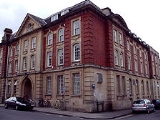
Ruskin College, Oxford


   Email Print
   Bookmark   Link


Ruskin College, Oxford


Mission and purpose

The mission of the CollegeCollege

College is a term most often used today to denote an educational institution....
 has always been to provide educational opportunities to adults who are excluded and disadvantaged, and to transform the individuals concerned along with the communities, groups and societies from which they come, the only change having been to personalise the language (away from ‘the excluded’, who do not sound like people) in line with growing equalities awareness. The mission statement is two-fold:

  • The first aim, that of giving individuals a second chance in education, continues to be achieved by admitting those with few or no formal qualifications to courses of study that can result in, or lead on to, university-level qualifications.
  • The second aim, the transformational element of the mission, is evidenced by the fact that the most frequent thing former students say about Ruskin is that it changed their lives. Students, whether or not they themselves are resident, benefit from studying in a setting with a strong sense of academic community and from the intensive tutorial teaching that Ruskin offers. The College is also transformational because it sees education as a vehicle for progressive social change.


Ruskin tends towards a curriculum that has high social relevance, students who want to make a difference in the world, and forms of academic scholarship and research that are engaged and applied.

Ruskin’s mission is also pursued by means of strong historical links, nationally and internationally, with the labour and trade union movement, other social movements and activism around social issues (e.g., anti-ageismAgeism

Ageism is bias against a person or group on the grounds of age....
), as well as with local communities, for example through the Social Work and Youth and Community Work programmes.

History

Ruskin College was established in 1899 specifically to provide educational opportunities for working class men, who were denied access to university. It was deliberately placed in OxfordOxford

Oxford is a city and local government district in Oxfordshire, England, with a population of 134,248 ....
, the city in which its young American founders the Vroomans had studied, because the city symbolised the educational privilege and standards to which ordinary people could never previously have aspired.

Ruskin College became, in turn, a symbol of working people’s education. It served as a model for labour colleges around the world, and GandhiMahatma Gandhi

Mohandas Karamchand Gandhi was a major political and spiritual leader of India and the Indian independence movement....
 made a point of visiting during a brief stay in Oxford in 1931 because he had been so inspired by the writings of John RuskinJohn Ruskin

John Ruskin is best known for his work as an art critic and social critic, but is remembered as an author, poet and artist a...
 on workers’ education, just as the College founders had been.

College structure

Student enrolments at Ruskin in 2005–2006 reached their highest ever number in the College’s history. Enrolments on long courses were 294 in total across a range of undergraduate and postgraduate programmes. Short course enrolments reached 5,187 in total, including trade union courses, residential short courses and the largest ever Summer School.

In 2005-06, there were 78 full-time equivalent academic staff of whom 26 were teaching staff and 13 teaching support services staff. Progression rates are excellent, with 87% of students on undergraduate-level Humanities courses at Ruskin having come via short courses there, and a majority of students on long courses going on to degree-level study, both at Ruskin and elsewhere. Ruskin students go on to jobs in professional, trade union and political settings, amongst others.

Courses offered

Ruskin’s educational work may be divided into further education activity (including short courses and external trade union courses), supported by the Learning and Skills Council (LSC), and higher education work, funded by the Higher Education Funding Council for England (HEFCE) and validated by the Open University Validation Services (OUVS).

The College’s work in higher education constitutes:

  • A one-year full-time Certificate of Higher Education (CertHE) that currently recruits to six pathways: English and Creative Writing, History, Law, Studying Society, Labour Relations and Law, and Women’s Studies (part-time).
  • Three Diplomas of Higher Education (DipHE) in English Studies: Creative Writing and Critical Practice, International Labour and Trade Union Studies and in Social Change.
  • Four BAs in English Studies: Creative Writing and Critical Practice, International Labour and Trade Union Studies, Social Work and Sociology, Politics and Economics.
  • A Foundation Degree in Youth and Community Work, with five core options and fourteen optional ones: seven offering a pathway in Youth Work and seven in Community Development. This course will be offered at BA level from 2008.
  • Three MA degrees in International Labour and Trade Union Studies, Public History and Women’s Studies.

People

Principals

  • 1899-1909 James Dennis Hird (1st Principal)
  • 1909-1916 Dr Gilbert Slater
  • 1916-1925 Henry Sanderson Furniss 'Lord Sanderson'
  • 1925-???? Alfred Barratt Brown
  • 1944-1950 Herbert Lionel Elvin
  • 1950-1979 Herbert Delauney "Billy" HughesBilly Hughes (educationist)

    Herbert Delauney Hughes , known as Billy Hughes, was a British adult educationist and Labour Party politician....
  • 1979-1989 John Hughes
  • 1989-1997 Dr Stephen Yeo
  • 1998-2003 James Durcan
  • 2004-present day Professor Audrey Mullender

Former academics/teachers

  • Clement Richard Attlee, (UK Prime Minister 1945-1951)
  • Henry Sanderson Furniss Lord Sanderson 1907-1916
  • Lord Bill McCarthy
  • Raphael SamuelRaphael Samuel

    Raphael Samuel was a Marxist historian, born in London to a Communist family....
  • Tom MboyaTom Mboya

    Tom Joseph Odhiambo Mboya was a Kenyan politician during Jomo Kenyatta's government....
  • Stephen Howe

Notable alumni

  • John PrescottJohn Prescott

    John Leslie Prescott MP is a British Labour Party politician, Deputy Prime Minister, First Secretary of State and Member of...
  • Madhusudan MistryMadhusudan Mistry

    Madhusudan Devram Mistry is a member of the 14th Lok Sabha of India....
  • Dennis SkinnerDennis Skinner

    Dennis Edward Skinner is a British politician, and Labour Member of Parliament for Bolsover since 1970....
    , Labour MP for Bolsover
  • Jack Ashley, Baron Ashley of Stoke, Labour Member of Parliament
  • George WoodcockGeorge Woodcock (trade unionist)

    George Woodcock was a British trade unionist and general secretary of the Trades Union Congress from 1960 to 1969....
    , General Secretary, Trade Union Congress
  • Siaka Probyn Stevens, Prime Minister & President of Sierra Leone
  • Ben EnwonwuBen Enwonwu

    Benedict Chuka Enwonwu better known internationally as Ben Enwonwu was a renown Nigerian artist....
    , Nigerian Artist
  • R. M. FoxR. M. Fox

    Richard Michael Fox , better known as R....
    , author and historian
  • Sir Robert YoungRobert Young

    Robert Young may refer to several different people:...
    , trade unionist, Labour Member Of Parliament
  • Peter Wilmott, sociologist
  • Thomas Edward Williams, 1st Baron Williams, Co-operative and Labour politician
  • James Walker, Trade Unionist and Labour politician

Ruskin Fellowship

The Ruskin FellowshipRuskin Fellowship

The Ruskin Fellowship is an alumni association for former students and staff of Ruskin College, Oxford, England....
 is an alumni association for ex-Ruskin College students and staff. Independent of but associated with the College, the Fellowship aims to support the work and ethos of the College in offering university-level education to disadvantaged adults in Britain. There is also a post graduate programme and an international section involving: International Labour and Trade Union Studies; Webb and Chevening Scholars.

RSU

The Ruskin Students Union is known for its political and social endeavours. Recently it has actively protested against fascism at the Oxford UnionOxford Union

The Oxford Union Society, commonly referred to simply as the Oxford Union, is a private debating society in the city o...
 when it invited the leader of the BNP to speak, and it has also given support to the striking nurses in the Karren Reissmann dispute.

Notable former executive members of the RSU include John Prescott and Jack Ashley.

Ruskin College Strike of 1909

In 1908, a group of Ruskin students, dissatisfied with its education policy which they viewed as too pro-establishment and imbued with elements of "social control", formed the Plebs League. The students revolt was supported by the Principal, Dennis Hird, and following his dismissal the students took strike action, refusing to attend lectures.

Relocation of the College

In the past several people have considered relocating the main college site as it is cramped and expensive to expand in the centre of Oxford. In 2005-8 the current principal seeks to sell the Walton Street building and carry out a £16m construction programme at the site in Old Headington which has been used in addition to Walton Street since 1946, making it the headquarters. There are protests from the students, staff and fellowship members against such a move.

External links