
All Topics  
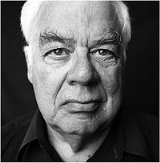
Richard Rorty


   Email Print
   Bookmark   Link


Richard Rorty


Richard McKay Rorty (October 4, 1931 - June 8, 2007) was an American philosopher. He had a long and diverse career in Philosophy, Humanities, and Literature departments. His complex intellectual background gave him a comprehensive and nuanced understanding of the analytical
Analytic philosophy

Analytic philosophy is a generic term for a style of philosophy that came to dominate English-speaking countries in the 20th century. In the United States, United Kingdom, Canada, Scandinavia, Australia, and New Zealand the overwhelming majority of university philosophy departments identify themselves as "analytic" departments....
 tradition in philosophy he would later famously reject.

ard Rorty was born October 4, 1931 in New York City to James and Winifred Rorty.


Discussion
Ask a question about 'Richard Rorty'
Start a new discussion about 'Richard Rorty'
Answer questions from other users
Full Discussion Forum


Quotations


My principal motive is the belief that we can still make admirable sense of our lives even if we cease to have ... an ambition of transcendence.

Introduction to Objectivity, Relativism, and Truth: Philosophical Papers, Volume I (1991).

Philosophy makes progress not by becoming more rigorous but by becoming more imaginative.

Introduction to Truth and Progress: Philosophical Papers, Volume 3 (1998).

Truthfulness under oath is, by now, a matter of our civic religion, our relation to our fellow citizens rather than our relation to a nonhuman power.

"John Searle on Realism and Relativism." Truth and Progress: Philosophical Papers, Volume 3 (1998).


Encyclopedia


Richard McKay Rorty (October 4, 1931 - June 8, 2007) was an American philosopher. He had a long and diverse career in Philosophy, Humanities, and Literature departments. His complex intellectual background gave him a comprehensive and nuanced understanding of the analytical
Analytic philosophy

Analytic philosophy is a generic term for a style of philosophy that came to dominate English-speaking countries in the 20th century. In the United States, United Kingdom, Canada, Scandinavia, Australia, and New Zealand the overwhelming majority of university philosophy departments identify themselves as "analytic" departments....
 tradition in philosophy he would later famously reject.

Biography

Richard Rorty was born October 4, 1931 in New York City to James and Winifred Rorty. Winifred was the daughter of Social Gospel theologian Walter Rauschenbusch
Walter Rauschenbusch

Walter Rauschenbusch was a Christian Theologian and Baptist Minister. He was a key figure in the Social Gospel movement in the USA....
. Rorty enrolled at the University of Chicago
University of Chicago

The University of Chicago is a private university located principally in the Hyde Park, Chicago neighborhood of Chicago. Although an older university by the same name existed prior to its founding, the modern University of Chicago credits its founding to the oil magnate John D....
 shortly before turning 15, where he received a bachelor's and a master's degree in philosophy, continuing at Yale University
Yale University

Yale University is a private university in New Haven, Connecticut. Founded in 1701 as the Collegiate School, Yale is the Colonial Colleges institution of higher education in the United States and is a member of the Ivy League....
 for a PhD in philosophy. He served two years in the army, and then taught at Wellesley College for three years, until 1961.

Thereafter for 21 years at Princeton University
Princeton University

Princeton University is a private university university located in Princeton, New Jersey, New Jersey, United States. The school is one of the eight universities of the Ivy League and has the largest per-student Financial endowment in the world....
 Rorty was a professor of philosophy. In 1982 he became Kenan Professor of the Humanities at the University Of Virginia
University of Virginia

The University of Virginia is a public university research university located in Charlottesville, Virginia, founded by Thomas Jefferson. Conceived by 1800 and established in 1819, it is the only university in the United States to be designated a World Heritage Site by UNESCO, an honor it shares with nearby Monticello....
. In 1997 Rorty became professor emeritus of comparative literature
Comparative literature

Comparative literature is literary criticism dealing with the literature of two or more different linguistic, cultural or national groups. While most frequently practiced with works of different languages, it may also be performed on works of the same language if the works originate from different nations or cultures among which that languag...
 (and philosophy, by courtesy), at Stanford University
Stanford University

Leland Stanford Junior University, commonly referred to as Stanford University or Stanford, is a private university research university located in Stanford, California, California, United States....
. During this period he was especially popular, and once quipped that he had been assigned to the position of "transitory professor of trendy studies".

Rorty's doctoral dissertation, "The Concept of Potentiality", and his first book (as editor), The Linguistic Turn (1967), were firmly in the prevailing analytic
Analytic philosophy

Analytic philosophy is a generic term for a style of philosophy that came to dominate English-speaking countries in the 20th century. In the United States, United Kingdom, Canada, Scandinavia, Australia, and New Zealand the overwhelming majority of university philosophy departments identify themselves as "analytic" departments....
 mode. However, he gradually became acquainted with the American philosophical movement known as pragmatism
Pragmatism

Pragmatism is the philosophy of considering practical consequences or real effects to be vital components of meaning and truth. Pragmatism is generally considered to have originated in the late nineteenth century with Charles Peirce, who first stated the pragmatic maxim....
, particularly the writings of John Dewey
John Dewey

John Dewey was an American philosopher, psychologist, and school reform whose thoughts and ideas have been highly influential in the United States and around the world....
. The noteworthy work being done by analytic philosophers such as W.V.O. Quine and Wilfrid Sellars
Wilfrid Sellars

Wilfrid Stalker Sellars was an United States philosopher. His father was the noted Canadian-American philosopher Roy Wood Sellars, a leading American philosophical naturalist in the first half of the twentieth-century....
 caused significant shifts in his thinking, which were reflected in his next book, Philosophy and the Mirror of Nature
Philosophy and the Mirror of Nature

Philosophy and the Mirror of Nature is a famous and controversial work by United States philosophy Richard Rorty. In this book, Rorty attempts to dissolve so-called philosophical problems instead of solving them by showing that they are in fact pseudo-problems that only exist in the language-game of Analytic philosophy....
 (1979).

Pragmatists generally hold that a proposition is useful if employing it helps us understand or solve a given problem. Rorty combined pragmatism about truth and other matters with a later
Philosophical Investigations

Philosophical Investigations is, along with the Tractatus Logico-Philosophicus, one of the two major works by 20th-century philosopher Ludwig Wittgenstein....
 Wittgensteinian philosophy of language
Philosophy of language

Philosophy of language is the reasoned inquiry into the nature, origins, and usage of language. As a topic, the philosophy of language for Analytic philosophys is concerned with four central problems: the nature of Meaning , language use, language cognition, and the relationship between language and reality....
 which declares that meaning is a social-linguistic product, and sentences do not 'link up' with the world in a correspondence relation. Rorty wrote in his Contingency, irony, and solidarity
Contingency, Irony, and Solidarity

Contingency, Irony, and Solidarity , written by United States philosopher Richard Rorty, is based on two sets of lectures given at University College, London, and at Trinity College, Cambridge....
 (1989):

Views like this led Rorty to question many of philosophy's most basic assumptions — and have also led to him being apprehended as a postmodern/deconstructionist philosopher par excellence. Indeed, from the late 1980s through the 1990s, Rorty focused on the continental philosophical tradition
Continental philosophy

Continental philosophy, in contemporary usage, refers to a set of traditions of 19th and 20th century philosophy from mainland Europe. This sense of the term originated among English-speaking philosophers in the second half of the 20th century, who found it useful for referring to a range of thinkers and traditions outside the analytic philo...
, examining the works of Friederich Nietzsche, Martin Heidegger
Martin Heidegger

Martin Heidegger was an influential Germany Philosophy. His best known book, Being and Time, is generally considered to be one of the most important philosophical works of the 20th century....
, Michel Foucault
Michel Foucault

Michel Foucault was a French philosophy, historian, intellectual, Critical theory and sociologist. He held a chair at the Coll?ge de France with the title "History of Systems of Thought," and also taught at the University of California, Berkeley....
, and Jacques Derrida
Jacques Derrida

Jacques Derrida was a France philosophy born in Algeria, who is known as the founder of deconstruction, which was originally a translation of a Heideggerian term from Being and Time, also translated as 'De-structuring'....
. His work from this period included Contingency, irony, and solidarity
Contingency, Irony, and Solidarity

Contingency, Irony, and Solidarity , written by United States philosopher Richard Rorty, is based on two sets of lectures given at University College, London, and at Trinity College, Cambridge....
, Essays on Heidegger and Others: Philosophical Papers (1991) and Truth and Progress: Philosophical Papers (1998). The latter two works attempt to bridge the dichotomy between analytic and continental philosophy by claiming that the two traditions complement rather than oppose each other.

According to Rorty, analytic philosophy
Analytic philosophy

Analytic philosophy is a generic term for a style of philosophy that came to dominate English-speaking countries in the 20th century. In the United States, United Kingdom, Canada, Scandinavia, Australia, and New Zealand the overwhelming majority of university philosophy departments identify themselves as "analytic" departments....
 may not have lived up to its pretensions and may not have solved the puzzles it thought it had. Yet such philosophy, in the process of finding reasons for putting those pretensions and puzzles aside, helped earn itself an important place in the history of ideas. By giving up on the quest for apodictic
Apodictic

"Apodictic" or "apodeictic" is an adjective expression from syllogism that refers to propositions that are demonstrable, that are necessarily or self-evidently the case or that, conversely, are impossible....
ity and finality that Husserl
Edmund Husserl

Edmund Gustav Albrecht Husserl was a philosophy who is deemed the founder of phenomenology . He broke with the positivist orientation of the science and philosophy of his day, believing that experience is the source of all knowledge, while at the same time he elaborated critiques of psychologism and historicism....
 shared with Carnap and Russell
Bertrand Russell

Bertrand Arthur William Russell, 3rd Earl Russell, Order of Merit , Fellow of the Royal Society , was a British people philosopher, mathematical logic, mathematician, historian, advocate for social reform, and pacifism....
, and by finding new reasons for thinking that such quest will never succeed, analytic philosophy cleared a path that leads past scientism
Scientism

The term scientism is used to describe the view that natural science has authority over all other interpretations of life, such as philosophy, religious, mythical, Spirituality, or humanism explanations, and over other fields of inquiry, such as the social sciences....
, just as the German idealists
Idealism

Idealism is the philosophical theory which maintains that the ultimate nature of reality is based on mind or ideas. It holds that the so-called external or "real world" is inseparable from mind, consciousness, or perception....
 cleared a path that led around empiricism
Empiricism

In philosophy, empiricism is a theory of knowledge which asserts that knowledge arises from experience. Empiricism is one of several competing views about how we know "things," part of the branch of philosophy called epistemology, or "theory of knowledge"....
.

In the last fifteen years of his life, Rorty continued to publish voluminously, including four volumes of philosophical papers, Achieving Our Country
Achieving Our Country

Achieving Our Country: Leftist Thought in Twentieth-Century America is a book by United States philosopher Richard Rorty. In this book, Rorty differentiates between what he sees as the two sides of the Left, a critical Left and a progressive Left....
 (1998), a political manifesto partly based on readings of John Dewey
John Dewey

John Dewey was an American philosopher, psychologist, and school reform whose thoughts and ideas have been highly influential in the United States and around the world....
 and Walt Whitman
Walt Whitman

Walter Whitman was an United States Poetry of the United States, essayist, journalism, and humanism. He was a part of the transition between Transcendentalism and literary realism, incorporating both views in his works....
 in which he defended the idea of a progressive, pragmatic left against what he feels are defeatist, anti-liberal, anti-humanist positions espoused by the critical left and continental school, personified by figures like Nietzsche, Heidegger, and Foucault
Foucault

The name Foucault can refer to:*L?on Foucault, physicist**Foucault , a small lunar impact crater named after the physicist*Michel Foucault, philosopher...
. Such theorists were also guilty of an "inverted Platonism" in which they attempted to craft over-arching, metaphysical, "sublime" philosophies—which in fact contradicted their core claims to be ironist and contingent. Rorty's last works focused on the place of religion in contemporary life, liberal communities, and philosophy as "cultural politics".

On June 8, 2007, Rorty died in his home of pancreatic cancer
Pancreatic cancer

Pancreatic cancer is a cancer of the pancreas. Each year in the United States, about 37,680 individuals are diagnosed with this condition and 34,290 die from the disease each year....
.

Shortly before his death, he wrote a piece called "The Fire of Life", (published in the November 2007 issue of Poetry Magazine), in which he meditates on his diagnosis and the comfort of poetry. He concludes, "I now wish that I had spent somewhat more of my life with verse. This is not because I fear having missed out on truths that are incapable of statement in prose. There are no such truths; there is nothing about death that Swinburne and Landor knew but Epicurus and Heidegger failed to grasp. Rather, it is because I would have lived more fully if I had been able to rattle off more old chestnuts?—?just as I would have if I had made more close friends."

Major works


Philosophy and the Mirror of Nature

In Philosophy and the Mirror of Nature (1979), Rorty argues that the central problems of modern epistemology
Epistemology

Epistemology or theory of knowledge is the branch of philosophy concerned with the nature and scope of knowledge. It addresses the questions:...
 depend upon a picture of the mind as trying to faithfully represent (or "mirror") a mind-independent, external reality. If we give up this metaphor, then the entire enterprise of foundationalist epistemology is misguided
Anti-foundationalism

Anti-foundationalism as the name implies, is a term applied to any philosophy which rejects a Foundationalism approach, i.e. an anti-foundationalist is one who does not believe that there is some fundamental belief or principle which is the basic ground or foundation of inquiry and knowledge....
. A foundationalist believes that in order to avoid the regress inherent in claiming that all beliefs are justified by other beliefs, some beliefs must be self-justifying and form the foundations to all knowledge. There were two senses of "foundationalism" criticized in Philosophy and the Mirror of Nature. In the philosophical sense, Rorty criticized the attempt to justify knowledge claims by tracing them to a set of foundations; more broadly, he criticized the claim of philosophy to function foundationally within a culture. The former argument draws on Sellars's critique of the idea that there is a "given" in sensory perception, in combination with Quine's critique
Two Dogmas of Empiricism

W. V. O. Quine paper "Two Dogmas of Empiricism", published in 1951, is one of the most celebrated papers of twentieth century philosophy in the analytic philosophy tradition....
 of the distinction between analytic sentences (sentences which are true solely in virtue of what they mean) and synthetic sentences (sentences made true by the world). Each critique, taken alone, provides a problem for a conception of how philosophy ought to proceed. Combined, Rorty claimed, the two critiques are devastating. With no privileged insight into the structure of belief and no privileged realm of truths of meaning, we have, instead, knowledge as those beliefs that pay their way. The only worthwhile description of the actual process of inquiry, Rorty claimed, was a Kuhnian account of the standard phases of the progress of discipline, oscillating through normal
Normal science

Normal science is a concept originated by Thomas Samuel Kuhn and elaborated in The Structure of Scientific Revolutions. The term refers to the relatively routine work of scientists experimenting within a paradigm, slowly accumulating detail in accord with established broad theory, not actually challenging or attempting to test the underly...
 and abnormal science, between routine problem solving and intellectual crises. The only role left for a philosopher is to act as an intellectual gadfly, attempting to induce a revolutionary break with previous practice, a role that Rorty was happy to take on himself. Rorty claims that each generation tries to subject all disciplines to the model that the most successful discipline of the day employs. On Rorty's view, the success of modern science has led academics in philosophy and the humanities to mistakenly imitate scientific methods. Philosophy and the Mirror of Nature popularized and extended ideas of Wilfrid Sellars
Wilfrid Sellars

Wilfrid Stalker Sellars was an United States philosopher. His father was the noted Canadian-American philosopher Roy Wood Sellars, a leading American philosophical naturalist in the first half of the twentieth-century....
 (the critique of the Myth of the given
Wilfrid Sellars

Wilfrid Stalker Sellars was an United States philosopher. His father was the noted Canadian-American philosopher Roy Wood Sellars, a leading American philosophical naturalist in the first half of the twentieth-century....
) and W. V. O. Quine
Willard Van Orman Quine

Willard Van Orman Quine , was an American analytic philosophy and logician. From 1930 until his death 70 years later, Quine was affiliated in some way with Harvard University, first as a student, then as a professor of philosophy and a teacher of mathematics, and finally as an emeritus elder statesman who published or revised seven books in...
 (the critique of the analytic-synthetic distinction) and others who advocate the doctrine of "dissolving" rather than solving philosophical problems.

Contingency, Irony, and Solidarity

In Contingency, Irony, and Solidarity (1989), Rorty abandons the attempt to explain his theories in analytic terms and creates an alternative conceptual schema to that of the "Platonists" he rejects. This schema is based on the belief that there is no intelligible truth (at least not in the sense in which it is conventionally conceptualized). Rorty proposes that philosophy (along with art, science, etc.) can and should be used to provide one with the ability to (re)create oneself, a view adapted from Nietzsche
Friedrich Nietzsche

Friedrich Wilhelm Nietzsche was a 19th century philosophy Germans philosophy and classical philology. He wrote critical texts on religion, morality, contemporary culture, philosophy, and science, using a distinctive German language style and displaying a fondness for metaphor and aphorism....
 and which Rorty also identifies with the novels of Proust
Marcel Proust

Valentin Louis Georges Eug?ne Marcel Proust was a France novelist, essayist and critic, best known as the author of In Search of Lost Time , a monumental work of twentieth-century fiction published in seven parts from 1913 to 1927....
, Nabokov
Vladimir Nabokov

Vladimir Vladimirovich Nabokov was a Multilingualism Russian-American novelist and short story writer.Nabokov wrote his first nine novels in Russian language, then rose to international prominence as a master English prose stylist....
, and Henry James
Henry James

Henry James, Order of Merit , son of theologian Henry James Sr., brother of the philosopher and psychologist William James and diarist Alice James, was an United States author....
. This book also marks his first attempt to specifically articulate a political vision consistent with his philosophy, the vision of a diverse community bound together by opposition to cruelty, and not by abstract ideas such as 'justice' or 'common humanity' policed by the separation of the public and private realms of life.

In this book, Rorty first introduces the terminology of Ironism, which he uses to describe his mindset and his philosophy.

Objectivity, Relativism, and Truth

Amongst the essays in Objectivity, Relativism, and Truth: Philosophical Papers, Volume 1 (1990), is "The Priority of Democracy to Philosophy," in which Rorty defends Rawls
John Rawls

John Rawls was an United States philosopher and a leading figure in moral and political philosophy.Rawls received the Schock Prize for Logic and Philosophy and the National Humanities Medal in 1999, the latter presented by U.S....
 against communitarian critics and argues that personal ideals of perfection and standards of truth were no more needed in politics than a state religion. He sees Rawls' concept of reflective equilibrium
Reflective equilibrium

Reflective equilibrium is a state of balance or coherence among a set of beliefs arrived at by a process of deliberative mutual adjustment among general principles and particular judgments....
 as a more appropriate way of approaching political decision-making in modern liberal democracies.

Essays on Heidegger and Others

In this text, Rorty focuses primarily on the continental philosophers Martin Heidegger and Jacques Derrida. He argues that these European "post-Nietzscheans" share much in common with American pragmatists, in that they critique metaphysics and reject the correspondence theory of truth. When discussing Derrida, Rorty claims that Derrida is most useful when viewed as a funny writer who attempted to circumvent the Western philosophical tradition, rather than the inventor of a philosophical "method." In this vein, Rorty criticizes Derrida's followers like Paul de Man for taking deconstructive literary theory too seriously.

Achieving Our Country

In Achieving Our Country: Leftist Thought in Twentieth-Century America (1998), Rorty differentiates between what he sees as the two sides of the Left, a critical Left and a progressive Left. He criticizes the critical Left, which is exemplified by post-structuralists such as Michel Foucault and postmodernists such as Jean-François Lyotard. Although these intellectuals make insightful claims about the ills of society, Rorty holds that they provide no alternatives and even present progress as problematic at times. On the other hand, the progressive Left, exemplified for Rorty by the pragmatist John Dewey
John Dewey

John Dewey was an American philosopher, psychologist, and school reform whose thoughts and ideas have been highly influential in the United States and around the world....
, makes progress its priority in its goal of "achieving our country." Rorty sees the progressive Left as acting in the philosophical spirit of pragmatism.

Rorty and His Critics

On fundamentalist religion, Rorty said:

On Human Rights

His notion of human rights is grounded on the notion of sentimentality. He contended that throughout history humans have devised various means of construing certain groups of individuals as inhuman or subhuman. Thinking in rationalist (foundationalist) terms will not solve this problem. We need to create a global human rights culture in order to stop violations from happening through sentimental education. He argued that we should create a sense of empathy or teach empathy to others so as to understand others' suffering.

Reception and criticism


Rorty is one of the most widely discussed and most controversial of philosophers of recent years, and his works have provoked thoughtful responses from many well-respected philosophers. In Robert Brandom's anthology, entitled Rorty and His Critics, for example, Rorty's philosophy is discussed by Donald Davidson
Donald Davidson

Donald Davidson is the name of:*Donald Davidson , American poet*Donald Davidson , American philosopher*Donald Davidson , historian of the Indianapolis Motor Speedway...
, Jürgen Habermas
Jürgen Habermas

J?rgen Habermas is a Germany philosopher and sociologist in the tradition of critical theory and American pragmatism. He is perhaps best known for his work on the concept of the public sphere, the topic of his first book....
, Hilary Putnam
Hilary Putnam

Hilary Whitehall Putnam is an American philosopher who has been a central figure in analytic philosophy since the 1960s, especially in philosophy of mind, philosophy of language, and philosophy of science....
, John McDowell
John McDowell

John Henry McDowell is a philosopher, formerly a fellow of University College, Oxford, Oxford University and now University Professor at the University of Pittsburgh....
, Jacques Bouveresse
Jacques Bouveresse

Jacques Bouveresse is a philosopher who has written on subjects including Ludwig Wittgenstein, Robert Musil, Karl Kraus, philosophy of science, epistemology, philosophy of mathematics and analytical philosophy....
, and Daniel Dennett
Daniel Dennett

Daniel Clement Dennett is a prominent United States Philosophy whose research centers on philosophy of mind, philosophy of science and philosophy of biology, particularly as those fields relate to evolutionary biology and cognitive science....
, among others.

John McDowell
John McDowell

John Henry McDowell is a philosopher, formerly a fellow of University College, Oxford, Oxford University and now University Professor at the University of Pittsburgh....
 is strongly influenced by Rorty, particularly by Rorty's Philosophy and the Mirror of Nature (1979). In continental philosophy, authors such as Jürgen Habermas
Jürgen Habermas

J?rgen Habermas is a Germany philosopher and sociologist in the tradition of critical theory and American pragmatism. He is perhaps best known for his work on the concept of the public sphere, the topic of his first book....
, Gianni Vattimo
Gianni Vattimo

Gianteresio Vattimo, also known as Gianni Vattimo is an internationally recognized Italian author, philosopher, and politician. Many of his works have been translated into English....
, Jacques Derrida
Jacques Derrida

Jacques Derrida was a France philosophy born in Algeria, who is known as the founder of deconstruction, which was originally a translation of a Heideggerian term from Being and Time, also translated as 'De-structuring'....
, Albrecht Wellmer, Hans Joas, Chantal Mouffe, Simon Critchley, Esa Saaarinen and Mike Sandbothe
Mike Sandbothe

Mike Sandbothe is a Germany intellectual and philosopher. He is co-founder of the new branch of media philosophy and one of the main proponents of philosophical pragmatism in Europe....
 are influenced in different ways by Rorty's thinking.

Although Rorty was a hardened liberal, his political and moral philosophies have been attacked from the Left
Left-wing politics

In politics, left-wing, leftist, and the Left are terms applied to Social progressivism and Egalitarianism positions. Originally, during the French Revolution, left-wing referred to seating arrangements in parliament; those who sat on the left opposed the monarchy and supported Political radicalism reform....
, some of whom believe them to be insufficient frameworks for social justice. Rorty was also criticized by others for his rejection of the idea that science can depict the world. One major criticism, especially of Contingency, Irony, and Solidarity is that Rorty's philosophical 'hero', the ironist
Ironist

Ironist is a term coined by Richard Rorty to describe someone who fulfills three conditions:In Contingency, Irony, and Solidarity, Rorty argues that Proust, Nietzsche, Michel Foucault, Heidegger, Derrida, and Vladimir Vladimirovich Nabokov, among others, all exemplify Ironism to different extents....
, is an elitist figure . Rorty claims that the majority of people would be "commonsensically nominalist and historicist" but not ironist.

Rorty often draws on a broad range of other philosophers to support his views, and his interpretation of their works has been contested. Since Rorty is working from a tradition of re-interpretation, he remains uninterested in 'accurately' portraying other thinkers, but rather in utilizing their work in the same way a literary critic might use a novel. His essay "The Historiography of Philosophy: Four Genres" is a thorough description of how he treats the greats in the history of philosophy.

As detailed in Contingency, Irony, and Solidarity, many philosophical criticisms against Rorty are made using axioms that are explicitly rejected within Rorty's own philosophy. For instance, Rorty defines allegations of irrationality as affirmations of vernacular "otherness", and so accusations of irrationality are not only brushed aside, but are expected during any argument.

Select bibliography

  • Philosophy and the Mirror of Nature
    Philosophy and the Mirror of Nature

    Philosophy and the Mirror of Nature is a famous and controversial work by United States philosophy Richard Rorty. In this book, Rorty attempts to dissolve so-called philosophical problems instead of solving them by showing that they are in fact pseudo-problems that only exist in the language-game of Analytic philosophy....
    . Princeton: Princeton University Press, 1979. ISBN
  • Consequences of Pragmatism. Minneapolis: University of Minnesota Press, 1982. ISBN
  • Philosophy in History. Cambridge: Cambridge University Press, 1985. (co-editor)
  • Contingency, Irony, and Solidarity
    Contingency, Irony, and Solidarity

    Contingency, Irony, and Solidarity , written by United States philosopher Richard Rorty, is based on two sets of lectures given at University College, London, and at Trinity College, Cambridge....
    . Cambridge: Cambridge University Press, 1989. ISBN
  • Objectivity, Relativism and Truth: Philosophical Papers I. Cambridge: Cambridge University Press, 1991. ISBN
  • Essays on Heidegger and Others: Philosophical Papers II. Cambridge: Cambridge University Press, 1991. ISBN
  • Achieving Our Country
    Achieving Our Country

    Achieving Our Country: Leftist Thought in Twentieth-Century America is a book by United States philosopher Richard Rorty. In this book, Rorty differentiates between what he sees as the two sides of the Left, a critical Left and a progressive Left....
    : Leftist Thought in Twentieth Century America
    . Cambridge, MA: Harvard University Press, 1998. ISBN
  • Truth and Progress: Philosophical Papers III. Cambridge: Cambridge University Press, 1998. ISBN
  • Philosophy and Social Hope. New York: Penguin, 2000. ISBN
  • Against Bosses, Against Oligarchies: A Conversation with Richard Rorty. Chicago: Prickly Paradigm Press, 2002. ISBN
  • The Future of Religion with Gianni Vattimo
    Gianni Vattimo

    Gianteresio Vattimo, also known as Gianni Vattimo is an internationally recognized Italian author, philosopher, and politician. Many of his works have been translated into English....
     Ed. Santiago Zabala. Columbia: Columbia University Press, 2005. ISBN
  • Philosophy as Cultural Politics: Philosophical Papers IV
    Philosophy as Cultural Politics

    Philosophy as Cultural Politics: Philosophical Papers is a book is by Richard Rorty, the late Professor of Comparative Literature, Emeritus, at Stanford University....
    . Cambridge: Cambridge University Press, 2007.


Further reading


Books:
  • The domestication of Derrida: Rorty, pragmatism and deconstruction / Lorenzo Fabbri., 2008
  • Richard Rorty: politics and vision / Christopher Voparil., 2006
  • Heidegger, Rorty, and the Eastern thinkers : a hermeneutics of cross-cultural understanding / Wei Zhang., 2006
  • Richard Rorty: his philosophy under discussion / Andreas Vieth., 2005
  • The concept of Rortyan Christian ironism / Odom, Barton Page., 2005
  • The Pragmatic Turn in Philosophy: Contemporary Engagement between Analytic and Continental Thought / Eds. William Egginton and Mike Sandbothe
    Mike Sandbothe

    Mike Sandbothe is a Germany intellectual and philosopher. He is co-founder of the new branch of media philosophy and one of the main proponents of philosophical pragmatism in Europe....
    ., 2005
  • Richard Rorty / Charles B Guignon., 2003
  • Between Rorty and MacIntyre: A Kierkegaardian account of irony and moral commitment / Frazier, Bradley., 2003
  • Richard Rorty's American faith / Taub, Gad Shmuel., 2003
  • The ethical ironist: Kierkegaard, Rorty, and the educational quest / Rohrer, Patricia Jean., 2003
  • Doing philosophy as a way to individuation: Reading Rorty and Cavell / Kwak, Duck-Joo., 2003
  • Richard Rorty / Alan R Malachowski., 2002
  • Richard Rorty: critical dialogues / Matthew Festenstein., 2001
  • Richard Rorty: education, philosophy, and politics / Michael Peters., 2001
  • Religion and the Demise of Liberal Rationalism / Judd Owen., 2001
  • Rorty and his critics / Robert Brandom., 2000
  • On Rorty / Richard Rumana., 2000
  • Philosophy and freedom : Derrida, Rorty, Habermas, Foucault / John McCumber., 2000
  • A pragmatist's progress?: Richard Rorty and American intellectual history / John Pettegrew., 2000
  • Problems of the modern self: Reflections on Rorty, Taylor, Nietzsche, and Foucault / Dudrick, David Francis., 2000
  • The last conceptual revolution: a critique of Richard Rorty's political philosophy / Eric Gander., 1999
  • Cultural otherness : correspondence with Richard Rorty / Anindita Niyogi Balslev., 1999
  • The work of friendship : Rorty, his critics, and the project of solidarity / Dianne Rothleder., 1999
  • Pragmatism and political theory : from Dewey to Rorty / Matthew Festenstein., 1997
  • Debating the state of philosophy: Habermas, Rorty, and Kolakowski / Józef Niznik., 1996
  • For the love of perfection : Richard Rorty and liberal education / René Vincente Arcilla., 1995
  • Rorty & pragmatism: the philosopher responds to his critics / Herman J Saatkamp., 1995
  • Richard Rorty : prophet and poet of the new pragmatism / David L Hall., 1994
  • Without God or his doubles : realism, relativism, and Rorty / D Vaden House., 1994
  • Beyond postmodern politics : Lyotard, Rorty, Foucault / Honi Fern Haber., 1994
  • After the demise of the tradition : Rorty, critical theory, and the fate of philosophy/ Kai Nielsen., 1991
  • Reading Rorty: critical responses to Philosophy and the mirror of nature (and beyond) / Alan R Malachowski., 1990
  • Rorty's humanistic pragmatism : philosophy democratized / Konstantin Kolenda., 1990
  • Pragmatist Aesthetics / Richard Shusterman. Rowman Littlefield 2000. [esp. Chapter 9: 236-261)


Articles:

  • Rorty R / "The Fire of Life" POETRY / NOV 2007 [available online]


  • Lynch S / On Richard Rorty's use of the distinction between the private and the public
INTERNATIONAL JOURNAL OF PHILOSOPHICAL STUDIES 15 (1): 97-120 MAR 2007

  • Dombrowski DA / Rorty versus Hartshorne, or, poetry versus metaphysics (Richard Rorty, Charles Hartshorne)
METAPHILOSOPHY 38 (1): 88-110 JAN 2007

  • Arriaga M / Richard Rorty's anti-foundationalism and traditional philosophy's claim of social relevance
INTERNATIONAL PHILOSOPHICAL QUARTERLY 45 (4): 467-482 DEC 2005

  • Barthold LS / How hermeneutical is he? A gadamerian analysis of Richard Rorty
PHILOSOPHY TODAY 49 (3): 236-244 FAL 2005

  • Stieb JA / Rorty on realism and constructivism
METAPHILOSOPHY 36 (3): 272-294 APR 2005

  • Flaherty J / Rorty, religious beliefs, and pragmatism
INTERNATIONAL PHILOSOPHICAL QUARTERLY 45 (2): 175-185 JUN 2005

  • Smith NH / Rorty on religion and hope
INQUIRY-AN INTERDISCIPLINARY JOURNAL OF PHILOSOPHY 48 (1): 76-98 FEB 2005

  • Santos RJ / Richard Rorty's philosophy of social hope
PHILOSOPHY TODAY 47 (4): 431-440 WIN 2003

  • Miller CB / Rorty and moral relativism
EUROPEAN JOURNAL OF PHILOSOPHY 10 (3): 354-374 DEC 2002

  • Abrams JJ / Aesthetics of self-fashioning and cosmopolitanism - Foucault and Rorty on the art of living
PHILOSOPHY TODAY 46 (2): 185-192 SUM 2002

  • Margolis J / Dewey's and Rorty's opposed pragmatisms
TRANSACTIONS OF THE CHARLES S PEIRCE SOCIETY 38 (1-2): 117-135 WIN-SPR 2002

  • Talisse RB / A pragmatist critique of Richard Rorty's hopeless politics
SOUTHERN JOURNAL OF PHILOSOPHY 39 (4): 611-626 WIN 2001

  • Picardi E / Rorty, Sorge and truth
INTERNATIONAL JOURNAL OF PHILOSOPHICAL STUDIES 9 (3): 431-439 Sp. Iss. SI AUG 2001

  • McDermid DJ / Does epistemology rest on a mistake? Understanding Rorty on scepticism
CRITICA-REVISTA HISPANOAMERICANA DE FILOSOFIA 32 (96): 3-42 DEC 2000

  • Owens J / The obligations of irony: Rorty on irony, autonomy, and contingency
REVIEW OF METAPHYSICS 54 (1): 27-41 SEP 2000

  • Margolis J / Richard Rorty: Philosophy by other means
METAPHILOSOPHY 31 (5): 529-546 OCT 2000

  • Kompridis N / So we need something else for reason to mean
INTERNATIONAL JOURNAL OF PHILOSOPHICAL STUDIES 8 (3): 271-295 OCT 2000

  • Cohen AJ / On Universalism: Commuitarians, Rorty, and ('Objectivist') 'liberal metaphysicians'
SOUTHERN JOURNAL OF PHILOSOPHY 38 (1): 39-75 SPR 2000

  • Rorty R / Response to Randall Peerenboom ('Rorty and the China Challenge')
PHILOSOPHY EAST & WEST 50 (1): 90-91 JAN 2000

  • Peerenboom R / The limits of irony: Rorty and the China challenge
PHILOSOPHY EAST & WEST 50 (1): 56-89 JAN 2000

See also

  • Analytic philosophy
    Analytic philosophy

    Analytic philosophy is a generic term for a style of philosophy that came to dominate English-speaking countries in the 20th century. In the United States, United Kingdom, Canada, Scandinavia, Australia, and New Zealand the overwhelming majority of university philosophy departments identify themselves as "analytic" departments....
  • Contributions to liberal theory
    Contributions to liberal theory

    This is a partial list of individual contributions to Liberalism on a worldwide scale. These individuals are strongly associated philosophers of the Enlightenment....
  • Liberalism
    Liberalism

    Liberalism is a broad class of political philosophy that considers individualism liberty and equality to be the most important political goals....
  • List of thinkers influenced by deconstruction
    List of thinkers influenced by deconstruction

    This is a list of notable thinkers that have been influenced by deconstruction.The thinkers included in this list are published and satisfy at least one of the three following additional criteria: he or she has...
  • Postanalytic philosophy
    Postanalytic philosophy

    Postanalytic philosophy describes a detachment from the mainstream philosophical movement of analytic philosophy, which is the predominant school of thought in Anglosphere....
  • Deconstruction-and-religion
    Deconstruction-and-religion

    The term deconstruction-and-religion describes a nontheism mode of thought that proceeds from a theological and deconstructive framework. In terms of dogmatic theology, deconstruction-and-religion ranges from almost certainly atheistic to out-and-out atheistic....


External links

  • , "Dewey and Posner on Pragmatism and Moral Progress," University of Chicago Law School
    University of Chicago Law School

    The University of Chicago Law School, having recently celebrated its centennial in the 2002-2003 school year, has established itself as a high profile part of the University of Chicago....
    , April 14, 2006.
  • , "National Pride, National Shame," panel discussion on Achieving Our Country with responses from Angela Davis, Gordon Wood and Kathleen Sullivan, Jan. 13, 2003.
  • An exhaustive compilation of on-line links and off-line sources.
  • by Adolfo Vasquez Rocca PH. D. (Spanish)
  • in First Things
    First Things

    First Things is a monthly ecumenical journal founded by Roman Catholic theologian Richard John Neuhaus, which is focused on creating a "religiously informed public philosophy for the ordering of society."...


  • New York Times Magazine profile (4600 words), "Richard Rorty: Philosopher-King", December 2, 1990 (no link available)


Essays and Articles by Rorty
  • , Poetry magazine, November 2007.
  • of Bernard Williams's Truth and Truthfulness, LRB, Oct. 31, 2002.
  • , possibly his last published, "A rejoinder to Béla Egyed," March 2007, reprinted in "Kritika & Kontext," May 2007.
  • published in Dissent
    Dissent

    'Dissent' is a sentiment or philosophy of non-agreement or opposition to an idea or an entity . The term's antonyms include ...
     (magazine)
  • , "Democracy and philosophy", originally delivered April 2004, in Tehran, reprinted in Kritika & Kontext, May 2007.
  • , 1998.
  • , New York Times op-ed, March 6, 2000.
  • , New York Times op-ed, October 13, 1994.


Book Reviews by Rorty
  • published at Notre Dame Philosophical Review.
  • , NYT Book Review, October 22, 2000.
  • , NYT Book Review, June 11, 2000.
  • of Marc Hauser's Moral Minds, NYT Book Review, Aug. 27, 2006.
  • of Scott Soames's history of analytic philosophy, London Review of Books, Jan. 20, 2005.
  • , NYT Book Review, Nov. 7, 1999.


Interviews
  • , informative interview by Prof. Robert P. Harrison
    Robert P. Harrison

    Robert P. Harrison is the Rosina Pierotti Chair of Italian Literature at Stanford University. He was born in Izmir, Turkey and raised in Rome. He is the host of the podcast Entitled Opinions: On Life and Literature....
    , Nov. 22, 2005.
  • , Against Bosses, Against Oligarchies, conducted by Derek Nystrom & Kent Puckett, Prickly Paradigm Press, Sept. 1998.
  • , The Atlantic Monthly, April 23, 1998.
  • , Flash Art Magazine, Nov/Dec. 1993.


Obituaries, Eulogies and Memorials
  • by Jürgen Habermas
    Jürgen Habermas

    J?rgen Habermas is a Germany philosopher and sociologist in the tradition of critical theory and American pragmatism. He is perhaps best known for his work on the concept of the public sphere, the topic of his first book....
    , Stanford University, Nov. 2, 2007.
  • for Richard Rorty, signandsight.com, June 12, 2007.
  • , June 2007.
  • in New Humanist
    New Humanist

    New Humanist is the leading journal of Humanism, atheism, secularism and freethought in the United Kingdom. It has been published for 120 years by the Rationalist Association, starting out as Watts's Literary Guide in November 1885....
    , July/August 2007.
  • by Richard Posner, Brian Eno, Mark Edmundson, Jürgen Habermas, Daniel Dennett, Stanley Fish, David Bromwich, Simon Blackburn, Morris Dickstein & others, Slate Magazine, June 18, 2007.
  • by Hans Ulrich Gumbrecht, TELOS
    TELOS (journal)

    TELOS is an academic journal published in the United States. It was founded in May 1968 to provide the New Left with a coherent theoretical perspective....
    , June 13, 2007.