
All Topics  
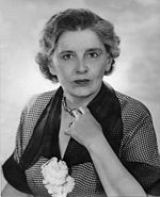
Rebecca West


   Email Print
   Bookmark   Link


Rebecca West


Cicely Isabel Fairfield (21 December 1892-15 March 1983), known by her pen name Rebecca West, or Dame Rebecca West, DBE
Order of the British Empire

The Most Excellent Order of the British Empire is a United Kingdom order of chivalry established on 4 June 1917 by George V of the United Kingdom....
 was an English
England

native_name =|conventional_long_name = England|common_name = England|image_flag = Flag of England.svg|image_coat = England COA.svg|symbol_type = Royal Coat of Arms...
 author
Author

An author is defined both as "the person who originates or gives existence to anything" and that authorship determines responsibility for what is created....
, journalist
Journalist

A journalist is a person who practices journalism, the gathering and dissemination of information about current events, trends, issues, and people while striving for viewpoints that aren't biased....
, literary critic
Literary criticism

Literary criticism is the study, discussion, evaluation, and interpretation of literature. Modern literary criticism is often informed by literary theory, which is the philosophical discussion of its methods and goals....
 and travel writer. A prolific, protean author who wrote in many genres, West was committed to feminist and liberal principles and was one of the foremost public intellectuals of the twentieth century. She reviewed books for The Times
The Times

The Times is a daily national newspaper published in the United Kingdom since 1785 when it was known as The Daily Universal Register.The Times and its sister paper The Sunday Times are published by Times Newspapers Limited, a subsidiary of News International....
, the New York Herald Tribune
New York Herald Tribune

The New York Herald Tribune was a daily newspaper created in 1924 when the New York Tribune acquired the New York Herald. The Herald Tribune was a leading Republican Party paper, and a voice for moderate "internationalism" Republicans as opposed to the "isolationism" variety represented by the Chicago Tribune....
, the Sunday Telegraph
Sunday Telegraph

The Sunday Telegraph is a United Kingdom broadsheet newspaper, founded in 1961. It is the sister paper of The Daily Telegraph, but is run separately, with a different editorial staff....
, and the New Republic
New Republic

New Republic may refer to:* The New Republic, an American political commentary magazine* The New Republic , an 1878 satirical novel by William Hurrell Mallock...
, and she was a correspondent for The Bookman
The Bookman

The Bookman may refer to:*The Bookman *The Bookman ...
.


Discussion
Ask a question about 'Rebecca West'
Start a new discussion about 'Rebecca West'
Answer questions from other users
Full Discussion Forum


Quotations


The general tendency to be censorious of the vices to which one has not been tempted.

Chapter IX

The point is that nobody likes having salt rubbed into their wounds, even if it is the salt of the earth.

"The Salt of the Earth"

There is no such thing as conversation. It is an illusion. There are intersecting monologues, that is all. Viking/Penguin, ISBN 0-14-00.7321-3

I myself have never been able to find out what feminism is; I only know that people call me a feminist whenever I express sentiments that differentiate me from a doormat or a prostitute.

"Mr. Chesterton in hysterics," The Clarion, (1913-11-14)

God forbid that any book should be banned. The practice is as indefensible as infanticide.

"The Tosh Horse," The New Statesman (1925); later included in Strange Necessity: Essays and Reviews (1928), ch. 11

If there is a God, I don't think He would demand that anyone bow down or stand up to Him. I often have a suspicion that God is still trying to work things out and hasn't finished.

Interview with Marina Warner (Summer 1981), The Paris Review Interviews: Writers at Work, Sixth Series (p. 15)


Encyclopedia


Cicely Isabel Fairfield (21 December 1892-15 March 1983), known by her pen name Rebecca West, or Dame Rebecca West, DBE
Order of the British Empire

The Most Excellent Order of the British Empire is a United Kingdom order of chivalry established on 4 June 1917 by George V of the United Kingdom....
 was an English
England

native_name =|conventional_long_name = England|common_name = England|image_flag = Flag of England.svg|image_coat = England COA.svg|symbol_type = Royal Coat of Arms...
 author
Author

An author is defined both as "the person who originates or gives existence to anything" and that authorship determines responsibility for what is created....
, journalist
Journalist

A journalist is a person who practices journalism, the gathering and dissemination of information about current events, trends, issues, and people while striving for viewpoints that aren't biased....
, literary critic
Literary criticism

Literary criticism is the study, discussion, evaluation, and interpretation of literature. Modern literary criticism is often informed by literary theory, which is the philosophical discussion of its methods and goals....
 and travel writer. A prolific, protean author who wrote in many genres, West was committed to feminist and liberal principles and was one of the foremost public intellectuals of the twentieth century. She reviewed books for The Times
The Times

The Times is a daily national newspaper published in the United Kingdom since 1785 when it was known as The Daily Universal Register.The Times and its sister paper The Sunday Times are published by Times Newspapers Limited, a subsidiary of News International....
, the New York Herald Tribune
New York Herald Tribune

The New York Herald Tribune was a daily newspaper created in 1924 when the New York Tribune acquired the New York Herald. The Herald Tribune was a leading Republican Party paper, and a voice for moderate "internationalism" Republicans as opposed to the "isolationism" variety represented by the Chicago Tribune....
, the Sunday Telegraph
Sunday Telegraph

The Sunday Telegraph is a United Kingdom broadsheet newspaper, founded in 1961. It is the sister paper of The Daily Telegraph, but is run separately, with a different editorial staff....
, and the New Republic
New Republic

New Republic may refer to:* The New Republic, an American political commentary magazine* The New Republic , an 1878 satirical novel by William Hurrell Mallock...
, and she was a correspondent for The Bookman
The Bookman

The Bookman may refer to:*The Bookman *The Bookman ...
. Her major works include Black Lamb and Grey Falcon
Black Lamb and Grey Falcon

Black Lamb and Grey Falcon is an 1,181-page travel literature written by Dame Rebecca West, published in 1941.The book gives an account of Balkan history and ethnography, and the significance of Nazism, structured about her six week trip to Yugoslavia in 1937....
 (1941), on the history and culture of Yugoslavia
Yugoslavia

File:LocationYugoslavia2.pngYugoslavia is a term that describes three political entities that existed successively on the Balkan Peninsula in Europe, during most of the 20th century....
; A Train of Powder (1955), her coverage of the Nuremberg trials
Nuremberg Trials

The Nuremberg Trials were a series of trials, or tribunals, most notable for the prosecution of prominent members of the political, military, and economic leadership of Nazi Germany after its defeat in World War II....
, published originally in The New Yorker
The New Yorker

The New Yorker is an United States magazine that publishes reportage, commentary, criticism, essays, fiction, satire, cartoons, and poetry. Starting as a weekly in the mid-1920s, the magazine is now published 47 times per year, with five of these issues covering two-week spans....
; The Meaning of Treason, later The New Meaning of Treason, a study of World War II
World War II

World War II, or the Second World War , was a global military conflict which involved a Participants in World War II, including all of the great powers, organised into two opposing military alliances: the Allies of World War II and the Axis powers....
 and Communist
Communism

Communism is a socioeconomic structure and political ideology that promotes the establishment of an egalitarianism, classlessness, stateless society based on common ownership and control of the means of production and property in general....
 traitors; The Return of the Soldier, a modernist World War I
World War I

World War I, or the First World War , was a global military conflict which involved the Great powers, organized into two opposing military alliances: the Allies of World War I and the Central Powers....
 novel; and the "Aubrey trilogy" of autobiographical novels, The Fountain Overflows, This Real Night, and Cousin Rosamund. Time called her "indisputably the world's number one woman writer" in 1947. She was made CBE in 1949, and DBE in 1959, in recognition of her outstanding contributions to British letters.

Biography

Rebecca West was born Cicely Isabel Fairfield in 1892 in London and grew up in a home full of intellectual stimulation, political debate, lively company, books, and music. Her mother, Isabella, a Scotswoman, was an accomplished pianist but did not pursue a musical career after her marriage to Charles Fairfield. Charles, an Anglo-Irish
Anglo-Irish

"Anglo-Irish" was a term used historically to describe a privileged social class in Ireland, whose members were the descendants and successors of the Protestant Ascendancy, mostly belonging to the Anglicanism Church of Ireland, which was the established church of Ireland until 1871, or to a lesser extent one of the English Dissenters churches...
 journalist of considerable reputation but financial incompetence, deserted his family when Cicely was 8 years old. He never rejoined them and died impoverished and alone in a boarding house in Liverpool in 1906, when Cicely was 14. The rest of the family moved to Edinburgh, Scotland, where Cicely was educated at George Watson's Ladies College. She had to leave school in 1907 due to a bout of tuberculosis. Cicely did not have any formal schooling after the age of 16, due to lack of funds.

She had two older sisters. Letitia ("Lettie"), who was the better educated of the three, became one of the first fully-qualified female doctors in Britain, as well as a barrister
Barrister

A barrister is a lawyer found in many common law jurisdictions that employ a split profession in relation to legal representation. In split professions, the other type of lawyer is the solicitor....
 at the Inns of Court
Inns of Court

The Inns of Court in London are the professional associations to one of which every Barristers in England and Wales must belong. They have supervisory and disciplinary functions over their members....
. Winifred ("Winnie"), the middle sister, married Norman Macleod, Principal Assistant Secretary in the Admiralty
Admiralty

The Admiralty was formerly the authority in the United Kingdom responsible for the command of the Royal Navy. Originally exercised by a single person, the office of Lord High Admiral was from the 18th century onward almost invariably put "in commission", and was exercised by a Board of Admiralty....
, and eventually director general of Greenwich Hospital. Winnie's two children, Alison and Norman, became closely involved in Rebecca's life as she got older; Alison Macleod would achieve a literary carrer of her own . West trained as an actress in London, taking the name 'Rebecca West' from the heroine in Rosmersholm
Rosmersholm

Rosmersholm is a Play written in 1886 by Norwegian people playwright Henrik Ibsen. In the estimation of many critics the piece is Ibsen's masterwork, only equalled by The Wild Duck of 1884....
 by Henrik Ibsen
Henrik Ibsen

Henrik Johan Ibsen was a major Nineteenth-century theatre Norway playwright of realism drama and poet. He is often referred to as the "father of modern drama" and is one of the founders of modernism in the theatre....
. She and Lettie became involved in the women's suffrage movement
Women's suffrage in the United Kingdom

Women were not formally prohibited from voting in the United Kingdom until the 1832 Reform Act and the Municipal Corporations Act 1835. Both before and after 1832 establishing women's suffrage on some level was a political topic, although it would not be until 1872 that it would become a national movement with the formation of the National S...
, participating in street protests. Meanwhile, West worked as a journalist on Freewoman
Freewoman

The Freewoman was a feminist weekly published between November 23, 1911 and October 10, 1912 and edited by Dora Marsden and Mary Gawthorpe.Although The Freewoman published articles on women's waged work, housework, motherhood, the suffrage movement, and literature, its notoriety and influence rested on its frank discussions of sexuality...
 and the Clarion
Clarion

A Wiktionary:clarion is a type of trumpet used in the Middle Ages."Clarion" may also refer to a number of other things....
, drumming up support for the suffragette cause. She met H. G. Wells
H. G. Wells

Herbert George Wells , known by his pen name H. G. Wells, was an England author, best known for his work in the science fiction genre. Wells and Jules Verne are each sometimes referred to as "The Father of Science Fiction"....
 in 1913, after her provocatively damning review of his novel Marriage prompted him to invite her to lunch. They fell in love, though Wells was still in his second marriage at the time, and their affair lasted ten years, producing a son, Anthony West
Anthony West

Anthony West was a British author, the son of British authors Rebecca West and H. G. Wells. Anthony West's best-known book is H.G. Wells: Aspects of a Life, a biography of his father....
. West is also said to have had affairs with Charlie Chaplin
Charlie Chaplin

Sir Charles Spencer Chaplin, Jr. Order of the British Empire , better known as Charlie Chaplin, was an Academy Award-winning England comedy film actor and filmmaker....
 and newspaper magnate Lord Beaverbrook
Max Aitken, 1st Baron Beaverbrook

William Maxwell "Max" Aitken, 1st Baron Beaverbrook, Baronet, Privy Council of the United Kingdom, was a Canada-United Kingdom business tycoon, politician, and writer....
.

Early career
West established her reputation as a savage and eloquent spokesperson for feminist and socialist causes and as a sharp-witted critic, turning out a staggering number of essays and reviews for The New Republic
The New Republic

The New Republic is an United States magazine of politics and the arts. It is published semimonthly and has a circulation of approximately 60,000....
, The New York Herald Tribune, The New York American, The New Statesman
The New Statesman

The New Statesman was an award-winning United Kingdom sitcom of the late 1980s and early 1990s satirising the Conservative Party government of the time....
, The Daily Telegraph
The Daily Telegraph

The Daily Telegraph is a British broadsheet newspaper, founded in 1855. Excepting the Financial Times and The Herald , it is the only remaining national daily newspaper printed on traditional newsprint in the broadsheet format in the United Kingdom, as most other broadsheet publications have converted to the smaller tabloid/Compa...
, and many more newspapers and magazines. George Bernard Shaw
George Bernard Shaw

George Bernard Shaw, was an Irish people playwright.Although Shaw's first profitable writing was music and literary criticism, his talent was for drama, and he wrote more than 60 plays....
 said in 1916 that "Rebecca West could handle a pen as brilliantly as ever I could and much more savagely." During the 1920s, West began a lifelong habit of visits to the U.S. to give lectures, meet artists, and get involved in the political scene. There, she befriended CIA
Central Intelligence Agency

The Central Intelligence Agency is a civilian intelligence agency of the Federal government of the United States. It is the successor of the Office of Strategic Services formed during World War II to coordinate espionage activities between the branches of the US military services....
 founder Allen Dulles, Charlie Chaplin, Harold Ross
Harold Ross

Harold Wallace Ross was an American journalist and founder of The New Yorker magazine, which he edited from the magazine's inception in 1925 to his death....
 of The New Yorker
The New Yorker

The New Yorker is an United States magazine that publishes reportage, commentary, criticism, essays, fiction, satire, cartoons, and poetry. Starting as a weekly in the mid-1920s, the magazine is now published 47 times per year, with five of these issues covering two-week spans....
 , and historian Arthur Schlesinger, Jr.
Arthur Schlesinger, Jr.

Arthur Meier Schlesinger Jr., born Arthur Bancroft Schlesinger , was a Pulitzer Prize recipient and United States historian and social critic whose work explored the American liberalism of American Politics of the United States including Franklin D....
, among many other significant figures of the day. Her lifelong fascination with the United States culminated in 1948 when President Truman
Harry S. Truman

Harry S. Truman was the List of Presidents of the United States President of the United States . As the List of Vice Presidents of the United States Vice President of the United States, he succeeded Franklin D....
 presented her with the Women's Press Club Award for Journalism, calling her "the world's best reporter."

In 1930, at the age of 37, she married a banker, Henry Maxwell Andrews, and they remained together until his death in 1968. West's writing brought her considerable wealth, and by 1940 she owned a Rolls Royce
Rolls-Royce (car)

A Rolls-Royce car may refer to vehicles produced by:*Rolls-Royce Limited *Rolls-Royce Motors , which was owned by Vickers between 1980 and 1998, and after that by Volkswagen....
 and a grand country estate, Ibstone House, in the Chiltern Hills
Chiltern Hills

The Chiltern Hills are a chalk escarpment in southeast England. They are known locally as "the Chilterns". A large portion of the hills was designated officially as an Area of Outstanding Natural Beauty in 1965....
 of southern England. It is testament to her financial savvy that both the Rolls and the country estate were acquired for a fraction of their worth from insolvent owners. During World War II, West housed Yugoslav refugees in the spare rooms of her blacked-out manor, and she used the grounds as a small dairy farm and vegetable plot, agricultural pursuits that continued long after the war had ended.

Later life
As West grew older, she turned to broader political and social issues, including humankind's propensity to inflict violent injustice on itself. Before and during World War II, West traveled widely, collecting material for books on travel and politics. In 1936-38, she made three trips to Yugoslavia, a country she came to love, seeing it as the nexus of European history since the late Middle Ages. Her non-fiction masterpiece, Black Lamb and Grey Falcon is an amalgamation of her impressions from these trips. New York Times
The New York Times

The New York Times is an American daily newspaper published in New York City. The largest metropolitan newspaper in the United States, "The Gray Lady"?named for its staid appearance and style?is regarded as a national newspaper of record....
 reviewer Katherine Woods wrote: "In two almost incredibly full-packed volumes one of the most gifted and searching of modern English novelists and critics has produced not only the magnification and intensification of the travel book form, but, one may say, its apotheosis." West was assigned by Ross' magazine to cover the Nuremberg Trials
Nuremberg Trials

The Nuremberg Trials were a series of trials, or tribunals, most notable for the prosecution of prominent members of the political, military, and economic leadership of Nazi Germany after its defeat in World War II....
 for The New Yorker, an experience she memorialized in the book A Train of Powder. She also went to South Africa
South Africa

The Republic of South Africa, also known by Official names of South Africa, is a country located at the southern tip of the continent of Africa....
 in 1960 to report on Apartheid in a series of articles for the Sunday Times.

She traveled extensively well into old age. In 1966 and 1969, she undertook two long journeys to Mexico
Mexico

The United Mexican States , commonly known as Mexico , is a federalism constitutionalism republic in North America. It is bordered on the north by the United States; on the south and west by the Pacific Ocean; on the southeast by Guatemala, Belize, and the Caribbean Sea; and on the east by the Gulf of Mexico....
, becoming fascinated by the indigenous culture of the country and its mestizo population. She stayed with actor Romney Brent in Mexico City
Mexico City

Mexico City is the capital city of Mexico. It is the most important economic, industrial, and cultural center in the country; the most populous city with over 8,836,045 inhabitants in 2008....
 and with Katherine (Kit) Wright, a long-time friend, in Cuernavaca
Cuernavaca

Cuernavaca is the capital and largest city of the Mexican state of Morelos in Mexico. As of the 2005 census, the population of the city was 332,197; the municipality's entire population was 349,102 in an area of that includes numerous small localities outside the city, like Ocotepec, where interesting religious celebrations take place, like...
. She collected a large amount of travel impressions and wrote tens of thousands of words for a "follow-up" volume to Black Lamb and Grey Falcon, tentatively titled "Survivors in Mexico." The work, however, was never finished, and only saw publication posthumously in 2003. Even into her late 70s, she visited Lebanon
Lebanon

Lebanon , officially the Republic of Lebanon or Lebanese Republic , is a country in Western Asia, on the eastern shore of the Mediterranean Sea....
, Venice
Venice

Venice is a city in northern Italy, the capital city of the Italian regions Veneto, a population of 271,251 . Together with Padua, Italy, the city is included in the Padua-Venice Metropolitan Area ....
, Monte Carlo
Monte Carlo

Monte Carlo is one of Monaco's various administrative areas, sometimes erroneously believed to be a town or the country's capital. The official capital is Monaco-Ville and covers all quarters of the territory....
, and always went back to the United States.

Old age
After her husband's death in 1968, West moved to London
London

London is the capital of both England and the United Kingdom, and the most populous municipality in the European Union. An important settlement for two millennia, History of London goes back to its founding by the Roman Empire....
, where she bought a spacious apartment overlooking Kensington Gardens
Kensington Gardens

See also Kensington Gardens, South Australia, a suburb of Adelaide, AustraliaKensington Gardens, once the private gardens of Kensington Palace, is one of the Royal Parks of London, lying immediately to the west of Hyde Park, London....
. (Unfortunately, it was next door to the Iran
Iran

Iran , officially the Islamic Republic of Iran and formerly known internationally as Persian Empire until 1935, is a country in Central Eurasia, located on the northeastern shore of the Persian Gulf and the southern shore of the Caspian Sea....
ian embassy. During the May 1980 incident, West, then 87, had to be evacuated). In the last two decades of her life, West kept up a very active social life, making friends with Martha Gellhorn
Martha Gellhorn

Martha Gellhorn was an United States novelist, travel writer and journalist, considered to be one of the greatest war correspondents of the 20th century....
, Doris Lessing
Doris Lessing

Doris May Lessing Order of the Companions of Honour, Order of the British Empire is a Zimbabwe-United Kingdom writer, author of works such as the novels The Grass is Singing and The Golden Notebook....
, Bernard Levin
Bernard Levin

Henry Bernard Levin Order of the British Empire was an England journalist, author and Presenter....
, comedian Frankie Howerd
Frankie Howerd

Frankie Howerd Order of the British Empire , was a distinctive England comedian and comic actor whose career spanned six decades....
, and film star and director Warren Beatty
Warren Beatty

Warren Beatty is an United States Academy Award- and Golden Globe-winning actor, film producer, screenwriter and film director....
, who filmed her for the movie Reds, a biography of journalist John Reed and his connection with the Russian Revolution. She also spent time with scholars such as Jane Marcus
Jane Marcus

Jane Marcus is a Distinguished English professor at the City University of New York and the City College of New York. She is a notable feminist critic, focusing mainly on modernist texts, particularly the works of Virginia Woolf....
 and Bonnie Kime Scott, who began to chronicle her feminist career and varied work. She wrote at an unabated pace, penning masterful reviews for the Sunday Telegraph
Sunday Telegraph

The Sunday Telegraph is a United Kingdom broadsheet newspaper, founded in 1961. It is the sister paper of The Daily Telegraph, but is run separately, with a different editorial staff....
, publishing her last novel The Birds Fall Down (1966), and overseeing the film version of the story by BBC in 1978. The last work published in her lifetime was 1900 (1982). 1900 explored the last year of Queen Victoria
Victoria of the United Kingdom

Victoria was from 20 June 1837 the Queen regnant of the United Kingdom of Great Britain and Ireland and from 1 May 1876 the first Empress of India of the British Raj until her death....
's long reign, which was a watershed in many cultural and political respects.

At the same time, West worked on sequels to her autobiographically inspired novel The Fountain Overflows (1957); although she had written the equivalent of two more novels for the planned trilogy, she was never satisfied with the sequels and did not publish them. She also tinkered at great length with an autobiography, without coming to closure, and she started scores of stories without finishing them. Much of her work from the late phase of her life was published posthumously, including Family Memories (1987), This Real Night (1984), Cousin Rosamund (1985), The Only Poet (1992), and Survivors in Mexico (2003). Unfinished works from her early period, notably Sunflower (1986) and The Sentinel (2001) were also published after her death, so that her oeuvre was augmented by about one third by posthumous publications.

Relationship with her son
West's relationship with her son, Anthony Panther West, was not a happy one. The rancor between them came to a head when Anthony, himself a gifted writer, his father's biographer (H. G. Wells: Aspects of a Life [1984]), and a novelist of some repute, published Heritage (1955), a fictionalized autobiography. West never forgave her son for depicting in Heritage the relationship between an illegitimate son and his two world-famous, unmarried parents, and for portraying the mother in unflattering terms. Essentially, she felt, Anthony was airing in public his accusations against her as a bad mother, which stemmed partly from the fact that she had made a fiction of his provenance - asking him to call her Auntie, and his father Wellsie, until he was about four or five, and partly from her habit of leaving him in institutions in his early years while she developed her career in the United States. West countered by claiming that she spent as much time with him as any child could reasonably hope to spend with a mother who was a professional. She was exasperated at his focus on her parenting, when he did not accuse his father of abandonment, even though Wells had been even more absent during Anthony's youth. Anthony, in fact, idolized Wells. The depiction of West's alter ego in Heritage as a deceitful, unloving actress (West had trained as an actress in her youth) and poor caregiver so wounded West that she broke off relations with her son and threatened to sue any publisher who would bring out Heritage in England. She successfully suppressed an English edition of the novel, which was only published there after her death, in 1984. Although there were temporary rapprochements between her and Anthony, a state of alienation persisted between them, causing West grief until her dying hour. She fretted about her son's absence from her deathbed, but when asked whether he should be sent for, answered, "perhaps not, if he hates me so much".

Death
West suffered from failing eyesight and high blood pressure in the late 1970s, and she became increasingly frail. Her last months were mostly spent in bed, sometimes delirious, sometimes lucid, and she complained that she was dying too slowly.She died on 15 March 1983 and is buried at Brookwood Cemetery
Brookwood Cemetery

Brookwood Cemetery is a burial ground in Brookwood, Surrey, England. It is the largest cemetery in the United Kingdom and one of the largest in western Europe....
, Woking
Woking

Woking is a large town and civil parish that shares its name with the surrounding Non-metropolitan district, located in the west of Surrey, England....
.

On hearing of her death, William Shawn
William Shawn

William Shawn was an United magazine editor who edited The New Yorker from 1952 until 1987....
, then editor in chief of The New Yorker, said:

Politics

West grew up in a home filled with discussions of world affairs. Her father was a journalist who often involved himself in controversial issues. He brought home Russia
Russia

Russia , or the Russian Federation , is a list of countries spanning more than one continent country extending over much of northern Eurasia....
n revolutionaries and other political activists, and their debates helped to form West's sensibility, which took shape in novels such as The Birds Fall Down, set in pre-revolution Russia. But the crucial event that molded West's politics was the Dreyfus Affair
Dreyfus Affair

The Dreyfus Affair was a political scandal which divided France in the 1890s and the early 1900s. It involved the conviction for treason in November 1894 of Captain Alfred Dreyfus, a young French artillery officer of Alsatian History of the Jews in France descent....
. The impressionable Rebecca learned early on just how powerful was the will to persecute minorities and to subject individuals to unreasonable suspicion based on flimsy evidence and mass hysteria. West had a keen understanding of the psychology of politics, how movements and causes could sustain themselves on the profound need to believe or disbelieve in a core of values—even when that core contradicted reality.

It would seem that her father's ironic, sceptical temper so penetrated her sensibility that she could not regard any body of ideas as other than a starting point for argument. Although she was a militant feminist and active suffragette, and published a perceptive and admiring profile of Emmeline Pankhurst
Emmeline Pankhurst

Emmeline Pankhurst was a political activist and leader of the British suffragette movement. Although she was widely criticised for her militant tactics, her work is recognised as a crucial element in achieving women's suffrage in Britain....
, West also criticized the tactics of Pankhurst's daughter, Christabel, and the sometimes doctrinaire aspects of the Pankhursts' Women's Social and Political Union
Women's Social and Political Union

The Women's Social and Political Union was the leading militant organisation campaigning for Women's suffrage in the United Kingdom. It was the first group whose members were known as "suffragettes"....
 (WSPU).

The first major test of West's political outlook was the Bolshevik Revolution. Many on the left saw it as the beginning of a new, better world, and the end of the crimes of capitalism. West regarded herself as a member of the left, having attending Fabian socialist
Fabian Society

The Fabian Society is a United Kingdom intellectual socialist movement, whose purpose is to advance the principles of Social democracy via gradualist and reformist, rather than revolutionary means....
 summer schools as a girl. But to West, both the Revolution and the revolutionaries were suspect. Even before the Bolsheviks took power in October 1917, West expressed her doubts that events in Russia could serve as a model for socialists in Britain or anywhere else.

West paid a heavy price for her cool reaction to the Russian Revolution; her positions increasingly isolated her. When Emma Goldman
Emma Goldman

Emma Goldman was an anarchism known for her political activism, writing and speeches. She played a pivotal role in the development of anarchist political philosophy in North America and Europe in the first half of the twentieth century....
 visited Britain in 1924 after seeing Bolshevik violence firsthand, West was exasperated that British intellectuals ignored Goldman's testimony and her warning against Bolshevik tyranny.

For all her censures of Communism, however, West was hardly an uncritical supporter of the Western democracies. Thus in 1919-1920, she excoriated the U.S. government for deporting Goldman and for the infamous Palmer raids
Palmer Raids

The Palmer Raids were a series of controversial raids by the United States Department of Justice and Immigration and Naturalization Service from 1919 to 1921 on suspected Far left citizens and immigrants in the United States, the legality of which is now in question....
. She was also appalled at the failure of Western democracies to come to the aid of Republican Spain, and she gave money to the Republican cause.

A staunch anti-Fascist, West attacked both the Conservative governments of her own country for appeasing Adolf Hitler
Adolf Hitler

Adolf Hitler was an Austrian-born Germany politician and the leader of the National Socialist German Workers Party , popularly known as the Nazi Party....
 and her colleagues on the left for their pacifism. Neither side, in her view, understood the evil Nazism posed. Unlike many on the left, she also distrusted Joseph Stalin
Joseph Stalin

Joseph Stalin was the General Secretary of the Communist Party of the Soviet Union's Central Committee of the Communist Party of the Soviet Union from 1922 until his death in 1953....
. To West, Stalin had a criminal mentality that Communism facilitated. She was outraged when the Allies decided to back the Communist-led Partisans led by Tito
Josip Broz Tito

Josip Broz Tito, original name Josip Broz was the leader of the Socialist Federal Republic of Yugoslavia from 1945 until his death in 1980. During World War II, Tito organized the anti-fascist resistance movement known as the People's Liberation Movement led by Yugoslav Partisans....
 in Yugoslavia, instead of the Chetniks
Chetniks

The Chetnik movement or the Chetniks were a Serbs-nationalist/Monarchism paramilitary organization operating in the Balkans before and during World Wars....
 of Draža Mihailovic
Draža Mihailovic

Dragoljub "Dra?a" Mihailovic was a Serbian general now primarily remembered as the World War II leader of the Chetnik movement. The organization, officially named the "Yugoslav Army in the Fatherland" , was founded as a royalist/nationalist Serbian resistance movement, but eventually transformed into a Collaborationism Axis militia fighting...
, whom she considered the legitimate Yugoslav resistance. After the war, West's anti-Communism hardened as she saw Poland
Poland

Poland , officially the Republic of Poland , is a country in Central Europe. Poland is bordered by Germany to the west; the Czech Republic and Slovakia to the south; Ukraine, Belarus and Lithuania to the east; and the Baltic Sea and Kaliningrad Oblast, a Russian Enclave and exclave, to the north....
, Czechoslovakia
Czechoslovakia

Czechoslovakia was a sovereign state in Central Europe that existed from October 1918 until 1992 . On January 1, 1993, Czechoslovakia dissolution of Czechoslovakia into the Czech Republic and Slovakia....
, Hungary
Hungary

Hungary , officially in English the Republic of Hungary , is a landlocked country in the Carpathian Basin of Central Europe, bordered by Austria, Slovakia, Ukraine, Romania, Serbia, Croatia, and Slovenia....
, and other Eastern and Central European states succumb to Soviet domination.

It is not surprising in the context that West reacted to U.S. Senator
United States Senate

The United States Senate is the upper house of the Bicameralism United States Congress, the lower house being the United States House of Representatives....
 Joseph McCarthy
Joseph McCarthy

Joseph Raymond McCarthy was an United States politician who served as a Republican Party United States Senate from the state of Wisconsin from 1947 until his death in 1957....
 differently from her colleagues. They saw a demagogue terrorizing liberals and leftists with baseless accusations of Communist conspiracy. West saw an oaf blundering into the minefield of Communist subversion. For her, McCarthy was right to pursue Communists with fervor, even if his methods were roughshod, though her mild reaction to McCarthy provoked powerful revulsion among those on the left and dismay even among anti-Communist liberals. She refused, however, to amend her views.

Although West's anti-Communism earned the high regard of conservatives, she never considered herself one of them. In postwar Britain, West voted Labour
Labour Party (UK)

The Labour Party is a political party in the United Kingdom. Founded at the start of the 20th century, it has been since the 1920s the principal party of the Left-wing politics in England, Scotland and Wales, but not Northern Ireland, where it has only recently organised again....
 and welcomed the Labour landslide of 1945. But she spoke out against domination of the Labour Party by British trade unions, and thought leftwing politicians such as Michael Foot
Michael Foot

Michael Mackintosh Foot is an England politician and writer. He was leader of the Labour Party from 1980 to 1983....
 unimpressive. She had mixed feelings about the Callaghan
James Callaghan

Leonard James Callaghan, Baron Callaghan of Cardiff, Order of the Garter, Her Majesty's Most Honourable Privy Council , was Prime Minister of the United Kingdom from 1976 to 1979 and leader of the Labour Party from 1976 to 1980....
 government. West admired Margaret Thatcher
Margaret Thatcher

Margaret Hilda Thatcher, Baroness Thatcher Order of the Garter, Order of Merit, Her Majesty's Most Honourable Privy Council, Fellow of the Royal Society was Prime Minister of the United Kingdom from 1979 to 1990 and Leader of the Conservative Party of the Conservative Party from 1975 to 1990....
, not for Thatcher's policies, but for Thatcher's achievement in rising to the top of a male-dominated sphere. She admired Thatcher's willingness to stand up to trade-union bullying.

In the end, West's anti-Communism remained the centerpiece of her politics because she so consistently challenged the Communists as legitimate foes of the status quo in capitalist countries. In West's view, Communism, like fascism, was merely a form of authoritarianism. Communists were under party discipline and therefore could never speak for themselves. And West was a supreme example of an intellectual who spoke for herself, no matter how her comments might injure her. Indeed, few writers explicitly acknowledged how much West's embrace of unpopular positions hurt her on the left. A whole generation of writers abandoned West and refused to read her, as Doris Lessing
Doris Lessing

Doris May Lessing Order of the Companions of Honour, Order of the British Empire is a Zimbabwe-United Kingdom writer, author of works such as the novels The Grass is Singing and The Golden Notebook....
 suggested.

Religion

West considered herself a Christian
Christianity

Christianity is a Monotheistic religion #Christian view religion centered on the life and teachings of Jesus as New Testament view on Jesus' life....
 but she was an unconventional believer. At times, she found God to be wicked; at other times she considered Him merely ineffectual and defeated. However, she revered Christ as the quintessentially good man, she had great respect for the literary, pictorial, and architectural manifestations of the Christian ethos, and she considered faith a valid tool to grapple with the conundrums of life and the mysteries of the cosmos. Although her writings are full of references to the Bible and ecclesiastical history, she was essentially anti-doctrinaire and occasionally blasphemous. In 1926 she expressed the unorthodox belief that "Christianity must be regarded not as a final revelation but as a phase of revelation." Moreover, she rejected specific articles of belief such as the virgin birth, Original sin
Original sin

Original sin is, according to a doctrine in Christian theology, humanity's state of sin resulting from the Fall of Man. While the Old Testament and the New Testament, which frequently speak of the sinfulness of humans, do not contain the terms "original sin" or "ancestral sin", the doctrine expressed by these terms is claimed to be based on t...
, the Atonement
Atonement

The atonement is a doctrine found within both Christianity and Judaism. It describes how sin can be forgiven by God. In Judaism, Atonement is said to be the process of forgiving or pardoning a transgression....
, and Providence
Divine Providence

In theology, Divine Providence, or simply Providence, is the sovereignty, superintendence, or agency of God over events in people's lives and throughout history....
. Her contribution to Virginia Woolf
Virginia Woolf

Adeline Virginia Woolf was an England novelist and essayist, regarded as one of the foremost modernist literature literature figures of the twentieth century....
's Hogarth Letters Series, Letter to a Grandfather (1933), is a declaration of "my faith, with seems to some unfaith" disguised as philosophical fiction. Written in the midst of the Great Depression, Letter to a Grandfather traces the progressive degeneration of the notion of Providence through the ages, concluding skeptically that "the redemptive power of divine grace no longer seemed credible, nor very respectable in the arbitrary performance that was claimed for it." As for the Atonement, Black Lamb and Grey Falcon is in part meant as a refutation of that very doctrine, which she saw as having sparked a fatal obsession with sacrifice throughout the Christian era and, specifically, as having prompted Neville Chamberlain
Neville Chamberlain

Arthur Neville Chamberlain was a British Conservative Party politician and Prime Minister of the United Kingdom from 1937 to 1940. Chamberlain is best known for appeasement foreign policy, in particular regarding his signing of the Munich Agreement in 1938, conceding the Sudetenland region of Czechoslovakia to Germany, and for his "containm...
 to formulate his policy of appeasement
Appeasement

Appeasement is "the policy of settling international quarrels by admitting and satisfying grievances through rational negotiation and compromise, thereby avoiding the resort to an armed conflict which would be expensive, bloody, and possibly dangerous." The term is most often applied to the foreign policy of United Kingdom Prime Minister of t...
, which she vehemently opposed. She wrote "All our Western thought is founded on this repulsive pretence that pain is the proper price of any good thing... [Augustine] developed a theory of the Atonement which was pure nonsense, yet had the power to convince... This monstrous theory supposes that God was angry with man for his sins and that He wanted to punish him for these, not in any way that might lead to his reformation, but simply by inflicting pain on him; and that He allowed Christ to suffer this pain instead of man and thereafter was willing on certain terms to treat man as if he had not committed these sins. This theory flouts reason at all points, for it is not possible that a just God should forgive people who are wicked because another person who was good endured agony by being nailed to a cross."

World War II shocked her into a more conventional belief: "I believe if people are looking for the truth, the truth of the Christian religion will come out and meet them." And in the early 1950s, she thought she had a mystical revelation in France and actively tried to convert to Catholicism
Roman Catholic Church

The Roman Catholic Church, officially known as the Catholic Church is the world's largest Christianity Ecclesia , representing over half of all Christians and one-sixth of the world population....
. There was a precedent in her family for this action, as her sister, Letitia, had earlier converted to Catholicism, thereby causing quite a stir. But West's attempt was short-lived, and she confessed to a friend: "I could not go on with being a Catholic... I don't want, I can't bear to, become a Graham Greene
Graham Greene

Henry Graham Greene Order of Merit, Order of the Companions of Honour was an English writer best known as a novelist, but who also produced short stories, plays, screenplays, travel writing and criticism....
 and Evelyn Waugh
Evelyn Waugh

Arthur Evelyn St. John Waugh was a United Kingdom writer, best known for such darkly humorous and Satire novels as Decline and Fall, Vile Bodies, Scoop , A Handful of Dust, and The Loved One, as well as for serious works, such as Brideshead Revisited and the Sword of Honour trilogy that clearly manifest his Catho...
, and I cannot believe that I am required to pay such a price for salvation." Her writings of the 1960s and early 70s again betray a profound mistrust towards God: "The case against religion is the responsibility of God for the sufferings of mankind, which makes it impossible to believe the good things said about Him in the Bible, and consequently to believe anything it says about Him."

West's fluctuating attitude towards Christianity was offset by a more constant form of belief. She was informally a Manichaean
Manichaeism

Manichaeism was one of the major Iranian Gnosticism religions, originating in Sassanid Persia. Although most of the original writings of the founding prophet Mani have been lost, numerous translations and fragmentary texts have survived....
 all her life. Although she was critical of Manichaeanism's puritanical excesses, she did believe in dualism as the most fundamental working principle of the universe. Although she conceded, optimistically, that "it is not possible to kill goodness," she also indulged in pessimistic statements like "natural man is mean," which is as much as saying that she adhered to the Manichaean belief that the essence of goodness was diffused inside gross matter like particles of light trapped in darkness. In accordance with this Manichaean skepticism, West wrote in a draft of her own memoirs: "I had almost no possibility of holding faith of any religious kind except a belief in a wholly and finally defeated God, a hypothesis which I now accept but tried for a long time to reject, I could not face it."

Manichaean was also her life-long struggle with the very question of how to deal with dualisms. At times she appears to favor the merging of opposites, for which Byzantium served as a model: "church and state, love and violence, life and death, were to be fused again as in Byzantium." More dominant, however, was her tendency to view the tensions generated in the space between dualistic terms as life-sustaining and creative; hence, her aversion to homosexuality and her warning not to confuse the drive for feminist emancipation with the woman's desire to become like a man. Her insistence on the fundamental difference between men and women reveals her essentialism, but it also bespeaks her innate Manichaean sensibility. She wanted respect and equal rights for women, but at the same time she required that women retain their specifically feminine qualities, notably an affinity with the life force: "Men have a disposition to violence; women have not. If one says that men are on the side of death, women on the side of life, one seems to be making an accusation against men. One is not doing that." One reason why she does not want to make an accusation against men is that they are simply playing their assigned role in a flawed universe, which is, of course, the result of an imperfect deity. Only love can alleviate destructive aspects of the sex-antagonism: "I loathe the way the two cancers of sadism and masochism eat into the sexual life of humanity, so that the one lifts the lash and the other offers blood to the blow, and both are drunken with the beastly pleasure of misery and do not proceed with love's business of building a shelter from the cruelty of the universe." In addition to the operations of love, female emancipation is crucial to removing the moral, professional, and social stigma associated with the notion of the "weaker sex," without trying to do away altogether with the temperamental and metaphysical aspects of the gender dualism itself. Thus, the "sex war" so graphically rendered in West's early short story "Indissoluble Matrimony" (1914) elevates the female character, Evadne, in the end because she accepts the terms of the contest without superficially trying to "win" that war.

Manichaeanism also informs West's political propensities. As Bernard Schweizer
Bernard Schweizer

Bernard Schweizer is an associate professor of English at Long Island University, Brooklyn, specializing in twentieth-century British Literature....
 has argued: "St. Augustine and Schopenhauer emphasized the fallenness of human life, implying a quietistic stance that could be confused with conservatism, while the Reclus brothers [famous French anarchists] urged her to revolt against such pessimistic determinism. West's characteristically heroic personal and historic vision is a result of these two contending forces." West's conviction that humanity will only fulfill its highest potentials if it adheres to the principle of process similarly arises from her Manichaean temperament: "Process is her most encompassing doctrine," states Peter Wolfe. "Reconciling her dualism, it captures the best aspects of the male and female principles." In this way, West's Manichaean disposition infuses her religious sensibility, as well as her thinking about gender, politics, and art.

Quotes

  • "I myself have never been able to find out what feminism is; I only know that people call me a feminist whenever I express sentiments that differentiate me from a doormat or a prostitute."
  • "There is, of course, no reason for the existence of the male sex except that sometimes one needs help with moving the piano."
  • "Any authentic work of art must start an argument between the artist and their audience."
  • "Only part of us is sane: only part of us loves pleasure and the longer day of happiness, wants to live to our nineties and die in peace, in a house that we built, that shall shelter those who come after us. The other half of us is nearly mad. It prefers the disagreeable to the agreeable, loves pain and its darker night despair, and wants to die in a catastrophe that will set back life to its beginnings and leave nothing of our house save its blackened foundations."
  • "All our Western thought is founded on this repulsive pretence that pain is the proper price of any good thing."
  • "If it be ungentlemanly to kiss and tell, it is still further from gentlemanliness to pray and tell."
  • "Fiction and poetry are the only way one can stop time and give an account of an experience and nail it down so that it lasts for ever."
  • "I am a fanatical admirer of A. L. Barker
    A. L. Barker

    Audrey Lilian Barker was an England novelist and short story writer. She was born in St Pauls Cray, Kent and brought up in Beckenham. During her lifetime, she published ten collections of short stories and eleven novels, one of which - John Brown's Body - was shortlisted for the Booker Prize in 1970....
    . If you cannot read her it is your fault. You should ask your vet to put you down if you do not admire The Middling or An Occasion for Embarrassment."
  • "[Nabokov has a] habit of constructing his novels on the same pattern as the mandrill, with the parts devoted to sexual activities far too extensive and highly coloured."
  • "A good cause has to be careful of the company it keeps."
  • "Unfortunately, all gatherings convened for the betterment of the human lot show a tendency to gas themselves, and not with laughing-gas either."
  • "Economists are like Aeolian harps, and the sounds that issue from them are determined by the winds that blow."
  • "It is the soul's duty to be loyal to its own desires. It must abandon itself to its master passion."


Cultural references

Virginia Woolf
Virginia Woolf

Adeline Virginia Woolf was an England novelist and essayist, regarded as one of the foremost modernist literature literature figures of the twentieth century....
 named Rebecca West as the "arrant feminist" who offends men by saying they are snobs in chapter two of A Room of One's Own
A Room of One's Own

A Room of One's Own is an extended essay by Virginia Woolf. First published during 24 October 1929, it was based on a series of lectures she delivered at Newnham College, Cambridge and Girton College, two women's colleges at University of Cambridge in 1928....
: "[W]hy was Miss West an arrant feminist for making a possibly true if uncomplimentary statement about the other sex?"

Bill Moyers
Bill Moyers

Bill Moyers is an United States journalist and public commentator. He served as White House Press Secretary in the Lyndon B. Johnson Administration from 1965-67....
's interview "A Visit With Dame Rebecca West", recorded in her London home when she was 89, was aired by PBS
Public Broadcasting Service

The Public Broadcasting Service is an United States non-profit public broadcasting television service with 354 member TV stations in the United States....
 in July 1981. In a review of the interview, John O'Connor wrote that "Dame Rebecca emerges as a formidable presence. When she finds something or somebody disagreeable, the adjective suddenly becomes withering."

West's first novel, The Return of the Soldier, was turned into a major motion picture in 1982, directed by Alan Bridges, starring Alan Bates
Alan Bates

Sir Alan Arthur Bates Order of British Empire was a United Kingdom actor of stage, screen and television....
, Glenda Jackson
Glenda Jackson

Glenda May Jackson, Order of the British Empire, is a two-times Academy Award winning United Kingdom actor and politician, currently Labour Party Member of Parliament for the constituency of Hampstead and Highgate in the London Borough of Camden....
, and Julie Christie
Julie Christie

Julie Frances Christie is a British actor. She was a pop icon of the "swinging London" era of the 1960s, and has won the Academy Award, Golden Globe, British Academy of Film and Television Arts, and Screen Actors Guild Awards....
. More recently, an adaptation of The Return of the Soldier for the stage by Kelly Younger titled Once A Marine took West's theme of shell-shock-induced amnesia and applied it to a soldier returning from the war in Iraq with PTSD.

There have been two plays about Rebecca West produced since 2004. That Woman: Rebecca West Remembers, by Carl Rollyson, Helen Macleod, and Anne Bobby, is a one-woman monologue in which an actress playing Rebecca West recounts her life through some of her most famous articles, letters, and books. Tosca's Kiss, a 2006 play by Kenneth Jupp, retells West's experience covering the Nuremberg trials for The New Yorker.

Robert D. Kaplan's influential book Balkan Ghosts (1994) is an homage to West's Black Lamb and Grey Falcon (1941), which he calls "this century's greatest travel book"

A 1990s female Canadian rock group headed by Alison Outhit called itself 'Rebecca West'.

In February 2006, BBC broadcast a radio version of West's novel The Fountain Overflows, dramatized by Robin Brook, in six 55 minute installments.

Bibliography


Fiction

  • The Return of the Soldier
    The Return of the Soldier

    The Return of the Soldier is a 1918 in literature novel by UK novelist Rebecca West. It concerns Captain Chris Baldry, a shell shocked soldier whose re-integration makes it difficult to enter British mainstream society when he returns home during The First World War....
     (1918), the first World War I novel written by a woman, about a shell-shocked, amnesiac soldier returning from World War I in hopes of being reunited with his first love, a working-class woman, instead of continuing to live with his high-class wife.
  • The Judge (1922), a brooding, passionate novel combining Freudian Oedipal themes with suffragism and an existential take on cosmic absurdity.
  • Harriet Hume (1929), a modernist story about a piano-playing prodigy and her obsessive lover, a corrupt politician.
  • The Harsh Voice:Four Short Novels (1935), contains the short story "The Salt of the Earth," featuring Alice Pemberton, whose obsessive altruism becomes so smothering that her husband plots her murder.
  • The Thinking Reed (1936), a novel about the corrupting influence of wealth even on originally decent people.
  • The Fountain Overflows (1957), a semi-autobiographical novel weaving a fascinating cultural, historical, and psychological tapestry of the first decade of the 20th century, reflected through the prism of the gifted, eccentric Aubrey family.
  • This Real Night (1984), sequel to The Fountain Overflows published posthumously
  • Cousin Rosamund (1985), final, unfinished installment of the "Aubrey Trilogy" published posthumously
  • The Birds Fall Down (1966), spy thriller based on the deeds of the historical double agent Yevno Azef
    Yevno Azef

    Yevno Azef , was a Russian socialist revolutionary who was also a double agent working both as an organizer of assassinations for the Socialist-Revolutionary Party and a police spy for the Okhrana, the Imperial secret police....
    .
  • Sunflower (1986), published posthumously, about a tense love-relationship between an actress and a literary lion, reminiscent of West's relationship with H. G. Wells.
  • The Sentinel (2002), edited by Kathryn Laing and published posthumously, West's very first extended piece of fiction, an unfinished novel about the suffragist struggle in Britain, including grim scenes of female incarceration and force-feeding.


Non-fiction

  • Henry James (1916)
  • The Strange Necessity: Essays and Reviews (1928), a blend of modernist literary criticism and cognitive science, including a long essay explaining why West disliked James Joyce's Ulysses, though she judged it an important book
  • Ending in Earnest: A literary Log (1931)
  • St. Augustine (1933), first psycho-biography of the Christian Church Father
  • The Modern Rake's Progress (co-authored with David Low
    David Low

    Sir David Alexander Cecil Low was a New Zealand political cartoonist who lived and worked in the United Kingdom for many years. Low was a self-taught cartoonist....
    ) (1934)
  • Black Lamb and Grey Falcon
    Black Lamb and Grey Falcon

    Black Lamb and Grey Falcon is an 1,181-page travel literature written by Dame Rebecca West, published in 1941.The book gives an account of Balkan history and ethnography, and the significance of Nazism, structured about her six week trip to Yugoslavia in 1937....
     (1941), a 1,181-page classic of travel literature
    Travel literature

    Travel literature is travel writing of literature value. Travel literature typically records the experiences of an author tourism a place for the pleasure of travel....
    , giving an account of Balkan history and ethnography, and the significance of Nazism
    Nazism

    Nazism, officially National Socialism , refers to the ideology and practices of the National Socialist German Workers? Party under Adolf Hitler, and the policies adopted by the dictatorial government of Nazi Germany from 1933 to 1945....
    , structured about her trip to Yugoslavia in 1937.
  • The Meaning of Treason (1949)
  • The New Meaning of Treason (1964)
  • A Train of Powder (1955)
  • The Court and the Castle: some treatments of a recurring theme (1958), excellent revisionist interpretations of literary classics, including Hamlet and Kafka's stories
  • 1900 (1982), cultural history and fascinating "thick description" of this pivotal year
  • The Young Rebecca (1982), West's early, radical journalism for The Freewoman and Clarion
    Clarion

    A Wiktionary:clarion is a type of trumpet used in the Middle Ages."Clarion" may also refer to a number of other things....
    , edited by Jane Marcus
  • Family Memories: An Autobiographical Journey (1987), West's autobiographical musings which remained unpublished during her life, assembled and edited by Faith Evans
  • The Selected Letters of Rebecca West (2000), edited by Bonnie Kime Scott
  • Survivors in Mexico (2003), posthumous work about West's two trips to Mexico in 1966 and 1969, edited by Bernard Schweizer
  • Woman as Artist and Thinker (2005), re-issues of some of West's best essays, together with her short-story "Parthenope"


Translations


French

Black Lamb and Grey Falcon:
  • Agneau noir et faucon gris: un voyage à travers la Yougoslavie. Lausanne [Paris]: l'Âge d'homme, 2000. Translated by Gérard Joulié


The Fountain Overflows:
  • La famille Aubrey. Paris: Éditions "Autrement." 1996. Translated by Anne Marcel


The Harsh Voice:
  • Femmes d'affaires. Paris: L. Levi, 1993. Translated by Claudine Richetin


German

Black Lamb and Grey Falcon:
  • Schwarzes Lamm und grauer Falke: eine Reise durch Jugoslawien. Berlin: Ed. Tiamat, 2002. Translated by Hanne Gebhard


"A Greenhouse with Cyclamens":
  • Gewächshaus mit Alpenveilchen. Berlin: Ed. Tiamat, 1995. Translator not specified


The Fountain Overflows:
  • Der Brunnen Fliesst Über. Hamburg: Krüger Verlag, 1958. Translated by Ilse Krämer.


The Birds Fall Down:
  • Die Zwielichtigen. Hamburg: Krüger Verlag, 1966-67. Translator not specified


Italian

Black Lamb and Grey Falcon:
  • Viaggio in Yugoslavia: Bosnia e l'Erzegovina. Torino: EDT 1994. Translated by Sarina Reina
  • La Croazia: viaggio in Yugoslavia. Torino: EDT, 1994. Translated by Maria Teresa Bonotto
  • La vecchia Serbia: viaggio in Yugoslavia. Torino: EDT, 2000. Translated by Sarina Reina


The Fountain Overflows:
  • La fontana degli Aubrey. Milano: Sugar 1958. Translated by Ada Salvatore
  • La famiglia Aubrey. Fidenza: Mattioli1885, 2008. Translated by Francesca Frigerio


The Return of the Soldier:
  • Il ritorno del soldato. Mondadori: 1983. Translated by Paola Campioli
  • Prigioniero del passato. Milano: Mondadori, 1984. Translator not specified


"The Salt of the Earth":
  • Il sale della terra. Milano: La Tartaruga, 1994. Ed. Maria del Sapio Garbero. Translated by Maddalena Pennacchia


"Parthenope":
  • Parthenope. Fidenza: Mattioli1885, 2006. Translated by Francesca Frigerio


Serbian

Black Lamb and Grey Falcon:

  • Crno jagnje i sivi soko. Blago, Beograd, 2004. Translated by Ana Selic


Spanish

Black Lamb and Grey Falcon:

  • Cordero negro, halcón gris: un viaje al interior de Yugoslavia. Barcelona: Edicios B, D.L., 2001. Translated by Luis Murillo


Criticism and biography

  • Rebecca West: Artist and Thinker (1971) by Peter Wolfe
  • Rebecca West (Twayne Authors Series) (1980) by Motley F. Deakin
  • The Literary Achievement of Rebecca West (1986) by Harold Orel
  • Rebecca West: A Life (1987) by Victoria Glendinning
  • Rebecca West: A Life (1996) by Carl Rollyson
  • The Literary Legacy of Rebecca West (1998) by Carl Rollyson
  • Paradoxical Feminism: The Novels of Rebecca West (2000) by Ann V. Norton
  • Rebecca West: Heroism, Rebellion, and the Female Epic ' (2002) by Bernard Schweizer
  • Rebecca West and the God That Failed (2005) by Carl Rollyson
  • Rebecca West Today (2006) edited by Bernard Schweizer, the first collection of critical essays on Rebecca West


External links

  • at Internet Archive
    Internet Archive

    The Internet Archive is a nonprofit organization dedicated to building and maintaining a free and openly accessible online digital library, including an archive site of the World Wide Web....
     (scanned books original editions color illustrated)
  • at the
  • *