


Putna Monastery

Encyclopedia
The Putna monastery is a Romanian Orthodox
monastery
, one of the most important cultural, religious and artistic centers established in medieval Moldavia
; as with many others, it was built and dedicated
by Prince Stephen the Great
. Putna was founded on the lands perambulated by the Putna
(which has its source in the Obcina Mare mountains, Bukovina
). Stephen the Great is famous for building and influencing the building of dozens of churches and monasteries all over Moldavia (allegedly, he founded a religious edifice after each important military victory). The Putna Monastery houses the tombs of Stephen —nowadays, a place of pilgrimage
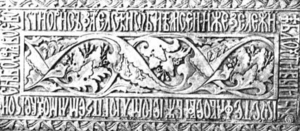
—, and several of his family members. The icon veils and tombstones are held as fine examples of Moldavian art in Stephen the Great’s time.
of the time mentions that Stephen bought the Vicovu de Sus
village in exchange for 200 zlots, and awarded the land and revenue to the treasury of the monastery.
Putna was completed in three years, but was consecrated only after four more years passed, given that the Moldavians engaged in other battles. On September 3, 1470, during a ceremony attended by Stephen and all his family, the monastery was consecrated
, and subsequently became the most important religious site in the area.
 The present church was practically rebuilt between 1653 and 1662 by Vasile Lupu
and his successors. Although the building follows the ground plan of a typical 15th and 16th century Moldavian church, it has many architectural and decorative features that are characteristic of 17th century architecture
.
For long, the site was believed to have been designed by a Greek
architect named Theodor - the interpretation of the Kilia chronicles on which this was based has since been proven wrong.
In the 15th century, Euphima, a Serbian nun, daughter of Vojihna, together with her daughter Euprasijka embroidered an altar cloth for Putna Monastery in gold thread.
Romanian Orthodox Church
The Romanian Orthodox Church is an autocephalous Eastern Orthodox church. It is in full communion with other Eastern Orthodox churches, and is ranked seventh in order of precedence. The Primate of the church has the title of Patriarch...
monastery
Monastery
Monastery denotes the building, or complex of buildings, that houses a room reserved for prayer as well as the domestic quarters and workplace of monastics, whether monks or nuns, and whether living in community or alone .Monasteries may vary greatly in size – a small dwelling accommodating only...
, one of the most important cultural, religious and artistic centers established in medieval Moldavia
Moldavia
Moldavia is a geographic and historical region and former principality in Eastern Europe, corresponding to the territory between the Eastern Carpathians and the Dniester river...
; as with many others, it was built and dedicated
Dedication
Dedication is the act of consecrating an altar, temple, church or other sacred building. It also refers to the inscription of books or other artifacts when these are specifically addressed or presented to a particular person. This practice, which once was used to gain the patronage and support of...
by Prince Stephen the Great
Stephen III of Moldavia
Stephen III of Moldavia was Prince of Moldavia between 1457 and 1504 and the most prominent representative of the House of Mușat.During his reign, he strengthened Moldavia and maintained its independence against the ambitions of Hungary, Poland, and the...
. Putna was founded on the lands perambulated by the Putna
Putna River (Suceava)
The Putna River is a tributary of the Suceava River in Romania.-References:* Administraţia Naţională Apelor Române - Cadastrul Apelor - Bucureşti* Institutul de Meteorologie şi Hidrologie - Rîurile României - Bucureşti 1971...
(which has its source in the Obcina Mare mountains, Bukovina
Bukovina
Bukovina is a historical region on the northern slopes of the northeastern Carpathian Mountains and the adjoining plains.-Name:The name Bukovina came into official use in 1775 with the region's annexation from the Principality of Moldavia to the possessions of the Habsburg Monarchy, which became...
). Stephen the Great is famous for building and influencing the building of dozens of churches and monasteries all over Moldavia (allegedly, he founded a religious edifice after each important military victory). The Putna Monastery houses the tombs of Stephen —nowadays, a place of pilgrimage
Pilgrimage
A pilgrimage is a journey or search of great moral or spiritual significance. Typically, it is a journey to a shrine or other location of importance to a person's beliefs and faith...
—, and several of his family members. The icon veils and tombstones are held as fine examples of Moldavian art in Stephen the Great’s time.
History
Right after Stephen the Great won the battle in which he conquered the Kilia citadel, he began work on the monastery as a means to give thanks to God, on July 10, 1466 - the church was to be dedicated to the Virgin Mary. The terrain on which the monastery is built is believed to have been previously occupied by a fortress. A chronicleChronicle
Generally a chronicle is a historical account of facts and events ranged in chronological order, as in a time line. Typically, equal weight is given for historically important events and local events, the purpose being the recording of events that occurred, seen from the perspective of the...
of the time mentions that Stephen bought the Vicovu de Sus
Vicovu de Sus
Vicovu de Sus is a town in northern Suceava County, on the border with Ukraine. The town administers one village, Bivolărie.-History:It was bought by Ştefan cel Mare for Putna Monastery in the year 1466...
village in exchange for 200 zlots, and awarded the land and revenue to the treasury of the monastery.
Putna was completed in three years, but was consecrated only after four more years passed, given that the Moldavians engaged in other battles. On September 3, 1470, during a ceremony attended by Stephen and all his family, the monastery was consecrated
Consecration
Consecration is the solemn dedication to a special purpose or service, usually religious. The word "consecration" literally means "to associate with the sacred". Persons, places, or things can be consecrated, and the term is used in various ways by different groups...
, and subsequently became the most important religious site in the area.
Vasile Lupu
Vasile Lupu was a Moldavian Voivode between 1634 and 1653. Vasile Coci surnamed "the wolf" who ruled as Prince of Moldavia had secured the Moldavian throne in 1634 after a series of complicated intrigues and managed to hold it for twenty years. Vasile was of Albanian origin and Greek education...
and his successors. Although the building follows the ground plan of a typical 15th and 16th century Moldavian church, it has many architectural and decorative features that are characteristic of 17th century architecture
Architecture
Architecture is both the process and product of planning, designing and construction. Architectural works, in the material form of buildings, are often perceived as cultural and political symbols and as works of art...
.
For long, the site was believed to have been designed by a Greek
Greeks
The Greeks, also known as the Hellenes , are a nation and ethnic group native to Greece, Cyprus and neighboring regions. They also form a significant diaspora, with Greek communities established around the world....
architect named Theodor - the interpretation of the Kilia chronicles on which this was based has since been proven wrong.
In the 15th century, Euphima, a Serbian nun, daughter of Vojihna, together with her daughter Euprasijka embroidered an altar cloth for Putna Monastery in gold thread.