
|
|
|
|
Puntland
|
| |
|
| |
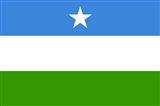
Puntland () is a region in northeastern Somalia, centered on Garowe (Nugaal region), whose leaders declared it an autonomous state in 1998. A third of the Somali people live in the province. The city of Boosaaso in the heart of Puntland has more than a million people, overtaking Mogadishu as the most populous city in Somalia following the civil war. Unlike neighbouring Somaliland, Puntland does not seek outright independence from Somalia.

Discussion
Ask a question about 'Puntland'
Start a new discussion about 'Puntland'
Answer questions from other users
|
Encyclopedia
Puntland () is a region in northeastern Somalia, centered on Garowe (Nugaal region), whose leaders declared it an autonomous state in 1998. A third of the Somali people live in the province. The city of Boosaaso in the heart of Puntland has more than a million people, overtaking Mogadishu as the most populous city in Somalia following the civil war. Unlike neighbouring Somaliland, Puntland does not seek outright independence from Somalia. The name "Puntland" is derived from the Land of Punt mentioned by ancient Egyptian sources, an area which is believed to have been most likely located in present day Somalia.
History
Puntland considers itself an autonomous region within Somalia. In 1969, when Somalia's government was toppled in a coup d'état, years of war and chaos followed. An unsuccessful invasion of Ethiopia followed the Soviet Union's change of support from Somalia to Ethiopia, caused by the rise of a pro-Soviet government in Ethiopia. Left without Soviet support, Somalia turned to the United States, which allowed Somalia's self-proclaimed president, Siad Barre, to stay in power through the end of the Cold War in 1991. When the Soviet Union collapsed, the Americans withdrew their support of the Somali government, and Barre was overthrown.
Following these events, Somalis remained without a strong government, with constant wars ravaging the southern part of Somalia. These events led in 1991 to the self-declared independence of the Somaliland region in the northwestern part of the country, a declaration which remains internationally unrecognized. Violence continued throughout the country, prompting a United Nations peacekeeping force to be sent to help restore order. However, the relief effort ended on March 3, 1995, almost two years after the Battle of Mogadishu when two American MH-60 Black Hawk helicopters were shot down and 19 soldiers were killed.
Somalia remained unstable, and Puntland declared its autonomy in 1998. Although it is a tribal-based separation under the presidency of Abdullahi Yusuf Ahmed (deputy president of the Somali Salvation Democratic Front), Puntland is a region with clan confederation as one of its top priorities. Since 1998 Puntland has also been in territorial disputes with Somaliland over the Sool and Sanaag regions. Yusuf was an army major when he sought political asylum in Ethiopia. He led the first group of resistance fighters belonging to Majeerteen clan, whose ultimate goal was to free Somalia from dictatorship.
Unlike the secessionist region of Somaliland, Puntland is not trying to obtain international recognition as a separate nation. It considers itself a federal division within a united Somalia that is a federal republic. But the two so-called "lands" have one thing in common: they both base their support upon clan elders and their way of organization along lines based on clan relationships and kinship.
, Puntland, Somalia.]]
Puntland began experiencing political unrest in 2001 when then President of Puntland Abdullahi Yusuf Ahmed wanted his term to be lengthened. Ahmed and Jama Ali Jama fought for control of the region, which Ahmed won in 2002. Ahmed served as president until October 2004 when he was elected President of Somalia. He was succeeded by Muhammad Abdi Hashi who served until January 2005 when he was defeated for re-election by Parliament, which elected General Mohamud Muse Hersi ("Adde"). In December 2004, Puntland sustained serious damage during the tsunami following the 2004 Indian Ocean Earthquake.
In November 2006, the Union of Islamic Courts reportedly captured Bandiiradley, a strategically located settlement near Puntland's border with Mudug. However, a spokesman for local warlord Abdi Hassan Awale Qeybdiid claimed that his troops had only made a tactical retreat from the area. Mohamed Mohamud Jama, a Mudug-based spokesman for the Islamic Courts, announced the courts' intention to march on Gaalkacyo, part of which is claimed by Puntland. Heretofore, the courts had avoided making incursions into Puntland. That same month, General Adde announced that he would rule according to Islamic law but in a different way from that of the Islamic Courts in order to avoid "politicising religion." Adde then announced that Puntland would resist any attack made by the Islamic Courts.
Tensions between Puntland and Somaliland heightened to a violent clash in October, 2007.
Politics
Former President Mohamed Musa Hersi dismissed the parliament of Puntland on December 9 2007, and effectively ruled by decree. This followed a year of defections and secessions from Puntland over the increasingly autocratic governing style of the president sparked initially by a demand earlier in 2007 for an audit of the budget. Fallout from this political crisis include the defection of Ahmed Abdi Xabsade to Somaliland and the invasion of Sool by Somaliland and his supporters, the secession of Puntland-controlled Sanaag and subsequent creation of the state of Maakhir, and recently the defection of the commander of Puntland military forces in Sool to Somaliland.
The newly elected President of Puntland is Abdirahman Mohamud Farole, 63, a former PhD student in the history department at La Trobe University in Melbourne, Australia. After having repeatedly turned down requests from his fellow countrymen to run for office and with the assurance of support from various political factions, Farole finally gave in and returned to Somalia to present himself as a candidate in the Puntland region's 2008-2009 presidential elections. In January 2009, he defeated all comers to become the fourth president of Puntland. In his election victory speech, Farole vowed to tackle head-on the pervasive piracy problem off of the Somali coast, including cracking down on local authorities who have reportedly corroborated with pirates in return for a share of the profits.
Dr Farole left Puntland in 2006 after falling out with former president Mohamud "Adde" Muse Hersi over a deal with Australian company Range Resources.
Maakhir factor
In July 2007, Maakhir was declared a regional state to represent the political will of members of the Warsangali branch of the Somali Darod clan from both the northern and southern portions of federal Somalia. Maakhir is the traditional territory of the Warsangali, a member (along with the Dhulbahante and Majeerteen) of the Harti confederation of Darod clans whom in 1998 created the macro region of Puntland in a grand meeting in Garowe.
The Maakhirians were one of the principal actors in Puntland politics. However, some of the clan's members felt that hey had been increasingly marginalized, as the Majeerteen clan assumed an increasingly hegemonic role in the state.
In August, 2008, General Abdullahi Ahmed Jama ‘Ilkajir’ arrived back in Maakhir with the promise of running and winning the Puntland presidential election and consequently improve the role of Maakhirians in Puntland politics. He received a huge welcome throughout Maakhir's cities, and is credited with having brought Maakhir back into the Puntland fold.
Following the dissolution of the Maakhir administration, General Ilkajir subsequently became the de-facto leader of Maakhir. He then assigned himself the duty of building up the sub-region's security structure, and to extend the local authorities' capacity to defend, serve and protect the region's inhabitants from external disruptions like piracy, charcoal profiteering and separatist adventures.
After the election in Puntland in which General Abdullahi Ilkajir ran and lost, he has joined the Puntland cabinet as the Interior Minister. In his new position, General Ilkajir is responsible for the establishment of local district governors across Puntland of which Maakhir territory is a part.
Economy
Puntland has 1600km of coastline, which is abundant with fish and other natural marine resources. However, after the collapse of the Somali central government in 1991, the coast was left unguarded against foreign intruders. As a result, many ships equipped with heavy trawls and other unlawful fishing equipment have worked in Puntland's territorial waters. These ships violate catch regulations, including some which keep their catch alive and stock them in waters where fishing has been depleted. Puntland's coastal authorities continue to receive complaints from local fishermen about the damage being done by these outsiders.
Puntland exports great quantities of seafood such as lobsters, dried fish, shark vines, and tuna. Sea salt is also produced.
Other economic products and activities of Puntland include livestock, frankincense, gum arabic, manufacturing and agriculture.
In Laasqoray district, there is a medium size fish processing plant that produces and processes great quantities of tuna fish. The products of Laasqoray fish factory reach commercial level, and its tuna are found throughout Puntland and also outside the region. A fish processing plant is also being constructed in Habo, which locals hope will reduce poverty and unemployment and improve the economy of the area.
Piracy
Piracy threatens shipping near the Puntland coast, with pirate crews operating out of ports on the coastline.[ ] The pirates actually have an income of $30m per year, $10m greater than that of Puntland as a whole. In a December 2008 report, the United Nations estimated that Somali pirates, mostly based in Puntland, had collected at least $120 million in the past year and still held at least 17 foreign ships. The report also claimed accused the Puntland government of being complicit in piracy.
Geography
Puntland comprises the following Regions of Somalia:
The regions of Sool and Sanaag are in dispute, as these territories were claimed by the secessionist northwestern Somaliland macro region of Somalia. Beginning in 2003, Puntland troops entered and occupied the eastern parts of the Sool region. Fighting between the two forces led to casualties and captured prisoners, who were later exchanged.
Both the Sool and Sanaag regions have declared themselves autonomous parts of Somalia, as Northland State (2008) and Maakhir State (2007) respectively.
As of October 20 2007, Puntland controls no territory in Sool.
Oil exploration
Puntland signed a deal with Consort Private Ltd for exclusive oil exploration rights in Puntland, interpreted in the original agreement as including Bari, Nugaal and Puntland's Mudug, Sool, Sanaag and Cayn regions. Consort then sold a controlling share (50.1%) to Range Resources of Perth, Western Australia to carry out the actual exploration.
Canmex Minerals of Canada signed an agreement with Range Resources for Canmex to open oil production on 80% of any oil discovered. In return, Canmex will foot the bill for exploration, amounting to up to ~$70 million, plus a $5 million signing bonus for Range. On August 23rd, 2006, Canmex changed its name to Africa Oil Corp. The company continues to be based in Vancouver, British Columbia, Canada.
Criticism
The manner in which Puntland and their partners (Range Resources LTD, Canmex/African Oil Corp and other linked parties) have explored for minerals, oil and gas in the Dharoor and Nugaal valley has drawn criticism both within Puntland, Somalia and in the diaspora. Somalia is a patchwork of overlapping administrations, clans and traditional authorities, which in Puntland includes the Transitional Government, the Puntland Government, various traditional Harti clan leaders, and individual loyalties to a particular warlord or business leader. The President of Puntland has chosen to place himself above all these other authorities within Puntland, and the oil, mineral and gas exploration in Puntland has become an engine empowering conflict and war in northern Somalia. Since exploration began, this has spawned Puntland's war with Somaliland, Maakhir's break with Puntland, Somaliland's war with Maakhir, gun-battles outside of the Puntland State legislature, and a great deal of political uncertainty.
The Northern Somali Unionist Movement is a Somali organization of unknown size or influence that claims members and supporters from Sool, Sanaag and Cayn regions in the northern regions of Somalia in which some promising geological formations lie. They have issued a warning to mineral and oil prospectors companies claiming that they view their agreement with the Puntland and TFG governments regarding the SSC region as illegitimate and non-binding without the prior sanction and agreement of the traditional leaders and the civil society organizations of the area.
Media Established in 2004, Radio Garowe is a community radio station based in Garowe, the capital of Puntland. The station broadcasts daily from Somalia on shortwave 89.8 FM, covering all the latest headlines in Somali news, politics and society. It also broadcasts other special programming on Garowe Online, its online sister website.
Radio Gaalkacyo is the state radio station formerly called Radio Free Somalia. XargagaOnline is the main news portal (mostly in Somali) for current events from the Sool, Sanaag and Cayn regions of Somalia.
See also
External links
-
- (4.3MB PDF file)
- (PDF file)
News
- November 12 2006
-
-
-
- May 7 2002
-
-
-
-
-
-
-
-
Politics
|
| |
|
|