
All Topics  
Protecting group


   Email Print
   Bookmark   Link


Protecting group


A protecting group or protective group is introduced into a molecule by chemical modification of a functional group
Functional group

In organic chemistry, functional groups are specific groups of atoms within molecules that are responsible for the characteristic chemical reactions of those molecules....
 in order to obtain chemoselectivity
Chemoselectivity

Chemical reactions are defined usually in small contexts , such generalizations are a matter of utility. The preferential outcome of one instance of a generalized reaction over a set of other plausible reactions, is defined as chemoselectivity....
 in a subsequent chemical reaction. It plays an important role in multistep organic synthesis
Organic synthesis

Organic synthesis is a special branch of chemical synthesis and is concerned with the construction of organic compounds via organic reactions. Organic_chemistry molecules can often contain a higher level of complexity compared to purely Inorganic_chemistry compounds, so the synthesis of organic compounds has developed into one of the most im...
.

In many preparations of delicate organic compounds, some specific parts of their molecules cannot survive the required reagents or chemical environments. Then, these parts, or groups, must be protected.


Discussion
Ask a question about 'Protecting group'
Start a new discussion about 'Protecting group'
Answer questions from other users
Full Discussion Forum


Encyclopedia


A protecting group or protective group is introduced into a molecule by chemical modification of a functional group
Functional group

In organic chemistry, functional groups are specific groups of atoms within molecules that are responsible for the characteristic chemical reactions of those molecules....
 in order to obtain chemoselectivity
Chemoselectivity

Chemical reactions are defined usually in small contexts , such generalizations are a matter of utility. The preferential outcome of one instance of a generalized reaction over a set of other plausible reactions, is defined as chemoselectivity....
 in a subsequent chemical reaction. It plays an important role in multistep organic synthesis
Organic synthesis

Organic synthesis is a special branch of chemical synthesis and is concerned with the construction of organic compounds via organic reactions. Organic_chemistry molecules can often contain a higher level of complexity compared to purely Inorganic_chemistry compounds, so the synthesis of organic compounds has developed into one of the most im...
.

In many preparations of delicate organic compounds, some specific parts of their molecules cannot survive the required reagents or chemical environments. Then, these parts, or groups, must be protected. For example, lithium aluminium hydride
Lithium aluminium hydride

Lithium aluminium hydride , commonly abbreviated to LAH, is a reducing agent used in organic synthesis. It is more powerful than the related reagent sodium borohydride due to the weaker Al-H bond compared to the B-H bond....
 is a highly reactive but useful reagent capable of reducing ester
Ester

An ester is an often Aroma compound organic chemistry or partially organic compound formed by the reaction between an acid and an alcohol or aromatic alcohol with the elimination of water....
s to alcohol
Alcohol

In chemistry, an alcohol is any organic compound in which a hydroxyl Functional group is bound to a carbon atom of an alkyl or substituted alkyl group....
s. It will always react with carbonyl
Carbonyl

In organic chemistry, a carbonyl group is a functional group composed of a carbon atom double bond to an oxygen atom : C=O.The term carbonyl can also refer to carbon monoxide as a ligand in an inorganic or organometallic complex ; in this situation, carbon is triple-bonded to oxygen : C=O....
 groups, and this cannot be discouraged by any means. When a reduction of an ester is required in the presence of a carbonyl, the attack of the hydride on the carbonyl has to be prevented. For example, the carbonyl is converted into an acetal
Acetal

An acetal is a molecule with two single bonded oxygens attached to the same carbon atom.Traditional usages distinguish ketal from acetal . Current accepted terminology classifies ketals as a subset of acetals....
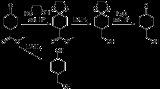
, which does not react with hydrides. The acetal is then called a protecting group for the carbonyl. After the step involving the hydride is complete, the acetal is removed (by reacting it with an aqueous acid), giving back the original carbonyl. This step is called deprotection.

Protecting groups are more commonly used in small-scale laboratory work and initial development than in industrial production processes because their use adds additional steps and material costs to the process. However, the availability of a cheap chiral building block can overcome these additional costs (e.g. shikimic acid
Shikimic acid

Shikimic acid, more commonly known as its ion form shikimate, is an important biochemical intermediate in plants and microorganisms. Its name comes from the Japanese flower shikimi , from which it was first isolated....
 for oseltamivir
Oseltamivir

Oseltamivir is an antiviral drug that is used in the treatment and prophylaxis of both Influenzavirus A and Influenzavirus B. Like zanamivir, oseltamivir is a neuraminidase inhibitor....
). While additional synthetic steps are required for protection and deprotection, reactions are typically much cleaner, proceed in higher yields, and require less optimization with protecting groups than without.

Common protecting groups


Alcohol protecting groups

Protection of alcohols:
  • Acetyl
    Acetyl

    In organic chemistry, acetyl , is a functional group, the acyl of acetic acid, with chemical formula -CarbonOxygenCarbonHydrogen3. It is sometimes abbreviated as Ac ....
     (Ac) - Removed by acid or base. (see Acetoxy_group
    Acetoxy group

    The Acetoxy group, abbreviated AcO or OAc, is a chemistry functional group of the structure CH3-C-O-. It differs from the acetyl group CH3-C- by the presence of one additional oxygen atom....
    )
  • β-Methoxyethoxymethyl ether (MEM) - Removed by acid.
  • Methoxymethyl ether (MOM) - Removed by acid.
  • p-Methoxybenzyl ether (PMB) - Removed by acid, hydrogenolysis, or oxidation.
  • Methylthiomethyl ether
    Methylthiomethyl ether

    In organic chemistry a methylthiomethyl ether is a protective group for Hydroxide. Hydroxyl groups are present in many chemical compounds and they must be protected during oxidation, acylation, halogenation, Dehydration reaction and other reactions to which they are susceptible....
     - Removed by acid.
  • Pivaloyl (Piv) - Removed by acid, base or reductant agents. It is stronger than other acyl protecting groups.
  • Tetrahydropyran
    Tetrahydropyran

    Tetrahydropyran, or oxane, is the organic compound consisting of a saturated six-membered ring containing five carbon atoms and one oxygen atom....
     (THP) - Removed by acid.
  • Silyl ether
    Silyl ether

    Silyl ethers are a group of chemical compounds which contain a silicon atom covalent bond to an alkoxy group. The general structure is R1R2R3Si-O-R4 where R4 is an alkyl group or an aryl group....
     (most popular ones include trimethylsilyl
    Trimethylsilyl

    A trimethylsilyl group is a functional group in organic chemistry. This group consists of three methyl groups bonded to a silicon atom [−Si3], which is in turn bonded to the rest of a molecule....
     (TMS), tert-butyldimethylsilyl (TBDMS), and triisopropylsilyl (TIPS) ethers) - Removed by acid or fluoride
    Fluoride

    Fluoride is the Redox form of fluorine. Both organic compounds and inorganic compounds containing the chemical element fluorine are considered fluorides....
     ion. (such as NaF or TBAF (Tetra-n-butylammonium fluoride
    Tetra-n-butylammonium fluoride

    Tetra-n-butylammonium fluoride or TBAF is a quaternary ammonium salt with the chemical formula 4N+F-....
    ))
  • Methyl Ethers - Cleavage is by TMSI in DCM or MeCN or Chloroform the other method to cleave methyl ethers is BBr3 in DCM
  • Ethoxyethyl ethers (EE) - Cleavage more trivial than simple ethers e.g. 1N Hydrochloric acid
    Hydrochloric acid

    Hydrochloric acid is the solution of hydrogen chloride in water. It is a highly corrosive, strong acid mineral acid and has major industrial uses....


Amine protecting groups

Protection of amine
Amine

Amines are organic compounds and functional groups that contain a base nitrogen atom with a lone pair. Amines are derivative s of ammonia, wherein one or more hydrogen atoms are replaced by organic substituents such as alkyl and aryl groups....
s:
  • Carbobenzyloxy
    Carboxybenzyl

    Carboxybenzyl or Cbz or Z is an amine protecting group in organic synthesis. It is commonly used in peptide synthesis and is formed by reacting an amine with benzyl chloroformate and a weak base....
     (Cbz) group - Removed by hydrogenolysis
    Hydrogenolysis

    Hydrogenolysis is a chemical reaction whereby a carbon-carbon or carbon-heteroatom single bond is cleaved or undergoes "lysis" by hydrogen. The heteroatom may vary, but it usually is oxygen, nitrogen, or sulfur....
  • p-Methoxybenzyl carbonyl (Moz or MeOZ) group - Removed by hydrogenolysis
    Hydrogenolysis

    Hydrogenolysis is a chemical reaction whereby a carbon-carbon or carbon-heteroatom single bond is cleaved or undergoes "lysis" by hydrogen. The heteroatom may vary, but it usually is oxygen, nitrogen, or sulfur....
    , more labile than Cbz
  • tert-Butyloxycarbonyl
    Di-tert-butyl dicarbonate

    Di-tert-butyl dicarbonate is a reagent widely used in organic synthesis. This carbonate ester reacts with amines to give N-tert-butoxycarbonyl or so-called t-BOC derivatives....
     (BOC) group (Common in solid phase peptide synthesis) - Removed by concentrated, strong acid. (such as HCl or CF3COOH)
  • 9-Fluorenylmethyloxycarbonyl (FMOC) group (Common in solid phase peptide synthesis) - Removed by base, such as piperidine
    Piperidine

    Piperidine is an organic compound with the molecular formula 5NH. This heterocyclic compound amine consists of a six-membered ring containing five methylene units and one nitrogen atom....
  • Benzyl
    Benzyl

    In organic chemistry, benzyl is the term used to describe the substituent or molecular fragment possessing the structure C6H5CH2-....
     (Bn) group - Removed by hydrogenolysis
    Hydrogenolysis

    Hydrogenolysis is a chemical reaction whereby a carbon-carbon or carbon-heteroatom single bond is cleaved or undergoes "lysis" by hydrogen. The heteroatom may vary, but it usually is oxygen, nitrogen, or sulfur....
  • p-Methoxybenzyl (PMB) - Removed by hydrogenolysis
    Hydrogenolysis

    Hydrogenolysis is a chemical reaction whereby a carbon-carbon or carbon-heteroatom single bond is cleaved or undergoes "lysis" by hydrogen. The heteroatom may vary, but it usually is oxygen, nitrogen, or sulfur....
    , more labile than Benzyl
  • 3,4-Dimethoxybenzyl (DMPM) - Removed by hydrogenolysis
    Hydrogenolysis

    Hydrogenolysis is a chemical reaction whereby a carbon-carbon or carbon-heteroatom single bond is cleaved or undergoes "lysis" by hydrogen. The heteroatom may vary, but it usually is oxygen, nitrogen, or sulfur....
    , more labile than p-methoxybenzyl
  • p-methoxyphenyl (PMP) group - Removed by Ammonium cerium(IV) nitrate
    Ammonium cerium(IV) nitrate

    Ceric ammonium nitrate is the inorganic compound with the formula 2Ce6. This orange-red, water-soluble salt is widely used as an Redox in organic synthesis and as a standard oxidant in quantitative analysis,...
     (CAN)
  • Tosyl
    Tosyl

    A tosyl group is CH3C6H4SO2. This group is usually derived from the compound 4-Toluenesulfonyl chloride, CH3C6H4SO2Cl, which forms esters and amides of toluenesulfonic acid....
     (Ts) group - Removed by concentrated acid (HBr, H2SO4) & strong reducing agents (sodium
    Sodium

    Sodium is an element which has the symbol Na , atomic number 11, atomic mass 23 amu , and a common oxidation number +1. Sodium is a soft, silvery white, highly reactive element and is a member of the alkali metals within "group 1" ....
     in liquid ammonia
    Ammonia

    Ammonia is a chemical compound with the chemical formula nitrogenhydrogen. It is normally encountered as a gas with a characteristic pungent odor....
    , sodium napthalene)
  • Other Sulfonamides
    Tosyl

    A tosyl group is CH3C6H4SO2. This group is usually derived from the compound 4-Toluenesulfonyl chloride, CH3C6H4SO2Cl, which forms esters and amides of toluenesulfonic acid....
     (Nosyl & Nps) groups - Removed by samarium iodide, tributyltin hydride
    Tributyltin hydride

    Tributyltin hydride is an organotin compound. It is a useful reagent in organic synthesis. Combined with azobisisobutylonitrile, tributyltin generates radicals by removing a hydrogen atom from the molecule of interest....


Carbonyl protecting groups

Protection of carbonyl
Carbonyl

In organic chemistry, a carbonyl group is a functional group composed of a carbon atom double bond to an oxygen atom : C=O.The term carbonyl can also refer to carbon monoxide as a ligand in an inorganic or organometallic complex ; in this situation, carbon is triple-bonded to oxygen : C=O....
 groups:
  • Acetal
    Acetal

    An acetal is a molecule with two single bonded oxygens attached to the same carbon atom.Traditional usages distinguish ketal from acetal . Current accepted terminology classifies ketals as a subset of acetals....
    s and Ketal
    Ketal

    A ketal is a functional group or molecule containing a carbon Chemical bond to two -OR groups, where O is oxygen and R represents any alkyl group....
    s - Removed by acid. Normally, the cleavage of acyclic acetals is easier than of cyclic acetals.
  • Acylal
    Acylal

    Acylals in organic chemistry are a group of chemical compounds sharing a functional group with the general structure R-C2. Acylals can be obtained by reaction of aldehydes with acetic anhydride and a suitable catalyst for instance with sulfated zirconia at low temperatures when used as protective groups for aldehydes....
    s - Removed by Lewis acid
    Lewis acid

    A Lewis acid is a chemical compound, A, that can accept a pair of electrons from a Lewis base, B, that acts as an electron-pair donor, forming an adduct, AB.Gilbert N....
    s.
  • Dithiane
    Dithiane

    A dithiane is a heterocyclic compound composed of a cyclohexane core structure with two methylene units replaced by sulfur. The parent compounds are 1,2-dithiane, 1,3-dithiane and 1,4-dithiane....
    s - Removed by metal salts or oxidizing agents.


Carboxylic acid protecting groups

Protection of carboxylic acid
Carboxylic acid

Carboxylic acids are organic acids characterized by the presence of a carboxyl group, which has the Chemical formula -COH, usually written -COOH or -CO2H....
s:
  • Methyl esters - Removed by acid or base.
  • Benzyl
    Benzyl

    In organic chemistry, benzyl is the term used to describe the substituent or molecular fragment possessing the structure C6H5CH2-....
     esters - Removed by hydrogenolysis.
  • tert-Butyl esters - Removed by acid, base and some reductants.
  • Silyl esters - Removed by acid, base and organometallic reagents

Miscellaneous

  • Terminal alkynes can be protected as propargyl alcohols in the Favorskii reaction
    Favorskii reaction

    The Favorskii reaction , named for the Russian chemist Alexei Yevgrafovich Favorskii, is a special case of nucleophilic attack on a carbonyl group involving a terminal alkyne with carbon acid....
    .


Orthogonal protection

Orthogonal protection is a strategy allowing the deprotection of multiple protective groups one at the time each with a dedicated set of reaction conditions without affecting the other. It was introduced in the field of peptide synthesis
Peptide synthesis

In organic chemistry, peptide synthesis is the production of peptides, which are organic compounds in which multiple amino acids are linked via peptide bonds which are also known as amide bonds....
 by Robert Bruce Merrifield
Robert Bruce Merrifield

Robert Bruce Merrifield was an United States biochemist who won the Nobel Prize in Chemistry in 1984 for the invention of solid phase peptide synthesis....
 in 1977 . As a proof of concept
Proof of concept

Proof of concept is a short and/or incomplete realization of a certain method or idea to demonstrate its feasibility, or a demonstration in principle, whose purpose is to verify that some concept or theory is probably capable of exploitation in a useful manner....
 orthogonal deprotection is demonstrated in a photochemical transesterification
Transesterification

In organic chemistry, transesterification is the process of exchanging the alcohol group of an ester compound with another alcohol. These reactions are often catalyst by the addition of an acid or base ....
 by trimethylsilyldiazomethane
Trimethylsilyldiazomethane

Trimethylsilyldiazomethane, 3SiCHN2, is an organic compound.It is a safer alternative to diazomethane for the methylation of carboxylic acids....
 utilizing the kinetic isotope effect
Kinetic isotope effect

The kinetic isotope effect is a dependence of the reaction rate of a chemical reaction on the isotope of an atom in a reactant. It is also called "isotope fractionation," although this term is somewhat broader in meaning....
 :
Due to this effect the quantum yield
Quantum yield

The quantum yield of a radiation-induced process is the number of times that a defined event occurs per photon absorbed by the system. Thus, the quantum yield is a measure of the efficiency with which absorbed light produces some effect....
 for deprotection of the right-side ester group is reduced and it stays intact. Significantly by placing the deuterium atoms next to the left-side ester group or by changing the wavelength to 254 nm the other monoarene is obtained.


Criticism

In a 2007 paper Phil Baran notes that even though the textbooks state that the use of protective groups is unavoidable and ideally easily added and removed, in practical terms in organic synthesis their use adds two synthetic steps in a chemical sequence and sometimes dramatically lowers chemical yield. Crucially, added complexity impedes the use of synthetic total synthesis in drug discovery
Drug discovery

In medicine, biotechnology and pharmacology, drug discovery is the process by which medication are discovered and/or designed.In the past most drugs have been discovered either by identifying the active ingredient from traditional remedies or by serendipity discovery....
. In contrast biomimetic synthesis does not employ protective groups. As an alternative, Baran presented a novel protective-group free synthesis of the compound hapalindole U. The previously published synthesis according to Baran, contained 20 steps with multiple protective group manipulations (two confirmed):

valign=top |
Hapalindole U Baran 2007 protective-group free Hapalindole U Muratake 1990 Ts
Tosyl

A tosyl group is CH3C6H4SO2. This group is usually derived from the compound 4-Toluenesulfonyl chloride, CH3C6H4SO2Cl, which forms esters and amides of toluenesulfonic acid....
 protective groups in blue


External links