


Positive liberty

Encyclopedia
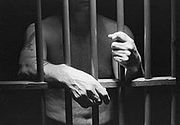
Negative liberty
Negative liberty is defined as freedom from interference by other people, and is set in contrast to positive liberty, which is defined as an individual's freedom from inhibitions of the social structure within the society such as classism, sexism or racism and is primarily concerned with the...
, which is freedom from external restraint. Specifically, the concepts of structure and agency
Structure and agency
The question over the primacy of either structure or agency in human behavior is a central debate in the social sciences. In this context, "agency" refers to the capacity of individuals to act independently and to make their own free choices. "Structure", by contrast, refers to the recurrent...
are central to the concept of positive liberty because in order to be free, a person should be free from inhibitions of the social structure in carrying out their free will
Free will
"To make my own decisions whether I am successful or not due to uncontrollable forces" -Troy MorrisonA pragmatic definition of free willFree will is the ability of agents to make choices free from certain kinds of constraints. The existence of free will and its exact nature and definition have long...
. Structurally speaking classism
Classism
Classism is prejudice or discrimination on the basis of social class. It includes individual attitudes and behaviors, systems of policies and practices that are set up to benefit the upper classes at the expense of the lower classes...
, sexism
Sexism
Sexism, also known as gender discrimination or sex discrimination, is the application of the belief or attitude that there are characteristics implicit to one's gender that indirectly affect one's abilities in unrelated areas...
or racism
Racism
Racism is the belief that inherent different traits in human racial groups justify discrimination. In the modern English language, the term "racism" is used predominantly as a pejorative epithet. It is applied especially to the practice or advocacy of racial discrimination of a pernicious nature...
can inhibit a person's freedom and positive liberty is primarily concerned with the possession of sociological agency
Agency (sociology)
In the social sciences, agency refers to the capacity of individuals to act independently and to make their own free choices. By contrast, "Structure" refers to the factors of influence that determine or limit an agent and his or her decisions...
. Positive liberty is enhanced by the ability of citizens to participate in their government and have their voice, interests and concerns recognized as valid and acted upon.
Although Isaiah Berlin
Isaiah Berlin
Sir Isaiah Berlin OM, FBA was a British social and political theorist, philosopher and historian of ideas of Russian-Jewish origin, regarded as one of the leading thinkers of the twentieth century and a dominant liberal scholar of his generation...
's essay "Two Concepts of Liberty
Two Concepts of Liberty
Two Concepts of Liberty was the inaugural lecture delivered by the liberal philosopher Isaiah Berlin before the University of Oxford on 31 October 1958. It was subsequently published as a 57-page pamphlet by Oxford at the Clarendon Press...
" (1958) is typically acknowledged as the first to explicitly draw the distinction between positive and negative liberty, Frankfurt School
Frankfurt School
The Frankfurt School refers to a school of neo-Marxist interdisciplinary social theory, particularly associated with the Institute for Social Research at the University of Frankfurt am Main...
psychoanalyst and Marxist humanistic philosopher Erich Fromm
Erich Fromm
Erich Seligmann Fromm was a Jewish German-American social psychologist, psychoanalyst, sociologist, humanistic philosopher, and democratic socialist. He was associated with what became known as the Frankfurt School of critical theory.-Life:Erich Fromm was born on March 23, 1900, at Frankfurt am...
drew a similar distinction between negative and positive freedom in The Fear of Freedom (1941), predating Berlin's essay by more than a decade. In fact, the concept as opposed to the name is probably as old as that of negative liberty, both referred to simply as "liberty" or "freedom".
Overview
The word liberty can refer to many things, but Isaiah Berlin recognized two main types of liberty. Berlin described a statement such as "I am slave to no man" as one of Negative Liberty, that is, freedom from another individual's direct interference. He contrasted this with a Positive Freedom statement such as "I am my own master", which lays claim to a freedom to choose one's own pursuits in life.Charles Taylor
Charles Taylor (philosopher)
Charles Margrave Taylor, is a Canadian philosopher from Montreal, Quebec best known for his contributions in political philosophy, the philosophy of social science, and in the history of philosophy. His contributions to these fields have earned him both the prestigious Kyoto Prize and the...
's clarification may be even more useful. Taylor explains that Negative Freedom is an "opportunity-concept": one possesses Negative Freedom if one is not enslaved by external forces, and has equal access to a society's resources (regardless of how one decides to spend their time). Positive Freedom, says Taylor, is an "exercise-concept": possessing it might mean that one is not internally constrained; one must be able to act according to their highest self - according to reason. Suppose a rich and powerful actor is also a drug addict. This actor may possess a great deal of Negative Liberty, but very little Positive Liberty according to Taylor. Recall that, by Taylor's definitions, Positive Freedom entails being in a mature state of decision making, free of internal restraints (e.g. weakness, fear, ignorance, etc).
Examples
In a description of positive liberty from the Stanford Encyclopedia of PhilosophyStanford Encyclopedia of Philosophy
The Stanford Encyclopedia of Philosophy is a freely-accessible online encyclopedia of philosophy maintained by Stanford University. Each entry is written and maintained by an expert in the field, including professors from over 65 academic institutions worldwide...
,
Put in the simplest terms, one might say that a democratic society is a free society because it is a self-determined society, and that a member of that society is free to the extent that he or she participates in its democratic process. But there are also individualist applications of the concept of positive freedom. For example, it is sometimes said that a government should aim actively to create the conditions necessary for individuals to be self-sufficient or to achieve self-realization.
In "Recovering the Social Contract", Ron Replogle made a metaphor that is helpful in understanding positive liberty. "Surely, it is no assault on my dignity as a person if you take my car keys, against my will, when I have had too much to drink. There is nothing paradoxical about making an agreement beforehand providing for paternalistic supervision in circumstances when our competence is open to doubt." In this sense, positive liberty is the adherence to a set of rules agreed upon by all parties involved. Should the rules be altered, all parties involved must agree upon the changes. Therefore, positive liberty is a contractarian philosophy.
However, Isaiah Berlin
Isaiah Berlin
Sir Isaiah Berlin OM, FBA was a British social and political theorist, philosopher and historian of ideas of Russian-Jewish origin, regarded as one of the leading thinkers of the twentieth century and a dominant liberal scholar of his generation...
opposed any suggestion that paternalism and positive liberty could be equivalent. He stated that positive liberty could only apply when the withdrawal of liberty from an individual was in pursuit of a choice that individual himself/herself made, not a general principle of society or any other person's opinion. In the case where a person removes a driver's car keys against their will because they have had too much to drink, this constitutes positive freedom only if the driver has made, of their own free will, an earlier decision not to drive drunk. Thus, by removing the keys, the other person facilitates this decision and ensures that it will be upheld in the face of paradoxical behaviour (i.e., drinking) by the driver. For the remover to remove the keys in the absence of such an expressed intent by the driver, because the remover feels that the driver ought not to drive drunk, is paternalism, and not positive freedom by Berlin's definition.
Erich Fromm
Erich Fromm
Erich Seligmann Fromm was a Jewish German-American social psychologist, psychoanalyst, sociologist, humanistic philosopher, and democratic socialist. He was associated with what became known as the Frankfurt School of critical theory.-Life:Erich Fromm was born on March 23, 1900, at Frankfurt am...
sees the distinction between the two types of freedom emerging alongside humanity's evolution away from the instinctual activity that characterizes lower animal forms. This aspect of freedom, he argues, "is here used not in its positive sense of 'freedom to' but in its negative sense of 'freedom from', namely freedom from instinctual determination of his actions." For Fromm, freedom from animal instinct implicitly implies that survival now hinges on the necessity of charting one's own course. He relates this distinction to the biblical story of man's expulsion from Eden
Garden of Eden
The Garden of Eden is in the Bible's Book of Genesis as being the place where the first man, Adam, and his wife, Eve, lived after they were created by God. Literally, the Bible speaks about a garden in Eden...
:
Positive freedom, Fromm maintains, comes through the actualization of individuality in balance with the separation from the whole: a "solidarity with all men", united not by instinctual or predetermined ties, but on the basis of a freedom founded on reason.
Various thinkers
Rousseau's theory of freedom, according to which individual freedom is achieved through participation in the process whereby one's community exercises collective control over its own affairs in accordance with the 'general willGeneral will
The general will , made famous by Jean-Jacques Rousseau, is a concept in political philosophy referring to the desire or interest of a people as a whole. As used by Rousseau, the "general will" is identical to the rule of law, and to Spinoza's mens una.The notion of the general will is wholly...
'. Some interpret the Social Contract to suggest that Rousseau believed that liberty was the power of individual citizens to act in the government to bring about changes; this is essentially the power for self-governance
Self-governance
Self-governance is an abstract concept that refers to several scales of organization.It may refer to personal conduct or family units but more commonly refers to larger scale activities, i.e., professions, industry bodies, religions and political units , up to and including autonomous regions and...
and democracy
Democracy
Democracy is generally defined as a form of government in which all adult citizens have an equal say in the decisions that affect their lives. Ideally, this includes equal participation in the proposal, development and passage of legislation into law...
. Rousseau himself said, "the mere impulse to appetite is slavery, while obedience to law we prescribe ourselves is liberty."
However, this is only one interpretation of Rousseau's work. This view is not really describing the General Will in terms of its more modern interpretations. Rather, it is describing more the 'Will of All' (in Rousseau's terminology). The Will of All contrasts to the General Will in that the prior comprises the composite desires and appetites of those who make up society and the latter the reasoned, objective opinions and beliefs of those who see themselves as part of a nation and of a group of men. A law cannot be said to be of the General Will unless it is general in its origins and applications. Particular wills cannot be homogeneous in the way which the General Will requires. However, this does not mean that Rousseau's liberty is incompatible with positive liberty. Rather, we have to remove the implication that positive liberty requires collective control over affairs which is derived from the conscious and expressed decisions of men. The task which Rousseau gives 'The Lawgiver' in the Social Contract is that of deciphering the General Will from the mass of particular wills. If The Lawgiver, whatever form this may take, is able to do so, then the individuals who comprise a society have truly participated (via their real, reasoned and tempered will) in the collective control of their own affairs. As the extract above says, government by the Will of All is slavery. Rousseau's usual solution to how the Lawgiver may be able to do this is cultural homogeneity on the one hand and physically small states on the other. These two themes recur within Rousseau's works often with the view to homogenising inharmonious particular wills.
According to Hegel, "Freedom is the fundamental character of the will, as weight is of matter... That which is free is the will. Will without freedom is an empty word."
See also
- Negative libertyNegative libertyNegative liberty is defined as freedom from interference by other people, and is set in contrast to positive liberty, which is defined as an individual's freedom from inhibitions of the social structure within the society such as classism, sexism or racism and is primarily concerned with the...
- Real freedomReal freedomReal freedom is a term coined by the political philosopher and economist Philippe Van Parijs. It expands upon notions of negative freedom by incorporating not simply institutional or other constraints on a person's choices, but also the requirements of physical reality, resources and personal...
- Negative and positive rightsNegative and positive rightsPhilosophers and political scientists make a distinction between negative and positive rights . According to this view, positive rights permit or oblige action, whereas negative rights permit or oblige inaction. These permissions or obligations may be of either a legal or moral character...
- Mutual LibertyMutual libertyMutual liberty is an idea first coined by Alexis de Tocqueville in his 1835 work Democracy in America. In effect, Tocqueville was referring to the general nature of American society during the 19th century. It appeared to him, at least on the surface, that every citizen in the United States had the...
- Rule according to higher lawRule according to higher lawThe rule according to a higher law means that no written law may be enforced by the government unless it conforms with certain unwritten, universal principles of fairness, morality, and justice...
- The Trap (television documentary series)