

Phascolarctos

Encyclopedia
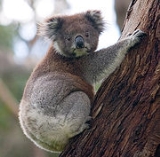
The genus Phascolarctos (Phasco - pouch or bag, larct- from the greek ‘arctos’ meaning bear) consists of 3 species, of which only one (P. cinereus, the Koala
) is alive today. The largest species was P. stirtoni (or Giant Koala
) that lived in the Pleistocene
epoch. Giant Koala species are known only from fossils found in the Lake Eyre
and Tarkarooloo basins of South Australia
. Not much is known of the P. maris species.
Koala
The koala is an arboreal herbivorous marsupial native to Australia, and the only extant representative of the family Phascolarctidae....
) is alive today. The largest species was P. stirtoni (or Giant Koala
Giant Koala
The Giant Koala was an arboreal marsupial which existed in Australia during the Pleistocene epoch. Phascolarctos stirtoni was about one third larger than the contemporary Koala, and has had an estimated weight of , which is the same weight as a large contemporary male Koala...
) that lived in the Pleistocene
Pleistocene
The Pleistocene is the epoch from 2,588,000 to 11,700 years BP that spans the world's recent period of repeated glaciations. The name pleistocene is derived from the Greek and ....
epoch. Giant Koala species are known only from fossils found in the Lake Eyre
Lake Eyre
Lake Eyre is the lowest point in Australia, at approximately below sea level, and, on the rare occasions that it fills, it is the largest lake in Australia and 18th largest in the world...
and Tarkarooloo basins of South Australia
South Australia
South Australia is a state of Australia in the southern central part of the country. It covers some of the most arid parts of the continent; with a total land area of , it is the fourth largest of Australia's six states and two territories.South Australia shares borders with all of the mainland...
. Not much is known of the P. maris species.