
|
|
|
|
Pentazocine
|
| |
|
| |
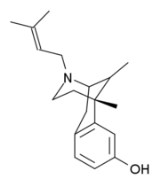
Pentazocine is a synthetically-prepared prototypical mixed agonist-antagonist narcotic (opioid analgesic) drug of the benzomorphan class of opioids used to treat mild to moderately severe pain. Pentazocine is sold under several brand names, such as Fortal, Talwin NX (with the mu-antagonistnaloxone, will cause withdrawal in opioid dependent persons), Talwin, Talwin PX (without naloxone) and Talacen (with acetaminophen).

Discussion
Ask a question about 'Pentazocine'
Start a new discussion about 'Pentazocine'
Answer questions from other users
|
Encyclopedia
Pentazocine is a synthetically-prepared prototypical mixed agonist-antagonist narcotic (opioid analgesic) drug of the benzomorphan class of opioids used to treat mild to moderately severe pain. Pentazocine is sold under several brand names, such as Fortal, Talwin NX (with the mu-antagonistnaloxone, will cause withdrawal in opioid dependent persons), Talwin, Talwin PX (without naloxone) and Talacen (with acetaminophen). This compound may exist as one of two enantiomers, named (+)-pentazocine and (-)-pentazocine. (-)-pentazocine is a kappa-opioid receptor agonist, while (+)-pentazocine is not, instead displaying a ten-fold greater affinity for the sigma receptor. Talwin PX is the main pentazocine pharmaceutical in Canada, where laws and regulations prohibit the addition of naloxone to the formulation for non-therapeutic purposes. Related drugs include phenazocine, dezocine, cyclazocine, Salvinorin A(distantly) and several chemicals used in research on the central nervous system, and the Greek equivalent of the first letter of the name of the drug ketocyclazocine is the source of the name of the kappa opioid receptor type, as is the case with morphine and mu receptors and dynorphin and delta opioid receptors.
Development and government approval Pentazocine was developed by the Sterling Drug Company, Sterling-Winthrop Research Institute, of Rensselaer, New York. It was approved by the Food and Drug Administration in June 1967 after being favorably reviewed following testing on 12,000 patients in the United States. The analgesic compound was first made at Sterling in 1958. U.S. testing was conducted between 1961 - 1967. By mid
1967 Pentazocine was already being sold in Mexico, England, and Argentina, under different trade names.
Adverse effects
Side effects are similar to those of morphine, but pentazocine may be more likely to cause hallucinations and other psychotomimetic effects; cardiovascular effects make it unsuitable for use in myocardial infarction. Unlike morphine, its respiratory depressant action is subject to a "ceiling" effect. 38 milligrams of pentazocine has the same pain relieving capacity as 10 milligrams of morphine. It can be used as an analgesic for dental extractions except in heroin-dependent patients.
Tissue Damage at Injection Sites
Severe necrosis and sepsis of the skin, subcutaneous tissues, and underlying muscle have occurred (sometime requiring amputation of limb) at the injection sites of addicts who have received multiple doses of pentazocine lactate (Sosegon). Constant rotation of injection sites is, therefore, essential. In addition, animal studies have demonstrated that Talwin is tolerated less well subcutaneously than intramuscularly.
Recreational use
In the 1970s, recreational drug users discovered that combining pentazocine with tripelennamine (a first-generation ethylenediamine antihistamine most commonly dispensed under the brand names Pelamine and Pyribenzamine and used both clinically and on the street to potentiate opioids and mitigate some of the side effects like itching, especially of codeine and morphine) produced a euphoric sensation much like that brought on by heroin. Users who were already addicted to the latter often used this combination when heroin was unavailable to them. Since tripelennamine tablets are typically blue in color, the pentazocine/tripelennamine combination acquired the slang name Ts and blues. After health-care professionals and drug-enforcement officials became aware of this scenario, the narcotic-antagonist naloxone was added to preparations containing pentazocine, and the reported incidence of its abuse has declined precipitously since. It is commonly asserted that the use of pentazocine with tripelennamine originated amongst dentists, doctors, and nurses in the Middle Western United States. A more recent development is that pentazocine is combined with methylphenidate (Ritalin) via the oral route or insufflation.
Administration
Pentazocine is administered by subcutaneous, intramuscular, and intravenous injection as the lactate: The usual dose is the equivalent of pentazocine 30 to 60 mg every 3 to 4 hours; it should not be necessary to exceed 360 mg daily. It is also available in 25mg pills.
In a study published in the March 24, 2003 issue of the Proceedings of the National Academy of Sciences, a team led by McGill University researcher Jeffrey Mogil found that women with red hair require less pentazocine for pain relief than do women with other hair colours or men of any hair colour.
Legal status
Pentazocine is still classified in Schedule IV under the Controlled Substances Act in the United States, even with the addition of the naloxone. Internationally, pentazocine is a Schedule III drug under the Convention on Psychotropic Substances.
External links
|
| |
|
|