
All Topics  
Otho

 
Otho

   Email Print
   Bookmark   Link


Otho


For other uses, see Otho (disambiguation)
Otho (disambiguation)

Otho can be the name of several people, including:*Marcus Salvius Otho, an emperor of the Roman Empire*Lucius Otho, his father*Otho, a saint and companion in martyrdom to Berard of Carbio...
.


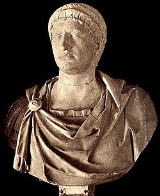
Marcus Salvius Otho (28 April 32 – 16 April 69), also called Marcus Salvius Otho Caesar Augustus, was Roman Emperor from 15 January to 16 April 69, the second emperor of the Year of the four emperors
Year of the Four Emperors

The Year of the Four Emperors was a year in the history of the Roman Empire, AD 69, in which four emperors ruled in a remarkable succession. These four emperors were Galba, Otho, Vitellius, and Vespasian....
.

belonged to an ancient and noble Etruscan
Etruscan civilization

Etruscan civilization is the modern English name given to the culture and way of life of a people of ancient Italy and Corsica whom the ancient Romans called Etrusci or Tusci....
 family, descended from the princes of Etruria and settled at Ferentinum (modern Ferento, near Viterbo
Viterbo

Viterbo is an ancient city and comune in the Latium region of central Italy, the capital of the province of Viterbo. It is approximately 100 kilometers north of Rome on the Via Cassia, and it is surrounded by the Monti Cimini and Monti Volsini....
) in Etruria.


Discussion
Ask a question about 'Otho'
Start a new discussion about 'Otho'
Answer questions from other users
Full Discussion Forum


Encyclopedia


For other uses, see Otho (disambiguation)
Otho (disambiguation)

Otho can be the name of several people, including:*Marcus Salvius Otho, an emperor of the Roman Empire*Lucius Otho, his father*Otho, a saint and companion in martyrdom to Berard of Carbio...
.


Marcus Salvius Otho (28 April 32 – 16 April 69), also called Marcus Salvius Otho Caesar Augustus, was Roman Emperor from 15 January to 16 April 69, the second emperor of the Year of the four emperors
Year of the Four Emperors

The Year of the Four Emperors was a year in the history of the Roman Empire, AD 69, in which four emperors ruled in a remarkable succession. These four emperors were Galba, Otho, Vitellius, and Vespasian....
.

Birth and lineage

Otho belonged to an ancient and noble Etruscan
Etruscan civilization

Etruscan civilization is the modern English name given to the culture and way of life of a people of ancient Italy and Corsica whom the ancient Romans called Etrusci or Tusci....
 family, descended from the princes of Etruria and settled at Ferentinum (modern Ferento, near Viterbo
Viterbo

Viterbo is an ancient city and comune in the Latium region of central Italy, the capital of the province of Viterbo. It is approximately 100 kilometers north of Rome on the Via Cassia, and it is surrounded by the Monti Cimini and Monti Volsini....
) in Etruria. His paternal grandfather Marcus Salvius Otho, whose father was a Roman knight but whose mother was of lowly origin and perhaps not even free-born, was raised in Livia
Livia

Livia Drusilla, after 14 AD called Julia Augusta was the wife of Augustus and one of the most powerful women in the Roman Empire, being Augustus' faithful advisor....
's household and rose to senatorial rank through her influence, although he did not advance beyond the rank of praetor. His father was Lucius Otho
Lucius Otho

Lucius Salvius Otho was father of the Roman emperor Otho, he was born of a distinguished and well-connected family on his mother's side. His close friendship with Tiberius, and physical similarity to him, led to rumours that he was that emperor's son....
.

Early Life

The future emperor appears first as one of the most reckless and extravagant of the young nobles who surrounded Nero
Nero

Nero Claudius Caesar Augustus Germanicus , born Lucius Domitius Ahenobarbus, also called Nero Claudius Caesar Drusus Germanicus, was the fifth and final Roman emperor of the Julio-Claudian dynasty....
. This friendship was brought to an end in 58 because of a woman, Poppea Sabina. Otho introduced his beautiful wife to the Emperor upon the insistence of his wife, who then began an affair that would eventually be the death of her. After securely establishing this position as his mistress, she divorced Otho and had the emperor send him away to the remote province of Lusitania
Lusitania

Lusitania was an ancient Ancient Rome Roman province including approximately all of modern Portugal south of the Douro river, and part of modern Spain ....
 (modern Portugal
Portugal

Portugal , officially the Portuguese Republic , is a country on the Iberian Peninsula. Located in southwestern Europe, Portugal is the westernmost country of mainland Europe and is bordered by the Atlantic Ocean to the west and south and by Spain to the north and east....
 and Extremadura
Extremadura

Extremadura is an autonomous communities in Spain of western Spain whose capital city is M?rida, Spain. It includes the provinces of Spain of C?ceres and Badajoz ....
).

Otho remained in Lusitania for the next ten years, administering the province with a moderation unusual at the time. When in 68 his neighbor Galba
Galba

Servius Sulpicius Galba , also called Servius Sulpicius Galba Caesar Augustus, was Roman Emperor from June 8, 68 until his death. He was the first emperor of the Year of the Four Emperors....
, the governor of Hispania Tarraconensis
Hispania Tarraconensis

Hispania Tarraconensis was one of three Roman provinces in Hispania. It encompassed much of the Mediterranean coast of Spain along with the central plateau and the north coast, and part of northern Portugal....
, rose in revolt against Nero, Otho accompanied him to Rome
Rome

Rome is the capital city of Italy and Lazio, and is Italy's largest and most populous city, with 2,724,347 residents in an urban area of some ....
. Resentment at the treatment he had received from Nero may have impelled him to this course, but to this motive was added before long that of personal ambition. Galba was childless and far advanced in years, and Otho, encouraged by the predictions of astrologer
Astrologer

An astrologer practices one or more forms of astrology. Typically an astrologer draws a horoscope for the time of an event, such as a person's birth, and interprets celestial points and their placements at the time of the event to better understand someone, determine the auspiciousness of an undertaking's beginning, etc....
s, aspired to succeed him. He came to a secret agreement with Galba's favourite
Favourite

In historical writings, when used in reference to a person, favourite, also spelled favorite , means the intimate companion of a ruler or other important person....
, Titus Vinius
Titus Vinius

Titus Vinius was a Roman general who was one of the most powerful men in Rome during the reign of the Emperor Galba.Plutarch has a number of stories of Vinius' early life, all to his discredit....
, agreeing to marry Vinius' daughter in exchange for his support. However in January 69 his hopes were dissipated by Galba's formal adoption of Lucius Calpurnius Piso Licinianus
Lucius Calpurnius Piso Licinianus

Lucius Calpurnius Piso Frugi Licinianus was a Ancient Rome nobleman that lived in the 1st century. Licinianus was one among the sons of consul of 27 Marcus Licinius Crassus Frugi and Scribonia ....
, whom Galba had previously named a recipient in his will.

After this, Otho decided to strike a bold blow. Desperate as was the state of his finances, thanks to his previous extravagance, he found money to purchase the services of some twenty-three soldiers of the Praetorian Guard
Praetorian Guard

The Praetorian Guard was a special force of guards used by Roman empire List of Roman Emperorss. Before being appropriated for the use of the Emperors' personal guards, the title was used for the guards of Roman generals, at least since the rise to prominence of the Scipio family around 275 BC....
. On the morning of January 15, only five days after the adoption of Piso, Otho attended as usual to pay his respects to the emperor, and then hastily excusing himself on the score of private business hurried from the Palatine
Palatine Hill

The Palatine Hill is the centermost of the Seven Hills of Rome and is one of the most ancient parts of the city. It stands 40 metres above the Roman Forum, looking down upon it on one side, and upon the Circus Maximus on the other....
 to meet his accomplices. He was then escorted to the Praetorian camp, where, after a few moments of surprise and indecision, he was saluted imperator.

With an imposing force he returned to the Forum, and at the foot of the Capitol
Capitoline Hill

The Capitoline Hill , between the Roman Forum and the Campus Martius, is one of the seven hills of Rome of Rome. By the 16th century, Capitolinus had become Campidoglio in the Romanesco....
 encountered Galba, who, alarmed by vague rumors of treachery, was making his way through a dense crowd of wondering citizens towards the barracks of the guard. The cohort
Cohort (military unit)

A cohort is a fairly large military unit, generally consisting of one type of soldier....
 on duty at the Palatine, which had accompanied the emperor, instantly deserted him. Galba, his newly adopted son Piso and others were brutally murdered by the Praetorians. The brief struggle over, Otho returned in triumph to the camp, and on the same day was duly invested by the senators
Roman Senate

The Senate of the Roman Republic was a political institution in the ancient Roman Republic. According to the Greek historian Polybius, our principal source on the Constitution of the Roman Republic, the Roman Senate was the predominant branch of government....
 with the name of Augustus, the tribunician power and the other dignities belonging to the principate. Otho had owed his success to the resentment felt by the Praetorian guards and the rest of the army at Galba's refusal to pay the promised gold to the ones who supported his accession to the throne. The population of the city was also unhappy with Galba and cherished the memory of Nero. Otho's first acts as emperor showed that he was not unmindful of the facts.

Decline and fall

He accepted, or appeared to accept, the cognomen
Cognomen

The cognomen was originally a middle name of a citizen of Ancient Rome, under Roman naming conventions. The cognomen started as a nickname, but lost that purpose when it became hereditary ....
 of Nero conferred upon him by the shouts of the populace, whom his comparative youth and the effeminacy of his appearance reminded of their lost favourite. Nero's statues were again set up, his freedmen and household officers reinstalled, and the intended completion of the Golden House announced. At the same time the fears of the more sober and respectable citizens were allayed by Otho's liberal professions of his intention to govern equitably, and by his judicious clemency towards Marius Celsus, consul-designate, a devoted adherent of Galba.

But any further development of Otho's policy was checked once Otho read through Galba's private correspondence and realized the extent of the revolution in Germany
Germany

Germany , officially the Federal Republic of Germany , is a country in Central Europe. It is bordered to the north by the North Sea, Denmark, and the Baltic Sea; to the east by Poland and the Czech Republic; to the south by Austria and Switzerland; and to the west by France, Luxembourg, Belgium, and the Netherlands....
, where several legions had declared for Vitellius
Vitellius

Aulus Vitellius Germanicus, born Aulus Vitellius and commonly known as Vitellius , was a Roman Emperors who reigned from 16 April 69 to 22 December of the same year....
, the commander of the legions on the lower Rhine
Rhine

File:Swiss Grand Canyon.jpgThe Rhine is one of the longest and most important rivers in Europe, at , with an average discharge of more than ....
, and were already advancing upon Italy. After a vain attempt to conciliate Vitellius by the offer of a share in the empire, Otho, with unexpected vigor, prepared for war. From the remoter provinces, which had acquiesced in his accession, little help was to be expected; but the legions of Dalmatia
Dalmatia

Dalmatia is a region on the eastern coast of the Adriatic Sea, situated mostly in modern Croatia and spreading between the island of Rab in the northwest and the Bay of Kotor in the southeast....
, Pannonia
Pannonia

Pannonia is an ancient province of the Roman Empire bounded north and east by the Danube, coterminous westward with Noricum and upper Italy, and southward with Dalmatia and upper Moesia....
 and Moesia
Moesia

Moesia was an ancient region and Roman province situated in the areas of modern Serbia, Bulgaria and Romania along the south bank of the Danube River....
 were eager in his cause, the praetorian cohorts were in themselves a formidable force and an efficient fleet
Roman Navy

The Roman Navy comprised the naval forces of the Roman state. Although the navy was instrumental in the Roman conquest of the Mediterranean Sea basin, it never enjoyed the prestige of the Roman legions....
 gave him the mastery of the Italian seas.

The fleet was at once dispatched to secure Liguria
Liguria

Liguria is a coastal Regions of Italy of north-western Italy, the third smallest of the Italian regions. Its capital is Genoa. It is a popular region with tourists for its beautiful beaches, picturesque little towns, and food....
, and on the March 14 Otho, undismayed by omens and prophecies, started northwards at the head of his troops in the hopes of preventing the entry of the Vitellius' troops into Italy. But for this he was too late, and all that could be done was to throw troops into Placentia and hold the line of the Po
Po River

The Po is a river that flows 652 km eastward across northern Italy, from Monviso to the Adriatic Sea near Venice. It has a drainage area of 71,000 km? and is the longest river in Italy....
. Otho's advanced guard successfully defended Placentia
Placentia

Placentia may refer to:* Palace of Placentia, an English Royal Palace* Placentia, California, United States* Placentia, Italy* Placentia, Newfoundland and Labrador, Canada...
 against Aulus Caecina Alienus
Aulus Caecina Alienus

Aulus Caecina Alienus, Roman general, was quaestor of Hispania Baetica in 68.On the death of Nero, he attached himself to Galba, who appointed him to the command of a legion in upper Germany....
, and compelled that general to fall back on Cremona
Cremona

Cremona is a city in northern Italy, situated in Lombardy, on the left shore of the Po River in the middle of the Pianura Padana . It is the capital of the province of Cremona and the seat of the local City and Province governments....
. But the arrival of Fabius Valens
Fabius Valens

Fabius Valens of Anagnia was a Roman Empire commander favoured by Nero. In 69 he was commander of Legio I Germanica based in Germania Inferior....
 altered the aspect of affairs.

Vitellius' commanders now resolved to bring on a decisive battle, the Battle of Bedriacum
Battle of Bedriacum

The Battle of Bedriacum refers to two battles fought during the Year of the four emperors near the village of Bedriacum , about 35 kilometers from the town of Cremona in northern Italy....
, and their designs were assisted by the divided and irresolute counsels which prevailed in Otho's camp. The more experienced officers urged the importance of avoiding a battle, until at least the legions from Dalmatia
Dalmatia

Dalmatia is a region on the eastern coast of the Adriatic Sea, situated mostly in modern Croatia and spreading between the island of Rab in the northwest and the Bay of Kotor in the southeast....
 had arrived. But the rashness of the emperor's brother Titianus
Titianus

Lucius Salvius Otho Titianus was the elder brother of the Roman Emperor Otho , and consul of Rome in 52 AD. He was married to Cocceia, the sister of the future Roman Emperor Nerva , with whom he had a son, Lucius Salvius Otho Cocceianus....
 and of Proculus
Proculus

Proculus was a Roman usurper, one of the "minor pretenders" according to Historia Augusta; he took the purple against Roman Emperor Probus in 280....
, prefect of the pretorian guards, added to Otho's feverish impatience, overruled all opposition, and an immediate advance was decided upon, Otho himself remaining behind with a considerable reserve force at Brixellum, on the southern bank of the Po. When this decision was taken, Otho's army had already crossed the Po and were encamped at Bedriacum (or Betriacum), a small village on the Via Postumia, and on the route by which the legions from Dalmatia would naturally arrive.

Leaving a strong detachment to hold the camp at Bedriacum, the Othonian forces advanced along the Via Postumia in the direction of Cremona. At a short distance from that city they unexpectedly encountered the Vitellian troops. The Othonians, though taken at a disadvantage, fought desperately, but were finally forced to fall back in disorder upon their camp at Bedriacum. There on the next day the victorious Vitellians followed them, but only to come to terms at once with their disheartened enemy, and to be welcomed into the camp as friends.

More unexpected still was the effect produced at Brixellum by the news of the battle. Otho was still in command of a formidable force: the Dalmatian legions had already reached Aquileia
Aquileia

Aquileia is an ancient history Roman Republic city in what is now Italy, at the head of the Adriatic Sea at the edge of the lagoons, about 10 km from the sea, on the river Natiso , the course of which has changed somewhat since Roman times....
 and the spirit of his soldiers and their officers was unbroken. But he was resolved to accept the verdict of the battle that his own impatience had hastened. In a dignified speech he bade farewell to those about him, declaring: "It is far more just to perish one for all, than many for one" , and then retiring to rest soundly for some hours. Early in the morning he stabbed himself in the heart with a dagger, which he had concealed under his pillow, and died as his attendants entered the tent.

Otho's ashes were placed within a modest monument. He had reigned only three months, but in this short time had shown more wisdom and grace than anyone had expected. His funeral was celebrated at once, as he had wished, and not a few of his soldiers followed their master's example by killing themselves at his pyre. A plain tomb was erected in his honour at Brixellum, with the simple inscription Diis Manibus Marci Othonis.

Reasons for Suicide

It has been thought that Otho's suicide was committed in order to steer his country from the path to civil war. Just as he had come to power, many Romans learned to respect Otho in his death. Few could believe that a renowned former companion of Nero
Nero

Nero Claudius Caesar Augustus Germanicus , born Lucius Domitius Ahenobarbus, also called Nero Claudius Caesar Drusus Germanicus, was the fifth and final Roman emperor of the Julio-Claudian dynasty....
 had chosen such an honourable end. The soldiers were so moved and impressed that some even threw themselves on the funeral pyre to die with their emperor.

Writing during the reign of emperor Domitian
Domitian

Titus Flavius Domitianus , commonly known as Domitian, was a Roman Emperor who reigned from 14 September 81 until his death. Domitian was the last emperor of the Flavian dynasty, which ruled the Roman Empire between 69 and 96, encompassing the reigns of Domitian's father Vespasian , his elder brother Titus , and that of Domitian himself...
 (AD 81-96), the Roman poet Martial
Martial

Marcus Valerius Martialis , was a Latin language poet from Hispania best known for his twelve books of Epigrams, published in Ancient Rome between AD 86 and 103, during the reigns of the Roman emperor Domitian, Nerva and Trajan....
 expressed his admiration for Otho's choice to spare the empire from civil war through sacrificing himself:

"Although the goddess of civil warfare was still in doubt, And soft Otho had perhaps still a chance of winning, He renounced fighting that would have cost much blood, And with sure hand pierced right through his breast. By all means let Cato
Cato

Cato may refer to:...
 in his life be greater than Caesar
Caesar

Caesar or C?sar may refer to the following:...
 himself; In his death was he greater than Otho?"

Physical Appearance


Suetonius, The Lives of the Caesars comments on Otho's appearance and personal hygiene.

"He is said to have been of moderate height, splay-footed and bandy-legged, but almost feminine in his care of his person. He had the hair of his body plucked out, and because of the thinness of his locks wore a wig so carefully fashioned and fitted to his head, that no one suspected it. Moreover, they say that he used to shave every day and smear his face with moist bread, beginning the practice with the appearance of the first down, so as never to have a beard"

Juvenal, in the Satire II, in a passage dealing with homosexuality, specifically mentions Otho as being vain, looking at himself in the mirror prior to going into battle, and "plaster[ing] his face with dough" in order to look good. While specifically meant to be satirical, this specific mention, in conjunction with many descriptions of his being "effeminate" provide possible insight into Otho's sexual orientation.

External links


Primary sources

  • (Suetonius; English translation and Latin original)
  • (Plutarch; English translation)
  • Tacitus
    Tacitus

    Publius Cornelius Tacitus was a Roman Senate and a historian of the Roman Empire. The surviving portions of his two major works—the Annals and the Histories —examine the reigns of the Roman Emperors Tiberius, Claudius, Nero and those that reigned in the Year of the Four Emperors....
    , Histories
    Histories (Tacitus)

    Histories is a book by Tacitus, written c. 100–110, which covers the Year of Four Emperors following the downfall of Nero, the rise of Vespasian, and the rule of the Flavian Dynasty up to the death of Domitian....
     (esp. , )


Secondary material

  • Biography on
  • entry in historical sourcebook by Mahlon H. Smith
  • Juvenal; Satire II