
Home      Discussion      Topics      Dictionary      Almanac
Signup       Login
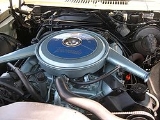
Oldsmobile V8 engine

Oldsmobile V8 engine

Overview
The Oldsmobile
Oldsmobile
Oldsmobile was a brand of American automobile produced for most of its existence by General Motors. It was founded by Ransom E. Olds in 1897. In its 107-year history, it produced 35.2 million cars, including at least 14 million built at its Lansing, Michigan factory...

 Rocket V8 was the first post-war OHV
Overhead valve
An overhead valve engine, also informally called pushrod engine or I-head engine, is a type of piston engine that places the camshaft within the cylinder block , and uses pushrods or rods to actuate rocker arms above the cylinder...

 V8 at General Motors. Production started in 1949, with a new generation introduced in 1964. Like Pontiac
Pontiac
Pontiac was an automobile brand that was established in 1926 as a companion make for General Motors' Oakland. Quickly overtaking its parent in popularity, it supplanted the Oakland brand entirely by 1933 and, for most of its life, became a companion make for Chevrolet. Pontiac was sold in the...

, Olds continued building its own V8 engine family for decades, finally adopting the corporate Chevrolet 350 small-block and Cadillac Northstar engine only in the 1990s. All Oldsmobile V-8's were manufactured at plants in Lansing, Michigan
Lansing, Michigan
Lansing is the capital of the U.S. state of Michigan. It is located mostly in Ingham County, although small portions of the city extend into Eaton County. The 2010 Census places the city's population at 114,297, making it the fifth largest city in Michigan...

.
Discussion
Ask a question about 'Oldsmobile V8 engine'
Start a new discussion about 'Oldsmobile V8 engine'
Answer questions from other users
Full Discussion Forum
 
Unanswered Questions
Encyclopedia
The Oldsmobile
Oldsmobile
Oldsmobile was a brand of American automobile produced for most of its existence by General Motors. It was founded by Ransom E. Olds in 1897. In its 107-year history, it produced 35.2 million cars, including at least 14 million built at its Lansing, Michigan factory...

 Rocket V8 was the first post-war OHV
Overhead valve
An overhead valve engine, also informally called pushrod engine or I-head engine, is a type of piston engine that places the camshaft within the cylinder block , and uses pushrods or rods to actuate rocker arms above the cylinder...

 V8 at General Motors. Production started in 1949, with a new generation introduced in 1964. Like Pontiac
Pontiac
Pontiac was an automobile brand that was established in 1926 as a companion make for General Motors' Oakland. Quickly overtaking its parent in popularity, it supplanted the Oakland brand entirely by 1933 and, for most of its life, became a companion make for Chevrolet. Pontiac was sold in the...

, Olds continued building its own V8 engine family for decades, finally adopting the corporate Chevrolet 350 small-block and Cadillac Northstar engine only in the 1990s. All Oldsmobile V-8's were manufactured at plants in Lansing, Michigan
Lansing, Michigan
Lansing is the capital of the U.S. state of Michigan. It is located mostly in Ingham County, although small portions of the city extend into Eaton County. The 2010 Census places the city's population at 114,297, making it the fifth largest city in Michigan...

.

All Oldsmobile V8s use a 90° bank angle, and most share a common stroke dimension: 3.4375 in (87.3 mm) for early Rockets, 3.6875 in (93.7 mm) for later Generation 1 engines, and 3.385 in (86 mm) for Generation 2. The 260 cid, 307 cid, 330 cid, 350 cid and 403 cid engines are commonly called small-blocks. 400 cid, 425 cid, and 455 cid V8s have a higher deck height (10.625 in (27 cm) versus 9.33 in (23.7 cm)) to accommodate a 4.25 in (108 mm) stroke crank to increase displacement. These taller-deck models are commonly called "big-blocks", and are 1 in (2.5 cm) longer and 1.5 in (3.8 cm) wider than their "small-block" counterparts.

The Rocket V8 was the subject of many first and lasts in the automotive industry. It was the first mass-produced OHV V8 in 1949; and was the last carbureted
Carburetor
A carburetor , carburettor, or carburetter is a device that blends air and fuel for an internal combustion engine. It is sometimes shortened to carb in North America and the United Kingdom....

 V8 passenger car engine in 1990.

The factory painted "small-blocks" gold or blue (flat black on the late model 307 cid), while "big-blocks" could be red, green, blue, or bronze.

Generation 1


The first generation of Oldsmobile V8s ranges from 1949-1964. Each engine in this generation is quite similar with the same size block and heads.

303


The 303 CID engine had hydraulic lifters, an oversquare bore:stroke ratio, a counterweighted forged crankshaft
Crankshaft
The crankshaft, sometimes casually abbreviated to crank, is the part of an engine which translates reciprocating linear piston motion into rotation...

, aluminum piston
Piston
A piston is a component of reciprocating engines, reciprocating pumps, gas compressors and pneumatic cylinders, among other similar mechanisms. It is the moving component that is contained by a cylinder and is made gas-tight by piston rings. In an engine, its purpose is to transfer force from...

s, floating wristpins, and a dual-plane intake manifold. The 303 was produced from 1949-1953. Bore was 3.75 in (95.3 mm) and stroke was 3.4375 in (87.3 mm). Cadillac used a distantly related engine which appeared in three different sizes through to the 1962 model year; though the Oldsmobile and Cadillac motors were not physically related, many lessons learned by one division were incorporated into the others design, and the result were two engines known for their excellent power-to-weight ratio, fuel economy, and smooth, strong, reliable running.

The original Oldsmobile V8 was originally to be advertised as "Kettering Power" after chief engineer Charles Kettering
Charles Kettering
Charles Franklin Kettering was an American inventor, engineer, businessman, and the holder of 186 patents. He was a founder of Delco, and was head of research for General Motors for 27 years from 1920 to 1947. Among his most widely used automotive inventions were the electrical starting motor and...

, but company policy disallowed the use of his name. So the engine was sold as the Oldsmobile Rocket. The engine was available in Oldsmobile's 88 and Super 88 models, which acquired the nickname Rocket 88.

The 303 was available from 1949 through 1953. 1949 through 1951 "88" 303's came with a 2-barrel carburetor
Carburetor
A carburetor , carburettor, or carburetter is a device that blends air and fuel for an internal combustion engine. It is sometimes shortened to carb in North America and the United Kingdom....

 for 135 hp and 253 lbft. 1952 88 and Super 88 V8s used a 4-barrel carburetor for 160 hp and 265 lbft, while 1953 versions upped the compression from 7.5:1 to 8.0:1 for 165 hp and 275 lbft. For comparison, a 1949 Ford
Ford Motor Company
Ford Motor Company is an American multinational automaker based in Dearborn, Michigan, a suburb of Detroit. The automaker was founded by Henry Ford and incorporated on June 16, 1903. In addition to the Ford and Lincoln brands, Ford also owns a small stake in Mazda in Japan and Aston Martin in the UK...

 Flathead V8
Ford Flathead engine
The Ford flathead V8 was a V8 engine of the flathead type, designed by the Ford Motor Company and built by Ford and various licensees...

 produced just 100 hp.

Applications:
  • 1949–1953 Oldsmobile 88
    Oldsmobile 88
    The Oldsmobile 88 was a full-size car sold by the Oldsmobile division of General Motors and produced from 1949 until 1999. From 1950 to 1974 the 88 was the division's top-selling line, particularly the entry-level models such as the 88 and Dynamic 88...

  • 1949–1953 Oldsmobile 98
    Oldsmobile 98
    The Oldsmobile 98 was a full-size automobile and the flagship model of the Oldsmobile division of General Motors. The name first appeared in 1941 and was used again after American consumer automobile production resumed post-World War II...

  • 1952–1953 Oldsmobile Super 88
    Oldsmobile 88
    The Oldsmobile 88 was a full-size car sold by the Oldsmobile division of General Motors and produced from 1949 until 1999. From 1950 to 1974 the 88 was the division's top-selling line, particularly the entry-level models such as the 88 and Dynamic 88...


324


The 324 CID version was also produced from 1954 until 1956. Bore was increased to 3.875 in (98.4 mm) (same as the 283 Chevy) and stroke remained the same at 3.4375 in (87.3 mm). All high performance 324s came with 4-barrel carburetors. The 324 was shared with GMC trucks.

The 1954 88 and Super 88 V8s used an 8.25:1 compression ratio for 170 and 185 hp (126 and 137 kW) and 295 and 300 ft·lbf (399 and 406 N·m) respectively.

The 1955 upped the compression to 8.5:1 for 185 hp and 320 lbft in the 88 and 202 hp and 332 lbft in the Super 88 and 98. For engines built during the first part of 1955, the 324 skirted pistons had a reputation for failing due to the cast aluminum skirt separating from its steel interior brace. This problem did not appear until the engine had over 50000 miles (80,467 km) on it. By late 1956, many Olds dealers learned about the problem.

Compression was up again in 1956 for 230 hp and 340 lbft in the 88 and 240 hp and 350 lbft in the Super 88 and 98.

Applications:
  • 1954–1956 Oldsmobile 88
    Oldsmobile 88
    The Oldsmobile 88 was a full-size car sold by the Oldsmobile division of General Motors and produced from 1949 until 1999. From 1950 to 1974 the 88 was the division's top-selling line, particularly the entry-level models such as the 88 and Dynamic 88...

  • 1954–1956 Oldsmobile Super 88
    Oldsmobile 88
    The Oldsmobile 88 was a full-size car sold by the Oldsmobile division of General Motors and produced from 1949 until 1999. From 1950 to 1974 the 88 was the division's top-selling line, particularly the entry-level models such as the 88 and Dynamic 88...

  • 1954–1956 Oldsmobile 98
    Oldsmobile 98
    The Oldsmobile 98 was a full-size automobile and the flagship model of the Oldsmobile division of General Motors. The name first appeared in 1941 and was used again after American consumer automobile production resumed post-World War II...


370


A special 370 CID variant called the 370 was used in GMC trucks alone, not shared.

371


Making its debut in 1957 as standard equipment on all Olds models, the 371 was produced through 1960. Bore was now 4 in (101.6 mm) (same as the 327 and 350 Chevys) and stroke was increased to 3.6875 in (93.7 mm) for 371 CID. 1959 and 1960 371s used green painted valve covers. 4-barrel models used 9.25:1 compression in 1957 and 10:1 in 1958 for 277 hp and 400 lbft and 305 hp and 410 lbft respectively. A 1958 2-barrel version was still impressive at 265 hp and 390 lbft, but had problems with early camshaft failures due to the high preload valve spring forces. Then, power nosed downward for the 1959 and 1960 88 model: 270 hp and 390 lbft for 1959 and 240 hp and 375 lbft for 1960. It was no longer available in cars in 1961.

The 371 was also used in GMC trucks.

Applications:
  • 1957–1960 Oldsmobile 88
    Oldsmobile 88
    The Oldsmobile 88 was a full-size car sold by the Oldsmobile division of General Motors and produced from 1949 until 1999. From 1950 to 1974 the 88 was the division's top-selling line, particularly the entry-level models such as the 88 and Dynamic 88...

  • 1957–1958 Oldsmobile Super 88
    Oldsmobile 88
    The Oldsmobile 88 was a full-size car sold by the Oldsmobile division of General Motors and produced from 1949 until 1999. From 1950 to 1974 the 88 was the division's top-selling line, particularly the entry-level models such as the 88 and Dynamic 88...

  • 1957–1958 Oldsmobile 98
    Oldsmobile 98
    The Oldsmobile 98 was a full-size automobile and the flagship model of the Oldsmobile division of General Motors. The name first appeared in 1941 and was used again after American consumer automobile production resumed post-World War II...


J-2 Golden Rocket


Introduced in the middle of the 1957 model year, the 1957 and 1958 J-2 Golden Rocket had three two-barrel (twin choke) carburetors with a vacuum-operated linkage. Only the center carburetor was mechanically connected to the throttle pedal, and it was the only one equipped with a choke. When the center carburetor was opened to 60° or more engine vacuum drawn from the windshield wiper pump would simultaneously open the front and rear carburetors. These carburetors did not open progressively; they were either open or closed. The J-2 engine also had a slightly thinner head gasket, raising compression to 10.0:1. It was advertised with gross power and torque ratings of 312 hp at 4600 rpm and 415 lbft at 2800 rpm. Oldsmobile charged $83 for the J-2 option with the three-speed manual (or in the 98), $314 dollars with the automatic.

In practice, owners who did not regularly drive hard enough to engage the front and rear carburetors experienced problems with the linkage and carburetor throats becoming clogged, and some J-2-equipped cars had the front and rear carburetors removed and blocked off. Moreover, correct tuning was a continual headache. The package was expensive to produce, and Oldsmobile discontinued it after 1958.

394


Bore was up to 4.125 in (104.8 mm) for the largest first-generation Rocket, the 394 CID. 394s were produced from 1959-1964 and were available on many Olds models. Most 394s used 2-barrel carburetors. Power was up to 315 hp (235 kW), even though compression was down a quarter point, to 9.75:1.

The 394 replaced the 371 in Super 88 and 98 cars for 1959 and 1960 and a detuned version was used in the 88 for 1961 and the Dynamic 88 for 1962-1964.

Applications:
  • 1959–1960 Oldsmobile Super 88
    Oldsmobile 88
    The Oldsmobile 88 was a full-size car sold by the Oldsmobile division of General Motors and produced from 1949 until 1999. From 1950 to 1974 the 88 was the division's top-selling line, particularly the entry-level models such as the 88 and Dynamic 88...

    , 315 hp and 435 lbft
  • 1959–1960 Oldsmobile 98
    Oldsmobile 98
    The Oldsmobile 98 was a full-size automobile and the flagship model of the Oldsmobile division of General Motors. The name first appeared in 1941 and was used again after American consumer automobile production resumed post-World War II...

    , 315 hp and 435 lbft
  • 1961 Oldsmobile 88
    Oldsmobile 88
    The Oldsmobile 88 was a full-size car sold by the Oldsmobile division of General Motors and produced from 1949 until 1999. From 1950 to 1974 the 88 was the division's top-selling line, particularly the entry-level models such as the 88 and Dynamic 88...

    , 250 hp and 405 lbft
  • 1962–1964 Oldsmobile Dynamic 88
    Oldsmobile 88
    The Oldsmobile 88 was a full-size car sold by the Oldsmobile division of General Motors and produced from 1949 until 1999. From 1950 to 1974 the 88 was the division's top-selling line, particularly the entry-level models such as the 88 and Dynamic 88...

    , 280 hp and 430 lbft
  • 1964 Oldsmobile Jetstar I
    Oldsmobile Jetstar I
    The Oldsmobile Jetstar 1 was produced for only two model years - 1964 and 1965. It was designed as a sporty, high-performance full-sized car and only offered as a two-door hardtop for both years, based on the Olds 88's B-body.-1964:...

    , 345 hp and 440 lbft

Sky Rocket


The 1961 through 1963 Sky Rocket (and 1964 Rocket) was a 394 CID engine. The 10:1 compression 1961 model produced 325 hp and 435 lbft, while the 10.25:1 1962-1964 version upped power to 330 hp and 440 lbft. A special 1963 10.5:1 version was also produced with 345 hp.

Applications:
  • 1961–1963 Oldsmobile Dynamic 88
    Oldsmobile 88
    The Oldsmobile 88 was a full-size car sold by the Oldsmobile division of General Motors and produced from 1949 until 1999. From 1950 to 1974 the 88 was the division's top-selling line, particularly the entry-level models such as the 88 and Dynamic 88...

     (option)
  • 1961–1964 Oldsmobile Super 88
    Oldsmobile 88
    The Oldsmobile 88 was a full-size car sold by the Oldsmobile division of General Motors and produced from 1949 until 1999. From 1950 to 1974 the 88 was the division's top-selling line, particularly the entry-level models such as the 88 and Dynamic 88...

     (standard)
  • 1961–1964 Oldsmobile 98
    Oldsmobile 98
    The Oldsmobile 98 was a full-size automobile and the flagship model of the Oldsmobile division of General Motors. The name first appeared in 1941 and was used again after American consumer automobile production resumed post-World War II...

     (standard)

Starfire


The 1964 Starfire produced 345 hp and 440 lbft for the 1963-4 Starfire and 98 Custom-Sports Coupe
Oldsmobile 98
The Oldsmobile 98 was a full-size automobile and the flagship model of the Oldsmobile division of General Motors. The name first appeared in 1941 and was used again after American consumer automobile production resumed post-World War II...

. It was optional on 1964 98s
Oldsmobile 98
The Oldsmobile 98 was a full-size automobile and the flagship model of the Oldsmobile division of General Motors. The name first appeared in 1941 and was used again after American consumer automobile production resumed post-World War II...

 and Super 88s.

Aluminum 215


From 1961-1963, Oldsmobile manufactured its own version of the Buick
Buick
Buick is a premium brand of General Motors . Buick models are sold in the United States, Canada, Mexico, China, Taiwan, and Israel, with China being its largest market. Buick holds the distinction as the oldest active American make...

-designed, all-aluminum 215 engine for the F-85
Oldsmobile Cutlass
The Oldsmobile Cutlass is a line of automobiles made by the Oldsmobile division of General Motors. The Cutlass began as a unibody compact car, but saw its greatest success as a body-on-frame intermediate car....

 compact. Known variously as the Rockette, Cutlass, and Turbo-Rocket by Oldsmobile (and as Fireball and Skylark by Buick), it was a compact, lightweight engine measuring 28 in (71.1 cm) long, 26 in (66 cm) wide, and 27 in (68.6 cm) high (same as the small-block Chevy
Chevrolet Small-Block engine
The Chevrolet small-block engine is a series of automobile V8 engines built by the Chevrolet Division of General Motors using the same basic small engine block...

), with a dry weight of only 320 lb (145.1 kg). The Oldsmobile engine was very similar to the Buick engine, but not identical: it had larger wedge(rather than hemispherical)-shaped combustion chamber
Combustion chamber
A combustion chamber is the part of an engine in which fuel is burned.-Internal combustion engine:The hot gases produced by the combustion occupy a far greater volume than the original fuel, thus creating an increase in pressure within the limited volume of the chamber...

s with flat-topped (rather than domed) pistons, six bolts rather than five per cylinder head, and slightly larger intake valves; the valves were actuated by shaft-mounted rocker arms like the Buick and Pontiac versions, but the shafts and rockers were unique to Oldsmobile. With an 8.75:1 compression ratio and a 2-barrel carburetor, the Olds 215 had the same rated hp, 155 hp at 4800 rpm, as the Buick 215, with 220 ft.lbf of torque at 2400 rpm. With a 4-barrel carburetor and 10.25:1 compression, the Olds 215 made 185 hp at 4800 rpm and 230 lbft at 3200 rpm with a manual transmission. With a 4-barrel carburetor and 10.75:1 compression, the Olds 215 made 195 hp at 4800 rpm and 235 lbft at 3200 rpm with an automatic. The Buick version was rated at 200hp with an 11to1 compression ratio.

The basic Buick/Olds 215 V8 went on to become the well known Rover V8, which still remains in limited production. The Range Rover V8 utilized the Buick-style pistons, heads, and valve train gear.

The Oldsmobile engine block formed the basis of the Repco
Repco
Repco is an Australian automotive engineering company. Its name is an abbreviation of Replacement Parts Company and it is best known for spare parts and motor accessories....

 3-liter engine used by Brabham to win the 1966
1966 Formula One season
The 1966 Formula One season was the 17th season of FIA Formula One motor racing. It featured the 1966 World Championship of Drivers and the 1966 International Cup for F1 Manufacturers which were contested concurrently over a nine race series that commenced on May 22 and ended on October 23...

 and 1967 Formula One world championships
1967 Formula One season
The 1967 Formula One season was the 18th season of FIA Formula One motor racing. It featured the 1967 World Championship of Drivers and the 1967 International Cup for F1 Manufacturers, contested concurrently over an eleven race series which commenced on January 2, 1967, and ended on October 22...

. The early Repco engines produced up to 300 bhp, and featured new SOHC cylinder heads and iron cylinder liners. The 1967 and later versions of the Repco engine had proprietary engine blocks.

In the mid-1980s, hot rod
Hot rod
Hot rods are typically American cars with large engines modified for linear speed. The origin of the term "hot rod" is unclear. One explanation is that the term is a contraction of "hot roadster," meaning a roadster that was modified for speed. Another possible origin includes modifications to or...

ders discovered the 215 could be stretched to as much as 305 cid, using the Buick 300 crankshaft, new cylinder sleeves, and an assortment of non-GM parts. It could also be fitted with high-compression cylinder head
Cylinder head
In an internal combustion engine, the cylinder head sits above the cylinders on top of the cylinder block. It closes in the top of the cylinder, forming the combustion chamber. This joint is sealed by a head gasket...

s from the Morgan +8
Morgan Plus 8
The Morgan Plus 8 is a sports car built by British car makers Morgan between 1968 and 2004. Its instant and enduring popularity has been credited with saving the company and keeping the company famous during the 36 years of its manufacture...

. Using the 5 liter Rover block and crankshaft, a maximum displacement of 317.8 cid is theoretically possible.

Turbo Jetfire


In 1962 and 1963 Oldsmobile built a turbocharged
Turbocharger
A turbocharger, or turbo , from the Greek "τύρβη" is a centrifugal compressor powered by a turbine that is driven by an engine's exhaust gases. Its benefit lies with the compressor increasing the mass of air entering the engine , thereby resulting in greater performance...

 version of the 215. The small-diameter Garrett T5 turbocharger was manufactured by Garrett AiResearch
Garrett AiResearch
Garrett AiResearch was a manufacturer of turboprop engines and turbochargers, and a pioneer in numerous aerospace technologies. It was previously known as Aircraft Tool and Supply Company, Garrett Supply Company, AiResearch Manufacturing Company, or simply AiResearch...

 and produced a maximum of 5 psi
Pounds per square inch
The pound per square inch or, more accurately, pound-force per square inch is a unit of pressure or of stress based on avoirdupois units...

 (34 kPa
KPA
KPA may refer to:* Kenya Ports Authority* Kiln phosphoric acid, a dry process to produce phosphoric acid at high temperature in a kiln* Kilopascal , a unit of pressure* Known-plaintext attack, a method of cryptanalysis* Korean People's Army...

) boost at 2200 rpm. The engine had 10.25:1 compression and a single-barrel carburetor. It was rated at 215 hp at 4600 rpm and 300 lbft at 3200 rpm. The high compression ratio created a serious problem with spark knock on hard throttle applications, which led Olds to use a novel water-injection system that sprayed small amounts of distilled water and methyl alcohol (dubbed "Turbo-Rocket Fluid") into the combustion chambers to cool the intake charge. If the fluid reservoir was empty, a complex double-float and valve assembly in the Turbo-Rocket Fluid path would set a second butterfly (positioned between the throttle butterfly and the turbocharger) into the closed position, limiting the amount of boost pressure. Unfortunately, many customers did not keep the reservoir filled, or had mechanical problems with the turbocharger plumbing.

The turbocharger was offered only in a special Jetfire model, which was the first turbocharged passenger car offered for public sale. Only 9,607 were sold in two model years, and many were converted by dealers to conventional four-barrel carbureted form.

Generation 2


The second generation of Oldsmobile V8s was produced from 1964-1990. Most of these engines were very similar, using the same bore centers, although "big-block" versions were produced with a 10.625 in (269.9 mm) deck height rather than 9.33 in (237 mm). Big-block and Diesel
Diesel engine
A diesel engine is an internal combustion engine that uses the heat of compression to initiate ignition to burn the fuel, which is injected into the combustion chamber...

 versions also used a larger 3 in (76.2 mm) instead of 2.5 in (63.5 mm) main bearing journal for increased strength. All generation-2 small-block Olds V8s used a stroke of 3.385 in (86 mm). The big-block engines initially used a forged crankshaft with a stroke of 3.975" for the 1965-1967 425 and 400 CID versions; starting in 1968, both the 400 CID and the 455 CID big blocks used a stroke of 4.25 in (108 mm), with crankshaft material changed to cast iron except in a few rare cases.

These engines, while being a wedge-head, had a unique combustion chamber that resulted from a valve angle of only 6°. This was much flatter than the 23° of the small-block Chevrolet
Chevrolet Small-Block engine
The Chevrolet small-block engine is a series of automobile V8 engines built by the Chevrolet Division of General Motors using the same basic small engine block...

 and 20° of the Ford small-block
Ford 335 engine
The Ford 335 engine family were a group of small-block V8 engines built by the Ford Motor Company between 1970 and 1985. The significance of the Numerals '335' designated to this series of Small block Ford V8 engines is relatively unknown...

 wedge heads. This very open and flat chamber was fuel efficient and had lower than average emissions output. It was the only GM engine to meet US emission standards using a carburetor all the way up to 1990.

Jetfire Rocket


The first second-generation Olds V8 was the 1964 330 CID which Olds called the "Jetfire Rocket". It introduced the standard 3.385 in (86 mm) stroke and used a 3.938 in (100 mm) bore and was produced through 1967. 330s were painted gold and had forged steel crankshafts. While the 4 barrel versions had a larger diameter harmonic damper, the 2 barrel versions used only a balancer hub without the rubberized outer ring.

400


The 400 CID version was the second tall-deck "big-block" Olds. Two distinct versions of the 400 CID engine were made:
  • 1965-1967 Early 400's used a slightly over-square 4 in (101.6 mm) bore and 3.975 in (101 mm) stroke. All the pre-1968 engines used a forged steel crankshaft.
  • 1968 and 1969 400's shared the Olds big-block standard 4.25 in (108 mm) stroke with the 455 but used a very undersquare 3.87 in (98.3 mm) bore to comply with GM's displacement restrictions in the A-body cars and reduce tooling costs. This Later 400 is considered by many enthusiasts to be less desirable because of the powerband characteristics induced by this exceedingly undersquare format, and the fact that the crankshafts were now made of less durable cast iron material. Early 400's used the same forged steel crankshaft as the 425's, while the Later 400's used the same cast iron crankshaft of the 455's, with rare exception- some 1968 and later Olds 400/455's were produced with forged steel crankshafts. These rare cranks can be readily spotted by the "J" shaped notch in the OD of the rear flange; cast iron cranks have a "C" shaped notch.


All 1965-1969 Olds 400's were painted bronze.

425


The 425 CID big-block was the first tall-deck "big block," produced from 1965 through 1967. It is arguably the best engine Olds made in the muscle car era, although it never made it into a "muscle car". It used a 4.126 in (104.8 mm) bore and 3.975 in (101 mm) stroke. Most 425s were painted red, though the 1966 and 1967 Toronado units were light blue. All 425 engines were fitted with forged steel crankshafts with harmonic balancers.

Super Rocket


The standard 1965-1967 425 CID was called the Super Rocket, and was the most powerful engine option for the Oldsmobile 88 and 98 of 1965-1967. Compression ratios of 9.0:1 at 310 hp or 10.25:1 at 360 hp were available in the U.S.

Starfire


A special 1965-1967 425 CID V8 was the Starfire engine. The main distinguishing features of this engine were a slightly different camshaft profile from the standard ultra high compression engine and factory dual exhaust. This engine was only available in the Oldsmobile Starfire. It shared the same compression ratio of the Toronado Rocket at 10.5:1. It also used the .921 in lifter bore size of the Toronado Rocket.

Toronado Rocket


Another 1967 425 CID V8 was the Ultra High Compression Toronado Rocket. Unlike all other 425s, this version was painted slate blue metallic. The Toronado 425 engines had the same 0.921 in (23.4 mm) diameter lifters of the first-generation Oldsmobile engines rather than the standard 0.842 in (21.4 mm). This let the engineers increase the ramp speed of the camshaft for more power, 385 hp, without sacrificing idle or reliability.

455


A larger big-block was introduced for 1968 as the Rocket 455 at 455 CID to replace the 425s. It kept the 425's 4.126 in (104.8 mm) bore and bumped the stroke to 4.25 in (108 mm). 1968-1969 455s were painted red, except in the Toronado, where they were painted slate blue metallic, while 1970-1976 versions were metallic blue. The "Rocket" name disappeared from the air cleaner identification decal after 1974. Although production of the 455 ended in 1976, a small number were produced through 1978 for power equipment use. Output ranged from 275 to 400 hp (199 to 298 kW).

Applications:
  • Oldsmobile Cutlass
    Oldsmobile Cutlass
    The Oldsmobile Cutlass is a line of automobiles made by the Oldsmobile division of General Motors. The Cutlass began as a unibody compact car, but saw its greatest success as a body-on-frame intermediate car....

  • Oldsmobile Vista Cruiser
    Oldsmobile Vista Cruiser
    The Vista Cruiser is a station wagon built by the Oldsmobile Division of General Motors from 1964 to 1977. It was based on the Oldsmobile Cutlass/F-85 model but prior to the 1973 model year it utilized a wheelbase which was longer than that of the Cutlass/F-85 sedan.Unlike most station wagons, it...

     (1970–76)
  • Oldsmobile Custom Cruiser
    Oldsmobile Custom Cruiser
    The Oldsmobile Custom Cruiser is large rear-wheel drive station wagon which was produced by Oldsmobile from 1971 to 1992. The Custom Cruiser used the same platform as the Buick, Chevrolet and Pontiac full-size wagons...

  • Oldsmobile 442
    Oldsmobile 442
    The Oldsmobile 442 was a muscle car produced by the Oldsmobile division of General Motors. It was introduced as an option package for F-85 and Cutlass models sold in the United States beginning with the 1964 model year. It became a model in its own right from 1968 to 1971, then reverted to an...

  • Oldsmobile Delta 88
    Oldsmobile 88
    The Oldsmobile 88 was a full-size car sold by the Oldsmobile division of General Motors and produced from 1949 until 1999. From 1950 to 1974 the 88 was the division's top-selling line, particularly the entry-level models such as the 88 and Dynamic 88...

  • Oldsmobile 98
    Oldsmobile 98
    The Oldsmobile 98 was a full-size automobile and the flagship model of the Oldsmobile division of General Motors. The name first appeared in 1941 and was used again after American consumer automobile production resumed post-World War II...

  • 1968–1970 Oldsmobile Toronado
    Oldsmobile Toronado
    The original Toronado began as a design painting by Oldsmobile stylist David North in 1962. His design, dubbed the "Flame Red Car," was for a compact sports/personal car never intended for production...

    , 375 hp
  • 1968–1970 Oldsmobile Toronado GT (W34), 400 hp
  • 1973–1976 GMC Motorhome
    GMC motorhome
    The GMC motorhome was produced by the GMC Truck & Coach Division of General Motors for the 1973 through 1978 model years in Pontiac, Michigan, USA. It was the only complete motorhome built by a major auto/truck manufacturer producing what GMC hoped would be their halo vehicle...


350


Produced from 1968-1980, the Rocket 350 was entirely different from the other GM divisions' 350's. It used a 4.057 in (103 mm) bore and Oldsmobile small-block standard 3.385 in (86 mm) stroke for 350 CID. 1968-1974 350s were painted gold; 1975-1976 350s were metallic blue like the 455; 1977-1980 models were painted GM Corporate Blue. The "Rocket" name disappeared from the air cleaner decal in 1975, the same year that the catalytic converter was added to the emission control systems. Output ranged from 160-325 hp (119-242 kW). The early Oldsmobile 350s made from 1968-1976 are more desirable engines with heavy castings, beefier crankshafts, and better flowing heads. The later 1977 thru 1980 350 had the "lightweight" castings, including a thinner block with large "windows" in the main bearing bulkheads, crack-prone head castings which were actually manufactured by Pontiac Motor Division (castings are marked "PMD"; these heads were also used on the 260), and a lightened crankshaft.

The Oldsmobile 350 was produced with an analog electronic port fuel injection system
Fuel injection
Fuel injection is a system for admitting fuel into an internal combustion engine. It has become the primary fuel delivery system used in automotive petrol engines, having almost completely replaced carburetors in the late 1980s....

, introduced in the Cadillac Seville
Cadillac Seville
The Cadillac Seville is a luxury-type car that was manufactured by the Cadillac division of American automaker General Motors from 1975 to 2004, as a smaller-sized top-of-the-line Cadillac...

 of 1976.

Applications:
  • Cadillac Seville
    Cadillac Seville
    The Cadillac Seville is a luxury-type car that was manufactured by the Cadillac division of American automaker General Motors from 1975 to 2004, as a smaller-sized top-of-the-line Cadillac...

  • Oldsmobile Cutlass
    Oldsmobile Cutlass
    The Oldsmobile Cutlass is a line of automobiles made by the Oldsmobile division of General Motors. The Cutlass began as a unibody compact car, but saw its greatest success as a body-on-frame intermediate car....

  • Oldsmobile Vista Cruiser
    Oldsmobile Vista Cruiser
    The Vista Cruiser is a station wagon built by the Oldsmobile Division of General Motors from 1964 to 1977. It was based on the Oldsmobile Cutlass/F-85 model but prior to the 1973 model year it utilized a wheelbase which was longer than that of the Cutlass/F-85 sedan.Unlike most station wagons, it...

     (1968–77)
  • Oldsmobile 442
    Oldsmobile 442
    The Oldsmobile 442 was a muscle car produced by the Oldsmobile division of General Motors. It was introduced as an option package for F-85 and Cutlass models sold in the United States beginning with the 1964 model year. It became a model in its own right from 1968 to 1971, then reverted to an...

  • Oldsmobile Delta 88
    Oldsmobile 88
    The Oldsmobile 88 was a full-size car sold by the Oldsmobile division of General Motors and produced from 1949 until 1999. From 1950 to 1974 the 88 was the division's top-selling line, particularly the entry-level models such as the 88 and Dynamic 88...

  • Oldsmobile 98
    Oldsmobile 98
    The Oldsmobile 98 was a full-size automobile and the flagship model of the Oldsmobile division of General Motors. The name first appeared in 1941 and was used again after American consumer automobile production resumed post-World War II...

  • Oldsmobile Toronado
    Oldsmobile Toronado
    The original Toronado began as a design painting by Oldsmobile stylist David North in 1962. His design, dubbed the "Flame Red Car," was for a compact sports/personal car never intended for production...

  • Oldsmobile Omega
    Oldsmobile Omega
    The Omega was one of 2 more X-body Chevrolet Nova clones introduced in 1973 . Naturally it shared the Nova's body and many of its mechanicals, but it had its own unique nose and tail, and, being an Oldsmobile, it had a little fancier trim than the Nova...


L34


Oldsmobile's own L34 350 CID V8 was used in the 1979 Hurst/Olds models. The L34 used a 4-barrel carburetor and produced 160 hp and 275 ft.lbf.

LF9 Diesel


The LF9 was a 5737 cc diesel V8 produced from 1978-1985.

Applications;
  • 350N 1978–1985 Chevrolet, Buick, Oldsmobile, Pontiac, Cadillac, and Checker Marathon
    Checker Marathon
    The Checker Marathon was an automobile produced by the Checker Motors Company of Kalamazoo, Michigan, between 1961 and 1982.Marathons were produced in both four-door sedan and four-door station wagon forms, and the rare eight-door, 12-seater "Aerobus" wagon....

     cars
    • Early 120 hp 220 ft.lbf torque
    • Later 105 hp and 205 ft.lbf torque

  • 350N 1978–1980 GMC and Chevrolet light trucks "pickups"

} and 225 ft.lbf torque

Variations;
  • 1978–1980 Early block Identified by "D" cast into both sides of block
    • Up to 125 bhp
    • external EGR from 1978–1981 (single stud air cleaner)
    • internal EGR from 1982–1985 (two stud air cleaner)
    • Used a conventional flat tappet hydraulic camshaft/flat tappet hydraulic lifters which required 3000 mi (4,828 km) oil change intervals.

  • 1981–1985 Improved block Identified by "DX" cast into both sides of block.
    • Up to 105 bhp
    • Internal EGR
    • All 5.7 diesels from 1978–1985 used 1/2" diameter cylinder head bolts.
    • Longer main bolts with fully tapped holes in block.
    • Newly introduced roller lifters/rollerized camshaft extended oil change intervals to 5000 mi (8,046.7 km).


Diesel differences;

The Oldsmobile diesel is believed by some to be a converted gasoline engine. While they share the same bore and stroke and some external bolt patterns (transmission and exhaust manifolds) they are quite different.

GM began with a substantially different bottom end when compared with its gasoline cousin.
  • Diesel blocks
    • 3" diameter injection pump mount is cast into the top of the lifter valley.This casting was part of the engine block.
    • Camshaft nose modified to incorporate injection pump drive gear.
    • A round plastic button in the 1981-1985 DX blocks was used with a stiff spring to prevent the camshaft from "walking" back and forth.
    • Block castings are much thicker and heavier. It's possible to overbore the cylinders by 0.125in without sonic testing.
    • Solid heavy cast main webs were used.
    • Reputedly, GM used a higher nickel cast iron alloy for the block and heads.

  • Diesel crankshafts
    • Cast nodular iron used in all Olds diesel crankshafts.
    • Main bearing journal diameter was increased to 3.0" which made that area the same as that of the Olds 455 crankshaft.
    • Vibration damper modified to allow eccentric for crank-driven fuel lift pump

  • Diesel pistons and rods
    • Diesel rods are shorter at 5.886" long.
    • Diesel connecting rods use a bronze bushing with a full floating piston pin.They did not use press fit piston pins like many gasoline engines do.Snap-rings are used to retain the piston pin within the piston.
    • Diesel pistons have large valve reliefs with a flame slot and a steel insert to reinforce the top piston ring area.

  • Fuel systems
    • No OEM fuel/water separator was factory installed on any Olds Diesel.
    • Crank eccentric driven fuel lift pump mounted in same location as gasoline fuel pump.
    • Fuel line heater between lift pump and filter.
    • Intake mounted 10 micrometer fuel filter.
    • Stanadyne Roosamaster DB2 mechanical diesel injection pump.
    • 1978-79 Pencil Injectors held in by a mounting clamp.
    • 1980-85 Poppet injectors thread into the cylinder head like a spark plug.

  • Heads
    • The same 10-head bolt pattern as their smallblock gasoline cousins.
    • The same exhaust manifold bolt pattern as their smallblock gasoline cousins.
    • Precombustion chambers were used since this engine is a indirect-injected design.
    • Valve springs contained a vibration dampener with rotators.

  • Head variations
    • Very early castings were stamped D3 and used 5/16" injector hold down retaining bolts and clamps.
    • D3A castings were created a little later and used 3/8" injector hold down bolts and clamps.
    • Both D3 and D3A heads accepted external EGR and pencil injectors.
    • Some D3A heads accepted poppet injectors as well.
    • D3B Later heads
      • All had internal EGR
      • Pencil or poppet injectors
      • 1 or 2 locating dowels


The Oldsmobile diesel gained a reputation for unreliability and anemic performance that badly damaged the North American passenger diesel market for the next 20 years.

Head bolts


GM used "torque to yield", commonly known as "stretch" or "angle torque", head bolts. This allowed the bolt pattern to remain the same as the gas powered counterpart with an increase in clamping load when compared to standard head bolts. A total of 10 bolts per head were used, four per cylinder with the center three pairs shared. This permitted the use of the same tooling and reduced setup costs. This design did not provide adequate clamping force under the severe conditions to which these engines were subjected. Overheating or excessive cylinder pressure could breach the seal of the head gasket and in severe cases break the bolts.

High strength aftermarket head bolt sets from Victors are now available to make the engine more reliable in this area.

Pump timing


The Stanadyne injection pump was driven with the use of a short stubby shaft with a built in helical gear which meshed with a gear on the front section of the camshaft. With high mileage,the timing chains tended to stretch a little (like any other timing chain) and the injection pump timing could become less than perfect. The pump timing can be adjusted dynamically with the use of a Snap-on MT480 analog diesel timing meter or with one of the more modern meters used today.

Water in fuel


Arguably a major portion of the LF9 engine's problem could have been simply avoided by using a water separating fuel filter. The lack of water separators was a fuel system deficiency across GMs' light duty diesel lineup into the late 1980's.

Water will rust
Rust
Rust is a general term for a series of iron oxides. In colloquial usage, the term is applied to red oxides, formed by the reaction of iron and oxygen in the presence of water or air moisture...

 the steel internals of the fuel system. Rust will damage the precision parts in diesel fuel injection pumps and high pressure diesel injectors causing erratic operation. Injecting fuel too much prior to TDC on the compression stroke will cause pressure conditions similar to pre-ignition / detonation in gasoline engines. Water in varying amounts will also be injected with the fuel charge. Any rust in the steel fuel lines, fuel filter, pump etc can damage replacement parts and continue to cause injection cycles out of time.

Consumer created fuel problems


Water in gasoline fuel systems can be addressed by adding anhydrous alcohol [drygas] to the fuel. This technique does not work with diesel fuel. Some consumers used drygas in their diesels to combat the water, but the Alcohol in drygas accelerated the wear of the governor flex rings inside the early Stanadyne DB injection pumps. These pumps included an ignition advance mechanism based on pump housing fuel pressure. The housing pressure was affected by fuel return flow. Pieces of a damaged governor flex ring lodged in the fuel return check ball assembly. The sometimes intermittently blocked return line combined with a damaged governor caused erratic ignition timing. The flex ring governor was replaced, by Stanadyne in 1985, with a much improved Elastomer Insert Drive Governor Assembly commonly referred to as an EID. The EID is a service replacement part that eliminates the disintegrating flex ring.

The above mix of conditions originating with water in the fuel contributed to creating extreme cylinder pressures far exceeding those foreseen by the LF9 engine designers. These pressures would damage the head gasket and sometimes break head bolts.

A head gasket leak effectively quenched ignition in the affected cylinder. This allowed unburnt fuel and coolant to leak into the crankcase, and would thin the lubricating oil. It also combined with combustion byproducts to make mild acids that attacked the copper/babbitt bearings and aluminum pistons. A head gasket failure can be particularly damaging in a diesel. A diesel engine has effectively no piston to head clearance at TDC
Dead centre
In a reciprocating engine, the dead centre is the position of a piston in which it is farthest from, or nearest to, the crankshaft. The former is known as top dead centre while the latter is known as bottom dead centre ....

 on the compression stroke. The introduction of coolant into the cylinders can cause hydrolock
Hydrolock
Hydrolock is an abnormal condition of any device which is designed to compress a gas by mechanically restraining it; most commonly the reciprocating internal combustion engine, the case this article refers to unless otherwise noted...

. Hydrolock typically results in bent/broken crankshafts, pulled threads on main bolts, and bent connecting rods, effectively destroying an engine.

Because the various failures these engines encountered were causally interrelated, and dealership technicians were unfamiliar at best with passenger car diesel engines, recurrent failures were possible because only the most obvious symptoms of trouble were addressed. The "one use only" head bolts were commonly re-used and symptoms in other interrelated systems ignored. Thus, cars could suffer multiple head gasket/head bolt failures from re-use of head bolts or a damaged injection system.

The Oldsmobile Diesel V6 engine
Oldsmobile Diesel V6 engine
Oldsmobile developed three diesel engines for the 1980s: two V8s and a 263 CID V6. It was based on the Olds 350 V8 with a bore and stroke....

s, although sharing much of the same production history, were produced on different tooling, where it was feasible to upgrade the head bolt pattern to what is arguably a superior design capable of withstanding more consumer abuse. However, the fuel system suffered from the same deficiencies.

403


The 455 "big block" Olds V8 was replaced in 1977 with the 403 CID "small block" V8. It used a wide 4.351 in (110.5 mm) bore, the largest ever used in a small-block V8, with the Olds small-block standard deck and 3.385 in (86 mm) stroke. The bore was so wide that the cylinder walls were "siamesed" (similar to another GM 400 CID small block engine) — there was no space for coolant flow between the cylinders. This sometimes led to overheating problems. Some very early 403s were painted metallic blue like the 455, but most were painted GM Corporate Blue.

The Olds 403 was used by Buick and Pontiac in addition to Oldsmobile. The engine was only produced through 1979. Output was 185 hp and 320 lbft.

Applications:
  • 1977 Buick Century
    Buick Century
    Buick Century is the model name used by the Buick division of General Motors for a line of full-size performance vehicles from 1936 to 1942 and 1954 to 1958, and from 1973 to 2005 for a mid-size car....

     Estate
  • 1977–1979 Buick Riviera
    Buick Riviera
    The Riviera by Buick is an automobile produced by Buick in the United States from the 1963 to 1999 model years, with 1,127,261 produced.A full-size coupé or personal luxury car, the early models of the Riviera in particular have been highly praised by automotive journalists and writers.A common...

  • 1977–1979 Buick Electra
    Buick Electra
    The Buick Electra was a full-size premium automobile built by the Buick division of General Motors. The Electra name was used by Buick between 1959 and 1990.- 1959–1960 :...

  • 1977–1979 Buick Estate Wagon
  • 1977–1979 Buick LeSabre
    Buick LeSabre
    1959LeSabre and all other 1959 Buicks not only got new names, but all-new styling as well, adopting the new GM B- and C-body used on all of the corporation's full-sized cars...

  • 1977 Oldsmobile Cutlass
    Oldsmobile Cutlass
    The Oldsmobile Cutlass is a line of automobiles made by the Oldsmobile division of General Motors. The Cutlass began as a unibody compact car, but saw its greatest success as a body-on-frame intermediate car....

  • 1977 Oldsmobile Vista Cruiser
    Oldsmobile Vista Cruiser
    The Vista Cruiser is a station wagon built by the Oldsmobile Division of General Motors from 1964 to 1977. It was based on the Oldsmobile Cutlass/F-85 model but prior to the 1973 model year it utilized a wheelbase which was longer than that of the Cutlass/F-85 sedan.Unlike most station wagons, it...

  • 1977 Pontiac Bonneville
    Pontiac Bonneville
    The Pontiac Bonneville was an automobile built by the Pontiac division of General Motors from 1957 to 2005. It was introduced as a limited production performance convertible during the 1957 model year...

  • 1977–1978 Oldsmobile Delta 88
  • 1977–1978 Oldsmobile Toronado
    Oldsmobile Toronado
    The original Toronado began as a design painting by Oldsmobile stylist David North in 1962. His design, dubbed the "Flame Red Car," was for a compact sports/personal car never intended for production...

  • 1977–1979 Oldsmobile 98
    Oldsmobile 98
    The Oldsmobile 98 was a full-size automobile and the flagship model of the Oldsmobile division of General Motors. The name first appeared in 1941 and was used again after American consumer automobile production resumed post-World War II...

  • 1977–1979 Oldsmobile Custom Cruiser
    Oldsmobile Custom Cruiser
    The Oldsmobile Custom Cruiser is large rear-wheel drive station wagon which was produced by Oldsmobile from 1971 to 1992. The Custom Cruiser used the same platform as the Buick, Chevrolet and Pontiac full-size wagons...

  • 1977–1979 Pontiac Trans Am
  • 1977 Pontiac Grand Prix
    Pontiac Grand Prix
    Picking up where the Pontiac Ventura model left off, the Grand Prix first appeared in the Pontiac line for 1962. It was essentially a standard Pontiac Catalina coupe with minimal outside chrome trim and a sportier interior...

     available with California Emissions Only
  • 1977–1978 GMC Motorhome
    GMC motorhome
    The GMC motorhome was produced by the GMC Truck & Coach Division of General Motors for the 1973 through 1978 model years in Pontiac, Michigan, USA. It was the only complete motorhome built by a major auto/truck manufacturer producing what GMC hoped would be their halo vehicle...


260


A smaller 260 cid V8 was produced in 1975 by decreasing the bore to just 3.5 in (88.9 mm). This was the first powerplant to use the smaller Rochester Dualjet two-barrel carburetor; all 260s used it. Production of the 260 V8 ended in 1982 when the 307 became the only gasoline V8 in Oldsmobile's line.

The 260 was designed for economy and it was the first engine option above the 3.8L Buick V6 standard in many Oldsmobile models by the late 1970s. While the 260s were not very powerful compared to the larger 350 and 403 V8s, fuel economy was almost as good as the base V6. Compared to the V6, the 260 was also smoother-running, and far more durable.

Most 260s were coupled to the Turbo Hydramatic 200. A 5-speed manual transmission was also available with some 260-equipped vehicles.

Applications:
  • 1975–1977 Pontiac Ventura
    Pontiac Ventura
    The Pontiac Ventura was an automobile produced by the Pontiac Motor Division of General Motors. The word "ventura" is a derivitave of the word "bonaventure" which is Italian for "good fortune". It also shares its name with the locations of Ventura, California and Ventura, Iowa...

    , Pontiac Le Mans, Oldsmobile Omega
    Oldsmobile Omega
    The Omega was one of 2 more X-body Chevrolet Nova clones introduced in 1973 . Naturally it shared the Nova's body and many of its mechanicals, but it had its own unique nose and tail, and, being an Oldsmobile, it had a little fancier trim than the Nova...

    , and Buick Skylark
    Buick Skylark
    The Buick Skylark was a passenger car produced by the Buick division of General Motors. The model was made in six production runs. In each run, the car design varied dramatically due to changing technology and tastes, as well as new standards implemented over the years.-1953–1954:Introduced to mark...

  • 1975–1982 Oldsmobile Cutlass
    Oldsmobile Cutlass
    The Oldsmobile Cutlass is a line of automobiles made by the Oldsmobile division of General Motors. The Cutlass began as a unibody compact car, but saw its greatest success as a body-on-frame intermediate car....

  • 1977-1982 Oldsmobile Delta 88

LV8


The LV8 was a 260 CID version produced from 1975-1982. It produced just 105 hp and 205 lbft.

LF7 Diesel


The LF7 was a 260 CID Diesel V8 putting out 90 hp and 160 ft.lbf torque. It was only used in 1979 as it did not meet 1980 emissions requirements.

Applications;
  • 1979 Oldsmobile Cutlass
    Oldsmobile Cutlass
    The Oldsmobile Cutlass is a line of automobiles made by the Oldsmobile division of General Motors. The Cutlass began as a unibody compact car, but saw its greatest success as a body-on-frame intermediate car....


307


A slightly larger 307 CID version was introduced in 1980. It uses a 3.8 in (96.5 mm) bore (in common with the Buick 231 V6 and 350 V8) with a 3.385 in (86 mm) stroke. Some early 307s were painted GM Corporate blue, but most were painted satin black. It was used in most Oldsmobile models, as well as those from Buick, Cadillac, Chevrolet, and Pontiac. Every 307 used a four-barrel carburetor, generally a variant of the Rochester
Rochester Products Division
Rochester Products Division was a division of General Motors that manufactured carburetors, and related components including emissions control devices and cruise control systems in Rochester, New York...

 Quadrajet
Quadrajet
In automobile mechanics, the Quadrajet is a four-barrel carburetor made by the Rochester Products Division of GM that was widely used in General Motors motor vehicles until 1990...

, usually the CCC (Computer Command Control) Quadrajet.

In fact, the 1990 5.0 L Olds V8 was the last carbureted passenger car engine on the market in the U.S. (excluding the 1991 Ford LTD Crown Victoria Police Interceptor
Ford Crown Victoria Police Interceptor
Though the name has been officially in use since 1992, the 1978–1991 full-size LTDs and LTD Crown Victorias and 1992 updated body style used the "P72" production code designation for both fleet/taxi and police models, with the model itself being internally classified as S...

 351 CID V8, the 1991 Subaru Justy (base model) and the 1993 Isuzu pick up truck, the very last carbureted road vehicle sold in the U.S.).

The output of the 307 CID was not particularly high in terms of horsepower. For example, the stock (non-high-output, VIN "Y") 307 CID in the 1983 Oldsmobile 98
Oldsmobile 98
The Oldsmobile 98 was a full-size automobile and the flagship model of the Oldsmobile division of General Motors. The name first appeared in 1941 and was used again after American consumer automobile production resumed post-World War II...

 was a mere 140 hp, although in that year a high-output model (VIN "9") was available producing a nominal 180 hp, at approximately 245 lbft torque. The final 1990 configuration was rated at 140 hp at 3200 rpm and 255 lbft of torque at 2000 rpm. The combination of good low-RPM torque, the Quadrajet four-barrel carburetor, and the THM-200-4R three speed plus overdrive automatic transmission having a lockup torque converter
Torque converter
In modern usage, a torque converter is generally a type of hydrodynamic fluid coupling that is used to transfer rotating power from a prime mover, such as an internal combustion engine or electric motor, to a rotating driven load...

 allowed for fairly good performance, and fuel economy considered reasonable for the era, even in the larger and heavier model cars.

Applications:
  • 1980–1985 Oldsmobile Delta 88
  • 1980–1984 Oldsmobile 98
    Oldsmobile 98
    The Oldsmobile 98 was a full-size automobile and the flagship model of the Oldsmobile division of General Motors. The name first appeared in 1941 and was used again after American consumer automobile production resumed post-World War II...

  • 1980–1985 Oldsmobile Toronado
    Oldsmobile Toronado
    The original Toronado began as a design painting by Oldsmobile stylist David North in 1962. His design, dubbed the "Flame Red Car," was for a compact sports/personal car never intended for production...

  • 1980–1990 Oldsmobile Custom Cruiser
    Oldsmobile Custom Cruiser
    The Oldsmobile Custom Cruiser is large rear-wheel drive station wagon which was produced by Oldsmobile from 1971 to 1992. The Custom Cruiser used the same platform as the Buick, Chevrolet and Pontiac full-size wagons...

  • 1980–1985 Buick Lesabre
    Buick LeSabre
    1959LeSabre and all other 1959 Buicks not only got new names, but all-new styling as well, adopting the new GM B- and C-body used on all of the corporation's full-sized cars...

  • 1980–1984 Buick Electra
    Buick Electra
    The Buick Electra was a full-size premium automobile built by the Buick division of General Motors. The Electra name was used by Buick between 1959 and 1990.- 1959–1960 :...

  • 1980–1985 Buick Riviera
    Buick Riviera
    The Riviera by Buick is an automobile produced by Buick in the United States from the 1963 to 1999 model years, with 1,127,261 produced.A full-size coupé or personal luxury car, the early models of the Riviera in particular have been highly praised by automotive journalists and writers.A common...

  • 1980–1990 Buick Estate Wagon
  • 1986–1987 Buick Regal
    Buick Regal
    The Buick Regal is a mid-size car introduced by General Motors for the 1973 model year. North American production ended in 2004 and began again in 2011. For the 2011 model year, Buick re-introduced the Regal to the North American market, positioned as an upscale sport sedan...

  • 1986–1990 Chevrolet Caprice
    Chevrolet Caprice
    The Chevrolet Caprice is a full-sized automobile produced by the Chevrolet Division of General Motors in North America for the 1965 through 1996 model years. Full-size Chevrolet sales peaked in 1965 with over a million sold. It was the most popular American car in the sixties and early seventies....

     Wagon
  • 1986–1987 Cadillac Brougham
    Cadillac Brougham
    Originally an enclosed carriage, drawn by a single horse, for 2-4 persons, “Brougham” owes its name to a British statesman, Henry Brougham, 1st Baron Brougham and Vaux, whose second claim to fame is having given to the sea-front drive, in Nice in the South of France, the nick-name of Promenade des...

     VIN "9" (Includes Early Model 1988 Broughams made in 1987)

LV2


Oldsmobile used the popular LV2, a 307 CID engine, commonly known by the VIN code "Y", from 1980-1990. It was used by every domestic GM automobile marque. Roller lifters, floating piston wrist pins, and swirl port intake runners were added in 1985.

The 307 "Y" produced 148 hp and 250 lbft in 1980-1984 models and 140 hp and 250 lbft in 1985-1990s. All LV2s feature a 4-barrel carburetor.

Y-version applications:
  • 1980–1985 Buick Lesabre
    Buick LeSabre
    1959LeSabre and all other 1959 Buicks not only got new names, but all-new styling as well, adopting the new GM B- and C-body used on all of the corporation's full-sized cars...

  • 1980–1985 Buick Riviera
    Buick Riviera
    The Riviera by Buick is an automobile produced by Buick in the United States from the 1963 to 1999 model years, with 1,127,261 produced.A full-size coupé or personal luxury car, the early models of the Riviera in particular have been highly praised by automotive journalists and writers.A common...

  • 1986–1987 Buick Regal
    Buick Regal
    The Buick Regal is a mid-size car introduced by General Motors for the 1973 model year. North American production ended in 2004 and began again in 2011. For the 2011 model year, Buick re-introduced the Regal to the North American market, positioned as an upscale sport sedan...

  • 1986–1990 Chevrolet Caprice
    Chevrolet Caprice
    The Chevrolet Caprice is a full-sized automobile produced by the Chevrolet Division of General Motors in North America for the 1965 through 1996 model years. Full-size Chevrolet sales peaked in 1965 with over a million sold. It was the most popular American car in the sixties and early seventies....

  • 1980–1985 Oldsmobile Delta 88
  • 1980–1984 Oldsmobile 98
    Oldsmobile 98
    The Oldsmobile 98 was a full-size automobile and the flagship model of the Oldsmobile division of General Motors. The name first appeared in 1941 and was used again after American consumer automobile production resumed post-World War II...

  • 1980–1985 Oldsmobile Toronado
    Oldsmobile Toronado
    The original Toronado began as a design painting by Oldsmobile stylist David North in 1962. His design, dubbed the "Flame Red Car," was for a compact sports/personal car never intended for production...

  • 1980–1990 Oldsmobile Custom Cruiser
    Oldsmobile Custom Cruiser
    The Oldsmobile Custom Cruiser is large rear-wheel drive station wagon which was produced by Oldsmobile from 1971 to 1992. The Custom Cruiser used the same platform as the Buick, Chevrolet and Pontiac full-size wagons...

  • 1980–1981 Oldsmobile Cutlass
    Oldsmobile Cutlass
    The Oldsmobile Cutlass is a line of automobiles made by the Oldsmobile division of General Motors. The Cutlass began as a unibody compact car, but saw its greatest success as a body-on-frame intermediate car....

  • 1982–1988 Oldsmobile Cutlass Supreme
    Oldsmobile Cutlass Supreme
    The Oldsmobile Cutlass Supreme was a mid-size car produced by General Motors for the American market. It was always at the top of the Cutlass range. It began as a trim package, developed its own roofline, and eventually was mechanically divorced from the later, smaller Cutlasses.The Cutlass Supreme...

  • 1982–1986 Pontiac Parisienne
    Pontiac Parisienne
    The Pontiac Parisienne is a full-size rear-wheel drive vehicle that was sold by Pontiac on the GM B platform in Canada from 1958 to 1986 and in the US from 1983 to 1986...

     VIN "Y"
  • 1988–1990 Cadillac Brougham
    Cadillac Brougham
    Originally an enclosed carriage, drawn by a single horse, for 2-4 persons, “Brougham” owes its name to a British statesman, Henry Brougham, 1st Baron Brougham and Vaux, whose second claim to fame is having given to the sea-front drive, in Nice in the South of France, the nick-name of Promenade des...

     VIN "Y"

LG8


The LG8 was a modern 307 CID High-Output derivative of the LV2 produced from 1983 to 1987. Performance modifications included a "hot" camshaft
Camshaft
A camshaft is a shaft to which a cam is fastened or of which a cam forms an integral part.-History:An early cam was built into Hellenistic water-driven automata from the 3rd century BC. The camshaft was later described in Iraq by Al-Jazari in 1206. He employed it as part of his automata,...

 (in reality, just the base model 455 camshaft from the '70s with .440"/.440" lift and 196°/208° duration at .050"), stiffer valve springs, a larger vibration damper (same as all '73-'79 350s, 403s, and 455s), a Y-pipe dual-outlet exhaust system, and richer secondary metering rods in the carburetor. It was offered in the Hurst/Olds
Oldsmobile Hurst/Olds
Following the success of Hurst components in Oldsmobile's 442 models, Oldsmobile, in collaboration with Hurst Performance of Warminster, Pennsylvania, produced special-edition performance versions of the 442 or Cutlass Supreme, the Hurst/Olds.-1968:...

 version of the Oldsmobile Cutlass Calais and in the 442 version of the Oldsmobile Cutlass Salon. Output for 1983-1985 was 180 hp and 245 lbft. Revisions to the engine for 1986 included roller lifters with a slightly smaller camshaft (.435"/.438" lift and 194°/210° duration at .050"), new heads with smaller, swirl-port intake runners, floating piston pins, and larger piston dishes for lower compression (8.0:1 v. 8.4:1). These changes increased torque to 250 lbft but lowered power to 170 hp, while lowering the RPM at which peak power and torque was achieved.

Applications:
  • 1983–1984 Hurst/Olds
    Oldsmobile Hurst/Olds
    Following the success of Hurst components in Oldsmobile's 442 models, Oldsmobile, in collaboration with Hurst Performance of Warminster, Pennsylvania, produced special-edition performance versions of the 442 or Cutlass Supreme, the Hurst/Olds.-1968:...

  • 1985–1987 Oldsmobile 442
  • 1985–1988 Cadillac Brougham
    Cadillac Brougham
    Originally an enclosed carriage, drawn by a single horse, for 2-4 persons, “Brougham” owes its name to a British statesman, Henry Brougham, 1st Baron Brougham and Vaux, whose second claim to fame is having given to the sea-front drive, in Nice in the South of France, the nick-name of Promenade des...

     VIN "9"

Generation 3


The GenII Oldsmobile V8 ended production in 1990. The company later introduced a new vehicle, the Oldsmobile Aurora
Oldsmobile Aurora
The Oldsmobile Aurora was a full-size sports sedan made by the Oldsmobile division of General Motors and launched in 1995. The Aurora rode on the same Cadillac-derived G platform as the 2-door Buick Riviera....

, with a new generation of V8 power. Based on the Cadillac Northstar engine, the Oldsmobile Aurora engine was a DOHC design.

See also

  • Oldsmobile Straight-6 engine
    Oldsmobile Straight-6 engine
    Oldsmobile produced a straight-6 automobile engine from 1937-1950. It was a conventional side-valve engine and the 230 was shared with GMC trucks for 1937 and 1938.-215:...

  • Oldsmobile Straight-8 engine
    Oldsmobile Straight-8 engine
    Oldsmobile produced a "multicylinder" straight-8 engine in the 1930s. This was the company's top engine choice from 1937 until the 1949 introduction of the Rocket V8.-257:...


From the 1950s through the late 1970s, each GM division had its own V8 engine family. Many were shared among other divisions, but each design was unique:
  • Buick V8 engine
    Buick V8 engine
    Like its sister General Motors divisions, Buick produced its own family of V8 engines to replace its straight-8 engines. These engines came in many of the same displacements as those from other divisions, but were entirely different.-Buick "Nailhead V8":...

  • Cadillac V8 engine
    Cadillac V8 engine
    Cadillac was the first automobile maker to mass produce a V8 engine. The company has produced eight generations of V8s since 1914, and was the last General Motors division to retain its own V8 design.-L-Head:...

  • Chevrolet Small-Block engine
    Chevrolet Small-Block engine
    The Chevrolet small-block engine is a series of automobile V8 engines built by the Chevrolet Division of General Motors using the same basic small engine block...

  • Chevrolet Big-Block engine
    Chevrolet Big-Block engine
    The Chevrolet big block is a series of large displacement V8 engines that were developed in the USA during the 1950s and 1960s. As American automobiles grew in size and weight following the Second World War the engines powering them had to keep pace...

  • Oldsmobile V8 engine
  • Pontiac V8 engine
    Pontiac V8 engine
    Pontiac began as a adjunct to the Oakland division of the General Motors line of automobiles in 1926. Pontiac successfully competed against more expensive 4-cylinder models with their inline flathead 6 engines. After outselling Oakland, Pontiac became the sole survivor of the two by 1932. In...


GM later standardized on the later generations of the Chevrolet design:
  • GM LT engine
    GM LT engine
    The LT6 and LT7 are not part of the LT V8 family. See Oldsmobile Diesel V6 engine.General Motors' Generation II LT is a small block V8 engine...

     - Generation II small-block
  • GM LS engine
    GM LS engine
    The GM LS engine family is an engine design intended as the only V-8 engine used in General Motors' line of rear-wheel-drive cars and trucks. The LS series was a "clean sheet" design with little in common with the classic Chevrolet small block V8...

     - Generation III/IV small-block
  • List of GM engines