
The
New Zealand Company originated in London in 1837 as the New Zealand Association with the aim of promoting the "systematic" colonisation of
New ZealandNew Zealand is an island country in the south-western Pacific Ocean comprising two main landmasses and numerous smaller islands. The country is situated some east of Australia across the Tasman Sea, and roughly south of the Pacific island nations of New Caledonia, Fiji, and Tonga...
. The association, and later the company, intended to follow the colonising principles of
Edward Gibbon WakefieldEdward Gibbon Wakefield was a British politician, the driving force behind much of the early colonisation of South Australia, and later New Zealand....
, who envisaged the creation of a new-model English society in the southern hemisphere. The New Zealand Company later established settlements at
WellingtonWellington is the capital city and third most populous urban area of New Zealand, although it is likely to have surpassed Christchurch due to the exodus following the Canterbury Earthquake. It is at the southwestern tip of the North Island, between Cook Strait and the Rimutaka Range...
,
NelsonNelson is a city on the eastern shores of Tasman Bay, and is the economic and cultural centre of the Nelson-Tasman region. Established in 1841, it is the second oldest settled city in New Zealand and the oldest in the South Island....
,
WanganuiWhanganui , also spelled Wanganui, is an urban area and district on the west coast of the North Island of New Zealand. It is part of the Manawatu-Wanganui region....
and
DunedinDunedin is the second-largest city in the South Island of New Zealand, and the principal city of the Otago Region. It is considered to be one of the four main urban centres of New Zealand for historic, cultural, and geographic reasons. Dunedin was the largest city by territorial land area until...
and also became involved in the settling of
New PlymouthNew Plymouth is the major city of the Taranaki Region on the west coast of the North Island of New Zealand. It is named after Plymouth, Devon, England, from where the first English settlers migrated....
and
ChristchurchChristchurch is the largest city in the South Island of New Zealand, and the country's second-largest urban area after Auckland. It lies one third of the way down the South Island's east coast, just north of Banks Peninsula which itself, since 2006, lies within the formal limits of...
. It reached the peak of efficiency about 1841, encountered financial problems from 1843 from which it never recovered, and wound up in 1858.
The company became notable for elaborate and grandiose advertising and for its vigorous attacks on those it perceived as its opponents – the British
Colonial OfficeColonial Office is the government agency which serves to oversee and supervise their colony* Colonial Office - The British Government department* Office of Insular Affairs - the American government agency* Reichskolonialamt - the German Colonial Office...
, successive governors of New Zealand, prominent missionary the Rev.
Henry WilliamsHenry Williams was one of the first missionaries who went to New Zealand in the first half of the 19th century....
and the Church Missionary Society in New Zealand and London. It stridently opposed the
Treaty of WaitangiThe Treaty of Waitangi is a treaty first signed on 6 February 1840 by representatives of the British Crown and various Māori chiefs from the North Island of New Zealand....
and was in turn frequently criticised by the Colonial Office and New Zealand Governors for its "trickery" and lies. The company also saw itself as a prospective quasi-government of New Zealand and in 1845 and 1846 proposed splitting the colony in two, along a line from
MokauMokau is a small town on the west coast of New Zealand's North Island, located at the mouth of the Mokau River on the North Taranaki Bight. Mokau lies just north of the boundary between the Taranaki Region and the Waikato Region...
in the west to
Cape KidnappersCape Kidnappers is a headland at the southeastern extremity of Hawke Bay on the east coast of New Zealand's North Island. It is located 20 kilometres southeast of the city of Napier...
in the east – with the north reserved for Maori and missionaries, while the south would become a self-governing province, known as "New Victoria" and managed by the company for that purpose. Britain's Colonial Secretary rejected the proposal.
Early attempts at colonisation
The earliest organised attempt to colonise New Zealand came in 1825, when an organisation under the name the New Zealand Company was formed in
LondonLondon is the capital city of :England and the :United Kingdom, the largest metropolitan area in the United Kingdom, and the largest urban zone in the European Union by most measures. Located on the River Thames, London has been a major settlement for two millennia, its history going back to its...
, headed by
John George LambtonJohn George Lambton, 1st Earl of Durham GCB, PC , also known as "Radical Jack" and commonly referred to in history texts simply as Lord Durham, was a British Whig statesman, colonial administrator, Governor General and high commissioner of British North America...
,
MPA Member of Parliament is a representative of the voters to a :parliament. In many countries with bicameral parliaments, the term applies specifically to members of the lower house, as upper houses often have a different title, such as senate, and thus also have different titles for its members,...
. The association unsuccessfully petitioned the British Government for a 31-year term of exclusive trade as well as command over a military force, anticipating that large profits could be made from
New Zealand flaxNew Zealand flax describes common New Zealand perennial plants Phormium tenax and Phormium cookianum, known by the Māori names harakeke and wharariki respectively...
, kauri timber, whaling and sealing. The following year it dispatched two ships under the command of Captain James Herd to explore trade prospects and potential settlement sites in New Zealand.
In September or October 1826 the ships, the
Lambton and the
Isabella (or
Rosanna), sailed into
Te Whanganui-a-TaraTe Whanganui a Tara is a Māori name for Wellington, the capital city of New Zealand. Originally it described the actual harbour , but the term has come to be accepted as the name of the city as well...
, (present-day
Wellington HarbourWellington Harbour is the large natural harbour at the southern tip of New Zealand's North Island. New Zealand's capital, Wellington, is on the western side of Wellington Harbour. The harbour was officially named Port Nicholson until it assumed its current name in the 1980s.In Māori the harbour is...
), which Herd named Lambton Harbour. Herd explored the area and identified land at the south-west of the harbour as the best place for a European settlement. The ships then sailed north to explore prospects for trade, purchasing tracts of land – later claims put them at one million acres (4000 km²) – from local Māori in
HokiangaHokianga is an area surrounding the Hokianga Harbour, also known as The Hokianga River, a long estuarine drowned valley on the west coast in the north of the North Island of New Zealand....
,
ManukauManukau Harbour is the second largest natural harbour in New Zealand by area. It is located to the southwest of the Auckland isthmus, and is an arm of the Tasman Sea.-Geography:...
and
PaeroaPaeroa is a small town in New Zealand, in the northern Waikato region of the Thames Valley. Located at the foot of the Coromandel Peninsula, it is close to the junction of the Waihou and Ohinemuri Rivers, 20 kilometres from the coast at the Firth of Thames...
on the way. The company opted against pursuing any trade or settlement ventures and ceased activity, having spent ₤20,000 on the venture.
The vessels arrived in the
Bay of IslandsThe Bay of Islands is an area in the Northland Region of the North Island of New Zealand. Located 60 km north-west of Whangarei, it is close to the northern tip of the country....
in November 1826. Henry Williams recorded that Captain Herd relinquished the idea of landing settlers as the Māori they encountered were hostile. Henry noted in his journal that “They have charged the Missionaries with prejudicing the natives against them, forgetting that those natives were at war with our people; consequently out of our reach, even if we been that way disposed . . . Captain Herd appears very desirous to cast considerable blame on
Mr MarsdenSamuel Marsden was an English born Anglican cleric and a prominent member of the Church Missionary Society, believed to have introduced Christianity to New Zealand...
.” At the time of this first encounter with the association Williams does not appear to have formed a view as to the consequences of extensive colonisation of New Zealand; however by 1838, having read the pamphlet explaining the plans of the New Zealand Company, he was actively opposing the activities of the New Zealand Company.
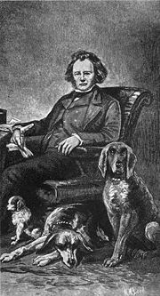
Edward Gibbon Wakefield
Edward Gibbon WakefieldEdward Gibbon Wakefield was a British politician, the driving force behind much of the early colonisation of South Australia, and later New Zealand....
revived plans for the settlement of New Zealand during the 1830s. Wakefield, who had grown up in a family with roots in philanthropy and social reform. In 1829, while in prison for
abducting a 15-year-old heiressThe Shrigley abduction was an 1827 British case of a forced marriage by Edward Gibbon Wakefield to the 15-year-old heiress Ellen Turner of Pott Shrigley. The couple were married in Gretna Green, Scotland and traveled to Calais before Turner's father was able to notify the police and intervene...
, he had published a pamphlet and a series of newspaper articles – the latter eventually republished as a book – promoting the colonising of
AustralasiaAustralasia is a region of Oceania comprising Australia, New Zealand, the island of New Guinea, and neighbouring islands in the Pacific Ocean. The term was coined by Charles de Brosses in Histoire des navigations aux terres australes...
. Wakefield's plan entailed the company buying land from the indigenous residents very cheaply, then selling it to speculators and "gentleman settlers" for a much higher sum. The emigrants would provide the labour to break in the gentlemen's lands and cater to their employers' everyday needs. They would eventually be able to buy their own land, but high land prices and low rates of pay would ensure they first laboured for many years.
Many of those who had had involvement in the 'New Zealand Company' of 1825 embraced Wakefield's ideas and used them in 1834 as a basis for the colonisation of
South AustraliaSouth Australia is a state of Australia in the southern central part of the country. It covers some of the most arid parts of the continent; with a total land area of , it is the fourth largest of Australia's six states and two territories.South Australia shares borders with all of the mainland...
, where his supporters proposed recreating "a perfect English society". Wakefield regarded the South Australian experience as a failure, however, and in 1836 set his sights on New Zealand, where his theories of "systematic" colonisation could be put into effect. A year later he chaired the first meeting of the New Zealand Association. Its members soon included MPs
William HuttSir William Hutt KCB, PC was a British Liberal politician who was heavily involved in the colonization of New Zealand and South Australia.-Background and education:...
and Sir William Molesworth,
R.S. RintoulRobert Stephen Rintoul , British journalist, was born at Tibbermore, Perthshire, in 1787, and educated at the Aberdalgie parish school...
of
The SpectatorThe Spectator is a weekly British magazine first published on 6 July 1828. It is currently owned by David and Frederick Barclay, who also owns The Daily Telegraph. Its principal subject areas are politics and culture...
and London banker John Wright. Wakefield drafted a
BillA bill is a proposed law under consideration by a legislature. A bill does not become law until it is passed by the legislature and, in most cases, approved by the executive. Once a bill has been enacted into law, it is called an act or a statute....
to bring the association's plans to fruition.
The Bill attracted stiff opposition, however, from Colonial Office officials and from the Church Missionary Society, who took issue both with the "unlimited power" the colony's founders would wield and what they regarded as the inevitable "conquest and extermination of the present inhabitants". Anglican and Wesleyan missionaries were particularly alarmed by claims made in pamphlets written by Wakefield in which he declared that one of the aims of colonisation was to "civilise a barbarous people" who could "scarcely cultivate the earth". Maori, he wrote, "craved" colonisation and looked up to the Englishman "as being so eminently superior to himself, that the idea of asserting his own independence of equality never enters his mind". Wakefield suggested that once Maori chiefs had sold their land to settlers for a very small sum, they would be "adopted" by English families and be instructed and corrected.
The New Zealand Land Company
By late 1837 the association had started to gain some favour in government circles, and in December was offered a
Royal CharterA royal charter is a formal document issued by a monarch as letters patent, granting a right or power to an individual or a body corporate. They were, and are still, used to establish significant organizations such as cities or universities. Charters should be distinguished from warrants and...
to take responsibility for the administration, and the legislative, judicial, military and financial affairs of the colony of New Zealand, subject to safeguards of control by the British Government. To receive the charter, however, the association was told by
Colonial SecretaryThe Secretary of State for War and the Colonies was a British cabinet level position responsible for the army and the British colonies . The Department was created in 1801...
Lord GlenelgCharles Grant, 1st Baron Glenelg PC FRS was a Scottish politician and colonial administrator.-Background and education:...
it would have to become a
joint stock companyA joint-stock company is a type of corporation or partnership involving two or more individuals that own shares of stock in the company...
, a condition the association initially rejected. But in August 1838 the association was wound up and replaced with two organisations, the New Zealand Colonisation Company and the New Zealand Land Company. In May 1839 both bodies merged with the 1825 New Zealand Company to form the New Zealand Land Company and in December the name 'New Zealand Company' was selected for the one and only company that would send emigrants to New Zealand. Once again Edward Gibbon Wakefield provided the driving impetus, although by then the offer of a charter had been withdrawn.
Within the British Government, meanwhile, concern had grown about the welfare of Maori and increasing lawlessness among the 2000 British subjects in New Zealand, who were concentrated in the
Bay of IslandsThe Bay of Islands is an area in the Northland Region of the North Island of New Zealand. Located 60 km north-west of Whangarei, it is close to the northern tip of the country....
. Because of the population of British subjects there, officials believed colonisation was now inevitable and at the end of 1838 the decision was made to appoint a
ConsulThe political title Consul is used for the official representatives of the government of one state in the territory of another, normally acting to assist and protect the citizens of the consul's own country, and to facilitate trade and friendship between the peoples of the two countries...
as a prelude to the declaration of British sovereignty over New Zealand. The officers of the New Zealand Company knew that any such declaration would involve a freeze on all land sales pending the establishment of effective British control, and control over the purchase of Maori lands by Europeans. They had other plans, which involved treating New Zealand as a foreign country and buying the land directly from the Māori, knowing this would allow them to secure a better deal.
The 1839 expedition and land purchases
The New Zealand Company hastily organised a land-buying expedition, which sailed to New Zealand in the
Tory on 12 May 1839, commanded by Wakefield's younger brother, Colonel
William WakefieldWilliam Hayward Wakefield was an English colonel, the leader of the first colonizing expedition to New Zealand and one of the founders of Wellington. In 1826, he married Emily Sidney, a daughter of Sir John Sidney.-Early life:...
and with Edward Main Chaffers as the ship's Master.
A second vessel, the
Cuba, with a surveyors' team headed by Captain
William Mein SmithWilliam Mein Smith was a key actor in the early settlement of New Zealand's capital city, Wellington. As the Surveyor General for the Wakefield's New Zealand Company at Port Nicholson from 1840 to 1843, he and his team surveyed the town of Wellington, after finding the land on the Petone foreshore...
, R.A., sailed in August, followed a month later by the first of nine immigrant ships, even before word had reached London of the success of the
Tory and
Cuba. The immigrant fleet had instructions to sail to Port Hardy on
D'Urville IslandD'Urville Island is an island in the Marlborough Sounds along the northern coast of the South Island of New Zealand. It was named after the French explorer Jules Dumont d'Urville. With an area of approximately , it is the eighth-largest island of New Zealand, and has around 52 permanent...
where they would be told of their final destination.
With the aid of whaler and trader
Dicky BarrettRichard "Dicky" Barrett was one of the first white traders to be based in New Zealand. He lent his translation skills to help negotiate the first land purchases from Maori in New Plymouth and Wellington and became a key figure in the establishment of the settlement of New Plymouth...
, who had good contacts with Māori and a grasp of their language, William Wakefield began negotiating to buy land from the Māori around
PetonePetone is a major suburb of the city of Lower Hutt in New Zealand. It is located at the southern end of the narrow triangular plain of the Hutt River, on the northern shore of Wellington Harbour...
in the Wellington area as soon as he arrived in New Zealand, and by the end of 1839 had concluded several purchases extending as far north as
PateaPatea is the third-largest town in South Taranaki, New Zealand. It is on the western bank of the Patea River, 61 kilometres north-west of Wanganui on State Highway 3. Hawera is 27 km to the north-west, and Waverley 17 km to the east. The Patea River flows through the town from the...
that quickly became mired in controversy over their legitimacy.
The settlement differed greatly from what had been planned in England: among the many falsehoods in company prospectuses and advertising about the nature of the country, Wellington had been described as a place of undulating plains suitable for the cultivation of grapevines, olives and wheat. Plans prepared in England showed parallel streets and sections that bore no relation to the physical contours of the area. Streets and sections, parks and cemeteries had been drawn in an area that consisted of swampy delta or high hills and steep gullies.
In November 1839
Henry WilliamsHenry Williams was one of the first missionaries who went to New Zealand in the first half of the 19th century....
and
Octavius HadfieldOctavius Hadfield was Archdeacon of Kapiti, Bishop of Wellington from 1870 to 1893 and Primate of New Zealand from 1890 to 1893. A missionary for thirty years, he was recognised as an authority on Maori customs and language...
arrived in Port Nicholson,
WellingtonWellington is the capital city and third most populous urban area of New Zealand, although it is likely to have surpassed Christchurch due to the exodus following the Canterbury Earthquake. It is at the southwestern tip of the North Island, between Cook Strait and the Rimutaka Range...
days after the New Zealand Company purchased the land around
Wellington harbourWellington Harbour is the large natural harbour at the southern tip of New Zealand's North Island. New Zealand's capital, Wellington, is on the western side of Wellington Harbour. The harbour was officially named Port Nicholson until it assumed its current name in the 1980s.In Māori the harbour is...
. Within months the Company purported to purchase approximately 20 million acres (8 million hectares) in
NelsonNelson is a city on the eastern shores of Tasman Bay, and is the economic and cultural centre of the Nelson-Tasman region. Established in 1841, it is the second oldest settled city in New Zealand and the oldest in the South Island....
,
WellingtonWellington is the capital city and third most populous urban area of New Zealand, although it is likely to have surpassed Christchurch due to the exodus following the Canterbury Earthquake. It is at the southwestern tip of the North Island, between Cook Strait and the Rimutaka Range...
,
WhanganuiVarious places in New Zealand are called Whanganui:*Whanganui, a city at the mouth of the Whanganui River, also often spelled "Wanganui", Manawatu-Wanganui Region*Whanganui District, Manawatu-Wanganui Region*Whanganui Island, Waikato Region...
and Taranaki.
Henry WilliamsHenry Williams was one of the first missionaries who went to New Zealand in the first half of the 19th century....
attempted to interfere with the land purchasing practices of the Company. Reihana, a Christian who had spent time in the Bay of Islands, had bought for himself 60 acres (24 hectares) of land in Te Aro, in what is now central
WellingtonWellington is the capital city and third most populous urban area of New Zealand, although it is likely to have surpassed Christchurch due to the exodus following the Canterbury Earthquake. It is at the southwestern tip of the North Island, between Cook Strait and the Rimutaka Range...
. When Reihana and his wife decided to go and live in Taranaki,
Henry WilliamsHenry Williams was one of the first missionaries who went to New Zealand in the first half of the 19th century....
persuaded Reihana to pass the land to Henry to hold it in
trustIn common law legal systems, a trust is a relationship whereby property is held by one party for the benefit of another...
for Reihana. On his journey north,
Henry WilliamsHenry Williams was one of the first missionaries who went to New Zealand in the first half of the 19th century....
records in a letter to his wife
MarianneMarianne Williams together with her sister-in-law Jane Williams were pioneering educators in New Zealand. They set up the first schools for Māori children and adults as well as educating the children of the Church Missionary Society in the Bay of Islands, New Zealand...
“I have secured a piece of land, I trust, from the paws of the New Zealand Company, for the natives; another piece I hope I have upset.” Upon arriving in
WhanganuiVarious places in New Zealand are called Whanganui:*Whanganui, a city at the mouth of the Whanganui River, also often spelled "Wanganui", Manawatu-Wanganui Region*Whanganui District, Manawatu-Wanganui Region*Whanganui Island, Waikato Region...
Henry records “After breakfast, held council with the chiefs respecting their land, as they were in considerable alarm lest the Europeans should take possession of the county. All approve of their land being purchased and held in trust for their benefit alone.”
The Church Missionary Society in London rejected Henry’s request for support for this practice of acquiring land on
trustIn common law legal systems, a trust is a relationship whereby property is held by one party for the benefit of another...
for the benefit of the Māori. The Society were well aware that the Company actively campaigned against those that opposed it plans. While the Church Missionary Society had connections with the Whig Government of
Viscount MelbourneWilliam Lamb, 2nd Viscount Melbourne, PC, FRS was a British Whig statesman who served as Home Secretary and Prime Minister . He is best known for his intense and successful mentoring of Queen Victoria, at ages 18-21, in the ways of politics...
, in August 1841 a
ToryToryism is a traditionalist and conservative political philosophy which grew out of the Cavalier faction in the Wars of the Three Kingdoms. It is a prominent ideology in the politics of the United Kingdom, but also features in parts of The Commonwealth, particularly in Canada...
Government came to office. The Church Missionary Society did not want to be in direct conflict with the New Zealand Company as its leaders had influence within the
ToryToryism is a traditionalist and conservative political philosophy which grew out of the Cavalier faction in the Wars of the Three Kingdoms. It is a prominent ideology in the politics of the United Kingdom, but also features in parts of The Commonwealth, particularly in Canada...
Government lead by Sir
Robert PeelSir Robert Peel, 2nd Baronet was a British Conservative statesman who served as Prime Minister of the United Kingdom from 10 December 1834 to 8 April 1835, and again from 30 August 1841 to 29 June 1846...
. In any event the actions of
Henry WilliamsHenry Williams was one of the first missionaries who went to New Zealand in the first half of the 19th century....
in attempting to thwart the ambitions of the New Zealand Company, lead to attacks on his character by members of the Company and their supporters.
The Treaty of Waitangi
The New Zealand Company had long expected intervention by the British Government in its activities in New Zealand, and this finally occurred following the signing of the
Treaty of WaitangiThe Treaty of Waitangi is a treaty first signed on 6 February 1840 by representatives of the British Crown and various Māori chiefs from the North Island of New Zealand....
on 6 February 1840. The treaty not only transferred sovereignty from the Māori to the British Crown (at least in the English version), but under its so-called pre-emption clause, Māori were prohibited from selling land to anyone but the Government and its agents. Lieutenant-Governor
HobsonCaptain William Hobson RN was the first Governor of New Zealand and co-author of the Treaty of Waitangi.-Early life:...
immediately froze all land sales and declared all existing purchases invalid pending investigation. The treaty put the New Zealand Company in a very difficult position. They did not have enough land to satisfy the arriving settlers and they could no longer legally sell the land they claimed they owned.
The British authorities progressively eased restrictions on land sales after an agreement at the end of the year between the Company and Colonial Secretary
Lord John RussellJohn Russell, 1st Earl Russell, KG, GCMG, PC , known as Lord John Russell before 1861, was an English Whig and Liberal politician who served twice as Prime Minister of the United Kingdom in the mid-19th century....
, which provided for land purchases by the company from the Crown at a discount price, and a charter to buy and sell land under government supervision. Money raised by the government from sales to the Company would be spent on assisting migration to New Zealand. The agreement was hailed by the Company as "all that we could desire ... our Company is really to be the agent of the state for colonizing NZ." The Government waived its right of pre-emption in the Wellington region, Wanganui and New Plymouth in September 1841.
Hobson sent his Colonial Secretary,
Willoughby ShortlandCommander Willoughby Shortland RN was a British naval officer and colonial administrator. He was New Zealand's first Colonial Secretary from 1841, after having arrived in New Zealand with Lieutenant Governor William Hobson in January 1840...
, and some soldiers, to Port Nicholson (Wellington) to raise the Union flag and put an end to what his administration perceived as a challenge to British sovereignty – a "colonial council", complete with primitive legal institutions, headed by Wakefield and Smith. Hobson considered the colonists were creating a "republic" and regarded the council's activities as treason.
The settlement of Wellington
Swayed by the opinion of its Surveyor-General, Captain
William Mein SmithWilliam Mein Smith was a key actor in the early settlement of New Zealand's capital city, Wellington. As the Surveyor General for the Wakefield's New Zealand Company at Port Nicholson from 1840 to 1843, he and his team surveyed the town of Wellington, after finding the land on the Petone foreshore...
of the Royal Artillery, the Company established the initial settlement, called "Britannia",
of 1100 1 acres (4,046.9 m²) town sections on the flat land at
Pito-onePetone is a major suburb of the city of Lower Hutt in New Zealand. It is located at the southern end of the narrow triangular plain of the Hutt River, on the northern shore of Wellington Harbour...
, at the mouth of the
Hutt Riverthumb|300px|The Hutt River looking downstream.The Hutt River flows through the southern North Island of New Zealand...
in January 1840. As well as a town section, each settler had purchased 100 "country acres" (about 40ha) to be located nearby, on which they could grow their food and support themselves initially. However the valley at Pito-one was a mix of dense forest, scrub, flax and swamp, prone to flooding and with a beach so flat ships were forced to anchor 1600 metres from the shore. In March, eight weeks after the first passenger ship arrived, settlers voted to abandon surveying at Pito-one and move the town to Thorndon, to the south-west, one of the few comparatively flat areas on the harbour.
The area of Lambton Bay (later Lambton Quay) took its name in honour of
Lord DurhamJohn George Lambton, 1st Earl of Durham GCB, PC , also known as "Radical Jack" and commonly referred to in history texts simply as Lord Durham, was a British Whig statesman, colonial administrator, Governor General and high commissioner of British North America...
, who had been closely associated with the formation of the Company.
Surveyors quickly encountered problems, however, when they discovered the land selected for the new settlement still inhabited by Māori, who expressed astonishment and bewilderment to find Pākehā tramping through their homes, gardens and cemeteries and driving wooden survey pegs into the ground. Surveyors became involved in skirmishes with the Māori, most of whom refused to budge, and were provided with weapons to continue their work.
Wakefield had purchased the land during a frantic week-long campaign the previous September, with payment made in the form of iron pots, soap, guns, ammunition, axes, fish hooks, clothing – including red nightcaps – slates, pencils, umbrellas, sealing wax and jaw harps. Signatures had been gained from local chiefs after an explanation, given by Wakefield and interpreted by Barrett, that the land would no longer be theirs once payment was made. However evidence later provided to the Spain Land Commission – set up by Governor FitzRoy to investigate New Zealand Company land claims – revealed three major flaws: that chiefs representing
pāThe word pā can refer to any Māori village or settlement, but in traditional use it referred to hillforts fortified with palisades and defensive terraces and also to fortified villages. They first came into being about 1450. They are located mainly in the North Island north of lake Taupo...
of Te Aro, Pipitea and Kumutoto, where the settlement of Thorndon was to be sited, were neither consulted nor paid; that Te Wharepouri, an aggressive and boastful young chief eager to prove his importance, had sold land he did not control; and that Barrett's explanation and interpretation of the terms of the sale was woefully inadequate. Barrett told the Spain Commission hearing in February 1843: "I said that when they signed their names the gentlemen in England who had sent out the trade might know who were the chiefs." Historian Angela Caughey also claimed it was extremely unlikely that Wakefield and Barrett could have visited all the villages at Whanganui-a-Tara in one day to explain the company's intentions and seek approval.
The Māori occupants of the disputed land received promises of reserves equal to one-tenth of the area, with their allotments chosen by lottery and sprinkled among the European settlers.
Edward Jerningham WakefieldEdward Jerningham Wakefield was the only son of Edward Gibbon Wakefield. He was born in London, and educated in England and France....
, who accompanied his uncle Col.
William WakefieldWilliam Hayward Wakefield was an English colonel, the leader of the first colonizing expedition to New Zealand and one of the founders of Wellington. In 1826, he married Emily Sidney, a daughter of Sir John Sidney.-Early life:...
to New Zealand on the
Tory in 1839, explained that interspersing Maori with white settlers would help them change their "rude and uncivilised habits". He wrote: "The constant example before their eyes, and constant emulation to attain the same results, would naturally lead the inferior race, by an easy ascent, to a capacity for acquiring the knowledge, habits, desires and comforts of their civilised neighbours." Wakefield said the reserves – "a very important part of our projected plan" – would remain inalienable to ensure that the Māori would not quickly sell the land to speculators. Spain eventually negotiated a settlement with Te Aro, Kumutoto and Pipitea chiefs whereby they would sell their land, but retain possession of their
pāThe word pā can refer to any Māori village or settlement, but in traditional use it referred to hillforts fortified with palisades and defensive terraces and also to fortified villages. They first came into being about 1450. They are located mainly in the North Island north of lake Taupo...
, cultivations and burial-places.
In August 1840 the New Zealand Company suffered a further setback when the Legislative Council in
New South WalesNew South Wales is a state of :Australia, located in the east of the country. It is bordered by Queensland, Victoria and South Australia to the north, south and west respectively. To the east, the state is bordered by the Tasman Sea, which forms part of the Pacific Ocean. New South Wales...
decreed that payment for land in New Zealand must go directly to the original inhabitants, and that no individual sale could exceed "four square miles". The NSW Government planned to examine all the purchases of the New Zealand Company – which had already claimed to have bought two million acres (8,000 km²) and sold part of it directly to settlers – as well as more than 1200 individual land claims throughout the country. Panic swept the town and hundreds of settlers chose to abandon their land and sailed to
ValparaísoValparaíso is a city and commune of Chile, center of its third largest conurbation and one of the country's most important seaports and an increasing cultural center in the Southwest Pacific hemisphere. The city is the capital of the Valparaíso Province and the Valparaíso Region...
,
ChileChile ,officially the Republic of Chile , is a country in South America occupying a long, narrow coastal strip between the Andes mountains to the east and the Pacific Ocean to the west. It borders Peru to the north, Bolivia to the northeast, Argentina to the east, and the Drake Passage in the far...
.
In November 1840 the New Zealand Company directors advised Wakefield that they wished to name the town at Lambton Harbour after the
Duke of WellingtonField Marshal Arthur Wellesley, 1st Duke of Wellington, KG, GCB, GCH, PC, FRS , was an Irish-born British soldier and statesman, and one of the leading military and political figures of the 19th century...
in recognition of his strong support for the company's principles of colonisation and his "strenuous and successful defence against its enemies of the measure for colonising
South AustraliaSouth Australia is a state of Australia in the southern central part of the country. It covers some of the most arid parts of the continent; with a total land area of , it is the fourth largest of Australia's six states and two territories.South Australia shares borders with all of the mainland...
". Edward Jerningham Wakefield reported that the settlers "took up the views of the directors with great cordiality and the new name was at once adopted".
Nelson
In April 1841 the company informed the Colonial Secretary of its intention to establish a second colony "considerably larger" than the first. The colony was initially to be called Molesworth after
RadicalThe Radical Whigs were "a group of British political commentators" associated with the British Whig faction who were at the forefront of Radicalism...
MP Sir William Molesworth, a supporter of Wakefield, but was renamed Nelson (after
the British admiralHoratio Nelson, 1st Viscount Nelson, 1st Duke of Bronté, KB was a flag officer famous for his service in the Royal Navy, particularly during the Napoleonic Wars. He was noted for his inspirational leadership and superb grasp of strategy and unconventional tactics, which resulted in a number of...
) when Molesworth showed little interest in leading the colony. It was planned to cover 201000 acres (813.4 km²), consisting of 1000 allotments. Each would be 150 acres (60 hectares) of rural land, 50 acres (20 hectares) of accommodation land and one "town acre" (4000 square metres), with half the funds raised by land sales being spent on emigration and about ₤50,000 ending up as company profits. The land would be sold at ₤301 per allotment or 30 shillings an acre, one pound an acre more than land at Wellington, with a lottery to determine the ownership of specific allotments.
Two ships, the
Whitby and
Will Watch, sailed that month for New Zealand with surveyors and labourers to prepare plots for the first settlers (scheduled to follow five months later). Land sales proved disappointing, however, and threatened the viability of the settlement: by early June only 326 allotments had been sold, with only 42 purchasers intending to actually travel to New Zealand. Things had improved little by the drawing of the lottery in late August 1841, when only 371 of the allotments were drawn by purchasers, three-quarters of whom were absentee owners.
The two survey ships arrived at Blind Bay (today known as
Tasman BayTasman Bay is a large V-shaped bay at the north end of New Zealand's South Island. Located in the centre of the island's northern coast, it stretches along of coastline and is across at its widest point. It is an arm of the Tasman Sea, lying on the western approach to Cook Strait.At the bay's...
), where the expedition leaders searched for land suitable for the new colony, before settling on the site of present-day
NelsonNelson is a city on the eastern shores of Tasman Bay, and is the economic and cultural centre of the Nelson-Tasman region. Established in 1841, it is the second oldest settled city in New Zealand and the oldest in the South Island....
, an area described as marshy land covered with scrub and fern. In a meeting with local Māori, expedition leader Arthur Wakefield claimed to have gained recognition – in exchange for "presents" of axes, a gun, gunpowder, blankets, biscuits and pipes – for the 1839 "purchases" in the area by William Wakefield. By January 1842 the advance guard had built more than 100 huts on the site of the future town in preparation for the arrival of the first settlers. A month later the township was described as having a population of 500, along with bullocks, sheep, pigs and poultry, although the company was yet to identify or purchase any of the rural land for which purchasers had paid.
The search for this remaining 200000 acres (809.4 km²) would ultimately lead to the
Wairau AffrayIn New Zealand history, the Wairau Affray on 17 June 1843 was the first serious clash of arms between Māori and the British settlers after the signing of the Treaty of Waitangi, and the only one to take place in the South Island...
– then known as the "Wairau Massacre" – of 17 June 1843, when 22 Europeans and four Maori died in a skirmish over land in the Wairau Valley, 25 km from Nelson. Arthur Wakefield claimed to have bought the land from the widow of a whaler who, in turn, had claimed to have bought it from chief
Te RauparahaTe Rauparaha was a Māori rangatira and war leader of the Ngāti Toa tribe who took a leading part in the Musket Wars. He was influential in the original sale of conquered Rangitane land to the New Zealand Company and was a participant in the Wairau Incident in Marlborough...
. The chief denied having sold it. Although settlers in Nelson and Wellington were appalled at the slaughter at Wairau, an investigation by Governor
Robert FitzRoyVice-Admiral Robert FitzRoy RN achieved lasting fame as the captain of HMS Beagle during Charles Darwin's famous voyage, and as a pioneering meteorologist who made accurate weather forecasting a reality...
laid the blame squarely at the feet of the New Zealand Company representatives.
As early as 1839 the New Zealand Company had resolved to "take steps to procure German emigrants" and appointed an agent in
BremenThe City Municipality of Bremen is a Hanseatic city in northwestern Germany. A commercial and industrial city with a major port on the river Weser, Bremen is part of the Bremen-Oldenburg metropolitan area . Bremen is the second most populous city in North Germany and tenth in Germany.Bremen is...
. A bid in September 1841 to sell the
Chatham IslandsThe Chatham Islands are an archipelago and New Zealand territory in the Pacific Ocean consisting of about ten islands within a radius, the largest of which are Chatham Island and Pitt Island. Their name in the indigenous language, Moriori, means Misty Sun...
to the Deutsche Colonisations Gesellschaft was quashed by the British Government. German migrants instead moved to Nelson.
Further settlements
The New Zealand Company also established a settlement at
WanganuiWhanganui , also spelled Wanganui, is an urban area and district on the west coast of the North Island of New Zealand. It is part of the Manawatu-Wanganui region....
in 1840 – chiefly as a
spillover settlementPrinciples of Intelligent Urbanism is a theory of urban planning composed of a set of ten axioms intended to guide the formulation of city plans and urban designs. They are intended to reconcile and integrate diverse urban planning and management concerns...
, the site of the rural land promised to Wellington purchasers – and also became indirectly involved in the settlement of
New PlymouthNew Plymouth is the major city of the Taranaki Region on the west coast of the North Island of New Zealand. It is named after Plymouth, Devon, England, from where the first English settlers migrated....
in 1841, through its links with the Plymouth Company, which merged with the New Zealand Company the same year. The company also sent surveyors down the east coast of the
South IslandThe South Island is the larger of the two major islands of New Zealand, the other being the more populous North Island. It is bordered to the north by Cook Strait, to the west by the Tasman Sea, to the south and east by the Pacific Ocean...
to consider further sites, where they made contact at
AkaroaAkaroa is a village on Banks Peninsula in the Canterbury region of the South Island of New Zealand, situated within a harbour of the same name—the name Akaroa is Kāi Tahu Māori for 'Long Harbour'.- Overview :...
with the fledgling French colony established there under the auspices of Jean-François Langlois's Nanto-Bordelaise Company.
In July 1843 the New Zealand Company issued a prospectus for the sale of 120,550 acres (48,000 hectares), divided between town, suburban and rural lots at a new settlement called New Edinburgh. The location of the settlement still remained undetermined. An office was established in
EdinburghEdinburgh is the capital city of Scotland, the second largest city in Scotland, and the eighth most populous in the United Kingdom. The City of Edinburgh Council governs one of Scotland's 32 local government council areas. The council area includes urban Edinburgh and a rural area...
to attract Scottish emigrants. A 400,000 acre (160,000 hectare) block was selected around the harbour at
OtagoOtago is a region of New Zealand in the south of the South Island. The region covers an area of approximately making it the country's second largest region. The population of Otago is...
in January 1844. The company worked with the Lay Association of the
Free Church of ScotlandThe Free Church of Scotland is a Scottish denomination which was formed in 1843 by a large withdrawal from the established Church of Scotland in a schism known as the "Disruption of 1843"...
on the sale of, and ballot for, land and the first body of settlers sailed for what became the settlement of
DunedinDunedin is the second-largest city in the South Island of New Zealand, and the principal city of the Otago Region. It is considered to be one of the four main urban centres of New Zealand for historic, cultural, and geographic reasons. Dunedin was the largest city by territorial land area until...
in late November 1847.
A month later Gibbon Wakefield began actively promoting a plan he had proposed in 1843: a
Church of EnglandThe Church of England is the officially established Christian church in England and the Mother Church of the worldwide Anglican Communion. The church considers itself within the tradition of Western Christianity and dates its formal establishment principally to the mission to England by St...
settlement. New Zealand Company directors initially hoped to site the settlement in the
WairarapaWairarapa is a geographical region of New Zealand. It occupies the south-eastern corner of the North Island, east of metropolitan Wellington and south-west of the Hawke's Bay region. It is lightly populated, having several rural service towns, with Masterton being the largest...
region in the lower North Island. When local Maori refused to sell, however, its surveyor inspected Port Cooper (
Lyttelton HarbourLyttelton Harbour is one of two major inlets in Banks Peninsula, on the coast of Canterbury, New Zealand. The other is Akaroa Harbour.Approximately 15 km in length from its mouth to Teddington, the harbour was formed from a series of ancient volcanic eruptions that created a caldera, the...
) on the east coast of the South Island and chose this as the location. Land was bought from 40 members of the
Ngai TahuNgāi Tahu, or Kāi Tahu, is the principal Māori iwi of the southern region of New Zealand, with the tribal authority, Te Rūnanga o Ngāi Tahu, being based in Christchurch and Invercargill. The iwi combines three groups, Kāi Tahu itself, and Waitaha and Kāti Mamoe who lived in the South Island prior...
iwi in June 1848. The colonising efforts were taken up by the
Canterbury AssociationThe Canterbury Association was formed in order to establish a colony in what is now the Canterbury Region in the South Island of New Zealand.- Formation of the Association :...
, Gibbon Wakefield's new project, and the New Zealand Company became a silent partner in the settlement process, providing little more than the initial purchase funds. The first of the body of 1512 Canterbury settlers sailed on 8 September 1850 for their new home.
- For more information on New Zealand Company involvement in New Plymouth, see History of New Plymouth
The city of New Plymouth, New Zealand, has a history that includes a lengthy occupation and residence by Maori, the arrival of white traders and settlers in the 19th century and warfare that resulted when the demands of the two cultures clashed....
- For more information on New Zealand Company involvement in Christchurch, see Canterbury Association
The Canterbury Association was formed in order to establish a colony in what is now the Canterbury Region in the South Island of New Zealand.- Formation of the Association :...
Financial difficulties and dissolution
The New Zealand Company began falling into financial difficulties from mid-1843 for two reasons. It had planned to buy land cheaply and sell it dearly and anticipated that a colony based on a higher land price would attract affluent colonists. The profits from the sale of land were to be used to pay for free passage of the working-class colonists and for public works, churches and schools for instance. For this scheme to work it was important to get the right proportion of labouring to propertied immigrants. In part the failure of the company's plans were because this proportion was never achieved – there were always more labourers, whose emigration was heavily subsidised by the company, than landed gentry.
The second major flaw arose because a large proportion of the land in the new colony was bought for speculative reasons by people who had no intention of migrating to New Zealand and developing the land they had bought. This meant that the new colonies had a serious shortage of employers and consequently a shortage of work for the labouring classes. From the outset the New Zealand Company was forced to be the major employer in the new colonies and this proved a serious financial drain on the company. Repeated approaches were made to the British government seeking financial assistance and in late 1846 the company accepted an offer for a £236,000 advance with strict conditions on, and oversight of, future company operations.
In June 1850 the company admitted land sales in Wellington, Nelson and New Plymouth had remained poor and its land sales for the year ended April 1849 amounted to only £6,266. With little prospect of trading its way to profitability, the company surrendered its charter. A select committee report concluded the company's losses were "mainly attributable to their own proceedings, characterised as they were in many respects by rashness and maladministration."
Gibbon Wakefield, who had resigned from the company in disgust after its 1846 financial arrangement with the British government, remained defiant to the end, declaring in 1852 that had the company been left alone it would have paid a dividend, recouped its capital "and there would now be 200,000 settlers in New Zealand".
The company, in its final report in May 1858, conceded it had erred, but said the communities they had planted had now assumed "gratifying proportions" and they could look forward to the day when "New Zealand shall take her place as the offspring and counterpart of her Parent-Isle ... the Britain of the Southern Hemisphere."
Further reading