
Home      Discussion      Topics      Dictionary      Almanac
Signup       Login
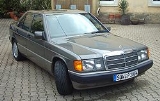
Mercedes-Benz W201

Mercedes-Benz W201

Overview
The Mercedes-Benz W201 is a compact executive car manufactured by Mercedes-Benz from 1982–1993, positioned below the Mercedes-Benz E-Class
Mercedes-Benz E-Class
The Mercedes-Benz E-Class is a range of executive-size cars manufactured by Mercedes-Benz in various engine and body configurations. The E initially stood for Einspritzmotor, ; a new feature in volume production vehicles at the time that the E-Class first appeared, with the E as a suffix to the...

 and S-Class
Mercedes-Benz S-Class
The Mercedes-Benz S-Class is a series of luxury sedans produced by Mercedes-Benz, a division of Daimler AG. The classification was officially introduced in 1972 with the W116 S-Class, which succeeded previous Mercedes-Benz models dating to the mid-1950s...

 — and marketed under variants of the Mercedes 190 nameplate.
Discussion
Ask a question about 'Mercedes-Benz W201'
Start a new discussion about 'Mercedes-Benz W201'
Answer questions from other users
Full Discussion Forum
 
Unanswered Questions
Recent Discussions
Encyclopedia
The Mercedes-Benz W201 is a compact executive car manufactured by Mercedes-Benz from 1982–1993, positioned below the Mercedes-Benz E-Class
Mercedes-Benz E-Class
The Mercedes-Benz E-Class is a range of executive-size cars manufactured by Mercedes-Benz in various engine and body configurations. The E initially stood for Einspritzmotor, ; a new feature in volume production vehicles at the time that the E-Class first appeared, with the E as a suffix to the...

 and S-Class
Mercedes-Benz S-Class
The Mercedes-Benz S-Class is a series of luxury sedans produced by Mercedes-Benz, a division of Daimler AG. The classification was officially introduced in 1972 with the W116 S-Class, which succeeded previous Mercedes-Benz models dating to the mid-1950s...

 — and marketed under variants of the Mercedes 190 nameplate.

The W201 featured a patented rear 5-link suspension
Multi-link suspension
A multi-link suspension is a type of vehicle suspension design typically used in independent suspensions, using three or more lateral arms, and one or more longitudinal arms....

, subsequently used in E and C class models, front and rear anti-roll bars, anti-dive and anti-squat geometry — as well as available airbags, ABS brakes and seatbelt pretensioners.

The W201 enjoyed strong sales in Europe but fared poorly in the United States. Series production ended April 13, 1993 after the manufacture of approximately 1.8 million examples. The 190 and its variants were succeeded in the compact executive car segment by the C-Class
Mercedes-Benz C-Class
The Mercedes-Benz C-Class is a compact executive car produced by the Mercedes-Benz division of Daimler AG. First introduced in 1993 as a replacement for the 190 range , the C-Class was the smallest model in the marque's lineup until the 1997 arrival of the A-Class...

, a newly created nameplate.

Background


Mercedes spent £600 million researching and developing the 190 and subsequently said it was 'massively over-engineered'. The W201-based 190 was introduced in November 1982.

Local 'red tape
Red tape
Red tape is excessive regulation or rigid conformity to formal rules that is considered redundant or bureaucratic and hinders or prevents action or decision-making...

' in Bremen (which produced commercial vehicles at the time) prevented Daimler-Benz from building the 190 there, so production was started in Sindelfingen
Sindelfingen
Sindelfingen is a German town near Stuttgart at the headwaters of the Schwippe that is the site of a Mercedes-Benz assembly plant.-History:* 1155 First documented mention of Sindelfingen...

 at a capacity of just 140,000 units per year. Eventually after just the first year, Bremen was cleared for production of the 190, replacing its commercial vehicle lines, and there the 190 was built with the first running modifications since release.

The 190E model has a super-efficient distributor pump injection system. This uses the air entering the throttle body to adjust the air fuel mixture accordingly, eliminating the need for complex computers. As a result, the 190E is well known for lasting well over 300,000 miles.

190E 2.3-16 & 2.5-16 "Cosworth"


Back in the late 1970s, Mercedes competed in rallying with the big V8-powered Coupés of the R107 Series, mainly the light-weight Mercedes 450 SLC 5.0. Mercedes wished to take the 190 E rallying, and asked British race car engineering company Cosworth to develop an engine with 320 bhp for the rally car. This project was known as project "WAA" by Cosworth". During this time, the Audi Quattro
Audi Quattro
The Audi Quattro is a road and rally car, produced by the German automobile manufacturer Audi, now part of the Volkswagen Group. It was first shown at the 1980 Geneva Motor Show on 3 March.The word quattro is derived from the Italian word for "four"...

 with its all wheel drive and turbocharger
Turbocharger
A turbocharger, or turbo , from the Greek "τύρβη" is a centrifugal compressor powered by a turbine that is driven by an engine's exhaust gases. Its benefit lies with the compressor increasing the mass of air entering the engine , thereby resulting in greater performance...

 was launched, making the 2.3-16v appear over-matched. With a continued desire to compete in high-profile motor sport with the 190, and also now an engine to do it with, Mercedes turned to the Deutsche Tourenwagen Meisterschaft
Deutsche Tourenwagen Meisterschaft
The Deutsche Tourenwagen Meisterschaft was a touring car racing series held from 1984 to 1996. Originally based in Germany, it held additional rounds elsewhere in Europe and later worldwide....

 (DTM) (German Touring Car Championship) motor sport series instead. Cars racing in this championship, however, had to be based on a roadgoing model. Mercedes therefore had to put into series production a 190 fitted with a detuned version of the Cosworth engine. This high performance model was known as the 190 E 2.3-16, and debuted at the Frankfurt Auto Show in September 1983, after its reputation had already been established. Three cars, only slightly cosmetically altered, had set three world records in August at the Nardo testing facility
Nardò Ring
The Nardò Ring, is a high speed test track located near the town of Nardò, Italy, in the southern region of Apulia, in the province of Lecce....

 in Italy
Italy
Italy , officially the Italian Republic languages]] under the European Charter for Regional or Minority Languages. In each of these, Italy's official name is as follows:;;;;;;;;), is a unitary parliamentary republic in South-Central Europe. To the north it borders France, Switzerland, Austria and...

, recording a combined average speed of 154.06 mi/h over the 50,000 km endurance
Endurance
Endurance is the ability for a human or animal to exert itself and remain active for a long period of time, as well as its ability to resist, withstand, recover from, and have immunity to trauma, wounds, or fatigue. In humans, it is usually used in aerobic or anaerobic exercise...

 test, and establishing twelve international endurance records. The Mercedes 190-E Cosworth was also featured on the second episode in season fifteen of the extremely popular car show Top Gear.

Engine


The Cosworth engine was based on the 2.3-liter 8-valve 136 hp unit already fitted to the 190- and E-Class series. Cosworth
Cosworth
Cosworth is a high performance engineering company founded in London in 1958, specialising in engines and electronics for automobile racing , mainstream automotive and defence industries...

 developed the cylinder head
Cylinder head
In an internal combustion engine, the cylinder head sits above the cylinders on top of the cylinder block. It closes in the top of the cylinder, forming the combustion chamber. This joint is sealed by a head gasket...

, "applying knowledge we've learnt from the DFV
DFV
The abbreviation DFV can refer to:* Cosworth DFV, a Formula One racing engine* Deutscher Frisbeesport-Verband, the association of frisbee players and teams in Germany.* Deutscher Fußball-Verband...

 and BDA". It was made from light alloy using Coscast's unique casting process and brought with it dual overhead camshafts and four valves per cylinder
Multi-valve
In automotive engineering a multi-valve or multivalve engine is one where each cylinder has more than two valves. A multi-valve engine has better breathing and can operate at higher revolutions per minute than a two-valve engine, delivering more power.- Multi-valve rationale :A multi-valve design...

, meaning 16 valves total which were developed to be the "largest that could practically be fitted into the combustion chamber".

In roadgoing trim, the 190 E 2.3-16 produced 49 hp (36 kW) and 41 ft·lbf (55 N·m) of torque more than the basic single overhead cam 2.3 I4
Straight-4
The inline-four engine or straight-four engine is an internal combustion engine with all four cylinders mounted in a straight line, or plane along the crankcase. The single bank of cylinders may be oriented in either a vertical or an inclined plane with all the pistons driving a common crankshaft....

 engine on which it was based. The 2.3 L 16 valve engine made "185 hp (137 kW) at 6,200 rpm and 174 ft·lbf (235 N·m) at 4,500 rpm, the oversquare 95.50 x 80.25 mm bore and stroke dimensions ensuring that it revs easily up to the 7000 rpm redline". Acceleration from 0–100 km/h (62 mph) was less than eight seconds, and the top speed was 230 km/h (143 mph).

US-Specification cars had a slightly reduced compression ratio (9.7:1 instead of 10.5:1), and were rated at 167 hp @ 5800 rpm and 162 lbft @ 4750.

The roadgoing version of the engine was reconfigured with reduced inlet and exhaust port sizes, different camshaft profiles, no dry sump configuration and Bosch K-jetronic replacing the specialised Kugelfischer fuel injection. These changes helped bring power down to the required 185 bhp specification, but still resulted in a "remarkably flexible engine, with a very flat torque curve and a wide power band". The heads for the engines were cast at Cosworth's Coscast foundry in Worcester and sent to Germany to be fitted to the rest of the engine, parts of which were different from the standard 2.3 including light pressed alloy pistons, and rings designed to withstand higher engine speeds, whilst con-rods, bearings and bearing caps were found to be strong enough as standard and left unaltered.


2.5 model


An enlarged 2.5 L
Litér
- External links :*...

 engine
Internal combustion engine
The internal combustion engine is an engine in which the combustion of a fuel occurs with an oxidizer in a combustion chamber. In an internal combustion engine, the expansion of the high-temperature and high -pressure gases produced by combustion apply direct force to some component of the engine...

 replaced the 2.3 L in 1988. It offered double valve timing chains to fix the easily snapping single chains on early 2.3 engines, and increased peak output by 17 hp
Horsepower
Horsepower is the name of several units of measurement of power. The most common definitions equal between 735.5 and 750 watts.Horsepower was originally defined to compare the output of steam engines with the power of draft horses in continuous operation. The unit was widely adopted to measure the...

 (12.5 kW) with a slight increase in torque. For the European market without catalyst (RÜF) the car delivered 204 bhp (150 kW). Catalyst equipped 2.5-16s produced a slightly reduced 197 bhp. It is debated whether the 2.5 L engine was developed and built by Mercedes or Cosworth. Mercedes was not keen to broadcast the fact that their most sporting saloon car has an engine developed by a British company. However some cylinder heads from 2.5 L cars are stamped with the Coscast logo indicating they were cast at Cosworth's foundry just like the 2.3s. Cosworth also list the project code "WAB" for the development of the 2.5-16 valve head just as they do for the 2.3-16 valve head.
Car program Top Gear predicted this 2.5 model to be one of the future classics in the car world, because of its relatively unknown history and rivalry with the BMW M3.

16v differences


Due to their performance, the 16 valve cars were different from the other 190 models. The body kit on the 2.3-16 and 2.5-16 reduced the drag coefficient to 0.32, one of the lowest CD values on a four door saloon of the time, whilst also reducing lift at speed. The steering ratio was quicker and the steering wheel smaller than that on other 190s, whilst the fuel tank was enlarged from 55 to 70 L. The Getrag
Getrag
Getrag is a leading manufacturer of automobile manual transmissions. The company was founded on 1 May 1935, in Ludwigsburg, Germany, by Hermann Hagenmeyer; as the Getriebe und Zahnradfabrik Hermann Hagenmeyer GmbH & Cie KG...

 5-speed manual gearbox was unique to the 16 valve and featured a 'racing' gear pattern with 'dog-leg' first gear, left and down from neutral. This meant that the remaining 2nd, 3rd, 4th and 5th gears were in a simple H pattern allowing fast and easy selection. The gearchange quality was, however, noted as "notchy, baulky", criticisms which weren't levelled at the BMW M3
BMW M3
The BMW M3 is a high-performance version of the BMW 3 Series, developed by BMW's in-house motorsport division, BMW M. M3 models have been derived from the E30, E36, E46 and E90/E92/E93 3-series, and sold with coupé, sedan and convertible body styles...

 (E30) which shared the same gearbox. The pattern is also unusual in that the driver engages reverse by shifting left and up from neutral, as for first gear in a conventional pattern. This was demonstrated in a Top Gear episode (S15E02) where James May
James May
James Daniel May is an English television presenter, journalist and writer. He is best known for his role as co-presenter of the award-winning motoring programme Top Gear alongside Jeremy Clarkson and Richard Hammond....

 took a 190E Cosworth and repeatedly confused (or perhaps pretended to confuse) reverse and first gear. An oil cooler was fitted to ensure efficient oil cooling for the inevitable track use many of these cars were destined for.

The strictly four-seater interior had Recaro sports seats with strong side bolsters for front and rear passengers. 3 extra dials - an oil temperature gauge, stopwatch and voltmeter - were included in the centre console. The 190 E 2.3-16 was available in only two colours, Blue-Black metallic (Pearl Black in the US), and Smoke Silver. The 2.5-16 added Almandine Red and Astral Silver.

All 2.3-16 valve 190 models are fitted with a Limited Slip Differential
Limited slip differential
A limited slip differential is a type of differential gear arrangement that allows for some difference in angular velocity of the output shafts, but imposes a mechanical bound on the disparity...

 (LSD) as standard. They were also available with Mercedes' ASD system which was standard equipment on the 2.5-16v. The ASD is an electronically controlled, hydraulically locking differential which activates automatically when required. The electronic control allows varied amounts of differential lock from the standard 15% right up to 100%. It is not a traction control system
Traction control system
A traction control system , also known as anti-slip regulation , is typically a secondary function of the anti-lock braking system on production motor vehicles, designed to prevent loss of traction of driven road wheels...

 however, and can only maximize traction rather than prevent wheel spin. Activation of the ASD system is indicated by an illuminating amber triangle in the speedometer.

The suspension on 16 valve models is very different from the standard 190 (W201). As well as being lower and stiffer, it has quicker dampers, larger anti-roll bars, harder bushings and hydraulic Self-levelling suspension
Self-levelling suspension
Self-levelling refers to an automobile suspension system that maintains a constant ride height of the vehicle above the road, regardless of load....

 (SLS) on the rear. This allows the rear ride height to remain constant even when the car is fully loaded.

At the inauguration of the new, shorter Nürburgring
Nürburgring
The Nürburgring is a motorsport complex around the village of Nürburg, Germany. It features a modern Grand Prix race track built in 1984, and a much longer old North loop track which was built in the 1920s around the village and medieval castle of Nürburg in the Eifel mountains. It is located about...

 in 1984, a race with identical cars was held, with former and current F1 pilots at the wheel. A rather unknown young driver named Ayrton Senna
Ayrton Senna
Ayrton Senna da Silva was a Brazilian racing driver. A three-time Formula One world champion, he is widely regarded as one of the greatest F1 drivers of all time...

 took First Place in that race.

Private Teams such as AMG later entered the 2.3-16 in touring cars races, especially the DTM
Deutsche Tourenwagen Masters
The Deutsche Tourenwagen Masters is a touring car racing series based in Germany, but also with rounds elsewhere in Europe....

. In the late 1980s, the 2.5-16 (never released in the United States) raced many times, against the similar BMW M3
BMW M3
The BMW M3 is a high-performance version of the BMW 3 Series, developed by BMW's in-house motorsport division, BMW M. M3 models have been derived from the E30, E36, E46 and E90/E92/E93 3-series, and sold with coupé, sedan and convertible body styles...

 and even the turbocharged Ford Sierra
Ford Sierra
The Ford Sierra is a large family car that was built by Ford Europe from 1982 until 1993. It was designed by Uwe Bahnsen, Robert Lutz and Patrick le Quément. The code used during development was "Project Toni"....

 Cosworth
Cosworth
Cosworth is a high performance engineering company founded in London in 1958, specialising in engines and electronics for automobile racing , mainstream automotive and defence industries...

.

Evolution models


With the debut of the BMW M3 Sport Evolution, Mercedes' direct competitor, it became obvious that the 2.5-16 needed a boost for the circuit. In March 1989, the 190 E 2.5-16 Evolution debuted at the Geneva Auto Show. The Evo I, as it came to be called, had a new spoiler and wider wheel arches. Many changes were made to under-the-skin components such as brakes and suspension. There was a full SLS suspension allowing vehicle ride height to be adjusted from an interior switch. All were intended to allow the Evolution cars to be even more effective round a track.

The Evo I's output similar to the 202 bhp of the "regular" 2.5-16. However this car had a redesigned engine of similar capacity but, most importantly, a shorter stroke and bigger bore which would allow for a higher rev limit and improved top-end power capabilities. Additional changes stretch to "rotating masses lightened, lubrication improved and cam timing altered". Cosworth also list a project code "WAC" for the development of the short-stroke Evolution engine.

Only 502 units of the Evolution model were produced for homologation
Homologation
Homologation is a technical term, derived from the Greek homologeo for "to agree", which is generally used in English to signify the granting of approval by an official authority...

 in compliance with DTM rules. For those customers desiring even more performance, a PowerPack option engineered by AMG
Mercedes-AMG
Mercedes-AMG GmbH, commonly known as AMG, is a subsidiary of the Mercedes-Benz car company specializing in high-performance luxury cars....

 was available for DM 18,000. The PowerPack option included hotter camshafts, a larger diameter throttle body, more aggressive ignition and fuel management as well as optimization of the intake and exhaust systems. The net result was an additional 30 bhp.

In March 1990, at the Geneva Auto Show, the 190 E 2.5-16 Evolution II was shown. With the success of the first Evolution model, this model's 502-unit production was already sold before it was unveiled. This car retailed in 1990 for USD $80,000.

The "Evo II" included the AMG PowerPack fitted to the same short stroke 2.5 engine as the Evolution, as well as a full SLS suspension allowing vehicle ride height to be adjusted from an interior switch. An obvious modification to the Evolution II is a radical body kit (designed by Prof. Richard Eppler from the University of Stuttgart) with a large adjustable rear wing, rear window spoiler, and Evolution II 17 inch wheels. The kit served an aerodynamic purpose — it was wind tunnel tested to reduce drag to 0.29, while at the same time increasing downforce. Period anecdotes tell of a BMW executive who was quoted as saying "if that rear wing works, we'll have to redesign our wind tunnel." The anecdote claims that BMW did.

As mentioned 500 were made in "blauschwarz" blue/black metallic. But the last two, numbers 501 and 502 were made in astral silver.

It is clear that these cars are now extremely rare in the collectors cars market place. Very few, if any have returned for resale in Europe as these cars are now clearly in the hands of long term collectors or are in personal storage. Of interesting fact is that a significant number of Evolution II cars were privately imported to Japan and that these cars appear to be the only units available for trade as of lately. Latest appearance in USS Tokyo auction group resulted in a wholesale price at 4,050,000 yen for a 65,000 km pristine example and this car was the third of its kind to appear in the 2010 to 2011.

16V AMG power pack


Available only to 2.5-16 and Evolution I models, optional AMG Power Pack increased power to 224 bhp (166 kW) at 7,200 rpm and torque
Torque
Torque, moment or moment of force , is the tendency of a force to rotate an object about an axis, fulcrum, or pivot. Just as a force is a push or a pull, a torque can be thought of as a twist....

 to 181 lbft at 5,000 rpm, whilst pushing the top speed up to 155 mph. In their final incarnations, these engines produced up to 350 bhp in racing tune.

Engines

Engine displacement (cc) Model Configuration Power PS (kW) Max Speed mph (km/h) Model Badge
1996 Carb I4 8V 105 (77) 115 (185) 190
1737 Inj I4 8V 107 (79) 115 (185) 190E 1.7
1797 Inj I4 8V 109 (80) 115 (185) 190E 1.8, 180E (AUS)
1996 Inj I4 8V 122 (89) 122 (195) 190E, 190E 2.0
2298 Inj I4 8V 136 (100) 124 (200) 190E 2.3
2597 Inj I6 12V 166 (122) 133 (215) 190E 2.6
2299 Inj ECE I4 16V 185 (136) 143 (235) 190E 2.3-16
2299 Inj RÜF I4 16V 177 (130) 140 (225) 190E 2.3-16
2299 Inj KAT I4 16V 170 (125) 137 (220) 190E 2.3-16
2498 Inj RÜF I4 16V 204 (150) 146 (235) 190E 2.5-16
2498 Inj KAT I4 16V 194 (143) 143 (230) 190E 2.5-16
2498/2463 Inj I4 16V AMG p/p 225 (165) 152 (244) 190E 2.5-16
2463 Inj KAT I4 16V Evolution (Evo I) 194 (143) 143 (230) 190E 2.5-16
2463 Inj I4 16V Evolution II (Evo II) 235 (173) 155 (250) 190E 2.5-16
1997 Diesel I4 8V 75 (55) 100 (160) 190D 2.0
2199 Diesel I4 8V 73 (54) 100 (160) 190D 2.2
2497 Diesel I5 10V 94 (69) 109 (175) 190D 2.5
2497 Diesel Turbo I5 10V 122 (89) 119 (192) 190D 2.5 TURBO

The turbo diesel model listed was not marketed in right hand drive form for the UK.

AMG models


AMG
Mercedes-AMG
Mercedes-AMG GmbH, commonly known as AMG, is a subsidiary of the Mercedes-Benz car company specializing in high-performance luxury cars....

 was not part of Mercedes-Benz when the 190 was first produced, but a separate racing and tuning company. As AMG had a lot of racing experience, they were tuning all the factory petrol engines for the customers and 190 E was one of them. Engine tuning added 25 bhp. They fitted aerodynamic features (spoilers) improving Cw and high speed stability, alloy wheels, leather interior and larger engines up to 6 litre V8's. After victories in DTM
Deutsche Tourenwagen Masters
The Deutsche Tourenwagen Masters is a touring car racing series based in Germany, but also with rounds elsewhere in Europe....

with AMG 190 E 16V's, Mercedes bought AMG in 1991. The 190 E 3.2 AMG was the first model sold through Mercedes-Benz dealerships with Mercedes-Benz new car warranty. About 200 complete cars were made, in black or silver: they were very expensive (about $90,000). Besides 200 complete 190 E 3.2 AMG's, Mercedes-Benz sold AMG body kits and 3.2l AMG engines separately, so there are 190's fitted with those features from factory or afterward. Sporty 190E 3.2 AMG straight-six 12 valve engines produced 234 bhp, and reached 260 km/h (162 mph).

Diesel models


The w201 190D is known for its extreme reliability and ruggedness with many examples doing more than 500,000 miles without any major work. The 190D was available in three different engines. The 2.0 was the baseline, and available in Europe only. The 2.2 was only available in 1984 and 1985 in the USA. The 2.5 was available in the late 80's and early 90's. The 2.5 Turbo was available in 1987 only, and is now a collectors item. The exterior of the 2.5 Turbo differentiates from the other models in that it has fender vents in the front fenders for the turbo to breathe.

Limited editions


For the UK and Irish market a special edition 190 was released for the 1993 model year. The car was given the badge name 190LE though on the rear boot lid it read 190E (on the left hand side of the lock) and LE on the right hand side. Roughly 1000 LEs were produced and each one came with a large A3 sized certificate giving each car a unique number.

LEs were available in three colours only; Azzuro Blue (blue/purple), Brilliant Silver and Rosso Red (Burgundy). The Azzuro blue coloured cars came with a grey checked cloth interior, the silver ones with black checked cloth and the Rosso Red with biscuit/cream checked cloth.

LEs were equipped with extra features that had been options on the other models and were only available with the 1.8 or 2.0 litre engine. Both the 1.8 and 2.0 litre models were equipped with a standard electric tilt and slide steel sunroof, four electric windows, electric aerial, 8 hole alloy wheels, Blaupunkt Verona CR43 Radio/cassette and walnut wood trim (as opposed to Zebrano wood). The 2.0-litre-engined version had in addition rear headrests and a front armrest. The LE was nearly £3500 cheaper than a non-LE 1.8 car of identical specification, and £2000 cheaper for a 2.0 litre.

No further options could be added to LE cars from the factory - though some were equipped with other dealer-installed items.

In Australia a limited run of 180E W201 cars could be bought from 1991 to 1993. This was essentially a 190E 1.8 with very basic trim (cloth seats, manual windows etc.), which allowed it to undercut the Luxury Car Tax introduced by the government at the time.

In 1993, for the U.S. market, 2 LE models were offered, limited to 1400 units (700 190E 2.3 LE and 700 190E 2.6 LE). The 2.3 LE was only offered in Emerald Green while the 2.6 was only offered in black.

External links

  • www.mercedes-190.co.uk The original UK Mercedes w201 190 owners club & forum with members from all over the world offering a wealth of knowledge on all things Mercedes 190.