
All Topics  
Mentuhotep II

 
Mentuhotep II

   Email Print
   Bookmark   Link


Mentuhotep II


Nebhepetre Mentuhotep II (2046 BC – 1995 BC) was a Pharaoh
Pharaoh

Pharaoh is a title used in many modern discussions of the ancient Egyptian rulers of all periods. In antiquity this title began to be used for the ruler who was the religious and political leader of united ancient Egypt, only during the New Kingdom, specifically, during the middle of the Eighteenth dynasty of Egypt....
 of the 11th dynasty
Eleventh dynasty of Egypt

The Eleventh dynasty of ancient Egypt was one group of rulers, whose earlier members are grouped with the four preceding dynasties to form the First Intermediate Period, while the later members are considered part of the Middle Kingdom of Egypt....
, the son of Intef III
Intef III

Intef III was a Pharaoh in Egypt of the Eleventh dynasty of Egypt during the First Intermediate Period. His Horus name was Nakjtnebtepnefer. He was buried in a saff-tomb at el-Tarif , and little is known about his deeds, but the fact that he restored a ruined tomb of a deified prince named Hekayeb at Aswan....
 of Egypt and a minor queen called Iah. His own wife was the 'king's mother' Tem. Other wives were Neferu (his sister) and five women buried in his funerary complex.


Discussion
Ask a question about 'Mentuhotep II'
Start a new discussion about 'Mentuhotep II'
Answer questions from other users
Full Discussion Forum


Encyclopedia


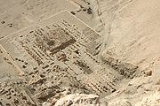
Mentuhotep Deir El Bahri
Nebhepetre Mentuhotep II (2046 BC – 1995 BC) was a Pharaoh
Pharaoh

Pharaoh is a title used in many modern discussions of the ancient Egyptian rulers of all periods. In antiquity this title began to be used for the ruler who was the religious and political leader of united ancient Egypt, only during the New Kingdom, specifically, during the middle of the Eighteenth dynasty of Egypt....
 of the 11th dynasty
Eleventh dynasty of Egypt

The Eleventh dynasty of ancient Egypt was one group of rulers, whose earlier members are grouped with the four preceding dynasties to form the First Intermediate Period, while the later members are considered part of the Middle Kingdom of Egypt....
, the son of Intef III
Intef III

Intef III was a Pharaoh in Egypt of the Eleventh dynasty of Egypt during the First Intermediate Period. His Horus name was Nakjtnebtepnefer. He was buried in a saff-tomb at el-Tarif , and little is known about his deeds, but the fact that he restored a ruined tomb of a deified prince named Hekayeb at Aswan....
 of Egypt and a minor queen called Iah. His own wife was the 'king's mother' Tem. Other wives were Neferu (his sister) and five women buried in his funerary complex. His only known son was Mentuhotep III
Mentuhotep III

Sankhkare Mentuhotep III of the Eleventh dynasty of Egypt was Pharaoh of Egypt during the Middle Kingdom of Egypt. He continued the building program of his father Mentuhotep II, erecting temples to among others, Amun and Montu, local gods who had grown in prominence during the First Intermediate Period....
.

The king changed his name several times during his reign, perhaps reflecting important political events. His throne name was Nebhepetre, and he was the first ruler of the Middle Kingdom of Egypt
Middle Kingdom of Egypt

The middle kingdom is the period in the history of ancient Egypt stretching from the establishment of the Eleventh dynasty of Egypt to the end of the Fourteenth dynasty of Egypt, roughly between 2040 BC and 1640 BC....
. The Turin Canon credits him with a reign of 51 years.

In the 14th year of his reign, an uprising occurred. This was probably connected with the conflict between Mentuhotep II based in Thebes and the rival 10th dynasty
Tenth dynasty of Egypt

The Seventh and eighth dynasties of Egypt, Seventh and eighth dynasties of Egypt, Ninth dynasty of Egypt, 10th and Eleventh dynasty of Egypt List of Egyptian Dynasties are often combined under the group title, First Intermediate Period....
 based at Herakleopolis Magna
Herakleopolis Magna

Herakleopolis Magna is the Greek language name of the capital of the Twentieth nome of ancient Egypt. It was called Henen-nesut, Nen-nesu, or Hwt-nen-nesu in Egyptian language, meaning 'house of the royal child.' Later, it was called Hnas in Coptic language, and Ahnas in medieval Arabic language writings....
. Little is known of the events.

During his reign, Mentuhotep was able to reunite ancient Egypt
Ancient Egypt

Ancient Egypt was an Ancient history civilization in eastern North Africa, concentrated along the lower reaches of the Nile in what is now the modern nation of Egypt....
 for the first time since the 6th dynasty
Sixth dynasty of Egypt

The Third, Fourth, Fifth and Sixth Dynasties of History of Egypt are often combined under the title "Old Kingdom"....
. The exact date that unification was achieved is unknown.

Mentuhotep II led military campaigns south into Nubia
Nubia

Nubia is a region in Southern Egypt along the Nile and in what is now northern Sudan. Most of Nubia is situated in Sudan with about a quarter of its territory in Egypt....
, which had gained its independence during the First Intermediate Period. There is also evidence of military actions against Palestine. The king reorganized the country and placed a vizier at the head of the administration. The vizier
Vizier (Ancient Egypt)

The vizier was the highest official in Ancient Egypt to serve the king, or pharaoh during the Old, Middle, and New Kingdoms. Vizier is the generally accepted rendering of ancient Egyptian tjati, tjaty etc, among Egyptologists....
s of his reign were Bebi
Bebi (vizier)

Bebi was an Egyptian Vizier under king Mentuhotep II in the Eleventh Dynasty. He is known only from a relief fragment found in the mortuary temple of the king at Deir el-Bahari....
 and Dagi. His treasurer was Khety who was involved in organising the sed festival for the king.

Mentuhotep II was buried in a large tomb he had constructed at Deir el-Bahri
Deir el-Bahri

Deir el-Bahri is a complex of mortuary temples and tombs located on the west bank of the Nile, opposite the city of Luxor, Egypt.In 1997, 58 tourists and 4 Egyptians were massacred here by Islamic terrorists from Al-Gama'a al-Islamiyya in what has become to be known as The 'Luxor massacre'....
. Mentuhotep II built temples and chapels at several places in Upper Egypt.

Mentuhotep II was considered by his subjects to be half divine, half mortal. This tradition continued under his successors.

Further reading and links

  • W. Grajetzki, The Middle Kingdom of Ancient Egypt: History,Archaeology and Society, Duckworth, London 2006 ISBN 0-7156-3435-6, 18-23
  • Labib Habachi: King Nebhepetre Menthuhotep: his monuments, place in history, deification and unusual representations in form of gods. Annales du Service des Antiquités de l'Égypte 19 (1963), p. 16-52
  • by Mark Andrews