
Home      Discussion      Topics      Dictionary      Almanac
Signup       Login
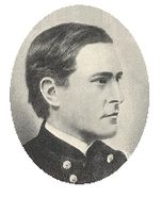
Marcus Reno

Marcus Reno

Overview
Marcus Albert Reno was a career military officer in the American Civil War
American Civil War
The American Civil War was a civil war fought in the United States of America. In response to the election of Abraham Lincoln as President of the United States, 11 southern slave states declared their secession from the United States and formed the Confederate States of America ; the other 25...

 and in the Black Hills War against the Lakota (Sioux) and Northern Cheyenne. He is most noted for his role in the Battle of Little Big Horn, which created controversy over his reputation.
Discussion
Ask a question about 'Marcus Reno'
Start a new discussion about 'Marcus Reno'
Answer questions from other users
Full Discussion Forum
 
Recent Discussions
Encyclopedia
Marcus Albert Reno was a career military officer in the American Civil War
American Civil War
The American Civil War was a civil war fought in the United States of America. In response to the election of Abraham Lincoln as President of the United States, 11 southern slave states declared their secession from the United States and formed the Confederate States of America ; the other 25...

 and in the Black Hills War against the Lakota (Sioux) and Northern Cheyenne. He is most noted for his role in the Battle of Little Big Horn, which created controversy over his reputation.

Early life and career


Reno was born November 15, 1834, in Carrollton, Illinois
Carrollton, Illinois
Carrollton is a city in Greene County, Illinois, United States. The population was 2,605 at the 2000 census. It is the county seat of Greene County.-Geography:Carrollton is located at ....

, the fourth child of James and Charlotte Reno. According to one biographer, he was a descendant of Phillippe Francois Renault, who in 1777 accompanied Lafayette to America and was awarded a land grant by the U. S. (worth about $400 million by Reno's time). At the age of 15, he wrote to the Secretary of War
United States Secretary of War
The Secretary of War was a member of the United States President's Cabinet, beginning with George Washington's administration. A similar position, called either "Secretary at War" or "Secretary of War," was appointed to serve the Congress of the Confederation under the Articles of Confederation...

 to learn about the qualifications necessary to enter the United States Military Academy
United States Military Academy
The United States Military Academy at West Point is a four-year coeducational federal service academy located at West Point, New York. The academy sits on scenic high ground overlooking the Hudson River, north of New York City...

 at West Point, New York
West Point, New York
West Point is a federal military reservation established by President of the United States Thomas Jefferson in 1802. It is a census-designated place located in Town of Highlands in Orange County, New York, United States. The population was 7,138 at the 2000 census...

. He was admitted and attended West Point from 1851 until 1857, graduating 20th in a class of 38. He was brevetted
Brevet (military)
In many of the world's military establishments, brevet referred to a warrant authorizing a commissioned officer to hold a higher rank temporarily, but usually without receiving the pay of that higher rank except when actually serving in that role. An officer so promoted may be referred to as being...

 second lieutenant, 1st Dragoons
Dragoon
The word dragoon originally meant mounted infantry, who were trained in horse riding as well as infantry fighting skills. However, usage altered over time and during the 18th century, dragoons evolved into conventional light cavalry units and personnel...

, on July 1, 1857, and assigned to duty in the Pacific Northwest
Pacific Northwest
The Pacific Northwest is a region in northwestern North America, bounded by the Pacific Ocean to the west and, loosely, by the Rocky Mountains on the east. Definitions of the region vary and there is no commonly agreed upon boundary, even among Pacific Northwesterners. A common concept of the...

 in Oregon
Oregon
Oregon is a state in the Pacific Northwest region of the United States. It is located on the Pacific coast, with Washington to the north, California to the south, Nevada on the southeast and Idaho to the east. The Columbia and Snake rivers delineate much of Oregon's northern and eastern...

.

Reno served in the Union Army
Union Army
The Union Army was the land force that fought for the Union during the American Civil War. It was also known as the Federal Army, the U.S. Army, the Northern Army and the National Army...

 in the Civil War, leading as a captain in the U.S. 1st Cavalry Regiment
U.S. 1st Cavalry Regiment
The 1st Cavalry Regiment is a unit in the United States Army which has its antecedents in the early 19th Century in the formation of the United States Regiment of Dragoons. To this day, the unit's Special Designation is "First Regiment of Dragoons".-Origins:The "United States Regiment of Dragoons"...

 at the Antietam
Battle of Antietam
The Battle of Antietam , fought on September 17, 1862, near Sharpsburg, Maryland, and Antietam Creek, as part of the Maryland Campaign, was the first major battle in the American Civil War to take place on Northern soil. It was the bloodiest single-day battle in American history, with about 23,000...

. Reno was wounded at Kelly's Ford
Battle of Kelly's Ford
The Battle of Kelly's Ford, also known as the Battle of Kellysville, took place on March 17, 1863, in Culpeper County, Virginia, as part of the cavalry operations along the Rappahannock River during the American Civil War. It set the stage for Brandy Station and other cavalry actions of the...

 in Virginia
Virginia
The Commonwealth of Virginia , is a U.S. state on the Atlantic Coast of the Southern United States. Virginia is nicknamed the "Old Dominion" and sometimes the "Mother of Presidents" after the eight U.S. presidents born there...

 on March 17, 1863, and was given the brevet rank of major
Major (United States)
In the United States Army, Air Force, and Marine Corps, major is a field grade military officer rank just above the rank of captain and just below the rank of lieutenant colonel...

 for gallant and meritorious conduct. Four months later, he served during the Gettysburg Campaign
Gettysburg Campaign
The Gettysburg Campaign was a series of battles fought in June and July 1863, during the American Civil War. After his victory in the Battle of Chancellorsville, Confederate General Robert E. Lee's Army of Northern Virginia moved north for offensive operations in Maryland and Pennsylvania. The...

. That same year, he married Mary Hannah Ross of Harrisburg
Harrisburg, Pennsylvania
Harrisburg is the capital of Pennsylvania. As of the 2010 census, the city had a population of 49,528, making it the ninth largest city in Pennsylvania...

, who would bear him one son, Robert Ross Reno. They owned a farm near New Cumberland, Pennsylvania
New Cumberland, Pennsylvania
New Cumberland is a municipality at the eastern tip of Cumberland County, Pennsylvania, United States. New Cumberland was incorporated as a borough on March 21, 1831. The population was 7,349 at the 2000 census...

, in Cumberland County
Cumberland County, Pennsylvania
Cumberland County is a county located in the U.S. state of Pennsylvania and is one of three counties comprising the Harrisburg–Carlisle Metropolitan Statistical Area. As of 2010, the population was 235,406.-History:...

. When she died in 1874, Reno was in the field in Montana. He rode all night to Fort Benton to request leave to attend her funeral, but his request was denied.

Reno participated in the 1864 battles of Cold Harbor
Battle of Cold Harbor
The Battle of Cold Harbor was fought from May 31 to June 12, 1864 . It was one of the final battles of Union Lt. Gen. Ulysses S. Grant's Overland Campaign during the American Civil War, and is remembered as one of American history's bloodiest, most lopsided battles...

, Trevilian Station
Battle of Trevilian Station
The Battle of Trevilian Station was fought on June 11–12, 1864, in Union Lt. Gen. Ulysses S. Grant's Overland Campaign against Confederate Gen. Robert E. Lee's Army of Northern Virginia. Union cavalry under Maj. Gen. Philip Sheridan fought against Confederate cavalry under Maj. Gens...

, and Cedar Creek
Battle of Cedar Creek
The Battle of Cedar Creek, or Battle of Belle Grove, October 19, 1864, was one of the final, and most decisive, battles in the Valley Campaigns of 1864 during the American Civil War. The final Confederate invasion of the North, led by Lt. Gen. Jubal A. Early, was effectively ended...

. After serving in a variety of staff positions, he was brevetted lieutenant colonel
Lieutenant Colonel (United States)
In the United States Army, United States Air Force, and United States Marine Corps, a lieutenant colonel is a field grade military officer rank just above the rank of major and just below the rank of colonel. It is equivalent to the naval rank of commander in the other uniformed services.The pay...

 in October. In December, Reno became brevet colonel
Colonel (United States)
In the United States Army, Air Force, and Marine Corps, colonel is a senior field grade military officer rank just above the rank of lieutenant colonel and just below the rank of brigadier general...

 of the 12th Pennsylvania Cavalry, later commanding a brigade
Brigade
A brigade is a major tactical military formation that is typically composed of two to five battalions, plus supporting elements depending on the era and nationality of a given army and could be perceived as an enlarged/reinforced regiment...

 against John Mosby's guerrillas
Guerrilla warfare
Guerrilla warfare is a form of irregular warfare and refers to conflicts in which a small group of combatants including, but not limited to, armed civilians use military tactics, such as ambushes, sabotage, raids, the element of surprise, and extraordinary mobility to harass a larger and...

. On March 13, 1865, he was brevetted brigadier general
Brigadier general (United States)
A brigadier general in the United States Army, Air Force, and Marine Corps, is a one-star general officer, with the pay grade of O-7. Brigadier general ranks above a colonel and below major general. Brigadier general is equivalent to the rank of rear admiral in the other uniformed...

 for "meritorious services during the war."

In 1866 Reno was ordered to Fort Vancouver
Fort Vancouver
Fort Vancouver was a 19th century fur trading outpost along the Columbia River that served as the headquarters of the Hudson's Bay Company in the company's Columbia District...

, in the Pacific Northwest. He served as acting assistant inspector general of the Department of the Columbia. While there, he became a member of the Freemasons at Washington Lodge #4. He was initiated on July 6, 1867, made a Fellowcraft mason on August 3 and raised to sublime degree of Master Mason on August 21, 1867 at Vancouver.

Reno was promoted to major and in December 1868, joined the 7th Cavalry at Fort Hays
Fort Hays
Fort Hays was an important frontier outpost of the United States Army located in Hays, Kansas between 1865 and 1889. Fort Hays was the home of several well-known Indian wars regiments including the Seventh U.S. Cavalry, the Fifth U.S. Infantry, and the Tenth U.S. Cavalry, whose black troopers were...

, Kansas. Later, he was transferred to Fort Abraham Lincoln
Fort Abraham Lincoln
Fort Abraham Lincoln State Park is located seven miles south of Mandan, North Dakota. The park is home to On-A-Slant Indian Village, the blockhouses and the Custer house...

, in the Dakota Territory, where he accompanied Lt. Col. George A. Custer on his Sioux campaign in 1876.

The Battle of Little Bighorn


Reno was the highest-ranking officer serving under Custer at the Battle of Little Bighorn in June 1876. Reno with three troops, or companies, was to attack the Indian village from the south, while Custer with five companies intended to cross the Little Bighorn river farther north and come into the village from the opposite side; Custer ordered Captain Frederick Benteen
Frederick Benteen
Frederick William Benteen was a military officer during the American Civil War and then during the Black Hills War against the Lakota and Northern Cheyenne. He is notable for being in command of a battalion of the 7th U. S...

 with three companies to move below the Sioux camp to block the Indians from escaping to the South. Captain Thomas Mcdougall's troop was to bring the packtrain with ammunition and supplies. Historians believe they did not understand how large the village was, as it contained thousands of warriors.

The plan quickly fell apart when Northern Cheyenne and Lakota Native American
Native Americans in the United States
Native Americans in the United States are the indigenous peoples in North America within the boundaries of the present-day continental United States, parts of Alaska, and the island state of Hawaii. They are composed of numerous, distinct tribes, states, and ethnic groups, many of which survive as...

 warriors, rather than fleeing as the cavalrymen expected, poured out of the village to meet Reno's attack. Reno ordered his troops to dismount and form a skirmish line, but that was quickly outflanked by hundreds of Indians, and Reno fell back into the timber along the river.

As Indians began to infiltrate the timber, Reno realized that position could not be held either, and he led a disorganized, every-man-for-himself scramble across the river and up the bluffs on the other side. There the cavalrymen set up a defensive position on what is now called Reno Hill. It was during this retreat that Reno was reportedly shot in the neck, but the bullet missed his spine and major blood vessels, so it was only a flesh wound. By this time 40 of Reno's 140 men already had been killed, 13 were wounded and 16 had been left behind in the trees (although most of these abandoned men would manage to rejoin Reno.) Bloody Knife, perhaps the foremost of the Arikara and Crow scouts attached to the 7th Cavalry, was shot through the head as he stood next to Reno. Most of the other scouts slipped away and escaped.

Benteen soon arrived at Reno's position with his three companies, and McDougall's company came along with the supply train shortly afterward. Sporadic fire continued to be directed at the hill, but heavier gunfire off to the northeast made it clear Custer was engaged in a raging battle. It is still hotly debated why Reno and Benteen did not press forward and attempt to join forces with Custer. There have been sources that a teenage Native American girl was hiding in the tall grass on the hills and sniping Reno's position, killing and wounding several men. Captain Thomas Weir
Thomas Weir (American soldier)
Captain Thomas Benton Weir was an officer in the 7th Cavalry Regiment , notable for his participation in the Battle of the Little Bighorn, also known as Custer's Last Stand. A hill on the battlefield, Weir Point, is named in his honor.-Civil War Experience:Weir graduated from the University of...

, commander of D Troop under Benteen, led his men to the high bluffs now called Weir Point, but he soon came under heavy attack and was barely able to regain the safety of Reno's position.

Having destroyed Custer's force—although Reno and his men had no way of knowing about what happened to Custer—the Indians took up the high ground above Reno Hill. They poured down constant fire on the exposed soldiers until dark. The firing resumed at dawn and continued until late in the afternoon, when the soldiers saw the distant village being broken up and the Indians' moving off. The next morning, the 27th, the surviving troops moved closer to the river, where General Alfred Terry and Colonel John Gibbon and their forces found them. Thirteen of Reno's soldiers were awarded the Medal of Honor for their bravery in the battle.

Postbellum career


After the Battle of the Little Big Horn, Reno was assigned the command of Fort Abercrombie
Fort Abercrombie
Fort Abercrombie, in North Dakota, was an American fort established by authority of an act of Congress, March 3, 1857. The act allocated twenty-five square miles of land on the Red River in Dakota Territory to be used for a military outpost, but the exact location was left to the discretion of...

 where, in December 1876, he was charged with making unwanted advances toward the wife of another officer of the 7th Cavalry, Captain James Bell, while Bell was away from the fort. An Episcopal minister, the Rev. Richard Wainwright, was staying with the Bells, and became concerned enough about Reno's behavior to persuade Capt. Bell to file charges against Reno for immoral conduct.

What really happened is unknown, but Reno certainly displayed public drunkenness on several occasions and denied Rev. Wainwright permission to preach at the fort. Captain Bell had been on detached service during the debacle of Battle of the Little Big Horn, which many were blaming on Reno. Complaints of public indecency
Public indecency
Public indecency refers to conduct undertaken in a non-private or publicly-viewable location, which are deemed indecent in nature, such as indecent exposure and sexual intercourse or masturbation in public view. Such activity is often illegal...

 were filed with the commander of the Seventh, Colonel Samuel D. Sturgis
Samuel D. Sturgis
Samuel Davis Sturgis was an American military officer who served in the Mexican-American War, as a Union general in the American Civil War, and later in the Indian Wars.-Early life:...

, who forwarded the complaints, but dismissed any fault of Reno's. (Most of the incidents had occurred at parties or on holidays when other officers also had been drinking.) Reno was ordered to surrender command and report to a board of inquiry at St Paul. The Army board recommended dismissal, but President Rutherford B. Hayes
Rutherford B. Hayes
Rutherford Birchard Hayes was the 19th President of the United States . As president, he oversaw the end of Reconstruction and the United States' entry into the Second Industrial Revolution...

 commuted this to suspension from rank and pay for 2 years.

Responding to charges of cowardice and drunkenness at the Little Big Horn, Reno later demanded and was granted a Court of Inquiry. This inquiry is typically referred to by the acronym RCOI. The court convened in Chicago
Chicago
Chicago is the largest city in the US state of Illinois. With nearly 2.7 million residents, it is the most populous city in the Midwestern United States and the third most populous in the US, after New York City and Los Angeles...

 in January 1879, and called as witnesses most of the surviving officers who had been in the fight. Enlisted men later stated they had been coerced into giving a positive report to both Reno and Benteen. The court reporter who contacted General Nelson Miles, then head of the Army, later wrote that the entire inquiry was a whitewash. While the court did not sustain any of the charges against Reno, neither did it single him out for praise. Later, in public requests for the trial transcripts, pages were missing and the text was found to have been written in the hands of two different people instead of one recording secretary. See following footnote for a complete scanned transcript of investigation.

In 1880, Reno was court-martialed a second time for conduct unbecoming an officer because of his drinking. He was supported by his commanders at Ft. Meade, SD, but nevertheless was convicted and dismissed from the service. This time the accusation concerned peeking through the window at the daughter of Samuel Sturgis, his commanding officer. Reno moved to Washington D.C., where he was hired by the Bureau of Pensions as an examiner
Examiner
The Examiner was a weekly paper founded by Leigh and John Hunt in 1808. For the first fifty years it was a leading intellectual journal expounding radical principles, but from 1865 it repeatedly changed hands and political allegiance, resulting in a rapid decline in readership and loss of...

. He married a government clerk named Isabella Ray in January 1884, but she left him after a few months. When his son was married in Nashville to a whisky heiress, Reno wrote that he was too busy to attend the wedding. In reality, he could not afford the train fare. Reno offered to write his memoirs, but the New York Weekly Press rejected the offer. When he submitted the portion of his diary concerning the Battle of the Little Big Horn, it was returned unpublished. (It later was published posthumously.)

Death, subsequent events and 1960s reburial


Marcus Reno died in Washington at the age of 54 on March 29, 1889, following surgery for cancer of the tongue.

Fifty years after what was then known as Custer's Last Stand, Custer's widow Elizabeth Bacon Custer
Elizabeth Bacon Custer
Elizabeth Bacon Custer was the wife of General George Armstrong Custer. After his death, she became an outspoken advocate for her husband's legacy through her popular books and lectures...

 spoke out against a memorial to Reno at the site. She had long campaigned in her husband's memory. Writing in 1926 when she was in her 80s, she stated "I long for a memorial to our heroes on the battlefield of the Little Big Horn (sic) but not to single out for honor, the one coward of the regiment."

In 1967 at the request of Charles Reno, the Major's great-nephew, a US military review board reviewed the original documents and testimony of Reno's 1880 court martial. It reversed the decision, ruling Reno's dismissal from the service improper. His "general discharge" status to was changed to "honorable".

Major Reno was originally buried in an unmarked grave in Washington's Oak Hill Cemetery. On September 9, 1967 his remains were reinterred with honors (including a church ceremony in Billings, Montana
Billings, Montana
Billings is the largest city in the U.S. state of Montana, and is the principal city of the Billings Metropolitan Area, the largest metropolitan area in over...

 and an eleven-gun salute at his gravesite) in the Custer National Cemetery, on the Little Bighorn Battlefield. Reno was the only participant of the Little Bighorn battle to be buried with such honors at the cemetery named for his former commander.

See also


  • List of American Civil War generals

External links