

Loss prevention

Encyclopedia
Retail loss prevention is a form of private investigation into larceny
or theft
. The focus of such investigations generally includes shoplifting
, package pilferage
, embezzlement
, credit fraud
, and check fraud. "Loss prevention" or "LP" is used to describe a number of methods used to reduce the amount of all losses and shrinkage
often related to retail trade.
Store personnel that are hired for this task are known as: loss prevention agents, loss prevention officers, asset protection agents, store detective
s, store security etc.
Although most retailers experience a shrink percentage of less than 2%, some smaller retailers often experience monthly and annual average shrinkage percentages as high as 20%.
s find their way into retail stores as much as or more than online retail websites. This is usually for several reasons. Retailers have generally relaxed their procedures for checking credit cards, to shorten customers' time spent at the cash register. Also, purchasing merchandise first-hand affords a credit card thief some anonymity, as opposed to providing a mailing address for an online sale.
Most retailers are not liable for the use of stolen cards, unless they have chosen to override the chip and PIN
and accept a customer's signature when they could have accepted a PIN.
and making counterfeit
cash. Another method is check kiting
, in which the suspect writes a check for a high dollar purchase, then withdraws the funds from the account before the check clears. Check kiting is usually done when suspects establish a fraudulent bank account under a false name. One other common check fraud tactic is to write a check on a closed account.
. Sweethearting generally occurs when an employee promises a deal to a customer in order to close a sale, or otherwise reduces the price of merchandise for dishonest reasons. Sweethearting investigations involve research into employees' finding competitor price matches to give to customers; overriding prices for their customers, friends, and themselves; and markdown of fees such as delivery and protection agreements.
These are an automated profit increase solutions, providing pin-pointed analysis and guidance for improved merchandise control, compliance assurance, loss prevention and fraud detection.
These solutions are covering all operational areas of the retail enterprise – the POS, store operation, supply chain and purchasing.
CCTV is an abbreviation for Closed Circuit Television
. CCTV camera systems are common to almost all loss prevention departments. The obvious benefits of CCTV camera is that the investigator can gain a better view of a suspect, record incidents, and not reveal themselves to shoplifting suspects. Some retailers use two-man teams in which one person uses the CCTV camera system to detect shoplifters
and a floor man follows the suspect and apprehends them.
CCTV camera systems have been drastically modernized in the last decade. Most systems now record digitally as opposed to using videotapes. Many systems now include a computer server that stores recorded video for months at a time. Digital cameras overlooking registers have greatly increased the number of internal cash thefts being resolved, and in some major cities such as Houston, Texas, an ordinance now requires convenience stores, pawn shops and similar outlets to have at least one camera trained on the entrance door(s) and one on the register.
 Electronic article surveillance
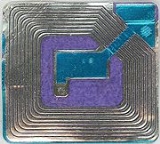
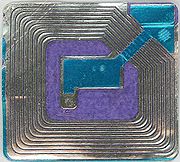
(EAS) is a deterrence system used by retailers to deter shoplifting. EAS involves the use of electronic security towers and electronic security tags. Hard tags or Sticker tags are placed on items throughout the store manually or are applied when merchandise is made and are disabled at check-out by either removing the hard tag using a detacher or by scanning label tags over a magnetic label deactivator. If the tag is not disabled it will activate the alarm pedestals, which are generally located at the exit of a retail store. EAS tags & labels are extremely effective in deterring amateur shoplifting, but most professionals require a combination of hard tags, labels, and ink tags to keep them in check. Even with the most elaborate anti-shoplifting systems some goods will be lost; this is possible with booster bag
s or simply a "grab and run".
Dual Resonator EAS stickers are usually placed on small items such as shaving razors and cold medicines. These items are popular items to sell at flea markets and swap meets. Dual Resonator EAS stickers are printed on thin paper and are difficult to remove. The high speed packaging application of these stickers was perfected by Craig Patterson (Knoxville, TN) and is a process called Source Tagging. Usually the sticker includes a retailer's company logo and serves as an indication to would-be buyers that the merchandise has been stolen.
communication. This technology is used by LP investigators to help teams follow shoplifting suspect(s) in conjunction with the CCTV camera system operators, summon assistance when apprehending a shoplifter(s), contact mall security when available and request police assistance. Most LP associates,agents,officers etc, when actively "working the floor" conceal their radios and keep the volume at a low setting as not to "blow their cover".
Exception reports are compiled on an annual basis into a report. Usually the reports are received monthly or bi-weekly. They include information on cash audit overs and shorts, no-sales, flagged returns, employees ringing themselves up, fake employee numbers used to avoid commission docking, excessive markdowns and/or discounts, and merchandise voids. Exception reports have dramatically reduced the amount of time an investigator needs to detect a possible sign of employee embezzlement.
Electronic journals
Almost every large retail institution has some form of electronic journal which records all its transactions. Information such as credit card numbers, gift card numbers, refunds, and merchandise voids are gathered at the point-of-sale. These journals can then be used to view and print facsimiles of receipts or checks.
Cash office audits
A cash office audit usually counts up the cash from transactions at the retailer's registers. A shortage occurs when the amount contained in the register does not match what the cash audit says it should have. Shortages are used to begin and close cash embezzlement cases that are investigated by loss prevention departments. Cash office audits all employees who used a particular register during the day. This information is used by loss prevention investigators to narrow the field of suspected employees.
have been around for several decades and are most commonly used by clothing retailers. Special equipment is required to remove the tags from the clothing. When the tags are forcibly removed, one or two glass vials containing permanent ink will break, causing it to spill over the clothing, effectively destroying it. Ink tags fall into the loss prevention category called benefit denial. As the name suggests, an ink tag denies the shoplifter any benefit for his or her efforts. Despite this, shoplifters have found ways around them, such as duct-taping the holes through which the ink comes out and then removing the tag with pliers, resulting in little to no damage of the merchandise. This however isn't possible with all ink tags as the holes may not be visible. Another technique used is to freeze the clothing and tag prior to removing it; the frozen ink is unable to spill onto the clothing. This was also made more difficult as several ink tag companies began installing an antifreeze solution to the ink. Ink tags are most effective if used together with another anti-shoplifting system so that the shoplifter can not use the product or remove the ink tag.
Retailers also mirror the stores structure columns. This not only benefits the customer by allowing them to view themselves it also assists LP camera operators who use the mirrors to reflect their cameras view in another direction.
A newer type of system actively monitors the checkout lane and alerts the cashier when an item is detected on the lower tray of the shopping cart. The alarm will trigger when any object is detected on the lower tray but the systems' technology is able to distinguish between a shopping cart and a person or bag passing through the lane. Unfortunately, none of these types of "alarm" systems have made any significant impact on BOB loss rates, as the cashier tends to ignore them within 3 months of installation. There is no way to ascertain whether the cashier simply ignored the alarm.
In modern retail loss prevention, consent searches are most often utilized by warehouse retailers such as Costco and Sam's Club. The warehouse retailers have made consent searches of their customers' purchases a part of the membership agreement. Although a customer may refuse to consent to a search from a legal standpoint, the warehouse retailer does retain the right as a private business entity to strip the customer of their membership or issue a verbal trespass. Warehouse retailers have been able to utilize consent searches to lower their prices on goods and reduce external shrinkage at the same time.
Certain states such as New Jersey allow loss prevention personnel to apprehend a shoplifter as soon as they conceal merchandise, rather than being required to wait until the customer attempts to leave the store. LP staff do not often make use of this permission, however, as a better court case is constructed when the shoplifter with the concealed merchandise attempts to walk out the door.
Integrity surveillance also is used to monitor cleaning crews, contractors working in the store and on some occasions by management or corporate officials to monitor LP associates themselves. LP monitoring of cleaning crews and contractors is often conducted outside of trading hours when the store is closed. It is common for LP crews to remain in the store after closing and monitor via CCTV.
s mounted at the point of entry to a store are capable of comparing the faces of people entering the store against a blacklist of known shoplifters. This allows a suitable system to notify store security when a person of interest enters the store, thereby allowing the person to either be ejected from the store (removing the opportunity for the loss to occur in the first place), or alternative allow more detailed surveillance in order to detect a theft occurrence with one of the above systems.
Larceny
Larceny is a crime involving the wrongful acquisition of the personal property of another person. It was an offence under the common law of England and became an offence in jurisdictions which incorporated the common law of England into their own law. It has been abolished in England and Wales,...
or theft
Theft
In common usage, theft is the illegal taking of another person's property without that person's permission or consent. The word is also used as an informal shorthand term for some crimes against property, such as burglary, embezzlement, larceny, looting, robbery, shoplifting and fraud...
. The focus of such investigations generally includes shoplifting
Shoplifting
Shoplifting is theft of goods from a retail establishment. It is one of the most common property crimes dealt with by police and courts....
, package pilferage
Package pilferage
Pilferage is the theft of part of the contents of a package. It may also include theft of the contents but leaving the package, perhaps resealed with bogus contents. Small packages can be pilfered from a larger package such as a shipping container...
, embezzlement
Embezzlement
Embezzlement is the act of dishonestly appropriating or secreting assets by one or more individuals to whom such assets have been entrusted....
, credit fraud
Credit card fraud
Credit card fraud is a wide-ranging term for theft and fraud committed using a credit card or any similar payment mechanism as a fraudulent source of funds in a transaction. The purpose may be to obtain goods without paying, or to obtain unauthorized funds from an account. Credit card fraud is also...
, and check fraud. "Loss prevention" or "LP" is used to describe a number of methods used to reduce the amount of all losses and shrinkage
Shrinkage (accounting)
In financial accounting the term inventory shrinkage is the loss of products between point of manufacture or purchase from supplier and point of sale. The term shrink relates to the difference in the amount of margin or profit a retailer can obtain...
often related to retail trade.
Store personnel that are hired for this task are known as: loss prevention agents, loss prevention officers, asset protection agents, store detective
Store detective
A store detective is employed to deter and detect theft in retail outlets . The term is no longer frequently used in the retail industry. More common terms today with major retailers are Loss Prevention Agent, Detective or Investigator and Asset Protection Officer or Investigator...
s, store security etc.
Sources of loss/shrink
The objective is to maximize profits through reducing inventory shrinkage, essentially the value of missing inventory. According to the 2006 National Retail Security Survey, retail operations suffered an average annual inventory shrinkage percentage of 1.57% in 2006. According to the survey, shrink is divided into 5 categories:- 46.8% from employee theft,
- 31.6% from shoplifting
- 14.4% from administrative error
- 3.75% from vendor error
- 2.86% from unknown error
Although most retailers experience a shrink percentage of less than 2%, some smaller retailers often experience monthly and annual average shrinkage percentages as high as 20%.
Credit card theft
Stolen credit cardCredit card
A credit card is a small plastic card issued to users as a system of payment. It allows its holder to buy goods and services based on the holder's promise to pay for these goods and services...
s find their way into retail stores as much as or more than online retail websites. This is usually for several reasons. Retailers have generally relaxed their procedures for checking credit cards, to shorten customers' time spent at the cash register. Also, purchasing merchandise first-hand affords a credit card thief some anonymity, as opposed to providing a mailing address for an online sale.
Most retailers are not liable for the use of stolen cards, unless they have chosen to override the chip and PIN
Chip and PIN
Chip and PIN is the brandname adopted by the banking industries in the United Kingdom and Ireland for the rollout of the EMV smartcard payment system for credit, debit and ATM cards.- History :...
and accept a customer's signature when they could have accepted a PIN.
Check fraud
Check fraud is accomplished in several ways. One way is by writing a fraudulent check that is manufactured to look like a real document, which in fact has no real value or no real bank account to back it up. Due to the complexity of the process and the high-levels of knowledge and skill required to successfully do this, it is typically done only by people who are experienced in forgeryForgery
Forgery is the process of making, adapting, or imitating objects, statistics, or documents with the intent to deceive. Copies, studio replicas, and reproductions are not considered forgeries, though they may later become forgeries through knowing and willful misrepresentations. Forging money or...
and making counterfeit
Counterfeit
To counterfeit means to illegally imitate something. Counterfeit products are often produced with the intent to take advantage of the superior value of the imitated product...
cash. Another method is check kiting
Check kiting
Cheque fraud/check fraud refers to a category of criminal acts that involve making the unlawful use of cheques in order to illegally acquire or borrow funds that do not exist within the account balance or account-holder's legal ownership...
, in which the suspect writes a check for a high dollar purchase, then withdraws the funds from the account before the check clears. Check kiting is usually done when suspects establish a fraudulent bank account under a false name. One other common check fraud tactic is to write a check on a closed account.
Margin loss and sweethearting
Retail loss prevention departments are becoming increasingly more involved in investigating losses which affect the margin of products and services. Typical areas of investigation include the overriding of PLU prices, price matching from competitors, and reduction of service fees such as delivery or protection agreements. While unintentional margin loss is reduced by educating employees and managers, the term for intentional margin loss is sweetheartingSweethearting
Sweethearting is a term used in the retail loss prevention industry to mean intentional margin loss/shrink through employee theft at the cash register...
. Sweethearting generally occurs when an employee promises a deal to a customer in order to close a sale, or otherwise reduces the price of merchandise for dishonest reasons. Sweethearting investigations involve research into employees' finding competitor price matches to give to customers; overriding prices for their customers, friends, and themselves; and markdown of fees such as delivery and protection agreements.
Exception-based reporting (EBR)
In the past 10 years, exception-based reporting (EBR) has become a widespread tool for loss prevention in retail organizations. EBR has allowed retailers to easily identify instances of potentially fraudulent activity by using data from the ERP, point-of-sale systems, and more. By utilizing this form of technology, retailers no longer have to search through cumbersome sales records to spot patterns of dishonesty.These are an automated profit increase solutions, providing pin-pointed analysis and guidance for improved merchandise control, compliance assurance, loss prevention and fraud detection.
These solutions are covering all operational areas of the retail enterprise – the POS, store operation, supply chain and purchasing.
Camera systems
CCTVCCTV is an abbreviation for Closed Circuit Television
Closed-circuit television
Closed-circuit television is the use of video cameras to transmit a signal to a specific place, on a limited set of monitors....
. CCTV camera systems are common to almost all loss prevention departments. The obvious benefits of CCTV camera is that the investigator can gain a better view of a suspect, record incidents, and not reveal themselves to shoplifting suspects. Some retailers use two-man teams in which one person uses the CCTV camera system to detect shoplifters
Shoplifting
Shoplifting is theft of goods from a retail establishment. It is one of the most common property crimes dealt with by police and courts....
and a floor man follows the suspect and apprehends them.
CCTV camera systems have been drastically modernized in the last decade. Most systems now record digitally as opposed to using videotapes. Many systems now include a computer server that stores recorded video for months at a time. Digital cameras overlooking registers have greatly increased the number of internal cash thefts being resolved, and in some major cities such as Houston, Texas, an ordinance now requires convenience stores, pawn shops and similar outlets to have at least one camera trained on the entrance door(s) and one on the register.
Electronic article surveillance
Electronic article surveillance
Electronic article surveillance is a technological method for preventing shoplifting from retail stores or pilferage of books from libraries. Special tags are fixed to merchandise or books. These tags are removed or deactivated by the clerks when the item is properly bought or checked out...
(EAS) is a deterrence system used by retailers to deter shoplifting. EAS involves the use of electronic security towers and electronic security tags. Hard tags or Sticker tags are placed on items throughout the store manually or are applied when merchandise is made and are disabled at check-out by either removing the hard tag using a detacher or by scanning label tags over a magnetic label deactivator. If the tag is not disabled it will activate the alarm pedestals, which are generally located at the exit of a retail store. EAS tags & labels are extremely effective in deterring amateur shoplifting, but most professionals require a combination of hard tags, labels, and ink tags to keep them in check. Even with the most elaborate anti-shoplifting systems some goods will be lost; this is possible with booster bag
Booster bag
A booster bag is a hand-made bag used to shoplift, typically from retail stores, libraries, and any other location employing security detectors to deter theft...
s or simply a "grab and run".
Dual Resonator EAS stickers are usually placed on small items such as shaving razors and cold medicines. These items are popular items to sell at flea markets and swap meets. Dual Resonator EAS stickers are printed on thin paper and are difficult to remove. The high speed packaging application of these stickers was perfected by Craig Patterson (Knoxville, TN) and is a process called Source Tagging. Usually the sticker includes a retailer's company logo and serves as an indication to would-be buyers that the merchandise has been stolen.
Retail entrance protection
Most retailers have little to no protection at their main and side entrances. Lack of knowledge and equipment leads owners vulnerable to theft on a large scale. Examples are placing high value items such as leather jackets and brand name items near the entrances. Retail managers and associates dedicated to making the store look visually appealing to the customer do not always factor in these problems. Equipment is available to retail to protect this sensitive area and deter theft. Many companies provide this service, and many fail to provide any real protection beyond visible barriers. Investing in the proper technology is the most important decision you can make as a store owner. Look for systems that provide fire route access, public view monitors (a television hanging from the ceiling that shows the customer the entrances are being recorded), large heavy glass walls that allow view of merchandise but deter running out the door with the merchandise.Two-way radio sets
Almost all loss prevention departments have some form of two-way radioTwo-way radio
A two-way radio is a radio that can both transmit and receive , unlike a broadcast receiver which only receives content. The term refers to a personal radio transceiver that allows the operator to have a two-way conversation with other similar radios operating on the same radio frequency...
communication. This technology is used by LP investigators to help teams follow shoplifting suspect(s) in conjunction with the CCTV camera system operators, summon assistance when apprehending a shoplifter(s), contact mall security when available and request police assistance. Most LP associates,agents,officers etc, when actively "working the floor" conceal their radios and keep the volume at a low setting as not to "blow their cover".
Point of sale
Point of sale is a form of electronic journal that allows the loss prevention investigator to see a transaction as it is occurring live. This system is either displayed on a computer screen or on a monitor linked to the CCTV camera system. This system has assisted investigators in closing employee embezzlement cases pertaining to merchandise passing, merchandise voiding, and discount fraud.Audits and reporting
Exception reportsException reports are compiled on an annual basis into a report. Usually the reports are received monthly or bi-weekly. They include information on cash audit overs and shorts, no-sales, flagged returns, employees ringing themselves up, fake employee numbers used to avoid commission docking, excessive markdowns and/or discounts, and merchandise voids. Exception reports have dramatically reduced the amount of time an investigator needs to detect a possible sign of employee embezzlement.
Electronic journals
Almost every large retail institution has some form of electronic journal which records all its transactions. Information such as credit card numbers, gift card numbers, refunds, and merchandise voids are gathered at the point-of-sale. These journals can then be used to view and print facsimiles of receipts or checks.
Cash office audits
A cash office audit usually counts up the cash from transactions at the retailer's registers. A shortage occurs when the amount contained in the register does not match what the cash audit says it should have. Shortages are used to begin and close cash embezzlement cases that are investigated by loss prevention departments. Cash office audits all employees who used a particular register during the day. This information is used by loss prevention investigators to narrow the field of suspected employees.
Ink tags
Ink tagsElectronic article surveillance
Electronic article surveillance is a technological method for preventing shoplifting from retail stores or pilferage of books from libraries. Special tags are fixed to merchandise or books. These tags are removed or deactivated by the clerks when the item is properly bought or checked out...
have been around for several decades and are most commonly used by clothing retailers. Special equipment is required to remove the tags from the clothing. When the tags are forcibly removed, one or two glass vials containing permanent ink will break, causing it to spill over the clothing, effectively destroying it. Ink tags fall into the loss prevention category called benefit denial. As the name suggests, an ink tag denies the shoplifter any benefit for his or her efforts. Despite this, shoplifters have found ways around them, such as duct-taping the holes through which the ink comes out and then removing the tag with pliers, resulting in little to no damage of the merchandise. This however isn't possible with all ink tags as the holes may not be visible. Another technique used is to freeze the clothing and tag prior to removing it; the frozen ink is unable to spill onto the clothing. This was also made more difficult as several ink tag companies began installing an antifreeze solution to the ink. Ink tags are most effective if used together with another anti-shoplifting system so that the shoplifter can not use the product or remove the ink tag.
Ceiling mirrors
Ceiling mirrors were once a staple of the loss prevention industry. Now, for the most part, they have been relegated to convenience stores. Mirrors allow loss prevention investigators to watch activity in a high-theft area without being seen. Some loss prevention departments have been known to use mirrors to increase the range of their camera systems.Retailers also mirror the stores structure columns. This not only benefits the customer by allowing them to view themselves it also assists LP camera operators who use the mirrors to reflect their cameras view in another direction.
Bottom of basket
Bottom of basket loss (BOB) occurs when an item is placed on the lower tray of a shopping cart. The cashier may forget to check the lower tray for items, resulting in the item not being paid for. What makes this form of shrink unique is that it may happen intentionally or unintentionally. Estimates for the dollar amount lost in this manner are over US$2 billion per year in North America alone, or $7 per checkout lane per day. There are a few products on the market to help prevent this loss. The most common are mirrors mounted across the checkout lane. Some stores have camera systems pointed at the lower tray with monitors for each cashier. Neither of these systems are completely effective as the problem is not visibility alone but also the inattentive cashier and/or forgetful customer.A newer type of system actively monitors the checkout lane and alerts the cashier when an item is detected on the lower tray of the shopping cart. The alarm will trigger when any object is detected on the lower tray but the systems' technology is able to distinguish between a shopping cart and a person or bag passing through the lane. Unfortunately, none of these types of "alarm" systems have made any significant impact on BOB loss rates, as the cashier tends to ignore them within 3 months of installation. There is no way to ascertain whether the cashier simply ignored the alarm.
Consent searches
Consent searches are widely used in law enforcement as well as loss prevention. When a customer consents to a search of their belongings, it is very difficult to later challenge the legality of the search in court, should an offence be detected in this manner. Consent searches in some instances can be used to build on previously existing evidence to establish the probable cause necessary to detain a shoplifter. The extreme end of establishing probable cause through a consent search has been eliminated except with a few smaller companies who still utilize it.In modern retail loss prevention, consent searches are most often utilized by warehouse retailers such as Costco and Sam's Club. The warehouse retailers have made consent searches of their customers' purchases a part of the membership agreement. Although a customer may refuse to consent to a search from a legal standpoint, the warehouse retailer does retain the right as a private business entity to strip the customer of their membership or issue a verbal trespass. Warehouse retailers have been able to utilize consent searches to lower their prices on goods and reduce external shrinkage at the same time.
Certain states such as New Jersey allow loss prevention personnel to apprehend a shoplifter as soon as they conceal merchandise, rather than being required to wait until the customer attempts to leave the store. LP staff do not often make use of this permission, however, as a better court case is constructed when the shoplifter with the concealed merchandise attempts to walk out the door.
Viewing towers
Although the necessity of viewing towers or "perches" has been largely eliminated by CCTV camera systems, they still exist today. A tower providing a wide view of the selling area is usually situated along the wall areas of a store, accessed by stock room ladders . Some perches were also walls that were floor level and centrally located. Two way glass is used to hide the LP associate from the customer. Some appear to be mere display walls or customer mirrors. Others are equipped with phones that will blink a light so not to alarm a shoplifter by ringing. An investigator can spend time in the tower while searching for shoplifters or investigating employees, much in the same manner as with CCTV. Most towers are now obsolete and being eliminated from many retail establishments. Some do remain even in major retail stores but their obsolescence due to CCTV systems has resulted in many being turned into small stock rooms.Integrity shops
The information gained from an integrity shop can be used to initiate investigations or conduct interviews that could possibly reveal dishonest and/or criminal employee behavior. Integrity shoppers are at times LP associates from other stores or an outside company. The integrity shopper purchases items at a register and the LP associate monitors the sales person.Integrity surveillance also is used to monitor cleaning crews, contractors working in the store and on some occasions by management or corporate officials to monitor LP associates themselves. LP monitoring of cleaning crews and contractors is often conducted outside of trading hours when the store is closed. It is common for LP crews to remain in the store after closing and monitor via CCTV.
Facial recognition
Facial recognition systemFacial recognition system
A facial recognition system is a computer application for automatically identifying or verifying a person from a digital image or a video frame from a video source...
s mounted at the point of entry to a store are capable of comparing the faces of people entering the store against a blacklist of known shoplifters. This allows a suitable system to notify store security when a person of interest enters the store, thereby allowing the person to either be ejected from the store (removing the opportunity for the loss to occur in the first place), or alternative allow more detailed surveillance in order to detect a theft occurrence with one of the above systems.
See also
- AuthenticationAuthenticationAuthentication is the act of confirming the truth of an attribute of a datum or entity...
- Security SmokeSecurity smokeSecurity smoke is thermally generated white smoke specifically used as a security measure...
- Tamper-evidentTamper-evidentTamper-evident describes a device or process that makes unauthorized access to the protected object easily detected. Seals, markings or other techniques may be tamper indicating.-Tampering:...
- Tamper resistanceTamper resistanceTamper resistance is resistance to tampering by either the normal users of a product, package, or system or others with physical access to it. There are many reasons for employing tamper resistance....
Further reading
- Hayes, R., "Retail Security and Loss Prevention", 1991, ISBN 0570690380
- Horan, D.J., "The Retailer's Guide to Loss Prevention and Security", 1996, ISBN 084938110X
- Kimieckik, R., C., "Loss Prevention Guide for Retail Businesses", 1995, ISBN 0471076368
- Thomas, C., "Loss Prevention in the Retail Business", 2005, ISBN 0471723215
External links
- HowStuffWorksHowStuffWorksHowStuffWorks is a commercial edutainment website that was founded by Marshall Brain with the goal of giving its target audience an insight into the way in which many things work. The site uses various media in its effort to explain complex concepts, terminology and mechanisms, including...
: How anti-shoplifting devices work - LP Eye United Kingdom loss prevention information