
All Topics  
Living fossil

 
Living Fossil

   Email Print
   Bookmark   Link


Living fossil


Living fossil is an informal term for any living species
Species

In biology, a species is one of the basic units of biological classification and a taxonomic rank. A species is often defined as a group of organisms capable of interbreeding and producing fertile offspring....
 (or clade
Clade

A clade is a term used in modern alpha taxonomy, the scientific classification of living and fossil organisms, to describe a monophyletic group, defined as a group consisting of a single common ancestor and all its descendants.The term "monophyletic group" is used in this article in the conventional sense of "an a...
) of organism which appears to be the same as a species otherwise only known from fossil
Fossil

Fossils are the preserved remains or trace fossil of animals, plants, and other organisms from the remote past. The totality of fossils, both discovered and undiscovered, and their placement in fossiliferous Rock formations and sedimentary rock layers is known as the fossil record....
s and which has no close living relatives. These species have all survived major extinction event
Extinction event

An extinction event is a sharp decrease in the number of species in a relatively short period of time. Mass extinctions affect most major taxonomy groups present at the time ? birds, mammals, reptiles, amphibians, fish, invertebrates and other simpler life forms....
s, and generally retain low taxonomic diversities. A species which successfully radiates (forming many new species after a possible genetic bottleneck) has become too successful to be considered a "living fossil".


Discussion
Ask a question about 'Living fossil'
Start a new discussion about 'Living fossil'
Answer questions from other users
Full Discussion Forum


Encyclopedia


Living fossil is an informal term for any living species
Species

In biology, a species is one of the basic units of biological classification and a taxonomic rank. A species is often defined as a group of organisms capable of interbreeding and producing fertile offspring....
 (or clade
Clade

A clade is a term used in modern alpha taxonomy, the scientific classification of living and fossil organisms, to describe a monophyletic group, defined as a group consisting of a single common ancestor and all its descendants.The term "monophyletic group" is used in this article in the conventional sense of "an a...
) of organism which appears to be the same as a species otherwise only known from fossil
Fossil

Fossils are the preserved remains or trace fossil of animals, plants, and other organisms from the remote past. The totality of fossils, both discovered and undiscovered, and their placement in fossiliferous Rock formations and sedimentary rock layers is known as the fossil record....
s and which has no close living relatives. These species have all survived major extinction event
Extinction event

An extinction event is a sharp decrease in the number of species in a relatively short period of time. Mass extinctions affect most major taxonomy groups present at the time ? birds, mammals, reptiles, amphibians, fish, invertebrates and other simpler life forms....
s, and generally retain low taxonomic diversities. A species which successfully radiates (forming many new species after a possible genetic bottleneck) has become too successful to be considered a "living fossil". However, the term is frequently misinterpreted.

Overview

There is a subtle difference between a "living fossil" and a "Lazarus taxon
Lazarus taxon

In paleontology, a Lazarus taxon is a taxon that disappears from one or more periods of the fossil record, only to appear again later. The term refers to the account in the Gospel of John chapter 11 in which Jesus miraculously raises Lazarus from the dead....
". A Lazarus taxon is a taxon
Taxon

A taxon or taxonomic unit is a name designating an organism or a group of organisms. In biological nomenclature according to Carl Linnaeus, a taxon is assigned a taxonomic rank and can be placed at a particular level in a systematic hierarchy reflecting evolutionary relationships....
 (either one species or a group of species
Systematics

Biological systematics is the study of the diversification of life on the planet Earth, both past and present, and the relationships among living things through time....
) that suddenly reappears, either in the fossil record or in nature (i.e. as if the fossil had "come to life again"), while a living fossil is a species that (seemingly) hasn't changed during its very long lifetime (i.e. as if the fossil has always lived). The mean species turnover time (the time a species lasts before it is replaced) varies widely among the phyla, but averages about 2-3 million years. So, a living species that was thought to be extinct (e.g. the coelacanth
Coelacanth

Coelacanth is the common name for an Order of fish that includes the oldest living Lineage of gnathostomata known to date. The coelacanths, which are related to lungfishes and tetrapods, were believed to have been extinction since the end of the Cretaceous period, until the first Latimeria specimen was found off the east coast of Sout...
, Latimeria chalumnae) is not a living fossil simply due to that definition (though it may still be one because it hasn't changed much), it is a Lazarus species. Coelacanths disappeared from the fossil record some 80 million years ago (upper Cretaceous
Cretaceous

The Cretaceous , usually abbreviated K for its German translation Kreide, is a geologic period from circa to million years ago . In the geologic timescale, the Cretaceous follows on the Jurassic period and is followed by the Paleogene period....
). If, however, other Cenozoic
Cenozoic

The Cenozoic Era...
 Latimeria fossil species were to be found, the coelacanth would be considered a true living fossil, as that would fill in the gap where the species is "dead". Of course, species do not just appear out of thin air, so all living Lazarus species (excluding disappearing and reappearing red list species
IUCN Red List

The IUCN Red List of Threatened Species , created in 1963, is the world's most comprehensive inventory of the global Conservation movement status of plant and animal species....
) are nonetheless considered living fossils, if it can be shown they are not Elvis taxa
Elvis taxon

In paleontology, an Elvis taxon is a taxon which has been misidentified as having re-emerged in the fossil record after a period of presumed extinction, but is not actually a descendant of the original taxon, instead having developed a similar morphology through convergent evolution....
. Some living fossils are species that were known from fossils before living representatives were discovered. The most famous examples of this are the coelacanthiform fishes Latimeria chalumnae and Latimeria menadoensis and the dawn redwood, Metasequoia, discovered in a remote Chinese valley. Others include glypheoid lobsters
Glypheoidea

The Glypheoidea , is a group of lobster-like Decapoda crustaceans which forms an important part of fossil faunas, such as the Solnhofen limestone....
, mymarommatid wasps
Mymarommatidae

Mymarommatidae is a very small family of microscopic hymenopteran insects. Only 10 living species in 1 genus have currently been described but they are known from all parts of the world....
, and jurodid beetles
Jurodidae

The beetle family Jurodidae was originally described from fossils, but in 1996 a single species from the Russian Far East, described as Sikhotealinia zhiltzovae, was found and later was recognized to be a living representative of this otherwise extinct family ....
, all of which were first described from fossils, but later found alive (2 species, 10 species, and one species respectively). Others are a single living species with no close living relatives, but which is the survivor of a large and widespread group in the fossil record, perhaps the best-known example of which is Ginkgo biloba (the ginkgo
Ginkgo

Ginkgo , frequently misspelled as "Gingko", and also known as the Maidenhair Tree after Adiantum, is a unique species of tree with no close living relatives....
), though there are others, such as the Syntexis libocedrii (the cedar wood wasp).

Note that just because a living fossil is a surviving representative of an archaic lineage does not necessarily require that it retains all of the "primitive" features (plesiomorphies) of the lineage it is descended from; that is, they may possess one to many derived features (autapomorphies
Autapomorphy

An autapomorphy in cladistics is a derived trait that is unique to a given terminal group. That is, it is found only in one member of a clade, but not found in any others or outgroup taxa, not even those most closely related to the group ....
), that have evolved since the time of their lineage's divergence. All that is required is that they can be unambiguously assigned to an otherwise extinct lineage (rarely are they identical to the fossil forms). See for example the uniquely and highly autapomorphic oxpecker
Oxpecker

The oxpecker consists of two species of bird which make up the family Buphagidae; some ornithologists regard them as a subfamily Buphaginae within the starling family Sturnidae but they appear to be quite distinct ....
s, which are not "true" living fossils (as no fossils are known yet) but nonetheless appear to be the only survivors of an ancient lineage related to starling
Starling

Starlings are found around the World, from Europe, Asia and Africa, to northern Australia and the islands of the tropical Pacific. Several European and Asian species have been introduced to these areas as well as North America, Hawaii and New Zealand, where they generally compete for habitat with native birds and are considered to be invasive spec...
s and mockingbird
Mockingbird

Mockingbirds are a group of New World passerine birds from the Mimidae family . They are best known for the habit of some species mimicking the songs of insect and amphibian sounds as well as other bird songs, often loudly and in rapid succession....
s.

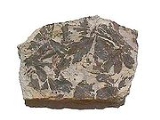
Fossil Plant Ginkgo
Gingko Blaetter

Note the similarity between the 170 million year old fossil Ginkgo sp. leaves on the left, and the living plant on the right.

Examples


Some of these are informally known as "living fossils".

Plants

  • Amborellaceae
    Amborellaceae

    Amborellaceae is a family of flowering plants Endemism to New Caledonia. The family consists of only a single species, Amborella trichopoda....
     – a plant from New Caledonia, possibly closest to base of the flowering plants
  • Araucaria araucana
    Araucaria araucana

    Araucaria araucana is the hardiest species in the Pinophyta genus Araucaria. It is native to central Chile and west central Argentina, and is an evergreen tree growing to 40 m tall and 2 m trunk diameter....
     – the Monkey Puzzle tree
  • Cycad
    Cycad

    File:Cycad cone.jpgCycads are a group of seed plants characterized by a large crown of compound Leaf and a stout trunk . They are evergreen, gymnospermous, dioecious plants having large pinnately compound leaves....
    s
  • Ginkgo
    Ginkgo

    Ginkgo , frequently misspelled as "Gingko", and also known as the Maidenhair Tree after Adiantum, is a unique species of tree with no close living relatives....
     tree (Ginkgoaceae)
  • Horsetail
    Horsetail

    Equisetum is the only living genus in the Equisetaceae, a family of vascular plants that reproduce by spores rather than seeds. They are commonly known as horsetails....
    s – Equisetum (Equisetaceae)
  • Metasequoia
    Metasequoia

    Metasequoia is a fast growing tree genus in the pinophyta family Cupressaceae of which Metasequoia glyptostroboides, native to the Sichuan-Hubei region of China, is the only living species....
     – Dawn Redwood (Cupressaceae; a borderline example, related to Sequoia
    Sequoia

    Sequoia sempervirens is the sole living species of the genus Sequoia in the cypress family Cupressaceae . Common names include Coast Redwood and California Redwood ....
     and Sequoiadendron
    Sequoiadendron

    Sequoiadendron giganteum is the sole species in the genus Sequoiadendron, and one of three species of coniferous trees known as Redwood , classified in the family Cupressaceae in the subfamily Cupressaceae#Classification, together with Sequoia and Metasequoia ....
    )
  • Sciadopitys
    Sciadopitys

    The Koyamaki or Japanese Umbrella-pine, is a unique conifer endemic to Japan. It is the sole member of the family Sciadopityaceae and genus Sciadopitys, a living fossil with no close relatives, and known in the fossil record for about 230 million years....
     tree (Sciadopityaceae)
  • Whisk ferns – Psilotum (Psilotaceae)
  • Welwitschia
    Welwitschia

    Welwitschia is a monotypic genus of gymnosperm plant, composed solely of the very distinct Welwitschia mirabilis. It is the only genus of the family Welwitschiaceae, in the order Welwitschiales, in the division Gnetophyta....
     (Welwitschiaceae)
  • Wollemia tree (Araucariaceae
    Araucariaceae

    The Araucariaceae are a very ancient family of conifers. They achieved maximum diversity in the Jurassic and Cretaceous periods, when they existed almost worldwide....
     – a borderline example, related to Agathis
    Agathis

    The genus Agathis, commonly known as kauri or dammar, is a relatively small genus of 21 species of evergreen trees in the very ancient Araucariaceae family of conifers....
     and Araucaria
    Araucaria

    Araucaria is a genus of evergreen Pinophyta trees in the family Araucariaceae. There are 19 species in the genus, with a highly disjunct distribution in New Caledonia , Norfolk Island, eastern Australia, New Guinea, Argentina, Chile, and southern Brazil....
    )


Fungi


  • Neolecta
    Neolecta

    Neolecta is a genus of ascomycetous fungus that have fruiting bodies in the shape of unbranched to lobed bright yellowish, orangish to pale yellow-green colored, club-shaped, smooth, fleshy columns up to about 7cm tall....


Animals

  • Vertebrates
    • Mammals
      • Aardvark
        Aardvark

        The Aardvark is a medium-sized, burrowing, nocturnal mammal native to Africa. It is sometimes called "antbear", "anteater", "Cape anteater" , "earth hog" or "earth pig"....
         (Orycteropus afer)
      • Cypriot mouse
        Cypriot Mouse

        The Cypriot mouse is a species of mouse native to Cyprus. Its primary habitat seems to be the vineyards and fields of the Troodos Mountains region....
         (Mus cypriacus)
      • Red Panda
        Red Panda

        The Red Panda, also called the Firefox or Lesser Panda , is a mostly herbivorous mammal, specialized as a bamboo feeder. It is slightly larger than a domestic cat ....
         (Ailurus fulgens)
      • Okapi
        Okapi

        The Okapi is a giraffid artiodactyl mammal native to the Ituri Rainforest, located in the northeast of the Democratic Republic of the Congo, in central Africa....
         (Okapia johnstoni)
      • Koala
        Koala

        The Koala is a wikt:thickset arboreal marsupial herbivory native to Australia, and the only Extant taxon representative of the family Phascolarctidae....
         (Phascolarctos cinereus)
      • Laotian Rock Rat
        Laotian rock rat

        The Laotian rock rat or kha-nyou , sometimes called the "rat-squirrel", is a rodent species of the Khammouan region of Laos. The species was first described in a 2005 article by Paulina Jenkins and coauthors, who considered the animal to be so distinct from all living rodents that they placed it in a new Family , Laonastidae....
         (Laonastes aenigmamus)
      • Volcano rabbit
        Volcano Rabbit

        The Volcano Rabbit also known as teporingo or zacatuche is a small rabbit that resides in the mountains of Mexico. It is the world's second smallest rabbit, second only to the Pygmy Rabbit....
         (Romerolagus diazi)
      • Amami rabbit
        Amami Rabbit

        The Amami Rabbit , or , also known as the Ryukyu Rabbit, is a primitive dark-furred rabbit which is only found in Amami Oshima and Tokunoshima, two small islands between southern Kyushu and Okinawa in Kagoshima Prefecture in Japan....
         (Pentalagus furnessi)
      • Iriomote cat
        Iriomote cat

        The Iriomote cat , is a wild Felidae about the size of a domestic cat that lives exclusively on the Japanese island of Iriomote. It is considered a "living fossil" by many biologists because it has not changed much from its primitive form....
         (Prionailurus iriomotensis)
      • Monito del Monte
        Monito del Monte

        The Monito del Monte is a semi-arboreal South American marsupial which is thought to be more closely related to the marsupials of Australasia than to those of the Americas....
         (Dromiciops gliroides)
      • monotreme
        Monotreme

        Monotremes are mammals that lay eggs instead of giving birth to live young like Marsupialias and Placentalia .They are conventionally treated as comprising a single order Monotremata, though a recent classification proposes to divide them into the orders Platypoda and Tachyglossa ....
        s (the platypus
        Platypus

        The Platypus is a semi-aquatic mammal Endemic to Eastern states of Australia, including Tasmania. Together with the four species of echidna, it is one of the five extant species of monotremes, the only mammals that lay Egg instead of giving birth to live young....
         and echidna
        Echidna

        Echidnas , also known as spiny anteaters, are four Extant taxon mammal species belonging to the Tachyglossidae Family of the monotremes....
        )
      • Mountain Beaver
        Mountain Beaver

        The Mountain Beaver is a primitive rodent unrelated to beavers and not always found in mountainous areas. It has several common names including Aplodontia, Boomer, Ground Bear, and Giant Mole....
         (Aplodontia rufa)
      • Opossums
      • Przewalski's Horse
        Przewalski's Horse

        Przewalski's Horse is a rare and endangered subspecies of Wild Horse native to the steppes of central Asia. At one time extinct in the wild, it has been reintroduced to its native habitat in Mongolia at the Khustain Nuruu National Park, Takhin Tal Nature Reserve and Khomiin Tal....
         (Equus ferus przewalskii, Equus przewalskii or Equus caballus przewalskii, classification is debated)
    • Birds
      • Acanthisittidae (New Zealand "wrens")
      • Hoatzin
        Hoatzin

        The Hoatzin , also known as the Hoactzin, Stinkbird, or Canje "Pheasant", is an unusual species of Tropics bird found in swamps, riverine forest and mangrove of the Amazon basin and the Orinoco delta in South America....
         (Ophisthocomus hoazin)
      • Broad-billed Sapayoa
        Broad-billed Sapayoa

        The Broad-billed Sapayoa , Sapayoa aenigma, is a suboscine passerine found in lowland rainforests in Panama and northwest South America....
         (Sapayoa aenigma)
      • Bearded Reedling (Panurus biarmicus)
      • Coliiformes (mousebirds, 6 living species in 2 genera)
      • Magpie-goose
        Magpie-goose

        The Magpie-goose, Anseranas semipalmata, is a waterbird species found in coastal northern Australia and savannah in southern New Guinea. It is a unique member of the order Anseriformes, and arranged in a Family and genus distinct from all other living waterfowl....
         (Anseranas semipalmata)
    • Reptiles
      • Pig-nosed turtle
      • Crocodilia
        Crocodilia

        Crocodilia is an order of large reptiles that appeared about 84 million years ago in the late Cretaceous Period . They are the closest living relatives of birds, as the two groups are the only known survivors of the Archosauria....
         (crocodile
        Crocodile

        A crocodile is any species belonging to the family Crocodylidae . The term can also be used more loosely to include all members of the order Crocodilia: i.e....
        s, gavials and alligator
        Alligator

        An Alligator is a crocodilian in the genus Alligator of the family Alligatoridae. The name alligator is an anglicization form of the Spanish language el lagarto , the name by which early Spain explorers and settlers in Florida called the alligator....
        s)
      • Tuatara
        Tuatara

        The tuatara is a reptile endemism to New Zealand which, though it resembles most lizards, is actually part of a distinct lineage, order Sphenodontia....
         (Sphenodon punctatus and Sphenodon guntheri)
    • Amphibians
      • Purple frog
        Purple Frog

        Nasikabatrachus sahyadrensis is a frog species belonging to the family Sooglossidae. It can be found in the Western Ghats in India. Common names for this species are Purple Frog or Pignose Frog....
         (Nasikabatrachus sahyadrensis)
    • Bony fish
      • Bowfin
        Bowfin

        Bowfins are an order of primitive ray-finned fish. Only one species, the bowfin Amia calva, family Amiidae, exists today, although additional species in six families are known from Jurassic, Cretaceous, and Eocene fossils....
         (Amia calva)
      • Coelacanth
        Coelacanth

        Coelacanth is the common name for an Order of fish that includes the oldest living Lineage of gnathostomata known to date. The coelacanths, which are related to lungfishes and tetrapods, were believed to have been extinction since the end of the Cretaceous period, until the first Latimeria specimen was found off the east coast of Sout...
         (the lobed-finned Latimeria menadoensis and Latimeria chalumnae)
      • Queensland lungfish
        Queensland Lungfish

        The Queensland lungfish, Neoceratodus forsteri is the sole surviving member of the family Ceratodontidae and order Ceratodontiformes....
         (Neoceratodus fosteri)
      • Sturgeons and paddlefish
        Paddlefish

        Paddlefish are primitive Chondrostean ray-finned fishes. The paddlefish can be distinguished by its large mouth and its elongated snout called a rostrum ....
         (Acipenseriformes
        Acipenseriformes

        Acipenseriformes are an order of primitive Actinopterygii that includes the sturgeons and paddlefishes, as well as some extinct families.Notable characteristics of Acipenseriformes include:...
        )
    • Sharks
      • Frilled shark (Chlamydoselachus anguineus)


  • Invertebrates
    • Insects
      • Mantophasmatodea
        Mantophasmatodea

        Mantophasmatodea is a suborder of African carnivore insects discovered in 2002, originally considered to be a new order, but since relegated to subordinal status, and comprising the single family Mantophasmatidae....
         (gladiators; a few living species)
      • Mymarommatid wasps
        Mymarommatidae

        Mymarommatidae is a very small family of microscopic hymenopteran insects. Only 10 living species in 1 genus have currently been described but they are known from all parts of the world....
         (10 living species in genus Palaeomymar)
      • Nevrorthidae
        Nevrorthidae

        The Nevrorthidae - often incorrectly spelled "Neurorthidae" - are a small family of Pterygota of the order Neuroptera. They are a living fossil....
         (3 species-poor genera)
      • Notiothauma reedi (a scorpionfly relative)
      • Orussidae
        Orussidae

        The family Orussidae is the only Symphytan group which is parasitoid, thus giving them the common name parasitic wood wasps. They are an ancient group, well-represented in the fossil record, and are believed to represent a sort of "missing link" within the order Hymenoptera, as they are often considered to be the sister taxon to the Apocrita...
         (parasitic wood wasps; about 70 living species in 16 genera)
      • Peloridiidae (peloridiid bugs; fewer than 30 living species in 13 genera)
      • Sikhotealinia zhiltzovae (a jurodid
        Jurodidae

        The beetle family Jurodidae was originally described from fossils, but in 1996 a single species from the Russian Far East, described as Sikhotealinia zhiltzovae, was found and later was recognized to be a living representative of this otherwise extinct family ....
         beetle
        Beetle

        Beetles are the group of insects with the largest number of known species. They are placed in the order Coleoptera , which contains more described species than in any other order in the animal, constituting about 25% of all known life-forms....
        )
      • Syntexis libocedrii (Anaxyelidae cedar wood wasp)
    • Crustaceans
      • glypheoid lobsters
        Glypheoidea

        The Glypheoidea , is a group of lobster-like Decapoda crustaceans which forms an important part of fossil faunas, such as the Solnhofen limestone....
         (3 living species: Neoglyphea inopinata, N. neocaledonica, and Laurentaeglyphea neocaledonica)
      • Stomatopods
        Mantis shrimp

        Mantis shrimp or stomatopods are marine crustaceans, the members of the order Stomatopoda. They are neither shrimp nor Praying mantis, but receive their name purely from the physical resemblance to both the terrestrial praying mantis and the shrimp....
         (Mantis shrimp)
      • Triops cancriformis
        Triops cancriformis

        Triops cancriformis, or Horseshoe crab , is an endangered species of Notostraca found in Europe. The species is considered endangered in the United Kingdom and in many other European countries ....
          (also known as Tadpole shrimp) (a notostracid crustacean
        Crustacean

        Crustaceans are a large group of arthropods, comprising almost 52,000 described species , and are usually treated as a subphylum . They include various familiar animals, such as crabs, lobsters, crayfish, shrimp, krill and barnacles....
        )
    • Molluscs
      • Nautilina (e.g. Nautilus pompilius)
      • Neopilina galateae, a monoplacophorid
        Monoplacophora

        Monoplacophora, meaning ?bearing one plate?, is a Class of shelled mollusks. These organisms were known only from the fossil record, ranging from the early Cambrian to the mid-Devonian periods until April 1952, when a living specimen was collected from deep depths in the Middle America Trench off Costa Rica's Pacific coast....
         mollusc
        Mollusca

        MolluscsSpelled mollusk in the USA; the spelling "mollusc" is preferred by some authors, see the reasons given by . are animals belonging to the Phylum Mollusca....
      • Ennucula superba (Nut clam)
    • Other invertebrates
      • crinoid
        Crinoid

        Crinoids, also known as sea lilies or feather-stars, are marine animals that make up the class Crinoidea of the echinoderms . They live both in shallow water and in depths as great as 6,000 meters....
        s
      • Horseshoe crab
        Horseshoe crab

        The horseshoe crab or Atlantic horseshoe crab is a marine chelicerate arthropod. Despite its name, it is more closely related to spiders, ticks, and scorpions than to crabs....
        s (only 4 living species of the class Xiphosura
        Xiphosura

        Xiphosura is an order of marine Chelicerata which includes a large number of extinct lineages and only four recent species in the family Limulidae, which include the horseshoe crabs....
        , family Limulidae
        Limulidae

        Limulidae is the only recent family of the order Xiphosurida and contains all the 4 living species of horseshoe crabs. Horseshoe crabs fossils have been first seen in the late Devonian....
        : Limulus polyphemus,Tachypleus gigas
        Tachypleus gigas

        Tachypleus gigas is a species in the family Limulidae. It is found in India, Indonesia, Malaysia, the Philippines, Singapore, and Thailand....
        , Tachypleus tridentatus
        Tachypleus tridentatus

        Tachypleus tridentatus, commonly known as the Japanese horseshoe crab or the Chinese horseshoe crab, is a species in the family Limulidae....
         and Carcinoscorpius rotundicauda
        Carcinoscorpius rotundicauda

        Carcinoscorpius rotundicauda is a species in the family Limulidae. It is found in India, Indonesia, Malaysia, the Philippines, Singapore, and Thailand....
        )
      • Lingula anatina
        Lingula (genus)

        Lingula is a genus of brachiopods within the class Lingulata. Lingula is among the few brachiopods surviving today but also known from fossils over 500 million years old....
         (an inarticulate brachiopod
        Brachiopod

        Brachiopods are a small Phylum of benthic invertebrates. Also known as lamp shells , "brachs" or Brachiopoda, they are Sessility , two-valved, Marine animals with an external morphology superficially resembling Bivalvias to which they are not closely related....
        )
      • onychophorans
      • Valdiviathyris quenstedti (a craniforma
        Craniforma

        Craniforma is a class of Brachiopoda originating in the Cambrian and still extant today. They have calcitic inarticulated shells that are subcircular in outline....
        n brachiopod)


History

The term was first coined by Charles Darwin
Charles Darwin

Charles Robert Darwin Royal Society was an English people natural history who realised and presented compelling evidence that all species of life have evolution over time from common descent, through the process he called natural selection....
 in his The Origin of Species
The Origin of Species

Charles Darwin's On the Origin of Species is a seminal work in scientific literature and a landmark work in evolutionary biology. The book's full title is On the Origin of Species by Means of Natural Selection, or the Preservation of Favoured Races in the Struggle for Life....
, when discussing Ornithorhynchus (the platypus) and Lepidosiren (the South American lungfish):

Other definitions

There are quite a lot of (ambiguous) definitions denoting living fossils:
  • A living taxon that lived through a large portion of geologic time
To prove this, all living specimens must belong to the same fossil species. This rules out Limulus, Peripatus, Latimeria, Sphenodon, Didelphis, the platypus, and many others. To allow some flexibility, the genus could be used. Paleontological taxonomy
Taxonomy

Taxonomy is the practice and science of classification. The word comes from the Greek language ', taxis and ', nomos .Taxonomies, or taxonomic schemes, are composed of taxonomic units known as taxa , or kinds of things that are arranged frequently in a hierarchical structure....
 relies on hard-part morphology
Morphology (biology)

The term morphology in biology refers to form, structure and configuration of an organism. This includes aspects of the outward appearance as well as the form and structure of the internal parts like bones and organs....
 (the paleontological species concept), so there is a bias towards longer species turnover times, and relationships can only be inferred partially. Modern molecular biology has shown that genetic rates of change are relatively uniform and not well related to morphological change rates. So from a more molecular basis of interbreeding capabilities there are essentially no such thing as species that lived through a long geological time. However, with the proviso that we are using the special case of a paleontological species name, the definition does hold together in context. Queensland lungfish
Queensland Lungfish

The Queensland lungfish, Neoceratodus forsteri is the sole surviving member of the family Ceratodontidae and order Ceratodontiformes....
 (Neoceratodus fosteri) is an example of an organism that meets this criteria, fossils identical to modern Queensland lungfish have been dated at over 100 million years making this species one of the oldest if not actually the oldest extant vertebrate species.
  • A living taxon morphologically
    Morphology (biology)

    The term morphology in biology refers to form, structure and configuration of an organism. This includes aspects of the outward appearance as well as the form and structure of the internal parts like bones and organs....
     and/or physiologically
    Physiology

    Physiology is the study of the mechanical, physical, and biochemical functions of living organisms. Physiology has traditionally been divided between plant physiology and animal and all living things physiology but the principles of physiology are universal, no matter what particular organism is being studied....
     resembling a fossil species through a large portion of geologic time (morphological stasis)
The living specimens need not belong to the same fossil species (or even genus). There must at least be some physiological resemblance.
The coelacanth for example, is a marine fish. The Mesozoic
Mesozoic

The Mesozoic Era is one of three Geologic time scale of the Phanerozoic eon . The division of time into eras dates back to Giovanni Arduino, in the 18th century, although his original name for the era now called the 'Mesozoic' was 'Secondary' ....
 coelacanth species lived in salt and fresh water. Osmoregulation
Osmoregulation

Osmoregulation is the active regulation of the osmotic pressure of bodily fluids to maintain the homeostasis of the body's water content; that is it keeps the body's fluids from becoming too dilute or too concentrated....
 in Latimeria is handled by ureum retention. Ureum retention is considered to be an indication of fresh water ancestry. This means that the coelacanth lineage has evolved from freshwater to saltwater.
The resemblance between Peripatus and Aysheaia
Aysheaia

Aysheaia was a genus of soft-bodied, caterpillar-shaped organisms average body length of 1?6 cm. The genus name commemorates a mountain peak named "Ashea" due north of the Waptia Glacier....
 (an early Cambrian
Cambrian

The Cambrian is a geologic period that began about Mya at the end of the Proterozoic eon and ended about Ma with the beginning of the Ordovician period ....
 animal from the Burgess Shale
Burgess Shale

The Burgess Shale Formation is one of the world's most celebrated fossil localities, and is famous for the exceptional preservation of the fossils found within it, in which the soft parts are preserved....
) is striking (as of now, both are classified in the Tardipolypoda (Tardigrada and Onychophora), were it not that Aysheaia was a marine animal, while Peripatus lives in tropical leaf mould.
  • A living taxon with many primitive characteristics
This is a more neutral definition. However, it does not make it clear whether the taxon is truly old, or it simply has many plesiomorphies. Note that, as mentioned above, the converse may hold for true living fossil taxa; that is, they may possess a great many derived features (autapomorphies
Autapomorphy

An autapomorphy in cladistics is a derived trait that is unique to a given terminal group. That is, it is found only in one member of a clade, but not found in any others or outgroup taxa, not even those most closely related to the group ....
), and not be particularly "primitive" in appearance.
  • Any one of the above three definitions, but also with a relict distribution in refuge
    Refuge

    Refuge is a place or state of safety. Refuge may also refer to:...
    s.
Some paleontologists consider "living fossils" with large distributions (such as Triops cancriformis) not to be real living fossils. In the case of Triops cancriformis (living from the Triassic
Triassic

The Triassic is a geologic period that extends from about 251 to 199 annum . As the first period of the Mesozoic Era, the Triassic follows the Permian and is followed by the Jurassic....
 until now), the Triassic specimens have lost most of their appendages (mostly only carapace
Carapace

A carapace is a Dorsum section of the exoskeleton or shell in a number of animal groups, including arthropods such as crustaceans and arachnids as well as vertebrates such as chelonians, order Testudines, turtles and tortoises....
s remain), and they haven't been thoroughly examined since 1938.
  • Any of the first three definitions, but the clade
    Clade

    A clade is a term used in modern alpha taxonomy, the scientific classification of living and fossil organisms, to describe a monophyletic group, defined as a group consisting of a single common ancestor and all its descendants.The term "monophyletic group" is used in this article in the conventional sense of "an a...
     also has a low taxonomic diversity (low diversity lineages)
Oxpecker
Oxpecker

The oxpecker consists of two species of bird which make up the family Buphagidae; some ornithologists regard them as a subfamily Buphaginae within the starling family Sturnidae but they appear to be quite distinct ....
s are morphological
Morphology (biology)

The term morphology in biology refers to form, structure and configuration of an organism. This includes aspects of the outward appearance as well as the form and structure of the internal parts like bones and organs....
ly somewhat similar to starlings due to shared plesiomorphies, but are uniquely adapted to feed on parasites and blood of large land mammals which has always obscured their relationships. This lineage forms part of a radiation that includes Sturnidae and Mimidae but appears to be the most ancient one of these groups. Biogeography
Biogeography

Biogeography is the study of the distribution of biodiversity over space and time. It aims to reveal where organisms live, and at what abundance....
 strongly suggests that oxpeckers originated in eastern Asia
Asia

Asia is the world's largest and most populous continent. It covers 8.6% of the Earth's total surface area and, with over 4 billion people, it contains more than 60% of the world's current human population....
 and only later arrived in Africa, where they now have a relict distribution (Zuccon et al. 2007). The two living species thus seem to be representatives of an entirely extinct and (as Passerida
Passerida

Passerida is under the Sibley-Ahlquist taxonomy, one of two "parvorders" contained within the suborder Passeri . While more recent research suggests that its sister parvorder, Corvida, is not a monophyletic grouping, the existence of Passerida as a distinct clade is well accepted....
 go) rather ancient lineage, as certainly as this can be said in the absence of actual fossils. The latter is probably due to the fact that the oxpecker lineage never occurred in areas where conditions were good for fossilization of small bird bones, but of course, fossils of ancestral oxpeckers may one day turn up enabling to test this theory.


An organism's living fossil status can be rejected if the (smallest) clade the species belongs to is species rich, as this would imply (recent) speciation.

External links