

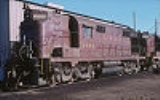
Lake Superior and Ishpeming Railroad

Encyclopedia
The Lake Superior and Ishpeming Railroad , a U.S. railroad offering service from Marquette, Michigan
, to nearby locations in Michigan's Upper Peninsula, began operations in 1896. The LS&I continues to operate as an independent railroad from its headquarters in Marquette.
, located west of Marquette, to docks
on Lake Superior
from which the ore could be shipped to steel mills on the lower Great Lakes
. The primary towns on the iron range are Ishpeming
and Negaunee, Michigan
.
In 1904, the railroad carried over 1.2 million tons of freight, and over 1.1 million tons of that was iron ore. It had 489 ore cars, 14 locomotives, and 121 employees.
In 1923 the LS&I Railway merged with the Munising, Marquette and Southeastern Railway, a short line running from Marquette 40 miles (64.4 km) east to Munising
to form the LS&I Railroad. The LS&I's new spur ran through a section of the Upper Peninsula thickly forested with pulpwood
, adding a second commodity to the LS&I's workload. The LS&I also operated a second spur from Marquette northwest to Big Bay
.
Passenger operations were never a major function of the Lake Superior and Ishpeming. In 1904 the railroad carried over 180,000 passenger miles of traffic, compared to over 24 million ton miles of freight. In 1931 two trains a day ran each way from Munising to Lawson, Marquette and Princeton. One train ran from Marquette to Big Bay and one on the East branch from Munising to Cusino. By 1940 the Munising-to-Princeton and Lawton-to-Marquette service had been reduced to one train a day each way, and Big Bay service was operating 3 times a week. This level of service lasted at least to 1950. By 1955 the only passenger service remaining was a single daily train from Munising to Princeton; Marquette and Big Bay were no longer served. All passenger service had been discontinued by the year 1960.
The Big Bay spur was sold in the 1960s, and Munising operations ended in the 1980s.
As of 2010, the Lake Superior & Ishpeming's primary remaining business continued to be the transport of iron ore over a 16 miles (25.7 km) short line from the Empire-Tilden Mine, operated by Cliffs Natural Resources, south of Ishpeming, to Lake Superior for transport.
Because of the location of the LS&I's Marquette docks, the railroad must cross the Dead River
. The trestle
is 565 feet (172.2 m) long and 104 feet (31.7 m) high.
AC4400CW
and four GE U30C
locomotives. The AC4400CWs, leased from CIT Group, typically operate unit iron ore trains and the U30Cs run in yard service at the Presque Isle yard in Marquette.
Marquette, Michigan
Marquette is a city in the U.S. state of Michigan and the county seat of Marquette County. The population was 21,355 at the 2010 census, making it the most populated city of the Upper Peninsula. Marquette is a major port on Lake Superior, primarily for shipping iron ore and is the home of Northern...
, to nearby locations in Michigan's Upper Peninsula, began operations in 1896. The LS&I continues to operate as an independent railroad from its headquarters in Marquette.
History
The Lake Superior and Ishpeming Railway was organized in 1893 as a subsidiary of Cliffs Natural Resources, the iron ore mining company. From the start, the railroad's primary business was the transport of iron ore from the Marquette Iron RangeMarquette Iron Range
The Marquette Iron Range is a deposit of iron ore located in Marquette County, Michigan, largely in and around the towns of Ishpeming and Negaunee. It is a smaller counterpart of Minnesota's Mesabi Range. The iron ore of the Marquette Range has been mined continuously from 1847 until the present...
, located west of Marquette, to docks
Ore dock
An ore dock is a large structure used for loading ore onto ships which then carry the ore to steelworks or to transshipment points. Most known ore docks were constructed near iron mines on the upper Great Lakes and served the lower Great Lakes. Ore docks still in existence are typically about ...
on Lake Superior
Lake Superior
Lake Superior is the largest of the five traditionally-demarcated Great Lakes of North America. It is bounded to the north by the Canadian province of Ontario and the U.S. state of Minnesota, and to the south by the U.S. states of Wisconsin and Michigan. It is the largest freshwater lake in the...
from which the ore could be shipped to steel mills on the lower Great Lakes
Great Lakes
The Great Lakes are a collection of freshwater lakes located in northeastern North America, on the Canada – United States border. Consisting of Lakes Superior, Michigan, Huron, Erie, and Ontario, they form the largest group of freshwater lakes on Earth by total surface, coming in second by volume...
. The primary towns on the iron range are Ishpeming
Ishpeming, Michigan
Ishpeming is a city in Marquette County in the Upper Peninsula of the U.S. state of Michigan. The population was 6,686 at the 2000 census. This is down from a higher population in the 1950s and 1960s when the economically supportive iron ore mines had a much higher employment level...
and Negaunee, Michigan
Negaunee, Michigan
Negaunee is a city in Marquette County in the U.S. state of Michigan. The population was 4,576 at the 2000 census. The city is located at the southwest corner of Negaunee Township. The city is home to the Michigan Iron Industry Museum...
.
In 1904, the railroad carried over 1.2 million tons of freight, and over 1.1 million tons of that was iron ore. It had 489 ore cars, 14 locomotives, and 121 employees.
In 1923 the LS&I Railway merged with the Munising, Marquette and Southeastern Railway, a short line running from Marquette 40 miles (64.4 km) east to Munising
Munising, Michigan
Munising is a city on the southern shore of Lake Superior on the Upper Peninsula of the U.S. state of Michigan. As of the 2000 census, the city population was 2,539. It is the county seat of Alger County...
to form the LS&I Railroad. The LS&I's new spur ran through a section of the Upper Peninsula thickly forested with pulpwood
Pulpwood
Pulpwood refers to timber with the principal use of making wood pulp for paper production.-Applications:* Trees raised specifically for pulp production account for 16% of world pulp production, old growth forests 9% and second- and third- and more generation forests account for the balance...
, adding a second commodity to the LS&I's workload. The LS&I also operated a second spur from Marquette northwest to Big Bay
Big Bay, Michigan
Big Bay is an unincorporated community in Marquette County of the U.S. state of Michigan. It is a census-designated place for statistical purposes and does not have any legal status as an incorporated municipality. As of the 2000 census, the CDP population was 265...
.
Passenger operations were never a major function of the Lake Superior and Ishpeming. In 1904 the railroad carried over 180,000 passenger miles of traffic, compared to over 24 million ton miles of freight. In 1931 two trains a day ran each way from Munising to Lawson, Marquette and Princeton. One train ran from Marquette to Big Bay and one on the East branch from Munising to Cusino. By 1940 the Munising-to-Princeton and Lawton-to-Marquette service had been reduced to one train a day each way, and Big Bay service was operating 3 times a week. This level of service lasted at least to 1950. By 1955 the only passenger service remaining was a single daily train from Munising to Princeton; Marquette and Big Bay were no longer served. All passenger service had been discontinued by the year 1960.
The Big Bay spur was sold in the 1960s, and Munising operations ended in the 1980s.
As of 2010, the Lake Superior & Ishpeming's primary remaining business continued to be the transport of iron ore over a 16 miles (25.7 km) short line from the Empire-Tilden Mine, operated by Cliffs Natural Resources, south of Ishpeming, to Lake Superior for transport.
Engineering
The Lake Superior & Ishpeming's historic main line operates on a relatively steep grade, called "The Hill", from Marquette to the iron mines. The steepest gradient is 1.63%.Because of the location of the LS&I's Marquette docks, the railroad must cross the Dead River
Dead River (Michigan)
The Dead River is a river in Marquette County, Michigan. Its watershed is approximately in size. The river flows southeasterly from western Marquette County to its mouth on Lake Superior....
. The trestle
Trestle
A trestle is a rigid frame used as a support, especially referring to a bridge composed of a number of short spans supported by such frames. In the context of trestle bridges, each supporting frame is generally referred to as a bent...
is 565 feet (172.2 m) long and 104 feet (31.7 m) high.
Fleet
The railroad presently operates a total of eight General ElectricGE Transportation Systems
GE Transportation, formerly known as GE Rail, is a division of General Electric. The organization manufactures equipment for the railroad, marine, mining, drilling and energy generation industries. It is based in Erie, Pennsylvania. Locomotives are assembled at the Erie plant, while engine...
AC4400CW
GE AC4400CW
The GE AC4400CW is a diesel-electric locomotive that was built by GE Transportation Systems between 1993 and 2004. It is similar to the Dash 9-44CW, but features AC traction motors instead of DC, with a separate inverter per motor. 2,598 examples of this locomotive were produced for North American...
and four GE U30C
GE U30C
The GE U30C was one of the earliest successes from General Electric in the diesel locomotive market. With 600 units sold, the U30C proved to be a choice for customers who weren't able to purchase SD40's or SD40-2's from EMD due to mass orders...
locomotives. The AC4400CWs, leased from CIT Group, typically operate unit iron ore trains and the U30Cs run in yard service at the Presque Isle yard in Marquette.