
All Topics  
Jules Ferry

 
Jules Ferry

   Email Print
   Bookmark   Link


Jules Ferry


Jules François Camille Ferry (5 April 1832 17 March 1893) was a French
France

France , officially the French Republic , is a country whose Metropolitan France is located in Western Europe and that also comprises various Overseas departments and territories of France....
 statesman, and ardent imperialist

Early life
Born in Saint-Dié
Saint-Dié-des-Vosges

Saint-Di?-des-Vosges, commonly referred to as Saint-Di?, is a communes of France of northeastern France.It is located in the Vosges departments of France, of which it is a Subprefectures in France....
, in the Vosges
Vosges

This article is about the department of France named Vosges. For the mountain range, see Vosges Mountains.Vosges is a France departments of France, named after the local Vosges Mountains....
 département, France
France

France , officially the French Republic , is a country whose Metropolitan France is located in Western Europe and that also comprises various Overseas departments and territories of France....
, he studied law
LAW

LAW may refer to:* Anti-tank warfare, e.g. the US Army M72 LAW or the British Army LAW 80*Palestinian Society for the Protection of Human Rights ...
, and was called to the bar at Paris
Paris

Paris is the Capital of France and the country's largest city. It is situated on the river Seine, in northern France, at the heart of the ?le-de-France Regions of France ....
, but soon went into politics
Politics

Politics is the process by which groups of people make decisions. The term is generally applied to behaviour within civil governments, but politics has been observed in all human group interactions, including corporation, academia, and religion institutions....
, contributing to various newspapers, particularly to Le Temps
Le Temps (Paris)

Le Temps , published from April 25, 1861, to November 30, 1942, was one of Paris's most important daily newspapers.Founded in 1861 by Edmund Chojecki and Auguste Nefftzer, Le Temps was under Nefftzer's direction for ten years, when Adrien H?brard took his place....
. He attacked the Second French Empire
Second French Empire

The Second French Empire or Second Empire was the Imperial Bonapartist regime of Napoleon III from 1852 to 1870, between the French Second Republic and the French Third Republic, in France....
 with great violence, directing his opposition especially against Baron Haussmann
Baron Haussmann

Georges-Eug?ne Haussmann , who called himself Baron Haussmann, was a France civic planner whose name is associated with the Haussmann's renovation of Paris....
, prefect of the Seine
Seine (département)

Seine was a d?partement in France of France encompassing Paris and its immediate suburbs. Its pr?fecture was Paris and its official number was 75....
 département.


Discussion
Ask a question about 'Jules Ferry'
Start a new discussion about 'Jules Ferry'
Answer questions from other users
Full Discussion Forum


Encyclopedia


Jules François Camille Ferry (5 April 1832 17 March 1893) was a French
France

France , officially the French Republic , is a country whose Metropolitan France is located in Western Europe and that also comprises various Overseas departments and territories of France....
 statesman, and ardent imperialist

Early life


Born in Saint-Dié
Saint-Dié-des-Vosges

Saint-Di?-des-Vosges, commonly referred to as Saint-Di?, is a communes of France of northeastern France.It is located in the Vosges departments of France, of which it is a Subprefectures in France....
, in the Vosges
Vosges

This article is about the department of France named Vosges. For the mountain range, see Vosges Mountains.Vosges is a France departments of France, named after the local Vosges Mountains....
 département, France
France

France , officially the French Republic , is a country whose Metropolitan France is located in Western Europe and that also comprises various Overseas departments and territories of France....
, he studied law
LAW

LAW may refer to:* Anti-tank warfare, e.g. the US Army M72 LAW or the British Army LAW 80*Palestinian Society for the Protection of Human Rights ...
, and was called to the bar at Paris
Paris

Paris is the Capital of France and the country's largest city. It is situated on the river Seine, in northern France, at the heart of the ?le-de-France Regions of France ....
, but soon went into politics
Politics

Politics is the process by which groups of people make decisions. The term is generally applied to behaviour within civil governments, but politics has been observed in all human group interactions, including corporation, academia, and religion institutions....
, contributing to various newspapers, particularly to Le Temps
Le Temps (Paris)

Le Temps , published from April 25, 1861, to November 30, 1942, was one of Paris's most important daily newspapers.Founded in 1861 by Edmund Chojecki and Auguste Nefftzer, Le Temps was under Nefftzer's direction for ten years, when Adrien H?brard took his place....
. He attacked the Second French Empire
Second French Empire

The Second French Empire or Second Empire was the Imperial Bonapartist regime of Napoleon III from 1852 to 1870, between the French Second Republic and the French Third Republic, in France....
 with great violence, directing his opposition especially against Baron Haussmann
Baron Haussmann

Georges-Eug?ne Haussmann , who called himself Baron Haussmann, was a France civic planner whose name is associated with the Haussmann's renovation of Paris....
, prefect of the Seine
Seine (département)

Seine was a d?partement in France of France encompassing Paris and its immediate suburbs. Its pr?fecture was Paris and its official number was 75....
 département. Elected republican deputy for Paris in 1869, he protested against the declaration of war with Germany
Franco-Prussian War

The Franco-Prussian War or Franco-German War, often referred to in France as the 1870 War was a conflict between Second French Empire and Kingdom of Prussia, while Prussia was backed by the North German Confederation, of which it was a member, and the South German states of Grand Duchy of Baden, History of W?rttemberg#The Kingdom...
, and on 6 September 1870 was appointed prefect of the Seine by the Government of National Defense
Government of National Defense

Le Gouvernement de la D?fense Nationale, or The Government of National Defence, was the first Government of the French Third Republic from September 4, 1870, to February 13, 1871, during the Franco-Prussian War, formed after the Emperor Napoleon III of France was captured by the Kingdom of Prussia army....
.

In this position he had the difficult task of administering Paris during the siege, and after the Paris Commune
Paris Commune

The Paris Commune was a government that briefly ruled Paris from March 28 to May 28, 1871. It existed before the split between Anarchism and Socialism, and is hailed by both as the first seizure of power by the working class....
 was obliged to resign (5 June 1871). From 1872 to 1873 he was sent by Adolphe Thiers
Adolphe Thiers

Louis-Adolphe was a France politician and historian. was a prime minister under King Louis-Philippe of France. Following the overthrow of the Second French Empire he again came to prominence as the French leader who suppressed the revolutionary Paris Commune of 1871....
 as minister to Athens, but returned to the chamber as deputy for the Vosges, and became one of the leaders of the republican party. When the first republican ministry was formed under WH Waddington
William Henry Waddington

William Henry Waddington was a France statesman who was Prime Minister of France in 1879....
 on 4 February 1879, he was one of its members, and continued in the ministry until 30 March 1885, except for two short interruptions (from 10 November 1881 to 30 January 1882, and from 29 July 1882 to 21 February 1883), first as minister of education and then as minister of foreign affairs. A leader of the Opportunist Republicans
Opportunist Republicans

The Opportunist Republicans was a term given to a fraction of the French Left who considered, after the proclamation of the Third Republic in 1870, that the regime could only be consolidated by successive phases....
 faction, he was twice premier (1880-1881 and 1883-1885).

Major works

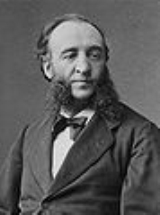
Jules Ferry Nadar
Two important works are associated with his administration, the non-clerical organization of public education, and the beginning of the colonial expansion of France. Following the republican programme he proposed to destroy the influence of the clergy in the university and found his own system of republican schooling. He reorganized the committee of public education (law of 27 February 1880), and proposed a regulation for the conferring of university degrees, which, though rejected, aroused violent polemics because the 7th article took away from the unauthorized religious orders the right to teach. He finally succeeded in passing his eponymous laws
Jules Ferry laws

The Jules Ferry laws are a set of French laws, which established first free education then mandatory and laicit? education . Proposed by the Minister of Public Instruction Jules Ferry, they were a crucial step in the grounding of the French Third Republic , dominated until the 16 May 1877 crisis by the Catholic Legitimists who dreamed of a...
 of 16 June 1881 and 28 March 1882, which made primary education in France
Education in France

The French educational system is highly centralized, organised, and ramified. It is divided into three different stages:* primary education ;...
 free
Free education

Free education is education that is provided at no cost to students. Although primary school and other comprehensive school or compulsory education is free in many countries, the Nordic countries are all examples of countries where education is mostly free all the way up , including post-graduate studies....
, non-clerical
Secular education

Secular education is a term that refers to the system of public education in countries with a secular government or separation of church and state between religion and state....
 (laïque
Laïcité

In French language, la?cit? is a France concept of a secular society, connoting the absence of religious involvement in government affairs as well as absence of government involvement in religious affairs ....
) and mandatory. In higher education, the number of professors, called the "hussards noirs de la République" ("Republic's black hussars") because of their Republican support, doubled under his ministry .

The education policies establishing French language
Language policy in France

France has one official language, the French language. The French government does not regulate the choice of language in publications by individuals but the use of French is required by law in commercial and workplace communications....
 as the language of the Republic have been contested in the second half of the 20th century insofar as, if they played an important role in unifying the French nation-state
Nation-state

The nation-state is a certain form of state that derives its legitimacy from serving as a Sovereignty entity for a nation as a sovereign territorial unit....
 and the Third Republic, they also nearly provoked the extinction of several regional languages .

After the military defeat of France by Germany
Franco-Prussian War

The Franco-Prussian War or Franco-German War, often referred to in France as the 1870 War was a conflict between Second French Empire and Kingdom of Prussia, while Prussia was backed by the North German Confederation, of which it was a member, and the South German states of Grand Duchy of Baden, History of W?rttemberg#The Kingdom...
 in 1870, Ferry formed the idea of acquiring a great colonial empire, principally for the sake of economic exploitation. In a before the Chamber of Deputies on 28 July 1885, he declared that "the superior races have a right because they have a duty: it is their duty to civilize the inferior races." Ferry directed the negotiations which led to the establishment of a French protectorate
Protectorate

A protectorate, in international law, is an autonomous territory that is protected diplomatically or militarily against third parties by a stronger state or entity, in exchange for which the protectorate usually accepts specified obligations, which may vary greatly, depending on the real nature of their relationship....
 in Tunis
Tunis

Tunis is the Capital of the Tunisian Republic and also the Tunis Governorate, with a population of 1 200,000 in 2008 and over 3,980,500 in the municipal area....
 (1881), prepared the treaty of 17 December 1885 for the occupation of Madagascar
Madagascar

Madagascar, or Republic of Madagascar , is an island nation in the Indian Ocean off the southeastern coast of Africa. The main island, also called Madagascar, is the List of islands by area, and is home to 5% of the world's plant and animal species, of which more than 80% are Endemism to Madagascar....
; directed the exploration of the Congo
Congo River

The Congo River is the largest river in Western Central Africa. Its overall length of 4,700 km makes it the second longest in Africa ....
 and of the Niger
Niger

Niger , officially the Republic of Niger, is a landlocked country in Western Africa, named after the Niger River. It borders Nigeria and Benin to the south, Burkina Faso and Mali to the west, Algeria and Libya to the north and Chad to the east....
 region; and above all, he organized the conquest of Annam
Annam (French Colony)

Annam was a France protectorate encompassing the central region of Vietnam. The word is Chinese for "pacified south." In colonial times, Vietnamese called Annam Trung K? ....
 and Tonkin
Tonkin

Tonkin , also spelled Tongkin, Tonquin or Tongking, is the northernmost part of Vietnam, south of China's Yunnan and Guangxi Provinces, east of northern Laos, and west of the Gulf of Tonkin....
 in what became Indochina
French Indochina

French Indochina was the part of the French colonial empire in Indochina in southeast Asia. A federation of the three Vietnamese regions, Tonkin, Annam, and Cochinchina, as well as Cambodia, was formed in 1887....
.

The last endeavor led to a war with Imperial China
Late Imperial China

Late Imperial China refers to the period between the end of Mongol rule in 1368 and the establishment of the Republic of China in 1912 and includes the Ming Dynasty and Qing Dynasty Dynasties....
, whose Qing dynasty
Qing Dynasty

The Qing Dynasty , also known as the Manchu Dynasty, followed the Ming Dynasty in History of China, and was the last ruling Chinese Dynasties of China, ruling from 1644 to 1912 ....
 had a claim of suzerainty over the two provinces. The excitement caused in Paris by the sudden retreat of the French troops from Lang Son
Lang Son

L?ng Son , a city in far northern Vietnam, is the capital of Lang Son Province. It is accessible by road and rail from Hanoi, the Vietnamese capital, and it is the northernmost point on National Road 1A ....
 during this war led to the Tonkin Affair
Tonkin Affair

The Tonkin Affair of March 1885 was a major French political crisis that erupted in the closing weeks of the Sino-French War. It effectively destroyed the political career of the French prime minister Jules Ferry, and abruptly ended the string of Opportunist Republicans inaugurated several years earlier by Leon Gambetta....
: his violent denunciation by Clemenceau
Georges Clemenceau

Georges Benjamin Clemenceau was a French statesman, physician, and journalist. He served as the List of Prime Ministers of France from 1906-1909 and 1917-1920....
 and other radicals, and his downfall on 30 March 1885. Although the treaty of peace with China (9 June 1885), in which the Qing Dynasty ceded suzerainty of Annam and Tonkin to France, was the work of his ministry, he would never again serve as premier.

The key to understanding Ferry's unique position in Third Republic history is that until his political critic, Georges Clemenceau
Georges Clemenceau

Georges Benjamin Clemenceau was a French statesman, physician, and journalist. He served as the List of Prime Ministers of France from 1906-1909 and 1917-1920....
 became Prime Minister twice in the 20th Century Ferry has the longest tenure as Prime Minister under that regime. He also played with political dynamite that eventually destroyed his success. Ferry (like his 20th Century equivalent Joseph Caillaux
Joseph Caillaux

Joseph-Marie-Auguste Caillaux was a major French politician of the French Third Republic. The leader of the Radical Party , he favored a policy of conciliation with Germany during his premiership from 1911 to 1912, which led to the maintenance of the peace during the Second Moroccan Crisis of 1911....
) believed in not confronting Wilhelmine Germany by threats of a future war of revenge. Most French politicians in the middle and right saw it as a sacred duty to one day lead France again against Germany to reclaim Alsace-Lorraine
Alsace-Lorraine

Alsace-Lorraine was a territorial entity created by the German Empire in 1871 after the annexation of most of Alsace and the Moselle region of Lorraine in the Franco-Prussian War....
, and avenge the awful defeat of 1870. But Ferry realized that Germany was too powerful, and it made more sense to cooperate with Otto von Bismarck
Otto von Bismarck

Otto Eduard Leopold von Bismarck, Count of Bismarck-Sch?nhausen, Duke of Lauenburg, Prince of Bismarck, , was a Kingdom of Prussia and Germany statesman and aristocrat of the 19th century....
 and avoid trouble. A sensible policy - but hardly popular.

Bismarck was constantly nervous about the situation with France. Although he had despised the ineptness of the French under Napoleon III and the government of Adolphe Thiers
Adolphe Thiers

Louis-Adolphe was a France politician and historian. was a prime minister under King Louis-Philippe of France. Following the overthrow of the Second French Empire he again came to prominence as the French leader who suppressed the revolutionary Paris Commune of 1871....
 and Jules Favre
Jules Favre

Jules Claude Gabriel Favre was a French statesman. After the establishment of the Third Republic in September 1871, he became one of the leader of the Opportunist Republicans faction....
, he had not planned for all the demands he presented the French in 1870. He only wished to temporarily cripple France by the billion franc reparation, but suddenly he was confronted by the demands of Marshals Albrecht von Roon and Helmut von Moltke (backed by Emperor Wilhelm I) to annex the two French provinces as further payment. Bismarck, for all his abilities regarding manipulating events, could not afford to anger the Prussian military. He got the two provinces, but he realized it would eventually have severe future reprecussions.

Bismarck was able to ignore the French for most of the 1870s and early 1880s, but as he found problems with his three erstwhile allies (Austria, Russia, and Italy) he realized France might one day take advantage of this (as it did with Russia in 1894). When Ferry came up with a radically different approach to the situation and offered an olive branch Bismarck reciprocated. A Franco-German friendship would alleviate problems of siding with either Austria or Russia, or Austria and Italy. Bismarck approved of the colonial expansion that France pursued under Ferry. He only had some problems with local German imperialists who were critical that Germany lacked colonies, so he found a few in the 1880s, making certain he did not confront French interests. But he also suggested Franco-German cooperation on the imperial front against the British Empire, thus hoping to create a wedge between the two Western European great powers. It did as a result, leading to a major race for influence across Africa that nearly culminated in war in the next decade, at Fashoda in the Sudan
Sudan

Sudan is a country in northeastern Africa. It is the largest in the African continent and the Arab World, and List of countries and outlying territories by total area by area....
 in 1898. But by then both Bismarck and Ferry were dead, and the rapproachment policy died when Ferry lost office. As for Fashoda, while it was a confrontation, it led to Britain and France eventually discussing their rival colonial goals, and agreeing to support each other's sphere of influence - the first step to the Entente Cordiale
Entente Cordiale

The Entente cordiale is a series of agreements signed on 8 April 1904 between the United Kingdom of Great Britain and Ireland and French Third Republic....
 between the countries in 1904.

He still remained an influential member of the moderate republican party, and directed the opposition to General Boulanger. After the resignation of Jules Grévy
Jules Grévy

Fran?ois Paul Jules Gr?vy was a President of the France French Third Republic and one of the leaders of the Opportunist Republicans faction. Given that his predecessors where monarchists who tried without success to restore the French monarchy, Gr?vy is seen as the first real republican President of France....
 (2 December 1887), he was a candidate for the presidency of the republic, but the radicals refused to support him, and he withdrew in favour of Sadi Carnot
Marie François Sadi Carnot

Marie Fran?ois Sadi Carnot was a France statesman, the fourth president of the Third French Republic. He served as the President of France from 1887 until his assassination in 1894....
.

Assassination in a major democracy is not an American only phenomemon. France has had assassinations even before it had it's First Republic. In the Third Republic there were quite a number, the most notably being two Presidents (Marie Francois Sadi Carnot
Marie François Sadi Carnot

Marie Fran?ois Sadi Carnot was a France statesman, the fourth president of the Third French Republic. He served as the President of France from 1887 until his assassination in 1894....
 and Paul Doumer
Paul Doumer

Joseph Athanase Paul Doumer, commonly known as Paul Doumer was the President of France from 13 June 1931 until his assassination.Born in Aurillac, in the Cantal d?partement, in France....
), Jean Jaures
Jean Jaurès

Jean L?on Jaur?s was a French Socialism leader. Initially an Opportunist Republican, he evolved into one of the first Social Democracy, becoming the leader, in 1902, of the French Socialist Party , which opposed Jules Guesde's revolutionary Socialist Party of France....
, and Louis Barthou
Louis Barthou

Jean Louis Barthou was a France politician of the French Third Republic....
, not to mention the murder of Gaston Calmette
Gaston Calmette

Gaston Calmette was a France journalist.In January 1914 Calmette, who had been editor of the newspaper Le Figaro since 1902, launched a campaign against Minister of Finance Joseph Caillaux, who had introduced progressive taxation and was known for his pacifist stance towards Germany....
 by the wife of Joseph Caillaux
Joseph Caillaux

Joseph-Marie-Auguste Caillaux was a major French politician of the French Third Republic. The leader of the Radical Party , he favored a policy of conciliation with Germany during his premiership from 1911 to 1912, which led to the maintenance of the peace during the Second Moroccan Crisis of 1911....
, and the attempt to shoot Georges Clemenceau
Georges Clemenceau

Georges Benjamin Clemenceau was a French statesman, physician, and journalist. He served as the List of Prime Ministers of France from 1906-1909 and 1917-1920....
 in 1918. You can add the death of Jules Ferry, who was shot by a religious madman, and died on 17 March 1893 from his wound. The Chamber of Deputies
Chamber of Deputies

Chamber of deputies is the name given to a legislative body such as the lower house of a bicameral legislature, or can refer to a unicameral legislature....
 voted him a state funeral.

Ferry's 1st Ministry, 23 September 1880 - 14 November 1881

  • Jules Ferry - President of the Council
    List of Prime Ministers of France

    Early Modern France...
     and Minister of Public Instruction and Fine Arts
    List of Education Ministers of France

    This page is a list of Minister of National Education .A governmental position overseeing public education was first created in France in 1802....
  • Jules Barthélemy-Saint-Hilaire
    Jules Barthélemy-Saint-Hilaire

    Jules Barth?lemy-Saint-Hilaire was a French people philosopher, journalist, statesman, and possible illegitimate son of Napoleon I of France....
     - Minister of Foreign Affairs
  • Jean Joseph Frédéric Adolphe Farre - Minister of War
  • Ernest Constans - Minister of the Interior
    List of Interior Ministers of France

    This page is a list of Minister of the Interior ....
     and Worship
  • Pierre Magnin - Minister of Finance
    List of Finance Ministers of France

    This page is a list of Minister of the Economy, Finance and Industry , including the equivalent positions of Superintendent of Finances and Controller-General of Finances during the ancien r?gime....
  • Jules Cazot - Minister of Justice
    List of Justice Ministers of France

    File:Guillaume_Jouvenel_des_Ursins.jpgThis page is a list of Minister of Justice .Under the ancien r?gime, the French minister responsible for the judiciary was the Chancellor of France....
  • Georges Charles Cloué - Minister of Marine and Colonies
    List of Naval Ministers of France

    One of France's Secretaries of State under the ancien r?gime was entrusted with control of the French Navy...
  • Sadi Carnot
    Marie François Sadi Carnot

    Marie Fran?ois Sadi Carnot was a France statesman, the fourth president of the Third French Republic. He served as the President of France from 1887 until his assassination in 1894....
     - Minister of Public Works
  • Adolphe Cochery - Minister of Posts and Telegraphs
  • Pierre Tirard
    Pierre Tirard

    Pierre Emmanuel Tirard was a France politician.He was born to French parents in Geneva, Switzerland. After studying in his native town, Tirard became a civil engineer....
     - Minister of Agriculture and Commerce


Ferry's 2nd Ministry, 21 February 1883 - 6 April 1885

  • Jules Ferry - President of the Council and Minister of Public Instruction and Fine Arts
  • Paul-Armand Challemel-Lacour
    Paul-Armand Challemel-Lacour

    Paul-Armand Challemel-Lacour was a French statesman....
     - Minister of Foreign Affairs
  • Jean Thibaudin - Minister of War
  • Pierre Waldeck-Rousseau - Minister of the Interior
  • Pierre Tirard
    Pierre Tirard

    Pierre Emmanuel Tirard was a France politician.He was born to French parents in Geneva, Switzerland. After studying in his native town, Tirard became a civil engineer....
     - Minister of Finance
  • Félix Martin-Feuilléee - Minister of Justice and Worship
  • Charles Brun
    Charles Brun (France)

    Charles Brun was a 1st class engineer of the French Navy stationed at Rochefort, France.He was famously involved in building the submarine Plongeur, which had been designed by Simon Bourgeois, in 1862....
     - Minister of Marine and Colonies
  • Jules Méline
    Jules Méline

    F?lix Jules M?line was a France statesman, prime minister from 1896 to 1898.M?line was born at Remiremont. Having taken up law as his profession, he was chosen a deputy in 1872, and in 1879 he was for a short time under-secretary to the minister of the interior....
     - Minister of Agriculture
  • David Raynal - Minister of Public Works
  • Adolphe Cochery - Minister of Posts and Telegraphs
  • Anne Charles Hérisson - Minister of Commerce


Changes
  • 9 August 1883 - Alexandre Louis François Peyron succeeds Charles Brun as Minister of Marine and Colonies
  • 9 October 1883 - Jean-Baptiste Campenon succeeds Thibaudin as Minister of War.
  • 20 November 1883 - Jules Ferry succeeds Challemel-Lacour as Minister of Foreign Affairs. Armand Fallières
    Armand Fallières

    Cl?ment Armand Falli?res was a France politician, President of France from 1906 to 1913.He was born at M?zin in the d?partement in France of Lot-et-Garonne, France, where his father was clerk of the peace....
     succeeds Ferry as Minister of Public Instruction and Fine Arts.
  • 14 October 1884 - Maurice Rouvier
    Maurice Rouvier

    Maurice Rouvier was a France statesman.He was born in Aix-en-Provence, and spent his early career in business at Marseille. He supported L?on Gambetta's candidature there in 1867, and in 1870 he founded an anti-imperial journal, L'Egalit?....
     succeeds Hérisson as Minister of Commerce
  • 3 January 1885 - Jules Louis Lewal succeeds Campenon as Minister of War.


See also

  • Jules Ferry laws
    Jules Ferry laws

    The Jules Ferry laws are a set of French laws, which established first free education then mandatory and laicit? education . Proposed by the Minister of Public Instruction Jules Ferry, they were a crucial step in the grounding of the French Third Republic , dominated until the 16 May 1877 crisis by the Catholic Legitimists who dreamed of a...
  • Opportunist Republicans
    Opportunist Republicans

    The Opportunist Republicans was a term given to a fraction of the French Left who considered, after the proclamation of the Third Republic in 1870, that the regime could only be consolidated by successive phases....
  • Vergonha
    Vergonha

    La vergonha is what some Occitans call the effects of various policies of the Government of France on its citizens whose mother tongue was one of so-called patois and in particular langue d'oc....