
Home      Discussion      Topics      Dictionary      Almanac
Signup       Login
Johnson-Corey-Chaykovsky reaction

Johnson-Corey-Chaykovsky reaction

Overview
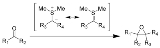
The Johnson–Corey–Chaykovsky reaction (sometimes referred to as the Corey–Chaykovsky reaction or CCR) is a chemical reaction
Chemical reaction
A chemical reaction is a process that leads to the transformation of one set of chemical substances to another. Chemical reactions can be either spontaneous, requiring no input of energy, or non-spontaneous, typically following the input of some type of energy, such as heat, light or electricity...

 used in organic chemistry
Organic chemistry
Organic chemistry is a subdiscipline within chemistry involving the scientific study of the structure, properties, composition, reactions, and preparation of carbon-based compounds, hydrocarbons, and their derivatives...

 for the synthesis of epoxide
Epoxide
An epoxide is a cyclic ether with three ring atoms. This ring approximately defines an equilateral triangle, which makes it highly strained. The strained ring makes epoxides more reactive than other ethers. Simple epoxides are named from the parent compound ethylene oxide or oxirane, such as in...

s, aziridine
Aziridine
Aziridines are organic compounds containing the aziridine functional group, a three-membered heterocycle with one amine group and two methylene groups...

s, and cyclopropane
Cyclopropane
Cyclopropane is a cycloalkane molecule with the molecular formula C3H6, consisting of three carbon atoms linked to each other to form a ring, with each carbon atom bearing two hydrogen atoms...

s. It was discovered in 1961 by A. William Johnson and developed significantly by E.J. Corey and Michael Chaykovsky. The reaction involves addition of a sulfur ylide
Ylide
An ylide or ylid is a neutral dipolar molecule containing a formally negatively charged atom directly attached to a hetero atom with a formal positive charge , and in which both atoms have full octets of electrons. Ylides are thus 1,2-dipolar compounds...

 to a ketone
Ketone
In organic chemistry, a ketone is an organic compound with the structure RCR', where R and R' can be a variety of atoms and groups of atoms. It features a carbonyl group bonded to two other carbon atoms. Many ketones are known and many are of great importance in industry and in biology...

, aldehyde
Aldehyde
An aldehyde is an organic compound containing a formyl group. This functional group, with the structure R-CHO, consists of a carbonyl center bonded to hydrogen and an R group....

, imine
Imine
An imine is a functional group or chemical compound containing a carbon–nitrogen double bond, with the nitrogen attached to a hydrogen atom or an organic group. If this group is not a hydrogen atom, then the compound is known as a Schiff base...

, or enone
Enone
An enone is an unsaturated chemical compound or functional group consisting of a conjugated system of an alkene and a ketone. The simplest enone is methyl vinyl ketone or CH2=CHCOCH3....

 to produce the corresponding 3-membered ring. The reaction is diastereoselective favoring trans substitution in the product regardless of the initial stereochemistry
Stereochemistry
Stereochemistry, a subdiscipline of chemistry, involves the study of the relative spatial arrangement of atoms within molecules. An important branch of stereochemistry is the study of chiral molecules....

. The synthesis of epoxide
Epoxide
An epoxide is a cyclic ether with three ring atoms. This ring approximately defines an equilateral triangle, which makes it highly strained. The strained ring makes epoxides more reactive than other ethers. Simple epoxides are named from the parent compound ethylene oxide or oxirane, such as in...

s via this method serves as an important retrosynthetic
Retrosynthetic analysis
Retrosynthetic analysis is a technique for solving problems in the planning of organic syntheses. This is achieved by transforming a target molecule into simpler precursor structures without assumptions regarding starting materials. Each precursor material is examined using the same method. This...

 alternative to the traditional epoxidation reactions of olefins.
Discussion
Ask a question about 'Johnson-Corey-Chaykovsky reaction'
Start a new discussion about 'Johnson-Corey-Chaykovsky reaction'
Answer questions from other users
Full Discussion Forum
 
Recent Discussions
Encyclopedia
The Johnson–Corey–Chaykovsky reaction (sometimes referred to as the Corey–Chaykovsky reaction or CCR) is a chemical reaction
Chemical reaction
A chemical reaction is a process that leads to the transformation of one set of chemical substances to another. Chemical reactions can be either spontaneous, requiring no input of energy, or non-spontaneous, typically following the input of some type of energy, such as heat, light or electricity...

 used in organic chemistry
Organic chemistry
Organic chemistry is a subdiscipline within chemistry involving the scientific study of the structure, properties, composition, reactions, and preparation of carbon-based compounds, hydrocarbons, and their derivatives...

 for the synthesis of epoxide
Epoxide
An epoxide is a cyclic ether with three ring atoms. This ring approximately defines an equilateral triangle, which makes it highly strained. The strained ring makes epoxides more reactive than other ethers. Simple epoxides are named from the parent compound ethylene oxide or oxirane, such as in...

s, aziridine
Aziridine
Aziridines are organic compounds containing the aziridine functional group, a three-membered heterocycle with one amine group and two methylene groups...

s, and cyclopropane
Cyclopropane
Cyclopropane is a cycloalkane molecule with the molecular formula C3H6, consisting of three carbon atoms linked to each other to form a ring, with each carbon atom bearing two hydrogen atoms...

s. It was discovered in 1961 by A. William Johnson and developed significantly by E.J. Corey and Michael Chaykovsky. The reaction involves addition of a sulfur ylide
Ylide
An ylide or ylid is a neutral dipolar molecule containing a formally negatively charged atom directly attached to a hetero atom with a formal positive charge , and in which both atoms have full octets of electrons. Ylides are thus 1,2-dipolar compounds...

 to a ketone
Ketone
In organic chemistry, a ketone is an organic compound with the structure RCR', where R and R' can be a variety of atoms and groups of atoms. It features a carbonyl group bonded to two other carbon atoms. Many ketones are known and many are of great importance in industry and in biology...

, aldehyde
Aldehyde
An aldehyde is an organic compound containing a formyl group. This functional group, with the structure R-CHO, consists of a carbonyl center bonded to hydrogen and an R group....

, imine
Imine
An imine is a functional group or chemical compound containing a carbon–nitrogen double bond, with the nitrogen attached to a hydrogen atom or an organic group. If this group is not a hydrogen atom, then the compound is known as a Schiff base...

, or enone
Enone
An enone is an unsaturated chemical compound or functional group consisting of a conjugated system of an alkene and a ketone. The simplest enone is methyl vinyl ketone or CH2=CHCOCH3....

 to produce the corresponding 3-membered ring. The reaction is diastereoselective favoring trans substitution in the product regardless of the initial stereochemistry
Stereochemistry
Stereochemistry, a subdiscipline of chemistry, involves the study of the relative spatial arrangement of atoms within molecules. An important branch of stereochemistry is the study of chiral molecules....

. The synthesis of epoxide
Epoxide
An epoxide is a cyclic ether with three ring atoms. This ring approximately defines an equilateral triangle, which makes it highly strained. The strained ring makes epoxides more reactive than other ethers. Simple epoxides are named from the parent compound ethylene oxide or oxirane, such as in...

s via this method serves as an important retrosynthetic
Retrosynthetic analysis
Retrosynthetic analysis is a technique for solving problems in the planning of organic syntheses. This is achieved by transforming a target molecule into simpler precursor structures without assumptions regarding starting materials. Each precursor material is examined using the same method. This...

 alternative to the traditional epoxidation reactions of olefins.
The reaction is most often employed for epoxidation via methylene transfer, and to this end has been used in several notable total syntheses (See Synthesis of epoxides below). Additionally detailed below are the history, mechanism, scope, and enantioselective variants of the reaction. Several reviews have been published.

History


The original publication by Johnson concerned the reaction of 9-dimethylsulfonium fluorenylide with substituted benzaldehyde
Benzaldehyde
Benzaldehyde is an organic compound consisting of a benzene ring with a formyl substituent. It is the simplest aromatic aldehyde and one of the most industrially useful. This colorless liquid has a characteristic pleasant almond-like odor...

 derivatives. The attempted Wittig-like reaction
Wittig reaction
The Wittig reaction is a chemical reaction of an aldehyde or ketone with a triphenyl phosphonium ylide to give an alkene and triphenylphosphine oxide....

 failed and a benzalfluorene oxide was obtained instead, noting that "Reaction between the sulfur ylid and benzaldehydes did not afford benzalfluorenes as had the phosphorus and arsenic ylids."

The subsequent development of dimethyloxosulfonium methylide, (CH3)2SOCH2 and dimethylsulfonium methylide, (CH3)2SCH2 (known as Corey–Chaykovsky reagents) by Corey and Chaykovsky as efficient methylene
Methylene
Methylene is a chemical species in which a carbon atom is bonded to two hydrogen atoms. Three different possibilities present themselves:* the -CH2- substituent group: e.g., dichloromethane ....

-transfer reagents established the reaction as a part of the organic canon.

Mechanism


The reaction mechanism
Reaction mechanism
In chemistry, a reaction mechanism is the step by step sequence of elementary reactions by which overall chemical change occurs.Although only the net chemical change is directly observable for most chemical reactions, experiments can often be designed that suggest the possible sequence of steps in...

 for the Johnson–Corey–Chaykovsky reaction consists of nucleophilic addition
Nucleophilic addition
In organic chemistry, a nucleophilic addition reaction is an addition reaction where in a chemical compound a π bond is removed by the creation of two new covalent bonds by the addition of a nucleophile....

 of the ylide
Ylide
An ylide or ylid is a neutral dipolar molecule containing a formally negatively charged atom directly attached to a hetero atom with a formal positive charge , and in which both atoms have full octets of electrons. Ylides are thus 1,2-dipolar compounds...

 to the carbonyl
Carbonyl
In organic chemistry, a carbonyl group is a functional group composed of a carbon atom double-bonded to an oxygen atom: C=O. It is common to several classes of organic compounds, as part of many larger functional groups....

 or imine
Imine
An imine is a functional group or chemical compound containing a carbon–nitrogen double bond, with the nitrogen attached to a hydrogen atom or an organic group. If this group is not a hydrogen atom, then the compound is known as a Schiff base...

 group. A negative charge is transferred to the heteroatom
Heteroatom
In organic chemistry, a heteroatom is any atom that is not carbon or hydrogen. Usually, the term is used to indicate that non-carbon atoms have replaced carbon in the backbone of the molecular structure...

 and because the sulfonium
Sulfonium
A sulfonium ion, also known as sulphonium ion or sulfanium ion, is a positively charged ion featuring three organic substituents attached to sulfur. They have the formula [SR3]+...

 cation is a good leaving group
Leaving group
In chemistry, a leaving group is a molecular fragment that departs with a pair of electrons in heterolytic bond cleavage. Leaving groups can be anions or neutral molecules. Common anionic leaving groups are halides such as Cl−, Br−, and I−, and sulfonate esters, such as para-toluenesulfonate...

 it gets expelled forming the ring. In the related Wittig reaction
Wittig reaction
The Wittig reaction is a chemical reaction of an aldehyde or ketone with a triphenyl phosphonium ylide to give an alkene and triphenylphosphine oxide....

, the formation of the much stronger phosphorus
Phosphorus
Phosphorus is the chemical element that has the symbol P and atomic number 15. A multivalent nonmetal of the nitrogen group, phosphorus as a mineral is almost always present in its maximally oxidized state, as inorganic phosphate rocks...

-oxygen
Oxygen
Oxygen is the element with atomic number 8 and represented by the symbol O. Its name derives from the Greek roots ὀξύς and -γενής , because at the time of naming, it was mistakenly thought that all acids required oxygen in their composition...

 double bond
Double bond
A double bond in chemistry is a chemical bond between two chemical elements involving four bonding electrons instead of the usual two. The most common double bond, that between two carbon atoms, can be found in alkenes. Many types of double bonds between two different elements exist, for example in...

 prevents oxirane formation and instead, olefination takes place through a 4-membered cyclic intermediate.
The trans diastereoselectivity observed results from the reversibility of the initial addition, allowing equilibration to the favored anti betaine over the syn betaine. Initial addition of the ylide results in a betaine with adjacent charges; density functional theory
Density functional theory
Density functional theory is a quantum mechanical modelling method used in physics and chemistry to investigate the electronic structure of many-body systems, in particular atoms, molecules, and the condensed phases. With this theory, the properties of a many-electron system can be determined by...

 calculations have shown that the rate-limiting step is rotation of the central bond into the conformer necessary for backside attack
Nucleophilic addition
In organic chemistry, a nucleophilic addition reaction is an addition reaction where in a chemical compound a π bond is removed by the creation of two new covalent bonds by the addition of a nucleophile....

 on the sulfonium.
The degree of reversibility in the initial step (and therefore the diastereoselectivity) depends on four factors, with greater reversibility corresponding to higher selectivity:
  1. Stability of the substrate with higher stability leading to greater reversibility by favoring the starting material over the betaine.
  2. Stability of the ylide with higher stability similarly leading to greater reversibility.
  3. Steric hindrance in the betaine with greater hindrance leading to greater reversibility by disfavoring formation of the intermediate and slowing the rate-limiting rotation of the central bond.
  4. Solvation of charges in the betaine by counterion
    Counterion
    A counterion is the ion that accompanies an ionic species in order to maintain electric neutrality. In table salt the sodium cation is the counterion for the chlorine anion and vice versa.In a charged transition metal complex, a simple A counterion is the ion that accompanies an ionic species in...

    s such as lithium
    Lithium
    Lithium is a soft, silver-white metal that belongs to the alkali metal group of chemical elements. It is represented by the symbol Li, and it has the atomic number 3. Under standard conditions it is the lightest metal and the least dense solid element. Like all alkali metals, lithium is highly...

     with greater solvation allowing more facile rotation in the betaine intermediate, lowering the amount of reversibility.

Scope


The application of the Johnson–Corey–Chaykovsky reaction in organic synthesis is diverse. The reaction has come to encompass reactions of many types of sulfur ylides with electrophile
Electrophile
In general electrophiles are positively charged species that are attracted to an electron rich centre. In chemistry, an electrophile is a reagent attracted to electrons that participates in a chemical reaction by accepting an electron pair in order to bond to a nucleophile...

s well beyond the original publications. It has seen use in a number of high-profile total syntheses, as detailed below, and is generally recognized as a powerful transformative tool in the organic repertoire.

Types of ylides


Many types of ylides can be prepared with various functional groups both on the anionic carbon center and on the sulfur. The substitution pattern can influence the ease of preparation for the reagents (typically from the sulfonium halide, e.g. trimethylsulfonium iodide) and overall reaction rate in various ways. The general format for the reagent is shown on the right.

Use of a sulfoxonium allows more facile preparation of the reagent using weaker bases as compared to sulfonium ylides. (The difference being that a sulfoxonium contains a doubly bonded oxygen whereas the sulfonium does not.) The former react slower due to their increased stability. In addition, the dialkylsulfoxide
Dimethyl sulfoxide
Dimethyl sulfoxide is an organosulfur compound with the formula 2SO. This colorless liquid is an important polar aprotic solvent that dissolves both polar and nonpolar compounds and is miscible in a wide range of organic solvents as well as water...

 by-product
By-product
A by-product is a secondary product derived from a manufacturing process or chemical reaction. It is not the primary product or service being produced.A by-product can be useful and marketable or it can be considered waste....

s of sulfoxonium reagents are greatly preferred to the significantly more toxic, volatile, and odorous dialkylsulfide by-products from sulfonium reagents.

The vast majority of reagents have are monosubstituted at the ylide carbon (either R1 or R2 as hydrogen). Disubstituted reagents are much rarer but have been described:
  1. If the ylide carbon is substituted with an electron-withdrawing group (EWG), the reagent is referred to as a stablized ylide. These, similarly to sulfoxonium reagents, react much slower and are typically easier to prepare. These are limited in their usefulness as the reaction can become prohibitively sluggish: examples involving amide
    Amide
    In chemistry, an amide is an organic compound that contains the functional group consisting of a carbonyl group linked to a nitrogen atom . The term refers both to a class of compounds and a functional group within those compounds. The term amide also refers to deprotonated form of ammonia or an...

    s are widespread, with many fewer involving ester
    Ester
    Esters are chemical compounds derived by reacting an oxoacid with a hydroxyl compound such as an alcohol or phenol. Esters are usually derived from an inorganic acid or organic acid in which at least one -OH group is replaced by an -O-alkyl group, and most commonly from carboxylic acids and...

    s and virtually no examples involving other EWG's. For these, the related Darzens reaction
    Darzens reaction
    The Darzens reaction is the chemical reaction of a ketone or aldehyde with an α-haloester to form an α,β-epoxy ester, also called a "glycidic ester"...

     is typically more appropriate.
  2. If the ylide carbon is substituted with an aryl
    Aryl
    In the context of organic molecules, aryl refers to any functional group or substituent derived from an aromatic ring, be it phenyl, naphthyl, thienyl, indolyl, etc....

     or allyl
    Allyl
    An allyl group is a substituent with the structural formula H2C=CH-CH2R, where R is the connection to the rest of the molecule. It is made up of a methylene , attached to a vinyl group . The name is derived from the Latin word for garlic, Allium sativum. Theodor Wertheim isolated an allyl...

     group, the reagent is referred to as a semi-stablized ylide. These have been developed extensively, second only to the classical methylene reagents (R1=R2=H). The substitution pattern on aryl reagents can heavily influence the selectivity of the reaction as per the criteria above.
  3. If the ylide carbon is substituted with an alkyl group the reagent is referred to as an unstablized ylide. The size of the alkyl groups are the major factors in selectivity with these reagents.


The R-groups on the sulfur, though typically methyls, have been used to synthesize reagents that can perform enantioselective variants of the reaction (See Variations below). The size of the groups can also influence diastereoselectivity in alicyclic substrates.

Synthesis of epoxides


Reactions of sulfur ylides with ketone
Ketone
In organic chemistry, a ketone is an organic compound with the structure RCR', where R and R' can be a variety of atoms and groups of atoms. It features a carbonyl group bonded to two other carbon atoms. Many ketones are known and many are of great importance in industry and in biology...

s and aldehyde
Aldehyde
An aldehyde is an organic compound containing a formyl group. This functional group, with the structure R-CHO, consists of a carbonyl center bonded to hydrogen and an R group....

s to form epoxide
Epoxide
An epoxide is a cyclic ether with three ring atoms. This ring approximately defines an equilateral triangle, which makes it highly strained. The strained ring makes epoxides more reactive than other ethers. Simple epoxides are named from the parent compound ethylene oxide or oxirane, such as in...

s are by far the most common application of the Johnson–Corey–Chaykovsky reaction. Examples involving complex substrates and 'exotic' ylides have been reported, as shown below.
The reaction has been used in a number of notable total syntheses including the Danishefsky Taxol total synthesis
Danishefsky Taxol total synthesis
The Danishefsky Taxol total synthesis in organic chemistry is an important third Taxol synthesis published by the group of Samuel Danishefsky in 1996...

, which produces the chemotherapeutic
Chemotherapy
Chemotherapy is the treatment of cancer with an antineoplastic drug or with a combination of such drugs into a standardized treatment regimen....

 drug taxol, and the Kuehne Strychnine total synthesis which produces the pesticide strychnine
Strychnine
Strychnine is a highly toxic , colorless crystalline alkaloid used as a pesticide, particularly for killing small vertebrates such as birds and rodents. Strychnine causes muscular convulsions and eventually death through asphyxia or sheer exhaustion...

.

Synthesis of aziridines


The synthesis of aziridine
Aziridine
Aziridines are organic compounds containing the aziridine functional group, a three-membered heterocycle with one amine group and two methylene groups...

s from imine
Imine
An imine is a functional group or chemical compound containing a carbon–nitrogen double bond, with the nitrogen attached to a hydrogen atom or an organic group. If this group is not a hydrogen atom, then the compound is known as a Schiff base...

s is another important application of the Johnson–Corey–Chaykovsky reaction and provides an alternative to amine
Amine
Amines are organic compounds and functional groups that contain a basic nitrogen atom with a lone pair. Amines are derivatives of ammonia, wherein one or more hydrogen atoms have been replaced by a substituent such as an alkyl or aryl group. Important amines include amino acids, biogenic amines,...

 transfer from oxaziridine
Oxaziridine
An oxaziridine is an organic molecule that features a three-membered heterocycle containing oxygen, nitrogen, and carbon.-History:Oxaziridine derivatives were first synthesized in the mid 1950s by Emmons and subsequently by Krimm and Horner and Jürgens...

s. Though less widely applied, the reaction has a similar substrate scope and functional group
Functional group
In organic chemistry, functional groups are specific groups of atoms within molecules that are responsible for the characteristic chemical reactions of those molecules. The same functional group will undergo the same or similar chemical reaction regardless of the size of the molecule it is a part of...

 tolerance to the carbonyl equivalent. The examples shown below are representative; in the latter, an aziridine forms in situ and is opened via nucleophilic attack to form the corresponding amine
Amine
Amines are organic compounds and functional groups that contain a basic nitrogen atom with a lone pair. Amines are derivatives of ammonia, wherein one or more hydrogen atoms have been replaced by a substituent such as an alkyl or aryl group. Important amines include amino acids, biogenic amines,...

.

Synthesis of cyclopropanes


For addition of sulfur ylides to enones, higher 1,4-selectivity
Nucleophilic conjugate addition
Nucleophilic conjugate addition is a type of organic reaction. Ordinary nucleophilic additions or 1,2-nucleophilic additions deal mostly with additions to carbonyl compounds. Simple alkene compounds do not show 1,2 reactivity due to lack of polarity, unless the alkene is activated with special...

 is typically obtained with sulfoxonium reagents than with sulfonium reagents. Many electron-withdrawing groups have been shown compatible with the reaction including ketone
Ketone
In organic chemistry, a ketone is an organic compound with the structure RCR', where R and R' can be a variety of atoms and groups of atoms. It features a carbonyl group bonded to two other carbon atoms. Many ketones are known and many are of great importance in industry and in biology...

s, ester
Ester
Esters are chemical compounds derived by reacting an oxoacid with a hydroxyl compound such as an alcohol or phenol. Esters are usually derived from an inorganic acid or organic acid in which at least one -OH group is replaced by an -O-alkyl group, and most commonly from carboxylic acids and...

s, and amide
Amide
In chemistry, an amide is an organic compound that contains the functional group consisting of a carbonyl group linked to a nitrogen atom . The term refers both to a class of compounds and a functional group within those compounds. The term amide also refers to deprotonated form of ammonia or an...

s (the example below involves a Weinreb amide). With further conjugated systems 1,6-addition tends to predominate over 1,4-addition.

Other reactions


In addition to the reactions originally reported by Johnson, Corey, and Chaykovsky, sulfur ylides have been used for a number of related homologation reaction
Homologation reaction
A homologation reaction, also known as homologization, is any chemical reaction that converts the reactant into the next member of the homologous series. A Homologous series is a group of compounds that differ by a constant unit, generally a group. The reactants undergo a homologation when the...

s that tend to be grouped under the same name.
  • With epoxide
    Epoxide
    An epoxide is a cyclic ether with three ring atoms. This ring approximately defines an equilateral triangle, which makes it highly strained. The strained ring makes epoxides more reactive than other ethers. Simple epoxides are named from the parent compound ethylene oxide or oxirane, such as in...

    s and aziridine
    Aziridine
    Aziridines are organic compounds containing the aziridine functional group, a three-membered heterocycle with one amine group and two methylene groups...

    s the reaction serves as a ring-expansion to produce the corresponding oxetane
    Oxetane
    Oxetane, or 1,3-propylene oxide, is an heterocyclic organic compound with the molecular formula C3H6O, having a four-membered ring with three carbon atoms and one oxygen atom....

     or azetidine
    Azetidine
    Azetidine is a heterocyclic organic compound. It belongs to the class of four membered rings and it contains a nitrogen atom.-External links:* *...

    . The long reaction times required for these reactions prevent them from occurring as significant side reactions when synthesizing epoxides and aziridines.

  • Several cycloaddition
    Cycloaddition
    A cycloaddition is a pericyclic chemical reaction, in which "two or more unsaturated molecules combine with the formation of a cyclic adduct in which there is a net reduction of the bond multiplicity." The resulting reaction is a cyclization reaction.Cycloadditions are usually described by the...

    s wherein the ylide serves as a "nucleophilic carbenoid
    Carbene
    In chemistry, a carbene is a molecule containing a neutral carbon atom with a valence of two and two unshared valence electrons. The general formula is RR'C:, but the carbon can instead be double-bonded to one group. The term "carbene" may also merely refer to the compound H2C:, also called...

     equivalent" have been reported.

  • Living polymerization
    Living polymerization
    In polymer chemistry, living polymerization is a form of addition polymerization where the ability of a growing polymer chain to terminate has been removed. This can be accomplished in a variety of ways. Chain termination and chain transfer reactions are absent and the rate of chain initiation is...

    s using trialkylboranes
    Organoborane
    Organoborane or organoboron compounds are chemical compounds that are organic derivatives of BH3, for example trialkyl boranes. Organoboron chemistry or organoborane chemistry is the chemistry of these compounds...

     as the catalyst and dimethylsulfoxonium methylide as the monomer have been reported for the synthesis of various complex polymers.

Enantioselective variations


The development of an enantioselective (i.e. yielding an enantiomeric excess
Enantiomeric excess
The enantiomeric excess of a substance is a measure of how pure it is. In this case, the impurity is the undesired enantiomer .-Definition:...

, which is labelled as "ee") variant of the Johnson–Corey–Chaykovsky reaction remains an active area of academic research. The use of chiral
Chirality (chemistry)
A chiral molecule is a type of molecule that lacks an internal plane of symmetry and thus has a non-superimposable mirror image. The feature that is most often the cause of chirality in molecules is the presence of an asymmetric carbon atom....

 sulfides in a stoichiometric fashion has proved more successful than the corresponding catalytic variants, but the substrate scope is still limited in all cases. The catalytic variants have been developed almost exclusively for enantioselective purposes; typical organosulfide reagents are not prohibitively expensive and the racemic reactions can be carried out with equimolar amounts of ylide without raising costs significantly. Chiral sulfides, on the other hand, are more costly to prepare, spurring the advancement of catalytic enantioselective methods.

Stoichiometric reagents


The most successful reagents employed in a stoichiometric fashion are shown below. The first is a bicyclic oxathiane that has been employed in the synthesis of the β-adrenergic compound dichloroisoproterenol (DCI) but is limited by the availability of only one enantiomer of the reagent. The synthesis of the axial diastereomer is rationalized via the 1,3-anomeric effect
Anomeric effect
In organic chemistry, the anomeric effect or Edward-Lemieux effect is a stereoelectronic effect that describes the tendency of heteroatomic substituents adjacent to a heteroatom within a cyclohexane ring to prefer the axial orientation instead of the less hindered equatorial orientation that would...

 which reduces the nucleophilicity of the equatorial lone pair
Lone pair
In chemistry, a lone pair is a valence electron pair without bonding or sharing with other atoms. They are found in the outermost electron shell of an atom, so lone pairs are a subset of a molecule's valence electrons...

. The conformation
Conformational isomerism
In chemistry, conformational isomerism is a form of stereoisomerism in which the isomers can be interconverted exclusively by rotations about formally single bonds...

 of the ylide is limited by transannular strain and approach of the aldehyde is limited to one face of the ylide by steric interactions with the methyl substituents.
The other major reagent is a camphor
Camphor
Camphor is a waxy, white or transparent solid with a strong, aromatic odor. It is a terpenoid with the chemical formula C10H16O. It is found in wood of the camphor laurel , a large evergreen tree found in Asia and also of Dryobalanops aromatica, a giant of the Bornean forests...

-derived reagent developed by Varinder Aggarwal of the University of Bristol
University of Bristol
The University of Bristol is a public research university located in Bristol, United Kingdom. One of the so-called "red brick" universities, it received its Royal Charter in 1909, although its predecessor institution, University College, Bristol, had been in existence since 1876.The University is...

. Both enantiomer
Enantiomer
In chemistry, an enantiomer is one of two stereoisomers that are mirror images of each other that are non-superposable , much as one's left and right hands are the same except for opposite orientation. It can be clearly understood if you try to place your hands one over the other without...

s are easily synthesized, although the yields are lower than for the oxathiane reagent. The ylide conformation is determined by interaction with the bridgehead
Bicyclic molecule
A bicyclic molecule is a molecule that features two fused rings. Bicyclic molecules occur widely in organic and inorganic compounds.Fusion of the rings can occur in three ways:...

 hydrogens and approach of the aldehyde is blocked by the camphor moiety. The reaction employs a phosphazene
Phosphazene
Phosphazenes are a class of chemical compounds in which a phosphorus atom is covalently linked to a nitrogen atom by a double bond and to three other atoms or radicals by single bonds. While other substitutions produce relatively persistent compounds, in organic synthesis the term largely refers to...

 base to promote formation of the ylide.

Catalytic reagents


Catalytic reagents have been less successful, with most variations suffering from poor yield, poor enantioselectivity, or both. There are also issues with substrate scope, most having limitations with methylene
Methylene
Methylene is a chemical species in which a carbon atom is bonded to two hydrogen atoms. Three different possibilities present themselves:* the -CH2- substituent group: e.g., dichloromethane ....

 transfer and aliphatic aldehyde
Aldehyde
An aldehyde is an organic compound containing a formyl group. This functional group, with the structure R-CHO, consists of a carbonyl center bonded to hydrogen and an R group....

s. The trouble stems from the need for a nucleophilic sulfide that efficiently generates the ylide which can also act as a good leaving group
Leaving group
In chemistry, a leaving group is a molecular fragment that departs with a pair of electrons in heterolytic bond cleavage. Leaving groups can be anions or neutral molecules. Common anionic leaving groups are halides such as Cl−, Br−, and I−, and sulfonate esters, such as para-toluenesulfonate...

 to form the epoxide. Since the factors underlying these desiderata are at odds, tuning of the catalyst properties has proven difficult. Shown below are several of the most successful catalysts along with the yields and enantiomeric excess for their use in synthesis of (E)-stilbene oxide.
Aggarwal has developed an alternative method employing the same sulfide as above and a novel alkylation involving a rhodium
Rhodium
Rhodium is a chemical element that is a rare, silvery-white, hard and chemically inert transition metal and a member of the platinum group. It has the chemical symbol Rh and atomic number 45. It is composed of only one isotope, 103Rh. Naturally occurring rhodium is found as the free metal, alloyed...

 carbenoid
Transition metal carbene complex
A transition metal carbene complex is a organometallic compound featuring a divalent organic ligand. The divalent organic ligand coordinated to the metal center is called a carbene. Carbene complexes for almost all transition metals have been reported. Many methods for synthesizing them and...

 formed in situ
In situ
In situ is a Latin phrase which translated literally as 'In position'. It is used in many different contexts.-Aerospace:In the aerospace industry, equipment on board aircraft must be tested in situ, or in place, to confirm everything functions properly as a system. Individually, each piece may...

. The method too has limited substrate scope, failing for any electrophile
Electrophile
In general electrophiles are positively charged species that are attracted to an electron rich centre. In chemistry, an electrophile is a reagent attracted to electrons that participates in a chemical reaction by accepting an electron pair in order to bond to a nucleophile...

s possessing basic substituents due to competitive consumption
Reaction rate
The reaction rate or speed of reaction for a reactant or product in a particular reaction is intuitively defined as how fast or slow a reaction takes place...

 of the carbenoid.

See also


  • Darzens reaction
    Darzens reaction
    The Darzens reaction is the chemical reaction of a ketone or aldehyde with an α-haloester to form an α,β-epoxy ester, also called a "glycidic ester"...

  • Wittig reaction
    Wittig reaction
    The Wittig reaction is a chemical reaction of an aldehyde or ketone with a triphenyl phosphonium ylide to give an alkene and triphenylphosphine oxide....

  • Epoxidation
  • Ylide
    Ylide
    An ylide or ylid is a neutral dipolar molecule containing a formally negatively charged atom directly attached to a hetero atom with a formal positive charge , and in which both atoms have full octets of electrons. Ylides are thus 1,2-dipolar compounds...

  • E.J. Corey
  • Taxol total synthesis
    Taxol total synthesis
    Paclitaxel total synthesis in organic chemistry is a major ongoing research effort in the total synthesis of paclitaxel . This diterpenoid is an important drug in the treatment of cancer but also expensive because the compound is harvested from a scarce resource, namely the Pacific yew...

  • Strychnine total synthesis
    Strychnine total synthesis
    Strychnine total synthesis in chemistry describes the total synthesis of the complex biomolecule strychnine. The first reported method by the group of Robert Burns Woodward in 1954 is considered a classic in this research field....