
Home      Discussion      Topics      Dictionary      Almanac
Signup       Login
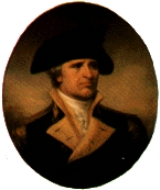
John Stark

John Stark

Overview

John Stark (August 28, 1728 – May 8, 1822) was a general who served in the American Continental Army
Continental Army
The American Continental Army was an army formed after the outbreak of the American Revolutionary War by the colonies that became the United States of America. Established by a resolution of the Continental Congress on June 14, 1775, it was created to coordinate the military efforts of the Thirteen...

 during the American Revolutionary War
American Revolutionary War
The American Revolutionary War , also sometimes known as the American War of Independence, began as a war between the Kingdom of Great Britain and thirteen united former British colonies in North America, and concluded in a global war between several European great powers...

. He became widely known as the "Hero of Bennington" for his exemplary service at the Battle of Bennington
Battle of Bennington
The Battle of Bennington was a battle of the American Revolutionary War that took place on August 16, 1777, in Walloomsac, New York, about from its namesake Bennington, Vermont...

 in 1777. He was married to Molly Stark
Molly Stark
Molly Stark, Elizabeth Page, was the wife of American Revolutionary War general John Stark.She was born in Haverhill, Massachusetts, moved with her family to Dunbarton, New Hampshire, around 1755, and was the daughter of the first postmaster of New Hampshire, Caleb Page, and his wife Ruth. She...

.


Stark enlisted as a second lieutenant
Second Lieutenant
Second Lieutenant is the lowest commissioned officer military rank in many armed forces.In British English the rank is pronounced second /lɛf'tɛnənt/ , while in American English it is pronounced second /lu'tɛnənt/ ....

 under Maj.
Major
In many European languages, the term Major is a military rank, implying seniority at one of usually various levels of rank. For example:*"General-Major" or "Major-General", denoting a senior ranking general officer....

 Robert Rogers
Robert Rogers (soldier)
Robert Rogers , was an American colonial frontiersman. Rogers served in the British army during both the French and Indian War and the American Revolution. During the French and Indian War Rogers raised and commanded the famous Rogers' Rangers...

 during the French and Indian War
French and Indian War
The French and Indian War, also known as the War of the Conquest or referred as part of the larger conflict known as the Seven Years' War, was a war fought in North America between 1754 and 1763...

. As part of the daring Rogers' Rangers
Rogers' Rangers
Rogers' Rangers was an independent company of rangers attached to the British Army during the French and Indian War. The unit was informally trained by Major Robert Rogers as a rapidly deployable light infantry force tasked with reconnaissance and conducting special operations against distant targets...

, Stark gained valuable battle experience and knowledge of the Northern frontier
Frontier
A frontier is a political and geographical term referring to areas near or beyond a boundary.-Colonial North America:In the earliest days of European settlement of the Atlantic coast, the frontier was essentially any part of the forested interior of the continent beyond the fringe of existing...

 of the American colonies.

General Jeffrey Amherst, anticipating the conquest of Quebec
Quebec
Quebec is a province in east-central Canada. It is the only Canadian province with a predominantly French-speaking identity and the only one whose sole official language is French at the provincial level....

, ordered Rogers' Rangers to journey from Lake George
Lake George
Lake George is a placename that has been used variously for cities, towns, and bodies of water:-Cities, towns, townships etc.:United States*Lake George, Colorado, a town in Park County*Lake George, Michigan, a village and lake in Michigan...

 to the Abenaki village of St. Francis
Saint-François-du-Lac, Quebec
Saint-François-du-Lac is a community in the Nicolet-Yamaska Regional County Municipality of Quebec, Canada. The population as of the Canada 2006 Census was 2,002...

, deep in Quebec.
Discussion
Ask a question about 'John Stark'
Start a new discussion about 'John Stark'
Answer questions from other users
Full Discussion Forum
 
Encyclopedia

John Stark (August 28, 1728 – May 8, 1822) was a general who served in the American Continental Army
Continental Army
The American Continental Army was an army formed after the outbreak of the American Revolutionary War by the colonies that became the United States of America. Established by a resolution of the Continental Congress on June 14, 1775, it was created to coordinate the military efforts of the Thirteen...

 during the American Revolutionary War
American Revolutionary War
The American Revolutionary War , also sometimes known as the American War of Independence, began as a war between the Kingdom of Great Britain and thirteen united former British colonies in North America, and concluded in a global war between several European great powers...

. He became widely known as the "Hero of Bennington" for his exemplary service at the Battle of Bennington
Battle of Bennington
The Battle of Bennington was a battle of the American Revolutionary War that took place on August 16, 1777, in Walloomsac, New York, about from its namesake Bennington, Vermont...

 in 1777. He was married to Molly Stark
Molly Stark
Molly Stark, Elizabeth Page, was the wife of American Revolutionary War general John Stark.She was born in Haverhill, Massachusetts, moved with her family to Dunbarton, New Hampshire, around 1755, and was the daughter of the first postmaster of New Hampshire, Caleb Page, and his wife Ruth. She...

.

French and Indian War


Stark enlisted as a second lieutenant
Second Lieutenant
Second Lieutenant is the lowest commissioned officer military rank in many armed forces.In British English the rank is pronounced second /lɛf'tɛnənt/ , while in American English it is pronounced second /lu'tɛnənt/ ....

 under Maj.
Major
In many European languages, the term Major is a military rank, implying seniority at one of usually various levels of rank. For example:*"General-Major" or "Major-General", denoting a senior ranking general officer....

 Robert Rogers
Robert Rogers (soldier)
Robert Rogers , was an American colonial frontiersman. Rogers served in the British army during both the French and Indian War and the American Revolution. During the French and Indian War Rogers raised and commanded the famous Rogers' Rangers...

 during the French and Indian War
French and Indian War
The French and Indian War, also known as the War of the Conquest or referred as part of the larger conflict known as the Seven Years' War, was a war fought in North America between 1754 and 1763...

. As part of the daring Rogers' Rangers
Rogers' Rangers
Rogers' Rangers was an independent company of rangers attached to the British Army during the French and Indian War. The unit was informally trained by Major Robert Rogers as a rapidly deployable light infantry force tasked with reconnaissance and conducting special operations against distant targets...

, Stark gained valuable battle experience and knowledge of the Northern frontier
Frontier
A frontier is a political and geographical term referring to areas near or beyond a boundary.-Colonial North America:In the earliest days of European settlement of the Atlantic coast, the frontier was essentially any part of the forested interior of the continent beyond the fringe of existing...

 of the American colonies.

General Jeffrey Amherst, anticipating the conquest of Quebec
Quebec
Quebec is a province in east-central Canada. It is the only Canadian province with a predominantly French-speaking identity and the only one whose sole official language is French at the provincial level....

, ordered Rogers' Rangers to journey from Lake George
Lake George
Lake George is a placename that has been used variously for cities, towns, and bodies of water:-Cities, towns, townships etc.:United States*Lake George, Colorado, a town in Park County*Lake George, Michigan, a village and lake in Michigan...

 to the Abenaki village of St. Francis
Saint-François-du-Lac, Quebec
Saint-François-du-Lac is a community in the Nicolet-Yamaska Regional County Municipality of Quebec, Canada. The population as of the Canada 2006 Census was 2,002...

, deep in Quebec. The Rangers went north and attacked the Indian town. Stark, Rogers' second-in-command of all ranger companies, refused to accompany the attacking force out of respect for his Indian foster-parents residing there. He returned to New Hampshire to his wife, who he had married the previous year.

At the end of the war, Stark retired as a captain
Captain (Land)
The army rank of Captain is an officer rank historically corresponding to command of a company of soldiers. The rank is also used by some air forces and marine forces. Today a captain is typically the commander, or second in command, of a company or squadron...

 and returned to Derryfield.

Bunker Hill


The Battle of Lexington and Concord on April 19, 1775, signaled the start of the American Revolutionary War
American Revolutionary War
The American Revolutionary War , also sometimes known as the American War of Independence, began as a war between the Kingdom of Great Britain and thirteen united former British colonies in North America, and concluded in a global war between several European great powers...

, and Stark returned to military service. On April 23 1775, Stark accepted a Colonel
Colonel
Colonel is a military rank of a commissioned officer, with corresponding ranks existing in almost every country in the world. It is also used in some police forces and other paramilitary rank structures...

cy in the New Hampshire Militia
New Hampshire Militia
The New Hampshire Militia was first organized in March 1680, by New Hampshire Colonial President John Cutt. The King of England authorized the Provincial President to give commissions to persons who shall be best qualified for regulating and discipline of the militia. President Cutt placed Major...

 and was given command of the 1st New Hampshire Regiment
1st New Hampshire Regiment
-Summary:The 1st New Hampshire Regiment was authorized as New Hampshire State Troops on 22 May 1775 and was organized as ten companies of 800 volunteers from Hillsborough and Rockingham counties of the colony of New Hampshire at Medford, Massachusetts, commanded by John Stark...

 and James Reed
James Reed (soldier)
James Reed was a military officer in the French and Indian War and the American Revolution, rising to the rank of brigadier general in the latter conflict....

 of the 3rd New Hampshire Regiment
3rd New Hampshire Regiment
-Summary:The 3rd New Hampshire Regiment, also known as the 2nd Continental Regiment, was formed on June 1, 1775, as the third of three Continental Army regiments raised by the state of New Hampshire during the American Revolution. Its first commander was Colonel James Reed...

, also outside of Boston. As soon as Stark could muster his men, he ferried and marched them south to Boston
Boston
Boston is the capital and largest city of the Commonwealth of Massachusetts, and is one of the oldest cities in the United States. The largest city in New England, Boston is considered the economic and cultural center of the region and is sometimes regarded as the unofficial "Capital of New England"...

 to support the blockaded rebels there. He made his headquarters in the confiscated Isaac Royall House
Isaac Royall House
The Isaac Royall House is a historic house located at 15 George Street, Medford, Massachusetts. It is a National Historic Landmark, operated as a non-profit museum, and open for public visits between June 1 and the last weekend in October....

 in Medford, Massachusetts
Medford, Massachusetts
Medford is a city in Middlesex County, Massachusetts, in the United States, on the Mystic River, just a few miles north of Boston. In the 2000 census, Medford's population was 55,765...

.

On June 16, the rebels, fearing a preemptive British
Kingdom of Great Britain
The Kingdom of Great Britain, also known as the United Kingdom of Great Britain, was a sovereign state in northwest Europe, in existence from 1707 to 1801...

 attack on their positions in Cambridge
Cambridge, Massachusetts
Cambridge is a city in Middlesex County, Massachusetts, United States, in the Greater Boston area. It was named in honor of the University of Cambridge in England, a nexus of the Puritan theology embraced by the town's founders. Notably, Cambridge is home to two internationally prominent...

 and Roxbury
Roxbury, Massachusetts
Roxbury is a neighborhood within Boston, Massachusetts USA. It was one of the first towns founded in the Massachusetts Bay Colony in 1630, and became a city in 1846 until annexed to Boston on January 5, 1868. The original town of Roxbury once included the current Boston neighborhoods of Jamaica...

, decided to take and hold the high ground surrounding the city, including Dorchester Heights, Bunker Hill, and Breed's Hill. Holding these positions would allow the rebels to oppose any British landing (at the time, Boston proper was almost an island and the British soldiers garrisoned there would have to travel by sea to attack the outlying towns). The positions could also be used to emplace cannon which could threaten the British ships blockading the harbor (although no cannon were available to the rebels at this time). Accordingly, on the night of the 16th, they moved into position on the heights and began digging entrenchments.

As dawn approached, lookouts on HMS Lively
HMS Lively (1754)
HMS Lively was a 20-gun Sixth rate Post-ship of the Royal Navy, launched at Bursledon, Hampshire on 10 August 1756.-At war with France:...

, a 20-gun sloop of war noticed the activity and the sloop opened fire on the rebels and the works in progress. This in turn drew the attention of the British Admiral, who demanded to know what the Lively was shooting at. Subsequent to that, the entire British squadron opened fire. As dawn broke on June 17 the British could clearly see hastily constructed fortifications on Breed's Hill, and British Gen. Thomas Gage
Thomas Gage
Thomas Gage was a British general, best known for his role in the early days of the American Revolution.Born to an aristocratic family in England, he entered military service, seeing action in the French and Indian War, where he served alongside a future opponent, George Washington. After the...

 knew that he would have to drive the rebels out before fortifications were complete. He ordered Major General William Howe
William Howe
William Howe may refer to:* William Howe, 5th Viscount Howe , British general during American Revolutionary War* William Howe , actor* William Howe , patented Howe Truss for covered bridges...

 to prepare to land his troops. Thus began the Battle of Bunker Hill
Battle of Bunker Hill
The Battle of Bunker Hill took place on June 17, 1775, mostly on and around Breed's Hill, during the Siege of Boston early in the American Revolutionary War...

. American Col. William Prescott
William Prescott
William Prescott was an American colonel in the Revolutionary War who commanded the rebel forces in the Battle of Bunker Hill...

 held the hill throughout the intense initial bombardment with only a few hundred untrained American militia. Prescott knew that he was sorely outgunned and outnumbered. He sent a desperate request for reinforcements.

Stark and Reed with the New Hampshire minutemen arrived at the scene soon after Prescott's request. The Lively had begun a rain of accurate artillery fire directed at Charlestown Neck, the narrow strip of land connecting Charlestown
Charlestown, Massachusetts
Charlestown is a part of the city of Boston, Massachusetts located on a peninsula north of Boston proper. Charlestown was originally a separate town and the first capital of the Massachusetts Bay Colony; it became a city in 1847 and was annexed by Boston on January 5, 1874...

 to the rebel positions. On the Charlestown side, several companies from other regiments were milling around in disarray, afraid to march into range of the artillery fire. Stark ordered the men to stand aside and calmly marched his men to Prescott's positions without taking any casualties.

When the New Hampshire militia arrived, the grateful Colonel Prescott allowed Stark to deploy his men where he saw fit. Stark surveyed the ground and immediately saw that the British would probably try to flank the rebels by landing on the beach of the Mystic River
Mystic River
The Mystic River is the name of a short river in the Commonwealth of Massachusetts in the United States. Its name derives from the Wampanoag word "muhs-uhtuq", which translates to "big river". It lies to the north of and flows approximately parallel to the lower portions of the Charles River.Mystic...

, below and to the left of Breed's Hill. Stark led his men to the low ground between Mystic Beach and the hill and ordered them to "fortify" a two-rail fence by stuffing straw and grass between the rails. Stark also noticed an additional gap in the defense line and ordered Lieutenant Nathaniel Hutchins from his brother William Stark's
William Stark
See William Stark for researcher into scurvy and vitamin C.William Stark was the older brother of Gen. John Stark, the hero of the Battle of Bennington. William Stark was born on April 1, 1724 at Londonderry, New Hampshire...

 company and others to follow him down a nine foot high bank to the edge of the Mystic River. They piled rocks across the twelve foot wide beach to form a crude defense line. After this fortification was hastily constructed, Stark deployed his men 3-deep behind the wall. A large contingent of British with the Royal Welch Fusiliers
Royal Welch Fusiliers
The Royal Welch Fusiliers were a regiment of the British Army, part of the Prince of Wales' Division. It was founded in 1689 to oppose James II and the imminent war with France...

 in the lead advanced towards the fortifications. The Minutemen crouched and waited until the advancing British were almost on top of them, and then stood up and fired as one. They unleashed a fierce and unexpected volley directly into the faces of the fusiliers, killing 90 in the blink of an eye and breaking their advance. The fusiliers retreated in panic. A charge of British infantry was next, climbing over their dead comrades to test Stark's line—this charge too was decimated by a withering fusillade by the Minutemen. A third charge was repulsed in a similar fashion, again with heavy losses to the British. The British officers wisely withdrew their men from that landing point and decided to land elsewhere, with the support of artillery.

Later in the battle, as the rebels were forced from the hill, Stark directed the New Hampshire regiment's fire to provide cover for Colonel Prescott's retreating troops. The day's New Hampshire dead were later buried in the Salem Street Burying Ground
Salem Street Burying Ground
Salem Street Burying Ground is a cemetery located at the intersection of Salem Street and Riverside Avenue in Medford, Massachusetts. The Salem Street Burying Ground was used exclusively in the late 1600s to late 1800s for the burial of the town's wealthy....

, Medford, Massachusetts
Medford, Massachusetts
Medford is a city in Middlesex County, Massachusetts, in the United States, on the Mystic River, just a few miles north of Boston. In the 2000 census, Medford's population was 55,765...

.

While the British did eventually take the hill that day, their losses were formidable, especially among the officers. After the arrival of General George Washington
George Washington
George Washington was the commander of the Continental Army in the American Revolutionary War and served as the first President of the United States of America...

  two weeks after the battle, the siege reached a stalemate until March the next year, when cannon seized at the Capture of Fort Ticonderoga
Capture of Fort Ticonderoga
On May 10, 1775, Fort Ticonderoga was captured by a small force of American Patriots led by Ethan Allen and Colonel Benedict Arnold. They surprised and captured, without significant injury or incident, the small British garrison at the fort, and looted the personal belongings of the garrison...

 were positioned on Dorchester Heights
Dorchester Heights
Dorchester Heights is the central area of South Boston. It is the highest area in the neighborhood and commands a view of both Boston Harbor and downtown.-In the American Revolution:...

 in a deft night manoeuvre. This placement threatened the British fleet in Boston Harbor and forced General Howe to withdraw all his forces from the Boston garrison and sail for Halifax
City of Halifax
The City of Halifax was the capital of the province of Nova Scotia and shire town of Halifax County, and was the largest city in Atlantic Canada until it was amalgamated into Halifax Regional Municipality in 1996...

, Nova Scotia
Nova Scotia
Nova Scotia is a Canadian province located on Canada's southeastern coast. It is the most populous province in Atlantic Canada. Its capital, Halifax, is a major economic centre of the region. Nova Scotia is the second-smallest province in Canada with an area of...

.

Bennington and beyond


Four months later, Stark was offered a commission as Brigadier General of the New Hampshire Militia
New Hampshire Militia
The New Hampshire Militia was first organized in March 1680, by New Hampshire Colonial President John Cutt. The King of England authorized the Provincial President to give commissions to persons who shall be best qualified for regulating and discipline of the militia. President Cutt placed Major...

. He accepted on the strict condition that he would not be answerable to Continental Army authority. Soon after receiving his commission, he was ordered by Brigadier General Philip Schuyler
Philip Schuyler
Philip John Schuyler was a general in the American Revolution and a United States Senator from New York. He is usually known as Philip Schuyler, while his son is usually known as Philip J. Schuyler.-Early life:...

 (of the Continental Army) to depart from Charlestown, New Hampshire
Charlestown, New Hampshire
Charlestown is a town in Sullivan County, New Hampshire, United States. The population was 4,749 at the 2000 census. Charlestown includes the villages of North Charlestown, South Charlestown and Hemlock Center...

 to reinforce the Continental army at Saratoga, New York
Saratoga, New York
Saratoga is a town in Saratoga County, New York, United States. The population was 5,141 at the 2000 census. It is also the commonly used, but not official, name for the neighboring and much more populous city, Saratoga Springs. The major village in the town of Saratoga is Schuylerville which is...

. Stark refused and instead led his men to meet the Hessians at the Battle of Bennington
Battle of Bennington
The Battle of Bennington was a battle of the American Revolutionary War that took place on August 16, 1777, in Walloomsac, New York, about from its namesake Bennington, Vermont...

. Before engaging the Hessian troops, Stark prepared his men to fight to the death, shouting, "There are your enemies, the Red Coats and the Tories. They are ours, or this night Molly Stark sleeps a widow!"

Stark's men, with some help from Seth Warner's Vermont
Vermont
The State of Vermont is a state in the New England region of the northeastern United States of America. The state ranks 43rd by land area, , and 45th by total area. It has a population of 621,270, making it the second least-populated state...

 militia the Green Mountain Boys
Green Mountain Boys
The Green Mountain Boys were a militia organization first established in the 1760s in the territory between the British provinces of New York and New Hampshire, known as the New Hampshire Grants...

, routed the Hessian forces there and prevented British General John Burgoyne
John Burgoyne
General John Burgoyne was a British army officer, politician and dramatist. During the American War of Independence, on 17 October, 1777, at the Saratoga he surrendered his army of 6,000 men.-Early biography:...

 from resupplying. Stark's action contributed directly to the surrender of Burgoyne's northern army at the Battle of Saratoga
Battle of Saratoga
The Battles of Saratoga, sometimes referred to as The Battle of Saratoga conclusively decided the fate of British General John Burgoyne's army in the American Revolutionary War, and are generally regarded as a turning point in the war...

 some months later. This battle is seen as the turning point in the Revolutionary War, as it was the first major defeat of a British general and it convinced the French
France
France , officially the French Republic , is a country located in Western Europe, with several overseas islands and territories located on other continents. Metropolitan France extends from the Mediterranean Sea to the English Channel and the North Sea, and from the Rhine to the Atlantic Ocean...

 that the Americans were worthy of military aid. After the Battle of Freeman's Farm Gen. Stark's Brigade moved into a position at Stark's Knob
Stark's Knob
Stark's Knob is a basaltic pillow lava formation near Schuylerville, New York, United States. It formed about 460 to 440 million years ago in relatively shallow sea water...

 cutting off Gen. John Burgoyne's path back to Lake George
Lake George (New York)
Lake George, nicknamed the Queen of American Lakes,Bolton Landing Chamber of Commerce, , Retrieved May 12, 2008; Albany International Airport, , 2004. Retrieved May 12, 2008; The Hyde Collection, , September, 2005...

 and Lake Champlain
Lake Champlain
Lake Champlain is a natural, freshwater lake in North America, located mainly within the borders of the United States but partially situated across the Canada – United States border in the Canadian province of Quebec.The New York portion of the Champlain Valley includes the eastern portions of...

.

John Stark was one of the jury
Jury
A jury is a sworn body of people convened to render an impartial verdict officially submitted to them by a court, or to set a penalty or judgment...

 that found John André
John André
John André was a British army officer hanged as a spy during the American Revolutionary War. This was due to an incident in which he assisted Benedict Arnold's attempted surrender of the fort at West Point, New York to the British Army.-Early life:André was born on May 2, 1750 in London to...

 guilty for spying and in helping in the conspiracy of Benedict Arnold
Benedict Arnold
Benedict Arnold V was a general during the American Revolutionary War who originally fought for the American Continental Army but switched sides to the British Empire. While he was still a general on the American side, he obtained command of the fort at West Point, New York, and plotted...

 to surrender West Point, New York
West Point, New York
West Point is a federal military reservation located North of the Village of Highland Falls in Orange County, New York, United States. The population was 7,138 at the 2000 census...

 to the British.

He was the commander of the Northern Department
Northern theatre of the American Revolutionary War
The Northern theatre of the American Revolutionary War also known as the Northern Department of the Continental Army was a theatre of operations during the American Revolutionary War....

 three times between 1778 and 1781.

Later years


After serving with distinction throughout the rest of the war, Stark retired to his farm in Derryfield. It has been said that of all the Revolutionary War generals, Stark was the only true Cincinnatus
Society of the Cincinnati
The Society of the Cincinnati is a historic organization with branches in the United States and France founded in 1783 to preserve the ideals and fellowship of the Revolutionary War officers and to pressure the government to honor pledges it had made to officers who fought for American independence...

because he truly retired from public life at the end of the war. In 1809, a group of Bennington veterans gathered to commemorate the battle. General Stark, then aged 81, was not well enough to travel, but he sent a letter to his comrades, which closed "Live free or die: Death is not the worst of evils." The motto Live Free or Die
Live Free or Die
"Live Free or Die" is the official motto of the U.S. state of New Hampshire, adopted by the state in 1945. It is possibly the best-known of all state mottos, partly because it speaks to an assertive independence historically found in American political philosophy and partly because of its contrast...

became the New Hampshire state motto in 1945. Stark and the Battle of Bennington were later commemorated with the tall Bennington Battle Monument
Bennington Battle Monument
The Bennington Battle Monument is a 306 ft stone obelisk located at 15 Monument Circle, in Bennington, Vermont. The monument commemorates the Revolutionary War's Battle of Bennington....

 in Bennington, Vermont.

Historic Sites


There is a New Hampshire historic marker near John Stark's birthplace on the east side of NH Route 28 (Rockingham Road) in Derry, New Hampshire
Derry, New Hampshire
Derry is a town in Rockingham County, New Hampshire, United States. The population was 34,021 at the 2000 census. Although it is a town and not a city, Derry is the fourth most-populous community in New Hampshire....

, just south of the intersection of Lane Road.

There is a second stone marker at the actual homestead location. Beginning on Rockingham Road in Derry, travel east on Lane Road for approximately 1/2 mile. Turn right (south) onto Stark Road. The marker will be on the right side in less than 1/4 mile.

John's childhood home is located at 2000 Elm Street in Manchester, New Hampshire. The home was built in 1736 by John's father Archibald. The building is now owned by the Molly Stark Chapter of the Daughters of the American Revolution
Daughters of the American Revolution
The Daughters of the American Revolution is a lineage-based membership organization of women dedicated to promoting historic preservation, education, and patriotism...

 (The property is open by appointment only).

See also

  • Battle of Bemis Heights
  • Battle of Bennington
    Battle of Bennington
    The Battle of Bennington was a battle of the American Revolutionary War that took place on August 16, 1777, in Walloomsac, New York, about from its namesake Bennington, Vermont...

  • Battle of Bunker Hill
    Battle of Bunker Hill
    The Battle of Bunker Hill took place on June 17, 1775, mostly on and around Breed's Hill, during the Siege of Boston early in the American Revolutionary War...

  • Battle of Princeton
    Battle of Princeton
    The Battle of Princeton was a battle in which General Washington's revolutionary forces defeated British forces near Princeton, New Jersey....

  • Battle of Trenton
    Battle of Trenton
    The Battle of Trenton took place on December 26, 1776, during the American Revolutionary War after General George Washington's crossing of the Delaware River north of Trenton, New Jersey. The hazardous crossing in adverse weather allowed Washington to lead the main body of the Continental Army...

  • Isaac Royall House
    Isaac Royall House
    The Isaac Royall House is a historic house located at 15 George Street, Medford, Massachusetts. It is a National Historic Landmark, operated as a non-profit museum, and open for public visits between June 1 and the last weekend in October....

    , Stark's headquarters in Medford, Massachusetts
    Medford, Massachusetts
    Medford is a city in Middlesex County, Massachusetts, in the United States, on the Mystic River, just a few miles north of Boston. In the 2000 census, Medford's population was 55,765...

  • New Hampshire
    New Hampshire
    New Hampshire is a state in the New England region of the northeastern United States of America. The state was named after the southern English county of Hampshire. It borders Massachusetts to the south, Vermont to the west, Maine and the Atlantic Ocean to the east, and the Canadian province of...

  • Rogers' Rangers
    Rogers' Rangers
    Rogers' Rangers was an independent company of rangers attached to the British Army during the French and Indian War. The unit was informally trained by Major Robert Rogers as a rapidly deployable light infantry force tasked with reconnaissance and conducting special operations against distant targets...

  • Fort at Number 4
    Fort at Number 4
    The Fort at Number 4 was the northernmost British settlement along the Connecticut River in New Hampshire until after the French and Indian War. Now known as Charlestown, it was more than from the nearest other British settlement at Fort Dummer. Construction began in 1740 by brothers Stephen,...


Many places in the United States were named after John Stark and his wife Molly. Among them are:
  • Fort Stark, New Hampshire
  • Stark, New Hampshire
    Stark, New Hampshire
    Stark is a town in Coos County, New Hampshire, United States. The population was 516 at the 2000 census. It has a famous covered bridge. The township includes the named villages of Percy and Crystal as well as the village of Stark, located on the Upper Ammonoosuc River. New Hampshire Route 110...

  • Stark County, Illinois
    Stark County, Illinois
    Stark County is a county located in the U.S. state of Illinois. As of 2000, the population is 6,332. Its county seat is Toulon, Illinois.Stark County is part of the Peoria, Illinois, Metropolitan Statistical Area.-Geography:According to the U.S...

  • Stark County, Ohio
    Stark County, Ohio
    Stark County is a county located in the U.S. state of Ohio. As of the 2000 census, the population was 378,098. It is included in the Canton-Massillon, Ohio Metropolitan Statistical Area....

  • Starke County, Indiana
    Starke County, Indiana
    Starke County is a county located in the U.S. state of Indiana. As of 2000, the population was 23,556. The county seat is Knox.-History:Starke County was formed in 1850. It was named for Gen...

  • Starkville, Mississippi
    Starkville, Mississippi
    Starkville is a city in and the county seat of Oktibbeha County, Mississippi, United States. The population was 21,869 at the 2000 census.The campus of Mississippi State University is located adjacent to the east of Starkville...

  • Stark, New York
    Stark, New York
    Stark is a town in Herkimer County, New York, United States. The population was 767 at the 2000 census. The town was named after a Revolutionary War General named John Stark.The Town of Stark is in the eastern part of Herkimer County.- History :...

  • Starksboro, Vermont
    Starksboro, Vermont
    Starksboro is a town in Addison County, Vermont, United States. The population was 1,898 at the 2000 census.-Geography:According to the United States Census Bureau, the town has a total area of 45.5 square miles , of which, 45.5 square miles of it is land and 0.1 square miles of it...

  • Molly Stark State Park, Vermont
  • John Stark Regional High School
    John Stark Regional High School
    John Stark Regional High School is a coeducational regional public high school in Weare, New Hampshire serving the communities of Weare and Henniker, New Hampshire. It is part of School Administrative Unit 24, and is administered by the John Stark School District...

     (Weare, New Hampshire
    Weare, New Hampshire
    Weare is a town in Hillsborough County, New Hampshire, United States. The population was 7,776 at the 2000 census, with an estimated population of 9,081 in 2007...

    )

External links


Primary sources


Detailed information on John Stark is not easy to come by. Please add references and primary resources to this section, noting where the resources can be found.
  • Reminiscences of the French War; containing Rogers' Expeditions with the New-England Rangers under his command, as published in London in 1765; with notes and illustrations. : To which is added an account of the life and military services of Maj. Gen. John Stark; with notices and anecdotes of other officers distinguished in the French and Revolutionary wars. -- Concord, N.H. : Published by Luther Roby., 1831. A copy can be found in the collections of the American Antiquarian Society
    American Antiquarian Society
    The American Antiquarian Society , located in Worcester, Massachusetts, is both a learned society and national research library of pre-twentieth century American History and culture. Its main building, known also as Antiquarian Hall, is a U.S. National Historic Landmark...

     in Worcester, Massachusetts
    Worcester, Massachusetts
    Worcester is a city in the state of Massachusetts in the United States of America. Having a population of 172,648 in the 2000 census, Worcester is ranked the second or third largest city in New England. It is the county seat of Worcester County....

    .

  • Reminiscences of the French War with Robert Rogers' journal and a memoir of General Stark. Freedom, N.H. : Freedom Historical Society, 1988. OCLC number: ocm18143265. A copy can be found in the Boston Public Library
    Boston Public Library
    The Boston Public Library is a municipal public library system in Boston, Massachusetts, United States. It was the first publicly supported municipal library in the United States, the first large library open to the public in the United States, and the first public library to allow people to borrow...

    .

  • Gen. John Stark's home farm : a paper read before the Manchester Historic Association October 7, 1903; by Roland Rowell. A copy can be found in the Boston Public Library
    Boston Public Library
    The Boston Public Library is a municipal public library system in Boston, Massachusetts, United States. It was the first publicly supported municipal library in the United States, the first large library open to the public in the United States, and the first public library to allow people to borrow...

    .

  • Major General John Stark, hero of Bunker Hill and Bennington, 1728-1822; by Leon W. Anderson. [n.p.] Evans Print. Co., c1972. OCLC number: ocm00709356. A copy can be found in the Boston Public Library
    Boston Public Library
    The Boston Public Library is a municipal public library system in Boston, Massachusetts, United States. It was the first publicly supported municipal library in the United States, the first large library open to the public in the United States, and the first public library to allow people to borrow...

    .

  • Memoir and official correspondence of Gen. John Stark, with notices of several other officers of the Revolution. Also a biography of Capt. Phine[h]as Stevens and of Col. Robert Rogers, with an account of his services in America during the "Seven Years' War." With a new introd. and pref. by George Athan Billias; by Stark, Caleb, 1804-1864. pub. Boston, Gregg Press, 1972 [c1860].


The Papers of John Stark, New Hampshire Historical Society, 30 Park Street, Concord, New Hampshire. An unpublished guide to the collection is available at the Society's library.

Secondary references

  • John Stark, Freedom Fighter; by Robert P. Richmond. Waterbury, Conn. : Dale Books, 1976. (Juvenile literature). A copy can be found in the Boston Public Library
    Boston Public Library
    The Boston Public Library is a municipal public library system in Boston, Massachusetts, United States. It was the first publicly supported municipal library in the United States, the first large library open to the public in the United States, and the first public library to allow people to borrow...

    .

  • Patriots: the men who started the American Revolution; by A.J. Langguth. New York, Simon & Schuster, 1988. ISBN 0-671-67562-1.