


Iron-hydrogen resistor

Encyclopedia
Hydrogen
Hydrogen is the chemical element with atomic number 1. It is represented by the symbol H. With an average atomic weight of , hydrogen is the lightest and most abundant chemical element, constituting roughly 75% of the Universe's chemical elemental mass. Stars in the main sequence are mainly...
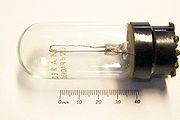
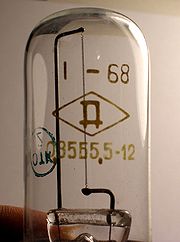
-filled glass bulb like a light bulb, in which an iron
Iron
Iron is a chemical element with the symbol Fe and atomic number 26. It is a metal in the first transition series. It is the most common element forming the planet Earth as a whole, forming much of Earth's outer and inner core. It is the fourth most common element in the Earth's crust...
wire is located. This resistor has a positive temperature coefficient of resistance. This characteristic made it useful for stabilizing circuits against fluctuations in power supply voltages. The modern successor to this device is the current source
Current source
A current source is an electrical or electronic device that delivers or absorbs electric current. A current source is the dual of a voltage source. The term constant-current sink is sometimes used for sources fed from a negative voltage supply...
.
When the current rises the temperature will increase. The higher temperature leads to a higher electrical resistance
Electrical resistance
The electrical resistance of an electrical element is the opposition to the passage of an electric current through that element; the inverse quantity is electrical conductance, the ease at which an electric current passes. Electrical resistance shares some conceptual parallels with the mechanical...
, opposing the increase in current. The hydrogen filling protects the iron not only against oxidation, but enhances the effect since the solubility of hydrogen in iron will increase when the temperature increases, resulting in the higher resistance.
Iron-hydrogen resistors were used in the early vacuum tube
Vacuum tube
In electronics, a vacuum tube, electron tube , or thermionic valve , reduced to simply "tube" or "valve" in everyday parlance, is a device that relies on the flow of electric current through a vacuum...
systems in series with the heaters of electron tubes to stabilize the heater current against fluctuating supply voltage.
This device is sometimes called a "barretter" and in a different form is used for detection of radio signals.