
Home      Discussion      Topics      Dictionary      Almanac
Signup       Login
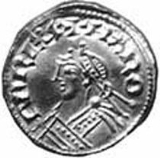
Harold Harefoot

Harold Harefoot

Discussion
Ask a question about 'Harold Harefoot'
Start a new discussion about 'Harold Harefoot'
Answer questions from other users
Full Discussion Forum
 
Encyclopedia
Harold Harefoot, or Harold I, (c. 1015–17 March 1040) was King of England
England
England is a country that is part of the United Kingdom. It shares land borders with Scotland to the north and Wales to the west; the Irish Sea is to the north west, the Celtic Sea to the south west and the North Sea to the east, with the English Channel to the south separating it from continental...

 from 1035 to 1040. His cognomen
Cognomen
The cognomen was the third name of a citizen of Ancient Rome, under Roman naming conventions. The cognomen started as a nickname, but lost that purpose when it became hereditary...

 "Harefoot" referred to his speed, and the skill of his huntsmanship. He was the son of Cnut the Great, king of England
England
England is a country that is part of the United Kingdom. It shares land borders with Scotland to the north and Wales to the west; the Irish Sea is to the north west, the Celtic Sea to the south west and the North Sea to the east, with the English Channel to the south separating it from continental...

, Denmark
Denmark
Denmark is a Scandinavian country in Northern Europe and the senior member of the Kingdom of Denmark. It is the southernmost of the Nordic countries; southwest of Sweden and south of Norway, and it is bordered to the south by Germany. Denmark borders both the Baltic and the North Sea...

, and Norway
Norway
Norway , officially the Kingdom of Norway, is a country in Northern Europe occupying the western portion of the Scandinavian Peninsula, as well as Jan Mayen and the Arctic archipelago of Svalbard under the Spitsbergen Treaty...

 by Ælfgifu of Northampton. Though there was some scepticism he was really Cnut's son, this was probably just propaganda by the opponents of his kingship.

Harthacnut's reign


Upon Cnut's death (12 November 1035), Harold's younger half-brother Harthacnut, the son of Cnut and his queen, Emma of Normandy
Emma of Normandy
Emma , was a daughter of Richard the Fearless, Duke of Normandy, by his second wife Gunnora. She was Queen consort of the Kingdom of England twice, by successive marriages: first as the second wife to Æthelred the Unready of England ; and then as a second wife to Cnut the Great of Denmark...

, was legitimate heir to the thrones of both the Danes and the English. He was, however, unable to travel to his coronation, because his Danish kingdom was under threat of invasion by King Magnus I
Magnus I of Norway
Magnus I was the King of Norway from 1035 to 1047 and the King of Denmark from 1042 to 1047. He was the illegitimate son of King Olaf Haraldsson, also known as Saint Olaf, by his concubine Alvhild...

 of Norway
Norway
Norway , officially the Kingdom of Norway, is a country in Northern Europe occupying the western portion of the Scandinavian Peninsula, as well as Jan Mayen and the Arctic archipelago of Svalbard under the Spitsbergen Treaty...

 and King Anund Jacob of Sweden
Anund Jacob of Sweden
Anund Jakob, English: Anwynd James was King of Sweden 1022 – c. 1050. He is believed to have been born in 25th of July c. 1008 or 1010 as Jakob. When the Swedish counsel, the Thing, was to elect him the co-ruler of Sweden, the people objected to his non-Scandinavian name...

. England's magnates favoured the idea of installing Harold Harefoot temporarily as regent
Regent
A regent, from the Latin regens "reigning", is a person selected to act as head of state because the ruler is a minor, not present, or debilitated. Thus, the common use is for an acting deputy governor....

, due to the difficulty of Harthacnut's absence, and despite the opposition of Godwin, the Earl of Wessex
Earl of Wessex
The title Earl of Wessex has been created twice in British history, once in the pre-Conquest Anglo-Saxon nobility of England and once in the Peerage of the United Kingdom...

, and the Queen, he eventually wore the crown.

Harold survived an attempt to unseat him led by Ælfred Ætheling
Ælfred Ætheling
Alfred Aetheling , was one of the eight sons of the English king Ethelred II, called 'The Unready'. He and his brother Edward the Confessor were sons of Ethelred's second wife Emma of Normandy....

 and Edward the Confessor
Edward the Confessor
Edward the confessor , son of Æthelred the Unready and Emma of Normandy, was one of the last English kings of England and is usually regarded as the last king of the House of Wessex, ruling from 1042 to 1066 Edward the confessor ...

, Emma's sons by the long-dead Æthelred the Unready, in 1036. Harold died at Oxford
Oxford
Oxford is a city, and the county town of Oxfordshire, in South East England. The city has a population of just under 165,000, with 151,000 living within the district boundary. The rivers Cherwell and Thames run through Oxford and meet south of the city centre...

 on 17 March 1040, just as Harthacnut was preparing an invasion force of Danes, and was buried at the abbey of Westminster
Westminster Abbey
The Collegiate Church of St Peter at Westminster, which is almost always referred to popularly and informally as Westminster Abbey, is a large, mainly Gothic church, in Westminster, London, just to the west of the Palace of Westminster...

. His body was subsequently exhumed, beheaded, and thrown into a fen
Fen
A fen is a type of wetland fed by surface and/or groundwater. Fens are characterized by their water chemistry, which is neutral or alkaline...

 bordering the Thames
River Thames
The River Thames is a major river flowing through southern England. While best known because its lower reaches flow through central London, the river flows through several other towns and cities, including Oxford, Reading and Windsor....

 when Harthacnut assumed the throne in June, 1040. His supporters later rescued the body, to be buried in a church which was fittingly named St. Clement Danes.

Assumes the throne


In 1037, Emma of Normandy
Emma of Normandy
Emma , was a daughter of Richard the Fearless, Duke of Normandy, by his second wife Gunnora. She was Queen consort of the Kingdom of England twice, by successive marriages: first as the second wife to Æthelred the Unready of England ; and then as a second wife to Cnut the Great of Denmark...

 fled to Bruges
Bruges
Bruges is the capital and largest city of the province of West Flanders in the Flemish Region of Belgium. It is located in the northwest of the country....

, in Flanders
Flanders
Flanders is the community of the Flemings but also one of the institutions in Belgium, and a geographical region located in parts of present-day Belgium, France, and the Netherlands...

, and Harold "was everywhere chosen as king". Harold himself is somewhat obscure; the historian Frank Stenton
Frank Stenton
Sir Frank Merry Stenton was a noted 20th century historian of Anglo-Saxon England. He was the author of Anglo-Saxon England, a volume of the Oxford History of England, first published in 1943 and widely considered a classic history of the period...

 considered it probable that his mother Ælfgifu was "the real ruler of England" for part or all of his reign.

With the north at least on Harold's side, in adherence to the terms of a deal, which Godwin was part of, Emma was settled in Winchester
Winchester
Winchester is the county town of Hampshire, in South East England. It lies at the heart of the wider City of Winchester, a local government district, and is located at the western end of the South Downs, along the course of the River Itchen...

, with Harthacnut's huscarls
Housecarl
Housecarls were household troops, personal warriors and equivalent to a bodyguard to Scandinavian lords and kings. The anglicized term comes from the Old Norse term huskarl or huscarl...

. Harold soon "sent and had taken from her all the best treasures" of Cnut the Great, and the Kingdom of England was practically his.

According to the Encomium Emmae
Encomium Emmae
Encomium Emmae Reginae or Gesta Cnutonis Regis is an 11th century Latin encomium in honour of Queen Emma of Normandy. It was written in 1041 or 1042 probably by a monk of St Omer.-Manuscripts:...

, though, the Archbishop of Canterbury
Archbishop of Canterbury
Also see Leaders of ChristianityThe Archbishop of Canterbury is the chief bishop and principal leader of the Church of England, the symbolic head of the worldwide Anglican Communion and the diocesan bishop of the Diocese of Canterbury, the see that churches must be in communion with in order to be...

 refused to crown Harold Harefoot. There is evidence that Ælfgifu of Northampton was attempting to secure her son's position through bribes to the nobles.

Alfred and Edward's invasion


In 1036, Alfred Atheling
Alfred Atheling
Alfred Atheling or Aetheling was the son of Aethelred II and his second wife Emma of Normandy. He was a brother of Edward the Confessor. King Canute became their stepfather when he married Aethelred's widow...

, Emma's son by the long dead Æthelred, returned to the kingdom from exile in Normandy
Normandy
Normandy is a geographical region corresponding to the former Duchy of Normandy. It is situated along the English Channel coast of Northern France between Brittany and Picardy and comprises territory in northern France and the Channel Islands.Normandy is divided between French and British...

 with his brother Edward the Confessor
Edward the Confessor
Edward the confessor , son of Æthelred the Unready and Emma of Normandy, was one of the last English kings of England and is usually regarded as the last king of the House of Wessex, ruling from 1042 to 1066 Edward the confessor ...

, with some show of arms. With his bodyguard, according to the Anglo-Saxon Chronicle he intended to visit his mother, Emma, in Winchester, but he may have made this journey for anything other than a family reunion. As the "murmur was very much in favour of Harold", Alfred was captured on the direction of Godwin, now apparently on Harold's side at this point, and the men loyal to Harefoot blinded him. He subsequently died soon after due to the severity of the wounds, his bodyguard similarly treated.

Offspring


Harold apparently had a son, Ælfwine, who became a monk
Monk
A monk is a person who practices religious asceticism, living either alone or with any number of monks, whilst always maintaining some degree of physical separation from those not sharing the same purpose...

 on the continent when he was older. Ælfgifu of Northampton disappears with no trace after 1040. According to the Anglo-Saxon Chronicle
Anglo-Saxon Chronicle
The Anglo-Saxon Chronicle is a collection of annals in Old English chronicling the history of the Anglo-Saxons. The annals were initially created late in the 9th century, probably in Wessex, during the reign of Alfred the Great. Multiple manuscript copies were made and distributed to monasteries...

, Harold Harefoot ruled for 4 years and 16 weeks, by which calculation he would have begun ruling two weeks after the death of Cnut.

External links