
All Topics  
Great Storm of 1987

 
Great Storm of 1987

   Email Print
   Bookmark   Link


Great Storm of 1987


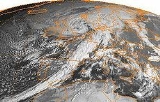
The Great Storm of 1987 occurred on the night of 15 October to 16 October 1987, when an unusually strong weather system caused winds to hit much of southern England
Southern England

Southern England is an imprecise term used to refer to the southern counties of England. Differing usages apply the term with varying geographic extents....
 and northern France
France

France , officially the French Republic , is a country whose Metropolitan France is located in Western Europe and that also comprises various Overseas departments and territories of France....
. It was the worst storm to hit England since the Great Storm of 1703
Great Storm of 1703

The Great Storm of 1703 is arguably the most severe European windstorm or natural disaster ever recorded in the southern part of Great Britain. It affected southern England and the English Channel....
 (284 years earlier) and was responsible for the deaths of at least 22 people in England and France combined (18 in England, at least 4 in France).

According to the Beaufort scale
Beaufort scale

The Beaufort scale is an empirical measure for describing wind wind speed based mainly on observed sea conditions. Its full name is the Beaufort wind force scale....
 of wind intensities, this storm
European windstorm

A European windstorm is a severe cyclone windstorm associated with areas of low pressure that track across the North Atlantic towards northwestern Europe....
 had winds of hurricane force; however, the term hurricane refers to tropical cyclone
Tropical cyclone

A tropical cyclone is a storm characterized by a large low pressure system center and numerous thunderstorms that produce strong winds and flooding rain....
s originating in the North Atlantic or North Pacific.


Discussion
Ask a question about 'Great Storm of 1987'
Start a new discussion about 'Great Storm of 1987'
Answer questions from other users
Full Discussion Forum


Encyclopedia


Windstorm
The Great Storm of 1987 occurred on the night of 15 October to 16 October 1987, when an unusually strong weather system caused winds to hit much of southern England
Southern England

Southern England is an imprecise term used to refer to the southern counties of England. Differing usages apply the term with varying geographic extents....
 and northern France
France

France , officially the French Republic , is a country whose Metropolitan France is located in Western Europe and that also comprises various Overseas departments and territories of France....
. It was the worst storm to hit England since the Great Storm of 1703
Great Storm of 1703

The Great Storm of 1703 is arguably the most severe European windstorm or natural disaster ever recorded in the southern part of Great Britain. It affected southern England and the English Channel....
 (284 years earlier) and was responsible for the deaths of at least 22 people in England and France combined (18 in England, at least 4 in France).

According to the Beaufort scale
Beaufort scale

The Beaufort scale is an empirical measure for describing wind wind speed based mainly on observed sea conditions. Its full name is the Beaufort wind force scale....
 of wind intensities, this storm
European windstorm

A European windstorm is a severe cyclone windstorm associated with areas of low pressure that track across the North Atlantic towards northwestern Europe....
 had winds of hurricane force; however, the term hurricane refers to tropical cyclone
Tropical cyclone

A tropical cyclone is a storm characterized by a large low pressure system center and numerous thunderstorms that produce strong winds and flooding rain....
s originating in the North Atlantic or North Pacific. Hurricanes have a very different wind profile and distribution to storms, and significantly higher precipitation levels. The storm had an air pressure equal to that of a Category 3 hurricane, and wind speeds equal to a Category 1 hurricane on the Saffir-Simpson Hurricane Scale
Saffir-Simpson Hurricane Scale

The Saffir-Simpson Hurricane Scale is a classification used for most Western Hemisphere tropical cyclones that exceed the intensities of tropical depressions and tropical storms, and thereby become hurricanes....
, although that scale does not apply to this system, because it was not a hurricane and, as such, would never be measured or risk-assessed by that scale; hence the significant difference in rated intensities between wind speed and barometric pressure.

Although the storm was declared a rare event, expected only to happen once every several hundred years, the Burns' Day storm
Burns' Day storm

The Burns' Day Storm occurred on January 25–January 26, 1990, over north-western Europe, and is one of the strongest storms on record. Starting on the birthday of Scotland poet Robert Burns, it caused widespread damage and hurricane-force winds over a wide area....
 hit the United Kingdom
United Kingdom

The United Kingdom of Great Britain and Northern Ireland, commonly known as the United Kingdom , the UK or Britain,is a sovereign state located off the northwestern coast of continental Europe....
 in January 1990, less than three years later and with comparable intensity.

Origins

Four or five days before the storm struck, forecasters had predicted bad weather on the following Thursday or Friday. By midweek, however, guidance from weather prediction models was somewhat equivocal. Instead of stormy weather over a considerable part of the UK, the models suggested that severe weather would reach no farther north than the English Channel and coastal parts of southern England. During the afternoon of 15 October, winds were very light over most parts of the UK. The pressure gradient was slack. A depression was drifting slowly northwards over the North Sea off eastern Scotland. A col lay over England, Wales and Ireland. Over the Bay of Biscay, a depression was developing. The first gale warnings for sea areas in the English Channel were issued at 0630 UTC on 15 October and were followed, four hours later, by warnings of severe gales. At 1200 UTC on 15 October, the depression which originated in the Bay of Biscay was centred near 46° N, 9° W and its depth was 970 mb. By 1800 UTC, it had moved north-east to about 47° N, 6° W, and deepened to 964 mb. At 2235 UTC, winds of Force 10 were forecast. By midnight, the depression was over the western English Channel, and its central pressure was 953 mb. At 0135 on 16 October, warnings of Force 11 were issued. The depression now moved rapidly north-east, filling a little as it did, reaching the Humber estuary at about 0530 UTC, by which time its central pressure was 959 mb. Dramatic increases in temperature were associated with the passage of the storm's warm front. It is now clear that for sea areas, warnings of severe weather were both timely and adequate, although forecasts for land areas left much to be desired. During the evening of 15 October, radio and TV forecasts mentioned strong winds, but indicated that heavy rain would be the main feature, rather than wind. By the time most people went to bed, exceptionally strong winds had not been mentioned in national radio and TV weather broadcasts. Warnings of severe weather had been issued, however, to various agencies and emergency authorities, including the London Fire Brigade. Perhaps the most important warning was issued by the Met Office to the Ministry of Defence at 0135 UTC, 16 October. It warned that the anticipated consequences of the storm were such that civil authorities might need to call on assistance from the military. In south-east England, where the greatest damage occurred, gusts of 70 knots or more were recorded continually for three or four consecutive hours. During this time, the wind veered from southerly to south-westerly. To the north-west of this region, there were two maxima in gust speeds, separated by a period of lower wind speeds. During the first period, the wind direction was southerly. During the latter, it was south-westerly. Damage patterns in south-east England suggested that whirlwinds accompanied the storm.

Effects


England

The storm made landfall in Cornwall
Cornwall

Cornwall , constitutional Duchy and palatine, is a metropolitan and non-metropolitan counties of England of England, United Kingdom, located at the tip of the south-western peninsula of Great Britain....
, before tracking northeast towards Devon
Devon

Devon is a large Counties of England in South West England. The county is also referred to as Devonshire, but that is an entirely unofficial name, rarely used inside of the county but often indicating a shire....
 and then over the Midlands, going out to sea via The Wash
The Wash

The Wash is the square-mouthed estuary on the northwest margin of East Anglia on the east coast of England, where Norfolk, England meets Lincolnshire....
. The strongest gusts, of up to 100 knots
Knot (speed)

The knot is a unit of speed equal to one nautical mile per hour. Its kn abbreviation is preferred by American and Canadian maritime authorities, and by the Institute of Electrical and Electronics Engineers; however, the kt and kts abbreviations also are used....
, were recorded along the south-eastern edge of the storm, hitting mainly Essex and Kent.

The storm caused substantial damage over much of England, downing some 15 million trees (including six of the seven famous oak trees in Sevenoaks
Sevenoaks

Sevenoaks is a town situated in the west of Kent, England. It gives its name to the Sevenoaks , of which it is the principal town, and lies 21.5 miles south-east of the centre of London, at the southern end of one of the principal commuter rail lines from the capital....
, historic trees in Kew Gardens, Wakehurst Place, Nymans Garden, Hyde Park, London and Scotney Castle
Scotney Castle

Scotney Castle is a country house with formal gardens south-east of Lamberhurst in the valley of the River Bewl in Kent, England. It belongs to the National Trust for Places of Historic Interest or Natural Beauty....
 and most of the trees making up Chanctonbury Ring
Chanctonbury Ring

Chanctonbury Ring is a hill fort based ring of trees atop Chanctonbury Hill on the South Downs, on the border of the civil parishes of Washington, West Sussex and Wiston, West Sussex in the England county of West Sussex....
), blocking roads and railways and leaving widespread structural damage to buildings. Several hundred thousand people were left without power, which was not fully restored until more than two weeks later. Local electric utility officials later said they lost more wires in that one storm than in the entire preceding decade. At sea, as well as many small boats being wrecked, a ship capsized at Dover
Dover

Dover is a town and major ferry port in the county of Kent, in South East England. It faces France across the narrowest part of the English Channel....
, a Sealink
Sealink

Sealink was a ferry company based in the United Kingdom, operating services to France, Belgium, Netherlands, Channel Islands, Isle of Wight and Ireland....
 cross-channel ferry, the MV Hengist, was driven ashore at Folkestone
Folkestone

Folkestone is the principal town in the Shepway District of Kent, England. Its original site lay in a stream valley in the cliffs here; and its subsequent development was through fishing and its proximity to the Europe as a landing place and trading port....
, and the transmitting mast of the Radio Caroline
Radio Caroline

Radio Caroline is a European radio station that started transmissions on Easter Sunday 1964 from a ship anchored in international waters off the coast of Felixstowe, Suffolk, England....
 radio ship, the Ross Revenge
Ross Revenge

The Merchant vessel Ross Revenge is a radio ship, formerly the offshore radio home of primarily Radio Caroline, but also Radio Monique and various religious broadcasters....
, sustained apparently minor damage, only to collapse in a force 10 gale the following month. Although the storm caused severe disruption on board the ship, Radio Caroline was able to continue broadcasting for most of the day during the storm, although taped music was used, as the record decks were unable to function due to the movement of the ship caused by the storm. When the storm was at its most intense (stage 3), whales were blown onto dry land.

In London, many of the Plane trees lining the streets were blown down overnight, blocking roads and crushing parked cars. Building construction scaffolding and billboards had collapsed in many places, and many buildings had been damaged. The following morning, the BBC television centre at Wood Lane in west London was unable to function due to a power failure, and the television breakfast-time news was broadcast from a single position emergency studio in central London, reinforcing an impression of national emergency. Most public transport in the capital was not functioning, and people were advised against trying to go to work.

The storm cost the insurance industry £2bn, making it the second most expensive UK weather event on record. Peak wind velocities were in the early hours of the morning, which probably reduced the death toll.

The storm hit the Isle of Wight at 2am, and Shanklin
Shanklin

Shanklin is a popular seaside resort and civil parish on the Isle of Wight, England, located on the east coast's Sandown Bay. The sandy beach, its Old Village and a wooded ravine, Shanklin Chine, are its main attractions....
 Pier on the south-east coast of the island was broken into three pieces as a result of mountainous waves. Plans to rebuild the pier were soon abandoned, and the rest of the pier was demolished by contractors shortly afterwards. A monument now stands in front of what used to be the pier entrance.

There are theories that after-effects of the storm were a contributing cause of the Black Monday
Black Monday (1987)

In financial markets, Black Monday refers to Monday, October 19, 1987, when stock markets around the world Stock market crash, shedding a huge value in a very short time....
 stock exchange collapse.

France


The départements of Finistère, Morbihan, Côtes-d’Armor and Ille-et-Vilaine in Brittany
Brittany

Brittany is a former independent Celtic nations monarchy and duchy, now incorporated into France. It is also, more generally, the name of the cultural area whose limits correspond to the historic province and independent duchy....
, and the Cotentin Peninsula
Cotentin Peninsula

The Cotentin Peninsula, also known as the Cherbourg Peninsula, is a peninsula in Normandy, forming part of the north-western coast of France....
 (départements of Manche and part of Calvados) in Normandy
Normandy

Normandy is a geographical region corresponding to the former Duchy of Normandy. It is situated along the coast of France south of the English Channel between Brittany and Picardy and comprises territory in northern France and the Channel Islands....
 were the areas in France most affected by the storm, which followed a line from Morbihan and Rennes to Deauville. 1.25 million homes were left without electricity supply and water, and a quarter of Brittany's forest
Forest

File:Stara planina suma.jpgA forest is an area with a high density of trees. There are many definitions of a forest, based on various criteria....
 was destroyed. The total damage was estimated at ?
French franc

The franc is a former currency of France. Between 1360 and 1641, it was the name of coins worth 1 livre tournois and it remained in common parlance as a term for this amount of money....
23 billion.

Météo France announced “une petite tempête en provenance des Açores” (a little storm coming in from the Azores), which reached the Brittany coast at about 6pm, later than expected. This depression caused little damage, with only 50 to 60 km/hour winds. A much deeper depression hit Ouessant on the extreme western tip of Brittany at midnight. It was measured at 948 hPa (or 948 mb) at the Brest
Brest

Brest may refer to:Places:* Brest, Belarus** Brest Fortress** Brest Railway Museum, the first outdoor railway museum in Belarus* Brest, France...
-Guipavas weather station, the lowest reading since the station's creation in 1945. Weather stations on the coast at la pointe du Raz
Pointe du Raz

The Pointe du Raz is a Headlands and bays that extends into the Atlantic from western Brittany, in France. The local Breton language name is Beg ar Raz....
, la pointe Saint-Mathieu
Pointe Saint-Mathieu

The pointe Saint-Mathieu is a headland located near Le Conquet in the territory of the commune of Plougonvelin in France, flanked by 20m high cliffs....
 and Penmarch gave no readings, as they were damaged by the high winds. 148 km/h was the wind speed measured at Brest
Brest

Brest may refer to:Places:* Brest, Belarus** Brest Fortress** Brest Railway Museum, the first outdoor railway museum in Belarus* Brest, France...
. The centre of the storm crossed Brittany from Penmarch to Saint-Brieuc
Saint-Brieuc

Saint-Brieuc is a commune in France in the C?tes-d'Armor Departments of France in Bretagne in northwestern France. It has a Saint-Brieuc Cathedral....
 at 110 km/h, with gusts of wind up to 187 km/h at Quimper
Quimper

Quimper is a Communes of France and capital of the Finist?re Departments of France in Bretagne in northwestern France.Its inhabitants are called Quimp?rois....
, 200 km/h at Ouessant and 220 km/h at la pointe de Penmarch and Granville
Granville

There are a number of uses of the term Granville.See also Grandville....
. Waves were measured at 16m off Ouessant and Belle-Ile-en-Mer.

Despite the rarity of this kind of storm, similar strength storms hit France again in 1990 (Tempête Vivian) and twice in December 1999, so it is perhaps not quite as rare as believed.

The church at Concarneau
Concarneau

Concarneau is a Communes of France in the Finist?re Departments of France in Bretagne in northwestern France.The town has two distinct areas: the modern town on the mainland and the medieval Ville Close, a walled town on a long island in the centre of the harbour....
 was damaged but never rebuilt, and was finally demolished a few years later.

Criticism of the Met Office


In the immediate aftermath, the Met Office
Met Office

The Met Office , is the United Kingdom's national weather service, and a subsidiary of the Ministry of Defence . Part of the Met Office headquarters at Exeter in Devon is the Met Office College, which handles the training for internal personnel and many forecasters from around the world....
 was severely criticized by journalists for failing to forecast the storm correctly. Interviewing a dishevelled Ian McCaskill
Ian McCaskill

Ian McCaskill is a former BBC weather forecasting. His Scotland accent, manner of speech, and relentless enthusiasm for severe weather made him popular with viewers ....
 on BBC News on 16 October 1987, the newsreader Michael Buerk
Michael Buerk

Michael Duncan Buerk is a BBC journalist and news presenter, most famous for his reporting of the 1984?1985 famine in Ethiopia on 23 October 1984, which inspired the Band Aid charity record....
 made the remark "a fat lot of good you guys were last night", which was typical of the media response at the time.

The Met Office conducted an internal inquiry, scrutinised by two independent assessors, and a number of recommendations were made. Chiefly, observational coverage of the atmosphere over the ocean to the south and west of the UK was improved by increasing the quality and quantity of observations from ships, aircraft, buoys and satellites. Continued refinements were made to the computer models used in forecasting, and changes were made in the training of forecasters. In addition, reforms in the way the Met Office
Met Office

The Met Office , is the United Kingdom's national weather service, and a subsidiary of the Ministry of Defence . Part of the Met Office headquarters at Exeter in Devon is the Met Office College, which handles the training for internal personnel and many forecasters from around the world....
 reports warnings of severe weather were implemented, leading to substantially more warnings being issued in the future. Further deployment of improved tracking devices and improvements in the computer model simulations were supported by the purchase of an additional Cray
Cray

Cray Inc. is a supercomputer manufacturer based in Seattle, Washington. The company's predecessor, Cray Research, Inc. , was founded in 1972 by computer designer Seymour Cray....
 supercomputer
Supercomputer

A supercomputer is a computer that is at the frontline of current processing capacity, particularly speed of calculation. Supercomputers introduced in the 1960s were designed primarily by Seymour Cray at Control Data Corporation , and led the market into the 1970s until Cray left to form his own company, Cray Research....
. Warnings for the Burns' Day storm
Burns' Day storm

The Burns' Day Storm occurred on January 25–January 26, 1990, over north-western Europe, and is one of the strongest storms on record. Starting on the birthday of Scotland poet Robert Burns, it caused widespread damage and hurricane-force winds over a wide area....
 three years later were accurate and on time.

BBC meteorologist Michael Fish
Michael Fish

Michael Fish Order of the British Empire is a semi-retired weather forecasting, most known for his BBC Weather television presentations, although he was actually employed by the Met Office....
 drew particular criticism for reporting several hours before the storm hit, seemingly flippantly:
Earlier on today, apparently, a woman rang the BBC and said she heard there was a hurricane on the way; well, if you're watching, don't worry, there isn't, but having said that, actually, the weather will become very windy, but most of the strong winds, incidentally, will be down over Spain and across into France.


Fish has subsequently claimed that his comments about a hurricane had nothing to do with the UK; they referred to Florida
Florida

Florida is a U.S. state located in the Southeastern United States of the United States, bordering Alabama to the northwest and Georgia to the northeast....
, USA, and were linked to a news story immediately precededing the weather bulletin, but had been so widely repeated out of context that the British public remains convinced that he was referring to the approaching storm. According to Michael Fish, the woman in question was actually a colleague's mother who was about to go on holiday in the Caribbean, and had called regarding Hurricane Floyd
Hurricane Floyd (1987)

Hurricane Floyd was the thirteenth tropical depression, seventh storm and third hurricane of the 1987 Atlantic hurricane season. Floyd became the first hurricane to make landfall in the United States in 1987, causing damage in Cuba, Florida and The Bahamas....
 to see if it would be safe to travel.

Fish went on to warn viewers in the UK to "batten down the hatches", saying it would be "very windy" across the south of England, but predicted that the storm would move further south along the English Channel
English Channel

The English Channel is an Arm of the Atlantic Ocean that separates England from northern France, and joins the North Sea to the Atlantic. It is about long and varies in width from at its widest, to only in the Strait of Dover....
 and the British mainland would escape the worst effects. The remainder of his warning is frequently left out of re-runs, which only adds to the public's misconception of that evening's forecasting. His analysis has been defended by weather experts. In particular, the lack of a weather ship
Weather ship

A weather ship is a ship stationed in mid-ocean to make meteorological observations for weather forecasting. Since the 1960s this role has been largely superseded by satellites, long range aircraft and weather buoys....
 in the Southwest Approaches, due to Met Office
Met Office

The Met Office , is the United Kingdom's national weather service, and a subsidiary of the Ministry of Defence . Part of the Met Office headquarters at Exeter in Devon is the Met Office College, which handles the training for internal personnel and many forecasters from around the world....
 cutbacks, meant the only manner of tracking the storm was by using satellite
Weather satellite

A weather satellite is a type of satellite that is primarily used to monitor the weather and climate of the Earth. Satellites can be either polar orbiting, seeing the same swath of the Earth every 12 hours, or geostationary, hovering over the same spot on Earth by orbiting over the equator while moving at the speed of the Earth's rotation....
 data, as automatic buoy
Weather buoy

Weather buoys are instruments which collect weather and ocean data within the world's oceans. They measure parameters such as air temperature at the ocean surface, water temperature, wave height, dominant wave period, barometric pressure, wind speed , and wind direction....
s had not been deployed at the time.

Ironically, earlier forecasts as far back as the preceding weekend had correctly identified that gale force winds would affect Southern England. However, later runs of the model had indicated a more southerly track for the low pressure system, incorrectly indicating that the strongest winds would be confined to Northern and Central France. Interestingly enough, the French meteorological office used a different computer weather model to the British, and the French model proved more accurate in predicting the severity of the storm in the Channel.

Aftermath


A great deal of effort and money was put into the post-storm "clean-up", when in hindsight it could have been better to simply let nature re-assert itself. A few people, such as the writer Oliver Rackham
Oliver Rackham

Professor Oliver Rackham Order of the British Empire is a Fellow of Corpus Christi College, Cambridge. He is also Keeper of the College Silver....
 and the charity Common Ground
Common Ground (charity)

Common Ground is a United Kingdom charity and lobby group. Founded in 1982 by Sue Clifford and Angela King , Common Ground aims to promote "Spirit of place" ....
 were active in trying to prevent unnecessary destruction of trees which, although fallen, were still living.

See also

  • List of natural disasters in the United Kingdom
    List of natural disasters in the United Kingdom

    This is a list of natural disasters in the United Kingdom and the states that preceded it.Worst Disasters by Type...
  • Great Storm of 1703
    Great Storm of 1703

    The Great Storm of 1703 is arguably the most severe European windstorm or natural disaster ever recorded in the southern part of Great Britain. It affected southern England and the English Channel....
  • Kyrill
    Kyrill (storm)

    Kyrill is the name given to a low pressure area that evolved into an unusually violent European windstorm, forming an extratropical cyclone with hurricane-strength winds....
  • European windstorm
    European windstorm

    A European windstorm is a severe cyclone windstorm associated with areas of low pressure that track across the North Atlantic towards northwestern Europe....
  • European windstorm names
    European windstorm names

    European windstorm names are names assigned to European windstorms by the Meteorology Institute at the Free University of Berlin. The practice was inspired by the U.S....
  • Sting jet
    Sting jet

    A sting jet is a Meteorology phenomenon which is believed to be the cause of the most damaging winds in European windstorms.Following reanalysis of the Great Storm of 1987, led by Professor Keith Browning at the University of Reading, researchers identified a mesoscale flow where the most damaging winds were shown to be emanating from the e...
  • Flood in Appley Bridge, Lancashire, England 1987
    Appley Bridge

    Appley Bridge is a village in West Lancashire Lancashire, England. It is located off Junction 27 of the M6 motorway and is nestled in the Douglas valley alongside the Leeds and Liverpool Canal....
  • Black Monday (1987)
    Black Monday (1987)

    In financial markets, Black Monday refers to Monday, October 19, 1987, when stock markets around the world Stock market crash, shedding a huge value in a very short time....


External links