
All Topics  
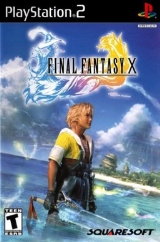
Final Fantasy X

 
Final Fantasy X

   Email Print
   Bookmark   Link


Final Fantasy X


is a console role-playing game
Console role-playing game

A console role-playing game is a video game Computer and video game genres that has its origin rooted in video game consoles and includes game mechanics and, frequently, settings derived from those of traditional role-playing games....
 developed and published by Square
Square Co.

was a Japanese video game company founded in September 1983 by Masafumi Miyamoto. It Mergers and acquisitions with Enix in 2003 and became part of Square Enix....
 (now Square Enix
Square Enix

is a video game and publishing company based in Japan best known for its console role-playing game franchises, which include the Dragon Quest series, the Final Fantasy series, and the Kingdom Hearts series....
) as the tenth installment in the Final Fantasy
Final Fantasy

is a media franchise created by Hironobu Sakaguchi and owned by Square Enix that includes video games, motion pictures, and other merchandise. The series began in 1987 as an Final Fantasy console role-playing game video game developer by Square Co., spawning a video game series that became the central focus of the franchise....
 series. It was released in 2001 for Sony
Sony Computer Entertainment

__NOEDITSECTION__ is a video game company specializing in a variety of areas in the video game industry, and is a full subsidiary of Sony Corporation....
's PlayStation 2
PlayStation 2

The PlayStation 2 is a History of video game consoles video game console manufactured by Sony. The successor to the PlayStation, and the predecessor to the PlayStation 3, the PlayStation 2 forms part of the PlayStation of video game consoles....
. The game marks the Final Fantasy series' transition from entirely pre-rendered
Pre-rendered

Pre-rendering is the process in which video footage is not rendering in real-time by the hardware that is outputing or playing back the video. Instead, the video is a recording of a footage that was previously rendered on a different equipment ....
 backdrops to fully three-dimensional
3D computer graphics

3D computer graphics are graphics that use a Cartesian coordinate system#Three-dimensional coordinate system representation of geometric data that is stored in the computer for the purposes of performing calculations and rendering 2D images....
 areas, and is also the first in the series to feature voice actors
Voice acting

Voice acting is the art of providing voices for animation characters and radio and audio dramas and comedy, doing voice-overs in radio and television Television advertisements, radio drama, dubbing foreign language films, video games, puppet shows, and amusement rides....
. Final Fantasy X replaces the Active Time Battle
Final Fantasy

is a media franchise created by Hironobu Sakaguchi and owned by Square Enix that includes video games, motion pictures, and other merchandise. The series began in 1987 as an Final Fantasy console role-playing game video game developer by Square Co., spawning a video game series that became the central focus of the franchise....
 (ATB) system with a new Conditional Turn-Based Battle (CTB) system, and uses a new leveling system called the "Sphere Grid."

Set in the fantasy world of Spira, the game's story centers around a group of adventurers and their quest to defeat a rampaging force known as "Sin." The player character
Player character

A player character or playable character is a fictional character in a video game or role playing game who is controlled or controllable by a player , and is typically a protagonist of the story told in the course of the game....
 is Tidus
Tidus

is the protagonist in the console role-playing game Final Fantasy X. As the lead character, the player controls Tidus through the game, manipulating his actions through the unfolding storyline in traditional Final Fantasy style....
, a blitzball
Minigames of Final Fantasy

The popular video game franchise has become known for its inclusion of one or more minigames as part of its core gameplay, beginning mainly with Final Fantasy VII....
 star who finds himself in Spira after his home city of Zanarkand is destroyed by Sin.


Discussion
Ask a question about 'Final Fantasy X'
Start a new discussion about 'Final Fantasy X'
Answer questions from other users
Full Discussion Forum


Quotations


Al Bhed is Al Bhed. Rikku is Rikku. Rikku swore to protect Yuna. And Rikku is not a liar. Kimahri can tell. So, she is a friend.

Apology is running. Yuna never run away.

On Yuna apologizing for not knowing another way to defeat Sin.

Being a Maester has it's privileges. I can just sit here and watch. Yunalesca

But there is no salvation for the damned! Rest in peace in eternal darkness.

By all means, try!

After Tidus says that he can stop him. Jecht

Don't look to others for knowledge, this is your story.


Encyclopedia


is a console role-playing game
Console role-playing game

A console role-playing game is a video game Computer and video game genres that has its origin rooted in video game consoles and includes game mechanics and, frequently, settings derived from those of traditional role-playing games....
 developed and published by Square
Square Co.

was a Japanese video game company founded in September 1983 by Masafumi Miyamoto. It Mergers and acquisitions with Enix in 2003 and became part of Square Enix....
 (now Square Enix
Square Enix

is a video game and publishing company based in Japan best known for its console role-playing game franchises, which include the Dragon Quest series, the Final Fantasy series, and the Kingdom Hearts series....
) as the tenth installment in the Final Fantasy
Final Fantasy

is a media franchise created by Hironobu Sakaguchi and owned by Square Enix that includes video games, motion pictures, and other merchandise. The series began in 1987 as an Final Fantasy console role-playing game video game developer by Square Co., spawning a video game series that became the central focus of the franchise....
 series. It was released in 2001 for Sony
Sony Computer Entertainment

__NOEDITSECTION__ is a video game company specializing in a variety of areas in the video game industry, and is a full subsidiary of Sony Corporation....
's PlayStation 2
PlayStation 2

The PlayStation 2 is a History of video game consoles video game console manufactured by Sony. The successor to the PlayStation, and the predecessor to the PlayStation 3, the PlayStation 2 forms part of the PlayStation of video game consoles....
. The game marks the Final Fantasy series' transition from entirely pre-rendered
Pre-rendered

Pre-rendering is the process in which video footage is not rendering in real-time by the hardware that is outputing or playing back the video. Instead, the video is a recording of a footage that was previously rendered on a different equipment ....
 backdrops to fully three-dimensional
3D computer graphics

3D computer graphics are graphics that use a Cartesian coordinate system#Three-dimensional coordinate system representation of geometric data that is stored in the computer for the purposes of performing calculations and rendering 2D images....
 areas, and is also the first in the series to feature voice actors
Voice acting

Voice acting is the art of providing voices for animation characters and radio and audio dramas and comedy, doing voice-overs in radio and television Television advertisements, radio drama, dubbing foreign language films, video games, puppet shows, and amusement rides....
. Final Fantasy X replaces the Active Time Battle
Final Fantasy

is a media franchise created by Hironobu Sakaguchi and owned by Square Enix that includes video games, motion pictures, and other merchandise. The series began in 1987 as an Final Fantasy console role-playing game video game developer by Square Co., spawning a video game series that became the central focus of the franchise....
 (ATB) system with a new Conditional Turn-Based Battle (CTB) system, and uses a new leveling system called the "Sphere Grid."

Set in the fantasy world of Spira, the game's story centers around a group of adventurers and their quest to defeat a rampaging force known as "Sin." The player character
Player character

A player character or playable character is a fictional character in a video game or role playing game who is controlled or controllable by a player , and is typically a protagonist of the story told in the course of the game....
 is Tidus
Tidus

is the protagonist in the console role-playing game Final Fantasy X. As the lead character, the player controls Tidus through the game, manipulating his actions through the unfolding storyline in traditional Final Fantasy style....
, a blitzball
Minigames of Final Fantasy

The popular video game franchise has become known for its inclusion of one or more minigames as part of its core gameplay, beginning mainly with Final Fantasy VII....
 star who finds himself in Spira after his home city of Zanarkand is destroyed by Sin. During the game, Tidus, along with several others, aids the summoner
Gameplay of Final Fantasy

Though each Final Fantasy story is independent, many aspects of gameplay have remained relatively consistent throughout the series....
 Yuna
Yuna (Final Fantasy)

is the female protagonist in both Square Enix's Final Fantasy X and Final Fantasy X-2 of the Final Fantasy series of console role-playing games....
 on her pilgrimage to destroy Sin.

Development of Final Fantasy X began in 1999, with a budget of more than US$
United States dollar

The United States dollar is the unit of currency of the United States and was defined by the Coinage Act of 1792 to be between 371 and 416 grains of silver ....
32.3 million and a team of more than 100 people. The game was the first in the main series not entirely scored by Nobuo Uematsu
Nobuo Uematsu

is a Japanese video game music and musician, best known for scoring numerous Final Fantasy titles. He is one of the most famous and respected composers in the video game community....
; Masashi Hamauzu
Masashi Hamauzu

is a Japanese video game music and musician who has been employed at Square Enix since 1996. He is perhaps best-known for his work on the Final Fantasy and SaGa series....
 and Junya Nakano
Junya Nakano

is a Japanese video game music and musician who has worked for Square Enix since 1995. He is perhaps best-known for scoring Threads of Fate and co-composing Final Fantasy X....
 were signed as Uematsu's fellow composers. Final Fantasy X was both a critical and commercial success. It was voted by the readers of the Japanese video game magazine Famitsu
Famitsu

is a Japanese video game magazine published by Enterbrain, Inc. and Tokuma Shoten. Currently, there are five console-only spin-off versions of Famitsu: Shukan Famitsu, Famitsu PS, Famitsu Xbox, Famitsu Wii+DS, and Famitsu Wave DVD....
 to be the greatest video game of all-time. As of January 20, 2004, the game has sold around 6.6 million units worldwide. In 2003, it was followed by a direct sequel; Final Fantasy X-2
Final Fantasy X-2

is a console role-playing game developed and published by Square Co. for Sony Computer Entertainment's PlayStation 2. It was released in 2003 and is the sequel to the best-selling 2001 game Final Fantasy X....
.

Gameplay


Like previous games in the series, Final Fantasy X is presented in a third-person perspective, with players directly navigating the main character, Tidus
Tidus

is the protagonist in the console role-playing game Final Fantasy X. As the lead character, the player controls Tidus through the game, manipulating his actions through the unfolding storyline in traditional Final Fantasy style....
, or Yuna
Yuna (Final Fantasy)

is the female protagonist in both Square Enix's Final Fantasy X and Final Fantasy X-2 of the Final Fantasy series of console role-playing games....
 in some cases, around the world to interact with objects and people. Unlike previous games, however, the world and town maps have been fully integrated, with terrain outside of cities rendered to scale. When an enemy is encountered, the environment switches to a turn-based
Turn-based strategy

A turn-based strategy game is a strategy game that is turn-based game. The phrase turn-based is used to distinguish such games from real-time strategy games, and as such the phrase refers almost exclusively to video games....
 battle area where characters and enemies await their turn to attack.

Final Fantasy Xs gameplay differs from that of previous Final Fantasy games in its lack of a top-down perspective
Top-down perspective

Top-down perspective, also sometimes referred to as bird's-eye view, overhead view or helicopter view, is a camera angle used in computer and video games that shows the player and the area around them from above....
 world map
Overworld

File:Pokemon gb ashandpikachu.pngIn video games, the term overworld refers to a top-down view or a Perspective #Film, television and video games of the fictional world within the game....
. Earlier games featured a miniature representation of the expansive areas between towns and other distinct locations, used for long-distance traveling. In Final Fantasy X, almost all the locations are essentially contiguous and never fade out to a world map. Regional connections are mostly linear, forming a single path through the game's locations, though an airship becomes available late in the game, giving the player the ability to navigate the world of Spira faster. Like previous games in the series, Final Fantasy X features numerous minigame
Minigame

A minigame, sometimes called a subgame, is a short video game often contained within another video game. A minigame is always smaller or more simplistic than the game in which it is contained....
s, most notably the fictional underwater sport "blitzball
Minigames of Final Fantasy

The popular video game franchise has become known for its inclusion of one or more minigames as part of its core gameplay, beginning mainly with Final Fantasy VII....
."

Combat


using a head-up display to illustrate the battle information.]] Final Fantasy X introduces the Conditional Turn-Based Battle
Final Fantasy

is a media franchise created by Hironobu Sakaguchi and owned by Square Enix that includes video games, motion pictures, and other merchandise. The series began in 1987 as an Final Fantasy console role-playing game video game developer by Square Co., spawning a video game series that became the central focus of the franchise....
 (CTB) system in place of the series' traditional Active Time Battle (ATB) system, which was originally developed by Hiroyuki Ito
Hiroyuki Ito

is a Japanese people game director and game designer. He is most known for his work on Square Enix's role-playing game series Final Fantasy.Initially working in debugging and sound effects for the first three games of the Final Fantasy series, his work became prominent in Final Fantasy IV, when he created the long-time series staple...
 and was first used in Final Fantasy IV
Final Fantasy IV

is a console role-playing game developed and published by Square Co. in as a part of the Final Fantasy series. The game was originally released for the Super Famicom in Japan, but has been ported with minor changes to the Super Nintendo Entertainment System as well as by TOSE to the Sony Computer Entertainment's PlayStation, Bandai's WonderS...
. The system was developed by battle director Toshiro Tsuchida
Toshiro Tsuchida

is a Japanese game director and game producer currently working for Square Enix . He is most notably credited for directing titles in the Front Mission series and was also the battle director for both Final Fantasy X and Final Fantasy XIII....
, who had Final Fantasy IV in mind when developing the CTB system. Whereas the ATB concept features real-time elements, the CTB system is a turn-based format that pauses the battle during each of the player's turns. Thus, the CTB design allows the player to select an action without time pressure. A graphical timeline along the upper-right side of the screen details who will be receiving turns next, and how various actions taken will affect the subsequent order of turns. The player can control up to three characters in battle, though a swapping system allows the player to replace any of them with one of the other four in the party. A player may swap characters at any time, unless the on-field character has been defeated. "Limit Breaks
Gameplay of Final Fantasy

Though each Final Fantasy story is independent, many aspects of gameplay have remained relatively consistent throughout the series....
" reappear in Final Fantasy X under the name "Overdrives." In this new incarnation of the feature, most of the techniques are interactive, requiring button inputs to increase their effectiveness.

Final Fantasy X introduces an overhaul of the summoning system employed in previous installments of the series. Whereas in previous games a summoned creature would arrive, perform a single action, and then depart, Final Fantasy Xs summons, called "aeons," arrive and entirely replace the battle party, fighting in their place until either the enemy has been slain, the aeon itself has been defeated, or the aeon is dismissed by the player. Aeons have their own statistics
Statistic (role-playing games)

A statistic in role-playing games is a piece of data which represents a particular property of a fictional character. That piece of data is usually a integer or, in some cases, a dice pool....
, commands, special attacks, spells, and Overdrives. The player acquires a minimum of five aeons over the course of the game, and three additional aeons can be obtained by completing various side-quests
Quest (gaming)

A quest in role playing games?including massively multiplayer online role-playing games and their text based predecessors MUD?is a task that a player-controlled player character or group of characters may complete in order to gain a reward....
.

Sphere Grid


As with previous titles in the series, players are given the opportunity to develop and improve their characters by defeating enemies and acquiring items, though the traditional experience point
Experience point

An experience point is a unit of measurement used in many role-playing games and role-playing video games to quantify a player character's progression through the game....
 system was replaced by a new system called the "Sphere Grid." Instead of characters gaining pre-determined statistic bonuses for their attributes after leveling up
Experience point

An experience point is a unit of measurement used in many role-playing games and role-playing video games to quantify a player character's progression through the game....
, each character gains a "sphere level" after collecting enough ability points (AP). Sphere levels allow players to move around the Sphere Grid, a predetermined grid of interconnected nodes consisting of various statistic and ability bonuses. Items called "spheres" are applied to these nodes, unlocking its function for the selected character.

The Sphere Grid system also allows players to fully customize characters in contrast to their intended battle roles, such as turning the magician Yuna into a physical powerhouse and the swordsman Auron into a healer. The International and PAL
PAL region

The PAL region is a video game publication territory which covers Australia, New Zealand and varying European countries. Most games designated as part of the region will not play on NTSC-U/C or NTSC-J region consoles because of regional lockout....
 versions of the game include an optional "Expert" version of the Sphere Grid; in these versions, all of the characters start in the middle of the grid and may follow whichever path the player chooses. As a trade-off, the Expert grid has fewer nodes in total, thus decreasing the total statistic upgrades available during the game.

Plot


Setting

Final Fantasy X is set in the fictional world of "Spira," and it consists of one large landmass divided into three subcontinents, surrounded by small tropical islands. It features diverse climates, ranging from the tropical Besaid and Kilika islands to the temperate Mi'ihen region to the frigid Macalania and Mt. Gagazet. Although it is predominantly populated by humans, Spira features a variety of races. Among them are the Al Bhed, a technologically advanced but disenfranchised sub-group of humans with distinctive green eyes and unique language. The Guado are less human in appearance, with elongated fingers and other differences. They also have a natural propensity for magic and conjuring monsters. Still less human in appearance are the large, lion-like Ronso, and the frog-like Hypello. Spira's wildlife population introduces several new concepts into the series. Although most creatures are drawn from real animals, such as cats, dogs, birds and butterflies, a few fictional species appear, such as the gigantic, amphibious "shoopuf" and the emu
Emu

The Emu , Dromaius novaehollandiae, is the largest bird native to Australia and the only Extant taxon member of the genus Dromaius. It is also the second-largest extant bird in the world by height, after its ratite relative, the ostrich....
-like chocobo
Chocobo

File:Chocobo.pngA is a fictional, large, and normally flightless galliformes/ratite bird capable of being ridden. This species is a staple of the Final Fantasy....
, which appears in most Final Fantasy games. Both are used primarily for transportation purposes. Most other unusual creatures encountered in Final Fantasy X are "fiends."

Spira is very different from the mainly European-style worlds found in previous Final Fantasy games, being much more closely modeled on Southeast Asia
Southeast Asia

Southeast Asia or Southeastern Asia is a subregion of Asia, consisting of the countries that are geographically south of China, east of India and north of Australia....
, most notably with respect to vegetation, topography, architecture, and names. Character designer Tetsuya Nomura
Tetsuya Nomura

is a Japanese video game director and character designer working for Square Enix , perhaps best known for his work on both the Final Fantasy and Kingdom Hearts series....
 has identified the South Pacific
Australasia

Australasia is a region of Oceania: New Zealand, Australia, Papua New Guinea, and neighbouring islands in the Pacific Ocean. The term was coined by Charles de Brosses in Histoire des navigations aux terres australes ....
, Thailand
Thailand

The Kingdom of Thailand is an independent country that lies in the heart of Southeast Asia. It is bordered to the north by Laos and Myanmar, to the east by Laos and Cambodia, to the south by the Gulf of Thailand and Malaysia, and to the west by the Andaman Sea and Myanmar....
 and Japan
Japan

Japan is an island country in East Asia. Located in the Pacific Ocean, it lies to the east of the Sea of Japan, People's Republic of China, North Korea, South Korea and Russia, stretching from the Sea of Okhotsk in the north to the East China Sea and Taiwan in the south....
 as major influences on the cultural and geographic design of Spira, particularly concerning the geographic location of the southern islands; Besaid and Kilika. He has also said that Spira deviates from the worlds of past Final Fantasy games in the level of detail incorporated, something he has expressed to have made a conscious effort to maintain during the design process. Producer Yoshinori Kitase
Yoshinori Kitase

is a Japanese game producer, scenario writer and a former game director working for Square Enix . He joined the company in 1991. His most notable roles as game director are Final Fantasy VI, Chrono Trigger, Final Fantasy VII and Final Fantasy VIII....
 felt that if the setting went back to a medieval European fantasy, it would not seem to help the development team advance. While he was thinking of different world environments, scenario writer Kazushige Nojima
Kazushige Nojima

is a Japanese game scenario writer and is the founder of Stellavista Ltd.. He is best known for writing parts of Square Enix's Final Fantasy video game series, namely Final Fantasy VII, Final Fantasy VIII, Final Fantasy X, Final Fantasy X-2 and the Kingdom Hearts series....
 suggested a fantasy world that incorporated Asian elements.

Characters

The seven main playable characters in Final Fantasy X are Tidus
Tidus

is the protagonist in the console role-playing game Final Fantasy X. As the lead character, the player controls Tidus through the game, manipulating his actions through the unfolding storyline in traditional Final Fantasy style....
, an energetic and upbeat blitzball
Minigames of Final Fantasy

The popular video game franchise has become known for its inclusion of one or more minigames as part of its core gameplay, beginning mainly with Final Fantasy VII....
 star; Yuna
Yuna (Final Fantasy)

is the female protagonist in both Square Enix's Final Fantasy X and Final Fantasy X-2 of the Final Fantasy series of console role-playing games....
, a reserved and soft-spoken summoner who always puts others before herself; Kimahri Ronso, an exile of the Ronso tribe who remains silent for most of the game and is devoted to protecting Yuna above all else; Wakka, a blitzball player and devout follower of the Yevon order; Lulu, a cynical and harsh, but well-meaning Black Mage; Auron, a taciturn former warrior monk; and Rikku
Rikku

is a player character in the console role-playing game Final Fantasy X, and a main character in its sequel, Final Fantasy X-2. She is a lively, kind-hearted young Al Bhed girl with blonde hair and spiral-shaped pupils, features that all Al Bhed share, and is highly skilled in mechanics, alchemy and thievery....
, a perky Al Bhed girl with extensive knowledge of machinery. The primary antagonists of the game are maester Seymour Guado and the other maesters of the Yevon religion, while the rampaging Sin serves as the primary source of conflict.

Sub-character chief designer Fumi Nakashima
Fumi Nakashima

Fumi Nakashima is a video game character designer for Square Enix. She has been credited on the following titles during her employment with the company:...
's focus was to ensure that characters from different regions and cultures bore distinctive characteristics in their clothing styles, so that they could be quickly and easily identified as members of their respective sub-groups. For example, she has said that the masks and goggles of the Al Bhed give the group a "strange and eccentric" appearance, while the attire of the Ronso lend to them being able to easily engage in battle.

Story


Final Fantasy X begins late in the story, with the main character, Tidus, waiting with his allies outside the ruined city of Zanarkand. Tidus narrates the series of events leading up to his present situation, which spans most of the game's storyline. It begins in Tidus' home city, the unruined and high-tech Zanarkand, where he is a renowned star of the underwater sport blitzball. During a blitzball tournament, the city is attacked by an immense creature shrouded in water known as Sin. The city is destroyed, and Tidus is taken by Sin to the world Spira.

After arriving in Spira, Tidus is rescued by Al Bhed divers in the area, and upon asking where he is from, one of them, Rikku, tells him that Zanarkand had been destroyed 1000 years earlier. After another attack by Sin, Tidus is separated from the divers and drifts to the tropical island Besaid, where he meets Wakka, the captain of the local blitzball team. Wakka introduces Tidus to Yuna, a young summoner planning a pilgrimage to destroy Sin using the "Final Aeon" from the ruins of Zanarkand. Accompanying Yuna are her guardians: Lulu, Wakka and Kimahri. The party travels to gather aeons, defending against attacks by Sin. The party encounters Auron, who joins them. He reveals to Tidus that Yuna's father, Lord Braska; Tidus's father, Jecht; and he himself made the same pilgrimage and defeated Sin ten years ago. Tidus thought his father had died at sea ten years earlier. Following more encounters with Sin, they are joined by Rikku, who is revealed to be Yuna's cousin.

When the party arrives in the Guado city Guadosalam, Seymour proposes to Yuna, and she informs the group of her intent to marry him for Spira's sake. Seymour's aide, Tromell, guides the group to Guadosalam's temple, where they see a message from Seymour's late father. He declares he was killed by his son, and that Seymour's evil nature will destroy Spira. The group engages Seymour in battle and defeats him; soon afterward, Sin attacks the group and they lose track of Yuna. Rikku guides the group to the Al Bhed "Home," which is under attack by Yevon. While searching Home's base, Tidus learns that a summoner must give their life to perform the "Final Summoning." Using the Al Bhed's airship, they escape the base before it is destroyed. The group resolves to save Yuna and they discover her at Bevelle, where she is forced into marrying the now unsent Seymour. They interrupt the wedding and escape with Yuna towards Mt. Gagazet, where Seymour has slaughtered the tribe there; after defeating him, the group heads to Zanarkand.

Tidus learns that he, Jecht, and the Zanarkand they hail from are summoned entities akin to aeons. Long ago a summoner named Yevon had the city's surviving people become "fayth" so that he could use their memories of Zanarkand to create a new city in its image, removed from the warfare on the Spiran mainland. Sin was also created, given form by Yevon to serve as armor; protecting himself and the fayth. While continuously summoning Dream Zanarkand, Yevon lost his humanity and became known as Yu Yevon, a being existing solely to maintain Dream Zanarkand's existence. Over the next 1000 years, Sin would persistently attack the people of Spira to prevent the discovery of Dream Zanarkand's existence.

Once the player completes Yuna's pilgrimage, Lady Yunalesca—Yevon's daughter and the first summoner to have defeated Sin—tells the group that the Final Aeon is created from the spirit of one close to a summoner. After defeating Sin, Yu Yevon's spirit possesses the aeon, transforming it into a new Sin. The group decides against using the Final Aeon and they defeat Yunalesca. They then seek a new way to permanently destroy Sin that will not require any sacrifices. This leads the group to enter Sin's body and battle Seymour, Jecht's imprisoned spirit, and Yu Yevon. Sin's cycle of rebirth ends, and the spirits of Spira's fayth are freed from their imprisonment, dispersing the aeons, Dream Zanarkand, and Tidus in the process. Afterward, in a speech to the citizens of Spira, Yuna resolves to help rebuild the world now that it is free of Sin. After the credits, there is a brief scene with Tidus underwater. He opens his eyes and begins swimming upward, and the screen fades to white. This scene is later explained in Final Fantasy X-2
Final Fantasy X-2

is a console role-playing game developed and published by Square Co. for Sony Computer Entertainment's PlayStation 2. It was released in 2003 and is the sequel to the best-selling 2001 game Final Fantasy X....
 if certain conditions are met. During the story there is also a love story between Tidus and Yuna where during the story they build a relationship which is forced to end at the end of the game but is also later explained in Final Fantasy X-2
Final Fantasy X-2

is a console role-playing game developed and published by Square Co. for Sony Computer Entertainment's PlayStation 2. It was released in 2003 and is the sequel to the best-selling 2001 game Final Fantasy X....
.

Development


Development for Final Fantasy X began in 1999, costing approximately four billion Japanese yen
Japanese yen

The is the currency of Japan. It is the third most-traded currency in the forex after the euro and the United States dollar. It is also widely used as a reserve currency after the U.S....
 (approximately US$
United States dollar

The United States dollar is the unit of currency of the United States and was defined by the Coinage Act of 1792 to be between 371 and 416 grains of silver ....
32.3 million) with a crew of more than 100 people, most of whom worked on previous games in the series. Executive producer Hironobu Sakaguchi
Hironobu Sakaguchi

is a Japanese people game designer, game director and game producer. He is famous around the world as the creator of the Final Fantasy series, and he has had a long career in gaming with over 80 million units of video games sold worldwide....
 has stated that although he had concerns about the transition from 2D to 3D backgrounds, the voice acting
Voice acting

Voice acting is the art of providing voices for animation characters and radio and audio dramas and comedy, doing voice-overs in radio and television Television advertisements, radio drama, dubbing foreign language films, video games, puppet shows, and amusement rides....
, and the transition to real-time story-telling, the success of the Final Fantasy series can be attributed to constantly challenging the development team to try new things. Scenario writer Kazushige Nojima
Kazushige Nojima

is a Japanese game scenario writer and is the founder of Stellavista Ltd.. He is best known for writing parts of Square Enix's Final Fantasy video game series, namely Final Fantasy VII, Final Fantasy VIII, Final Fantasy X, Final Fantasy X-2 and the Kingdom Hearts series....
 was particularly concerned with establishing a connection in the relationship between the player and main character. Thus, he penned the story such that the player's progress through the world and growing knowledge about it is reflected in Tidus' own understanding and narration. The game was initially going to feature online elements, but these were dropped during production, and online gaming would not become part of the Final Fantasy series until Final Fantasy XI
Final Fantasy XI

, also known as Final Fantasy XI Online, is a massively multiplayer online role-playing game developed and published by Square Co. as part of the Final Fantasy series....
.

Map director Takayoshi Nakazato
Takayoshi Nakazato

Takayoshi Nakazato is a video game director for Square Enix. He has been credited as one of the three main directors of Final Fantasy X, with Motomu Toriyama and Toshiro Tsuchida, and most recently was the director of Dirge of Cerberus: Final Fantasy VII....
 wanted to implement a world map concept with a more realistic approach than that of the traditional Final Fantasy game, in-line with the realism of the game's 3D backgrounds, as opposed to pre-rendered backgrounds. As a player of the games in the Final Fantasy series, battle director Toshiro Tsuchida
Toshiro Tsuchida

is a Japanese game director and game producer currently working for Square Enix . He is most notably credited for directing titles in the Front Mission series and was also the battle director for both Final Fantasy X and Final Fantasy XIII....
 wanted to recreate elements he found interesting or he felt was entertaining, which eventually led to the removal of the Active Time Battle (ATB) system, and instead, incorporated the party interchanging Conditional Turn-Based Battle (CTB) system. Originally, Final Fantasy X was going to feature wandering enemies visible on the field map, seamless transitions into battles, and the option for players to move around the landscape during enemy encounters. Battle art director Shintaro Takai
Shintaro Takai

Shintaro Takai is a video game director for Square Enix. He has been credited on the following titles during his employment with the company:*Dirge of Cerberus: Final Fantasy VII - ...
 has explained that it was his intention that battles in Final Fantasy X come across as a natural part of the story and not an independent element. However, due to hardware and system limitations, these ideas were not used until Final Fantasy XI and Final Fantasy XII
Final Fantasy XII

is a single-player console role-playing game developed and published by Square Enix for the PlayStation 2. Released in 2006, it is the twelfth installment in the Final Fantasy series....
. Instead, a compromise was made, whereby some transitions from the field screen to battle arenas were made relatively seamless with the implementation of a motion blur effect. The desire for seamless transitions also led to the implementation of the new summoning system seen in the game. Yoshinori Kitase
Yoshinori Kitase

is a Japanese game producer, scenario writer and a former game director working for Square Enix . He joined the company in 1991. His most notable roles as game director are Final Fantasy VI, Chrono Trigger, Final Fantasy VII and Final Fantasy VIII....
 has explained that the purpose behind the Sphere Grid is to give players an interactive means of increasing their characters' attributes, such that they will be able to observe the development of those attributes firsthand.

Final Fantasy X features innovations in the rendering of characters' facial expressions, achieved through motion capture
Motion capture

Motion capture, motion tracking, or mocap are terms used to describe the process of recording motion and translating that movement onto a digital model....
 and skeletal animation
Skeletal animation

Skeletal animation, sometimes referred to as rigging, is a technique in computer animation, particularly in the animation of vertebrates, in which a character is represented in two parts: a surface representation used to draw the character and a hierarchical set of bones used for animation only ....
 technology. This technology allowed animators to create realistic lip movements, which were then programmed to match the speech of the game's voice actors. Nojima has revealed that the inclusion of voice-over
Voice-over

The term voice-over refers to a production technique where a Diegetic#Film_sound_and_music voice is broadcast live or pre-recorded in radio, television, film, theatre and/or presentation....
s enabled him to express emotion more powerfully than before, and he was therefore able to keep the storyline simple. He also said that the presence of voice actors led him to make various changes to the script, in order to match the voice actors' personalities with the characters they were portraying. The inclusion of voice-overs, however, led to difficulties. With the game's cut scenes already programmed around the Japanese voice work, Final Fantasy Xs English localization
Language localisation

Language localisation can be defined as the second phase of a larger process of product translation and cultural adaptation to account for differences in distinct markets....
 team faced the difficulty of establishing English-oriented dialogue and the obstacle of incorporating this modified wording with the rhythm and timing of the characters' lip movements. Localization specialist Alexander O. Smith
Alexander O. Smith

Alexander O. Smith is a professional English language/Japanese language translator and author. While his output covers many areas such as adaptation of Japanese novels, manga, song lyrics, anime scripts and various academic works, he is best known for his software localizations of Japanese video games....
 described the process of fitting natural-sounding English speech into the game as "something akin to writing four or five movies worth of dialogue entirely in haiku
Haiku

' ', plural haiku, is a form of Japanese poetry, consisting of 17 Mora e , in three metrical phrases of 5, 7 and 5 morae respectively. Haiku typically contain a kigo, or seasonal reference, and a kireji or verbal caesura....
 form [and] of course the actors had to act, and act well, within those restraints."

Audio

Final Fantasy X marks the first time regular series composer Nobuo Uematsu
Nobuo Uematsu

is a Japanese video game music and musician, best known for scoring numerous Final Fantasy titles. He is one of the most famous and respected composers in the video game community....
 has had any assistance in composing the score for a game in the main series. His fellow composers for Final Fantasy X were Masashi Hamauzu
Masashi Hamauzu

is a Japanese video game music and musician who has been employed at Square Enix since 1996. He is perhaps best-known for his work on the Final Fantasy and SaGa series....
 and Junya Nakano
Junya Nakano

is a Japanese video game music and musician who has worked for Square Enix since 1995. He is perhaps best-known for scoring Threads of Fate and co-composing Final Fantasy X....
. They were chosen for the soundtrack based on their ability to create music that was different from Uematsu's style while still being able to work together.

The game features three songs with vocalized elements, including the J-pop
J-pop

J-pop is an abbreviation of Japanese pop, but is also a loosely defined musical genre that entered the musical mainstream of Japan in 1990s....
 ballad "Suteki Da Ne," which translates as "Isn't it Wonderful?." The lyrics were written by Kazushige Nojima
Kazushige Nojima

is a Japanese game scenario writer and is the founder of Stellavista Ltd.. He is best known for writing parts of Square Enix's Final Fantasy video game series, namely Final Fantasy VII, Final Fantasy VIII, Final Fantasy X, Final Fantasy X-2 and the Kingdom Hearts series....
, and the instrumentals were composed by Uematsu. The song is performed by Japanese folk singer RIKKI
RIKKI

, professionally known as , is a famous Japanese folk singer.She began to sing traditional Japanese music when she was four years old. Later, at the age of 15, Rikki was the youngest winner ever to win the "Grand Prix" of the Japanese traditional folk music awards ....
, whom the music team contacted while searching for a singer whose music reflected an Okinawan
Okinawa Prefecture

is one of Japan's southern Prefectures of Japan, and consists of hundreds of the Ryukyu Islands in a chain over 1,000 km long, which extends southwest from Kyushu to Taiwan....
 atmosphere. "Suteki Da Ne" is also sung in Japanese in the English version of Final Fantasy X. Like "Eyes on Me
Discography of Final Fantasy VIII

The music of the video game Final Fantasy VIII was composed by regular series composer Nobuo Uematsu. The Final Fantasy VIII Original Soundtrack, a compilation of all music in the game, was released on four Compact Discs by DigiCube in Japan, and by Square Electronic Arts in North America....
" from Final Fantasy VIII
Final Fantasy VIII

is a console role-playing game developed and published by Square Co. as the eighth installment in the Final Fantasy series. It was released in 1999 for Sony Computer Entertainment's PlayStation and in 2000 for Microsoft's Microsoft Windows-based personal computers....
 and "Melodies of Life
Discography of Final Fantasy IX

The music of the video game Final Fantasy IX was composed by regular series composer Nobuo Uematsu. It was his last exclusive Final Fantasy score....
" from Final Fantasy IX
Final Fantasy IX

is a console role-playing game developed and published by Square Co. as the ninth installment in the Final Fantasy series. It was released in 2000 and is the third and last numbered Final Fantasy game for Sony Computer Entertainment's PlayStation....
, an orchestrated version of "Suteki Da Ne" is used as part of the ending theme. The other songs with lyrics are the heavy metal opening theme, "Otherworld," sung in English by Bill Muir, and "Hymn of the Fayth," a recurring piece sung using Japanese syllabary.

Versions and merchandise


The Japanese version of Final Fantasy X included an additional disc entitled "The Other Side of Final Fantasy," which featured interviews, storyboards, and trailers for Blue Wing Blitz
Blue Wing Blitz

is a Japanese-exclusive tactical role-playing game developed and published by Square Co. on July 5, 2001 for the WonderSwan Color and compatible with the WonderSwan....
, Kingdom Hearts
Kingdom Hearts

is an action role-playing game developed and published by Square Co. in 2002 for the PlayStation 2 video game console. The first game in the Kingdom Hearts , it is the result of a collaboration between Square and The Walt Disney Company....
, and Final Fantasy: The Spirits Within
Final Fantasy: The Spirits Within

Final Fantasy: The Spirits Within is a computer animated science fiction film by Hironobu Sakaguchi, the creator of the Final Fantasy series of console role-playing game....
, as well as the first footage of Final Fantasy XI
Final Fantasy XI

, also known as Final Fantasy XI Online, is a massively multiplayer online role-playing game developed and published by Square Co. as part of the Final Fantasy series....
. An international version
International version

In video games, an international version is a software localization version of a previously released title in its native territory that has gained additional features and contents in foreign releases....
 of the game was released in Japan as "Final Fantasy X International" in January 2002, and in PAL
PAL region

The PAL region is a video game publication territory which covers Australia, New Zealand and varying European countries. Most games designated as part of the region will not play on NTSC-U/C or NTSC-J region consoles because of regional lockout....
 territories under its original title. It features content not available in the original NTSC
NTSC

NTSC is the analog television system used in most of the Americas, Japan, South Korea, Taiwan, the Philippines, Burma, and some Pacific island nations and territories ....
 releases, including battles with "dark" versions of the game's aeons and an airship fight with the superboss "Penance." The Japanese release of Final Fantasy X International also includes "Eternal Calm," a 14 minute video clip bridging the story of Final Fantasy X with that of its sequel, Final Fantasy X-2
Final Fantasy X-2

is a console role-playing game developed and published by Square Co. for Sony Computer Entertainment's PlayStation 2. It was released in 2003 and is the sequel to the best-selling 2001 game Final Fantasy X....
. The video clip was included in a bonus DVD for Unlimited Saga Collector's Edition
Unlimited Saga

is a console role playing game developed and published by Square Co. . It was released on December 19, 2002 in Japan, June 17, 2003 in North America and October 31, 2003 in Europe....
 under the name Eternal Calm, Final Fantasy X-2: Prologue. It was first released in Europe on October 31, 2003, and featured English voice-overs.

The International and PAL versions includes a bonus DVD called Beyond Final Fantasy, a disc including interviews with the game's developers, and two of the game's English voice actors, James Arnold Taylor
James Arnold Taylor

James Arnold Taylor is an United States voice actor....
 (Tidus) and Hedy Burress
Hedy Burress

Hedy Burress is an United States actress....
 (Yuna). Also included are trailers for Final Fantasy X and Kingdom Hearts, a concept and promotional art gallery for the game, and a music video of "Suteki Da Ne" performed by RIKKI
RIKKI

, professionally known as , is a famous Japanese folk singer.She began to sing traditional Japanese music when she was four years old. Later, at the age of 15, Rikki was the youngest winner ever to win the "Grand Prix" of the Japanese traditional folk music awards ....
. In 2005, a compilation featuring Final Fantasy X and Final Fantasy X-2 was released in Japan as Final Fantasy X/X-2 Ultimate Box.

Square also produced various types of merchandise and several books, including The Art of Final Fantasy X and three Ultimania
DigiCube

DigiCube Co., Ltd. was a Japanese company established as a subsidiary of software developer Square Co. on February 6, 1996 and headquartered in Tokyo, Japan....
 guides, a series of artbooks/strategy guide
Strategy guide

Strategy guides are instruction books that contain hints or complete solutions to specific video games. The line between strategy guides and walkthroughs is somewhat blurred, with the former often containing or being written around the latter....
s published by DigiCube
DigiCube

DigiCube Co., Ltd. was a Japanese company established as a subsidiary of software developer Square Co. on February 6, 1996 and headquartered in Tokyo, Japan....
 in Japan. They feature original artwork from Final Fantasy X, offer gameplay walkthroughs, expand upon many aspects of the game's storyline and feature several interviews with the game's designers. There are three books in the series: Final Fantasy X Scenario Ultimania, Final Fantasy X Battle Ultimania, and Final Fantasy X Ultimania O.

Reception


Final Fantasy X was well received by the media, and enjoyed high sales figures. Within four days of its release in Japan, the game had sold over 1.4 million copies in pre-order
Pre-order

A pre-order is an order placed for an item which has not yet been released. The idea for pre-orders came when people found it hard to get popular items in stores due to their popularity....
s. These figures exceeded the performances of Final Fantasy VII
Final Fantasy VII

is a console role-playing game developed by Square Co. and published by Sony Computer Entertainment as the seventh installment in the Final Fantasy series....
 and Final Fantasy IX
Final Fantasy IX

is a console role-playing game developed and published by Square Co. as the ninth installment in the Final Fantasy series. It was released in 2000 and is the third and last numbered Final Fantasy game for Sony Computer Entertainment's PlayStation....
 in a comparable period, and Final Fantasy X became the first PlayStation 2 game to reach two million and four million sold copies. In October 2007, the game was listed as the eighth best-selling game for the PlayStation 2. The game has sold approximately 6.6 million copies worldwide as of January 20, 2004. Final Fantasy X came in third on IGN
IGN

IGN is a multimedia news and reviews website that focuses heavily on video games. Its corporate parent is IGN Entertainment, which owns and controls separate sites such as GameSpy, GameStats, Rotten Tomatoes and AskMen....
's "Top 25 PS2 Games of All Time" list in 2007. At the sixth annual Interactive Achievement Awards
Interactive Achievement Awards

The Academy of Interactive Arts & Sciences has been hosting the Interactive Achievement Awards for video game publication annually since 1998. The game award ceremony is presented at the annual D.I.C.E....
 in 2003, it was nominated for "Outstanding Achievement in Animation" and "Console Role-Playing Game of the Year."

Critical response


Japanese and Western critics have generally given Final Fantasy X high review scores. The Japanese video game magazine Famitsu
Famitsu

is a Japanese video game magazine published by Enterbrain, Inc. and Tokuma Shoten. Currently, there are five console-only spin-off versions of Famitsu: Shukan Famitsu, Famitsu PS, Famitsu Xbox, Famitsu Wii+DS, and Famitsu Wave DVD....
 and Famitsu PS2 awarded the game a near-perfect 39/40 score, and readers of the former magazine voted it the best game of all time in early 2006. Another Japanese gaming magazine called The Play Station gave the game a score of 29/30. Famitsu, Famitsu PS2, and The Play Station expressed particularly favorable responses toward the game's storyline, graphics, and movies.

IGN's David Smith offered praise for the voice actors and the innovations in gameplay, particularly with the revised battle and summon magic system, the option to change party members during battle, and the character development and inventory management systems. They also felt that the game's graphics had improved on its predecessors in every area possible, and that the game as a whole was "the best-looking game of the series [and] arguably the best-playing as well." Greg Kasavin
Greg Kasavin

Gregory A. Kasavin is the former site director and executive editor at the gaming website GameSpot. He attended University of California, Berkeley, where he considered becoming an English professor....
 of GameSpot
GameSpot

GameSpot is a video game website that provides news, reviews, previews, downloads, and other information. The site was launched in May 1996 by Pete Deemer and Vince Broady....
 praised the game's storyline, calling it surprisingly complex, its ending satisfying, and its avoidance of role-playing game clichés commendable. He also lauded the music, feeling it was "diverse and well suited to the various scenes in the game." The visuals of the game were commended by GameSpy
GameSpy

GameSpy, also known as GameSpy Industries, is a division of IGN Entertainment, which operates a network of game websites and provides online video game-related services and software....
's Raymond Padilla, who referred to them as "top-notch," as well as giving praise to the character models, backgrounds, cut scenes, and animations.

The UK-based publication Edge
Edge (magazine)

Edge is a multi-format computer and video game magazine published by Future Publishing in the United Kingdom. It is known for its industry contacts, editorial stance, distinctive anonymous third-person writing style, yearly awards, and longevity....
 rated the game considerably lower, criticizing it for not providing a next generation gaming experience. The magazine cited the game's battle system as "fractionally more complex" than in previous installments of the series, and the dialogue as "nauseating" Andrew Reiner of Game Informer
Game Informer

Game Informer is an United States-based monthly video game journalism featuring articles, news, strategy, and reviews of popular video games and associated video game console....
 criticized the game's linearity and that players were no longer able to travel the world by chocobo
Chocobo

File:Chocobo.pngA is a fictional, large, and normally flightless galliformes/ratite bird capable of being ridden. This species is a staple of the Final Fantasy....
 or control the airship. Eurogamer
Eurogamer

Eurogamer is a Brighton-based website focused on video games news, reviews, previews and interviews. It is operated by Eurogamer Network Ltd., which was formed in 1999 by brothers Rupert Loman and Nick Loman....
's Tom Bramwell noted that the game's puzzle segments were "depressing" and "superfluous," and that although the "Sphere Grid" was "a nice touch," it took up too much of the game.

Legacy


Due to its commercial and critical success, Square Enix released a direct sequel to Final Fantasy X in 2003, titled Final Fantasy X-2
Final Fantasy X-2

is a console role-playing game developed and published by Square Co. for Sony Computer Entertainment's PlayStation 2. It was released in 2003 and is the sequel to the best-selling 2001 game Final Fantasy X....
. The sequel is set two years after the conclusion of Final Fantasy X, establishing new conflicts and dilemmas and resolving loose ends left by the original game. As a result of Final Fantasy Xs reception, Yoshinori Kitase
Yoshinori Kitase

is a Japanese game producer, scenario writer and a former game director working for Square Enix . He joined the company in 1991. His most notable roles as game director are Final Fantasy VI, Chrono Trigger, Final Fantasy VII and Final Fantasy VIII....
 and Kazushige Nojima
Kazushige Nojima

is a Japanese game scenario writer and is the founder of Stellavista Ltd.. He is best known for writing parts of Square Enix's Final Fantasy video game series, namely Final Fantasy VII, Final Fantasy VIII, Final Fantasy X, Final Fantasy X-2 and the Kingdom Hearts series....
 decided to establish a plot-related connection between Final Fantasy X and Final Fantasy VII
Final Fantasy VII

is a console role-playing game developed by Square Co. and published by Sony Computer Entertainment as the seventh installment in the Final Fantasy series....
, another popular Final Fantasy game.

The advancements in portraying realistic emotions achieved with Final Fantasy X through voice-overs and detailed facial expressions have since become a staple of the series, with Final Fantasy X-2 and other subsequent titles (such as Dirge of Cerberus: Final Fantasy VII
Dirge of Cerberus: Final Fantasy VII

is a third person shooter game developed and published by Square Enix in 2006. It is part of the Compilation of Final Fantasy VII metaseries, a multimedia collection set within the universe of the popular 1997 video game Final Fantasy VII....
 and Final Fantasy XII
Final Fantasy XII

is a single-player console role-playing game developed and published by Square Enix for the PlayStation 2. Released in 2006, it is the twelfth installment in the Final Fantasy series....
) also featuring this development. Traversing real-time 3D environments instead of an overworld map has also become a standard of the series, as demonstrated in both Final Fantasy XI
Final Fantasy XI

, also known as Final Fantasy XI Online, is a massively multiplayer online role-playing game developed and published by Square Co. as part of the Final Fantasy series....
 and Final Fantasy XII.

External links


  • Final Fantasy X on the Final Fantasy Wiki