

Fertility awareness

Encyclopedia
Fertility awareness refers to a set of practices used to determine the fertile
and infertile phases of a woman's menstrual cycle
. Fertility awareness methods may be used to avoid pregnancy
, to achieve pregnancy
, or as a way to monitor gynecological
health.
Methods of identifying infertile days have been known since antiquity, but scientific knowledge gained during the past century has greatly increased the accuracy of these systems. From 1930 to 1980, all research and promotion of fertility awareness was done by those associated with the Roman Catholic Church
.
Systems of fertility awareness rely on observation of changes in one or more of the primary fertility signs (basal body temperature
, cervical mucus, and cervical position), tracking menstrual cycle length and identifying the fertile window based on this information, or both. Other signs may also be observed: these include breast tenderness and mittelschmerz
(ovulation pains), urine analysis strips known as ovulation predictor kits (OPKs), and microscopic examination of saliva or cervical fluid. Also available are computerized fertility monitor
s.
, cervical mucus, and cervical position. Systems relying exclusively on cervical mucus include the Billings Ovulation Method
, The Ovulation Method, the Creighton Model
, and the Two-Day Method. Symptothermal methods combine observations of basal body temperature (BBT), cervical mucus, and sometimes cervical position. Calendar-based methods rely on tracking a woman's cycle and identifying her fertile window based on the lengths of her cycles. The best known of these methods is the Standard Days Method. The Calendar-Rhythm method is also considered a calendar-based method though it is not well defined and has many different meanings to different people.
Systems of fertility awareness may be referred to as fertility awareness-based methods (FAB methods); the term Fertility Awareness Method (FAM) refers specifically to the system taught by Toni Weschler
. The term "natural family planning
" (NFP) is sometimes used to refer to any use of FA methods. However, , which are: the Lactational amenorrhea method
, and periodic abstinence
during fertile times. A method of FA may be used by NFP users to identify these fertile times.
Women who are breastfeeding a child and wish to avoid pregnancy may be able to practice the lactational amenorrhea method (LAM). LAM is distinct from fertility awareness, but because it also does not involve devices or chemicals, it is often presented alongside FA as a method of "natural" birth control.
wrote about periodic abstinence to avoid pregnancy in the year 388 (the Manichaeans attempted to use this method to remain childfree
, and Augustine condemned their use of periodic abstinence). One book states that periodic abstinence was recommended "by a few secular thinkers since the mid-nineteenth century," but the dominant force in the twentieth century popularization of fertility awareness-based methods was the Roman Catholic Church
.
In 1905 Theodoor Hendrik van de Velde
, a Dutch gynecologist, showed that women only ovulate once per menstrual cycle. In the 1920s, Kyusaku Ogino
, a Japanese gynecologist, and Hermann Knaus, from Austria, independently discovered that ovulation occurs about fourteen days before the next menstrual period. Ogino used his discovery to develop a formula for use in aiding infertile women to time intercourse to achieve pregnancy. In 1930, John Smulders, Roman Catholic physician from the Netherlands, used this discovery to create a method for avoiding pregnancy. Smulders published his work with the Dutch Roman Catholic medical association, and this was the first formalized system for periodic abstinence — the rhythm method.
in 1951 gave the highest form of recognition to the Catholic Church's approval—for couples who needed to avoid pregnancy—of these systems. In the early 1950s, Dr. John Billings
discovered the relationship between cervical mucus and fertility while working for the Melbourne Catholic Family Welfare Bureau. Dr. Billings and several other physicians studied this sign for a number of years, and by the late 1960s had performed clinical trials and begun to set up teaching centers around the world.
The first organization to teach a symptothermal method was founded in 1971. John and Sheila Kippley, lay Catholics, joined with Dr. Konald Prem in teaching an observational method that relied on all three signs: temperature, mucus, and also cervical position. Their organization is now called Couple to Couple League International. The next decade saw the founding of other now-large Catholic organizations — Family of the Americas (1977), teaching the Billings method, and the Pope Paul VI Institute (1985), teaching a new mucus-only system called the Creighton Model.
Up until the 1980s, information about fertility awareness was only available from Catholic sources. The first secular teaching organization was the Fertility Awareness Center in New York, founded in 1981. Toni Weschler
started teaching in 1982 and published the bestselling book Taking Charge of Your Fertility in 1995. Justisse was founded in 1987 in Edmonton, Canada. These secular organizations all teach symptothermal methods. Although the Catholic organizations are significantly larger than the secular fertility awareness movement, independent secular teachers have become increasingly common throughout the 1990s and 2000s.
introduced two new methods. The Two-Day Method, a mucus-only system, and CycleBeads
and iCycleBeads (the digital version), based on the Standard Days Method, are designed to be both effective and very simple to teach, learn, and use.
(BBT), cervical mucus, and cervical position. A woman practicing symptoms-based fertility awareness may choose to observe one sign, two signs, or, all three. Many women experience secondary fertility signs that correlate with certain phases of the menstrual cycle. Examples include abdominal pain
and heaviness, back pain
, breast tenderness and mittelschmerz
(ovulation pains).
will trigger a rise in BBT between 0.3 and 0.9 °C (0.5 and 1.6 °F) that lasts approximately until the next menstruation. This temperature shift may be used to determine the onset of post-ovulatory infertility.
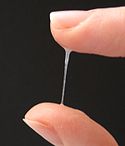
The production of fertile cervical mucus is caused by the same hormone (estrogen) that prepares a woman’s body for ovulation. By observing her cervical mucus, and paying attention to the sensation as it passes the vulva, a woman can detect when her body is gearing up for ovulation, and also when ovulation has passed. When ovulation occurs, estrogen production drops slightly and progesterone starts to rise. The rise in progesterone causes a distinct change in the quantity and quality of mucus observed at the vulva.
changes position in response to the same hormones that cause cervical mucus to be produced and to dry up. When a woman is in an infertile phase of her cycle, the cervix will be low in the vaginal canal; it will feel firm to the touch (like the tip of a person’s nose); and, the os – the opening in the cervix – will be relatively small, or ‘closed’. As a woman becomes more fertile, the cervix will rise higher in the vaginal canal; it will become softer to the touch (more like a person’s lips); and the os will become more open. After ovulation has occurred, the cervix will revert to its infertile position.
and cervical cap
s.
Mucus- and temperature-based methods used to determine post-ovulatory infertility, when used to avoid conception, result in very low perfect-use pregnancy rates. However, mucus and temperature systems have certain limitations in determining pre-ovulatory infertility. A temperature record alone provides no guide to fertility or infertility before ovulation occurs. Determination of pre-ovulatory infertility may be done by observing the absence of fertile cervical mucus; however, this results in a higher failure rate than that seen in the period of post-ovulatory infertility. Relying only on mucus observation also means that unprotected sexual intercourse is not allowed during menstruation
, since any mucus would be obscured.
Use of certain calendar rules to determine the length of the pre-ovulatory infertile phase allows unprotected intercourse during the first few days of the menstrual cycle, while maintaining a very low risk of pregnancy. With mucus-only methods, there is a possibility of incorrectly identifying mid-cycle or anovulatory bleeding as menstruation. Keeping a BBT chart enables accurate identification of menstruation, when pre-ovulatory calendar rules may be reliably applied. In temperature-only systems, a calendar rule may be relied on alone to determine pre-ovulatory infertility. In symptothermal systems, the calendar rule is cross-checked by mucus records: observation of fertile cervical mucus overrides any calendar-determined infertility.
Calendar rules may set a standard number of days, specifying that (depending on a woman's past cycle lengths) the first three to six days of each menstrual cycle are considered infertile. Or, a calendar rule may require calculation, for example holding that the length of the pre-ovulatory infertile phase is equal to the length of a woman's shortest cycle minus twenty-one days. Rather than being tied to cycle length, a calendar rule may be determined from the cycle day on which a woman observes a thermal shift. One system has the length of the pre-ovulatory infertile phase equal to a woman's earliest historical day of temperature rise minus seven days.
Saliva microscopes, when correctly used, can detect ferning structures in the saliva that precede ovulation. Ferning is usually detected beginning three days before ovulation, and continuing until ovulation has occurred. During this window, ferning structures occur in cervical mucus as well as saliva.
Computerized fertility monitors are available under various brand names. These monitors may use BBT-only systems, they may analyze urine test strips, they may use symptothermal observations, they may monitor the electrical resistance of saliva and vaginal fluids, or a combination of any of these factors.
or abstain from sexual intercourse.
, can be assessed two ways. Perfect use or method effectiveness rates only include people who follow all observational rules, correctly identify the fertile phase, and refrain from unprotected intercourse on days identified as fertile. Actual use, or typical use effectiveness rates are of all women relying on fertility awareness to avoid pregnancy, including those who fail to meet the "perfect use" criteria. Rates are generally presented for the first year of use. Most commonly the Pearl Index
is used to calculate effectiveness rates, but some studies use decrement table
s.
The failure rate of fertility awareness varies widely depending on the system used to identify fertile days, the instructional method, and the population being studied. Some studies have found actual failure rates of 25% per year or higher. At least one study has found a failure rate of less than 1% per year with continuous intensive coaching and monthly review, and several studies have found actual failure rates of 2-3% per year.
When used correctly and consistently (i.e., perfect use) with ongoing coaching, under study conditions some studies have found some forms of FA to be 99% effective.
From Contraceptive Technology:
The most common reason for the lower actual effectiveness is not mistakes on the part of instructors or users, but conscious user non-compliance, i.e., the couple knowing that the woman is likely to be fertile at the time, but engaging in sexual intercourse nonetheless. This is similar to failures of barrier methods, which are primarily caused by non-use of the method.
Studies of cervical-mucus methods of fertility awareness have found pregnancy rates of 67%-81% in the first cycle if intercourse occurred on the Peak Day of the mucus sign.
Because of high rates of very early miscarriage
(25% of pregnancies are lost within the first six weeks since the woman's last menstrual period, or LMP
), the methods used to detect pregnancy may lead to bias in conception rates. Less-sensitive methods will detect lower conception rates, because they miss the conceptions that resulted in early pregnancy loss. A Chinese study of couples practicing random intercourse to achieve pregnancy used very sensitive pregnancy tests to detect pregnancy. It found a 40% conception rate per cycle over the 12-month study period.
Fertile cervical mucus is important in creating an environment that allows sperm to pass through the cervix and into the fallopian tubes where they wait for ovulation. Fertility charts can help diagnose hostile cervical mucus, a common cause of infertility. If this condition is diagnosed, some sources suggest taking guaifenesin
in the few days before ovulation to thin out the mucus.
s are not accurate until 1–2 weeks after ovulation. Knowing an estimated date of ovulation can prevent a woman from getting false negative results due to testing too early. Also, 18 consecutive days of elevated temperatures means a woman is almost certainly pregnant.
Estimated ovulation dates from fertility charts are a more accurate method of estimating gestational age
than the traditional pregnancy wheel or last menstrual period (LMP) method of tracking menstrual periods.
Fertile
The term fertile describes a condition whereby organisms are able to produce physically healthy offspring.Fertile may also refer to:...
and infertile phases of a woman's menstrual cycle
Menstrual cycle
The menstrual cycle is the scientific term for the physiological changes that can occur in fertile women for the purpose of sexual reproduction. This article focuses on the human menstrual cycle....
. Fertility awareness methods may be used to avoid pregnancy
Birth control
Birth control is an umbrella term for several techniques and methods used to prevent fertilization or to interrupt pregnancy at various stages. Birth control techniques and methods include contraception , contragestion and abortion...
, to achieve pregnancy
Fertilisation
Fertilisation is the fusion of gametes to produce a new organism. In animals, the process involves the fusion of an ovum with a sperm, which eventually leads to the development of an embryo...
, or as a way to monitor gynecological
Female reproductive system (human)
The female reproductive system contains two main parts: the uterus, which hosts the developing fetus, produces vaginal and uterine secretions, and passes the anatomically male person's sperm through to the fallopian tubes; and the ovaries, which produce the anatomically female person's egg cells...
health.
Methods of identifying infertile days have been known since antiquity, but scientific knowledge gained during the past century has greatly increased the accuracy of these systems. From 1930 to 1980, all research and promotion of fertility awareness was done by those associated with the Roman Catholic Church
Roman Catholic Church
The Catholic Church, also known as the Roman Catholic Church, is the world's largest Christian church, with over a billion members. Led by the Pope, it defines its mission as spreading the gospel of Jesus Christ, administering the sacraments and exercising charity...
.
Systems of fertility awareness rely on observation of changes in one or more of the primary fertility signs (basal body temperature
Basal body temperature
Basal body temperature is the lowest temperature attained by the body during rest . It is generally measured immediately after awakening and before any physical activity has been undertaken, although the temperature measured at that time is somewhat higher than the true basal body temperature...
, cervical mucus, and cervical position), tracking menstrual cycle length and identifying the fertile window based on this information, or both. Other signs may also be observed: these include breast tenderness and mittelschmerz
Mittelschmerz
Mittelschmerz is a medical term for "ovulation pain" or "midcycle pain". About 20% of women experience mittelschmerz, some every cycle, some intermittently.-Symptoms and diagnosis:...
(ovulation pains), urine analysis strips known as ovulation predictor kits (OPKs), and microscopic examination of saliva or cervical fluid. Also available are computerized fertility monitor
Fertility monitor
A fertility monitor is an electronic device which may utilize various methods to assist the user with fertility awareness. A fertility monitor may analyze changes in hormone levels in urine, basal body temperature, electrical resistance of saliva and vaginal fluids, or a combination of these methods...
s.
Terminology
Symptoms-based methods involve tracking one or more of the three primary fertility signs - basal body temperatureBasal body temperature
Basal body temperature is the lowest temperature attained by the body during rest . It is generally measured immediately after awakening and before any physical activity has been undertaken, although the temperature measured at that time is somewhat higher than the true basal body temperature...
, cervical mucus, and cervical position. Systems relying exclusively on cervical mucus include the Billings Ovulation Method
Billings ovulation method
The Billings Ovulation Method is a method which women use to monitor their fertility, by identifying when they are fertile and when they are infertile during each menstrual cycle. Users pay attention to the sensation at their vulva, and the appearance of any vaginal discharge...
, The Ovulation Method, the Creighton Model
Creighton Model
The Creighton Model FertilityCare System is a form of natural family planning which involves identifying the fertile period during a woman's menstrual cycle. The Creighton Model was developed by Dr Thomas Hilgers, the founder and director of the Pope Paul VI Institute...
, and the Two-Day Method. Symptothermal methods combine observations of basal body temperature (BBT), cervical mucus, and sometimes cervical position. Calendar-based methods rely on tracking a woman's cycle and identifying her fertile window based on the lengths of her cycles. The best known of these methods is the Standard Days Method. The Calendar-Rhythm method is also considered a calendar-based method though it is not well defined and has many different meanings to different people.
Systems of fertility awareness may be referred to as fertility awareness-based methods (FAB methods); the term Fertility Awareness Method (FAM) refers specifically to the system taught by Toni Weschler
Toni Weschler
Toni Weschler is the author of the bestselling book on women's health and fertility, Taking Charge of Your Fertility: The Definitive Guide to Natural Birth Control, Pregnancy Achievement, and Reproductive Health as well as the new "Cycle Savvy: The Smart Teen's Guide to the Mysteries of Her Body...
. The term "natural family planning
Natural family planning
Natural family planning is a term referring to the family planning methods approved by the Roman Catholic Church. In accordance with the Church's requirements for sexual behavior in keeping with its philosophy of the dignity of the human person, NFP excludes the use of other methods of birth...
" (NFP) is sometimes used to refer to any use of FA methods. However, , which are: the Lactational amenorrhea method
Lactational Amenorrhea Method
The lactational amenorrhea method is a method of avoiding pregnancies which is based on the natural postnatal infertility that occurs when a woman is amenorrheic and fully breastfeeding...
, and periodic abstinence
Abstinence
Abstinence is a voluntary restraint from indulging in bodily activities that are widely experienced as giving pleasure. Most frequently, the term refers to sexual abstinence, or abstention from alcohol or food. The practice can arise from religious prohibitions or practical...
during fertile times. A method of FA may be used by NFP users to identify these fertile times.
Women who are breastfeeding a child and wish to avoid pregnancy may be able to practice the lactational amenorrhea method (LAM). LAM is distinct from fertility awareness, but because it also does not involve devices or chemicals, it is often presented alongside FA as a method of "natural" birth control.
Development of calendar-based methods
It is not known exactly when it was first discovered that women have predictable periods of fertility and infertility. St. AugustineAugustine of Hippo
Augustine of Hippo , also known as Augustine, St. Augustine, St. Austin, St. Augoustinos, Blessed Augustine, or St. Augustine the Blessed, was Bishop of Hippo Regius . He was a Latin-speaking philosopher and theologian who lived in the Roman Africa Province...
wrote about periodic abstinence to avoid pregnancy in the year 388 (the Manichaeans attempted to use this method to remain childfree
Childfree
Childfree also known as "voluntary childlessness" is a form of childlessness. The term was coined in the English language late in the 20th century and is used to describe people who have made a personal decision not to have children. The term childfree also describes domestic and urban...
, and Augustine condemned their use of periodic abstinence). One book states that periodic abstinence was recommended "by a few secular thinkers since the mid-nineteenth century," but the dominant force in the twentieth century popularization of fertility awareness-based methods was the Roman Catholic Church
Roman Catholic Church
The Catholic Church, also known as the Roman Catholic Church, is the world's largest Christian church, with over a billion members. Led by the Pope, it defines its mission as spreading the gospel of Jesus Christ, administering the sacraments and exercising charity...
.
In 1905 Theodoor Hendrik van de Velde
Theodoor Hendrik van de Velde
Theodoor Hendrik van de Velde was a Dutch physician and gynæcologist who served as Director at the Gynæcological Institute in Haarlem. His 1926 book Het volkomen huwelijk made him an instant international celebrity...
, a Dutch gynecologist, showed that women only ovulate once per menstrual cycle. In the 1920s, Kyusaku Ogino
Kyusaku Ogino
was a Japanese doctor specializing in obstetrics and gynecology.His natural father's family name was Nakamura, but Kyusaku was adopted by the Ogino family in 1901....
, a Japanese gynecologist, and Hermann Knaus, from Austria, independently discovered that ovulation occurs about fourteen days before the next menstrual period. Ogino used his discovery to develop a formula for use in aiding infertile women to time intercourse to achieve pregnancy. In 1930, John Smulders, Roman Catholic physician from the Netherlands, used this discovery to create a method for avoiding pregnancy. Smulders published his work with the Dutch Roman Catholic medical association, and this was the first formalized system for periodic abstinence — the rhythm method.
Introduction of temperature and cervical mucus signs
In the 1930s, Rev. Wilhelm Hillebrand, a Catholic priest in Germany, developed a system for avoiding pregnancy based on basal body temperature. This temperature method was found to be more effective at helping women avoid pregnancy than calendar-based methods. Over the next few decades, both systems became widely used among Catholic women. Two speeches delivered by Pope Pius XIIPope Pius XII
The Venerable Pope Pius XII , born Eugenio Maria Giuseppe Giovanni Pacelli , reigned as Pope, head of the Catholic Church and sovereign of Vatican City State, from 2 March 1939 until his death in 1958....
in 1951 gave the highest form of recognition to the Catholic Church's approval—for couples who needed to avoid pregnancy—of these systems. In the early 1950s, Dr. John Billings
John Billings
John Billings, was an Australian physician who pioneered the natural method of family planning known variously as the Billings Ovulation Method, the Ovulation Method, or the Billings Method....
discovered the relationship between cervical mucus and fertility while working for the Melbourne Catholic Family Welfare Bureau. Dr. Billings and several other physicians studied this sign for a number of years, and by the late 1960s had performed clinical trials and begun to set up teaching centers around the world.
First symptoms-based teaching organizations
While Dr. Billings initially taught both the temperature and mucus signs, they encountered problems in teaching the temperature sign to largely illiterate populations in developing countries. In the 1970s they modified the method to rely on only mucus. The international organization founded by Dr. Billings is now known as the World Organization Ovulation Method Billings (WOOMB).The first organization to teach a symptothermal method was founded in 1971. John and Sheila Kippley, lay Catholics, joined with Dr. Konald Prem in teaching an observational method that relied on all three signs: temperature, mucus, and also cervical position. Their organization is now called Couple to Couple League International. The next decade saw the founding of other now-large Catholic organizations — Family of the Americas (1977), teaching the Billings method, and the Pope Paul VI Institute (1985), teaching a new mucus-only system called the Creighton Model.
Up until the 1980s, information about fertility awareness was only available from Catholic sources. The first secular teaching organization was the Fertility Awareness Center in New York, founded in 1981. Toni Weschler
Toni Weschler
Toni Weschler is the author of the bestselling book on women's health and fertility, Taking Charge of Your Fertility: The Definitive Guide to Natural Birth Control, Pregnancy Achievement, and Reproductive Health as well as the new "Cycle Savvy: The Smart Teen's Guide to the Mysteries of Her Body...
started teaching in 1982 and published the bestselling book Taking Charge of Your Fertility in 1995. Justisse was founded in 1987 in Edmonton, Canada. These secular organizations all teach symptothermal methods. Although the Catholic organizations are significantly larger than the secular fertility awareness movement, independent secular teachers have become increasingly common throughout the 1990s and 2000s.
Ongoing development
Development of fertility awareness methods is ongoing. In the late 1990s, the Institute for Reproductive Health at Georgetown UniversityGeorgetown University
Georgetown University is a private, Jesuit, research university whose main campus is in the Georgetown neighborhood of Washington, D.C. Founded in 1789, it is the oldest Catholic university in the United States...
introduced two new methods. The Two-Day Method, a mucus-only system, and CycleBeads
CycleBeads
CycleBeads is a visual tool that was developed by the Institute for Reproductive Health at Georgetown University. This device helps women use the Standard Days Method, a fertility awareness-based family planning method....
and iCycleBeads (the digital version), based on the Standard Days Method, are designed to be both effective and very simple to teach, learn, and use.
Fertility signs
Most menstrual cycles have several days at the beginning that are infertile (pre-ovulatory infertility), a period of fertility, and then several days just before the next menstruation that are infertile (post-ovulatory infertility). The first day of red bleeding is considered day one of the menstrual cycle. Different systems of fertility awareness calculate the fertile period in slightly different ways, using primary fertility signs, cycle history, or both.Primary fertility signs
The three primary signs of fertility signs are basal body temperatureBasal body temperature
Basal body temperature is the lowest temperature attained by the body during rest . It is generally measured immediately after awakening and before any physical activity has been undertaken, although the temperature measured at that time is somewhat higher than the true basal body temperature...
(BBT), cervical mucus, and cervical position. A woman practicing symptoms-based fertility awareness may choose to observe one sign, two signs, or, all three. Many women experience secondary fertility signs that correlate with certain phases of the menstrual cycle. Examples include abdominal pain
Abdominal pain
Abdominal pain can be one of the symptoms associated with transient disorders or serious disease. Making a definitive diagnosis of the cause of abdominal pain can be difficult, because many diseases can result in this symptom. Abdominal pain is a common problem...
and heaviness, back pain
Back pain
Back pain is pain felt in the back that usually originates from the muscles, nerves, bones, joints or other structures in the spine.The pain can often be divided into neck pain, upper back pain, lower back pain or tailbone pain...
, breast tenderness and mittelschmerz
Mittelschmerz
Mittelschmerz is a medical term for "ovulation pain" or "midcycle pain". About 20% of women experience mittelschmerz, some every cycle, some intermittently.-Symptoms and diagnosis:...
(ovulation pains).
Basal body temperature
This classifies a temperature reading collected when a person first wakes up in the morning (or after their longest sleep period of the day). In women, ovulationOvulation
Ovulation is the process in a female's menstrual cycle by which a mature ovarian follicle ruptures and discharges an ovum . Ovulation also occurs in the estrous cycle of other female mammals, which differs in many fundamental ways from the menstrual cycle...
will trigger a rise in BBT between 0.3 and 0.9 °C (0.5 and 1.6 °F) that lasts approximately until the next menstruation. This temperature shift may be used to determine the onset of post-ovulatory infertility.
Cervical mucus
The appearance of cervical mucus and vulvar sensation are generally described together as two ways of observing the same sign. Cervical mucus is produced by the cervix, which separates the uterus from the vaginal canal. Fertile cervical mucus promotes sperm life by decreasing the acidity of the vagina, and also helps guide sperm through the cervix and into the uterus.The production of fertile cervical mucus is caused by the same hormone (estrogen) that prepares a woman’s body for ovulation. By observing her cervical mucus, and paying attention to the sensation as it passes the vulva, a woman can detect when her body is gearing up for ovulation, and also when ovulation has passed. When ovulation occurs, estrogen production drops slightly and progesterone starts to rise. The rise in progesterone causes a distinct change in the quantity and quality of mucus observed at the vulva.
Cervical position
The cervixCervix
The cervix is the lower, narrow portion of the uterus where it joins with the top end of the vagina. It is cylindrical or conical in shape and protrudes through the upper anterior vaginal wall...
changes position in response to the same hormones that cause cervical mucus to be produced and to dry up. When a woman is in an infertile phase of her cycle, the cervix will be low in the vaginal canal; it will feel firm to the touch (like the tip of a person’s nose); and, the os – the opening in the cervix – will be relatively small, or ‘closed’. As a woman becomes more fertile, the cervix will rise higher in the vaginal canal; it will become softer to the touch (more like a person’s lips); and the os will become more open. After ovulation has occurred, the cervix will revert to its infertile position.
Cycle history
Calendar-based systems determine both pre-ovulatory and post-ovulatory infertility based on cycle history. When used to avoid pregnancy, these systems have higher perfect-use failure rates than symptoms-based systems, but are still comparable to barrier methods such as diaphragmsDiaphragm (contraceptive)
The diaphragm is a cervical barrier type of birth control. It is a soft latex or silicone dome with a spring molded into the rim. The spring creates a seal against the walls of the vagina.-Use:...
and cervical cap
Cervical cap
The cervical cap is a form of barrier contraception. A cervical cap fits over the cervix and blocks sperm from entering the uterus through the external orifice of the uterus, called the os.-Terminology:...
s.
Mucus- and temperature-based methods used to determine post-ovulatory infertility, when used to avoid conception, result in very low perfect-use pregnancy rates. However, mucus and temperature systems have certain limitations in determining pre-ovulatory infertility. A temperature record alone provides no guide to fertility or infertility before ovulation occurs. Determination of pre-ovulatory infertility may be done by observing the absence of fertile cervical mucus; however, this results in a higher failure rate than that seen in the period of post-ovulatory infertility. Relying only on mucus observation also means that unprotected sexual intercourse is not allowed during menstruation
Menstruation
Menstruation is the shedding of the uterine lining . It occurs on a regular basis in sexually reproductive-age females of certain mammal species. This article focuses on human menstruation.-Overview:...
, since any mucus would be obscured.
Use of certain calendar rules to determine the length of the pre-ovulatory infertile phase allows unprotected intercourse during the first few days of the menstrual cycle, while maintaining a very low risk of pregnancy. With mucus-only methods, there is a possibility of incorrectly identifying mid-cycle or anovulatory bleeding as menstruation. Keeping a BBT chart enables accurate identification of menstruation, when pre-ovulatory calendar rules may be reliably applied. In temperature-only systems, a calendar rule may be relied on alone to determine pre-ovulatory infertility. In symptothermal systems, the calendar rule is cross-checked by mucus records: observation of fertile cervical mucus overrides any calendar-determined infertility.
Calendar rules may set a standard number of days, specifying that (depending on a woman's past cycle lengths) the first three to six days of each menstrual cycle are considered infertile. Or, a calendar rule may require calculation, for example holding that the length of the pre-ovulatory infertile phase is equal to the length of a woman's shortest cycle minus twenty-one days. Rather than being tied to cycle length, a calendar rule may be determined from the cycle day on which a woman observes a thermal shift. One system has the length of the pre-ovulatory infertile phase equal to a woman's earliest historical day of temperature rise minus seven days.
Other techniques
Ovulation predictor kits (OPKs) can detect imminent ovulation from the concentration of lutenizing hormone (LH) in a woman’s urine. A positive OPK is usually followed by ovulation within 12–36 hours.Saliva microscopes, when correctly used, can detect ferning structures in the saliva that precede ovulation. Ferning is usually detected beginning three days before ovulation, and continuing until ovulation has occurred. During this window, ferning structures occur in cervical mucus as well as saliva.
Computerized fertility monitors are available under various brand names. These monitors may use BBT-only systems, they may analyze urine test strips, they may use symptothermal observations, they may monitor the electrical resistance of saliva and vaginal fluids, or a combination of any of these factors.
Benefits and drawbacks
Fertility awareness has a number of unique characteristics:- FA can be used to monitor reproductive health. Changes in the cycle can alert the user to emerging gynecological problems. FA can also be used to aid in diagnosing known gynecological problems such as infertility.
- FA is versatile: it may be used to avoid pregnancy or to aid in conception.
- Use of FA can give insight to the workings of women's bodies, and may allow women to take greater control of their own fertility.
- Some symptoms-based forms of fertility awareness require observation or touching of cervical mucus, an activity with which some women are not comfortable. Some practitioners prefer to use the term "cervical fluid" to refer to cervical mucus, in an attempt to make the subject more acceptable to these women.
- Some drugs, such as decongestants, can change cervical mucus. In women taking these drugs, the mucus sign may not accurately indicate fertility.
- Some symptoms-based methods require tracking of basal body temperatures. Because irregular sleep can interfere with the accuracy of basal body temperatures, shift workers and those with very young children, for example, might not be able to use those methods.
- FA requires action every day and detailed record keeping. Some may find the time and detail requirements too complicated.
As birth control
By restricting unprotected sexual intercourse to the infertile portion of the menstrual cycle, a woman and her partner can prevent pregnancy. During the fertile portion of the menstrual cycle, the couple may use barrier contraceptionBarrier contraception
Barrier contraception methods prevent pregnancy by physically preventing sperm from entering the uterus.-History:The earliest recorded barrier methods are those of stem pessaries, found in Egypt. The diaphragm and reusable condoms became common after the invention of rubber vulcanization in the...
or abstain from sexual intercourse.
Advantages
- There are no drug-related side effects to FA. Side effects may occur from inserting fingers into the vagina for cervical observation (as some FA methods recommend).
- FA can be free or very low up front cost. Users may buy a chart, calendar, basal thermometer, or software, or employ a coach. The direct costs are low when compared to other methods.
- FA can be used with barrier contraception so that intercourse may continue through the fertile period. Unlike barrier use without FA, practicing FA can allow couples to use barrier contraception only when necessary.
- FA can be used to immediately switch from pregnancy avoidance to pregnancy planning when the woman decides it is time to plan for conception.
Disadvantages
- Use of a barrier or other backup method is required on fertile days, otherwise the couple must abstain. To reduce pregnancy risk to below 1% per year, there are an average of 13 days where abstinence or backup must be used during each cycle. For women with very irregular cycles — such as those common during breastfeeding, perimenopause, or with hormonal diseases such as PCOSPolycystic ovary syndromePolycystic ovary syndrome is one of the most common female endocrine disorders. PCOS is a complex, heterogeneous disorder of uncertain aetiology, but there is strong evidence that it can to a large degree be classified as a genetic disease....
- abstinence or the use of barriers may be required for months at a time. - Higher failure cost than many methods. Typical use effectiveness is lower than most other methods thus the cost for failures is higher than for most methods.
- Fertility awareness does not protect against sexually transmitted diseaseSexually transmitted diseaseSexually transmitted disease , also known as a sexually transmitted infection or venereal disease , is an illness that has a significant probability of transmission between humans by means of human sexual behavior, including vaginal intercourse, oral sex, and anal sex...
.
Effectiveness
The effectiveness of fertility awareness, as of most forms of contraceptionBirth control
Birth control is an umbrella term for several techniques and methods used to prevent fertilization or to interrupt pregnancy at various stages. Birth control techniques and methods include contraception , contragestion and abortion...
, can be assessed two ways. Perfect use or method effectiveness rates only include people who follow all observational rules, correctly identify the fertile phase, and refrain from unprotected intercourse on days identified as fertile. Actual use, or typical use effectiveness rates are of all women relying on fertility awareness to avoid pregnancy, including those who fail to meet the "perfect use" criteria. Rates are generally presented for the first year of use. Most commonly the Pearl Index
Pearl Index
The Pearl Index, also called the Pearl rate, is the most common technique used in clinical trials for reporting the effectiveness of a birth control method.-Calculation and usage:...
is used to calculate effectiveness rates, but some studies use decrement table
Decrement table
Decrement tables, also called life table methods, are used to calculate the probability of certain events.-Birth control:Life table methods are often used to study birth control effectiveness...
s.
The failure rate of fertility awareness varies widely depending on the system used to identify fertile days, the instructional method, and the population being studied. Some studies have found actual failure rates of 25% per year or higher. At least one study has found a failure rate of less than 1% per year with continuous intensive coaching and monthly review, and several studies have found actual failure rates of 2-3% per year.
When used correctly and consistently (i.e., perfect use) with ongoing coaching, under study conditions some studies have found some forms of FA to be 99% effective.
From Contraceptive Technology:
- Post-ovulation methods (i.e. abstaining from intercourse from menstruation until after ovulation) have a method failure rate of 1% per year.
- The symptothermo method has a method failure rate of 2% per year.
- The cervical mucus-only methods have a method failure rate of 3% per year.
- Calendar rhythm has a method failure rate of 9% per year.
- The Standard Days Method has a method failure rate of 5% per year.
Reasons for lower typical-use effectiveness
Several factors account for typical use effectiveness being lower than perfect use effectiveness:- conscious user non-compliance with instructions (having unprotected intercourse on a day identified as fertile)
- mistakes on the part of those providing instructions on how to use the method (instructor providing incorrect or incomplete information on the rule system)
- mistakes on the part of the user (misunderstanding of rules, mistakes in charting)
The most common reason for the lower actual effectiveness is not mistakes on the part of instructors or users, but conscious user non-compliance, i.e., the couple knowing that the woman is likely to be fertile at the time, but engaging in sexual intercourse nonetheless. This is similar to failures of barrier methods, which are primarily caused by non-use of the method.
Intercourse timing
A study by Barrett and Marshall has shown that random acts of intercourse achieve a 24% pregnancy rate per cycle. That study also found that timed intercourse based on information from a BBT-only method of FA increased pregnancy rates to 31%-68%.Studies of cervical-mucus methods of fertility awareness have found pregnancy rates of 67%-81% in the first cycle if intercourse occurred on the Peak Day of the mucus sign.
Because of high rates of very early miscarriage
Miscarriage
Miscarriage or spontaneous abortion is the spontaneous end of a pregnancy at a stage where the embryo or fetus is incapable of surviving independently, generally defined in humans at prior to 20 weeks of gestation...
(25% of pregnancies are lost within the first six weeks since the woman's last menstrual period, or LMP
Gestational age
Gestational age relates to the age of an embryo or fetus . There is some ambiguity in how it is defined:*In embryology, gestational age is the time elapsed since conception. This interval is also termed fertilisation age....
), the methods used to detect pregnancy may lead to bias in conception rates. Less-sensitive methods will detect lower conception rates, because they miss the conceptions that resulted in early pregnancy loss. A Chinese study of couples practicing random intercourse to achieve pregnancy used very sensitive pregnancy tests to detect pregnancy. It found a 40% conception rate per cycle over the 12-month study period.
Problem diagnosis
Regular menstrual cycles are sometimes taken as evidence that a woman is ovulating normally, and irregular cycles as evidence she is not. However, many women with irregular cycles do ovulate normally, and some with regular cycles are actually annovulatory or have a luteal phase defect. Records of basal body temperatures, especially, but also of cervical mucus and position, can be used to accurately determine if a woman is ovulating, and if the length of the post-ovulatory (luteal) phase of her menstrual cycle is sufficient to sustain a pregnancy.Fertile cervical mucus is important in creating an environment that allows sperm to pass through the cervix and into the fallopian tubes where they wait for ovulation. Fertility charts can help diagnose hostile cervical mucus, a common cause of infertility. If this condition is diagnosed, some sources suggest taking guaifenesin
Guaifenesin
Guaifenesin INN or guaiphenesin , also glyceryl guaiacolate, is an expectorant drug sold over the counter and usually taken by mouth to assist the bringing up of phlegm from the airways in acute respiratory tract infections.-History:Similar medicines derived from the guaiac tree were in use as a...
in the few days before ovulation to thin out the mucus.
Pregnancy testing and gestational age
Pregnancy testPregnancy test
A pregnancy test attempts to determine whether or not a woman is pregnant.These markers are found in urine and blood, and pregnancy tests require sampling one of these substances. The first of these markers to be discovered, human chorionic gonadotropin , was discovered in 1930 to be produced by...
s are not accurate until 1–2 weeks after ovulation. Knowing an estimated date of ovulation can prevent a woman from getting false negative results due to testing too early. Also, 18 consecutive days of elevated temperatures means a woman is almost certainly pregnant.
Estimated ovulation dates from fertility charts are a more accurate method of estimating gestational age
Gestational age
Gestational age relates to the age of an embryo or fetus . There is some ambiguity in how it is defined:*In embryology, gestational age is the time elapsed since conception. This interval is also termed fertilisation age....
than the traditional pregnancy wheel or last menstrual period (LMP) method of tracking menstrual periods.