
All Topics  
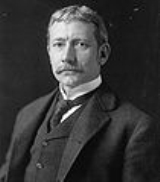
Elihu Root

 
Elihu Root

   Email Print
   Bookmark   Link


Elihu Root


Elihu Root (February 15, 1845 – February 7, 1937) was an American
United States

The United States of America is a Federal government constitutional republic comprising U.S. state and a federal district. The country is situated mostly in central North America, where its Contiguous United States and Washington, D.C., the Capital districts and territories, lie between the Pacific Ocean and Atlantic Oceans, Borders of the U...
 lawyer and statesman and the 1912 recipient of the Nobel Peace Prize
Nobel Peace Prize

The Nobel Peace Prize is one of five Nobel Prizes bequeathed by the Swedish industrialist and inventor Alfred Nobel. According to Nobel's will , the Peace Prize should be awarded "to the person who shall have done the most or the best work for :wikt:fraternity between nations, for the abolition or reduction of standing armies and for the h...
. He was the prototype of the 20th century "wise man
The Wise Men

The Wise Men were a group of six government officials, who during the Truman administration developed the containment policy of dealing with the Communist bloc....
", who shuttled between high-level government positions in Washington, D.C. and private-sector legal practice in New York City.

was born in Clinton, New York
Clinton, Oneida County, New York

Clinton is a village in Oneida County, New York, New York, United States. The population was 1,952 at the 2000 census. It was named for George Clinton , the first governor of the state of New York....
, to Oren Root and Nancy Whitney Buttrick. His father was professor of mathematics at Hamilton College
Hamilton College

Hamilton College is a private, independent, Liberal arts colleges in the United States located in Clinton, Oneida County, New York, New York. In 2007, U.S....
, where Elihu attended college; there he joined the Sigma Phi Society
Sigma Phi

The Sigma Phi Society, founded on 4 March, 1827 on the campus of Union College as a part of the Union Triad in Schenectady, New York is the second oldest Greek alphabet social Fraternities and sororities in the United States.The Sigma Phi Society was the first Greek organization to establish a second chapter at another college, which occurred...
.


Discussion
Ask a question about 'Elihu Root'
Start a new discussion about 'Elihu Root'
Answer questions from other users
Full Discussion Forum


Encyclopedia


Elihu Root (February 15, 1845 – February 7, 1937) was an American
United States

The United States of America is a Federal government constitutional republic comprising U.S. state and a federal district. The country is situated mostly in central North America, where its Contiguous United States and Washington, D.C., the Capital districts and territories, lie between the Pacific Ocean and Atlantic Oceans, Borders of the U...
 lawyer and statesman and the 1912 recipient of the Nobel Peace Prize
Nobel Peace Prize

The Nobel Peace Prize is one of five Nobel Prizes bequeathed by the Swedish industrialist and inventor Alfred Nobel. According to Nobel's will , the Peace Prize should be awarded "to the person who shall have done the most or the best work for :wikt:fraternity between nations, for the abolition or reduction of standing armies and for the h...
. He was the prototype of the 20th century "wise man
The Wise Men

The Wise Men were a group of six government officials, who during the Truman administration developed the containment policy of dealing with the Communist bloc....
", who shuttled between high-level government positions in Washington, D.C. and private-sector legal practice in New York City.

Early life and career

Root was born in Clinton, New York
Clinton, Oneida County, New York

Clinton is a village in Oneida County, New York, New York, United States. The population was 1,952 at the 2000 census. It was named for George Clinton , the first governor of the state of New York....
, to Oren Root and Nancy Whitney Buttrick. His father was professor of mathematics at Hamilton College
Hamilton College

Hamilton College is a private, independent, Liberal arts colleges in the United States located in Clinton, Oneida County, New York, New York. In 2007, U.S....
, where Elihu attended college; there he joined the Sigma Phi Society
Sigma Phi

The Sigma Phi Society, founded on 4 March, 1827 on the campus of Union College as a part of the Union Triad in Schenectady, New York is the second oldest Greek alphabet social Fraternities and sororities in the United States.The Sigma Phi Society was the first Greek organization to establish a second chapter at another college, which occurred...
. After graduation, Root taught for one year at the Rome Academy. In 1867, Root graduated from the New York University School of Law. He went into private practice as a lawyer. While mainly practicing corporate law, Root was a junior defense counsel during the corruption trial of William "Boss" Tweed
Boss Tweed

William Marcy Tweed Jr. , known as "Boss Tweed," was an United States most famous for his leadership of Tammany Hall, the History of the United States Democratic Party political machine that played a major role in the politics of 19th century New York....
. Root also had private clients including Jay Gould
Jay Gould

Jason "Jay" Gould was an American financier who became a leading American railroad developer and speculator. Although he was long vilified as an archetypal Robber baron , modern historians have discounted various myths about him and evaluated his career more positively....
, Chester A. Arthur
Chester A. Arthur

Chester Alan Arthur was an Politics of the United States who served as the List of Presidents of the United States President of the United States....
, Charles Anderson Dana
Charles Anderson Dana

Charles Anderson Dana was an United States journalist, author, and government official, best known for his association with Ulysses S. Grant during the American Civil War and his aggressive political advocacy after the war....
, William C. Whitney
William C. Whitney

William Collins Whitney was an American political leader and financier and founder of the prominent Whitney family. He served as Secretary of the Navy in the first Cleveland administration from 1885 through 1889....
, Thomas Fortune Ryan
Thomas Fortune Ryan

Thomas Fortune Ryan was a United States of America tobacco and transport magnate. Part of his fortune paid for the construction of the Cathedral of the Sacred Heart in Richmond in Richmond, Virginia....
, and E. H. Harriman
E. H. Harriman

Edward Henry Harriman was an American railroad executive....
.

Root was appointed U.S. Attorney for the Southern District of New York
U.S. Attorney for the Southern District of New York

The U.S. Attorney for the Southern District of New York is the chief federal law enforcement officer in eight New York counties: Manhattan , The Bronx, Westchester County, New York, Putnam County, New York, Rockland County, New York, Orange County, New York, Dutchess County, New York, and Sullivan County, New York....
 by President Chester A. Arthur
Chester A. Arthur

Chester Alan Arthur was an Politics of the United States who served as the List of Presidents of the United States President of the United States....
.

Root married Clara Frances Wales (died in 1928), who was the daughter of Salem Wales, the managing editor of Scientific American
Scientific American

Scientific American is a popular science science magazine, published since August 28, 1845, making it one of the oldest continuously published magazines in the United States....
, in 1878. They had three children: Edith (married Ulysses S. Grant III
Ulysses S. Grant III

Ulysses Simpson Grant III was the son of Frederick Dent Grant, and the grandson of General of the Army and President of the United States Ulysses S....
), Elihu, Jr. (who became a lawyer), and Edward Wales (who became Professor of Art at Hamilton College).

Root was a member of the Union League Club of New York
Union League Club of New York

The Union League Club of New York is a prominent social club in New York City. Its fourth and current clubhouse is a building designed by Benjamin Wystar Morris, located at 38 E....
 and twice served as its president, 1898-99, and again from 1915-16.

Political career

He served as the United States Secretary of War
United States Secretary of War

File:Swearing in of Secretary Dwight Davis.jpgThe Secretary of War was a member of the United States President of the United States United States Cabinet, beginning with George Washington's administration....
 1899–1904 under William McKinley
William McKinley

William McKinley, Jr. was the List of Presidents of the United States President of the United States, and the last veteran of the American Civil War to be elected....
 and Theodore Roosevelt
Theodore Roosevelt

Theodore Roosevelt , also known as T.R., and to the public as Teddy, was the List of Presidents of the United States President of the United States....
. He reformed the organization of the United States Military. He was responsible for enlarging West Point
United States Military Academy

The United States Military Academy at West Point is a four-year coeducational United States Service academies located at West Point, New York, New York....
 and establishing the U.S. Army War College
U.S. Army War College

The United States Army War College is a United States Army school located in Carlisle, Pennsylvania, on the 500 acre campus of the historic Carlisle Barracks, Pennsylvania, a military post dating back to the 1770s....
 as well as the General Staff
General Staff

A military staff is a group of officers and enlisted personnel that provides a bi-directional flow of information between a Officer and subordinate military units....
. He changed the procedures for promotions and organized schools for the special branches of the service. He also devised the principle of rotating officers from staff to line. Root was concerned about the new territories acquired after the Spanish-American War
Spanish-American War

The Spanish?American War was an armed military conflict between Spain and the United States that took place between April and August 1898, over the issues of the liberation of Cuba....
 and worked out the methods of how Cuba would be turned over to the Cubans, wrote the charter of government for the Philippines, and eliminated tariffs on goods imported to the United States from Puerto Rico. Root left the cabinet in 1904 and returned to private practice as a lawyer.

In 1905, President Roosevelt named Root to be the United States Secretary of State
United States Secretary of State

The United States Secretary of State is the head of the United States Department of State, concerned with foreign affairs. The Secretary is a member of the President's United States Cabinet and the highest-ranking cabinet secretary both in United States presidential line of succession and United States order of precedence....
 after the death of John Hay
John Hay

John Milton Hay was an United States statesman, diplomat, author, journalist, and private secretary and assistant to Abraham Lincoln....
. As secretary, Root placed the consular service under the Civil Service
Civil service

The term civil service has two distinct meanings:* Branch of governmental service in which individuals are hired on the basis of merit which is proven by the use of competitive examinations....
. He maintained the Open Door Policy
Open Door Policy

The Open Door Policy is a concept in foreign affairs. As a theory, the Open Door Policy originates with British commercial practice, as was reflected in treaties concluded with Qing Dynasty China after the First Opium War ....
 in the Far East. On a tour to Latin America in 1906, Root persuaded those governments to participate in the Hague Peace Conference. He worked with Japan in emigration to the United States and in dealings with China and established the Root-Takahira Agreement
Root-Takahira Agreement

The was an agreement between the United States of America and the Empire of Japan negotiated between U.S. Secretary of State Elihu Root and Japanese ambassador Takahira Kogoro....
, which limited Japanese and American naval fortifications in the Pacific. He worked with Great Britain
Great Britain

Great Britain is an island lying to the northwest of Continental Europe. It is the List of islands by area, and the largest in Europe. With a population of 58.9 million people it is List of islands by population....
 in resolving border disputes between the United States (Alaska) and Canada and also in the North Atlantic fisheries. He supported arbitration in resolving international disputes.

Root served a term in the United States Senate
United States Senate

The United States Senate is the upper house of the Bicameralism United States Congress, the lower house being the United States House of Representatives....
 as a Republican from New York
New York

The State of New York is a U.S. state in the Mid-Atlantic States and Northeastern United States regions of the United States and is the nation's List of U.S....
 from 1909 to 1915. He was an active member of the Senate Committee on the Judiciary. He chose not to seek reelection in 1914. During and after his Senate service, Root served as President of the Carnegie Endowment for International Peace
Carnegie Endowment for International Peace

The Carnegie Endowment for International Peace is a formally private, nonprofit organization, in practice closely associated with the United States Department of State, many President of the United States, "numerous private foreign affairs groups" and the leaders of major US political parties....
 from 1910 to 1925.

In a 1910 letter published by the New York Times, Root supported the proposed income tax amendment, which became the Sixteenth Amendment to the United States Constitution
Sixteenth Amendment to the United States Constitution

The Sixteenth Amendment to the United States Constitution was ratified on February 3, 1913. This Amendment overruled Pollock v. Farmers' Loan & Trust Co. , which greatly limited U.S....
:

It is said that a very large part of any income tax under the amendment would be paid by citizens of New York....

The reason why the citizens of New York will pay so large a part of the tax is New York City is the chief financial and commercial centre of a great country with vast resources and industrial activity. For many years Americans engaged in developing the wealth of all parts of the country have been going to New York to secure capital and market their securities and to buy their supplies. Thousands of men who have amassed fortunes in all sorts of enterprises in other states have gone to New York to live because they like the life of the city or because their distant enterprises require representation at the financial centre. The incomes of New York are in a great measure derived from the country at large. A continual stream of wealth sets toward the great city from the mines and manufactories and railroads outside of New York.


In 1912, as a result of his work to bring nations together through arbitration and cooperation, Root received the Nobel Peace Prize
Nobel Peace Prize

The Nobel Peace Prize is one of five Nobel Prizes bequeathed by the Swedish industrialist and inventor Alfred Nobel. According to Nobel's will , the Peace Prize should be awarded "to the person who shall have done the most or the best work for :wikt:fraternity between nations, for the abolition or reduction of standing armies and for the h...
.

At the outbreak of World War I
World War I

World War I, or the First World War , was a global military conflict which involved the Great powers, organized into two opposing military alliances: the Allies of World War I and the Central Powers....
, Root opposed President Woodrow Wilson
Woodrow Wilson

Thomas Woodrow Wilson was the List of Presidents of the United States President of the United States. A devout Presbyterianism and leading intellectual of the Progressive Era, he served as President of Princeton University of Princeton University from 1902 to 1910, and then as the Governor of New Jersey from 1911 to 1913....
's policy of neutrality. He did support Wilson once the United States entered the war.

In June 1916, Root was drafted for the Republican presidential nomination but declined, stating that he was too old to bear the burden of the Presidency. At the Republican National Convention
Republican National Convention

The Republican National Convention is the U.S. presidential nominating convention of the Republican Party . Convened by the Republican National Committee, the stated purpose of the convocation is to nominate an official candidate in an upcoming U.S....
, Root reached his peak strength of 103 votes on the first ballot. The Republican presidential nomination went to Charles Evans Hughes
Charles Evans Hughes

Charles Evans Hughes Sr. was a lawyer and United States Republican Party politician from the State of New York. He served as Governor of New York , United States Secretary of State , Associate Justice of the Supreme Court of the United States and Chief Justice of the United States ....
, who lost the election to Democrat Woodrow Wilson.

In June 1917, at age 72, he was sent to Russia
Russia

Russia , or the Russian Federation , is a list of countries spanning more than one continent country extending over much of northern Eurasia....
 by President Wilson to arrange American co-operation with the new revolutionary government. AFL James Duncan
James Duncan (labor leader)

James Duncan was a Scottish American trade union leader, and president of the Granite Cutters' International Association from 1885 until his death in 1928....
, socialist Charles Edward Russell
Charles Edward Russell

Charles Edward Russell was an United States journalist and politician. The author of a number of books of biography and social commentary, in 1928 he won a Pulitzer Prize for The American Orchestra and Theodore Thomas....
, general Hugh L. Scott
Hugh L. Scott

Hugh Lenox Scott was a post-Civil War West Point graduate who served as superintendent of West Point from 1906 to 1910, and Chief of Staff of the United States Army from 1914 to 1917, including the first few months of American involvement in World War I....
, admiral James H. Glennon
James H. Glennon

James Henry Glennon was a United States Navy officer. He saw action in the Spanish-American War, the Philippine-American War, and World War I....
, New York banker S.R. Bertron, John Mott
John Mott

John Raleigh Mott was a long-serving leader of the YMCA and the World Student Christian Federation . He received the Nobel Peace Prize in 1946 for his work in establishing and strengthening international Protestant Christianity student organizations that worked to promote peace....
 and Charles Richard Crane
Charles Richard Crane

Charles Richard Crane or Charles R. Crane of Chicago, Illinois was a wealthy philanthropical American Arabist, who had business knowledge of Eastern Europe and the Middle East....
 were members of Root's mission. They traveled from Vladivostok
Vladivostok

File:vladivostokrussia.jpgVladivostok is Russia's largest port types of inhabited localities in Russia on the Pacific Ocean and the administrative center of Primorsky Krai....
 across Siberia
Siberia

Siberia , is the name given to the vast region constituting almost all of North Asia and for the most part currently serving as the massive central and eastern portion of the Russian Federation, having served in the same capacity previously for the Soviet Union from its beginning, and the Russian Empire beginning in the 16th century....
 in the Czar
Nicholas II of Russia

Nicholas II was the last Tsar of Russian Empire, Grand Prince of Finland, and claimant to the title of King of Poland. His official title was Nicholas II, Emperor and Autocrat of All the Russias and he is currently regarded as Saint Nicholas the Passion Bearer by the Russian Orthodox Church....
's former train. Root remained in Petrograd for close to a month, and was not much impressed by what he saw. The Russians, he said, "are sincerely, kindly, good people but confused and dazed." He summed up his attitude to the Provisional Government very trenchantly: "No fight, no loans," which referred to the current conflict with Germany
Germany

Germany , officially the Federal Republic of Germany , is a country in Central Europe. It is bordered to the north by the North Sea, Denmark, and the Baltic Sea; to the east by Poland and the Czech Republic; to the south by Austria and Switzerland; and to the west by France, Luxembourg, Belgium, and the Netherlands....
 in World War I
World War I

World War I, or the First World War , was a global military conflict which involved the Great powers, organized into two opposing military alliances: the Allies of World War I and the Central Powers....
.

After World War I, Root supported the League of Nations
League of Nations

The League of Nations was an inter-governmental organization founded as a result of the Treaty of Versailles in 1919?1920. At its greatest extent from 28 September 1934 to 23 February 1935, it had 58 members....
 and served on the commission of jurist
Jurist

A jurist or jurisconsult is a professional who studies, develops, applies, or otherwise deals with the law. The term is widely used in American English, but in the United Kingdom and many Commonwealth of Nations countries it has only historical and specialist usage....
s, which created the Permanent Court of International Justice
Permanent Court of International Justice

The Permanent Court of International Justice, sometimes called the World Court, was the international court of the League of Nations, established in 1922....
. In 1922, President Warren G. Harding
Warren G. Harding

Warren Gamaliel Harding was the List of Presidents of the United States President of the United States, serving from 1921 until his death from a heart attack or stroke, in 1923....
 appointed him as a delegate to the International Conference on the Limitation of Armaments. He was the founding chairman of the Council on Foreign Relations
Council on Foreign Relations

The Council on Foreign Relations is an American nonpartisan foreign policy membership organization founded in 1921 and based at 58 East 68th Street in New York City, with an additional office in Washington, D.C....
, established in 1921 in New York.

Root worked with Andrew Carnegie
Andrew Carnegie

Andrew Carnegie was a Scotland-born United States industrialist, List of business people, and a major philanthropist. He was an immigrant as a child with his parents....
 in programs for international peace and the advancement of science. He was the first president of the Carnegie Endowment for International Peace
Carnegie Endowment for International Peace

The Carnegie Endowment for International Peace is a formally private, nonprofit organization, in practice closely associated with the United States Department of State, many President of the United States, "numerous private foreign affairs groups" and the leaders of major US political parties....
. He helped found the American Society of International Law in 1906. He was among the founders of the American Law Institute
American Law Institute

The American Law Institute was established in 1923 to promote the clarification and simplification of American common law and its adaptation to changing social needs....
 in 1923. Furthermore, he also helped create the Hague Academy of International Law
Hague Academy of International Law

The Hague Academy of International Law is a center for high-level education in both public and private international law housed in the Peace Palace in The Hague, Netherlands....
 in the Netherlands.

Root also served as vice president of the American Peace Society
American Peace Society

The American Peace Society was a pacifist group founded upon the initiative of William Ladd, in New York City, May 8, 1828. It was formed by the merging of many state and local societies, from New York, Maine, New Hampshire, and Massachusetts, of which the oldest, the New York Peace Society, dated from 1815....
, which publishes World Affairs (journal)
World Affairs (journal)

World Affairs is a quarterly International relations journal published by Heldref Publications. World Affairs, which, in one form or another, has been published since 1837, was re-launched in January 2008 as an entirely new publication....
, the oldest U.S. journal on international relations.

In addition to the Nobel Prize, Root was awarded the Grand Cordon of the Order of the Crown (Belgium)
Order of the Crown (Belgium)

The Order of the Crown is an Order of Belgium which was first created on 15 October 1897. The Order of the Crown was created under the authority of Leopold II of Belgium and was originally intended to recognize heroic deeds and distinguished service achieved from service in the Congo Free State - many of which acts soon became highly controv...
 and the Grand Commander of the Order of George I
Order of George I

The Royal Order of George I was formerly an Order of Greece named after King of the Hellenes George I of Greece. It was replaced in 1975 by the Order of Honour ....
 (Greece). He was the second cousin twice removed of Henry Luce
Henry Luce

Henry Robinson Luce was an influential United States publisher....
, through Elihu Root (1772-1843). Prior to his death, Root had been the last surviving member of the McKinley Cabinet.

Root died in 1937 in New York City
New York City

The City of New York is the List of United States cities by population in the United States, while the New York metropolitan area ranks among the List of urban areas by population....
, with his family by his side. He is buried at the Hamilton College Cemetery. His home that he purchased in 1893, the Elihu Root House
Elihu Root House

Elihu Root House was the home of American statesman Elihu Root. Elihu Root was born and grew up in the immediate vicinity of this house, which became his home as an adult....
, was declared a National Historic Landmark
National Historic Landmark

A National Historic Landmark is a building, :wiktionary:site, structure, object, or district, that is officially recognized by the Federal government of the United States for its historical significance....
 in 1972.

Works by Elihu Root

  • Citizen's Part in Government. Yale University Press, 1911.
  • Experiments in Government and the Essentials of the Constitution. Princeton University Press, 1913.
  • Addresses on International Subjects. Harvard University Press, 1916.
  • Military and Colonial Policy of the United States. Harvard University Press, 1916.
  • Miscellaneous Addresses. Harvard University Press, 1917.
  • Men and Policies: Addresses by Elihu Root. Harvard University Press, 1925.


External links

  • 1922
  • History of the Council by Peter Grose, a Council member.


Footnotes