
All Topics  
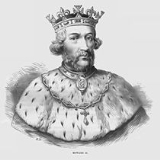
Edward II of England

 
Edward II of England

   Email Print
   Bookmark   Link


Edward II of England


Edward II, (25 April 1284 – 21 September 1327?) of Caernarfon
Caernarfon

Caernarfon is a List of UK place names with royal patronage in Gwynedd, northwest Wales.The name comes from Welsh Caer yn Arfon = "castle in Arfon", referring to the Roman Empire fort named Segontium....
, was King of England
Kingdom of England

The Kingdom of England was, from 927 to 1707, a state in North-West Europe. The Kingdom of England spanned the southern two-thirds of the island of Great Britain and a number of smaller outlying islands?what is today the legal unit of England and Wales....
 from 1307 until he was deposed
Deposition (politics)

Deposition by political means concerns the removal of a politician or monarch. It may be done by coup, impeachment, invasion or forced abdication....
 in January 1327. His tendency to ignore his nobility
Nobility

Nobility is a government-privileged title which may be either hereditary or for a lifetime. Titles of nobility exist today in many countries although it is usually associated with present or former monarchies....
 in favour of low-born favourites led to constant political unrest and his eventual deposition. Edward is perhaps best remembered for his death by supposed murder and his showering of male favourite
Favourite

In historical writings, when used in reference to a person, favourite, also spelled favorite , means the intimate companion of a ruler or other important person....
s with gifts as well as being the first monarch to establish colleges in the universities of Oxford
University of Oxford

The University of Oxford , located in the city of Oxford, Oxfordshire, England, is the List of oldest universities in continuous operation in the English-speaking world....
 and Cambridge
University of Cambridge

The University of Cambridge , located in Cambridge, England, is the List of oldest universities in continuous operation university in the Anglosphere....
.
fourth son of Edward I
Edward I of England

Edward I , popularly known as Longshanks, the English Justinian, and the Hammer of the Scots , was a House of Plantagenet King of England who achieved historical fame by conquering large parts of Wales and almost succeeding in doing the same to Scotland....
 by his first wife Eleanor of Castile, Edward II was born at Caernarfon Castle
Caernarfon Castle

Caernarfon Castle was constructed at Caernarfon in Gwynedd, north-west Wales, by King Edward I of England, following his conquest of Gwynedd in 1283....
.


Discussion
Ask a question about 'Edward II of England'
Start a new discussion about 'Edward II of England'
Answer questions from other users
Full Discussion Forum


Recent Posts


Encyclopedia


Edward II, (25 April 1284 – 21 September 1327?) of Caernarfon
Caernarfon

Caernarfon is a List of UK place names with royal patronage in Gwynedd, northwest Wales.The name comes from Welsh Caer yn Arfon = "castle in Arfon", referring to the Roman Empire fort named Segontium....
, was King of England
Kingdom of England

The Kingdom of England was, from 927 to 1707, a state in North-West Europe. The Kingdom of England spanned the southern two-thirds of the island of Great Britain and a number of smaller outlying islands?what is today the legal unit of England and Wales....
 from 1307 until he was deposed
Deposition (politics)

Deposition by political means concerns the removal of a politician or monarch. It may be done by coup, impeachment, invasion or forced abdication....
 in January 1327. His tendency to ignore his nobility
Nobility

Nobility is a government-privileged title which may be either hereditary or for a lifetime. Titles of nobility exist today in many countries although it is usually associated with present or former monarchies....
 in favour of low-born favourites led to constant political unrest and his eventual deposition. Edward is perhaps best remembered for his death by supposed murder and his showering of male favourite
Favourite

In historical writings, when used in reference to a person, favourite, also spelled favorite , means the intimate companion of a ruler or other important person....
s with gifts as well as being the first monarch to establish colleges in the universities of Oxford
University of Oxford

The University of Oxford , located in the city of Oxford, Oxfordshire, England, is the List of oldest universities in continuous operation in the English-speaking world....
 and Cambridge
University of Cambridge

The University of Cambridge , located in Cambridge, England, is the List of oldest universities in continuous operation university in the Anglosphere....
.

Prince of Wales

The fourth son of Edward I
Edward I of England

Edward I , popularly known as Longshanks, the English Justinian, and the Hammer of the Scots , was a House of Plantagenet King of England who achieved historical fame by conquering large parts of Wales and almost succeeding in doing the same to Scotland....
 by his first wife Eleanor of Castile, Edward II was born at Caernarfon Castle
Caernarfon Castle

Caernarfon Castle was constructed at Caernarfon in Gwynedd, north-west Wales, by King Edward I of England, following his conquest of Gwynedd in 1283....
. He was the first English prince to hold the title Prince of Wales
Prince of Wales

Prince of Wales is a title traditionally granted to the Heir Apparent to the reigning monarch of the United Kingdom . The current Prince of Wales is Charles, Prince of Wales, the eldest son of Elizabeth II of the United Kingdom....
, which was formalized by the Lincoln Parliament of 7 February 1301.

The story that his father presented Edward II as a newborn to the Welsh
Welsh people

The Welsh people are an ethnic group and nation associated with Wales and the Welsh language. John Davies argues that the origin of the "Welsh nation" can be traced to the late 4th and early 5th centuries, following the Roman withdrawal from Britain, although Celtic languages seem to have been spoken in Wales far longer....
 as their future native prince is unfounded. The Welsh purportedly asked the King to give them a prince who spoke Welsh
Welsh language

Welsh ]], is a member of the Brythonic branch of Celtic languages spoken natively in Wales, in England by some along the Welsh Marches and in the Welsh settlement in Argentina in the Chubut Valley in Argentina Patagonia....
, and, the story goes, he answered he would give them a prince that spoke no English
English language

English is a West Germanic language that originated in Anglo-Saxon England and has lingua franca status in many parts of the world as a result of the military, economic, scientific, political and cultural influence of the British Empire in the 18th, 19th and early 20th centuries and that of the United States from the mid 20th century onwa...
 at all. This story first appeared in the work of 16th century Welsh "antiquary" David Powel
David Powel

David Powel was a Wales Church of England clergyman and historian who published the first printed history of Wales in 1584....
.

Edward became heir at just a few months of age, following the death of his elder brother Alphonso
Alphonso, Earl of Chester

Alphonso was the ninth child of Edward I of England and Eleanor of Castile . During his lifetime, he was first in line to the throne.Alphonso was born at Bayonne, in Gascony, and named after his maternal uncle, King Alfonso X of Castile, who was his godfather....
. His father, a notable military leader, trained his heir in warfare
Warfare

Warfare refers to the conduct of conflict between opponents, and usually involves escalation of aggression from the proverbial "war of words" between politics and diplomacy to full-scale War, waged until one side accepts defeat or peace terms are agreed on....
 and statecraft starting in his childhood, yet the young Edward preferred boating
Boating

Boating, the leisurely activity of traveling by boat typically refers to the recreational use of boats whether power boats, Sailing, or yachts , focused on the travel itself, as well as sports activities, such as fishing or waterskiing....
 and craftwork
Craftwork

Craftwork may refer to:* Handicraft* Kraftwerk, a German band...
, activities considered beneath kings at the time.

It has been hypothesized that Edward's love for "lowbrow" activities developed because of his overbearing, ruthless father. The prince took part in several Scots
Scotland

conventional_long_name = ScotlandAlba|common_name= Scotland|image_flag = Flag of Scotland.svg|flag_width = 130px...
 campaigns, but despite these martial engagements, "all his father's efforts could not prevent his acquiring the habits of extravagance and frivolity which he retained all through his life". The king attributed his son’s preferences to his strong attachment to Piers Gaveston
Piers Gaveston

Piers Gaveston, 1st Earl of Cornwall was the favourite, and possibly lover, of King Edward II of England.A Gascony by birth, Piers was the son of Sir Arnaud de Gabaston, a soldier in service to King Edward I of England, and of Claramonde de Marsan....
, a Gascon
Gascony

Gascony is an area of southwest France that constituted a Provinces of France prior to the French Revolution. In historic references dating from the beginning of the Roman era, it was part of Gaul and became part of the Kingdom of the Franks during the conquests of Clovis I ....
 knight
Knight

File:Gothic armor 2.jpgKnight is the term for a social position originating in the Middle Ages. In the Commonwealth of Nations, knighthood is a non-heritable form of gentry....
, and Edward I exile
Exile

Exile means to be away from one's home while either being explicitly refused permission to return and/or being threatened by prison or death upon return....
d Gaveston from court after Prince Edward attempted to bestow on his friend a title reserved for royalty. Ironically, it was the king who had originally chosen Gaveston to be a suitable friend for his son, in 1298 due to his wit, courtesy and abilities. Edward I died on 7 July 1307 en route to another campaign against the Scots, a war that became the hallmark of his reign. Edward had requested that his son "boil his body, extract the bones and carry them with the army until the Scots had been subdued." But his son ignored the request and had his father buried in Westminster Abbey with the epitaph "Here lies Edward I, the Hammer of the Scots". Edward II immediately recalled Gaveston and withdrew from the Scottish campaign that year.

King of England

Edward was as physically impressive as his father, yet he lacked the drive and ambition of his forebear. It was written that Edward II was "the first king after the Conquest who was not a man of business". His main interest was in entertainment, though he also took pleasure in athletics
Athletics (track and field)

Track and field athletics, commonly known as athletics or track and field, is a collection of sports events that involve running, throwing and jumping....
 and mechanical crafts. He had been so dominated by his father that he had little confidence in himself, and was often in the hands of a court favourite with a stronger will than his own.

On 25 January 1308, Edward married Isabella of France
Isabella of France

Isabella of France , known as the She-Wolf of France, was the Queen consort of Edward II of England and mother of Edward III. She was the youngest surviving child and only surviving daughter of Philip IV of France and Joan I of Navarre....
, the daughter of King Philip IV of France
Philip IV of France

Philip IV , called the Fair , son and successor of Philip III of France, reigned as List of French monarchs from 1285 until his death. He was the husband of Joan I of Navarre, by virtue of which he was List of Navarrese royal consorts and Counts of Champagne from 1284 to 1305....
, "Philip the Fair," and sister to three French
French people

French people can refer to:* The legal residents and citizens of France, regardless of ancestry. For a legal discussion, see French nationality law....
 kings. The marriage was doomed to failure almost from the beginning. Isabella was frequently neglected by her husband, who spent much of his time conspiring with his favourites regarding how to limit the powers of the Peerage
Peerage

The Peerage is a system of titles of nobility in the United Kingdom, part of the British honours system. The term is used both collectively to refer to the entire body of titles, and individually to refer to a specific title....
 in order to consolidate his father's legacy for himself. Nevertheless, their marriage produced two sons, Edward
Edward III of England

Edward III was one of the most successful List of the monarchs of the Kingdom of Englands of the Britain in the Middle Ages. Restoring royal authority after the disastrous reign of his father, Edward II of England, Edward III went on to transform the Kingdom of England into the most efficient military power in Europe....
 (1312–1377), who would succeed his father on the throne as Edward III, and John of Eltham, Earl of Cornwall
John of Eltham, Earl of Cornwall

John of Eltham, Earl of Cornwall was the son of Edward II of England and Isabella of France.He was born in 1316 at Eltham Palace, Kent and was created Earl of Cornwall on 6 October 1328....
 (1316–1336), and two daughters, Eleanor
Eleanor of Woodstock

Eleanor of Woodstock . Born in Woodstock, Oxfordshire on 18 June 1318 to Edward II of England and Isabella of France, Eleanor was named after her paternal Grandmother Eleanor of Castile, ?333 was given for her churching by father....
 (1318–1355) and Joanna
Joan of The Tower

Joan of England , known as Joan of the Tower was the first wife and Queen consort of David II of Scotland. She was born in the Tower of London and was the youngest daughter of Edward II of England and Isabella of France....
 (1321–1362), wife of David II of Scotland
David II of Scotland

Daibhidh a Briuis , anglicised as David II , was King of Scotland between 7 June 1329 and 22 February 1371....
. Edward had also fathered at least one illegitimate son, Adam FitzRoy
Adam FitzRoy

Adam FitzRoy was the illegitimate son of Edward II of England. He accompanied his father in the Scottish campaigns of 1322, and died shortly afterwards on September 18, 1322....
, who accompanied his father in the Scottish campaigns of 1322 and died shortly afterwards.

War with the Barons

When Edward travelled to the northern French city of Boulogne
Boulogne-sur-Mer

Boulogne-sur-Mer is a city in northern France. It is a Subprefectures in France of the Departments of France of Pas-de-Calais.The population of the city was 44,859 in the 1999 census, whereas that of the whole metropolitan area was 135,116....
 to marry Isabella, he left his friend and counsellor Piers Gaveston
Piers Gaveston

Piers Gaveston, 1st Earl of Cornwall was the favourite, and possibly lover, of King Edward II of England.A Gascony by birth, Piers was the son of Sir Arnaud de Gabaston, a soldier in service to King Edward I of England, and of Claramonde de Marsan....
 to act as regent. Gaveston also received the earldom of Cornwall
Cornwall

Cornwall , constitutional Duchy and palatine, is a metropolitan and non-metropolitan counties of England of England, United Kingdom, located at the tip of the south-western peninsula of Great Britain....
 and the hand of the king's niece, Margaret of Gloucester
Margaret de Clare

Margaret de Clare was one of the three daughters of Gilbert de Clare, 3rd Earl of Gloucester and his wife, Joan of Acre, and thus a granddaughter of King Edward I of England....
; these proved to be costly honours.

Various barons grew resentful of Gaveston, and insisted on his banishment through the Ordinances of 1311
Ordinances of 1311

The Ordinances of 1311 were a series of regulations imposed upon King Edward II of England by the peerage and clergy of the Kingdom of England to restrict the power of the king....
. Edward recalled his friend, but in 1312, Gaveston was executed by the Earl of Lancaster
Thomas Plantagenet, 2nd Earl of Lancaster

Thomas, Earl of Lancaster was one of the leaders of the baronial opposition to Edward II of England....
 and his allies, who claimed that Gaveston led the king to folly. Lancaster handed Gaveston over to two Welshmen, who took him to Blacklow Hill and executed him; one ran him through the heart with his sword and the other beheaded him. A monument called Gaveston's Cross still stands today on Blacklow Hill, which is just outside the small village of Leek Wootton
Leek Wootton

Leek Wootton is a small village in Warwickshire, England, roughly one mile from Kenilworth and two miles from Warwick. It lies in the triangle created by Kenilworth, Warwick and Leamington Spa....
. Edward's grief over the death of Gaveston was profound. He kept the remains of his body close to him for a number of weeks before the Church forcibly arranged a burial.

Immediately following this, Edward focused on the destruction of those who had betrayed him, while the barons themselves lost impetus (with Gaveston dead, they saw little need to continue). By mid-July, Aymer de Valence, 2nd Earl of Pembroke
Aymer de Valence, 2nd Earl of Pembroke

Aymer de Valence, 2nd Earl of Pembroke was a France-England nobleman. Though primarily active in England, he also had strong connections with the List of French monarchs....
 was advising the king to make war on the barons who, unwilling to risk their lives, entered negotiations in September 1312. In October, the Earls of Lancaster, Warwick, Arundel and Hereford begged Edward's pardon.

Conflict with Scotland

During this period, Robert the Bruce
Robert I of Scotland

Robert I, King of the Scots usually known in modern English as Robert the Bruce was King of the Scots from 1306 until his death in 1329....
 was steadily reconquering Scotland
Scotland

conventional_long_name = ScotlandAlba|common_name= Scotland|image_flag = Flag of Scotland.svg|flag_width = 130px...
. Each campaign begun by Edward, from 1307 to 1314, ended in Robert's clawing back more of the land that Edward I had taken during his long reign. Robert's military successes against Edward II were due to a number of factors, not the least of which was the Scottish King's strategy. He used small forces to trap an invading English army, took castles by stealth to preserve his troops and he used the land as a weapon against Edward by attacking quickly and then disappearing into the hills instead of facing the superior numbers of the English. Bruce united Scotland against its common enemy and is quoted as saying that he feared more the dead Edward I than the living Edward II. By June 1314, only Stirling Castle and Berwick remained under English control.

On 23 June 1314, Edward and his army of 20 000 foot soldiers and 3 000 cavalry faced Robert and his army of foot soldiers and farmers wielding 14-foot-long pikes. Edward knew he had to keep the critical stronghold of Stirling Castle if there was to be any chance for English military success. The castle, however, was under a constant state of siege, and the English commander, Sir Phillip de Mowbray, had advised Edward that he would surrender the castle to the Scots unless Edward arrived by 24 June 1314, to relieve the siege. Edward could not afford to lose his last forward castle in Scotland. He decided therefore to gamble his entire army to break the siege and force the Scots to a final battle by putting its army into the field.

However, Edward had made a serious mistake in thinking his vastly superior numbers alone would provide enough of a strategic advantage to defeat the Scots. Robert not only had the advantage of prior warning, as he knew the actual day that Edward would come north and fight, he also had the time to choose the field of battle most advantageous to the Scots and their style of combat. As Edward moved forward on the main road to Stirling, Robert placed his army on either side of the road north, one in the dense woods and the other placed on a bend on the river, a spot hard for the invading army to see. Robert also ordered his men to dig potholes and cover them with bracken in order to help break any cavalry charge.

By contrast, Edward did not issue his writs of service, calling upon 21,540 men, until 27 May 1314. Worse, his army was ill-disciplined and had seen little success in eight years of campaigns. On the eve of battle, he decided to move his entire army at night and placed it in a marshy area, with its cavalry
Cavalry

The Cavalry is the second oldest of the Combat Arms, and as soldiers or warriors who fought mounted on horseback in combat, it represents the mobility and offensive power of the armed forces....
 laid out in nine squadrons in front of the foot soldiers. The following battle, the Battle of Bannockburn
Battle of Bannockburn

The Battle of Bannockburn was a significant Scotland victory in the Wars of Scottish Independence. It was the decisive battle in the First War of Scottish Independence....
, is considered by contemporary scholars to be the worst defeat sustained by the English since the Battle of Hastings
Battle of Hastings

The Battle of Hastings was the decisive Normans victory in the Norman Conquest of England. It was fought between the Norman army of William I of England, and the English people army led by Harold Godwinson....
 in 1066.

Tactics similar to Robert's were employed by victorious English armies against the French in later centuries, partly as a direct result of the enduring decisiveness of the Scots' victory. A young Henry V of England
Henry V of England

Henry V was one of the most significant English warrior kings of the 15th century. He was born at Monmouth, Wales, in the tower above the gatehouse of Monmouth Castle, and reigned as King of England from 1413 to 1422....
 would use exactly this tactic against French cavalry in a key battle on the fields of Agincourt
Battle of Agincourt

The Battle of Agincourt was an English victory against a much larger French army in the Hundred Years' War. The battle occurred on Friday 25 October 1415 ...
 in 1415, winning the day against France.

Edward and Piers Gaveston


Several contemporary sources criticised his infatuation with Piers Gaveston
Piers Gaveston

Piers Gaveston, 1st Earl of Cornwall was the favourite, and possibly lover, of King Edward II of England.A Gascony by birth, Piers was the son of Sir Arnaud de Gabaston, a soldier in service to King Edward I of England, and of Claramonde de Marsan....
, to the extent that Edward ignored and humiliated his wife. Chroniclers called the relationship excessive, immoderate, beyond measure and reason and criticised his desire for wicked and forbidden sex. The Westminster chronicler says that Gaveston led Edward to reject the sweet embraces of his wife. He turned over to Gaveston all of the wedding gifts Isabella brought to the marriage - including the marriage bed. The Meaux Chronicle (written decades later) complained that, Edward took too much delight in sodomy. This does not, however, prove that Edward and Gaveston were lovers; only that some contemporaries and later writers thought this might be the case.

Gaveston was considered to be athletic and handsome; was a few years older than Edward and had seen military service in Flanders
Flanders

Flanders is a geographical region located in parts of present-day Belgium, France, and the Netherlands. Over the course of history, the geographical territory that was called "Flanders" has varied....
 before becoming Edward's close companion. Upon meeting Gaveston, he was immediately dazzled and later exclaimed that he loved Gaveston "more than life itself". Gaveston was known to have a quick, biting wit, and his fortunes continued to ascend as Edward obtained more and more honours for him, including the Earldom of Cornwall
Earl of Cornwall

The title of Earl of Cornwall was created several times in the Peerage of England before 1337, when it was superseded by the title Duke of Cornwall, which became attached to heirs-apparent to the throne....
. Earlier, Edward I had attempted to control the situation by exiling Gaveston from England. However, upon the king's death in 1307, Edward II immediately recalled him.

Isabella's marriage to Edward took place in January, 1308. Almost immediately, she wrote to her father, Philip the Fair of France, complaining of Edward's behavior with Gaveston. Although the relationship that developed between the two young men was certainly very close, its exact nature is impossible to determine. Some modern assumptions are that their relationship was definitely sexual. The evidence for this, however, is far from clear. While some of the chroniclers' remarks can be interpreted simply as homosexuality
Homosexuality

Homosexuality refers to human sexual behavior or same-sex attraction between people of the same sex or to homosexual orientation. As a sexual orientation, homosexuality refers to "having sexual and romantic attraction primarily or exclusively to members of one?s own sex"; "it also refers to an individual?s sense of personal and social identi...
 or bisexuality
Bisexuality

Bisexuality refers to sexual behavior with or physical attraction to people of both genders , or a bisexual orientation. People who have a bisexual orientation "can experience sexual attraction, emotional, and affectional attraction to both their own sex and the opposite sex"; "it also refers to an individual?s sense of personal and social i...
, too many of them are either much later in date or the product of hostility. Both Edward and Gaveston married early in the reign. There were children from both marriages - Edward also had an illegitimate son, Adam, aside from those with Isabella. It has also been plausibly, though not conclusively, argued that the two men entered into a bond of adoptive brotherhood.

The relationship was later explored in a play
Edward II (play)

Edward II is a Renaissance or Early Modern period play written by Christopher Marlowe. It is one of the earliest English history plays. The full title of the first publication is The Troublesome Reign and Lamentable Death of Edward the Second, King of England, with the Tragical Fall of Proud Mortimer....
 by the dramatist Christopher Marlowe
Christopher Marlowe

Christopher "Kit" Marlowe was an Kingdom of England Playwright, poet and translator of the Elizabethan era. The foremost English Renaissance theatre tragedy next to William Shakespeare, he is known for his blank verse, his overreaching protagonists, and his own mysterious and untimely death....
. This is unusual in making explicit reference to a sexual relationship between king and favourite. More frequently the nature of the relationship between the two is only hinted at, or is cited as a dreadful example of the fate that may befall kings who allow themselves to be influenced by favourites, and so become estranged from their subjects.

'Rule' of the Despensers

Following Gaveston's death, the king increased favour to his nephew-by-marriage (who was also Gaveston's brother-in-law), Hugh Despenser the Younger. But, as with Gaveston, the barons were indignant at the privileges Edward lavished upon the Despenser father and son, especially when the younger Despenser began in 1318 to strive to procure for himself the earldom of Gloucester
Gloucester

Gloucester is a city status in the United Kingdom, Non-metropolitan district and county town of Gloucestershire in the South West England region of England....
 and the lands associated with it.

By 1320, the situation in England was again becoming dangerously unstable. Edward ignored the law in favour of Despenser: when Lord de Braose of Gower sold his title to his son-in-law, an action entirely lawful in the Welsh Marches, Despenser demanded the king grant Gower to him instead. The king, against all laws, then confiscated Gower from the purchaser and offered it to Despenser; in so doing, he provoked the fury of most of the barons. In 1321, the Earl of Hereford, along with the Earl of Lancaster and others, took up arms against the Despenser family, and the King was forced into an agreement with the barons. On 14 August at Westminster Hall, accompanied by the Earls of Pembroke and Richmond, the king declared the Despenser father and son both banished.

The victory of the barons proved their undoing. With the removal of the Despensers, many nobles, regardless of previous affiliation, now attempted to move into the vacuum left by the two. Hoping to win Edward's favour, these nobles were willing to aid the king in his revenge against the barons and thus increase their own wealth and power. In following campaigns, many of the king's opponents were murdered, the Earl of Lancaster being beheaded in the presence of Edward himself.

With all opposition crushed, the king and the Despensers were left the unquestioned masters of England. At the York Parliament of 1322, Edward issued a statute which revoked all previous ordinances designed to limit his power and to prevent any further encroachment upon it. The king would no longer be subject to the will of Parliament, and the Lords, Prelates, and Commons were to suffer his will in silence.

Isabella leaves England

A dispute between France and England broke out over Edward's refusal to pay homage to the French king for the territory of Gascony. After several bungled attempts to regain the territory, Edward sent his wife, Isabella, to negotiate peace terms. Overjoyed, Isabella arrived in France in March 1325. She was now able to visit her family and native land as well as escape the Despensers and the king, all of whom she now detested.

On 31 May 1325, Isabella agreed to a peace treaty, favouring France and requiring Edward to pay homage in France to Charles; but Edward decided instead to send his son to pay homage. This proved a gross tactical error, and helped to bring about the ruin of both Edward and the Despensers as Isabella, now that she had her son with her, declared that she would not return to England until Despenser was removed.

Invasion by Isabella and Mortimer

When Isabella's retinue - loyal to Edward, and ordered back to England by Isabella - returned to the English Court on 23 December, they brought further shocking news for the king: Isabella had formed a liaison with Roger Mortimer in Paris and they were now plotting an invasion of England.

Edward prepared for the invasion but was betrayed by those close to him: his son refused to leave his mother - claiming he wanted to remain with her during her unease and unhappiness. Edward's brother, the Earl of Kent, married Mortimer's cousin, Margaret Wake; other nobles, such as John de Cromwell and the Earl of Richmond, also chose to remain with Mortimer.

In September 1326, Mortimer and Isabella invaded England. Edward was amazed by their small numbers of soldiers, and immediately attempted to levy an immense army to crush them. However, a large number of men refused to fight Mortimer and the Queen; Henry of Lancaster, for example, was not even summoned by the king, and he showed his loyalties by raising an army, seizing a cache of Despenser treasure from Leicester Abbey, and marching south to join Mortimer.

The invasion swiftly had too much force and support to be stemmed. As a result, the army the king had ordered failed to emerge and both Edward and Despenser were left isolated. They abandoned London on 1 October, leaving the city to fall into disorder. The king first took refuge in Gloucester and then fled to South Wales
South Wales

South Wales is an area of Wales bordered by England and the Bristol Channel to the east and south, and Mid Wales and West Wales to the north and west....
 in order to make a defence in Despenser's lands. However, Edward was unable to rally an army, and on 31 October, he was abandoned by his servants, leaving him with only Despenser and a few retainers.

On 27 October, the elder Despenser was accused of encouraging the illegal government of his son, enriching himself at the expense of others, despoiling the Church, and taking part in the illegal execution of the Earl of Lancaster. He was hanged
Hanging

Hanging is the lethal suspension of a person by a ligature. The Oxford English Dictionary states that hanging in this sense is "specifically to put to death by suspension by the neck", although it formerly also referred to crucifixion and death by impalement in which the body would remain "hanging"....
 and beheaded at the Bristol Gallows. Henry of Lancaster was then sent to Wales in order to fetch the King and the younger Despenser; on 16 November he caught Edward, Despenser and their soldiers in the open country near Tonyrefail
Tonyrefail

Tonyrefail is a village in the county borough of Rhondda Cynon Taff, Wales. It is situated four miles north-west of Llantrisant below the Rhondda and at the head of the Ely Valley....
, where a plaque now commemorates the event. The soldiers were released and Despenser was sent to Isabella at Hereford whilst the king was taken by Lancaster himself to Kenilworth
Kenilworth

Kenilworth is a town in central Warwickshire, England. In United Kingdom Census 2001 the town had a population of 22,582 . It is situated 10 km south of Coventry, 10 km north of Warwick and 145 km northwest of London....
.

End of the Despensers

Reprisals against Edward's allies began immediately thereafter. The Earl of Arundel
Earl of Arundel

The title Earl of Arundel is the oldest extant Earldom and perhaps the oldest extant title in the Peerage of England. It is currently held by the Duke of Norfolk, and is used by his Heir Apparent as a courtesy title....
, Sir Edmund Fitz Alan
Edmund FitzAlan, 9th Earl of Arundel

Edmund FitzAlan, 9th Earl of Arundel ....
, an old enemy of Roger Mortimer, was beheaded; this was followed by the trial and execution of Despenser.

Despenser was brutally executed and a huge crowd gathered in anticipation at seeing him die. They dragged him from his horse, stripped him, and scrawled Biblical
Bible

The Bible is the central religious text of Judaism and Christianity. The exact Books of the Bible is dependent on the religious traditions of specific denominations....
 verses against corruption and arrogance on his skin. They then led him into the city, presenting him in the market square to Roger, Isabella, and the Lancastrians. He was then condemned to hang as a thief, be castrated
Castration

Castration is any action, surgery, chemical castration, or otherwise, by which a male loses the functions of the testicles. In common usage the term is usually applied to males, although as a medical term it is applied to both males and females....
, and then be drawn and quartered as a traitor, his quarters to be dispersed throughout England.

Abdication

With the King imprisoned, Mortimer and the Queen faced the problem of what to do with him. The simplest solution would be execution: his titles would then pass to Edward of Windsor, whom Isabella could control, while it would also prevent the possibility of his being restored. Execution would require the King to be tried and convicted of treason: and while most Lords agreed that Edward had failed to show due attention to his country, several Prelates argued that, appointed by God, the King could not be legally deposed or executed; if this happened, they said, God would punish the country. Thus, at first, it was decided to have Edward imprisoned for life
Life imprisonment

Life imprisonment or life incarceration is a sentence of prison for a serious crime, often for most or even all of the criminal's remaining life, but in fact for a period which varies between jurisdictions: many countries have a maximum possible period of time a prisoner may be incarcerated, or require the possibility of parole after...
 instead.

However, the fact remained that the legality of power still lay with the King. Isabella had been given the Great Seal, and was using it to rule in the names of the King, herself, and their son as appropriate; nonetheless, these actions were illegal, and could at any moment be challenged.

In these circumstances, Parliament chose to act as an authority above the King. Representatives of the House of Commons
British House of Commons

The House of Commons is the lower house of the Parliament of the United Kingdom, which also comprises the British monarchy and the House of Lords ....
 were summoned, and debates began. The Archbishop of York and others declared themselves fearful of the London
London

London is the capital of both England and the United Kingdom, and the most populous municipality in the European Union. An important settlement for two millennia, History of London goes back to its founding by the Roman Empire....
 mob, loyal to Roger Mortimer. Others wanted the King to speak in Parliament and openly abdicate
Abdication

Abdication is the act of renouncing and resigning from a formal office, especially from the supreme office of state. In Roman law the term was also applied to the disowning of a family member, as the disinheriting of a son....
, rather than be deposed by the Queen and her General. Mortimer responded by commanding the Mayor of London, Richard de Bethune, to write to Parliament, asking them to go to the Guildhall to swear an oath to protect the Queen and Prince Edward, and to depose the King. Mortimer then called the great lords to a secret meeting that night, at which they gave their unanimous support to the deposition of the King.

Eventually Parliament agreed to remove the King. However, for all that Parliament had agreed that the King should no longer rule, they had not deposed him. Rather, their decision made, Edward was asked to accept it.

On 20 January 1327, Edward II was informed at Kenilworth Castle of the charges brought against him. The King was guilty of incompetence; allowing others to govern him to the detriment of the people and Church; not listening to good advice and pursuing occupations unbecoming to a monarch; having lost Scotland and lands in Gascony and Ireland
Ireland

Ireland is the List of islands by area in Europe, and the twentieth-largest island in the world. It lies to the north-west of continental Europe and is surrounded by hundreds of islands and islet....
 through failure of effective governance; damaging the Church
Catholicism

Catholicism is a broad term for the body of the Catholic faith, its Theology and doctrines, its Catholic liturgy, Ethics, spiritual, and behavioral characteristics, as well as a religious people as a whole....
, and imprisoning its representatives; allowing nobles to be killed, disinherited, imprisoned and exiled; failing to ensure fair justice, instead governing for profit and allowing others to do likewise; and of fleeing in the company of a notorious enemy of the realm, leaving it without government, and thereby losing the faith and trust of his people. Edward, profoundly shocked by this judgment, wept while listening. He was then offered a choice: he might abdicate in favour of his son; or he might resist, and relinquish the throne to one not of royal blood, but experienced in government—this, presumably, being Roger Mortimer. The King, lamenting that his people had so hated his rule, agreed that if the people would accept his son, he would abdicate in his favour. The lords, through the person of Sir William Trussel, then renounced their homage to him, and the reign of Edward II ended.

The abdication was announced and recorded in London on 24 January, and the following day was proclaimed the first of the reign of Edward III—who, at 14, was still controlled by Isabella and Mortimer. The former King Edward remained imprisoned.

Death

Edward Ii Tomb
The government of Isabella and Mortimer was so precarious that they dared not leave the deposed king in the hands of their political enemies. On 3 April, Edward II was removed from Kenilworth and entrusted to the custody of two subordinates of Mortimer, then later imprisoned at Berkeley Castle
Berkeley Castle

Berkeley Castle is a castle in the town of Berkeley, Gloucestershire, Gloucestershire, United Kingdom .It was constructed from 1154 A.D., on the orders of Henry II of England, with the aim of defending the Bristol - Gloucester Road, the River Severn estuary and the Wales border....
 in Gloucestershire
Gloucestershire

Gloucestershire is a Counties of England in South West England England. The county comprises part of the Cotswold Hills, part of the flat fertile valley of the River Severn, and the entire Forest of Dean....
 where, it is generally believed, he was murdered by an agent of Isabella and Mortimer.

On the night of 11 October while lying in on a bed [the king] was suddenly seized and, while a great mattress... weighed him down and suffocated him, a plumber's iron, heated intensely hot, was introduced through a tube into his anus so that it burned the inner portions beyond the intestines.—Thomas de la Moore
Thomas de la Moore

Sir Thomas de la Moore or More of Northmoor, Oxfordshire was an England knight and member of parliament. He was a follower of Edward II of England, and was present at the king's enforced abdication on January 20, 1327....


It was rumoured that Edward had been killed by the insertion of a piece of copper into his rectum
Rectum

The rectum is the final straight portion of the large intestine in some mammals, and the Gastrointestinal tract in others, terminating in the anus....
 (later a red-hot iron rod, as in the supposed murder of Edmund Ironside
Edmund Ironside

Edmund Ironside or Eadmund , surnamed "Ironside" for his efforts to fend off the Denmark invasion led by Canute the Great, was Kingdom of England from 23 April to 30 November 1016....
). Murder in this manner would have appeared a natural death, as a metal tube would have been inserted into the anus
Anus

The anus is an opening at the opposite end of an animal's digestive tract from the mouth. Its function is to expel feces, unwanted semi-solid matter produced during digestion, which, depending on the type of animal, may be one or more of: matter which the animal cannot digest, such as coprolite ; food material after all the nutrients have b...
 first, thus allowing the iron rod to penetrate the entrails without leaving a burn on the buttocks
Buttocks

The buttocks are rounded portions of the anatomy located on the posterior of the pelvic region of the apes, including humans and many other bipeds or quadrupeds....
.

This account is uncorroborated by any contemporary source and no-one writing in the 14th century knew exactly what had happened to Edward II. The closest chronicler to the scene in time and distance, Adam Murimuth
Adam Murimuth

Adam Murimuth was an England ecclesiastic and chronicler....
, stated that it was 'popularly rumoured' that he had been suffocated. The Lichfield chronicle, equally reflecting local opinion, stated that he had been strangled. Most chronicles did not offer a cause of death other than natural causes. Not until the relevant sections of the longer Brut chronicle were composed by a Lancastrian (anti-Mortimer) polemicist in the mid-1330s was the story of a copper rod in the anus widely circulated. In her biography of the king's wife Isabella, Alison Weir
Alison Weir (historian)

Alison Weir is a United Kingdom writer of history books, mostly in the form of biography about British royalty.She currently lives in Surrey, England, with her husband and two children, John and Kate....
 puts forward the theory based on the Fieschi Letter
Fieschi Letter

The Fieschi Letter was written to Edward III of England in circa 1337 by a Genoese priest at Avignon, Manuele Fieschi . He was a papal notary and a member of the influential Fieschi family, who later became Bishop of Vercelli....
 that Edward actually escaped imprisonment and lived the rest of his life in exile. Ian Mortimer
Ian Mortimer (historian)

Ian Mortimer, born in 1967, is a British historian. He won a scholarship to Eastbourne College and read for degrees in History at the University of Exeter and in Archives Studies at University College London....
, in his biography of Edward III, and in his biography of Roger Mortimer, also asserts that Edward II survived for at least another 14 years after his supposed death in 1327, and in fact died in Italy
Italy

Italy , officially the Italian Republic , is a country located on the Italian Peninsula in Southern Europe and on the two largest islands in the Mediterranean Sea, Sicily and Sardinia....
. Ian Mortimer argues Edward II's survival is a matter of certainty.

Following the public announcement of the king's death, the rule of Isabella and Mortimer did not last long. They made peace with the Scots in the Treaty of Northampton, but this move was highly unpopular. Consequently, when Edward III came of age in 1330, he executed Roger Mortimer on fourteen charges of treason, most significantly the murder of Edward II (thereby removing any public doubt about his father's survival). Edward III spared his mother and gave her a generous allowance, but ensured that she retired
Retirement

Retirement is the point where a person stops employment completely. A person may also semi-retire and keep some sort of retirement job, out of choice rather than necessity....
 from public life for several years. She died at Hertford
Hertford

Hertford is the affluent county town of Hertfordshire, England, and is in the East Hertfordshire district of the county. Forming a civil parish, it has a population today of about 24,180 and boasts a wide selection of boutiques, bars and cafes....
 on 23 August 1358.

Titles, styles, honours and arms


Arms

As King, Edward's arms were those of the kingdom. Prior to this, as heir-apparent, his arms were differenced from those of the kingdom by a label azure of three points.

Cultural depictions

Christopher Marlowe
Christopher Marlowe

Christopher "Kit" Marlowe was an Kingdom of England Playwright, poet and translator of the Elizabethan era. The foremost English Renaissance theatre tragedy next to William Shakespeare, he is known for his blank verse, his overreaching protagonists, and his own mysterious and untimely death....
's play Edward II
Edward II (play)

Edward II is a Renaissance or Early Modern period play written by Christopher Marlowe. It is one of the earliest English history plays. The full title of the first publication is The Troublesome Reign and Lamentable Death of Edward the Second, King of England, with the Tragical Fall of Proud Mortimer....
 (c. 1592) depicts Edward's reign as a single narrative, and does not include Bannockburn. Bertolt Brecht
Bertolt Brecht

was a Germany poet, playwright, and theatre director. An influential theatre practitioner of the Twentieth-century theatre, Brecht made equally significant contributions to dramaturgy and Theatre, the latter particularly through the seismic impact of the tours undertaken by the Berliner Ensemble?the post-war theatre company operated by Brec...
's adaptation of Marlowe's play, The Life of Edward II of England
The Life of Edward II of England

The Life of Edward II of England , also known as Edward II, is an Theatrical adaptation by the Germany Modernism playwright Bertolt Brecht of the 16th-century historical tragedy by Christopher Marlowe, Edward II ....
, was written in 1923. Marlowe's play was made into a film of the same name
Edward II (film)

Edward II is a 1991 in film film by Derek Jarman based on the play Edward II by Christopher Marlowe.The plot revolves around Edward II of England's infatuation with Piers Gaveston, 1st Earl of Cornwall , which proves to be the downfall of both of them, thanks to the machinations of Roger Mortimer, 1st Earl of March ....
 by Derek Jarman
Derek Jarman

Derek Jarman was an England film director, stage designer, artist, and writer....
 in 1991. The English composer John McCabe
John McCabe (composer)

John McCabe CBE is an English composer and pianist....
's ballet, Edward II (1994), is also based on the Marlowe play.

See also

  • History of sex#Same-sex relations, specifically the note on historiographical considerations
  • Cultural depictions of Edward II of England
    Cultural depictions of Edward II of England

    Edward II of England has been portrayed in popular culture a number of times....
  • Vita Edwardi Secundi
    Vita Edwardi Secundi

    The Vita Edwardi Secundi is a Latin chronicle most likely written in 1326 by an unknown English historians in the Middle Ages contemporary to Edward II of England....


External links

  • : a website examining the issues, events and personalities of Edward II's reign
  • : a blog related to the website
  • : an Edward II discussion forum
|- |- |- |-