
All Topics  
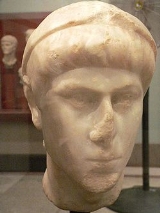
Constantius II

 
Constantius II

   Email Print
   Bookmark   Link


Constantius II


Flavius Iulius Constantius, known in English as Constantius II (7 August, 317
317

Events...
 – November 3, 361
361

Events...
) was a Roman Emperor
Roman Emperor

The Roman Emperor was the ruler of the Roman Empire during the imperial period . The Romans had no single term for the office: Latin language titles such as imperator , Augustus , Caesar and princeps were all associated with it....
 (337-361) of the Constantinian dynasty
Constantinian dynasty

The Constantinian dynasty is an informal name for the ruling family of the Roman Empire from Constantius Chlorus to the death of Julian the Apostate in 363....
.

lavius Iulius Constantius was born at Sirmium
Sirmium

Sirmium was an ancient city in Roman Pannonia. Sirmium originally was an Illyrians town conquered by the Ancient Rome in the 1st century BC. It was a very important town in the later Roman Empire, being the economic capital of Roman Pannonia and one of the four capital cities of the Roman Empire....
 (now Sremska Mitrovica
Sremska Mitrovica

Sremska Mitrovica is a city and municipality located in the Vojvodina province of Serbia at 44.98? North, 19.61? East, on the left bank of the Sava river....
 in Serbia
Serbia

Serbia , officially the Republic of Serbia , is a country in Central Europe and Balkans Europe, covering the southern part of the Pannonian Plain and the central part of the Balkans....
) in province of Pannonia
Pannonia

Pannonia is an ancient province of the Roman Empire bounded north and east by the Danube, coterminous westward with Noricum and upper Italy, and southward with Dalmatia and upper Moesia....
, the third son of Constantine the Great, and second by his second wife Fausta
Fausta

Fausta Flavia Maxima, Roman Empress, She was the daughter of the Roman Emperor Maximianus . To seal the alliance between them for control of the Tetrarchy, Maximianus married her to Constantine I in 307....
, the daughter of Maximian
Maximian

Marcus Aurelius Valerius Maximianus Herculius , commonly referred to as Maximian, was Caesar from July 285 and Augustus from April 1, 286 to May 1, 305....
. Constantius was made Caesar
Caesar (title)

Caesar , Latin: Caesar , is a title of emperor character. It derives from the Roman naming convention#Cognomen of Julius Caesar, the Roman dictator....
 by his father on 13 November 324.

The Massacre of 337
The role of Constantius in the massacre of his relatives (those descended from the second marriage of his paternal grandfather Constantius Chlorus
Constantius Chlorus

Flavius Valerius Constantius , also Constantius I, was an Roman emperor of the Western Roman Empire . He was commonly called Chlorus an epithet given to him by Byzantine Empire historians....
 and Theodora
Flavia Maximiana Theodora

File:Bronze-Flavia Maximiana Theodora-trier RIC 65.jpgFlavia Maximiana Theodora was the stepdaughter of Maximian. Her parents were Flavius Afranius Hannibalianus and wife, divorced before 283, Eutropia, later wife of Maximian....
) is unclear.


Discussion
Ask a question about 'Constantius II'
Start a new discussion about 'Constantius II'
Answer questions from other users
Full Discussion Forum


Timeline

317   Born

337   Constantine II, Constantius II, and Constans succeed their father Constantine I and rule as co-emperors of the Roman Empire.

338   Constantius II intervenes against the Persians in Armenia.

340   Constantinople, capital of Emperor Constantius II becomes the largest city of the world, taking the lead from Rome, capital of Emperor Constans.

343   Emperor Constantius II invades Adiabene (Mesopotamia).

344   Battle of Singara: massacre of the Roman Army of Constantius II by the Persian Army of Shapur II.

351   Constantius II elevates his cousin Gallus to Caesar, and puts him in charge of the Eastern part of the Roman Empire.

353   Battle of Mons Seleucus - Constantius II defeats the usurper Magnentius.

354   Caesar of the East Constantius Gallus is deposed and executed on orders of Constantius II.

355   The Lentienses are fined by the Roman commander Arbetio under Emperor Constantius II for several riots against the Roman Empire.


Encyclopedia


Flavius Iulius Constantius, known in English as Constantius II (7 August, 317
317

Events...
 – November 3, 361
361

Events...
) was a Roman Emperor
Roman Emperor

The Roman Emperor was the ruler of the Roman Empire during the imperial period . The Romans had no single term for the office: Latin language titles such as imperator , Augustus , Caesar and princeps were all associated with it....
 (337-361) of the Constantinian dynasty
Constantinian dynasty

The Constantinian dynasty is an informal name for the ruling family of the Roman Empire from Constantius Chlorus to the death of Julian the Apostate in 363....
.

Early Life

Flavius Iulius Constantius was born at Sirmium
Sirmium

Sirmium was an ancient city in Roman Pannonia. Sirmium originally was an Illyrians town conquered by the Ancient Rome in the 1st century BC. It was a very important town in the later Roman Empire, being the economic capital of Roman Pannonia and one of the four capital cities of the Roman Empire....
 (now Sremska Mitrovica
Sremska Mitrovica

Sremska Mitrovica is a city and municipality located in the Vojvodina province of Serbia at 44.98? North, 19.61? East, on the left bank of the Sava river....
 in Serbia
Serbia

Serbia , officially the Republic of Serbia , is a country in Central Europe and Balkans Europe, covering the southern part of the Pannonian Plain and the central part of the Balkans....
) in province of Pannonia
Pannonia

Pannonia is an ancient province of the Roman Empire bounded north and east by the Danube, coterminous westward with Noricum and upper Italy, and southward with Dalmatia and upper Moesia....
, the third son of Constantine the Great, and second by his second wife Fausta
Fausta

Fausta Flavia Maxima, Roman Empress, She was the daughter of the Roman Emperor Maximianus . To seal the alliance between them for control of the Tetrarchy, Maximianus married her to Constantine I in 307....
, the daughter of Maximian
Maximian

Marcus Aurelius Valerius Maximianus Herculius , commonly referred to as Maximian, was Caesar from July 285 and Augustus from April 1, 286 to May 1, 305....
. Constantius was made Caesar
Caesar (title)

Caesar , Latin: Caesar , is a title of emperor character. It derives from the Roman naming convention#Cognomen of Julius Caesar, the Roman dictator....
 by his father on 13 November 324.

Death of Constantine I and Aftermath


When the elder Constantine died at Constantinople
Constantinople

Constantinople was the empire capital of the Roman Empire , the Byzantine Empire , the Latin Empire , and the Ottoman Empire . Strategically located between the Golden Horn and the Sea of Marmara at the point where Europe meets Asia, Byzantine Constantinople had been the capital of a Christendom empire, successor to ancient ancient Greece...
 on 22 May 337, Constantius was nearest of his sons to that city, and despite being on campaign in the eastern provinces, immediately returned to the city to oversee his father's funeral.

The Massacre of 337


The role of Constantius in the massacre of his relatives (those descended from the second marriage of his paternal grandfather Constantius Chlorus
Constantius Chlorus

Flavius Valerius Constantius , also Constantius I, was an Roman emperor of the Western Roman Empire . He was commonly called Chlorus an epithet given to him by Byzantine Empire historians....
 and Theodora
Flavia Maximiana Theodora

File:Bronze-Flavia Maximiana Theodora-trier RIC 65.jpgFlavia Maximiana Theodora was the stepdaughter of Maximian. Her parents were Flavius Afranius Hannibalianus and wife, divorced before 283, Eutropia, later wife of Maximian....
) is unclear. Zosimus
Zosimus

Zosimus was a Byzantine Empire historian, who lived in Constantinople during the reign of the Byzantine Emperor Anastasius I . According to Photios I of Constantinople, he was a comes, and held the office of "advocate" of the imperial treasury....
, writing 498-518 claims that Constantius “caused” the soldiers to murder his relatives, as opposed to actually ordering the action. Eutropius
Eutropius

IntroductionNot much is known about the early life of Eutropius because there are no written texts that document his life. Eutropius should not be confused with Eutropius of Valencia or Saint Eutropius....
, writing between 350 and 370, writes that Constantius merely sanctioned “the act, rather than commanding it”. However, it must be noted that both of these sources are hostile to Constantius - Zosimus
Zosimus

Zosimus was a Byzantine Empire historian, who lived in Constantinople during the reign of the Byzantine Emperor Anastasius I . According to Photios I of Constantinople, he was a comes, and held the office of "advocate" of the imperial treasury....
 being a pagan, Eutropius
Eutropius

IntroductionNot much is known about the early life of Eutropius because there are no written texts that document his life. Eutropius should not be confused with Eutropius of Valencia or Saint Eutropius....
 a friend of Julian
Julian the Apostate

Flavius Claudius Julianus, known also as Julian or Julian the Apostate , was Roman Emperor of the Constantinian dynasty. He was the last non-Christian Roman Emperor, and expended much energy during his reign attempting to supplant the growing power of Christianity within the empire with officially revived Religion in ancient Rom...
, Constantius’ cousin and, ultimately, his enemy.

Whatever the case, Constantius himself, his older brother Constantine II
Constantine II (emperor)

Flavius Claudius Constantinus, known in English as Constantine II, was List of Roman Emperors from 337 to 340. The eldest son of Constantine the Great and Fausta, he was born at Arles, and was raised as a Christian....
, his younger brother Constans
Constans

Flavius Julius Constans , was a Roman Emperor who ruled from 337 to 350. Constans was the third and youngest son of Constantine the Great and Fausta, Constantine's second wife....
 and three cousins, Gallus
Constantius Gallus

Flavius Claudius Constantius Gallus , better known as Constantius Gallus, was a member of the Constantinian dynasty and Caesar of the Roman Empire ....
, his half-brother Julian
Julian the Apostate

Flavius Claudius Julianus, known also as Julian or Julian the Apostate , was Roman Emperor of the Constantinian dynasty. He was the last non-Christian Roman Emperor, and expended much energy during his reign attempting to supplant the growing power of Christianity within the empire with officially revived Religion in ancient Rom...
 and Nepotianus
Nepotianus

Flavius Iulius Popilius Nepotianus Constantinus , commonly Nepotian, was a member of the Constantinian dynasty, and a short-lived Roman usurper of the Roman Empire....
, son of Eutropia
Eutropia (princess)

Eutropia was the daughter of Emperor Constantius Chlorus and of Flavia Maximiana Theodora, and therefore half-sister of Emperor Constantine I....
, were left as the only surviving males related to Constantine.

Division of the Empire


Meeting at Sirmium not long after the massacre, the three brothers proceeded to divide the Roman Empire among them, according to their father's will. Constantine II received Britannia
Roman Britain

Roman Britain refers to those parts of the island of Great Britain controlled by the Roman Empire between AD 43 and 410. The Romans referred to their province as Britannia....
, Gaul
Gaul

Gaul is the name used for the region of Western Europe comprising part of present day northern Italy, France, Belgium, western Switzerland and the parts of the Netherlands and Germany on the west bank of the River Rhine....
 and Hispania
Hispania

Hispania was the name given by the Ancient Rome to the whole of the Iberian Peninsula . When Rome was a Roman Republic, Hispania was divided into Roman provinces: Hispania Citerior and Hispania Ulterior....
; Constans (initially under the supervision of Constantine II) Italia, Africa
Africa Province

File:Roman Africa.JPGThe Roman province of Africa was established after the Romans defeated Carthage in the Third Punic War. It roughly comprised the territory of present-day northern Tunisia, north-eastern Algeria and the Mediterranean Sea coast of modern-day western Libya along the Syrtis Minor....
, Illyricum, Thrace
Thracia (Roman province)

Thracia was the name of a Roman province of the Roman empire. It was established in 46 AD, when the former Roman client state of Thrace was annexed by the emperor Claudius ....
, Macedon
Macedonia (Roman province)

The Roman province of Macedonia was officially established in 146 BC, after the Roman general Quintus Caecilius Metellus Macedonicus defeated Andriscus of Macedon in 148 BC, and after the four client republics established by Rome in the region were dissolved....
 and Achaea
Achaea (Roman province)

Achaea was a Roman province of the Roman Empire, consisting of the modern-day Peloponnese in southern Greece and bordered on the north by the provinces of Epirus and Macedonia ....
; and Constantius the East.

Reign in the East

Constantius Ii   Solidus   Antioch Ric Viii 025
There are few details of the early years of Constantius' sole reign in the East. He seems to have spent most of his time defending the eastern border against invasions by the aggressive Sassanid Empire
Sassanid Empire

The Sassanid Empire or Sassanian Dynasty is the name of the last pre-Islamic Iranian empire. It was one of the two main powers in Western Asia for a period of more than 400 years....
 under Shapur II
Shapur II

Shapur II was the ninth King of the Sassanid Empire from 309 to 379. During his long reign, the Sassanid Empire saw its first golden era since the reign of Shapur I ....
. These conflicts seem to have been mainly limited to Sassanid sieges of the various fortresses (Nisibis
Nisibis

Nusaybin is a city in Mardin Province, southeastern Turkey populated by Kurdish people, Assyrian/Chaldean/Syriac people, Arabs.It is the ancient Mesopotamian city, which Alexander's successors refounded as Antiochia Mygdonia and is mentioned for the first time in Polybius' description of the march of Antiochus I against the Molon...
, Singara
Singara

Singara was a strongly fortified post at the northern extremity of Mesopotamia, which for awhile, as appears from many coins still extant, was occupied by the Roman Empire as an advanced colony against the Persians....
, Constantia and Amida
Diyarbakir

Diyarbakir is the largest city in southeastern Turkey. Situated on the banks of the River Tigris, it is the seat of Diyarbakir Province, and has a population of 2.5 million....
) of Roman Mesopotamia
Mesopotamia

Mesopotamia is the area of the Tigris-Euphrates river system, along the Tigris and Euphrates rivers, largely corresponding to modern Iraq, as well as some parts of northeastern Syria, some parts of southeastern Turkey, and some parts of the Khuzestan Province of southwestern Iran....
, which achieved little for either side. Although Shapur II
Shapur II

Shapur II was the ninth King of the Sassanid Empire from 309 to 379. During his long reign, the Sassanid Empire saw its first golden era since the reign of Shapur I ....
 seems to have been victorious in most of the confrontations - except the Battle of Narasara, where one of Shapur II
Shapur II

Shapur II was the ninth King of the Sassanid Empire from 309 to 379. During his long reign, the Sassanid Empire saw its first golden era since the reign of Shapur I ....
's brothers, Narses, was killed - the overall result must be considered a victory for Constantius because Shapur
Shapur II

Shapur II was the ninth King of the Sassanid Empire from 309 to 379. During his long reign, the Sassanid Empire saw its first golden era since the reign of Shapur I ....
 failed to make any significant gains.

In the meantime, Constantine II
Constantine II

Constantine II may refer to:* Antipope Constantine II, antipope from 767 – 768* Constantine II , Roman Emperor 337 – 340* Constantine II of Scotland , King of Scotland 900 – 942 or 943...
's desire to retain control of Constans
Constans

Flavius Julius Constans , was a Roman Emperor who ruled from 337 to 350. Constans was the third and youngest son of Constantine the Great and Fausta, Constantine's second wife....
' realm had lead Constantius' two surviving brothers into open conflict; resulting in the death of the elder in 340. As a result, Constans took control of his deceased elder brother’s realms and became sole ruler of the Western two-thirds of the Empire. This division lasted until 350, when Constans was killed in battle by forces loyal to the usurper
Roman usurper

Usurpers are individuals or groups of individuals who obtain and maintain the power or rights of another by force and without legal authority. Usurpers were a common feature of the late Roman Empire, especially from the crisis of the third century onwards, when political instability became the rule....
 Magnentius
Magnentius

Flavius Magnus Magnentius was a Roman usurper .Born in Samarobriva , Gaul, Magnentius was the commander of the Herculians and Iovians, the imperial guard units ....
 .

War against Magnentius


Maiorina Vetranio Siscia Ric 281
This new state of affairs proved unacceptable to Constantius, who felt that, as the only surviving son of Constantine the Great, the position of Emperor
Roman Emperor

The Roman Emperor was the ruler of the Roman Empire during the imperial period . The Romans had no single term for the office: Latin language titles such as imperator , Augustus , Caesar and princeps were all associated with it....
 was his alone. As such, he determined to march west to enforce his claims. However, feeling that the east still required some sort of imperial control, he elevated his cousin Constantius Gallus
Constantius Gallus

Flavius Claudius Constantius Gallus , better known as Constantius Gallus, was a member of the Constantinian dynasty and Caesar of the Roman Empire ....
 to Caesar of the East. As an extra measure to ensure the loyalty of his cousin, he married the elder of his two sisters, Constantina
Constantina

Constantina was the eldest daughter of Roman Emperor Constantine the Great and his second wife Fausta, daughter of Emperor Maximian. Constantina received the title of Augusta by her father, and is venerated as saint....
, to Gallus
Constantius Gallus

Flavius Claudius Constantius Gallus , better known as Constantius Gallus, was a member of the Constantinian dynasty and Caesar of the Roman Empire ....
.

Before facing Magnentius
Magnentius

Flavius Magnus Magnentius was a Roman usurper .Born in Samarobriva , Gaul, Magnentius was the commander of the Herculians and Iovians, the imperial guard units ....
, Constantius first came to terms with Vetranio
Vetranio

Vetranio , born in the province of Moesia in a part of the region located in modern Serbia, is sometimes but apparently incorrectly referred to as Vetriano....
, a loyal Constantian general, who had previously accepted the position of Augustus in order to retain the loyalty of his troops, and probably to stop Magnentius from gaining more support. This action may have been carried out at the urging of Constantius’ own sister, Constantina
Constantina

Constantina was the eldest daughter of Roman Emperor Constantine the Great and his second wife Fausta, daughter of Emperor Maximian. Constantina received the title of Augusta by her father, and is venerated as saint....
, who had since traveled east to marry Gallus
Constantius Gallus

Flavius Claudius Constantius Gallus , better known as Constantius Gallus, was a member of the Constantinian dynasty and Caesar of the Roman Empire ....
. Constantius for his own part had previously sent Vetranio
Vetranio

Vetranio , born in the province of Moesia in a part of the region located in modern Serbia, is sometimes but apparently incorrectly referred to as Vetriano....
 the imperial diadem and acknowledged the general‘s new position. However, when Constantius arrived, Vetranio
Vetranio

Vetranio , born in the province of Moesia in a part of the region located in modern Serbia, is sometimes but apparently incorrectly referred to as Vetriano....
 willingly and gladly resigned his position and accepted Constantius’ offer of a comfortable retirement in Bithynia
Bithynia

Bithynia was an ancient region, kingdom and Roman province in the northwest of Asia Minor, adjoining the Propontis, the Thrace Bosporus and the Euxine ....
.

Double Centenionalis Magnentius Xr S4017
The following year, Constantius finally met Magnentius
Magnentius

Flavius Magnus Magnentius was a Roman usurper .Born in Samarobriva , Gaul, Magnentius was the commander of the Herculians and Iovians, the imperial guard units ....
 in the Battle of Mursa Major
Battle of Mursa Major

The Battle of Mursa Major was fought in 351 between the Eastern Roman army led by Constantius II and the western forces supporting the usurper Magnentius....
  , one of the bloodiest battles in Roman history. The result was a defeat for the usurper, who withdrew back to his Gaulish domains. As a result, the cities of Italy switched their allegiance to Constantius and ejected all of Magnentius
Magnentius

Flavius Magnus Magnentius was a Roman usurper .Born in Samarobriva , Gaul, Magnentius was the commander of the Herculians and Iovians, the imperial guard units ....
’ garrisons. Constantius spent the early months of 352 on a campaign against the Sarmatians
Sarmatians

The Sarmatians, Sarmat? or Sauromat? were a people of Ancient Iranian peoples origin. Mentioned by Classics authors, they migrated from Central Asia to the Ural Mountains around fifth century B.C....
, before moving on to invade Italy.

When Constantius and Magnentius finally met again, at the Battle of Mons Seleucus
Battle of Mons Seleucus

The Battle of Mons Seleucus was fought in 353 between the forces of Constantius II and the forces of the usurper Magnentius. Constantius' forces were victorious, and Magnentius later committed suicide....
 in southern Gaul, Constantius once again emerged the victor. Soon after, Magnentius
Magnentius

Flavius Magnus Magnentius was a Roman usurper .Born in Samarobriva , Gaul, Magnentius was the commander of the Herculians and Iovians, the imperial guard units ....
, realising the futility of continuing his revolt, committed suicide 10 August, 353.

Sole Ruler of the Roman Empire


Constantius spent much of the rest of 353 and early 354 on campaign against the Alemanni
Alamanni

The Alamanni, Allemanni, or Alemanni were originally an alliance of Germanic languagess located around the upper Main river . One of the earliest references to them is the cognomen Alamannicus assumed by Caracalla, who ruled the Roman Empire from 211?17 and claimed thereby to be their defeater....
 on the Danubian borders. The exact results of this campaign is uncertain, though it seems to have been a victory for Constantius.

The Downfall of Gallus


In the meantime, Constantius had been receiving some disturbing reports regarding the actions of his cousin, Gallus
Constantius Gallus

Flavius Claudius Constantius Gallus , better known as Constantius Gallus, was a member of the Constantinian dynasty and Caesar of the Roman Empire ....
. Possibly as a result of these reports, Constantius concluded a peace with the Alemanni
Alamanni

The Alamanni, Allemanni, or Alemanni were originally an alliance of Germanic languagess located around the upper Main river . One of the earliest references to them is the cognomen Alamannicus assumed by Caracalla, who ruled the Roman Empire from 211?17 and claimed thereby to be their defeater....
, and withdrew to Milan
Milan

Milan is the second largest city of Italy, located in the plains of Lombardy. It is the capital in the Province of Milan, as well as the Regions of Italy capital of Lombardy....
.

Solidus Constantius Gallus Thessalonica Ric 149
Once there, he decided to first call Ursicinus
Ursicinus

Ursicinus, a Latin name derived from Ursus 'bear', can refer to:*Antipope Ursicinus *Saint Ursicinus *Ursicinus , a Roman general of the fourth century...
, Gallus’ magister equitum, to Milan for reasons that remain unclear. Constantius then requested the presence of Gallus
Constantius Gallus

Flavius Claudius Constantius Gallus , better known as Constantius Gallus, was a member of the Constantinian dynasty and Caesar of the Roman Empire ....
 and Constantina
Constantina

Constantina was the eldest daughter of Roman Emperor Constantine the Great and his second wife Fausta, daughter of Emperor Maximian. Constantina received the title of Augusta by her father, and is venerated as saint....
. Although at first Gallus
Constantius Gallus

Flavius Claudius Constantius Gallus , better known as Constantius Gallus, was a member of the Constantinian dynasty and Caesar of the Roman Empire ....
 and Constantina
Constantina

Constantina was the eldest daughter of Roman Emperor Constantine the Great and his second wife Fausta, daughter of Emperor Maximian. Constantina received the title of Augusta by her father, and is venerated as saint....
 complied with this order, when Constantina
Constantina

Constantina was the eldest daughter of Roman Emperor Constantine the Great and his second wife Fausta, daughter of Emperor Maximian. Constantina received the title of Augusta by her father, and is venerated as saint....
 died in Bithynia
Bithynia

Bithynia was an ancient region, kingdom and Roman province in the northwest of Asia Minor, adjoining the Propontis, the Thrace Bosporus and the Euxine ....
, Gallus
Constantius Gallus

Flavius Claudius Constantius Gallus , better known as Constantius Gallus, was a member of the Constantinian dynasty and Caesar of the Roman Empire ....
 begun to hesitate. However, after some convincing by one of Constantius’ agents, Gallus continued his journey west, passing through Constantinople
Constantinople

Constantinople was the empire capital of the Roman Empire , the Byzantine Empire , the Latin Empire , and the Ottoman Empire . Strategically located between the Golden Horn and the Sea of Marmara at the point where Europe meets Asia, Byzantine Constantinople had been the capital of a Christendom empire, successor to ancient ancient Greece...
 and Thrace
Thracia (Roman province)

Thracia was the name of a Roman province of the Roman empire. It was established in 46 AD, when the former Roman client state of Thrace was annexed by the emperor Claudius ....
 to Petobio in the province of Noricum
Noricum

Noricum, in ancient history geography, was a Celtic kingdom stretching over the area of today's Austria and Slovenia. It became a Roman province of the Roman Empire....
 .

It was there that Gallus
Constantius Gallus

Flavius Claudius Constantius Gallus , better known as Constantius Gallus, was a member of the Constantinian dynasty and Caesar of the Roman Empire ....
 was arrested by the soldiers of Constantius under the command of Barbatio
Barbatio

Barbatio was a Ancient Rome general of the infantry under the command of Constantius II. Previously he was a commander of the household troops under Gallus Caesar, but he arrested Gallus under the instruction of Constantius, thereby ensuring his promotion on the death of Claudius Silvanus....
. He was then moved to Pola
Pula

Pula is the largest city in Istria County, Croatia, situated at the southern tip of the Istria peninsula, with a population of 62,080 .Like the rest of the region, it is known for its mild climate, tame sea, and unspoiled nature....
, and interrogated. Once there, Gallus
Constantius Gallus

Flavius Claudius Constantius Gallus , better known as Constantius Gallus, was a member of the Constantinian dynasty and Caesar of the Roman Empire ....
 claimed that it was Constantina
Constantina

Constantina was the eldest daughter of Roman Emperor Constantine the Great and his second wife Fausta, daughter of Emperor Maximian. Constantina received the title of Augusta by her father, and is venerated as saint....
 who was to blame for all the trouble that had been caused while he was in charge of the east. Apparently, at first, this so greatly angered Constantius that he immediately ordered the death of Gallus
Constantius Gallus

Flavius Claudius Constantius Gallus , better known as Constantius Gallus, was a member of the Constantinian dynasty and Caesar of the Roman Empire ....
. However, soon after, he changed his mind, and recanted his execution order . Unfortunately for Gallus, this order was delayed by Eusebius
Eusebius (praepositus sacri cubiculi)

Eusebius was a high-ranking officer of the Roman Empire, holding the position of praepositus sacri cubiculi for all the rule of Emperor Constantius II ....
, one of Constantius‘ eunuchs, and, as a result, Gallus
Constantius Gallus

Flavius Claudius Constantius Gallus , better known as Constantius Gallus, was a member of the Constantinian dynasty and Caesar of the Roman Empire ....
 was executed.

More Usurpers and Julian Caesar


On 11 August 355, the magister militum
Magister militum

Magister militum was a top-level military command used in the later Roman Empire, dating from the reign of Constantine I . Used alone, the term referred to the senior military officer of the Empire....
 Claudius Silvanus
Claudius Silvanus

Claudius Silvanus was a Ancient Rome general of Franks descent, Roman usurper in Gaul against Emperor Constantius II for 28 days in 355....
 revolted in Gaul. Silvanus had surrendered to Constantius after the battle of Mursa Major
Battle of Mursa Major

The Battle of Mursa Major was fought in 351 between the Eastern Roman army led by Constantius II and the western forces supporting the usurper Magnentius....
. Constantius had made him magister militum in 353, with the purpose of blocking the German threats, a feat that Silvanus achieved by bribing the German tribes with the money he had collected. A plot organized by members of Constantius' court led the emperor to recall Silvanus. After Silvanus revolted, he received a letter by Constantius that recalled him to Milan, but which made no reference to the revolt. Ursicinus
Ursicinus (Roman general)

Ursicinus was the "master of cavalry" in the Eastern Roman Empire c. 349-359.In 353, Ammianus Marcellinus was attached to the command of Ursicinus at his headquarters in Nisibis....
, who was meant to replace Silvanus, bribed some troops, and Silvanus was killed.

However, Constantius realised that too many threats still faced the Empire, and he could not possibly handle all of them by himself, so on 6 November 355, he elevated his last remaining relative, Julian, to the rank of Caesar
Caesar (title)

Caesar , Latin: Caesar , is a title of emperor character. It derives from the Roman naming convention#Cognomen of Julius Caesar, the Roman dictator....
. A few days later, Julian
Julian the Apostate

Flavius Claudius Julianus, known also as Julian or Julian the Apostate , was Roman Emperor of the Constantinian dynasty. He was the last non-Christian Roman Emperor, and expended much energy during his reign attempting to supplant the growing power of Christianity within the empire with officially revived Religion in ancient Rom...
 was married to Helena, wife of Julian
Helena, wife of Julian

Helena was the wife of Julian the Apostate, List of Roman Emperors. She was briefly his Empress consort when Julian was proclaimed Augustus by his troops in 360....
, the last surviving sister of Constantius. Not long after Constantius sent Julian
Julian the Apostate

Flavius Claudius Julianus, known also as Julian or Julian the Apostate , was Roman Emperor of the Constantinian dynasty. He was the last non-Christian Roman Emperor, and expended much energy during his reign attempting to supplant the growing power of Christianity within the empire with officially revived Religion in ancient Rom...
 off to Gaul.

Constantius in the West and Return to the East


Constantius spent the next few years overseeing affairs in the western part of the Empire primarily from his base at Milan
Milan

Milan is the second largest city of Italy, located in the plains of Lombardy. It is the capital in the Province of Milan, as well as the Regions of Italy capital of Lombardy....
. However, he also visited Rome
Rome

Rome is the capital city of Italy and Lazio, and is Italy's largest and most populous city, with 2,724,347 residents in an urban area of some ....
 - for the first and only time in his life - in 357, and, in that same year, he forced Sarmatian
Sarmatians

The Sarmatians, Sarmat? or Sauromat? were a people of Ancient Iranian peoples origin. Mentioned by Classics authors, they migrated from Central Asia to the Ural Mountains around fifth century B.C....
 and Quadi
Quadi

The Quadi were a smaller Germanic tribe, about which little definitive information is known. The history of non-literate peoples is written by their opponents, and we can only know the Germanic tribe the Romans called the 'Quadi' through Roman eyes....
 invaders out of Pannonia
Pannonia

Pannonia is an ancient province of the Roman Empire bounded north and east by the Danube, coterminous westward with Noricum and upper Italy, and southward with Dalmatia and upper Moesia....
 and Moesia Inferior
Moesia

Moesia was an ancient region and Roman province situated in the areas of modern Serbia, Bulgaria and Romania along the south bank of the Danube River....
, then led a successful campaign across the Danube against the Sarmatians
Sarmatians

The Sarmatians, Sarmat? or Sauromat? were a people of Ancient Iranian peoples origin. Mentioned by Classics authors, they migrated from Central Asia to the Ural Mountains around fifth century B.C....
 and the Germanic Quadi
Quadi

The Quadi were a smaller Germanic tribe, about which little definitive information is known. The history of non-literate peoples is written by their opponents, and we can only know the Germanic tribe the Romans called the 'Quadi' through Roman eyes....
 tribe.

Around 357/8, Constantius received ambassadors from Shapur II
Shapur II

Shapur II was the ninth King of the Sassanid Empire from 309 to 379. During his long reign, the Sassanid Empire saw its first golden era since the reign of Shapur I ....
, who demanded that Constantius restore the lands surrendered by Narseh
Narseh

Narseh was the seventh Sassanid dynasty King of Persian Empire , and son of Shapur I .During the rule of his father Shapur I, Narseh had served as the Viceroy of Sistan, Baluchistan and Sindh....
 . Despite rejecting these terms , Constantius still tried to avert war with the Sassanid Empire
Sassanid Empire

The Sassanid Empire or Sassanian Dynasty is the name of the last pre-Islamic Iranian empire. It was one of the two main powers in Western Asia for a period of more than 400 years....
 by sending two embassies to Shapur II
Shapur II

Shapur II was the ninth King of the Sassanid Empire from 309 to 379. During his long reign, the Sassanid Empire saw its first golden era since the reign of Shapur I ....
  .

As a result of Constantius' rejection of his terms, Shapur II
Shapur II

Shapur II was the ninth King of the Sassanid Empire from 309 to 379. During his long reign, the Sassanid Empire saw its first golden era since the reign of Shapur I ....
 launched another invasion of Roman Mesopotamia. When news reached Constantius that Shapur II
Shapur II

Shapur II was the ninth King of the Sassanid Empire from 309 to 379. During his long reign, the Sassanid Empire saw its first golden era since the reign of Shapur I ....
 had not only invaded Roman territory, but taken Amida
Diyarbakir

Diyarbakir is the largest city in southeastern Turkey. Situated on the banks of the River Tigris, it is the seat of Diyarbakir Province, and has a population of 2.5 million....
, destroyed Singara
Singara

Singara was a strongly fortified post at the northern extremity of Mesopotamia, which for awhile, as appears from many coins still extant, was occupied by the Roman Empire as an advanced colony against the Persians....
 and taken Bezabde
Cizre

Cizre is a district of Sirnak Province of Turkey. Cizre is populated by a majority of Kurdish people and Assyrian/Syriac people....
 he decided to return to there to face this re-emergent threat in 360.

The usurpation of Julian and Problems in the East


In the meantime, Julian
Julian the Apostate

Flavius Claudius Julianus, known also as Julian or Julian the Apostate , was Roman Emperor of the Constantinian dynasty. He was the last non-Christian Roman Emperor, and expended much energy during his reign attempting to supplant the growing power of Christianity within the empire with officially revived Religion in ancient Rom...
 had won some victories against the Alemanni
Alamanni

The Alamanni, Allemanni, or Alemanni were originally an alliance of Germanic languagess located around the upper Main river . One of the earliest references to them is the cognomen Alamannicus assumed by Caracalla, who ruled the Roman Empire from 211?17 and claimed thereby to be their defeater....
 tribe, who had once again invaded Roman Gaul
Roman Gaul

Roman Gaul consisted of an area of provincial rule in the Roman Empire, in modern day France, Belgium, Luxembourg, and western Germany. Roman control of the area lasted for 600 years....
. As such, Constantius requested reinforcements from Julian
Julian the Apostate

Flavius Claudius Julianus, known also as Julian or Julian the Apostate , was Roman Emperor of the Constantinian dynasty. He was the last non-Christian Roman Emperor, and expended much energy during his reign attempting to supplant the growing power of Christianity within the empire with officially revived Religion in ancient Rom...
 for his own campaign against Shapur II. However, when he requested reinforcements from Julian
Julian the Apostate

Flavius Claudius Julianus, known also as Julian or Julian the Apostate , was Roman Emperor of the Constantinian dynasty. He was the last non-Christian Roman Emperor, and expended much energy during his reign attempting to supplant the growing power of Christianity within the empire with officially revived Religion in ancient Rom...
’s Gaulish army, the Gaulish legions revolted and proclaimed Julian
Julian the Apostate

Flavius Claudius Julianus, known also as Julian or Julian the Apostate , was Roman Emperor of the Constantinian dynasty. He was the last non-Christian Roman Emperor, and expended much energy during his reign attempting to supplant the growing power of Christianity within the empire with officially revived Religion in ancient Rom...
 Augustus .

However, on account of the immediate Sassanid threat, Constantius was unable to directly respond to his cousin’s usurpation other than by sending missives by which he tried to convince Julian to resign the title of Augustus and be satisfied with that of Caesar.

By 361, Constantius saw no alternative but to face the usurper with violent force; and yet the threat of the Sassanids
Sassanid Empire

The Sassanid Empire or Sassanian Dynasty is the name of the last pre-Islamic Iranian empire. It was one of the two main powers in Western Asia for a period of more than 400 years....
 remained. Constantius had already spent part of early 361 unsuccesfully attempting to take the fortress of Bezabde
Cizre

Cizre is a district of Sirnak Province of Turkey. Cizre is populated by a majority of Kurdish people and Assyrian/Syriac people....
. After a time, he had withdrawn to Antioch
Antioch

Antioch on the Orontes was an ancient city on the eastern side of the Orontes River. It is near the modern city of Antakya, Turkey.Founded near the end of the 4th century BC by Seleucus I Nicator, one of Alexander the Great's generals, Antioch eventually rivaled Alexandria as the chief city of the nearer East and was a cradle of gentile hi...
 to regroup, and prepare for a confrontation with Shapur II
Shapur II

Shapur II was the ninth King of the Sassanid Empire from 309 to 379. During his long reign, the Sassanid Empire saw its first golden era since the reign of Shapur I ....
. However, as it turned out, the campaigns of the previous year had inflicted such heavy losses on the Sassanids
Sassanid Empire

The Sassanid Empire or Sassanian Dynasty is the name of the last pre-Islamic Iranian empire. It was one of the two main powers in Western Asia for a period of more than 400 years....
 that they did not attempt another round of engagements in 361. This allowed Constantius to turn his full attention to facing the usurpation of Julian
Julian the Apostate

Flavius Claudius Julianus, known also as Julian or Julian the Apostate , was Roman Emperor of the Constantinian dynasty. He was the last non-Christian Roman Emperor, and expended much energy during his reign attempting to supplant the growing power of Christianity within the empire with officially revived Religion in ancient Rom...
.

Death


As such, Constantius immediately gathered his forces and set off west. However, by the time he reached Mopsuestia
Mopsuestia

Mopsuestia or Mopsus or Mamistra is an ancient city of Cilicia Campestris on the Pyramus river located approximately 20 km east of present-day Adana in Adana Province, Turkey....
 in Cicilia, it was clear that he was fatally ill and would not survive to face Julian
Julian the Apostate

Flavius Claudius Julianus, known also as Julian or Julian the Apostate , was Roman Emperor of the Constantinian dynasty. He was the last non-Christian Roman Emperor, and expended much energy during his reign attempting to supplant the growing power of Christianity within the empire with officially revived Religion in ancient Rom...
. Apparently, realising his death was near, Constantius had himself baptised by Euzoius
Arianism

Arianism is the theological teaching of Arius , a Christian priest, who was first ruled a heresy at the First Council of Nicea, later exonerated and then pronounced a heretic again after his death....
, the Semi-Arian
Semi-Arianism

Semi-Arianism is a name frequently given to the Trinitarian position of the conservative majority of the Eastern Christian Church in the 4th century, to distinguish it from strict Arianism....
 bishop of Antioch
Antioch

Antioch on the Orontes was an ancient city on the eastern side of the Orontes River. It is near the modern city of Antakya, Turkey.Founded near the end of the 4th century BC by Seleucus I Nicator, one of Alexander the Great's generals, Antioch eventually rivaled Alexandria as the chief city of the nearer East and was a cradle of gentile hi...
, and then declared that Julian was his rightful successor. Constantius II died of fever on 3 November 361.

Marriages and Children


Constantius II was married three times:

First to a daughter
Daughter of Julius Constantius

An unnamed daughter of Julius Constantius was the first known wife of Constantius II. ...
 of his half-uncle Julius Constantius
Julius Constantius

Flavius Julius Constantius was a son of Western Roman Emperor Constantius Chlorus and his second wife Flavia Maximiana Theodora. He was a younger half-brother of Roman Emperor Constantine the Great....
, whose name is unknown. She was a full-sister of Gallus and a half-sister of Julian. She died c. 352/3.

Second, to Eusebia, a woman of Macedonian
Ancient Macedonians

The Macedonians were an ancient tribe which inhabited the alluvial plain around the rivers Haliacmon and lower Vardar, north of Mount Olympus in Greece....
 origin from the city of Thessaloniki
Thessaloniki

Thessaloniki , Thessalonica, or Salonica is the List of largest cities and second largest cities by country in Greece and the capital of Macedonia , the nation's largest Regions of Greece....
, whom he married before Constantius' defeat of Magnentius in 353. She died in 360.

Third and lastly, in 360, to Faustina (empress)
Faustina (empress)

Faustina was an Empress of the Roman Empire and third wife of Emperor Constantius II. The main source for her biography is the account of historian Ammianus Marcellinus....
, who gave birth to Constantius' only child, a posthumous daughter named Flavia Maxima Constantia
Flavia Maxima Constantia

Flavia Maxima Constantia was the first Empress consort of Gratian of the Western Roman Empire....
, who later married Emperor Gratian
Gratian

Flavius Gratianus , known usually by the anglicised name Gratian, was a Western Roman Emperor from 375 to 383.He favoured the Christian religion against Roman polytheism, refusing the traditional polytheistic attributes of the emperors and removing the Altar of Victory from the Roman Senate....
.

Religious Issues


Constantius seems to have had a particular interest in the religious state of the Roman Empire
Roman Empire

The Roman Empire was the Roman Republic phase of the Ancient Rome, characterised by an autocracy form of government and large territorial holdings in Europe and around the Mediterranean....
. As a Christian
Christianity

Christianity is a Monotheistic religion #Christian view religion centered on the life and teachings of Jesus as New Testament view on Jesus' life....
 Roman Emperor
Roman Emperor

The Roman Emperor was the ruler of the Roman Empire during the imperial period . The Romans had no single term for the office: Latin language titles such as imperator , Augustus , Caesar and princeps were all associated with it....
, Constantius made a concerted effort to promote Christianity
Christianity

Christianity is a Monotheistic religion #Christian view religion centered on the life and teachings of Jesus as New Testament view on Jesus' life....
 at the expense of Roman polytheism
Religion in ancient Rome

Ancient Roman religion encompasses the collection of beliefs and rituals practised in ancient Rome in the form of cult practices. It is therefore the practical counterpart of Roman mythology....
 (‘paganism’). As such, over the course of his reign, he issued a number of different edicts designed specifically to carry out this agenda (see below). Constantius also took an active part in attempting to shape the Christian
Christianity

Christianity is a Monotheistic religion #Christian view religion centered on the life and teachings of Jesus as New Testament view on Jesus' life....
 church.

Paganism under Constantius


In spite of the some of the edicts issued by Constantius, it should be recognised that he was not fanatically anti-pagan - he never made any attempt to disband the various Roman priestly colleges or the Vestal Virgins
Vestal Virgin

In Ancient Rome, the Vestal Virgins , were the virgin holy female priests of Vesta , the goddess of the hearth. Their primary task was to maintain the sacred fire of Vesta....
, he never acted against the various pagan schools, and, at times, he actually even made some effort to protect paganism. Also, most notably, he remained pontifex maximus
Pontifex Maximus

The Pontifex Maximus was the high priest of the Ancient Rome College of Pontiffs. This was the most important position in the Ancient Roman religion, open only to patricians until 254 BC, when a plebeian first occupied this post....
 until his death, and was actually deified by the Roman Senate after his death. The relative moderation of Constantius' actions toward paganism is reflected by the fact that it was not until over 20 years after Constantius' death, during the reign of Gratian
Gratian

Flavius Gratianus , known usually by the anglicised name Gratian, was a Western Roman Emperor from 375 to 383.He favoured the Christian religion against Roman polytheism, refusing the traditional polytheistic attributes of the emperors and removing the Altar of Victory from the Roman Senate....
, that any pagan senators protested their religion's treatment.

Christianity under Constantius


Although often considered an Arian
Arianism

Arianism is the theological teaching of Arius , a Christian priest, who was first ruled a heresy at the First Council of Nicea, later exonerated and then pronounced a heretic again after his death....
, Constantius ultimately preferred a third, compromise version that lay somewhere in between Arianism
Arianism

Arianism is the theological teaching of Arius , a Christian priest, who was first ruled a heresy at the First Council of Nicea, later exonerated and then pronounced a heretic again after his death....
 and the Nicaean Creed, retrospectively called Semi-Arianism
Semi-Arianism

Semi-Arianism is a name frequently given to the Trinitarian position of the conservative majority of the Eastern Christian Church in the 4th century, to distinguish it from strict Arianism....
 . As such, during his reign, Constantius made a concerted attempt to mold the Christian church to follow this compromise position, and to this end, he convened several Christian councils during his reign, the most notable of which were one at Rimini
Council of Rimini

The Council of Rimini was an early Christianity church synod held in Ariminum .In 358, the Roman Emperor Constantius II requested two councils, one of the western bishops at Ariminum and one of the eastern bishops to resolve the Arian controversy over the nature of the divinity of Jesus Christ, which divided the 4th-century church....
 and its twin at Seleuca
Silifke

Silifke is a town and district in south-central Mersin Province, Turkey, west of the city of Mersin.Silifke is near the Mediterranean coast, on the banks of the G?ksu River, which flows from the nearby Taurus Mountains, surrounded by attractive countryside along the river banks....
, which met in 359 and 360 respectively. "Unfortunately for his memory the theologians whose advice he took were ultimately discredited and the malcontents whom he pressed to conform emerged victorious," writes the historian A.H.M. Jones. "The great councils of 359-60 are therefore not reckoned ecumenical
Ecumenical council

An ecumenical council is a conference of the bishops of the whole Christian Church convened to discuss and settle matters of Church doctrine and practice....
 in the tradition of the church, and Constantius II is not remembered as a restorer of unity, but as a heretic
Arianism

Arianism is the theological teaching of Arius , a Christian priest, who was first ruled a heresy at the First Council of Nicea, later exonerated and then pronounced a heretic again after his death....
 who arbitrarily imposed his will on the church."

Religious Edicts Issued by Constantius


Pagan-related edicts issued by Constantius (by himself or with others) included:
  • The banning of sacrifices;
  • The closing of pagan temples;
  • Edicts against soothsayers and magicians.


Christian-related edicts issued by Constantius (by himself or with others) included:
  • Exemption from compulsory public service for the clergy; * Exemption from compulsory public service for the sons of clergy;
  • Tax exemptions for clergy and their servants, also later for their family;
  • Clergy and the issue of private property;
  • Bishops exempted from being tried in secular courts;
  • Christian prostitutes only able to be bought by Christians.


Reputation


Constantius II is a particularly difficult figure to properly judge, mainly as a result of the hostility of most every source that mentions him.

A.H.M Jones writes that Constantius "appears in the pages of Ammianus
Ammianus Marcellinus

Ammianus Marcellinus was a fourth-century Ancient Rome historian. His is the last major historical account of the late Roman empire which survives today....
 as a conscientious emperor but a vain and stupid man, an easy prey to flatterers. He was timid and suspicious, and interested persons could easily play on his fears for their own advantage."

However, Kent & M. and A. Hirmer suggest that Constantius "has suffered at the hands of unsympathetic authors, ecclesiastical and civil alike. To orthodox churchmen he was a bigoted supporter of the Arian heresy, to Julian the Apostate and the many who have subsequently taken his part he was a murderer, a tyrant and inept as a ruler". They go on to add, "Most contemporaries seem in fact to have held him in high esteem, and he certainly inspired loyalty in a way his brother could not".

Ancestry


Footnotes


Primary Sources

  • Ammianus Marcellinus
    Ammianus Marcellinus

    Ammianus Marcellinus was a fourth-century Ancient Rome historian. His is the last major historical account of the late Roman empire which survives today....
    , Res Gestae
  • Eunapius
    Eunapius

    Eunapius was a Greece sophist and historian of the 4th century....
    , Lives of the Sophists
    Lives of the Sophists

    Lives of the Sophists may refer to:* a book by Eunapius* a book by Philostratus...
  • Eutropius
    Eutropius

    IntroductionNot much is known about the early life of Eutropius because there are no written texts that document his life. Eutropius should not be confused with Eutropius of Valencia or Saint Eutropius....
    , Historiae Romanae Breviarium
  • Festus
    Festus (historian)

    Festus was a late Roman historian whose epitome was commissioned by the emperor Valens in preparation for Valens#Conflict with the Sassanids....
    , Brevarium
  • Julian the Apostate
    Julian the Apostate

    Flavius Claudius Julianus, known also as Julian or Julian the Apostate , was Roman Emperor of the Constantinian dynasty. He was the last non-Christian Roman Emperor, and expended much energy during his reign attempting to supplant the growing power of Christianity within the empire with officially revived Religion in ancient Rom...
    , Letter To The Senate And People of Athens
  • Libanius
    Libanius

    Libanius was a Greek-speaking teacher of rhetoric of the later Roman Empire, an educated Pagan of the Sophist school in an Empire that was turning Christian....
    , Orations XII & XVII
  • Theophanes
    Theophanes the Confessor

    Saint Theophanes Confessor was a member of the Byzantine Empire aristocracy, who became a monk and chronicler. He is venerated on March 12 in the Roman Catholic Church and the Eastern Orthodox Church ....
    , Chronicle
  • Zonaras
    Joannes Zonaras

    Ioannes Zonaras was a Byzantine Empire chronicler and theology, who lived at Constantinople.Under Emperor Alexios I Komnenos he held the offices of Drungarios of the Vigla and private secretary to the emperor, but after Alexios' death, he retired to the monastery of St Glykeria, where he spent the rest of his life in writing books....
    , Extracts of History
  • Zosimus
    Zosimus

    Zosimus was a Byzantine Empire historian, who lived in Constantinople during the reign of the Byzantine Emperor Anastasius I . According to Photios I of Constantinople, he was a comes, and held the office of "advocate" of the imperial treasury....
    , New History


Secondary Sources

  • Banchich, T.M., 'DIR-Gallus' from De Imperatoribus Romanis
  • Dignas, B. & Winter, E., Rome and Persia in Late Antiquity (Cambridge University Press, 2007)
  • DiMaio, M., and Frakes, R., 'DIR-Constantius II' from De Imperatoribus Romanis .
  • Gaddis, M., There is No Crime for Those who Have Christ (University of California Press, 2005)
  • Jones, A.H.M, The Later Roman Empire, 284-602: a Social, Economic and Administrative Survey (Baltimore: Johns Hopkins University, 1986)
  • Kent, J.P.C., Hirmer, M. & Hirmer, A. Roman Coins (Thames and Hudson, 1978)
  • Odahl, C.M., Constantine and the Christian Empire (Routledge, 2004)
  • Pelikan, J.J., The Christian Tradition (University of Chicago, 1989)
  • Potter, D.S., The Roman Empire at Bay: AD 180-395 (Routledge, 2004)
  • Rohrbacher, D., "Why didn't Constantius II Eat Fruit?," Classical Quarterly 55,1 (2005), 323-326.
  • Salzman, M.R., The Making of a Christian Aristocracy: Social and Religious Change in the Western Roman Empire (Harvard University Press, 2002)
  • Vagi, D.L. & Coquand, T., Coinage and History of the Roman Empire (Taylor & Francis, 2001)
  • Vasiliev, A.A., History of the Byzantine Empire 324-1453 (University of Wisconsin Press, 1958)
  • Vogler, C., Constance II et l’administration impériale (Strasbourg, 1979).


External links

  • An 1886 translation of Eutropius
    Eutropius

    IntroductionNot much is known about the early life of Eutropius because there are no written texts that document his life. Eutropius should not be confused with Eutropius of Valencia or Saint Eutropius....
    ' Historiae Romanae Breviarium by Watson can be found .
  • An 1814 translation of Zosimus
    Zosimus

    Zosimus was a Byzantine Empire historian, who lived in Constantinople during the reign of the Byzantine Emperor Anastasius I . According to Photios I of Constantinople, he was a comes, and held the office of "advocate" of the imperial treasury....
    ' New History by Green & Chaplin can be found .
  • An 1862 translation of Ammianus Marcellinus
    Ammianus Marcellinus

    Ammianus Marcellinus was a fourth-century Ancient Rome historian. His is the last major historical account of the late Roman empire which survives today....
    ' Res Gestae by Bohn can be found . Books 14-21 cover Constantius II's reign.
  • A 2001 translation of Festus
    Festus (historian)

    Festus was a late Roman historian whose epitome was commissioned by the emperor Valens in preparation for Valens#Conflict with the Sassanids....
    ' Brevarium by Banchich & Meka can be found .
  • This shows laws passed by Constantius II relating to Christianity.
  • Other likely portrait sculptures of Constantius II: , .