
Home      Discussion      Topics      Dictionary      Almanac
Signup       Login
Common wasp

Common wasp

Discussion
Ask a question about 'Common wasp'
Start a new discussion about 'Common wasp'
Answer questions from other users
Full Discussion Forum
 
Encyclopedia
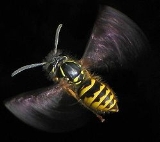
The common wasp, Vespula vulgaris, is a yellowjacket
Yellowjacket
Yellow jacket or yellow-jacket is the common name in North America for predatory wasps of the genera Vespula and Dolichovespula. Members of these genera are known simply as "wasps" in other English-speaking countries...

 wasp
Wasp
The term wasp is typically defined as any insect of the order Hymenoptera and suborder Apocrita that is neither a bee nor ant. Almost every pest insect species has at least one wasp species that preys upon it or parasitizes it, making wasps critically important in natural control of their numbers,...

 found in much of the Northern Hemisphere
Northern Hemisphere
The Northern Hemisphere is the half of a planet that is north of the equator—the word hemisphere literally means 'half sphere'. It is also that half of the celestial sphere north of the celestial equator...

, and introduced to Australia
Australia
Australia , officially the Commonwealth of Australia, is a country in the Southern Hemisphere comprising the continental mainland , the island of Tasmania, and numerous smaller islands in the Indian and Pacific Oceans...

 and New Zealand
New Zealand
New Zealand is an island country in the south-western Pacific Ocean comprising two main landmasses , and numerous smaller islands, most notably Stewart Island/Rakiura and the Chatham Islands. The indigenous Māori named New Zealand Aotearoa, commonly translated as The Land of the Long White Cloud...

. It is a eusocial vespid
Vespid
The Vespidae are a large , diverse, cosmopolitan family of wasps, including nearly all the known eusocial wasps and many solitary wasps. Each social wasp colony includes a queen and a number of female workers with varying degrees of sterility relative to the queen. In temperate social species,...

, which builds its grey paper nest underground, often using an abandoned mammal
Mammal
Mammals are a class of vertebrate animals whose females are characterized by the possession of mammary glands while both males and females are characterized by sweat glands, hair, three middle ear bones used in hearing, and a neocortex region in the brain.Mammals are divided into three main...

 hole as a start for the site, which is then enlarged by the workers. The foundress queen may also select a hollow tree, wall cavity, or rock crevice for a nest site.

Identification


Adult workers of the common wasp measure about 12 mm to 17 mm from head to abdomen, whereas the queen is about 20 mm long. It has aposematic colours of black and yellow and is very similar to the German wasp
German wasp
The German wasp, or European wasp, Vespula germanica, is a wasp found in much of the Northern Hemisphere, native to Europe, northern Africa, and temperate Asia. It has been introduced and is well-established in many other places, including North America, South America , Australia and New Zealand...

, but seen head on, its face lacks the three black dots characteristic of that species. Additionally it can be distinguished by a lack of black dots on its back (gastral terga), which are located further up and form part of the black rings on each of the abdomen's six segments. Furthermore the genal area – the part of the head to which the jaws of an insect are attached – is usually broken by black (although sometimes narrowly). The Ash Borer
Ash Borer
The Ash Borer , aka Lilac Borer, is a clearwing moth in the family Sesiidae. It is found throughout the United States east of the Rocky Mountains...

 (a moth) mimic
Mimic
Biological mimicry occurs when a group of organisms, the mimics, have evolved to share common perceived characteristics with another group, the models, through the selective action of a signal-receiver or dupe. Collectively this is known as a mimicry complex. The model is usually another species...

s the common wasp's aposematic colouration.

Common wasps are colloquially known as "jaspers" in south eastern England
England
England is a country that is part of the United Kingdom. It shares land borders with Scotland to the north and Wales to the west; the Irish Sea is to the north west, the Celtic Sea to the south west and the North Sea to the east, with the English Channel to the south separating it from continental...

 and more commonly the English Midlands, although it is not clear whether the etymology refers to the Latin name "vespa" or the striped abdomen, which echoes the striped mineral jasper
Jasper
Jasper is an opaque, impure variety of silica, usually red, yellow, brown or green in color. Blue is rare. This mineral breaks with a smooth surface, and is used for ornamentation or as a gemstone. It can be highly polished and is used for vases, seals, and at one time for snuff boxes. When the...

.

Nest and life cycle


The nest is made from chewed wood fibres, mixed with saliva. It has open cells and a petiole attaching the nest to the substrate. The wasps produce a chemical which repels ant
Ant
Ants are social insects of the family Formicidae , and along with the related wasps and bees, they belong to the order Hymenoptera. Ants evolved from wasp-like ancestors in the mid-Cretaceous period between 110 and 130 million years ago and diversified after the rise of flowering plants...

s and secrete it around the base of this petiole in order to avoid ant predation.

A solitary female queen starts the nest, building 20–30 cells before initial egg-laying. This phase begins in spring, depending on climatic conditions. She fashions a petiole and produces a single cell at the end of it. Six further cells are then added around this to produce the characteristic hexagonal shape of the nest cells. The spherical nest is built up from layers of cells.

Once the larvae have hatched as workers, they take up most of the colony’s foraging, brood care and nest maintenance. A finished nest may contain 5,000–10,000 individuals.

Each wasp colony
Colony (biology)
In biology, a colony refers to several individual organisms of the same species living closely together, usually for mutual benefit, such as stronger defences or the ability to attack bigger prey. Some insects live only in colonies...

 includes one queen and a number of sterile workers. Colonies usually last only one year, all but the queen dying at the onset of winter. However, in the mild climate of New Zealand and Australia, a few of the colonies survive the winter, although this is much more common with the German wasp
German wasp
The German wasp, or European wasp, Vespula germanica, is a wasp found in much of the Northern Hemisphere, native to Europe, northern Africa, and temperate Asia. It has been introduced and is well-established in many other places, including North America, South America , Australia and New Zealand...

. New queens and males (drones) are produced towards the end of the summer, and after mating, the queen overwinters in a hole or other sheltered location, sometimes indoors.

Wasp nests are not reused from one year to the next, since colonies usually die off in winter apart from the queen, but in Australia some colonies survive over winter. Overwintering colonies have also been reported in New Zealand, where the severity of winters makes this a much rarer phenomenon though.

This common and widespread wasp collects insect
Insect
Insects are arthropods, having a hard exoskeleton, a three-part body , three pairs of jointed legs, compound eyes, and two antennae. They are the most diverse group of animals on the planet and include more than a million species that are already described. Insects represent more than half of all...

s including caterpillar
Caterpillar
Caterpillars are the larval form of a member of the order Lepidoptera . They are mostly phytophagous in food habit, with some species being entomophagous. Caterpillars are voracious feeders and many of them are considered pests in agriculture...

s to feed to its larvae. The adults feed on nectar and sweet fruit. Common wasps will also attempt to invade honey bee
Honey bee
Honey bees are a subset of bees, primarily distinguished by the production and storage of honey and the construction of perennial, colonial nests out of wax. Honey bees are the only extant members of the tribe Apini, all in the genus Apis...

 nests to steal their honey; the bees attempt to defend their nest by stinging the wasp to death.

Common wasp nests are subject to predation by the Honey Buzzard
Honey Buzzard
The Honey Buzzard , sometimes known as the "pern", is a bird of prey in the family Accipitridae which also includes many other diurnal raptors such as kites, eagles and harriers....

, which excavates them to obtain the larva. As the wasps have a tendency to build nests near houses, they are not necessarily defensive of their hive and can still be approached and watched without immediate attack.
The hoverfly
Hoverfly
Flies in the family Syrphidae are commonly known as hoverflies, flower flies, or syrphid flies.As their common names suggest, they are often seen hovering or nectaring at flowers; the adults of many species feed mainly on nectar and pollen, while the larvae eat a wide range of foods...

 Volucella pellucens
Volucella pellucens
Volucella pellucens is a hover-fly. It occurs in much of Europe, and across Asia to Japan.It is about 15-16 mm in length with a broad body. It is mainly black, but the front part of the abdomen has a broad yellow band, giving it the appearance of a bee or wasp...

and some of its relatives lay their eggs in a wasp nest and their larvae feed on the wasps’ young and dead adults. Spider
Spider
Spiders are air-breathing chelicerate arthropods that have eight legs, and chelicerae modified into fangs that inject venom. They are the largest order of arachnids and rank seventh in total species diversity among all other groups of organisms...

s are yet another predator of this and many other species.

Pest status


Along with the German wasp and two species of Polistes
Polistes
Wasps of the cosmopolitan genus Polistes are the most familiar of the polistine wasps, and are the most common type of paper wasp. It is also the single largest genus within the family Vespidae, with over 300 recognized species and subspecies...

(all Invasive species
Invasive species
'Invasive species' is a phrase with several definitions. The first definition expresses the phrase in terms of non-indigenous species that adversely affect the habitats they invade economically, environmentally or ecologically...

), the common wasp is considered a pest species in New Zealand as it competes with endemic species for food, such as insects and honeydew. Pest Control. http://www.envbop.govt.nz/Factsheets/PestAnimal-090526-PA03.pdf