
All Topics  
Christoph Willibald Gluck

 
Christoph Willibald Gluck

   Email Print
   Bookmark   Link


Christoph Willibald Gluck


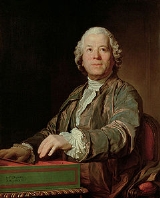
Christoph Willibald Ritter von Gluck (2 July 1714 – 15 November 1787) was an opera
Opera

Opera is an Performing arts in which singers and musicians perform a dramatic work which combines a text and a musical score. Opera is part of the Western classical music tradition....
 composer
Composer

A composer is a person who creates music, usually in the medium of musical notation, for interpretation and performance. The level of distinction between composers and other musicians varies, which affects issues such as copyright and the deference given to individual interpretations of a particular piece of music....
 of the early classical period. After many years at the Habsburg
Habsburg

The House of Habsburg was an important royal house of Europe and is best known as supplying all of the formally elected Holy Roman Emperors between 1452 and 1740, as well as rulers of Spanish Empire and the Austrian Empire....
 court at Vienna
Vienna

Vienna is the Capital of Republic of Austria and also one of the nine states of Austria. Vienna is Austria's primary city, with a population of about 1.7 million...
, Gluck brought about the practical reform of opera's dramaturgical practices that many intellectuals had been campaigning for over the years. With a series of radical new works in the 1760s, among them Orfeo ed Euridice
Orfeo ed Euridice

Orfeo ed Euridice is an opera composed by Christoph Willibald Gluck based on Orpheus, set to a libretto by Ranieri de' Calzabigi. It belongs to the genre of the azione teatrale, meaning an opera on a mythological subject with choruses and dancing....
 and Alceste
Alceste (Gluck)

Alceste is an opera by Christoph Willibald Gluck. The libretto was written by Ranieri de Calzabigi and based on the play Alcestis by Euripides....
, he broke the stranglehold that Metastasian
Metastasio

Pietro Antonio Domenico Trapassi, better known by his pseudonym of Metastasio, was an Italy poet and librettist, considered the most important writer of opera seria libretti....
 opera seria
Opera seria

Opera seria is an Italian musical term which refers to the noble and "serious" style of Italian opera that predominated in Europe from the 1710s to ca....
 had enjoyed for much of the century.

The strong influence of French opera
French Opera

French opera is one of Europe's most important operatic traditions, containing works by composers of the stature of Jean-Baptiste Lully, Jean-Philippe Rameau, Hector Berlioz, Georges Bizet, Claude Debussy, Francis Poulenc and Olivier Messiaen....
 in these works encouraged Gluck to move to Paris, which he did in November 1773.


Discussion
Ask a question about 'Christoph Willibald Gluck'
Start a new discussion about 'Christoph Willibald Gluck'
Answer questions from other users
Full Discussion Forum


Encyclopedia


Christoph Willibald Ritter von Gluck (2 July 1714 – 15 November 1787) was an opera
Opera

Opera is an Performing arts in which singers and musicians perform a dramatic work which combines a text and a musical score. Opera is part of the Western classical music tradition....
 composer
Composer

A composer is a person who creates music, usually in the medium of musical notation, for interpretation and performance. The level of distinction between composers and other musicians varies, which affects issues such as copyright and the deference given to individual interpretations of a particular piece of music....
 of the early classical period. After many years at the Habsburg
Habsburg

The House of Habsburg was an important royal house of Europe and is best known as supplying all of the formally elected Holy Roman Emperors between 1452 and 1740, as well as rulers of Spanish Empire and the Austrian Empire....
 court at Vienna
Vienna

Vienna is the Capital of Republic of Austria and also one of the nine states of Austria. Vienna is Austria's primary city, with a population of about 1.7 million...
, Gluck brought about the practical reform of opera's dramaturgical practices that many intellectuals had been campaigning for over the years. With a series of radical new works in the 1760s, among them Orfeo ed Euridice
Orfeo ed Euridice

Orfeo ed Euridice is an opera composed by Christoph Willibald Gluck based on Orpheus, set to a libretto by Ranieri de' Calzabigi. It belongs to the genre of the azione teatrale, meaning an opera on a mythological subject with choruses and dancing....
 and Alceste
Alceste (Gluck)

Alceste is an opera by Christoph Willibald Gluck. The libretto was written by Ranieri de Calzabigi and based on the play Alcestis by Euripides....
, he broke the stranglehold that Metastasian
Metastasio

Pietro Antonio Domenico Trapassi, better known by his pseudonym of Metastasio, was an Italy poet and librettist, considered the most important writer of opera seria libretti....
 opera seria
Opera seria

Opera seria is an Italian musical term which refers to the noble and "serious" style of Italian opera that predominated in Europe from the 1710s to ca....
 had enjoyed for much of the century.

The strong influence of French opera
French Opera

French opera is one of Europe's most important operatic traditions, containing works by composers of the stature of Jean-Baptiste Lully, Jean-Philippe Rameau, Hector Berlioz, Georges Bizet, Claude Debussy, Francis Poulenc and Olivier Messiaen....
 in these works encouraged Gluck to move to Paris, which he did in November 1773. Fusing the traditions of Italian opera
Italian opera

Italian opera is both the art of opera in Italy and opera in the Italian language. Opera was born in Italy around the year 1600 and Italian opera has continued to play a dominant role in the history of the form until the present day....
 and the French national genre into a new synthesis, Gluck wrote eight operas for the Parisian stages. One of the last of these, Iphigénie en Tauride
Iphigénie en Tauride

Iphig?nie en Tauride is an opera by Christoph Willibald Gluck in four acts. The French language libretto was written by Nicolas-Fran?ois Guillard....
, was a great success and is generally acknowledged to be his finest work. Though he was extremely popular and widely credited with bringing about a revolution in French opera, Gluck's mastery of the Parisian operatic scene was never absolute, and after the poor reception of his Echo et Narcisse
Echo et Narcisse

Echo et Narcisse was the last original opera written by Christoph Willibald Gluck, his sixth for the French stage. The libretto was written by Louis Theodor von Tschudi....
, he left Paris in disgust and returned to Vienna to live out the remainder of his life.

Early years

Gluck was born in Erasbach (now a district of Berching
Berching

Berching is a Town#Germany in the district of Neumarkt in Bavaria, Germany.Berching is a historical town with a fully preserved town wall and low streamlet....
, Bavaria) the first of 6 surviving children. His father, Alexander Johannes, came from a long line of foresters, and married Gluck's mother, Maria Walburga, in about 1711. During 1717 the family moved to Bohemia
Bohemia

History...
, where the father became head forester in the service of Prince Philipp Hyazinth von Lobkowitz in 1727. According to J.C. von Mannlich, who shared rooms with Gluck in Paris, it was as a Bohemian schoolboy that Gluck received his first musical training, both as a singer in the church choir and by learning. Gluck later wrote:

A childhood flight from home to Vienna
Vienna

Vienna is the Capital of Republic of Austria and also one of the nine states of Austria. Vienna is Austria's primary city, with a population of about 1.7 million...
 is included in several contemporary accounts of Gluck's life, including Mannlich's, but recent scholarship has cast doubt on Gluck's picturesque tales of earning food and shelter by his singing as he travelled. Most now claim that, if this incident happened at all, it occurred later, and the object of Gluck's journeying was not Vienna but Prague
Prague

Prague is the Capital and World's largest cities of the Czech Republic. Its official name is Hlavn? mesto Praha, meaning Prague, the Capital City....
, and connected to his studies at the University of Prague, where according to early biographies he began studying logic and mathematics in 1731. At this time the University boasted a flourishing musical scene that included performances of both Italian opera and oratorio
Oratorio

An oratorio is a large musical composition including an orchestra, a choir, and solo ists. The oratorio was somewhat modeled after the opera. Their similarities include the use of a choir, soloists, an ensemble, various distinguishable Fictional character, and arias....
. Gluck eventually left Prague without taking a degree, and vanishes from the historical record until 1737, a possible year (likely to have been 1736) in Vienna apart.

Italy

In 1737 Gluck arrived in Milan
Milan

Milan is the second largest city of Italy, located in the plains of Lombardy. It is the capital in the Province of Milan, as well as the Regions of Italy capital of Lombardy....
, where he studied under G.B. Sammartini, who, according to Carpani, taught Gluck "practical knowledge of all the instruments". Apparently this relationship lasted for several years. Sammartini was not, primarily, a composer of opera, his main output being of sacred music and symphonies, but Milan boasted a vibrant opera scene, and Gluck soon formed an association with one of the city's up-and-coming opera house
Opera house

An opera house is a theater building used for opera performances that consists of a stage, an orchestra pit, audience seating, and backstage facilities for costumes and set building....
s, the Teatro Regio Ducal
Teatro Regio Ducal

The Teatro Regio Ducal was the opera house in Milan from 26 December 1717 until 25 February 1776, when it was burned down following a carnival gala....
, where his first opera, Artaserse, was performed on 26 December 1741. Set to a libretto by Metastasio, the opera opened the Milanese Carnival of 1742. According to one anecdote, the public would not accept Gluck's style until he inserted an aria
Aria

An aria in music was originally any expressive melody, usually, but not always, performed by a singer. The term is now used almost exclusively to describe a self-contained piece for one voice usually with orchestral accompaniment....
 in the lighter Milanese manner for contrast.

Nevertheless, Gluck composed an opera for each of the next four Carnivals at Milan, with renowned castrato
Castrato

A castrato is a man with a singing voice equivalent to that of a soprano, mezzo-soprano, or contralto human voice produced either by castration of the singer before puberty or one who, because of an endocrinology condition, never reaches sexual maturity....
 Giovanni Carestini
Giovanni Carestini

Giovanni Carestini was an Italy castrato of the 18th century, who sang in the operas and oratorios of George Frideric Handel. He is also remembered as having sung for Johann Adolph Hasse and Christoph Willibald Gluck....
 appearing in many of the performances, so the reaction to Artaserse is unlikely to have been completely unfavourable. He also wrote operas for other cities of Northern Italy in between Carnival seasons, including Turin
Turín

Tur?n is a municipality in the Ahuachap?n Department Departments of El Salvador of El Salvador....
 and Venice
Venice

Venice is a city in northern Italy, the capital city of the Italian regions Veneto, a population of 271,251 . Together with Padua, Italy, the city is included in the Padua-Venice Metropolitan Area ....
, where his Ipermestra was given during November 1744 at the S Giovanni Grisostomo. Nearly all of his operas in this period were, like Artaserse, set to Metastasio's texts, despite the poet's dislike for his style of composition.

Travels: 1745–1752

In 1745 Gluck accepted an invitation to become house composer at London
London

London is the capital of both England and the United Kingdom, and the most populous municipality in the European Union. An important settlement for two millennia, History of London goes back to its founding by the Roman Empire....
's King's Theatre, probably travelling to England via Frankfurt. The timing was poor, as the Jacobite Rebellion had caused much panic in London, and for most of the year the King's Theatre was shut. Gluck's two London operas, (La caduta de'giganti and Artamene) eventually performed in 1746, contained much borrowing from his earlier works, a method that was re-occur throughout his career. Six trio sonatas were the other immediate fruits of his time in London. A more long-term benefit was exposure to the music of Handel
HANDEL

HANDEL was the code-name for the United Kingdom's National Attack Warning System in the Cold War. It consisted of a small console consisting of two microphones, lights and gauges....
, whom he later accounted a great influence on his style, and the naturalistic acting style of David Garrick
David Garrick

David Garrick was an English actor, playwright, theatre manager and Theatrical producer who influenced nearly all aspects of theatrical practice throughout the 18th century and was a pupil and friend of Dr Samuel Johnson....
. Handel's own experience of Gluck pleased that composer less - Charles Burney
Charles Burney

Charles Burney was an England music history and father of author Frances Burney....
 reports Handel as saying that "he [Gluck] knows no more of contrapunto, as mein cook, Waltz".

The years 1747 and 1748 brought Gluck two highly prestigious engagements. First came a commission to produce an opera for Dresden, performed by Pietro Mingotti
Pietro Mingotti

Pietro Mingotti was an Italy impresario active across continental Europe. His brother, Angelo, formed an opera company in Prague around 1732, consisting of 3 male singers and 5 females; Pietro quickly followed suit, and the two troupes achieved Europe-wide success , sometimes performing together....
's troupe, to celebrate a royal double wedding that would unite the ruling families of Bavaria and Saxony. Le nozze d'Ercole e d'Ebe, a festa teatrale
Festa teatrale

The term festa teatrale refers to a genre of drama, and of opera in particular. The genre cannot be rigidly defined, and in any case feste teatrali tend to be split into two different sets: feste teatrali divided by acts are operas, while works in this genre performed without division, or merely cut into two parts, are serenatas....
, borrowed heavily from earlier works, and even from Gluck's teacher Sammartini. The success of this work brought Gluck to the attention of the Viennese court, and, ahead of such a figure as Johann Adolf Hasse, he was selected to set Metastasio's Semiramide riconosciuta to celebrate Maria Theresa
Maria Theresa of Austria

Maria Theresa was the List of rulers of Austria, List of rulers of Hungary, List of rulers of Croatia, Queen of Bohemia, Grand Duchy of Tuscany and a Holy Roman Emperor by marriage to Francis I, Holy Roman Emperor....
's birthday. Vittoria Tesi
Vittoria Tesi

Vittoria Tesi was an Italian opera singer and music teacher of the 18th century. Her vocal range was that of a contralto.Her operatic career began with performances at Parma and Bologna in 1716....
 took the title role. On this occasion Gluck's music was completely original, but the displeasure of Metastasio, the court poet, who called the opera "archvandalian music", probably explains why Gluck did not remain long in Vienna despite the work's enormous popular success (it was performed 27 times to great acclaim). For the remainder of 1748 and 1749 Gluck travelled with Mingotti's troupe, contracting a venereal disease from the prima donna and composing the opera La contesa de' numi for the court at Copenhagen
Copenhagen

Copenhagen is the capital and largest city of Denmark, with an urban area with a population of 1,153,615 . Copenhagen is situated on the Islands of Zealand and Amager....
.

In 1750 he abandoned Mingotti's group for another company established by a former member of the Mingotti troupe, Giovanni Battista Locatelli
Giovanni Battista Locatelli

Giovanni Battista Locatelli was an Italy opera director and owner of a private opera company.In 1757 he and his troupe were invited to St. Petersburg....
. The main effect of this was that Gluck returned to Prague on a more consistent basis. For the Prague Carnival of 1750 Gluck composed a new opera, Ezio (again set to one of Metastasio's works), and his Ipermestra was also performed in the same year. The other major event of Gluck's stay in Prague, on 15 September 1750, was his marriage to Maria Anna Bergin, aged 18 years old, the daughter of a long-dead rich Viennese merchant. The marriage brought Gluck financial security, and he seems to have spent most of 1751 commuting between Prague and Vienna.

The year 1752 brought another major commission to Gluck, when he asked to set Metastasio's La clemenza di Tito (the specific libretto was the composer's choice) for the nameday celebrations of King Charles III of Spain, held at Naples
Naples

Naples is a city in southern Italy, the capital of the region of Campania and of the province of Naples. The city is known for its rich history, art, culture and gastronomy, playing an important role throughout much of its existence; it is over 2,800 years old....
. The opera was performed on 4 November at the Teatro San Carlo, and the world-famous mezzo-soprano
Mezzo-soprano

A mezzo-soprano is a type of European classical music female voice type whose range lies between the soprano and the contralto singing voices, usually extending from the A below middle C to the A two octaves above ....
 castrato
Castrato

A castrato is a man with a singing voice equivalent to that of a soprano, mezzo-soprano, or contralto human voice produced either by castration of the singer before puberty or one who, because of an endocrinology condition, never reaches sexual maturity....
 Caffarelli (Gaetano Majorano) took the role of Sextus. For Caffarelli Gluck composed the famous, but notoriously dissident, aria "Se mai senti spirarti sul volto", that provoked widespread admiration and equally widespread vituperation in equal measure. Gluck later reworked this aria for his Iphigénie en Tauride
Iphigénie en Tauride

Iphig?nie en Tauride is an opera by Christoph Willibald Gluck in four acts. The French language libretto was written by Nicolas-Fran?ois Guillard....
, which, according to one account, the Neapolitan composer Francesco Durante claimed that his fellow composers "should have been proud to have conceived and written". Durante simultaneously declined to comment concerning whether the aria was within the boundaries of the accepted compositional rules of the time.

Vienna

Gluck finally settled in Vienna where he became Kapellmeister
Kapellmeister

Kapellmeister is a German language word designating a person in charge of music-making. The word is a compound word, consisting of the roots Kapelle and Meister ....
. He wrote Le Cinesi for a festival in 1754 and La Danza for the birthday of the future Emperor Leopold II the following year. After his opera Antigono was performed in Rome
Rome

Rome is the capital city of Italy and Lazio, and is Italy's largest and most populous city, with 2,724,347 residents in an urban area of some ....
 in February, 1756, Gluck was made a Knight of the Golden Spur by Pope Benedict XIV
Pope Benedict XIV

Pope Benedict XIV , born Prospero Lorenzo Lambertini, was Pope from 17 August 1740 to 3 May 1758....
. From that time on, Gluck used the title "Ritter von Gluck" or "Chevalier de Gluck".

Gluck turned his back on Italian opera seria
Opera seria

Opera seria is an Italian musical term which refers to the noble and "serious" style of Italian opera that predominated in Europe from the 1710s to ca....
 and began to write opéra comique
Opera Comique

The Opera Comique was a 19th-century opera house constructed between Wych Street and Holywell Street with entrances on the East Strand, London. The theatre opened in 1870 and was demolished in 1902, for the construction of the Aldwych and Kingsway....
s. In 1761, Gluck produced the groundbreaking ballet Don Juan in collaboration with the choreographer Gasparo Angiolini
Gasparo Angiolini

Gasparo Angiolini was an Italy dancer and choreographer, and composer. He was born in Florence, Italy and died in Milan....
. The climax of Gluck's opéra comique
Opera Comique

The Opera Comique was a 19th-century opera house constructed between Wych Street and Holywell Street with entrances on the East Strand, London. The theatre opened in 1870 and was demolished in 1902, for the construction of the Aldwych and Kingsway....
 writing was La rencontre imprévue
La rencontre imprévue

La rencontre impr?vue , also known as Les p?lerins de la Mecque is a com?die m?l?e d'ariettes, a form of op?ra comique, by Christoph Willibald Gluck, first performed at the Burgtheater, Vienna on January 7, 1764....
 
of 1764. By that time, Gluck was already engaged in his operatic reforms.

Operatic reforms

Gluck had long pondered the fundamental problem of form and content in opera. He thought both of the main Italian operatic genres — opera buffa
Opera buffa

The term opera buffa was at first used as an informal description of Italy comic operas variously classified by their authors as ?commedia in musica?, ?commedia per musica?, ?dramma bernesco?, ?dramma comico?, ?divertimento giocoso' etc....
 and opera seria
Opera seria

Opera seria is an Italian musical term which refers to the noble and "serious" style of Italian opera that predominated in Europe from the 1710s to ca....
 — had strayed too far from what opera should really be. They seemed unnatural, the singing in opera seria was devoted to superficial effects, the content was uninteresting and fossilised. Opera buffa had long lost its original freshness, its jokes were threadbare, the repetition of the same characters made them seem no more than stereotypes. In opera seria too, the singers were effectively absolute masters of the stage and the music, decorating the vocal lines so floridly that audiences could no longer recognise the original melody. Gluck wanted to return opera to its origins, focusing on human drama and passions, and making words and music of equal importance.

In Vienna, Gluck met likeminded figures in the operatic world: Count Giacomo Durazzo
Giacomo Durazzo

Count Giacomo Durazzo was an Italian diplomat and man of the theatre. He was born into one of the most important aristocratic families in Genoa....
, the head of the court theatre, who was a passionate admirer of French stage music; the librettist Ranieri de' Calzabigi
Ranieri de' Calzabigi

Ranieri de' Calzabigi was an Italian poet and librettist, most famous for his collaboration with the composer Christoph Willibald Gluck on his "reform" operas....
, who wanted to attack the dominance of Metastasian
Metastasio

Pietro Antonio Domenico Trapassi, better known by his pseudonym of Metastasio, was an Italy poet and librettist, considered the most important writer of opera seria libretti....
 opera seria
Opera seria

Opera seria is an Italian musical term which refers to the noble and "serious" style of Italian opera that predominated in Europe from the 1710s to ca....
; the innovative choreographer Gasparo Angiolini
Gasparo Angiolini

Gasparo Angiolini was an Italy dancer and choreographer, and composer. He was born in Florence, Italy and died in Milan....
; and the London-trained castrato
Castrato

A castrato is a man with a singing voice equivalent to that of a soprano, mezzo-soprano, or contralto human voice produced either by castration of the singer before puberty or one who, because of an endocrinology condition, never reaches sexual maturity....
 Gaetano Guadagni
Gaetano Guadagni

Gaetano Guadagni was an Italian mezzo-soprano castrato singer, most famous for singing the role of Orpheus at the premiere of Gluck's opera Orfeo ed Euridice in 1762....
. The first result of the new thinking was Gluck's reformist ballet Don Juan, but a more important work was soon to follow. On 5 October 1762, Orfeo ed Euridice
Orfeo ed Euridice

Orfeo ed Euridice is an opera composed by Christoph Willibald Gluck based on Orpheus, set to a libretto by Ranieri de' Calzabigi. It belongs to the genre of the azione teatrale, meaning an opera on a mythological subject with choruses and dancing....
 was given its first performance, with music by Gluck to words by Calzabigi. The dances were arranged by Angiolini and the title role was taken by Guadagni. Orfeo showed the beginnings of Gluck's reforms and the opera has never left the standard repertory. Gluck's idea was to make the drama of the work more important than the star singers who performed it, and to do away with dry recitative
Recitative

Recitative is a style of delivery in which a singer is allowed to adopt the rhythms of ordinary speech. The mostly syllabic recitativo secco is at one end of a spectrum through recitativo accompagnato , the more melismatic arioso, and finally the full blown aria or ensemble, where the pulse is entirely governed by the mus...
 which broke up the action. The more flowing and dramatic style which resulted has been seen as a precursor to the music dramas of Richard Wagner
Richard Wagner

Wilhelm Richard Wagner was a German composer, Conducting, theatre director and essayist, primarily known for his operas . Unlike most other great opera composers, Wagner wrote both the scenario and libretto for his works....
. Gluck and Calzabigi followed Orfeo with Alceste
Alceste (Gluck)

Alceste is an opera by Christoph Willibald Gluck. The libretto was written by Ranieri de Calzabigi and based on the play Alcestis by Euripides....
 
(1767) and Paride ed Elena
Paride ed Elena

Paride ed Elena is an opera by Gluck, the third and final of his Italian reformist works, following Orfeo ed Euridice and Alceste ....
 
(1770), pushing their innovations even further. Calzabigi wrote a preface to Alceste, which Gluck signed, setting out the principles of their reforms.

Paris

Gluck now began to spread his ideas to France. Under the patronage of his former music pupil, Marie Antoinette
Marie Antoinette

For the 2006 film about this person that stars Kirsten Dunst, see Marie-Antoinette .Marie Antoinette was born an Archduchess of Austria and later became Queen of France and of Navarre....
, who had married the future French king Louis XVI in 1770, Gluck signed a contract for six stage works with the management of the Paris Opéra. He began with Iphigénie en Aulide
Iphigénie en Aulide

Iphig?nie en Aulide is an opera by Gluck, the first work he wrote for the Paris stage. The libretto was written by Leblanc du Roullet and was based on Jean Racine's tragedy Iphig?nie ....
 (19 April 1774). The premiere sparked a huge controversy, almost a war, such as had not been seen in the city since the Querelle des Bouffons. Gluck's opponents brought the leading Italian composer, Niccolò Piccinni
Niccolò Piccinni

Niccol? Piccinni was an Italy composer of symphonies, sacred music, chamber music, and opera. Although he is somewhat obscure, even to music lovers today, Piccinni was one of the most popular composers of opera ? particularly the Neapolitan opera buffa ? of his day....
, to Paris to demonstrate the superiority of Neapolitan
Naples

Naples is a city in southern Italy, the capital of the region of Campania and of the province of Naples. The city is known for its rich history, art, culture and gastronomy, playing an important role throughout much of its existence; it is over 2,800 years old....
 opera and the "whole town" engaged in an argument between "Gluckists" and "Piccinnists". The composers themselves took no part in the polemics, but when Piccinni was asked to set the libretto to Roland
Roland (Lully)

Roland is an opera with music by Jean-Baptiste Lully and a libretto by Philippe Quinault first performed at Versailles on January 8, 1685. The story is derived from Ariosto Epic poetry poem Orlando Furioso....
, on which Gluck was also known to be working, Gluck destroyed everything he had written for that opera up to that point.

On 2 August 1774 the French version of Orfeo ed Euridice
Orfeo ed Euridice

Orfeo ed Euridice is an opera composed by Christoph Willibald Gluck based on Orpheus, set to a libretto by Ranieri de' Calzabigi. It belongs to the genre of the azione teatrale, meaning an opera on a mythological subject with choruses and dancing....
 was performed, with the title role transposed from the castrato to the tenor voice. This time Gluck's work was better received by the Parisian public. In the same year Gluck returned to Vienna where he was appointed composer to the imperial court. Over the next few years the now internationally famous composer would travel back and forth between Paris and Vienna. On 23 April 1776, the French version of Alceste
Alceste (Gluck)

Alceste is an opera by Christoph Willibald Gluck. The libretto was written by Ranieri de Calzabigi and based on the play Alcestis by Euripides....
 
was given.

Gluck also wrote Armide
Armide (Gluck)

Armide is an opera by Christoph Willibald Gluck, his fourth for the Parisian stage and the composer's own favourite among his works. It was first performed in Paris at the Acad?mie Royale de Musique on September 23, 1777....
 (1777), Iphigénie en Tauride
Iphigénie en Tauride

Iphig?nie en Tauride is an opera by Christoph Willibald Gluck in four acts. The French language libretto was written by Nicolas-Fran?ois Guillard....
 
(1779) and Echo et Narcisse
Echo et Narcisse

Echo et Narcisse was the last original opera written by Christoph Willibald Gluck, his sixth for the French stage. The libretto was written by Louis Theodor von Tschudi....
 for Paris. During the rehearsals for Echo et Narcisse
Echo et Narcisse

Echo et Narcisse was the last original opera written by Christoph Willibald Gluck, his sixth for the French stage. The libretto was written by Louis Theodor von Tschudi....
 , Gluck suffered his first stroke. Since the opera itself was a complete failure, Gluck decided to return to Vienna.

His musical heir in Paris was the composer Antonio Salieri
Antonio Salieri

Antonio Salieri , was a Republic of Venice composer and Conducting. As the Austrian imperial Kapellmeister from 1788 to 1824, he was one of the most important and famous musicians of his time....
, who had been Gluck's protegé since he arrived in Vienna in 1767, and later had made friends with Gluck. Gluck brought Salieri to Paris with him and bequeathed him the libretto for Les Danaïdes
Les Danaïdes

Les Dana?des is an opera by Antonio Salieri, in 5 acts: more specifically, it is a trag?die lyrique. The opera was set to a libretto by Leblanc du Roullet and Baron Tschudi, who in turn adapted the work of Ranieri de' Calzabigi ....
 by Leblanc du Roullet and Baron Tschudi. The opera was announced as a collaboration between the two composers; however, after the overwhelming success of its premiere on 26 April 1784, Gluck revealed to the prestigious Journal de Paris that the work was wholly Salieri's.

Last years

In Vienna Gluck wrote a few more minor works but he generally lived in retirement. In 1781 he brought out a German version of Iphigénie en Tauride
Iphigénie en Tauride

Iphig?nie en Tauride is an opera by Christoph Willibald Gluck in four acts. The French language libretto was written by Nicolas-Fran?ois Guillard....
 and other operas of his enjoyed great popularity in Vienna.

On 15 November 1787, in Vienna
Vienna

Vienna is the Capital of Republic of Austria and also one of the nine states of Austria. Vienna is Austria's primary city, with a population of about 1.7 million...
, Gluck suffered another stroke and died a few days later. At a formal commemoration on 8 April 1788 his friend and pupil Salieri
Salieri

Salieri is an Italian surname that may refer to:*composer and director Antonio Salieri*porn director Mario Salieri and his wife Nicky Ranieri...
 conducted Gluck's De profundis and a requiem
Requiem

The Requiem or Requiem Mass , also known formally in Latin as the Missa pro defunctis or Missa defunctorum , is a liturgy of the Roman Catholic Church, Anglo-Catholic Anglicans, and certain Lutheran Church Churches in the United States....
 by the Italian composer Jommelli was given. Like many other prominent musicians and painters, Gluck was buried in the Matzleinsdorfer Friedhof. When this cemetery was turned into a park in 1923, Gluck's remains were transferred to a tomb in the Vienna Zentralfriedhof
Zentralfriedhof

The Zentralfriedhof is situated in the district of Simmering , Simmeringer Hauptstra?e 230?244, Vienna 1110, Austria, and is the largest and most famous cemetery among Vienna's nearly 50 cemeteries....
.

Gluck's musical legacy was around 35 complete operas, together with numerous ballets and instrumental works. His reforms influenced Mozart, particularly his opera Idomeneo
Idomeneo

Idomeneo, re di Creta ossia Ilia e Idamante is an Italian language opera by Wolfgang Amadeus Mozart. The libretto was adapted by Varesco from a French text by Antoine Danchet, which had been set to music by Andr? Campra as Idom?n?e in 1712....
 (1781). Gluck left behind a flourishing school of disciples in Paris, who would dominate the French stage throughout the Revolutionary and Napoleonic period. As well as Salieri, they included Sacchini
Antonio Sacchini

Antonio Maria Gasparo Sacchini , was an Italy opera composer.Sacchini was born in Florence, but was raised in Naples, where he received his musical education at the Music_conservatories_of_Naples#Sant.27_Onofrio_a_Capuana conservatory....
, Cherubini, Méhul and Spontini. Gluck's greatest French admirer would be Hector Berlioz
Hector Berlioz

Louis Hector Berlioz was a French Romantic music composer and guitarist, best known for his compositions Symphonie fantastique and Requiem . Berlioz made great contributions to the modern orchestra with his Treatise on Instrumentation and by utilizing huge orchestral forces for his works; as a conductor, he performed several c...
, whose epic Les Troyens
Les Troyens

Les Troyens is a France opera in five acts by Hector Berlioz. The libretto was written by Berlioz himself, based on Virgil's epic poem The Aeneid....
 may be seen as the culmination of the Gluckian tradition. Though Gluck wrote no operas in German, his example influenced the German school of opera, particularly Weber
Carl Maria von Weber

Carl Maria Friedrich Ernst von Weber was a Germans composer, conducting, pianist, guitarist and critic, one of the first significant composers of the Romanticism school....
 and Wagner
Richard Wagner

Wilhelm Richard Wagner was a German composer, Conducting, theatre director and essayist, primarily known for his operas . Unlike most other great opera composers, Wagner wrote both the scenario and libretto for his works....
, whose concept of music drama was not so far removed from Gluck's own.

Works

See List of operas by Gluck
List of operas by Gluck

This is a complete list of the operas of Christoph Willibald Gluck ....


Ballets
  • Les amours de Flore et Zéphire, Schönbrunn, 13 August 1759
  • Le naufrage, Vienna 1759
  • La halte des Calmouckes, Vienna 23 March 1761
  • Don Juan, ou Le festin de Pierre, Vienna, 17 October 1761
  • Citera assediata, Vienna, 15 September 1762
  • Alessandro (Les amours d’Alexandre et de Roxane), Vienna, 4 October 1764
  • Sémiramis, Vienna, 31 January 1765
  • Iphigénie, Laxenburg, 19 May 1765


Sources

  • Bruce Alan Brown: Gluck and the French Theatre in Vienna. Oxford: Clarendon Press 1991
  • This article incorporates material from the German version of Wikipedia


Further reading

  • A. A. Abert: Christoph Willibald Gluck (Munich, 1959)
  • P. Howard: Gluck and the Birth of Modern Opera (London, 1963)
  • W. Felix: Christoph Willibald Gluck (Leipzig, 1965)
  • D. Heartz: "From Garrick to Gluck: the Reform of Theatre and Opera in the Mid-Eighteenth Century", PRMA, xciv (1967–8), 111–27
  • J. Rushton: "The Musician Gluck", MT, cxxvi (1987), 615–18
  • J. Kerman: Opera as Drama (New York, 1956, 2/1989)
  • F. W. Sternfeld: "Expression and Revision in Gluck"s Orfeo and Alceste", Essays Presented to Egon Wellesz (Oxford, 1966), 114–29
  • P. Howard: "“Orfeo” and “Orphée”", MT, cviii (1967), 892–4
  • P. Howard: "Gluck"s Two Alcestes: a Comparison", MT, cxv (1974), 642–3
  • O. F. Saloman: Aspects of Gluckian Operatic Thought and Practice in France (diss., Columbia U., 1970)
  • J. Rushton: "Iphigénie en Tauride: the Operas of Gluck and Piccinni", ML, liii (1972), 411–30
  • M. Noiray: Gluck"s Methods of Composition in his French Operas "Iphigénie en Aulide", "Orphée", "Iphigénie en Tauride" (diss., U. of Oxford, 1979
  • P. Howard: "Armide: a Forgotten Masterpiece", Opera, xxx (1982), 572–6
  • J. Rushton: "“Royal Agamemnon”: the Two Versions of Gluck"s Iphigénie en Aulide", Music and the French Revolution, ed. M. Boyd (Cambridge, 1992), 15–36


External links