

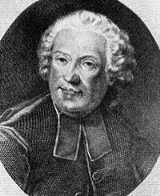
Metastasio

Encyclopedia
Pietro Antonio Domenico Trapassi, better known by his pseudonym
of Metastasio, (January 3, 1698 – April 12, 1782) was an Italian
poet
and librettist, considered the most important writer of opera seria
libretti.
, where his father, Felice Trapassi, a native of Assisi
, had taken service in the Corsican regiment of the papal forces. Felice married a Bolognese woman, Francesca Galasti, and became a grocer in the Via dei Cappellari. The couple had two sons and two daughters; Pietro was the younger son.
Pietro, while still a child, is said to have attracted crowds by reciting impromptu verses on a given subject. On one such occasion in 1709, two men of distinction stopped to listen: Giovanni Vincenzo Gravina
, famous for legal and literary erudition as well as his directorship of the Arcadian Academy, and Lorenzini, a critic of some note. Gravina was attracted by the boy's poetic talent and personal charm, and made Pietro his protégé; in the course of a few weeks he adopted him. Felice Trapassi was glad to give his son the chance of a good education and introduction into society.
Gravina hellenized the boy's name Trapassi into Metastasio, and intended his adopted son to be a jurist like himself. He therefore made the boy learn Latin
and law
. At the same time he cultivated his literary gifts, and displayed the youthful prodigy both at his own house and in the Roman coteries. Metastasio soon found himself competing with the most celebrated improvvisatori of his time in Italy. However, his days full of study and evenings devoted to improvising poetry took a toll on Pietro's health.
Gravina, making a business trip to Calabria
, exhibited Metastasio in the literary circles of Naples
, then placed him in the care of his kinsman Gregorio Caroprese at Scaléa. In country air and the quiet of the southern seashore Metastasio's health revived. Gravina decided that he should never improvise again, but should be reserved for nobler efforts, when, having completed his education, he might enter into competition with the greatest poets.
Metastasio responded to his patron's wishes. At the age of twelve he translated the Iliad
into octave stanzas; and two years later he composed a Senecan
tragedy on a subject from Gian Giorgio Trissino
's Italia liberata - Gravina's favourite epic. It was called Giustino, and was printed in 1713; forty-two years later, Metastasio told his publisher that he would willingly suppress this juvenilia.
Caroprese died in 1714, leaving Gravina his heir; and in 1718 Gravina also died. Metastasio inherited a fortune of 15,000 scudi. At a meeting of the Arcadian Academy, he recited an elegy to his patron, and then settled down to enjoy his wealth.
While slaving at the law, Metastasio in 1721 composed an epithalamium
, and probably also his first musical serenade, Endimione, on the occasion of the marriage of his patroness Donna Anna Francesca Ravaschieri Pinelli di Sangro (later 6th Principessa di Belmonte
) to the Marchese Don Antonio Pignatelli (later His Serene Highness Principe di Belmonte
). In 1722, the birthday of the empress had to be celebrated with more than ordinary honours, and the viceroy asked Metastasio to compose a serenata for the occasion. Metastasio accepted, but kept his authorship secret. He wrote "Gli orti esperidi," which was set to music by Nicola Porpora
, and sung by Porpora's pupil, the castrato Farinelli
, making a spectacular début, it won the most enthusiastic applause. The Roman prima donna, Marianna Bulgarelli
, who played Venus in this opera, spared no pains until she had discovered its author.
Bulgarelli persuaded the poet to give up the law, and promised to secure for him fame and independence if he would devote his talents to the musical drama. In her house Metastasio became acquainted with the greatest composers of the day: Johann Adolph Hasse
, Giovanni Battista Pergolesi
, Alessandro Scarlatti
, Leonardo Vinci
, Leonardo Leo
, Francesco Durante
, and Benedetto Marcello
, all of whom would later set his plays to melody. Here too he studied the art of singing, and learned to appreciate the style of such men as Farinelli. Metastasio wrote quickly and his plays were enhanced by being set to music and sung by the greatest singers of the day. On paper, his plots may seem conventional, his situations absurd; he takes liberties with historical fact and is obsessed with the topic of love. Yet the music helps negate these criticisms.
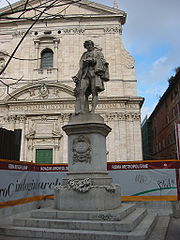 Metastasio lived with Bulgarelli and her husband in Rome. Moved by an affection half maternal, half romantic, and by admiration for his talent, she adopted him more passionately even than Gravina had done. She took the whole Trapassi family - father, mother, brother, sisters - into her own house. She fostered the poet's genius and pampered his caprices. Under her influence he wrote in rapid succession Didone abbandonata
, Catone in Utica, Ezio, Alessandro nell' Indie, Semiramide riconosciuta, Siroe and Artaserse
. These dramas were set to music by the chief composers of the day, and performed in the chief towns of Italy.
But meanwhile Bulgarelli was growing older; she had ceased to sing in public; and the poet increasingly felt his dependence upon her kindness irksome. He gained 300 scudi for each opera; this pay, though good, was precarious and he longed for some fixed engagement. In September 1729 he received the offer of the post of court poet to the theatre at Vienna
, with a stipend of 3000 florins. This he at once accepted. Bulgarelli unselfishly sped him on his way to glory. She took charge of his family in Rome and he set off for Austria
.
In Vienna Metastasio met with no marked social success. His plebeian birth excluded him from aristocratic circles. To make up in some measure for this comparative failure, he enjoyed the intimacy of the Countess Althann, sister-in-law of his old patroness the Princess Belmonte Pignatelli. She had lost her husband, and had some while occupied the post of chief favourite to the emperor. Metastasio's liaison with her became so close that it was believed they had been privately married.
Bulgarelli tired of his absence, and asked Metastasio to get her an engagement at the court theatre. He was ashamed of her and tired of her, and wrote dissuading her from the projected visit. The tone of his letters alarmed and irritated her. She seems to have set out from Rome, but died suddenly upon the road. All we know is that she left him her fortune after her husband's life interest in it had expired, and that Metastasio, overwhelmed with grief and remorse, immediately renounced the legacy. This disinterested act plunged the Bulgarelli-Metastasio household at Rome into confusion. Bulgarelli's widower married again. Leopoldo Trapassi, and his father and sister, were thrown upon their own resources.
As time advanced, the life which Metastasio led at Vienna, together with the climate, told on his health and spirits. From about the year 1745 onward he wrote little, though the cantata
s which belong to this period, and the canzonetta Ecco quel fiero istante, which he sent to his friend Farinelli, rank among the most popular of his productions. It was clear, as Vernon Lee has phrased it, that "what ailed him was mental and moral ennui". In 1755 the Countess Althann died, and Metastasio was reduced to the society which gathered round him in the bourgeois house of the Martinez. He sank rapidly into the habits of old age; and, though he lived till the year 1782, he was very inactive. He bequeathed his whole fortune of some 130,000 florins to the six children of his friend Martinez. He had survived all his Italian relatives.
Throughout the forty years of his career in Vienna, in the course of which Metastasio eventually outlived his own originality and creative powers, his fame went on increasing. In his library he counted as many as forty editions of his own works. They had been translated into French, English, German, Spanish, and modern Greek. They had been set to music over and over again by every composer of distinction. They had been sung by the best virtuosi in every capital, and there was not a literary academy of note which had not conferred on him the honour of membership. Strangers of distinction passing through Vienna made a point of paying their respects to the old poet at his lodgings in the Kohlmarkt Gasse.
But his poetry was intended for a certain style of music - for the music of omnipotent vocalists, of exceedingly skilled sopranos and castrati. When the operas of Christoph Willibald Gluck
and Wolfgang Amadeus Mozart
--focusing more on psychology and less on virtuoso singing—came into vogue, a new style of libretto was needed. (However, Mozart did use an old Metastasio libretto for his renowned opera La clemenza di Tito
.) The demise of castrato singing meant that Metastasio's operas dropped out of the repertory.
Metastasio is known as an emotional, lyrical, and romantic poet. The chief dramatic situations are expressed by lyrics for two or three voices, embodying the several contending passions of the agents brought into conflict by the circumstances of the plot. The total result is not pure literature, but literature fit for musical effect. Language in Metastasio's hands is pure and limpid, perhaps due to his history as an improvisatory poet. He is said to have admired Torquato Tasso
, Giambattista Marini, and Ovid
.
Pseudonym
A pseudonym is a name that a person assumes for a particular purpose and that differs from his or her original orthonym...
of Metastasio, (January 3, 1698 – April 12, 1782) was an Italian
Italy
Italy , officially the Italian Republic languages]] under the European Charter for Regional or Minority Languages. In each of these, Italy's official name is as follows:;;;;;;;;), is a unitary parliamentary republic in South-Central Europe. To the north it borders France, Switzerland, Austria and...
poet
Poet
A poet is a person who writes poetry. A poet's work can be literal, meaning that his work is derived from a specific event, or metaphorical, meaning that his work can take on many meanings and forms. Poets have existed since antiquity, in nearly all languages, and have produced works that vary...
and librettist, considered the most important writer of opera seria
Opera seria
Opera seria is an Italian musical term which refers to the noble and "serious" style of Italian opera that predominated in Europe from the 1710s to c. 1770...
libretti.
Early life
Metastasio was born in RomeRome
Rome is the capital of Italy and the country's largest and most populated city and comune, with over 2.7 million residents in . The city is located in the central-western portion of the Italian Peninsula, on the Tiber River within the Lazio region of Italy.Rome's history spans two and a half...
, where his father, Felice Trapassi, a native of Assisi
Assisi
- Churches :* The Basilica of San Francesco d'Assisi is a World Heritage Site. The Franciscan monastery, il Sacro Convento, and the lower and upper church of St Francis were begun immediately after his canonization in 1228, and completed in 1253...
, had taken service in the Corsican regiment of the papal forces. Felice married a Bolognese woman, Francesca Galasti, and became a grocer in the Via dei Cappellari. The couple had two sons and two daughters; Pietro was the younger son.
Pietro, while still a child, is said to have attracted crowds by reciting impromptu verses on a given subject. On one such occasion in 1709, two men of distinction stopped to listen: Giovanni Vincenzo Gravina
Giovanni Vincenzo Gravina
Giovanni Vincenzo Gravina was an Italian man of letters and jurist. He was born at Roggiano Gravina, a small town near Cosenza, in Calabria....
, famous for legal and literary erudition as well as his directorship of the Arcadian Academy, and Lorenzini, a critic of some note. Gravina was attracted by the boy's poetic talent and personal charm, and made Pietro his protégé; in the course of a few weeks he adopted him. Felice Trapassi was glad to give his son the chance of a good education and introduction into society.
Gravina hellenized the boy's name Trapassi into Metastasio, and intended his adopted son to be a jurist like himself. He therefore made the boy learn Latin
Latin
Latin is an Italic language originally spoken in Latium and Ancient Rome. It, along with most European languages, is a descendant of the ancient Proto-Indo-European language. Although it is considered a dead language, a number of scholars and members of the Christian clergy speak it fluently, and...
and law
Law
Law is a system of rules and guidelines which are enforced through social institutions to govern behavior, wherever possible. It shapes politics, economics and society in numerous ways and serves as a social mediator of relations between people. Contract law regulates everything from buying a bus...
. At the same time he cultivated his literary gifts, and displayed the youthful prodigy both at his own house and in the Roman coteries. Metastasio soon found himself competing with the most celebrated improvvisatori of his time in Italy. However, his days full of study and evenings devoted to improvising poetry took a toll on Pietro's health.
Gravina, making a business trip to Calabria
Calabria
Calabria , in antiquity known as Bruttium, is a region in southern Italy, south of Naples, located at the "toe" of the Italian Peninsula. The capital city of Calabria is Catanzaro....
, exhibited Metastasio in the literary circles of Naples
Naples
Naples is a city in Southern Italy, situated on the country's west coast by the Gulf of Naples. Lying between two notable volcanic regions, Mount Vesuvius and the Phlegraean Fields, it is the capital of the region of Campania and of the province of Naples...
, then placed him in the care of his kinsman Gregorio Caroprese at Scaléa. In country air and the quiet of the southern seashore Metastasio's health revived. Gravina decided that he should never improvise again, but should be reserved for nobler efforts, when, having completed his education, he might enter into competition with the greatest poets.
Metastasio responded to his patron's wishes. At the age of twelve he translated the Iliad
Iliad
The Iliad is an epic poem in dactylic hexameters, traditionally attributed to Homer. Set during the Trojan War, the ten-year siege of the city of Troy by a coalition of Greek states, it tells of the battles and events during the weeks of a quarrel between King Agamemnon and the warrior Achilles...
into octave stanzas; and two years later he composed a Senecan
Seneca the Younger
Lucius Annaeus Seneca was a Roman Stoic philosopher, statesman, dramatist, and in one work humorist, of the Silver Age of Latin literature. He was tutor and later advisor to emperor Nero...
tragedy on a subject from Gian Giorgio Trissino
Gian Giorgio Trissino
Gian Giorgio Trissino was an Italian Renaissance humanist, poet, dramatist, diplomat, and grammarian.-Biography:...
's Italia liberata - Gravina's favourite epic. It was called Giustino, and was printed in 1713; forty-two years later, Metastasio told his publisher that he would willingly suppress this juvenilia.
Caroprese died in 1714, leaving Gravina his heir; and in 1718 Gravina also died. Metastasio inherited a fortune of 15,000 scudi. At a meeting of the Arcadian Academy, he recited an elegy to his patron, and then settled down to enjoy his wealth.
Roman fame
Metastasio was now twenty. During the last four years he had worn the costume of abbé, having taken the minor orders without which it was then useless to expect advancement in Rome. His romantic history, personal beauty, charming manners and distinguished talents made him fashionable. Within two years he had spent his money and increased his reputation. He decided to apply himself seriously to the work of his profession. In Naples, he entered the office of an eminent lawyer named Castagnola, who exercised severe control over his time and energies.While slaving at the law, Metastasio in 1721 composed an epithalamium
Epithalamium
Epithalamium refers to a form of poem that is written specifically for the bride on the way to her marital chamber...
, and probably also his first musical serenade, Endimione, on the occasion of the marriage of his patroness Donna Anna Francesca Ravaschieri Pinelli di Sangro (later 6th Principessa di Belmonte
Belmonte
-People and titles:*Prince Belmonte or Princess Belmonte, a Spanish and Italian noble title*Domenico Pignatelli di Belmonte, a Cardinal of the Roman Catholic Church*Gennaro Granito Pignatelli di Belmonte, a Cardinal of the Roman Catholic Church...
) to the Marchese Don Antonio Pignatelli (later His Serene Highness Principe di Belmonte
Belmonte
-People and titles:*Prince Belmonte or Princess Belmonte, a Spanish and Italian noble title*Domenico Pignatelli di Belmonte, a Cardinal of the Roman Catholic Church*Gennaro Granito Pignatelli di Belmonte, a Cardinal of the Roman Catholic Church...
). In 1722, the birthday of the empress had to be celebrated with more than ordinary honours, and the viceroy asked Metastasio to compose a serenata for the occasion. Metastasio accepted, but kept his authorship secret. He wrote "Gli orti esperidi," which was set to music by Nicola Porpora
Nicola Porpora
Nicola Porpora was an Italian composer of Baroque operas and teacher of singing, whose most famous singing student was the castrato Farinelli. One of his other students was composer Matteo Capranica.-Biography:Porpora was born in Naples...
, and sung by Porpora's pupil, the castrato Farinelli
Farinelli
Farinelli , was the stage name of Carlo Maria Broschi, celebrated Italian castrato singer of the 18th century and one of the greatest singers in the history of opera.- Early years :...
, making a spectacular début, it won the most enthusiastic applause. The Roman prima donna, Marianna Bulgarelli
Marianna Bulgarelli
Marianna Bulgarelli , also known as Maria Anna Benti, was an Italian soprano of the 18th century.Bulgarelli was born and died in Rome; hence her nickname, "La Romanina." She is best remembered as an early patron of and sympathiser with the youthful Metastasio, whose work she encouraged and helped...
, who played Venus in this opera, spared no pains until she had discovered its author.
Bulgarelli persuaded the poet to give up the law, and promised to secure for him fame and independence if he would devote his talents to the musical drama. In her house Metastasio became acquainted with the greatest composers of the day: Johann Adolph Hasse
Johann Adolph Hasse
Johann Adolph Hasse was an 18th-century German composer, singer and teacher of music. Immensely popular in his time, Hasse was best known for his prolific operatic output, though he also composed a considerable quantity of sacred music...
, Giovanni Battista Pergolesi
Giovanni Battista Pergolesi
Giovanni Battista Pergolesi was an Italian composer, violinist and organist.-Biography:Born at Iesi, Pergolesi studied music there under a local musician, Francesco Santini, before going to Naples in 1725, where he studied under Gaetano Greco and Francesco Feo among others...
, Alessandro Scarlatti
Alessandro Scarlatti
Alessandro Scarlatti was an Italian Baroque composer especially famous for his operas and chamber cantatas. He is considered the founder of the Neapolitan school of opera. He was the father of two other composers, Domenico Scarlatti and Pietro Filippo Scarlatti.-Life:Scarlatti was born in...
, Leonardo Vinci
Leonardo Vinci
Leonardo Vinci was an Italian composer, best known for his operas.He was born at Strongoli and educated at Naples under Gaetano Greco in the Conservatorio dei Poveri di Gesù Cristo. He first became known for his opere buffe in Neapolitan dialect in 1719; he also composed many opere serie...
, Leonardo Leo
Leonardo Leo
Leonardo Leo , more correctly Lionardo Oronzo Salvatore de Leo, was an Italian Baroque composer.-Biography:...
, Francesco Durante
Francesco Durante
Francesco Durante was an Italian composer.He was born at Frattamaggiore, in the Kingdom of Two Sicilies, and at an early age he entered the Conservatorio dei poveri di Gesù Cristo, in Naples, where he received lessons from Gaetano Greco. Later he became a pupil of Alessandro Scarlatti at the...
, and Benedetto Marcello
Benedetto Marcello
Benedetto Marcello was a Venetian composer, writer, advocate, magistrate, and teacher.-Life:...
, all of whom would later set his plays to melody. Here too he studied the art of singing, and learned to appreciate the style of such men as Farinelli. Metastasio wrote quickly and his plays were enhanced by being set to music and sung by the greatest singers of the day. On paper, his plots may seem conventional, his situations absurd; he takes liberties with historical fact and is obsessed with the topic of love. Yet the music helps negate these criticisms.
Didone abbandonata
Didone abbandonata is an opera libretto in 3 acts by Pietro Metastasio. It was his first original work and was set to music by Domenico Sarro in 1724...
, Catone in Utica, Ezio, Alessandro nell' Indie, Semiramide riconosciuta, Siroe and Artaserse
Artaserse
Artaserse is the name of a number of Italian operas, all based on a text by Metastasio. Artaserse is the Italian form of the name of a Persian king, Artaxerxes....
. These dramas were set to music by the chief composers of the day, and performed in the chief towns of Italy.
But meanwhile Bulgarelli was growing older; she had ceased to sing in public; and the poet increasingly felt his dependence upon her kindness irksome. He gained 300 scudi for each opera; this pay, though good, was precarious and he longed for some fixed engagement. In September 1729 he received the offer of the post of court poet to the theatre at Vienna
Vienna
Vienna is the capital and largest city of the Republic of Austria and one of the nine states of Austria. Vienna is Austria's primary city, with a population of about 1.723 million , and is by far the largest city in Austria, as well as its cultural, economic, and political centre...
, with a stipend of 3000 florins. This he at once accepted. Bulgarelli unselfishly sped him on his way to glory. She took charge of his family in Rome and he set off for Austria
Austria
Austria , officially the Republic of Austria , is a landlocked country of roughly 8.4 million people in Central Europe. It is bordered by the Czech Republic and Germany to the north, Slovakia and Hungary to the east, Slovenia and Italy to the south, and Switzerland and Liechtenstein to the...
.
Vienna
In the early summer of 1730 Metastasio settled at Vienna in an apartment in the so-called 'Michaelerhaus'. This date marks a new period in his artistic activity. Between the years 1730 and 1740 his finest dramas, Adriano, Demetrio, Issipile, Demofoonte, Olimpiade, Clemenza di Tito, Achille in Sciro, Temistocle and Attilio Regolo, were produced for the imperial theatre. Some of them had to be composed for special occasions, with almost incredible rapidity: Achille in eighteen days, Ipermestra in nine. Poet, composer, musical copyist and singer did their work together in frantic haste. Metastasio understood the technique of his peculiar art in its minutest details. The experience gained at Naples and Rome, quickened by the excitement of his new career at Vienna, enabled him almost instinctively, and as it were by inspiration, to hit the exact mark aimed at in the opera.In Vienna Metastasio met with no marked social success. His plebeian birth excluded him from aristocratic circles. To make up in some measure for this comparative failure, he enjoyed the intimacy of the Countess Althann, sister-in-law of his old patroness the Princess Belmonte Pignatelli. She had lost her husband, and had some while occupied the post of chief favourite to the emperor. Metastasio's liaison with her became so close that it was believed they had been privately married.
Bulgarelli tired of his absence, and asked Metastasio to get her an engagement at the court theatre. He was ashamed of her and tired of her, and wrote dissuading her from the projected visit. The tone of his letters alarmed and irritated her. She seems to have set out from Rome, but died suddenly upon the road. All we know is that she left him her fortune after her husband's life interest in it had expired, and that Metastasio, overwhelmed with grief and remorse, immediately renounced the legacy. This disinterested act plunged the Bulgarelli-Metastasio household at Rome into confusion. Bulgarelli's widower married again. Leopoldo Trapassi, and his father and sister, were thrown upon their own resources.
As time advanced, the life which Metastasio led at Vienna, together with the climate, told on his health and spirits. From about the year 1745 onward he wrote little, though the cantata
Cantata
A cantata is a vocal composition with an instrumental accompaniment, typically in several movements, often involving a choir....
s which belong to this period, and the canzonetta Ecco quel fiero istante, which he sent to his friend Farinelli, rank among the most popular of his productions. It was clear, as Vernon Lee has phrased it, that "what ailed him was mental and moral ennui". In 1755 the Countess Althann died, and Metastasio was reduced to the society which gathered round him in the bourgeois house of the Martinez. He sank rapidly into the habits of old age; and, though he lived till the year 1782, he was very inactive. He bequeathed his whole fortune of some 130,000 florins to the six children of his friend Martinez. He had survived all his Italian relatives.
Throughout the forty years of his career in Vienna, in the course of which Metastasio eventually outlived his own originality and creative powers, his fame went on increasing. In his library he counted as many as forty editions of his own works. They had been translated into French, English, German, Spanish, and modern Greek. They had been set to music over and over again by every composer of distinction. They had been sung by the best virtuosi in every capital, and there was not a literary academy of note which had not conferred on him the honour of membership. Strangers of distinction passing through Vienna made a point of paying their respects to the old poet at his lodgings in the Kohlmarkt Gasse.
But his poetry was intended for a certain style of music - for the music of omnipotent vocalists, of exceedingly skilled sopranos and castrati. When the operas of Christoph Willibald Gluck
Christoph Willibald Gluck
Christoph Willibald Ritter von Gluck was an opera composer of the early classical period. After many years at the Habsburg court at Vienna, Gluck brought about the practical reform of opera's dramaturgical practices that many intellectuals had been campaigning for over the years...
and Wolfgang Amadeus Mozart
Wolfgang Amadeus Mozart
Wolfgang Amadeus Mozart , baptismal name Johannes Chrysostomus Wolfgangus Theophilus Mozart , was a prolific and influential composer of the Classical era. He composed over 600 works, many acknowledged as pinnacles of symphonic, concertante, chamber, piano, operatic, and choral music...
--focusing more on psychology and less on virtuoso singing—came into vogue, a new style of libretto was needed. (However, Mozart did use an old Metastasio libretto for his renowned opera La clemenza di Tito
La clemenza di Tito
La clemenza di Tito , K. 621, is an opera seria in two acts composed by Wolfgang Amadeus Mozart to an Italian libretto by Caterino Mazzolà, after Metastasio...
.) The demise of castrato singing meant that Metastasio's operas dropped out of the repertory.
Metastasio is known as an emotional, lyrical, and romantic poet. The chief dramatic situations are expressed by lyrics for two or three voices, embodying the several contending passions of the agents brought into conflict by the circumstances of the plot. The total result is not pure literature, but literature fit for musical effect. Language in Metastasio's hands is pure and limpid, perhaps due to his history as an improvisatory poet. He is said to have admired Torquato Tasso
Torquato Tasso
Torquato Tasso was an Italian poet of the 16th century, best known for his poem La Gerusalemme liberata , in which he depicts a highly imaginative version of the combats between Christians and Muslims at the end of the First Crusade, during the siege of Jerusalem...
, Giambattista Marini, and Ovid
Ovid
Publius Ovidius Naso , known as Ovid in the English-speaking world, was a Roman poet who is best known as the author of the three major collections of erotic poetry: Heroides, Amores, and Ars Amatoria...
.
Operas
- Siface rè di Numidia (1723)
- Didone abbandonataDidone abbandonataDidone abbandonata is an opera libretto in 3 acts by Pietro Metastasio. It was his first original work and was set to music by Domenico Sarro in 1724...
(1724) - L'impresario delle Canarie (1724)
- Siroe rè di Persia (1726)
- Catone in Utica (1728)
- Ezio (1728)
- Alessandro nell'Indie (1729)
- Semiramide riconosciuta (1729)
- Artaserse (1730)
- Demetrio (1731)
- Adriano in Siria (1732)
- Issipile (1732)
- Demofoonte (1733)
- L'OlimpiadeL'OlimpiadeL'Olimpiade is an opera libretto in three acts by Metastasio originally written for Antonio Caldara's 1733 opera. Following Caldara's success, more than 60 baroque and classical composers used the libretto for their own renditions. Metastasio’s plot, draws upon the narrative of '"The Trial of the...
(1733) - La clemenza di Tito (1734)
- Achille in Sciro (1736)
- Ciro riconosciuto (1736)
- Temistocle (1736)
- Zenobia (1740)
- Antigono (1743)
- Ipermestra (1744)
- Attilio Regolo (1750)
- Il re pastore (1751)
- L'eroe cinese (1752)
- Nitteti (1756)
- Il trionfo di CleliaIl trionfo di CleliaIl trionfo di Clelia is an 18th-century Italian opera in three acts by the Czech composer Josef Mysliveček composed to a libretto by the Italian poet Metastasio. It was common in the 1760s for composers to set Metastasian texts written decades before...
(1762) - Romolo ed Ersilia (1765)
- Ruggiero (1771)
- Giustino ?
Feste, azioni, componimenti
- Angelica (1720)
- Endimione (1721)
- Gli orti esperdi (1721)
- La Galatea (1722)
- La contesa de' numi (1729)
- Il tempio dell'Eternità (1731)
- Amor prigioniero (1732)
- L'asilo d'Amore (1732)
- Il palladio conservato (1735)
- Il sogno di Scipione (1735)
- Le cinesi (1735)
- Le grazie vendicate (1735)
- Il Parnaso accusato e difeso (1738)
- La pace fra la virtù e la bellezza (1738)
- Astrea placata (1739)
- Il natale di Giove (1740)
- Il vero omaggio (1743)
- Augurio di felicità (1749)
- La rispettosa tenerezza (1750)
- L'isola disabitata (1753)
- Tributo di rispetto e d'amore (1754)
- La gara (1755)
- Il sogno (1756)
- La ritrosia disarmata (1759)
- Alcide al bivio (1760)
- L'Atenaide (Gli affetti generosi) (1762)
- Egeria (1764)
- Il Parnaso confuso (1765)
- Il trionfo d'Amore (1765)
- La corona (1765)
- La pace fra le tre dee (1765)
- Partenope (1767)
- L'ape (n.d.)
Oratori
- Per la festività del santo natale (1727)
- La passione di Gesù Cristo (1730)
- Sant'Elena al Calvario (1731)
- La morte d'Abel (1732)
- Giuseppe riconosciuto (1733)
- La Betulia Liberata (1734) (musicata da Wolfgang Amadeus MozartWolfgang Amadeus MozartWolfgang Amadeus Mozart , baptismal name Johannes Chrysostomus Wolfgangus Theophilus Mozart , was a prolific and influential composer of the Classical era. He composed over 600 works, many acknowledged as pinnacles of symphonic, concertante, chamber, piano, operatic, and choral music...
nel 1771)-(K 118) - Gioas re di Giuda (1735)
- Isacco figura del Redentore (1740)
Cantate
- Il ciclope
- La danza
- Il quadro animato
- Amor timido
- Il consiglio
- Il nido degli amor
- Il nome
- Il primo amore
- Il ritorno
- Il sogno
- Il tabacco
- Il trionfo della gloria
- Irene
- La cacciatrice
- La cioccolata
- La gelosia
- La Pesca
- La primavera
- L'Armonica
- La scusa
- La tempesta
- L'Aurora
- L'estate
- L'inciampo
- L'inverno
- Pel giorno natalizio di Francesco I
- Pel giorno natalizio di Maria Teresa
- Pel nome glorioso di Mari Teresia
- Primo omaggio del canto
- Altre cantate
Canzonette
- A Nice
- Canzonetta
- La libertà
- La partenza
- La primavera
- L'estate
- Palinodia
Altri lavori
- 9 complimenti
- 33 strofe per musica
- 32 sonetti
- 4 poemi sacri
- Numerosi testi per arie
External links
- Drammi of Metastasio
- Pietro Metastasio: Drammi per musica
- Handbook for Metastasio Research
- Pietro Metastasio: Poeta dell'Unità culturale europea
- Metastasio's works: text, concordances and frequency list
- "Biography: Pietre Metastasio", The Every-day Book and Table Book; or, Everlasting Calendar of Popular Amusements, Sports, Pastimes, Ceremonies, Manners, Customs, and Events, Each of the Three Hundred and Sixty-Five Days, in Past and Present Times; Forming a Complete History of the Year, Months, and Seasons, and a Perpetual Key to the Almanac, Including Accounts of the Weather, Rules for Health and Conduct, Remarkable and Important Anecdotes, Facts, and Notices, in Chronology, Antiquities, Topography, Biography, Natural History, Art, Science, and General Literature; Derived from the Most Authentic Sources, and Valuable Original Communication, with Poetical Elucidations, for Daily Use and Diversion. Vol III., ed. William Hone, (London: 1838) p 421-24.