
All Topics  
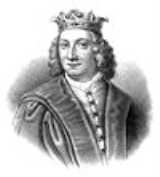
Charles VIII of Sweden

 
Charles VIII of Sweden

   Email Print
   Bookmark   Link


Charles VIII of Sweden


Charles II of Sweden, Charles I of Norway, a.k.a Karl Knutsson (Bonde), king of Sweden
Sweden

Sweden , officially the Kingdom of Sweden , is a Nordic countries on the Scandinavian Peninsula in Northern Europe. Sweden has land borders with Norway to the west and Finland to the northeast, and it is connected to Denmark by the ?resund Bridge in the south....
 (1448 – 1457, 1464 – 1465 and from 1467 to his death in 1470); king of Norway
Norway

Norway , officially the Kingdom of Norway, is a constitutional monarchy in Northern Europe that occupies the western portion of the Scandinavian Peninsula....
 (1449 – 1450).

Referring to Karl Knutsson as Charles VIII is a later invention.


Discussion
Ask a question about 'Charles VIII of Sweden'
Start a new discussion about 'Charles VIII of Sweden'
Answer questions from other users
Full Discussion Forum


Timeline

1438   Eric of Pomerania, King of Sweden, Denmark and Norway loses direct control of Sweden. Karl Knutsson Bonde is elected Regent of Sweden

1439   Eric of Pomerania, King of Sweden, Denmark and Norway is declared deposed in Sweden. Karl Knutsson Bonde continues to serve as Regent of Sweden

1440   End of term for Regent of Sweden Karl Knutsson Bonde.

1441   Christopher of Bavaria succeeds Karl Knutsson Borde as king of Sweden.

1448   The Regency period of Sweden ends with the election of Karl Knutsson Bonde as King Charles VIII of Sweden.

1448   Charles VIII of Sweden is publicly hailed as King at Mora Stones.

1450   Charles VIII of Sweden who was also serving as Carl I of Norway is declared deposed from the later throne in favor of Christian I of Denmark.

1457   Charles VIII of Sweden is declared deposed. Archbishop of Sweden Jöns Bengtsson Oxenstierna and statesman Erik Axelsson Tott become Co-Regents of Sweden. The throne is then offered to Christian I of Denmark and Norway.

1464   Christian I of Denmark and Norway who was also serving as King of Sweden is declared deposed from the later throne. His deposed predecessor Charles VIII of Sweden is re-elected to the throne.

1465   Charles VIII of Sweden is deposed. Clergyman Kettil Karlsson Vasa becomes Regent of Sweden.


Encyclopedia


Karl Knutsson Bonde
Karl Knutsson Bonde

Regency1438-1440 in Sweden
ReignJune 20, 1448-1457,

1464-1465 and

1467-May 15, 1470 in Sweden.

20 November 1449-June 1450
in Norway
HailedJune 28, 1448 in Sweden
CoronationJune 29 1448 in Uppsala
Uppsala

Uppsala is the capital of Uppsala County and the fourth largest Cities of Sweden of Sweden with 128,409 inhabitants.Located about 70 km north of the capital Stockholm, it is also the seat of the Uppsala municipality ....
 
(as king of Sweden),
November 20 1449 in Trondheim
Trondheim

is a city and Municipalities of Norway in S?r-Tr?ndelag Counties of Norway, Norway. The city of Trondheim was established as a municipality on 1 January 1838 ....
 
(as king of Norway)
Royal HouseBonde
Bonde

Bonde is a Swedish noble family.Prominent members include:* Karl Knutsson Bonde , King Charles VIII of Sweden* Gustaf Bonde , Swedish statesman...

ConsortsBirgitta Turesdotter (Bielke)
(died before he became king)

Katarina Karlsdotter

Kristina Abrahamsdotter

Kristina Abrahamsdotter , , was a Finnish noblewoman, royal mistress and later third wife and queen consort of King Charles VIII of Sweden....

PredecessorsChristopher of Bavaria
Christopher of Bavaria

Christopher of Bavaria known by his Danish language and Norwegian language title as Christoffer af/av Bayern and by his Swedish language title as Kristofer av Bayern was union king of Denmark , Sweden and Norway ....
 in Sweden
and Norway
SuccessorsChristian I
Christian I of Denmark

Christian I , Danish monarch and union king of Denmark , Norway and Sweden , under the Kalmar Union. In Sweden his short tenure as monarch was preceded by regents, J?ns Bengtsson Oxenstierna and Erik Axelsson Tott and succeeded by regent Kettil Karlsson Vasa....
 in Norway and Sweden
Date of Birth1408 or 1409
Date of DeathMay 15 1470
Charles II of Sweden, Charles I of Norway, a.k.a Karl Knutsson (Bonde), king of Sweden
Sweden

Sweden , officially the Kingdom of Sweden , is a Nordic countries on the Scandinavian Peninsula in Northern Europe. Sweden has land borders with Norway to the west and Finland to the northeast, and it is connected to Denmark by the ?resund Bridge in the south....
 (1448 – 1457, 1464 – 1465 and from 1467 to his death in 1470); king of Norway
Norway

Norway , officially the Kingdom of Norway, is a constitutional monarchy in Northern Europe that occupies the western portion of the Scandinavian Peninsula....
 (1449 – 1450).

Referring to Karl Knutsson as Charles VIII is a later invention. The Swedish kings Erik XIV (1560-68) and Charles IX
Charles IX of Sweden

Charles IX , was King of Sweden from 1604 until his death. He was the youngest son of King Gustav I of Sweden and his second wife, Margaret Leijonhufvud, brother of Eric XIV of Sweden and John III of Sweden, and uncle of Sigismund III Vasa king of both Sweden and Poland....
 (1604-1611) took their numbers after studying a highly fictitious History of Sweden. Prior to Karl Knutsson Sweden had only had one king called Karl (Charles). Charles's coins therefore correctly refer to him as Charles II.

Karl Knutsson was born in 1409, the son of Knut Tordsson (Bonde), knight and member of the privy council
Privy Council of Sweden

The High Council of Sweden or Council of the Realm consisted originally of those men of noble, common and clergical background, that the king saw fit for advisory service....
 (riksråd), and Margareta Karlsdotter (Sparre av Tofta), the only daughter and heiress of Charles Ulvsson, Lord of Tofta
Charles Ulvsson, Lord of Tofta

knight Charles of Tofta, a.k.a Karl Ulfson was a 14th century Sweden magnate and High Constable of Sweden.Lord Charles always signed himself as "of Tofta", which has given his whole ancestral lineage its later genealogical name, although his paternal grandfather for example did not possess Tofta manor....
. King Charles died 14 May, 1470. His first marriage, in 1428, to Birgitta Turesdotter (Bielke) (died 1436) gave him his daughter Kristina. His second marriage, in 1438, to Katarina Karlsdotter (Gumsehuvud) (died in 1450) produced his second daughter Magdalena, who married Ivar Axelsson (Tott). He also had two children by his third wife (and former mistress) Kristina Abrahamsdotter, Anna and Karl. His father was said by contemporary legends to descend from a younger brother of King Eric IX
Eric IX of Sweden

Eric IX of Sweden was a Sweden Monarchy of Sweden c.1150 – 1160. No historical records of Eric have survived, and all information about him is based on later legends that were aimed at having him established as a saint....
 (Saint Eric). His mother, an important heiress, descended from Jarl Charles the Deaf
Charles the Deaf

Charles the Deaf from the House of Bjelbo was the jarl in Sweden of Sweden during 1216-1220. His father was magnate Bengt Snivil. He was the brother of Magnus Minnesk?ld and jarl Birger Brosa and father of jarl Ulf Fase....
 and consequently from some ancient Folkunge earls of Sweden, as well as from a daughter of Canute IV of Denmark
Canute IV of Denmark

Canute IV , also known as Canute the Saint and Canute the Holy , was List of Danish monarchs of Denmark from 1080 until 1086. Canute was an ambitious king who sought the English throne, attempted to strengthen the Danish monarchy, and devoutedly supported the Roman Catholic Church....
 and Adela of Flanders.

In 1434 he became member of the Privy Council of Sweden
Privy Council of Sweden

The High Council of Sweden or Council of the Realm consisted originally of those men of noble, common and clergical background, that the king saw fit for advisory service....
 and in October of the same year he assumed one of its most senior offices, Lord High Constable of Sweden, or Riksmarsk. Due to the growing dissatisfaction over King Eric of Pomerania
Eric of Pomerania

Eric of Pomerania or Erik of Pomerania was King of Norway , elected King of Denmark , and of Sweden . He was the first male King of the Nordic Kalmar Union....
 among the Swedish nobility, Charles was in 1436 made Rikshövitsman, an office as Military Governor of the Realm
Realm of Sweden

The Realm of Sweden or Svenska v?ldet is a term that historically was used to comprise all the territories under the control of the Sweden monarchs....
 and finally replacing the king as an elected regent from 1438 to 1440, as the result of the rebellion by Engelbrekt Engelbrektsson
Engelbrekt Engelbrektsson

Engelbrekt Engelbrektsson was a Sweden rebel leader and later statesman. He was the leader of the Engelbrekt rebellion in 1434 against Eric of Pomerania, king of the Kalmar Union....
. During Charles' brief regentship, the so-called rebellion of David (a peasant rebellion) took place in Finland. Eric of Pomerania was forced to step down from the throne and in 1440 Christopher of Bavaria
Christopher of Bavaria

Christopher of Bavaria known by his Danish language and Norwegian language title as Christoffer af/av Bayern and by his Swedish language title as Kristofer av Bayern was union king of Denmark , Sweden and Norway ....
, was elected king in the Sweden
Sweden

Sweden , officially the Kingdom of Sweden , is a Nordic countries on the Scandinavian Peninsula in Northern Europe. Sweden has land borders with Norway to the west and Finland to the northeast, and it is connected to Denmark by the ?resund Bridge in the south....
, Norway
Norway

Norway , officially the Kingdom of Norway, is a constitutional monarchy in Northern Europe that occupies the western portion of the Scandinavian Peninsula....
 and Denmark
Denmark

Denmark is a Scandinavian country in northern Europe and the senior member of the Kingdom of Denmark. It is the southernmost of the Nordic countries....
. At the coronation of Christopher in September 1441, Charles was dubbed a knight and appointed Lord High Justiciar of Sweden, or Riksdrots. In October he resigned as Lord High Justiciar and resumed his office as Lord High Constable. From 1442 he was the military governor, hövitsman, at Vyborg
Vyborg

Vyborg is a types of inhabited localities in Russia in Leningrad Oblast, Russia, situated on the Karelian Isthmus near the head of the Bay of Vyborg, 130 km to the northwest of Saint Petersburg, 38 km south from Russia's border with Finland, where the Saimaa Canal enters the Gulf of Finland....
 in Finland
Finland

Finland , officially the Republic of Finland , is a Nordic countries situated in the Fennoscandian region of northern Europe. It borders Sweden on the west, Russia on the east, and Norway on the north, while Estonia lies to its south across the Gulf of Finland....
 (margrave of Viborg). Charles acquired extensive fiefs, for example in Western Finland. His first seat was in Turku. Soon, Christopher's government began to take back fiefs and positions and Charles was forced to give up the castle of Turku. Charles' next seat was the castle of Vyborg, on Finland's eastern border, where he kept an independent court, taking no heed of Christopher and exercising his own foreign policy in relation to such powers in the region as the Hanseatic League
Hanseatic League

The Hanseatic League was an Military alliance of Trade cities and their guilds that established and maintained trade monopoly along the coast of Northern Europe, from the Baltic Sea to the North Sea and inland, during the Late Middle Ages and Early modern period ....
, the Russian city of Novgorod and the Teutonic Knights
Teutonic Knights

The Order of the Teutonic Knights of St. Mary's Hospital in Jerusalem , or for short the Teutonic Order was a Germans Roman Catholic religious order....
 in what are today Estonia
Estonia

Estonia , officially the Republic of Estonia is a country in the Baltic region of Northern Europe. It is bordered to the north by Finland across the Gulf of Finland, to the west by Sweden across the Baltic Sea, to the south by Latvia , and to the east by the Russia ....
 and Latvia
Latvia

Latvia The Latvians are a Baltic peoples culturally related to the Estonians and Lithuanians, with the Latvian language having many similarities with Lithuanian language, but not with the Estonian language....
.

At the death of Christopher in 1448, without a direct heir, Charles was elected king of Sweden on June 20 and on June 28 he was hailed as the new monarch at the Stones of Mora
Stones of Mora

Stones of Mora was the place where the Swedish kings were elected. The origin of the tradition is unknown....
, not far from Uppsala
Uppsala

Uppsala is the capital of Uppsala County and the fourth largest Cities of Sweden of Sweden with 128,409 inhabitants.Located about 70 km north of the capital Stockholm, it is also the seat of the Uppsala municipality ....
, mostly due to his own military troops being present at the place, against the wishes of regents Bengt and Nils Jönsson (Oxenstierna). His election as king of Sweden resulted in an effort to reestablish the Kalmar Union
Kalmar Union

The Kalmar Union is a historiography term meaning a series of personal unions that united the three kingdoms of Denmark, Norway and Sweden under a single monarch, though intermittently....
, this time under Swedish initiative, and in 1449 he was elected king of Norway and received the coronation at Trondheim
Trondheim

is a city and Municipalities of Norway in S?r-Tr?ndelag Counties of Norway, Norway. The city of Trondheim was established as a municipality on 1 January 1838 ....
 on November 20. The Danish had in September 1448 elected Christian I as their new monarch. Soon, in 1450, Charles was forced to cede Norway to Christian. From 1451, Sweden and Denmark were in state of war against each other. Because of devastating warring, a growing opposition against Charles emerged in Sweden. The strongest opponent was the Swedish church which opposed Charles's efforts to concentrate royal and secular power. Other opponents were the family group of Oxenstierna
Oxenstierna

Oxenstierna, an ancient Sweden noble family, the origin of which can be traced up to the middle of the 14th century, which had vast estates in S?dermanland and Uppland, and began to adopt its armorial designation of Oxenstierna as a personal name towards the end of the 16th century....
 and Vasa (House), which had been in the opposing side in the election of king and lost.

During the next 20 years, Charles was deposed twice, only to regain the throne and reign three times (1448-57, 1464-65, 1467-70).

In 1457, a rebellion took place, lead by archbishop Jöns Bengtsson (Oxenstierna) and a nobleman, Erik Axelsson Tott. Charles went into exile to Danzig(Gdansk). The two leaders of the revolt took the regentship, and organized the election of Christian I of Denmark as king (firstly in Turku, then in Stockholm).

In 1463, King Christian quarreled with the archbishop because of his taxation policies. The archbishop was imprisoned, which resulted in a rebellion by his relatives, and led to Christian being driven out of Sweden. Charles was recalled by the rebels and returned at the head of force of German and Polish mercenaries. Upon arrival in Sweden he found himself at war with the Archbishop and after two bloody battles in the winter of 1464-1465 Charles was again exiled. In 1467, the regent Erik Axelsson Tott, now having reverted to support Charles, once more had him crowned. Charles reigned for three years, under power of riksrad, until his death in 1470.

He left only one young son, born of his mistress, Kristina Abrahamsdotter
Kristina Abrahamsdotter

Kristina Abrahamsdotter , , was a Finnish noblewoman, royal mistress and later third wife and queen consort of King Charles VIII of Sweden....
 whom he married on his deathbed. Though she was recognized as Queen, the Swedish government did not allow the boy, suddenly legitimized as Prince Charles (Karl Karlsson) to succeed him, but appointed one of their number, Sten Sture the Elder
Sten Sture the Elder

Sten Sture the Elder was a Sweden statesman and regent of Sweden from ....
 (who was Charles's nephew) as regent.

See also: Engelbrekt

Legacy


Charles represented a growing nationalist tendency among the Swedish aristocracy which tried first to subjugate the other Scandinavian countries under Sweden but soon focussed on dissolving the Kalmar Union
Kalmar Union

The Kalmar Union is a historiography term meaning a series of personal unions that united the three kingdoms of Denmark, Norway and Sweden under a single monarch, though intermittently....
. In the next century, when the union was finally dissolved, Charles received some respect as an early champion of Swedish independence.

Charles's great-granddaughter Christina Nilsdotter Gyllenstierna was married to Sten Sture the Younger
Sten Sture the Younger

Sten Sture the Younger , Lord of Ekesi? , was a Swedish statesman and regent of Sweden, under the era of the Kalmar Union....
 whose regentship represented similar values: nationalism and Swedish independence.

Though the Bonde family, not descendants of Charles himself but just his collateral relatives, remained prominent among the Swedish nobility and in politics into the 20th Century, Charles's own descendants did not ascend nor inherit any thrones until Prince Christian zu Schleswig-Holstein-Sonderburg-Glucksburg became Christian IX of Denmark
Christian IX of Denmark

Christian IX was King of Denmark from November 16, 1863 to January 29, 1906....
 in 1863. Charles's descendants have since ascended the thrones of Norway, Greece and Great Britain.

His distant direct descendant, Sibylla of Saxe-Coburg-Gotha
Princess Sibylla of Saxe-Coburg and Gotha

Princess Sibylla of Sweden, Duchess of V?sterbotten was the wife of Prince Gustav Adolf, Duke of V?sterbotten, and the mother of the current Monarch of Sweden, Carl XVI Gustaf of Sweden....
 married the Hereditary Prince of Sweden in 20th century, and with Sibylla's son, king Charles XVI Gustav of Sweden, Charles' blood returned to the Swedish throne.