

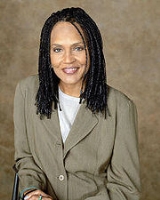
Charlayne Hunter-Gault

Encyclopedia
Charlayne Hunter-Gault is an American journalist and former foreign correspondent for National Public Radio, and the Public Broadcasting Service
.
In 1961, Athens, Georgia
witnessed part of the civil rights movement when Charlayne Hunter and Hamilton Holmes became the first two African American
students to enroll in the University of Georgia
. Upon her graduation in 1963, she became the university's first black graduate.
In 1967, she joined the investigative news team at WRC-TV, Washington, D.C., and also anchored the local evening news. In 1968, Charlayne joined The New York Times as a metropolitan reporter specializing in coverage of the urban African American community. She joined The MacNeil/Lehrer Report in 1978 as a correspondent, and became The NewsHour's national correspondent in 1983. She left The NewsHour with Jim Lehrer in June 1997. She worked in Johannesburg, South Africa as National Public Radio's chief correspondent in Africa from 1997 to 1999. Hunter-Gault recently left her post as CNN's Johannesburg bureau chief and correspondent, which she had held since 1999.
During her association with The NewsHour, Hunter-Gault has won additional awards: two Emmys, and a Peabody for excellence in broadcast journalism for her work on Apartheid's People, a NewsHour series on South Africa. She also received the 1986 Journalist of the Year Award from the National Association of Black Journalists; the 1990 Sidney Hillman Award; the Good Housekeeping Broadcast Personality of the Year Award; the American Women in Radio and Television Award; and two awards from the Corporation for Public Broadcasting for excellence in local programming.
Hunter-Gault is author of In My Place
(1992), a memoir about her experiences at the University of Georgia. She currently lives in Massachusettshttp://www.thehistorymakers.com/biography/biography.asp?bioindex=807&category=Businessmakers&occupation=International%20Business%20Expert&name=Ron%20Gault and is working on a first-person memoir detailing the struggle of African Americans in the 1960s.
Shortly before she graduated from the University of Georgia, Hunter married a white fellow classmate, Walter L. Stovall, the writer son of a chicken-feed manufacturer. The couple were first married in March 1963 and then remarried in Detroit, Michigan, on 8 June 1963, because they believed the first ceremony might be considered invalid as well as criminal, based on the laws of the unidentified state in which they had been married.http://www.time.com/time/magazine/article/0,9171,896932,00.html Once the marriage was revealed, the governor of Georgia called it "a shame and a disgrace", while Georgia's attorney general made public statements about prosecuting the mixed-race couple under Georgia law. News reports quoted the parents of both bride and groom as being against the marriage, for reasons of race. Years later, after the couple's 1972 divorce, Hunter-Gault gave a speech at the university, in which she praised Stovall, whom, she said, "unhesitatingly jumped into my boat with me. He gave up going to movies because he knew I couldn't get a seat in the segregated theaters. He gave up going to the Varsity because he knew they would not serve me .... We married, despite the uproar we knew it would cause, because we loved each other." Shortly after their marriage, Stovall was quoted as saying, "We are two young people who found ourselves in love and did what we feel is required of people when they are in love and want to spend the rest of their lives together. We got married."http://www.time.com/time/magazine/article/0,9171,896932,00.html The couple had one daughter, Susan Stovall, a singer (born December 1963).
In 1971 Hunter married Ronald T. Gault, an African American businessman who was then a program officer for the Ford Foundation; he is now an investment banker and consultant.http://www.people.com/people/archive/article/0,,20109246,00.htmlhttp://www.thehistorymakers.com/biography/biography.asp?bioindex=807&category=Businessmakers&occupation=International%20Business%20Expert&name=Ron%20Gaulthttp://www.grinnell.edu/offices/president/trustee/memberintro/gault They have one son, Chuma Gault, an actor (born 1972).http://www.people.com/people/archive/article/0,,20109246,00.html
Public Broadcasting Service
The Public Broadcasting Service is an American non-profit public broadcasting television network with 354 member TV stations in the United States which hold collective ownership. Its headquarters is in Arlington, Virginia....
.
In 1961, Athens, Georgia
Athens, Georgia
Athens-Clarke County is a consolidated city–county in U.S. state of Georgia, in the northeastern part of the state, comprising the former City of Athens proper and Clarke County. The University of Georgia is located in this college town and is responsible for the initial growth of the city...
witnessed part of the civil rights movement when Charlayne Hunter and Hamilton Holmes became the first two African American
African American
African Americans are citizens or residents of the United States who have at least partial ancestry from any of the native populations of Sub-Saharan Africa and are the direct descendants of enslaved Africans within the boundaries of the present United States...
students to enroll in the University of Georgia
University of Georgia
The University of Georgia is a public research university located in Athens, Georgia, United States. Founded in 1785, it is the oldest and largest of the state's institutions of higher learning and is one of multiple schools to claim the title of the oldest public university in the United States...
. Upon her graduation in 1963, she became the university's first black graduate.
In 1967, she joined the investigative news team at WRC-TV, Washington, D.C., and also anchored the local evening news. In 1968, Charlayne joined The New York Times as a metropolitan reporter specializing in coverage of the urban African American community. She joined The MacNeil/Lehrer Report in 1978 as a correspondent, and became The NewsHour's national correspondent in 1983. She left The NewsHour with Jim Lehrer in June 1997. She worked in Johannesburg, South Africa as National Public Radio's chief correspondent in Africa from 1997 to 1999. Hunter-Gault recently left her post as CNN's Johannesburg bureau chief and correspondent, which she had held since 1999.
During her association with The NewsHour, Hunter-Gault has won additional awards: two Emmys, and a Peabody for excellence in broadcast journalism for her work on Apartheid's People, a NewsHour series on South Africa. She also received the 1986 Journalist of the Year Award from the National Association of Black Journalists; the 1990 Sidney Hillman Award; the Good Housekeeping Broadcast Personality of the Year Award; the American Women in Radio and Television Award; and two awards from the Corporation for Public Broadcasting for excellence in local programming.
Hunter-Gault is author of In My Place
In My Place
"In My Place" is a song by English alternative rock band Coldplay. The song was written collaboratively by all the band members for their second album, A Rush of Blood to the Head. The track is built around thumping drums, chiming guitars and a chorus...
(1992), a memoir about her experiences at the University of Georgia. She currently lives in Massachusettshttp://www.thehistorymakers.com/biography/biography.asp?bioindex=807&category=Businessmakers&occupation=International%20Business%20Expert&name=Ron%20Gault and is working on a first-person memoir detailing the struggle of African Americans in the 1960s.
Personal life
Alberta Charlayne Hunter was born in Due West, South Carolina, daughter of Charles S.H. Hunter, Col., U.S. Army, a regimental chaplain, and his wife, the former Althea Brown.Shortly before she graduated from the University of Georgia, Hunter married a white fellow classmate, Walter L. Stovall, the writer son of a chicken-feed manufacturer. The couple were first married in March 1963 and then remarried in Detroit, Michigan, on 8 June 1963, because they believed the first ceremony might be considered invalid as well as criminal, based on the laws of the unidentified state in which they had been married.http://www.time.com/time/magazine/article/0,9171,896932,00.html Once the marriage was revealed, the governor of Georgia called it "a shame and a disgrace", while Georgia's attorney general made public statements about prosecuting the mixed-race couple under Georgia law. News reports quoted the parents of both bride and groom as being against the marriage, for reasons of race. Years later, after the couple's 1972 divorce, Hunter-Gault gave a speech at the university, in which she praised Stovall, whom, she said, "unhesitatingly jumped into my boat with me. He gave up going to movies because he knew I couldn't get a seat in the segregated theaters. He gave up going to the Varsity because he knew they would not serve me .... We married, despite the uproar we knew it would cause, because we loved each other." Shortly after their marriage, Stovall was quoted as saying, "We are two young people who found ourselves in love and did what we feel is required of people when they are in love and want to spend the rest of their lives together. We got married."http://www.time.com/time/magazine/article/0,9171,896932,00.html The couple had one daughter, Susan Stovall, a singer (born December 1963).
In 1971 Hunter married Ronald T. Gault, an African American businessman who was then a program officer for the Ford Foundation; he is now an investment banker and consultant.http://www.people.com/people/archive/article/0,,20109246,00.htmlhttp://www.thehistorymakers.com/biography/biography.asp?bioindex=807&category=Businessmakers&occupation=International%20Business%20Expert&name=Ron%20Gaulthttp://www.grinnell.edu/offices/president/trustee/memberintro/gault They have one son, Chuma Gault, an actor (born 1972).http://www.people.com/people/archive/article/0,,20109246,00.html
Filmography
- Dare to Struggle... Dare to Win (1999)
- Globalization & Human Rights (1998)
- Rights & Wrongs: Human Rights Television (1993)
External links
- Charlayne Hunter-Gault Biography at National Public Radio
- Charlayne Hunter-Gault Biography at New Georgia Encyclopedia
- http://www.genconnect.com/2010-aspen-ideas-festival/interview-with-charlayne-hunter-gault-facing-the-first-person-videos/ at genConnect.com
- Maynard Institute for Journalism Education: Black Journalists Movement