
All Topics  
Banana

 
Banana

   Email Print
   Bookmark   Link


Banana


Banana is the common name
Common name

A common name is a name in general use within a community . A common name is not necessarily a commonly used name.Many of the conventions and traditions described in this article are based on the English language, and thus may not apply to common names in other languages....
 for a fruit and also the herbaceous plants of the genus
Genus

A genus is a low-level taxonomic rank used in the classification of living and fossil organisms. The taxonomic ranks are domain , kingdom , phylum, class , order , family , genus, and species....
 Musa
Musa (genus)

Musa is one of three genera in the family Musaceae; it includes bananas and plantains. There are over 50 species of Musa with a broad variety of uses....
 which produce this commonly eaten fruit
Fruit

The term fruit has different meanings dependent on context, and the term is not synonymous in food preparation and biology. In botany, which is the scientific study of plants, fruits are the ripened Ovary of flowering plants....
. They are native to the tropical region of Southeast Asia
Southeast Asia

Southeast Asia or Southeastern Asia is a subregion of Asia, consisting of the countries that are geographically south of China, east of India and north of Australia....
. Bananas are likely to have been first domesticated in Papua New Guinea
Papua New Guinea

Papua New Guinea , officially the Independent State of Papua New Guinea, is a country in Oceania, occupying the eastern half of the island of New Guinea and numerous offshore islands ....
.


Nutrition Facts


Discussion
Ask a question about 'Banana'
Start a new discussion about 'Banana'
Answer questions from other users
Full Discussion Forum


Encyclopedia


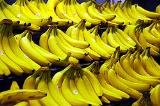
Luxor, Banana Island, Banana Tree, Egypt, Oct 2004
Banana is the common name
Common name

A common name is a name in general use within a community . A common name is not necessarily a commonly used name.Many of the conventions and traditions described in this article are based on the English language, and thus may not apply to common names in other languages....
 for a fruit and also the herbaceous plants of the genus
Genus

A genus is a low-level taxonomic rank used in the classification of living and fossil organisms. The taxonomic ranks are domain , kingdom , phylum, class , order , family , genus, and species....
 Musa
Musa (genus)

Musa is one of three genera in the family Musaceae; it includes bananas and plantains. There are over 50 species of Musa with a broad variety of uses....
 which produce this commonly eaten fruit
Fruit

The term fruit has different meanings dependent on context, and the term is not synonymous in food preparation and biology. In botany, which is the scientific study of plants, fruits are the ripened Ovary of flowering plants....
. They are native to the tropical region of Southeast Asia
Southeast Asia

Southeast Asia or Southeastern Asia is a subregion of Asia, consisting of the countries that are geographically south of China, east of India and north of Australia....
. Bananas are likely to have been first domesticated in Papua New Guinea
Papua New Guinea

Papua New Guinea , officially the Independent State of Papua New Guinea, is a country in Oceania, occupying the eastern half of the island of New Guinea and numerous offshore islands ....
. Today, they are cultivated throughout the tropics
Tropics

The Tropics, seated in the equatorial regions of the world, are limited in latitude by the Tropic of Cancer in the northern hemisphere at approximately 23?26' N latitude, and the Tropic of Capricorn in the southern hemisphere at 23?26' S latitude....
.

Banana plants are of the family
Family (biology)

In biological classification, family is a taxonomic rank. Exact details of formal nomenclature depend on the Nomenclature Codes which applies....
 Musaceae
Musaceae

Musaceae is a botanical name for a family of flowering plants. The family is native to the tropics of Africa and Asia. The plants have a large herbaceous growth habit with leaves with overlapping basal sheaths that form a pseudostem making some members appear to be woody trees....
. They are cultivated primarily for their fruit, and to a lesser extent for the production of fibre
Fiber

Fiber or fibre is a class of materials that are continuous filaments or are in discrete elongated pieces, similar to lengths of yarn. They are very important in the biology of both plants and animals, for holding tissue s together....
 and as ornamental plant
Ornamental plant

Ornamental plants are typically grown in the flower garden or as house plants. Most commonly they are grown for the display of their flowers. Other common ornamental features include leaves, scent, fruit, Plant stem and bark....
s. As the banana plants are normally tall and fairly sturdy they are often mistaken for tree
TREE

TREE was a Boston hardcore punk band formed in the summer of 1990. They were active in the Boston music scene until disbanding in 2002....
s, but their main or upright stem is actually a pseudostem (literally "fake stem"). For some species
Species

In biology, a species is one of the basic units of biological classification and a taxonomic rank. A species is often defined as a group of organisms capable of interbreeding and producing fertile offspring....
 this pseudostem can reach a height
Height

Height is the measurement of vertical distance, but has two meanings in common use. It can either indicate how "tall" something is, or how "high up" it is....
 of up to 2–8 m, with leaves
Leaf

In botany, a leaf is an above-ground plant Organ specialized for photosynthesis. For this purpose, a leaf is typically flat and thin, to expose the cells containing chloroplast to light over a broad area, and to allow light to penetrate fully into the tissues....
 of up to 3.5 m in length
Length

Length is the long dimension of any object. The length of a thing is the distance between its ends, its linear extent as measured from end to end....
. Each pseudostem can produce a bunch of yellow, green or even red bananas before dying and being replaced by another pseudostem.

The banana fruit grow in hanging clusters, with up to 20 fruit to a tier (called a hand), and 3-20 tiers to a bunch. The total of the hanging clusters is known as a bunch, or commercially as a "banana stem", and can weigh from 30–50 kg. The fruit averages 125 g, of which approximately 75% is water
Water

Water is a common chemical substance that is essential for the survival of all known forms of life. In typical usage, water refers only to its liquid form or States of matter, but the substance also has a solid state, ice, and a gaseous state, water vapor or steam....
 and 25% dry matter content. Each individual fruit (known as a banana or 'finger') has a protective outer layer (a peel or skin) with a fleshy edible
Eating

In general terms, eating is the process of consuming food to provide for the nutritional needs of an animal, particularly their food energy requirements and to growth....
 inner portion. Both skin and inner part can be eaten raw or cooked. Western culture
Western culture

File:Clash of Civilizations map.pngWestern culture are terms which are used to refer to cultures of European origin. This terminology originated as a way of describing what was different about the Graeco-Roman culture and its descendants, in contrast to the older neighboring civilizations of the Middle East, which in many ways continued...
s generally eat the inside raw and throw away the skin while some Asian culture
Culture

Culture is difficult to define. For example, in 1952, Alfred Kroeber and Clyde Kluckhohn compiled a list of 164 definitions of "culture" in Culture: A Critical Review of Concepts and Definitions....
s generally eat both the skin and inside cooked. Typically, the fruit has numerous strings (called 'phloem
Phloem

In vascular plants, phloem is the living Biological tissue that carries organic nutrients , particularly sucrose, a sugar, to all parts of the plant where needed....
 bundles
Vascular bundle

A vascular bundle is a part of the transport system in vascular plants. The transport itself happens in vascular tissue, which exists in two forms: xylem and phloem....
') which run between the skin and inner part. Bananas are a valuable source of vitamin B6
Vitamin B6

Vitamin B6 is a water-soluble vitamin and is part of the vitamin B complex group. Pyridoxal phosphate is the active form and is a cofactor in many reactions of amino acid metabolism, including transamination, deamination, and decarboxylation....
, vitamin C
Vitamin C

Vitamin C or ascorbic acid is an essential nutrient for humans, a large number of simian species, a small number of other mammalian species , a few species of birds, and some fish....
, and potassium
Potassium

Potassium is a chemical element. It has the symbol K , atomic number 19, and atomic mass 39.0983. Potassium was first isolated from potash, hence the name....
.

Bananas are grown in at least 107 countries
Country

Country may refer to the territory of a state, or to a smaller, or former, political division of a geographical region. In another meaning of the word, the country is also a term used to refer to rural areas....
. In popular culture
Popular culture

Popular culture is the totality of Distinction memes, ideas, Perspective s and Attitude s that are deemed preferred per an informal consensus within the mainstream of a given culture....
 and commerce
Commerce

Commerce is a division of trade or production, costs, and pricing which deals with the Trade of goods and service from production, costs, and pricing to final consumer....
, "banana" usually refers to soft, sweet "dessert" bananas. The bananas from a group of cultivar
Cultivar

A cultivar is a cultivated plant that has been selected and given a unique name because of its decorative or useful characteristics; it is usually distinct from similar plants and when Plant propagation it retains those characteristics....
s with firmer, starchier fruit are called plantain
Plantain

The plantain is a crop in the genus Musa and is generally used for cooking, in contrast to the soft, sweet banana .The population of North America was first introduced to the banana plantain, and colloquially in the United States and Europe the term "banana" refers to that variety....
s. Bananas may also be cut and dried and eaten as a type of chip. Dried bananas are also ground into banana flour.

Although the wild species have fruits with numerous large, hard seed
Seed

A seed is a small Plant embryogenesis plant enclosed in a covering called the seed coat, usually with some Food storage. It is the product of the ripened ovule of gymnosperm and angiosperm plants which occurs after fertilization and some growth within the mother plant....
s, virtually all culinary bananas have seedless fruit
Seedless fruit

Seedless fruits are fruits that have been developed to possess no seeds, generally to make consumption easier and more convenient. They are therefore considered commercially valuable....
s. Bananas are classified either as dessert
Dessert

Dessert is a course that typically comes at the end of a meal, usually consisting of sweet food but sometimes of a strongly-flavored one, such as some cheeses....
 bananas (meaning they are yellow and fully ripe when eaten) or as green cooking bananas. Almost all export bananas are of the dessert types; however, only about 10-15% of all production is for export
Export

Export goods or services are provided to foreign consumers by domestic Production theory basics. It is a good that is sent to another country for sale....
, with the United States
United States

The United States of America is a Federal government constitutional republic comprising U.S. state and a federal district. The country is situated mostly in central North America, where its Contiguous United States and Washington, D.C., the Capital districts and territories, lie between the Pacific Ocean and Atlantic Oceans, Borders of the U...
 and European Union
European Union

The European Union is an economic and political union of 27 European Union member state, located primarily in Europe. It was established by the Treaty of Maastricht on 1 November 1993 upon the foundations of the pre-existing European Economic Community....
 being the dominant buyers.

Botany

The banana plant is a pseudostem that grows to 6 to 7.6 metres (20-25 feet) tall, growing from a corm
Corm

A corm is a short, vertical, swollen underground plant Plant stem that serves as a storage organ used by some plants to survive winter or other adverse conditions such as summer drought and heat ....
. Leaves are spirally arranged and may grow 2.7 metres (9 ft) long and 60 cm (2 ft) wide. The banana plant is the largest of all herbaceous flowering plants. The large leaves grow whole, but are easily torn by the wind, resulting in the familiar frond look.

A single, sterile
Sterility

The term 'sterility' has several meanings:* The quality or state of being unable to reproduce; of being Infertility. The term may be used of higher animals....
, male banana flower, also known as the banana heart is normally produced by each stem (though on rare occasions more can be produced - a single plant in the Philippines
Philippines

The Philippines, officially known as the Republic of the Philippines, is a country in Southeast Asia with Manila as its capital city. It comprises 7,107 islands in the western Pacific Ocean....
 has five). Banana hearts are used as a vegetable
Vegetable

The term "vegetable" generally means the Eating parts of plants. The definition of the word is traditional rather than scientific, however, and therefore the usage of the word is somewhat arbitrary and subjective, as it is determined by individual cultural customs of food selection and food preparation....
 in Southeast Asia
Southeast Asia

Southeast Asia or Southeastern Asia is a subregion of Asia, consisting of the countries that are geographically south of China, east of India and north of Australia....
, steamed, in salad
Salad

Salad is a mixture of cold or hot foods, usually including vegetables and/or fruits, often with a dressing, occasionally nuts or croutons, and sometimes with the addition of meat, fish, pasta, cheese, eggs, or whole grains....
s, or eaten raw. The female flowers are produced further up the stem and produce the actual fruit without requiring fertilization. The fruit has been described as a "leathery berry". In cultivated varieties, the seeds have degenerated nearly to non-existence; their remnants are tiny black specks in the interior of the fruit. The ovary is inferior to the flower; because of their stiff stems and the positioning of the ovary and flower, bananas grow sticking up, not hanging down.

Some sources assert that the genus of the banana, Musa
Musa (genus)

Musa is one of three genera in the family Musaceae; it includes bananas and plantains. There are over 50 species of Musa with a broad variety of uses....
, is named for Antonio Musa, physician to the Emperor Augustus. Others say that Linnaeus, who gave the genus its name in 1750, simply adapted an Arabic word for banana, mauz. The word banana itself comes from the Arabic word banan, which means "finger". The genus contains numerous species; several produce edible fruit, while others are cultivated as ornamentals.

Properties


Bananas come in a variety of sizes and color
Color

Color or colour is the visual perception property corresponding in humans to the categories called red, yellow, blue and others....
s when ripe, including yellow, purple, and red. Bananas can be eaten raw though some varieties are generally cooked first. Depending upon cultivar and ripeness, the flesh can vary in taste from starchy to sweet, and texture from firm to mushy. Unripe or green bananas and plantain
Plantain

The plantain is a crop in the genus Musa and is generally used for cooking, in contrast to the soft, sweet banana .The population of North America was first introduced to the banana plantain, and colloquially in the United States and Europe the term "banana" refers to that variety....
s are used for cooking various dishes such as banana pudding and are the staple starch
Starch

File:Amylose2.svgFile:Amylopektin Sessel.svgStarch or amylum is a polysaccharide carbohydrate consisting of a large number of glucose units joined together by glycosidic bonds....
 of many tropical
Tropics

The Tropics, seated in the equatorial regions of the world, are limited in latitude by the Tropic of Cancer in the northern hemisphere at approximately 23?26' N latitude, and the Tropic of Capricorn in the southern hemisphere at 23?26' S latitude....
 populations. Banana sap is extremely sticky and can be used as a practical adhesive. Sap can be obtained from the pseudostem, from the fruit peelings, or from the fruit flesh.

Most production for local sale is of green cooking bananas and plantain
Plantain

The plantain is a crop in the genus Musa and is generally used for cooking, in contrast to the soft, sweet banana .The population of North America was first introduced to the banana plantain, and colloquially in the United States and Europe the term "banana" refers to that variety....
s, as ripe dessert bananas are easily damaged while being transported to market. Even when transported only within their country of origin, ripe bananas suffer a high rate of damage and loss.

The commercial dessert cultivars most commonly eaten in temperate countries (species Musa acuminata or the hybrid Musa × paradisiaca, a cultigen
Cultigen

A cultigen is a plant that has been deliberately altered or selected by humans; it is the result of artificial selection. These "man-made" or anthropogenic plants are, for the most part, plants of commerce that are used in horticulture, agriculture and forestry....
) are imported in large quantities from the tropics. They are popular in part because, being a non-seasonal crop, they are available fresh year-round. In global commerce, by far the most important of these banana cultivar
Cultivar

A cultivar is a cultivated plant that has been selected and given a unique name because of its decorative or useful characteristics; it is usually distinct from similar plants and when Plant propagation it retains those characteristics....
s is 'Cavendish
Cavendish banana

The Cavendish is the name for the banana cultivar used most commonly in the world banana trade. One of many banana cultivars originating in Vietnam and China, it became the primary replacement for the Gros Michel banana in the 1950s....
', which accounts for the vast bulk of bananas exported from the tropics. The Cavendish gained popularity in the 1950s after the previously mass produced cultivar, Gros Michel, became commercially unviable due to Panama disease
Fusarium oxysporum

Fusarium oxysporum, also referred to as Panama disease or Agent Green, is a fungus that causes Fusarium wilt disease in more than a hundred species of plants....
, a fungus which attacks the roots of the banana plant.

The most important properties making 'Cavendish' the main export banana are related to transport and shelf life rather than taste; major commercial cultivars rarely have a superior flavor compared to the less widespread cultivars. Export bananas are picked green, and then usually ripened in ripening rooms when they arrive in their country of destination. These are special rooms made air-tight and filled with ethylene
Ethylene

Ethylene is the chemical compound with the formula C2H4. It is the simplest alkene. Because it contains a carbon-carbon double bond, ethylene is called an unsaturated hydrocarbon or an olefin....
 gas to induce ripening. Bananas can be ordered by the retailer "ungassed", however, and may show up at the supermarket still fully green. While these bananas will ripen more slowly, the flavor will be notably richer, and the banana peel can be allowed to reach a yellow/brown speckled phase, and yet retain a firm flesh inside. Thus, shelf life is somewhat extended.

The vivid yellow color normally associated with supermarket bananas is in fact a side-effect of the artificial ripening process. Cavendish bananas that have been allowed to ripen naturally on the plant have a greenish-yellow appearance which changes to a brownish-yellow as they ripen further. Although both the flavor and texture of "tree ripened" bananas is generally regarded as superior to any type green-picked fruit, once natural ripening has commenced the shelf life is typically only 7-10 days, making commercial distribution impractical. For most people the only practical means of obtaining such fruit is growing it themselves, however this is also somewhat problematic, as the bananas all tend to ripen at once and have very poor keeping properties.

The flavor and texture of bananas are also affected by the temperature at which they ripen. Bananas are refrigerated to between 13.5 and 15 °C (57 and 59 °F) during transportation. At lower temperatures, the ripening of bananas permanently stalls, and the bananas will eventually turn gray as cell walls break down. The skins of ripe bananas will quickly turn black in the 4°C environment of a domestic refrigerator, although the fruit inside remains unaffected.

It should be noted that Musa × paradisiaca is also the generic name for the common plantain
Plantain

The plantain is a crop in the genus Musa and is generally used for cooking, in contrast to the soft, sweet banana .The population of North America was first introduced to the banana plantain, and colloquially in the United States and Europe the term "banana" refers to that variety....
, a coarser and starchier variant not to be confused with Musa acuminata or the Cavendish variety.

In addition to the fruit, the flower
Flower

A flower, sometimes known as a bloom or blossom, is the reproduction structure found in flowering plants . The biological function of a flower is to mediate the union of male sperm with female ovum in order to produce seeds....
 of the banana plant (also known as banana blossom or banana heart) is used in Southeast Asia
Southeast Asia

Southeast Asia or Southeastern Asia is a subregion of Asia, consisting of the countries that are geographically south of China, east of India and north of Australia....
n, Tamil
Tamil cuisine

Tamil Nadu is famous for its hospitality and its deep belief that serving food to others is a service to humanity as is common in many regions of India....
, Bengali
Bengali cuisine

Bengali cuisine is a style of food preparation originating in Bengal, a region in the eastern South Asia which is now divided between the Indian state of West Bengal and the independent country of Bangladesh....
, and Kerala (India) cuisine
Cuisine of Kerala

The cuisine of Kerala is linked in all its richness to the History of Kerala, Geography of Kerala, Demographics of Kerala and culture of the land....
, either served raw with dips or cooked in soups and curries. The tender core of the banana plant's trunk is also used in Bengali and Kerala cooking, and notably in the Burmese dish mohinga
Mohinga

Mohinga is rice vermicelli in fish soup and considered by many to be the national dish of Myanmar, formerly Burma. It is readily available in most parts of the country....
. Bananas fried with batter
Pisang goreng

Pisang Goreng is a snack food mostly found throughout Indonesia, Malaysia and Singapore. In Singapore it is known incorrectly as Goreng Pisang instead of Pisang Goreng....
 is a popular dessert in Malaysia
Malaysia

Malaysia is a federation that consists of States of Malaysia in Southeast Asia with a total landmass of . The capital city is Kuala Lumpur, while Putrajaya is the seat of the federal government....
, Singapore
Singapore

Singapore , officially the Republic of Singapore, is an island country microstate located at the southern tip of the Malay Peninsula. It lies 137 kilometres north of the equator, south of the Malaysian state of Johor and north of Indonesia's Riau Islands....
, and Indonesia
Indonesia

The Republic of Indonesia , is a transcontinental country in Southeast Asia and Oceania. Comprising Islands of Indonesia, it is the world's largest Archipelago state....
. Banana fritters can be served with ice cream
Ice cream

Ice cream or ice-cream is a frozen dessert usually made from dairy products, such as milk and cream, combined with fruits or other ingredients....
 as well. Bananas are also eaten deep fried, baked in their skin in a split bamboo, or steamed in glutinous rice
Glutinous rice

Glutinous rice is a type of short-grained Asian rice that is especially sticky when cooked. It is called glutinous in the sense of being glue-like or sticky and not in the sense of containing gluten; on the other hand, it is called sticky but should not be confused with the other varieties of Asian rice that become sticky to one deg...
 wrapped in a banana leaf in Burma where bunches of green bananas surrounding a green coconut in a tray form an important part of traditional offerings to the Buddha
Gautama Buddha

Siddhartha Gautama was a Spirituality teacher in the northern region of the Indian subcontinent who founded Buddhism. He is generally seen by Buddhists as the Supreme Buddhahood of our age....
 and the Nat
Nat (spirit)

The nats are spirits worshipped in Burma in conjunction with Buddhism. They are divided between the 37 Great Nats and all the rest . Almost all of the 37 Great Nats were human beings who met violent and tragic deaths ....
s. The juice extract prepared from the tender core is used to treat kidney stone
Kidney stone

Kidney stones, also called renal Calculus , are solid concretions of dissolved dietary mineral in urine; calculi typically form inside the kidneys or bladder....
s.

The leaves
Banana leaf

Banana leaf is the leaf of the Banana plant. It is used as a decorative element for auspicious ceremonies in Hindu and Buddhist cultures. It is also used as a plate to serve food in countries like India....
 of the banana plant are large, flexible, and waterproof. They are used many ways, including as umbrella
Umbrella

An umbrella or parasol is a canopy designed to protect against precipitation or sunlight. The term parasol usually refers to an item designed to protect from the sun, and umbrella refers to a device more suited to protect from rain....
s and to wrap food for cooking or storage. Banana leaves are also used to serve food in India and other Asian countries.

Banana chips
Banana chips

Banana chips are deep-fried and/or dried slices of banana, covered with sugar or honey. The chips are crispy and have a sweet taste. Variants of banana chips may be covered with chocolate salt instead....
 are a snack produced from dehydrated or fried banana or plantain slices, which have a dark brown color and an intense banana taste. Bananas have also been used in the making of jam
Fruit preserves

Fruit preserves refers to fruits or vegetables that have been prepared and canning for long term storage. The preparation of fruit preserves traditionally involves the use of pectin as a gelling agent, although sugar or honey may be used as well....
. Unlike other fruits, it is difficult to extract juice from bananas because when compressed a banana simply turns to pulp.

Seeded bananas (Musa balbisiana
Musa balbisiana

Musa balbisiana is the wild plant that is the ancestor of many cultivated bananas. It grows lush leaves in clumps and grows with a more upright habit than most cultivated bananas....
), the forerunner of the common domesticated banana, are sold in markets in Indonesia.

In India
India

India, officially the Republic of India , is a country in South Asia. It is the List of countries and outlying territories by total area country by geographical area, the List of countries by population country, and the most populous liberal democracy in the world....
, juice is extracted from the corm
Corm

A corm is a short, vertical, swollen underground plant Plant stem that serves as a storage organ used by some plants to survive winter or other adverse conditions such as summer drought and heat ....
 and used as a home remedy
Home remedy

A home remedy is a treatment to cure a disease or ailment that employs certain spices, vegetables, or other common items. Home remedies may or may not have medicinal properties that treat or cure the disease or ailment in question, as they are typically passed along by laypersons ....
 for the treatment of jaundice
Jaundice

Jaundice, also known as icterus , is a yellowish discoloration of the skin, the conjunctival membranes over the sclera , and other mucous membranes caused by hyperbilirubinemia ....
, sometimes with the addition of honey
Honey

Honey is a sweet fluid produced by honey bees , and derived from the nectar of flowers. According to the United States National Honey Board and various international food regulations, "honey stipulates a pure product that does not allow for the addition of any other substance?this includes, but is not limited to, water or other sweeteners...
.

Trade

Top Banana Producing Nations - 2005
(in million metric tons)
16.8
6.7
6.4
5.9
5.8
4.5
2.2
2.0
2.0
1.6
1.6
World Total 72.5
Source: Food and Agriculture Organization of the United Nations


Bananas and plantain
Plantain

The plantain is a crop in the genus Musa and is generally used for cooking, in contrast to the soft, sweet banana .The population of North America was first introduced to the banana plantain, and colloquially in the United States and Europe the term "banana" refers to that variety....
s constitute a major staple food crop
Agriculture

Agriculture refers to the production of food and goods through farming and forestry. Agriculture was the key development that led to the rise of civilization, with the animal husbandry of domestication animals and plants creating food surpluses that enabled the development of more Population density and Social stratification societies....
 for millions of people in developing countries
Developing country

A developing country is a country that has often low standards of democracy, industrialisation, Social work, and Human rights for its citizens....
. In most tropical countries, green (unripe) bananas used for cooking
Cooking

Cooking is the process of preparing food by applying heat, selecting, measuring and combining of ingredients in an ordered procedure for producing safe and edible food....
 represent the main cultivars. Cooking bananas are very similar to potato
Potato

The potato is a starchy, tuberous crop from the perennial plant Solanum tuberosum of the Solanaceae family. The word potato may refer to the plant itself as well....
es in how they are used. Both can be fried
Frying

Frying is the cooking of food in oil or fat, a technique that originated in ancient Old_Kingdom around 2500BC. Chemically, oils and fats are the same, differing only in melting point, but the distinction is only made when needed....
, boiled
Boiling

Boiling, a type of phase transition, is the rapid vaporization of a liquid, which typically occurs when a liquid is heated to its boiling point, the temperature at which the vapor pressure of the liquid is equal to the pressure exerted on the liquid by the surrounding environmental pressure....
, baked
Baking

Baking is the technique of prolonged cooking of food by dry heat acting by Heat convection, and not by Thermal radiation, normally in an oven, but also in hot ashes, or on hot stones....
, or chipped and have similar taste
Taste

Sorry, no overview for this topic
 and texture when served. One green cooking banana has about the same calorie
Calorie

The calorie is a pre-SI metric system unit of energy. The unit was first defined by Professor Nicolas Cl?ment in 1824 as a unit of heat. This definition entered French and English dictionaries between 1841 and 1867....
 content as one potato.

In 2003, India
India

India, officially the Republic of India , is a country in South Asia. It is the List of countries and outlying territories by total area country by geographical area, the List of countries by population country, and the most populous liberal democracy in the world....
 led the world in banana production, representing approximately 23% of the worldwide crop, most of which was for domestic consumption. The four leading banana exporting countries were Ecuador
Ecuador

Ecuador , officially the , literally, "Republic of the equator") is a representative democratic republic in South America, bordered by Colombia on the north, by Peru on the east and south, and by the Pacific Ocean to the west....
, Costa Rica
Costa Rica

Costa Rica, officially the Republic of Costa Rica is a country in Central America, bordered by Nicaragua to the north, Panama to the east and south, the Pacific Ocean to the west and south and the Caribbean Sea to the east....
, the Philippines
Philippines

The Philippines, officially known as the Republic of the Philippines, is a country in Southeast Asia with Manila as its capital city. It comprises 7,107 islands in the western Pacific Ocean....
, and Colombia
Colombia

Colombia , officially the Republic of Colombia , is a country in north-western South America. Colombia is bordered to the east by Venezuela and Brazil; to the south by Ecuador and Peru; to the north by the Caribbean Sea; to the north west by Panama; and to the west by the Pacific Ocean....
, which together accounted for about two-thirds of the world's exports, each exporting more than 1 million tons. Ecuador alone provided more than 30% of global banana exports, according to FAO
Food and Agriculture Organization

The Food and Agriculture Organization of the United Nations is a specialised agency of the United Nations that leads international efforts to defeat hunger....
 statistics.

The vast majority of producers are small-scale farmer
Farmer

A farmer is a person who raises living organisms for food or raw materials....
s growing the crop either for home consumption or for local markets. Because bananas and plantain
Plantain

The plantain is a crop in the genus Musa and is generally used for cooking, in contrast to the soft, sweet banana .The population of North America was first introduced to the banana plantain, and colloquially in the United States and Europe the term "banana" refers to that variety....
s will produce fruit year-round, they provide an extremely valuable source of food during the hunger season (that period of time when all the food from the previous harvest has been consumed, and the next harvest is still some time away). It is for these reasons that bananas and plantain
Plantain

The plantain is a crop in the genus Musa and is generally used for cooking, in contrast to the soft, sweet banana .The population of North America was first introduced to the banana plantain, and colloquially in the United States and Europe the term "banana" refers to that variety....
s are of major importance to food security
Food security

Food security refers to the availability of food and one's access to it. A household is considered food secure when its occupants do not live in hunger or fear of starvation....
.
Banana Sorting
Bananas are among the most widely consumed foods in the world. Most banana farmers receive a low unit price for their produce as supermarket
Supermarket

A supermarket is a self-service Retailing#Retail types offering a wide variety of food and household merchandise, organized into departments....
s buy enormous quantities and receive a discount for that business. Competition amongst supermarkets has led to reduced margins in recent years which in turn has led to lower prices for growers. Chiquita
Chiquita Brands International

Chiquita Brands International Inc. is a Cincinnati, Ohio-based producer and distributor of bananas and other produce, under a variety of subsidiary brand names, collectively known as Chiquita....
, Del Monte
Fresh Del Monte Produce

Fresh Del Monte Produce is a major producer and distributor of fruit and other agricultural products.The company came into existence in its current form in 1996, after a change of ownership....
, Dole
Dole Food Company

Dole Food Company, Inc. is an United States-based agricultural multinational corporation headquartered in Westlake Village, California and is the leading grower and packer of such food items as bananas, pineapples , grapes, strawberries, and other fresh and frozen fruits....
, and Fyffes
Fyffes

File:Fyffes SVG logo.svgFyffes plc is a fruit and fresh produce company headquartered at North Anne Street, Dublin List of Dublin postal districts, Republic of Ireland....
 grow their own bananas in Ecuador, Colombia, Costa Rica, Guatemala
Guatemala

Guatemala is a country in Central America bordered by Mexico to the north and west, the Pacific Ocean to the southwest, Belize and the Caribbean to the northeast, and Honduras and El Salvador to the southeast....
, and Honduras
Honduras

Honduras is a democratic republic in Central America. It was formerly known as Spanish Honduras to differentiate it from British Honduras ....
. Banana plantations are capital intensive and demand high expertise, so the majority of independent growers are large and wealthy landowners of these countries. This has led to bananas being available as a "fair trade
Fair trade

Fair trade is an organized social movement and market-based approach to empowering developing country producers and promoting sustainability. The movement advocates the payment of a fair price as well as social and environmental standards in areas related to the production of a wide variety of goods....
" or Rainforest Alliance
Rainforest Alliance

The Rainforest Alliance is a non-governmental organization working to conserve biodiversity and ensure sustainable livelihoods by transforming land-use practices, business practices and consumer behavior....
 certified item in some countries.

The banana has an extensive trade history beginning with the founding of the United Fruit Company
United Fruit Company

The United Fruit Company was a major United States corporation that traded tropical fruit grown in Third World plantations and sold in the United States and Europe....
 (now Chiquita) at the end of the nineteenth century. For much of the 20th century, bananas and coffee
Coffee

Coffee is a brewed drink prepared from roasted seeds, commonly called coffee beans, of the Coffea. Caffeinated coffee has a stimulating effect in humans....
 dominated the export economies of Central America
Central America

Central America is a central geography region of the Americas. It is the southernmost, isthmus portion of the North American continent, which connects with South America on the southeast....
. In the 1930s, bananas and coffee made up as much as 75% of the region's exports. As late as 1960, the two crops accounted for 67% of the exports from the region. Though the two were grown in similar regions, they tended not to be distributed together. The United Fruit Company
United Fruit Company

The United Fruit Company was a major United States corporation that traded tropical fruit grown in Third World plantations and sold in the United States and Europe....
 based its business almost entirely on the banana trade, as the coffee trade proved too difficult for it to control. The term "banana republic
Banana Republic

Banana Republic is a chain of mainly United States based clothes stores founded by Mel Ziegler and Patricia Ziegler in 1978 as a travel-themed clothing company....
" has been broadly applied to most countries in Central America, but from a strict economic perspective only Costa Rica, Honduras, and Panama
Panama

Panama, officially the Republic of Panama , is the southernmost country of Central America and, in turn, North America. Situated on an isthmus connecting North and South America, some categorize it as a transcontinental nation....
 were actual "banana republics", countries with economies dominated by the banana trade. The countries of the European Union
European Union

The European Union is an economic and political union of 27 European Union member state, located primarily in Europe. It was established by the Treaty of Maastricht on 1 November 1993 upon the foundations of the pre-existing European Economic Community....
 have traditionally imported many of their bananas from the former European island colonies of the Caribbean
Caribbean

The Caribbean is a region consisting of the Caribbean Sea, its islands , and the surrounding coasts. The region is located southeast of the Gulf of Mexico and Northern America, east of Central America, and to the north of South America....
, paying guaranteed prices above global market rates. As of 2005, these arrangements were in the process of being withdrawn under pressure from other major trading powers, principally the United States. The withdrawal of these indirect subsidies to Caribbean producers is expected to favour the banana producers of Central America, in which American companies have an economic interest.

The United States has minimal banana production. 14,000 tons of bananas were grown in Hawaii in 2001. Bananas have also been grown in Florida
Florida

Florida is a U.S. state located in the Southeastern United States of the United States, bordering Alabama to the northwest and Georgia to the northeast....
 and southern California.

History


Early cultivation


The domestication
Domestication

Domestication or taming refers to the process whereby a population of living things becomes accustomed to a controlled environment by other plants or animals through a process of Selective breeding....
 of bananas took place in southeastern Asia. Many species of wild bananas still exist in New Guinea
New Guinea

New Guinea, located just north of Australia, is the List of islands by area, having become separated from the Australian mainland when the area now known as the Torres Strait flooded after the last glacial period....
, Malaysia, Indonesia, and the Philippines. Recent archaeological and palaeoenvironmental evidence at Kuk Swamp
Kuk Swamp

Kuk Swamp is an archaeological site in New Guinea.Evidence for early agricultural drainage systems was found here, beginning about 9,000 years ago....
 in the Western Highlands Province of Papua New Guinea suggests that banana cultivation there goes back to at least 5000 BCE
Common Era

Common Era, abbreviated as CE, is a designation for the calendar system most commonly used in the Western world, and also internationally, for numbering the year part of the calendar date....
, and possibly to 8000 BCE. This would make the New Guinean highlands the place where bananas were first domesticated. It is likely that other species of wild bananas were later also domesticated elsewhere in southeastern Asia. Southeast Asia is the region of primary diversity of the banana. Areas of secondary diversity are found in Africa, indicating a long history of banana cultivation in the region.

Some recent discoveries of banana phytolith
Phytolith

A phytolith is a rigid microscopic body that occurs in many plants. The most common type of phytolith is the silica phytolith, also called opal phytolith....
s in Cameroon
Cameroon

The Republic of Cameroon is a unitary state of central and western Africa. It is bordered by Nigeria to the west; Chad to the northeast; the Central African Republic to the east; and Equatorial Guinea, Gabon, and the Republic of the Congo to the south....
 dating to the first millennium BCE have triggered an as yet unresolved debate about the antiquity of banana cultivation in Africa. There is linguistic evidence that bananas were already known in Madagascar
Madagascar

Madagascar, or Republic of Madagascar , is an island nation in the Indian Ocean off the southeastern coast of Africa. The main island, also called Madagascar, is the List of islands by area, and is home to 5% of the world's plant and animal species, of which more than 80% are Endemism to Madagascar....
 around that time. The earliest evidence of banana cultivation in Africa before these recent discoveries dates to no earlier than late 6th century AD. In this view, bananas were introduced to the east coast of Africa by Muslim Arabs.

The banana may have been present in isolated locations of the Middle East on the eve of the rise of Islam. There is some textual evidence that the prophet Muhammad
Muhammad

Muhammad Patronymic#Arabic Abd Allah ibn Abd al Muttalib , is the founder of the Major religious groups of Islam and is regarded by Muslims as a Rasul and prophet of , the last and the greatest law-bearer in a series of prophets....
 was familiar with it. The spread of Islam
Spread of Islam

The Spread of Islam began shortly after the death of the Prophets of Islam Muhammad in 632. Trade networks connected many regions which helped the spread of Islam....
 was followed by the far reaching diffusion of bananas. There are numerous references to it in Islamic texts (such as poems and hadith
Hadith

Hadith are oral traditions relating to the words and deeds of the Prophets of Islam Muhammad. Hadith collections are regarded by all traditional madhab as important tools for determining the Muslim way of life, the sunnah....
s) beginning in the ninth century. By the tenth century the banana appears in texts from Palestine
Palestine

Palestine is a name which has been widely used since Roman times to refer to the region between the Mediterranean Sea and the Jordan River. It is derived from a name used already much earlier for a narrower geographical region, mainly along the coastal region....
 and Egypt
Egypt

Egypt is a country mainly in North Africa, with the Sinai Peninsula forming a land bridge in Western Asia. Covering an area of about , Egypt borders the Mediterranean Sea to the north, the Gaza Strip and Israel to the northeast, the Red Sea to the east, Sudan to the south and Libya to the west....
. From there it diffused into north Africa and Muslim Spain
Al-Andalus

Al-Andalus was the Arabic name given to the parts of the Iberian Peninsula governed by Arab Muslims, at various times in the period between 711 and 1492....
. In fact, during the medieval ages, bananas from Granada
Granada

Granada is a city and the capital of the province of Granada , in the autonomous communities of Spain of Andalusia, Spain....
 were considered amongst the best in the Arab world.In 650, Islamic conquerors brought the banana to Palestine.

Bananas were introduced to the Americas
Americas

The Americas are the region of the Western hemisphere that consists of the continents of North America and South America with their associated islands and regions....
 by Portuguese sailors who brought the fruits from West Africa
West Africa

West Africa or Western Africa is the westernmost region of the African continent. Geopolitically, the United Nations subregion of Western Africa includes the following 16 countries distributed over an area of approximately 5 million square km:...
 in the 1500s. The word banana is of West African origin, and passed into English via Spanish or Portuguese.

Plantation cultivation


In the 15th and 16th century, Portuguese colonists started banana plantations in the Atlantic Islands, Brazil, and western Africa. As late as the Victorian Era, bananas were not widely known in Europe, although they were available via merchant trade.Jules Verne
Jules Verne

Jules Gabriel Verne was a France author who helped pioneer the science fiction genre. He is best known for his novels Journey to the Center of the Earth , From the Earth to the Moon , Twenty Thousand Leagues Under the Sea , and Around the World in Eighty Days ....
 references bananas with detailed descriptions so as not to confuse readers in his book Around the World in Eighty Days (1872).

In the early 20th century, bananas began forming the basis of large commercial empires, exemplarized by the United Fruit Company
United Fruit Company

The United Fruit Company was a major United States corporation that traded tropical fruit grown in Third World plantations and sold in the United States and Europe....
, which created immense banana plantations especially in Central and South America. These were usually extremely commercially exploitative, and the term "Banana republic
Banana Republic

Banana Republic is a chain of mainly United States based clothes stores founded by Mel Ziegler and Patricia Ziegler in 1978 as a travel-themed clothing company....
" was coined for states like Honduras and Guatemala, representing the fact that "servile dictatorships" were created and abetted by these companies and their political backers, for example in the USA.

Cultivation

While the original bananas contained rather large seeds, triploid
Polyploidy

Polyploidy occurs in biological cell and organisms when there are more than two Homologous Chromosomes sets of chromosomes.Polyploidy is a state different from most organisms which are normally diploid meaning they have only two sets of chromosomes - one set inherited from each parent; polyploidy may occur due to abnormal cell division....
 (and thus seedless) cultivars have been selected for human consumption. These are propagated asexually
Asexual reproduction

Asexual reproduction is reproduction which does not involve meiosis, ploidy reduction, or fertilization. Only one parent is involved in asexual reproduction....
 from offshoots of the plant. The plant is allowed to produce 2 shoots at a time; a larger one for fruiting immediately and a smaller "sucker" or "follower" that will produce fruit in 6–8 months time. The life of a banana plantation is 25 years or longer, during which time the individual stools or planting sites may move slightly from their original positions as lateral rhizome
Rhizome

In botany, a rhizome is a characteristically horizontal plant stem of a plant that is usually found underground, often sending out roots and shoots from its nodes....
 formation dictates.

Cultivated bananas are parthenocarpic
Parthenocarpy

In botany and horticulture, parthenocarpy is the natural or artificially induced production of fruit without fertilization of ovules. The fruit is therefore seedless fruit....
, which makes them sterile and unable to produce viable seeds. Lacking seeds, another form of propagation is required. This normally involves removing and transplanting part of the underground stem (called a corm). Usually this is done by carefully removing a sucker (a vertical shoot that develops from the base of the banana pseudostem) with some roots intact. However, small sympodial corms, representing not yet elongated suckers, are easier to transplant and can be left out of the ground for up to 2 weeks; they require minimal care and can be boxed together for shipment.

Contrary to what is widely believed, it is not actually necessary to include any of the corm or root structure to propagate bananas; severed suckers with no root material attached can be successfully propagated in damp sand, although this takes somewhat longer.

In some countries, bananas are also commercially propagated by means of tissue culture. This method is preferred since it ensures disease-free planting material. When using vegetative parts such as suckers for propagation, there is a risk of transmitting diseases (especially the devastating Panama disease).

Pests, diseases, and natural disasters

Bananasbluebagstlucia
Banana Trees
While in no danger of outright extinction, the most common edible banana cultivar 'Cavendish' (extremely popular in Europe and the Americas) could become unviable for large-scale cultivation in the next 10-20 years. Its predecessor 'Gros Michel', discovered in the 1820s, has already suffered this fate. Like almost all bananas, it lacks genetic diversity, which makes it vulnerable to diseases, which threaten both commercial cultivation and the small-scale subsistence farming. Some commentators have further remarked that those variants which could replace what much of the world considers a "typical banana" are so different that most people would not consider them the same fruit, and blame the decline of the banana on monogenetic cultivation driven by short-term commercial exploitation motives.

Major diseases

Major afflictions of bananas include:
  • Panama Disease
    Fusarium oxysporum

    Fusarium oxysporum, also referred to as Panama disease or Agent Green, is a fungus that causes Fusarium wilt disease in more than a hundred species of plants....
     (Race 1) – fusarium wilt (a soil
    Soil

    Soil is the naturally occurring, unconsolidated or loose covering on the Earth's surface. Soil is composed of particles of broken rock that have been altered by chemical and environmental processes including weathering and erosion....
     fungus
    Fungus

    A fungus is a Eukaryote organism that is a member of the Kingdom Fungi . The fungi are a monophyletic group, also called the Eumycota , that is phylogeny distinct from the morphologically similar slime molds and water molds ....
    ). The fungus enters the plant
    Plant

    Plants are Life organisms belonging to the Kingdom Plantae. They include familiar organisms such as trees, herbs, bushes, grasses, vines, ferns, mosses, and green algae....
    s through the root
    Root

    In vascular plants, the root is the organ of a plant body that typically lies below the surface of the soil. This is not always the case, however, since a root can also be aerial root or aerating ....
    s and moves up with water into the trunk and leaves, producing gels and gums. These plug and cut off the flow of water and nutrient
    Nutrient

    A nutrient is a chemical that an organism needs to live and grow or a substance used in an organism's metabolism which must be taken in from its environment....
    s, causing the plant to wilt
    Wilting

    Wilting refers to the loss of rigidity of non-woody parts of plants. This occurs when the turgor pressure in non-lignin plant plant cells falls towards zero, as a result of diminished water in the Cell ....
    . Prior to 1960 almost all commercial banana production centered on the cultivar 'Gros Michel', which was highly susceptible to fusarium wilt and collapse, exposing the rest of the plant to lethal amounts of sunlight. The cultivar 'Cavendish' was chosen as a replacement for 'Gros Michel' because out of the resistant cultivars it was viewed as producing the highest quality fruit
    Fruit

    The term fruit has different meanings dependent on context, and the term is not synonymous in food preparation and biology. In botany, which is the scientific study of plants, fruits are the ripened Ovary of flowering plants....
    . However, more care is required for shipping the 'Cavendish' banana, and its quality compared to 'Gros Michel' is debated.
However, according to current references, a deadly form of Panama disease is infecting the world's Cavendish banana plants. All are genetically identical, which causes problems when it comes to disease resistance. However, researchers are experimenting with hundreds of feral varieties to find out which one(s) are resistant.
  • Tropical Race 4 - a reinvigorated strain of Panama disease first discovered in 1993. This is a virulent form of fusarium wilt that has wiped out 'Cavendish' in several southeast Asian countries. It has yet to reach the Americas; however, soil fungi can easily be carried on boot
    Boot

    A boot is a type of shoe that covers at least the foot and the ankle and sometimes extends up to the knee or even the hip. Most have a heel that is clearly distinguishable from the rest of the sole, even if the two are made of one piece....
    s, clothing
    Clothing

    A feature of all human societies, except perhaps the most primitive, is the wearing of clothing or clothes, especially in public. The primary purpose of clothing is functional, as a protection from the weather....
    , or tool
    Tool

    A broad definition of a tool is an entity used to interface between two or more domains that facilitates more effective action of one domain upon the other....
    s. This is how Tropical Race 4 moves from one plantation to another and is its most likely route into Latin America. The Cavendish cultivar is highly susceptible to TR4, and over time, Cavendish is almost certain to be eliminated from commercial production by this disease. Unfortunately, the only known defense to TR4 is genetic resistance.
  • Black Sigatoka
    Black sigatoka

    Black Sigatoka is a leaf spot disease of banana plants caused by ascomycete fungusMycosphaerella fijiensis Morelet. Plants with leaves damaged by the disease may have up to 50% lower yield of fruit....
     - a fungal leaf spot disease first observed in Fiji
    Fiji

    Fiji , officially the Republic of the Fiji Islands , is an island nation in the South Pacific Ocean east of Vanuatu, west of Tonga and south of Tuvalu....
     in 1963 or 1964. Black Sigatoka (also known as Black Leaf Streak) has spread to banana plantations throughout the tropics due to infected banana leaves being used as packing material. It affects all of the main cultivars of bananas and plantain
    Plantain

    The plantain is a crop in the genus Musa and is generally used for cooking, in contrast to the soft, sweet banana .The population of North America was first introduced to the banana plantain, and colloquially in the United States and Europe the term "banana" refers to that variety....
    s, impeding photosynthesis
    Photosynthesis

    File:Seawifs global biosphere.jpgPhotosynthesis is a metabolic pathway that converts carbon dioxide into organic compounds, especially sugars, using the energy from sunlight....
     by turning parts of their leaves black, and eventually killing the entire leaf. Being starved for energy, fruit production falls by 50% or more, and the bananas that do grow suffer premature ripening
    Ripening

    Ripening is a process in fruits that causes them to become more edible. In general, a fruit becomes sweetness, less green, and softer as it ripens....
    , making them unsuitable for export
    Export

    Export goods or services are provided to foreign consumers by domestic Production theory basics. It is a good that is sent to another country for sale....
    . The fungus has shown ever increasing resistance to fungicidal treatment, with the current expense for treating 1 hectare exceeding $
    United States dollar

    The United States dollar is the unit of currency of the United States and was defined by the Coinage Act of 1792 to be between 371 and 416 grains of silver ....
    1000 per year. In addition to the financial expense there is the question of how long such intensive spraying can be justified environmentally. Several resistant cultivars of banana have been developed, but none has yet received wide scale commercial acceptance due to taste and texture issues.
  • Banana Bunchy Top Virus (BBTV) - this virus
    Virus

    A virus is a Optical microscope#Limitations of light microscopes infectious agent that is unable to grow or reproduce outside a host cell . Viruses infect all cellular life....
     is spread from plant to plant by aphid
    Aphid

    Aphids, also known as plant lice , are small plant-eating insects, and members of the Taxonomic rank Aphidoidea. Aphids are among the most destructive insect pests on cultivated plants in temperate regions....
    s. It causes stunting of the leaves resulting in a "bunched" appearance. Generally, a banana plant infected with the virus will not set fruit, although mild strains exist in many areas which do allow for some fruit production. These mild strains are often mistaken for malnourishment, or a disease other than BBTV. There is no cure for BBTV, however its effect can be minimised by planting only tissue cultured plants (In-vitro propagation), controlling the aphids, and immediately removing and destroying any plant from the field that shows signs of the disease.


Even though it is no longer viable for large scale cultivation, 'Gros Michel' is not extinct and is still grown in areas where Panama disease is not found. Likewise, 'Cavendish' is in no danger of extinction, but it may leave the shelves of the supermarkets for good if diseases make it impossible to supply the global market. It is unclear if any existing cultivar can replace 'Cavendish' on a scale needed to fill current demand, so various hybridisation and genetic engineering programs are working on creating a disease-resistant, mass-market banana.

In Australia

Australia is relatively free of plant diseases and therefore prohibits imports. When Cyclone Larry
Cyclone Larry

Severe Tropical Cyclone Larry was a tropical cyclone that made landfall in Australia during the 2005-06 Southern Hemisphere tropical cyclone season....
 wiped out Australia's domestic banana crop in 2006, bananas became relatively expensive, due to both low supply domestically and the existence of laws prohibiting banana imports. Prices have since fallen as production has reverted back to a steady rate.

In East Africa
Most bananas grown worldwide are used for local consumption. In the tropics, bananas, especially cooking bananas, represent a major source of food, as well as a major source of income for smallholder farmers. It is in the East African highlands that bananas reach their greatest importance as a staple food crop. In countries such as Uganda
Uganda

The Republic of Uganda is a landlocked country in East Africa. It is bordered on the east by Kenya, on the north by Sudan, on the west by the Democratic Republic of the Congo, on the southwest by Rwanda, and on the south by Tanzania....
, Burundi
Burundi

Burundi , officially the Republic of Burundi, is a small country in the Great Lakes region of Eastern Africa bordered by Rwanda to the north, Tanzania to the south and east, and the Democratic Republic of the Congo to the west....
, and Rwanda
Rwanda

The Republic of Rwanda is a small landlocked country in the Great Lakes region of east-central Africa, bordered by Uganda, Burundi, the Democratic Republic of the Congo and Tanzania....
 per capita consumption has been estimated at 450 kg per year, the highest in the world. Ugandans use the same word "matooke" to describe both banana and food.

In the past, the banana was a highly sustainable crop with a long plantation life and stable yields year round. However with the arrival of the Black sigatoka
Black sigatoka

Black Sigatoka is a leaf spot disease of banana plants caused by ascomycete fungusMycosphaerella fijiensis Morelet. Plants with leaves damaged by the disease may have up to 50% lower yield of fruit....
 fungus, banana production in eastern Africa has fallen by over 40%. For example, during the 1970s, Uganda produced 15 to 20 tonnes of bananas per hectare. Today, production has fallen to only 6 tonnes per hectare.

The situation has started to improve as new disease resistant cultivars have been developed by the International Institute of Tropical Agriculture
International Institute of Tropical Agriculture

The International Institute of Tropical Agriculture was established in 1967 as a non profit organization to find solutions for hunger and poverty through research for development activities....
 and NARO such as the FHIA-17 (known in Uganda as the Kabana 3). These new cultivars taste different from the traditionally grown banana which has slowed their acceptance by local farmers. However, by adding mulch
Mulch

In agriculture and gardening, is a protective cover placed over the soil, primarily to modify the effects of the local climate. A wide variety of nature and Synthetic fiber materials are used....
 and animal manure
Manure

Manure is organic matter used as organic fertilizer in agriculture. Manures contribute to the fertility of the soil by adding organic matter and Nutrient#Nutrients and the environment, such as nitrogen that is trapped by bacterium in the soil....
 to the soil around the base of the banana plant, these new cultivars have substantially increased yields in the areas where they have been tried.

The International Institute of Tropical Agriculture and NARO, funded by the Rockefeller Foundation
Rockefeller Foundation

The Rockefeller Foundation is a prominent philanthropic organization and private foundation based at 420 Fifth Avenue, New York City. The preeminent institution established by the six-generation Rockefeller family, it was founded by John D....
 and CGIAR
Consultative Group on International Agricultural Research

The Consultative Group on International Agricultural Research was originally created at the initiative of the Rockefeller Foundation, which had sponsored international meetings of agronomists at its Bellagio Conference Center in Lake Como, Italy, from 1968 onwards....
 have started trials for genetically modified
Genetic engineering

Engineering There are a number of ways through which genetic engineering is accomplished. Essentially, the process has five main steps# Isolation of the genes of interest...
 banana plants that are resistant to both Black sigatoka and banana weevils. It is developing cultivars specifically for smallholder or subsistence farmers.

Allergic reactions

There are two forms of banana allergy. One is oral allergy syndrome
Oral allergy syndrome

Oral allergy syndrome or OAS is a type of food allergy typified by a cluster of allergic reactions in the mouth in response to eating certain fruits, nut , and vegetables that typically develops in adult hay fever sufferers....
 which causes itching and swelling in the mouth or throat within one hour after ingestion and is related to birch
Birch

Birch is the name of any tree of the genus Betula , in the family Betulaceae, closely related to the beech/oak family, Fagaceae....
 tree and other pollen
Pollen

Pollen is a fine to coarse powder consisting of Gametophyte , which produce the male gametes of spermatophyta. A hard coat covering the pollen grain protects the sperm cells during the process of their movement between the stamens of the flower to the pistil of the next flower....
 allergies. The other is related to latex allergies
Latex allergy

Latex allergy is a medical term encompassing a range of allergic reactions to natural rubber latex....
 and causes urticaria
Urticaria

Urticaria are a kind of skin rash notable for dark red, raised, itchy bumps. Hives are frequently caused by allergic reactions, however there are many non-allergic causes....
 and potentially serious upper gastrointestinal
Gastrointestinal tract

The digestive tract is the system of Organ s within multicellular animals that takes in food, digestion it to extract energy and nutrients, and expels the remaining waste....
 symptoms.

Fibre


Textiles

The banana plant has long been a source of fibre for high quality textiles. In Japan, the cultivation of banana for clothing and household use dates back to at least the 13th century. In the Japanese system, leaves and shoots are cut from the plant periodically to ensure softness. The harvested shoots must first be boiled in lye
Lye

Lye is a corrosive alkaline substance, commonly, sodium hydroxide . Previously, lye was among the many different alkalis leached from hardwood ashes....
 to prepare the fibres for the making of the yarn. These banana shoots produce fibres of varying degrees of softness, yielding yarns and textiles with differing qualities for specific uses. For example, the outermost fibres of the shoots are the coarsest, and are suitable for tablecloths, whereas the softest innermost fibres are desirable for kimono
Kimono

The is the national costume of Japan. Originally the word "kimono" literally meant "thing to wear" but now has come to denote a particular type of traditional full-length Japanese garment....
 and kamishimo
Hakama

Hakama are a type of traditional Japanese clothing. They were originally worn only by men, but today they are worn by both men and women. Hakama are tied at the waist and fall approximately to the ankles....
. This traditional Japanese banana cloth making process requires many steps, all performed by hand.

In another system employed in Nepal, the trunk of the banana plant is harvested instead, small pieces of which are subjected to a softening process, mechanical extraction of the fibres, bleaching, and drying. After that, the fibres are sent to the Kathmandu Valley
Kathmandu Valley

The Kathmandu Valley , located in the Nepal, lies at the crossroads of ancient civilizations of Asia, and has at least 130 important monuments, including several places of pilgrimage for the Hindus and the Buddhists....
 for the making of high end rugs with a textural quality similar to silk. These banana fibre rugs are woven by the traditional Nepalese hand-knotted methods, and are sold RugMark certified
Rugmark

Rugmark is a global nonprofit organization working to end illegal child labor in the carpet industry and to offer educational opportunities to children in India and Nepal....
.

Paper

Banana fibre is also used in the production of banana paper. Banana paper is used in two different senses: to refer to a paper
Paper

Paper is thin material mainly used for writing upon, printing upon or packaging. It is produced by pressing together moist fibers, typically cellulose pulp derived from wood, rags or grasses, and drying them into flexible sheets....
 made from the bark
BARK

BARK was an early Electromechanics. BARK was built using standard phone relays, implementing a 32-bit binary machine and could perform addition in 150 ms and multiplication in 250 ms....
 of the banana plant, mainly used for artistic purposes, or paper made from banana fiber, obtained from an industrialized process, from the stem and the non usable fruits. This paper can be either hand-made or made by industrialized machine.

Storage and transport


In the current world marketing system, bananas are grown in the tropics. The fruit therefore has to be transported over long distances and storage is necessary. To gain maximum life, bunches are harvested before the fruit is fully mature. The fruit is carefully handled, transported quickly to the seaboard, cooled, and shipped under sophisticated refrigeration. The basis of this procedure is to prevent the bananas producing ethylene which is the natural ripening agent of the fruit. This sophisticated technology allows storage and transport for 3-4 weeks at 13 degrees Celsius. On arrival at the destination, the bananas are held at about 17 degrees Celsius and treated with a low concentration of ethylene. After a few days, the fruit has begun to ripen and it is distributed for retail sale. It is important to note that unripe bananas can not be held in the home refrigerator as they suffer from the cold. After ripening some bananas can be held for a few days at home. They can be stored indefinitely frozen, then eaten like an ice pop
Ice pop

An ice pop is a frozen water-based dessert on a stick. It is made by freezing coloured, flavoured liquid around a stick. Once the liquid freezes solid, the stick can be used as a handle to hold the ice pop....
 or cooked as a banana mush.

Recent studies have suggested that the presence of carbon dioxide (which is produced by the fruit) extends the life and the addition of an ethylene absorbent further extends the life even at high temperatures. This effect can be exploited by packing the fruit in a polyethylene bag and including an ethylene absorbent, potassium permanganate
Potassium permanganate

Potassium permanganate is the inorganic chemical compound potassiummanganeseoxygen4, a water soluble salt consisting of equal Mole amounts of potassium and permanganate ions....
, on an inert carrier. The bag is then sealed with a band or string. This treatment has been shown to more than double the life of the bananas at a range of temperatures and can give a life of up to 3-4 weeks without the need for refrigeration.

Usage in culture


Peels

The depiction of a person slipping on a banana peel has been a staple of physical comedy
Physical comedy

Physical comedy, also known as slapstick is a comedic performance relying mostly on the use of the body to convey humour.Whether a pratfall , a silly face, or by walking into walls, physical comedy is a common and rarely subtle form of comedy....
 for generations. A 1906 comedy record produced by Edison Records
Edison Records

Edison Records was the first record label, pioneering recorded sound and an important player in the early record industry....
 features a popular character of the time, "Cal Stewart
Cal Stewart

Cal Stewart was a pioneer in vaudeville and early sound recordings. He is best remembered for his comic monologues in which he played "Uncle Josh" Weathersby, a resident of a mythical New England farming town called "Pumpkin Center."...
", claiming to describe his own such incident, saying:
I don't think much of a man what throws a bananer peelin' on the sidewalk, and I don't think much of a bananer what throws a man on the sidewalk, neither. ... my foot hit that bananer peelin' and I went up in the air, and come down ker-plunk, and fer about a minnit I seen all the stars what 'stronomy tells about, and some that hain't been discovered yit. Wall jist as I was pickin' myself up, a little boy come runnin' cross the street and he said, "Oh mister, won't you please do that agin? My mother didn't see you do it."


Arts

  • The poet Basho
    Matsuo Basho

    was the most famous poet of the Edo period in Japan. During his lifetime, Basho was recognized for his works in the collaborative Renku form; today, after centuries of commentary, he is recognized as a master of brief and clear haiku....
     is named after the Japanese word for a banana plant. The "basho" planted in his garden by a grateful student became a source of inspiration to his poetry, as well as a symbol of his life and home.
  • The song Yes! We Have No Bananas was written by Frank Silver
    Frank Silver

    Frank Silver , a United States of America songwriter. He co-wrote & co-composed the popular song Yes, We Have No Bananas in 1923 with Irving Cohn. Frank Silver was a jazz band drummer....
     and Irving Cohn
    Irving Cohn

    Irving Cohn was a British-American songwriter, best known for "Yes, We Have No Bananas", which he co-wrote with Frank Silver in 1923.Cohn was born in London, but re-located to the United States, where he died....
     and originally released in 1923; for many decades, it was the best-selling sheet music in history. Since then the song has been rerecorded several times and has been particularly popular during banana shortages.


Symbols

Bananas are also humorously used as a phallic symbol
Phallus

Phallus can refer to a penis, or to an object shaped like a penis. The word comes from Vulgar Latin "phallus", from Ancient Greek "fa????" phallos, penis....
 due to similarities in size and shape. This is typified by the artwork of the debut album of The Velvet Underground
The Velvet Underground

The Velvet Underground was an American Rock music band first active, in various incarnations, from 1965 to 1973. Their best-known members were Lou Reed and John Cale, who both went on to find success as solo artists....
, which features a banana on the front cover, yet on the original LP version, the design allowed the listener to 'peel' this banana to find a pink, phallic structure on the inside.

Blue fluorescence, a recent discovery

A publication in Angewandte Chemie by Moser et al. (2008)

mentions a recent and surprising finding. Ripe bananas exhibit a blue fluorescence when exposed to ultraviolet
Ultraviolet

Ultraviolet light is electromagnetic radiation with a wavelength shorter than that of visible light, but longer than x-rays, in the range 400 nanometer to 10 nm, and energies from 3 Electron volt to 124 eV....
 (UV) light (Black light
Black light

File:Ultraviolet.svgA Black light or UV Light is a lamp emitting electromagnetic radiation that is almost exclusively in the soft ultraviolet range, and emits very little Optical spectrum....
). This property has been overlooked for a long time. Green bananas do not show any sign of fluorescence. The cause is attributed by the authors to the degradation of chlorophyll
Chlorophyll

Chlorophyll is a green pigment found in most plants, algae, and cyanobacteria. Its name is derived from Greek language: ?????? and f????? ....
 giving rise to the accumulation of a fluorescent product in the skin of the fruit. The chlorophyll breakdown product is stabilized by a propionate ester group. Banana-tree leaves also fluoresce in the same way. A possible consequence in nature is that animals capable of seeing in the UV spectrum would also be able to more quickly detect the ripened fruits.

Gallery


See also

  • Banana production in Iceland
    Banana production in Iceland

    Although Iceland is reliant upon fishing and aluminum production as the mainstays of its economy, it is also known for banana production. However, this does not occur on a commercial scale, but was an experiment to show that water from the hot geysers could provide a localised climate sufficient for this....
  • Banana messenger
    Banana messenger

    Banana messengers or fruit messengers were agents sent on U.S. railroads to accompany shipments of bananas and other fruit. They were accorded special ticket rates, similar to those for railway employees and clergy, as late as the 1960s....
  • Bananadine
    Bananadine

    Bananadine is a fictional psychoactive substance which is allegedly extracted from banana peels. A recipe for its extraction from banana peel was originally published as a hoax in the Berkeley Barb in March 1967....
  • Banana republic
    Banana Republic

    Banana Republic is a chain of mainly United States based clothes stores founded by Mel Ziegler and Patricia Ziegler in 1978 as a travel-themed clothing company....
  • Enset
    Ensete

    Ensete, or Enset, is one of three genus of plants in the banana family, Musaceae, native to tropical regions of Africa and Asia....
     (false banana)
  • Plantain
    Plantain

    The plantain is a crop in the genus Musa and is generally used for cooking, in contrast to the soft, sweet banana .The population of North America was first introduced to the banana plantain, and colloquially in the United States and Europe the term "banana" refers to that variety....
  • Banana Pancake Trail
    Banana Pancake Trail

    The Banana Pancake Trail is the name given to the well-trodden and constantly growing routes around South East Asia travelled by backpacking and other tourists....
  • Song: Yes! We Have No Bananas


Culinary usage

Banana Pudding, Homemade
*Banana bread
Banana bread

Banana bread is a type of bread that contains mashed yellow bananas. Banana bread is usually a quick bread, a sweet, cake-like bread which typically uses sodium bicarbonate as the leavening agent instead of yeast; however there are some banana bread recipes that are traditional style yeast breads....
  • Banana chips
    Banana chips

    Banana chips are deep-fried and/or dried slices of banana, covered with sugar or honey. The chips are crispy and have a sweet taste. Variants of banana chips may be covered with chocolate salt instead....
  • Banana cream pie
    Cream pie

    A cream pie is a type of pie filled with a rich custard or pudding that is made from milk, cream, flour, and eggs. It can come in many forms, including vanilla, lemon, Lime , banana, coconut, and chocolate....
  • Bananas Foster
    Bananas Foster

    Bananas Foster is a dessert made from bananas and vanilla ice cream, with the sauce made from butter, brown sugar, cinnamon, dark rum, and banana liqueur....
  • Banana ketchup
    Banana ketchup

    Banana ketchup or banana sauce is a prepared condiment made from banana fruit mashed, with sugar, vinegar, and spices, and sometimes colored with Food coloring to look more like tomato ketchup....
  • Banana pudding
    Banana pudding

    Banana pudding is a dessert common in the Southern US cuisine, generally consisting of repeated layers of sweet custard, cookies and sliced bananas placed in a dish, baked and served, sometimes with whipped cream or meringue on top....
  • Banana sauce
    Banana sauce

    Banana sauce is a sweet mixture used as a topping for ice cream and baked sweets such as bread pudding and cakes. It is typically served warm and made with bananas, rum, butter, and brown sugar....
  • Banana split
    Banana split

    A banana split is an ice cream-based dessert. In its classic form it is served in a long dish called a "boat". A banana is cut in two lengthwise and laid in the dish....
  • Banania
    Banania

    http://www.banania.frBanania is a popular chocolate drink found most widely distributed in France. It is made from cocoa, banana flour, cereals, honey and sugar....
  • Bánh chu?i
    Bánh chu?i

    B?nh chu?i is a sweet banana cake or bread pudding from Vietnamese cuisine. Although its exact ingredients may vary, it is usually made with ripe bananas or plantains, coconut milk, sugar, white bread, shredded young coconut, condensed milk, butter, egg , and vanilla extract....
  • Pisang goreng
    Pisang goreng

    Pisang Goreng is a snack food mostly found throughout Indonesia, Malaysia and Singapore. In Singapore it is known incorrectly as Goreng Pisang instead of Pisang Goreng....


Footnotes


Further reading

  • Dan Koeppel
    Dan Koeppel

    Dan Koeppel is an American author and columnist. He has written columns for the New York Times Magazine and Popular Science, as well as having written extensively in a variety of mountain biking periodicals....
    , Banana: The Fate of the Fruit that Changed the World, ISBN 9781594630385,
  • Dan Koeppel, The New York Times
    The New York Times

    The New York Times is an American daily newspaper published in New York City. The largest metropolitan newspaper in the United States, "The Gray Lady"?named for its staid appearance and style?is regarded as a national newspaper of record....
     article of June 18, 2008,


External links