
All Topics  
Artificial gravity

 
Artificial Gravity

   Email Print
   Bookmark   Link


Artificial gravity


Artificial gravity is a simulation of gravity
Gravitation

Gravitation is a natural phenomenon that gives weight to objects. In everyday life, attraction due to gravity is the result of the presence of relatively large bodies, such as the Earth and the Moon....
 in outer space
Outer space

Outer space comprises the relatively empty regions of the universe outside the atmospheres of celestial bodies. Outer space is used to distinguish it from airspace and terrestrial locations....
 or free-fall
Free-fall

Free fall is motion with no acceleration other than that provided by gravity. Since this definition does not specify velocity, it also applies to objects initially moving upward....
. Artificial gravity is desirable for long-term space travel for ease of mobility and to avoid the adverse health effects of weightlessness
Weightlessness

Weightlessness is a phenomenon experienced by people during free-fall. Although the term #Zero gravity is often used as a synonym, weightlessness in orbit is not the result of the force of gravity being eliminated or even significantly reduced ....
.

ficial gravity could be created in several ways:

Rotation
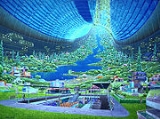
A rotating spacecraft will produce the feeling of gravity on its inside hull. The rotation drives any object inside the spacecraft toward the hull, thereby giving the appearance of a gravitational pull directed outward.


Discussion
Ask a question about 'Artificial gravity'
Start a new discussion about 'Artificial gravity'
Answer questions from other users
Full Discussion Forum


Recent Posts


Encyclopedia


Artificial gravity is a simulation of gravity
Gravitation

Gravitation is a natural phenomenon that gives weight to objects. In everyday life, attraction due to gravity is the result of the presence of relatively large bodies, such as the Earth and the Moon....
 in outer space
Outer space

Outer space comprises the relatively empty regions of the universe outside the atmospheres of celestial bodies. Outer space is used to distinguish it from airspace and terrestrial locations....
 or free-fall
Free-fall

Free fall is motion with no acceleration other than that provided by gravity. Since this definition does not specify velocity, it also applies to objects initially moving upward....
. Artificial gravity is desirable for long-term space travel for ease of mobility and to avoid the adverse health effects of weightlessness
Weightlessness

Weightlessness is a phenomenon experienced by people during free-fall. Although the term #Zero gravity is often used as a synonym, weightlessness in orbit is not the result of the force of gravity being eliminated or even significantly reduced ....
.

Methods

Artificial gravity could be created in several ways:

Rotation


A rotating spacecraft will produce the feeling of gravity on its inside hull. The rotation drives any object inside the spacecraft toward the hull, thereby giving the appearance of a gravitational pull directed outward. Often referred to as a centrifugal force
Centrifugal force

In classical mechanics, centrifugal force is an outward force associated with rotation. Centrifugal force is one of several so-called pseudo-forces , so named because, unlike Fundamental interaction, they do not originate in interactions with other bodies situated in the environment of the particle upon which they act....
, the "pull" is actually a manifestation of the objects inside the spacecraft attempting to travel in a straight line due to inertia. The spacecraft's hull provides the centripetal force
Centripetal force

The centripetal force is the external force required to make a body follow a curved path. Hence centripetal force is a kinematic force requirement, not a particular kind of force like gravity or electromagnetism....
 required for the objects to travel in a circle (if they continued in a straight line, they would leave the spacecraft's confines). Thus, the gravity felt by the objects is simply the reaction force of the object on the hull reacting to the centripetal force of the hull on the object, in accordance with Newton's Third Law
Newton's laws of motion

Newton's laws of motion are three physical laws that form the basis for classical mechanics, Direct relationship the forces acting on a Physical body to the motion of the body....
.

From the point of view of people rotating with the habitat
Rotating reference frame

A rotating frame of reference is a special case of a non-inertial reference frame that is rotation relative to an inertial reference frame. An everyday example of a rotating reference frame is the surface of the Earth....
, artificial gravity by rotation behaves in some ways similarly to normal gravity but has the following effects:
  • Centrifugal force
    Centrifugal force

    In classical mechanics, centrifugal force is an outward force associated with rotation. Centrifugal force is one of several so-called pseudo-forces , so named because, unlike Fundamental interaction, they do not originate in interactions with other bodies situated in the environment of the particle upon which they act....
    : Unlike real gravity which pulls towards a center, this pseudo-force that appears in rotating reference frames gives a rotational 'gravity' that pushes away from the axis of rotation. Artificial gravity levels vary proportionately with the distance from the centre of rotation. With a small radius of rotation, the amount of gravity felt at one's head would be significantly different from the amount felt at one's feet. This could make movement and changing body position awkward. Again, slower rotations or larger rotational radii should not lead to such a problem.
  • The Coriolis effect
    Coriolis effect

    In physics, the Coriolis effect is an apparent deflection of moving objects when they are viewed from a rotating reference frame.Newton's laws of motion govern the motion of an object in an inertial frame of reference....
     gives an apparent force that acts on objects that move. This force tends to curve the motion in the opposite sense to the habitat's spin. Effects produced by the coriolis effect act on the inner ear and can cause dizziness
    Dizziness

    Dizziness describes a number of subjective symptoms, which the patient may describe as feelings of lightheadedness, floating, wooziness, giddiness, confusion, disorientation or loss of balance....
    , nausea
    Nausea

    Nausea is the sensation of unease and discomfort in the stomach with an urge to vomit....
     and disorientation. Experiments have shown that slower rates of rotation reduce the Coriolis forces and its effects. It is generally believed that at 2 rpm
    Revolutions per minute

    Revolutions per minute is a units of measurement of frequency: the number of Turn completed in one minute around a rotation around a fixed axis....
     or less no adverse effects from the Coriolis forces will occur, at higher rates some people can become accustomed to it and some do not, but at rates above 7 rpm few if any can become accustomed. It is not yet known if very long exposures to high levels of Coriolis forces can increase the likelihood of becoming accustomed. The nausea-inducing effects of Coriolis forces can also be mitigated by restraining movement of the head. Head restraints are perhaps practical for exercising in artificial gravity (an artificial gravity gym
    GYM

    GYM is a sound format for the Sega Mega Drive/Sega Genesis.The name stands for Genesis YM2612, since the file contains the data sent to the Yamaha YM2612 sound chip in the console....
    ), but not for much else.


This form of artificial gravity gives additional system issues:
  • Kinetic energy: Spinning up parts or all of the habitat requires energy. This would require a propulsion system and propellant of some kind to spin up (or spin down) or a motor and counterweight of some kind (possibly in the form of another living area) to spin in the opposite direction.
  • If parts of the structure are intentionally not spinning, friction
    Friction

    File:Friction alt.svgFriction is the force resisting the relative lateral motion of solid surfaces, fluid layers, or material elements in contact....
     and similar torque
    Torque

    Torque is the tendency of a force to rotate an object about an axis . Just as a force is a push or a pull, a torque can be thought of as a twist....
    s will cause the rates of spin to converge (as well as causing the otherwise-stationary parts to spin), requiring motors and power to be used to compensate for the losses due to friction.
  • Angular inertia can complicate spacecraft propulsion and altitude control particularly when no counterweight is employed.


Calculations


or


Where:
g = Decimal fraction of Earth gravity
R = Radius from center of rotation in meters
= 3.14159
Pi

Pi or p is a mathematical constant whose value is the ratio of any circle's circumference to its diameter in Euclidean geometry; this is the same value as the ratio of a circle's area to the square of its radius....

rpm = revolutions per minute


The engineering challenges of creating a rotating spacecraft are comparatively modest to any other proposed approach. Theoretical spacecraft designs using artificial gravity have a great number of variants with intrinsic problems and advantages. To reduce Coriolis forces to livable levels, a rate of spin of 2 rpm or less would be needed. To produce 1g
G-force

The g-force of an object is its acceleration relative to free-fall. The unit of measure used is informally but commonly known as the "gee" , symbolized as g . An acceleration of 1 g is generally considered as equal to standard gravity , which is defined as precisely metre per second square...
, the radius of rotation would have to be 224 m (735 ft) or greater, which would make for a very large spaceship. To reduce mass, the support along the diameter could consist of nothing but a cable connecting two sections of the spaceship, possibly a habitat module and a counterweight consisting of every other part of the spacecraft. Eugene F. Lally
Eugene F. Lally

Eugene F. Lally was a Space Age pioneer born in South Boston, Massachusetts in 1934. He became first interested in science and space travel at the South Boston Boy's Club while enrolled in the Photography Club and watching Flash Gordon serial movies at the Club in the 40s....
 of the Jet Propulsion Laboratory proposed this concept in the early 1960s in a paper titled To Spin or Not to Spin. It is not yet known if exposure to high gravity for short periods of time is as beneficial to health as continuous exposure to normal gravity. It is also not known how effective low levels of gravity would be to countering the adverse effects on health of weightlessness. Artificial gravity at 0.1g would require a radius of only 22 m (74 ft). Likewise, at a radius of 10 m, about 10 rpm would be required to produce Earth gravity (at the hips; gravity would be 11% higher at the feet), or 14 rpm to produce 2g. If brief exposure to high gravity can negate the health effects of weightlessness, then a small centrifuge could be used as an exercise area.

The Gemini 11
Gemini 11

Gemini 11 was a 1966 manned spaceflight in NASA's Gemini program. It was the 9th manned Gemini flight, the 17th manned American flight and the 25th spaceflight of all time ....
 mission attempted to produce artificial gravity by rotating the capsule around the Agena Target Vehicle
Agena Target Vehicle

The Agena target vehicle was a spacecraft used by NASA to develop and practice orbital space rendezvous and docking techniques in preparation for the Apollo program lunar missions....
 which it was attached to by a 36-meter tether. The resultant force was too small to be felt by either astronaut, but objects were observed moving towards the "floor" of the capsule.

The Mars Gravity Biosatellite
Mars Gravity Biosatellite

The Mars Gravity Biosatellite project is a joint venture of MIT and the Georgia Institute of Technology to develop a free-flying spacecraft for un-crewed research flights....
 will study the effect of artificial gravity on mammals. An artificial gravity field of 0.38g (Mars
MARS

In cryptography, MARS is a block cipher that was IBM's submission to the Advanced Encryption Standard process. MARS was selected as an AES finalist in August 1999, after the AES2 conference in March 1999, where it was voted as the fifth and last finalist algorithm....
 gravity) will be produced by rotation (34 rpm, radius of ca. 30 cm). Fifteen mice will orbit Earth for five weeks and land alive.

Linear acceleration

The spacecraft could, in theory, continuously accelerate in a straight line, forcing objects inside the spacecraft in the opposite direction of the direction of acceleration. Most rockets already accelerate at a sufficient rate to produce several times Earth's gravity but can only maintain these accelerations for several minutes because of a limited supply of fuel. Theoretically, a propulsion system with a very high specific impulse
Specific impulse

Specific impulse is a way to describe the efficiency of rocket engine and jet engine engines. It represents the impulse per unit of propellant....
 and high thrust-to-weight ratio
Thrust-to-weight ratio

Thrust-to-weight ratio is the ratio of thrust to weight of a rocket, jet engine, propeller engine, or a vehicle propelled by such an engine. It is a dimensionless quantity and is an indicator of the performance of the engine or vehicle....
 could accelerate, producing useful levels of artificial gravity for long periods of time. In addition, constant acceleration would provide relatively short flight times around the solar system. A spaceship accelerating (then decelerating) at 1g would reach Mars
MARS

In cryptography, MARS is a block cipher that was IBM's submission to the Advanced Encryption Standard process. MARS was selected as an AES finalist in August 1999, after the AES2 conference in March 1999, where it was voted as the fifth and last finalist algorithm....
 in 2–5 days, depending on the point in the synodic period. In a number of science fiction
Science fiction

Science fiction is a broad genre of fiction that often involves speculations based on current or future science or technology. Science fiction is found in books, art, television, films, games, theatre, and other media....
 plots, acceleration is used to produce artificial gravity for interstellar
Interstellar travel

Interstellar space travel is unmanned or manned travel between stars. The concept of interstellar travel in starships is a staple in science fiction....
 spacecraft, propelled by as yet theoretical or hypothetical
Hypothesis

A hypothesis consists either of a suggested explanation for an observable phenomenon or of a reasoned proposal predicting a possible causal correlation among multiple phenomena....
 means.

While this effect of acceleration is very well understood, this concept is far beyond current technological capabilities.

Mass

Another way artificial gravity may be achieved is by installing an ultra-high density core into a spacecraft so that it would generate its own gravitational field and pull everything inside towards it. Technically this is not artificial gravity—it is natural gravity, gravity in its original sense. An extremely large amount of mass would be needed to produce even a tiny amount of noticeable gravity. A large asteroid could exert several thousandths of a g and, by attaching a propulsion system of some kind, would qualify as a space ship, though gravity at such a low level might not have any practical value. In addition, the mass would obviously need to move with the spacecraft; if the spacecraft is to be accelerated significantly, this would greatly increase fuel consumption. Because gravitational force is proportional to the square of the distance from the center of mass, it would be possible to have significant levels of gravity with much less mass than such an asteroid if this mass could be made much denser than current materials. See neutronium
Neutronium

Neutronium is a term originally used in science fiction and in popular literature to refer to an extremely dense phases of matter composed primarily of neutrons....
 and unobtainium
Unobtainium

Unobtainium is a humorous term that refers to an extremely rare, costly, or physically impossible material science needed to fulfill a given design for a given application....
. It is generally acknowledged that this method of producing gravity is unlikely to be of any benefit or utility to manned spaceflight inside the solar system.

Tidal forces

In a planetary orbit, a small artificial gravity can be obtained from the tidal force
Tidal force

The tidal force is a secondary effect of the force of gravity and is responsible for the tides. It arises because the gravitational force exerted on one body by a second body is not constant across its diameter....
 by two spacecraft above each other (or one spacecraft and another mass) connected by a tether. See also tidal stabilization.

Magnetism

A similar effect to gravity has been created through diamagnetism
Diamagnetism

Diamagnetism is the property of an object which causes it to create a magnetic field in opposition of an externally applied magnetic field, thus causing a repulsive effect....
. It requires magnets with extremely powerful magnetic fields. Such devices have been made that were able to levitate at most a small frog and thus produced a 1 g field to cancel the earth's; yet it required a magnet and system that weighed thousands of kilogram
Kilogram

The kilogram or kilogrammeThe spelling kilogram is used by the International Committee for Weights and Measures and the U.S....
s, was kept superconductive with expensive cryogenics
Cryogenics

In physics, cryogenics is the study of the production of very low temperature and the behavior of materials at those temperatures. Rather than the familiar temperature scales of Fahrenheit and Celsius, cryogenicists use the Kelvin scales....
, and required 6 MW of power.

Such extremely strong magnetic fields are far above the permitted levels, and safety for use with humans is at best unclear. In addition, it would involve avoiding any non-diamagnetic materials near the strong magnetic field required for diamagnetism to be evident. Some other disadvantages of using magnetism on a spaceship are found here: http://www.madsci.org/posts/archives/2005-04/1112370655.Ph.r.html

However, facilities using diamagnetism may prove excellent laboratories for simulating low gravity conditions here on Earth. Note that the frog was levitated against Earth's gravity, simulating a condition similar to microgravity. Lower forces may also be generated to simulate a condition similar to lunar or Martian gravity with small model organisms.

Gravity generator/gravitomagnetism

In science fiction
Science fiction

Science fiction is a broad genre of fiction that often involves speculations based on current or future science or technology. Science fiction is found in books, art, television, films, games, theatre, and other media....
, artificial gravity (or cancellation of gravity) is sometimes present in spacecraft that are neither rotating nor accelerating. At present, there is no confirmed technique that can produce gravity other than sheer mass or acceleration. There have been many claims over the years of such a device. Eugene Podkletnov
Eugene Podkletnov

Dr Yevgeny Podkletnov is a Russian engineer, formerly affiliated with the Materials science Department at the Tampere University of Technology, Finland, who is best known for his controversial work on a so-called gravity shielding device....
, a Russian engineer, has claimed since the early 1990s to have made such a device consisting of a spinning superconductor producing a powerful gravitomagnetic
Gravitomagnetism

Gravitomagnetism , refers to a set of Analogy between Maxwell's field equations and an approximation, valid under certain conditions, to the Einstein field equations for general relativity....
 field, but there has been no verification or even negative results from third parties. In 2006, a research group funded by ESA claimed to have created a similar device that demonstrated positive results for the production of gravitomagnetism, although it produced only 100 millionths of a g
Standard gravity

Standard gravity, usually denoted by g0 or gn, is the nominal acceleration due to Earth's gravity at the Earth's surface at sea level....
.

See also

  • Centrifugal force
    Centrifugal force

    In classical mechanics, centrifugal force is an outward force associated with rotation. Centrifugal force is one of several so-called pseudo-forces , so named because, unlike Fundamental interaction, they do not originate in interactions with other bodies situated in the environment of the particle upon which they act....
  • Coriolis force
  • Fictitious force
    Fictitious force

    A fictitious force, also called a pseudo force, d'Alembert force or inertial force, is an apparent force that acts on all masses in a non-inertial reference frame, such as a rotating reference frame....
  • Accelerated reference frame
    Accelerated reference frame

    In theoretical physics, an accelerated reference frame is usually a coordinate system or frame of reference, that undergoes a constant and continual change in velocity over time as judged from an inertial frame....
  • Artificial gravity (fiction)
    Artificial gravity (fiction)

    Artificial gravity is a common theme in fiction, particularly science fiction....


External links