
Home      Discussion      Topics      Dictionary      Almanac
Signup       Login
Anseriformes

Anseriformes

Overview
The order Anseriformes contains about 150 living species
Species
In biology, a species is one of the basic units of biological classification and a taxonomic rank. A species is often defined as a group of organisms capable of interbreeding and producing fertile offspring. While in many cases this definition is adequate, more precise or differing measures are...

 of bird
Bird
Birds are feathered, winged, bipedal, endothermic , egg-laying, vertebrate animals. Around 10,000 living species and 188 families makes them the most speciose class of tetrapod vertebrates. They inhabit ecosystems across the globe, from the Arctic to the Antarctic. Extant birds range in size from...

s in three extant families: the Anhimidae (the screamers), Anseranatidae
Anseranatidae
Anseranatidae, the magpie-geese, is a biological family of waterbirds. It is a unique member of the order Anseriformes. The only living species, the Magpie Goose, is a resident breeder in northern Australia and in southern New Guinea....

 (the Magpie Goose), and the Anatidae
Anatidae
Anatidae is the biological family of birds that includes ducks, geese and swans. The family has a cosmopolitan distribution, occurring on all the world's continents except Antarctica and on most of the world's islands and island groups...

, which includes over 140 species of waterfowl
Waterfowl
Waterfowl are certain wildfowl of the order Anseriformes, especially members of the family Anatidae, which includes ducks, geese, and swans....

, among them the duck
Duck
Duck is the common name for a large number of species in the Anatidae family of birds, which also includes swans and geese. The ducks are divided among several subfamilies in the Anatidae family; they do not represent a monophyletic group but a form taxon, since swans and geese are not considered...

s, geese
Goose
The word goose is the English name for a group of waterfowl, belonging to the family Anatidae. This family also includes swans, most of which are larger than true geese, and ducks, which are smaller....

, and swan
Swan
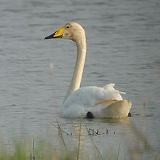
Swans, genus Cygnus, are birds of the family Anatidae, which also includes geese and ducks. Swans are grouped with the closely related geese in the subfamily Anserinae where they form the tribe Cygnini. Sometimes, they are considered a distinct subfamily, Cygninae...

s.
Discussion
Ask a question about 'Anseriformes'
Start a new discussion about 'Anseriformes'
Answer questions from other users
Full Discussion Forum
 
Unanswered Questions
Encyclopedia
The order Anseriformes contains about 150 living species
Species
In biology, a species is one of the basic units of biological classification and a taxonomic rank. A species is often defined as a group of organisms capable of interbreeding and producing fertile offspring. While in many cases this definition is adequate, more precise or differing measures are...

 of bird
Bird
Birds are feathered, winged, bipedal, endothermic , egg-laying, vertebrate animals. Around 10,000 living species and 188 families makes them the most speciose class of tetrapod vertebrates. They inhabit ecosystems across the globe, from the Arctic to the Antarctic. Extant birds range in size from...

s in three extant families: the Anhimidae (the screamers), Anseranatidae
Anseranatidae
Anseranatidae, the magpie-geese, is a biological family of waterbirds. It is a unique member of the order Anseriformes. The only living species, the Magpie Goose, is a resident breeder in northern Australia and in southern New Guinea....

 (the Magpie Goose), and the Anatidae
Anatidae
Anatidae is the biological family of birds that includes ducks, geese and swans. The family has a cosmopolitan distribution, occurring on all the world's continents except Antarctica and on most of the world's islands and island groups...

, which includes over 140 species of waterfowl
Waterfowl
Waterfowl are certain wildfowl of the order Anseriformes, especially members of the family Anatidae, which includes ducks, geese, and swans....

, among them the duck
Duck
Duck is the common name for a large number of species in the Anatidae family of birds, which also includes swans and geese. The ducks are divided among several subfamilies in the Anatidae family; they do not represent a monophyletic group but a form taxon, since swans and geese are not considered...

s, geese
Goose
The word goose is the English name for a group of waterfowl, belonging to the family Anatidae. This family also includes swans, most of which are larger than true geese, and ducks, which are smaller....

, and swan
Swan
Swans, genus Cygnus, are birds of the family Anatidae, which also includes geese and ducks. Swans are grouped with the closely related geese in the subfamily Anserinae where they form the tribe Cygnini. Sometimes, they are considered a distinct subfamily, Cygninae...

s.

All species in the order are highly adapted for an aquatic existence at the water surface. All are web-footed for efficient swimming (although some have subsequently become mainly terrestrial).

Evolution


The earliest known Anseriform is the recently discovered Vegavis
Vegavis
Vegavis is a genus of extinct bird that lived during the Late Cretaceous of Antarctica, some 65 mya. It belonged to the clade Anseriformes...

, which lived during the Cretaceous
Cretaceous
The Cretaceous , derived from the Latin "creta" , usually abbreviated K for its German translation Kreide , is a geologic period and system from circa to million years ago. In the geologic timescale, the Cretaceous follows the Jurassic period and is followed by the Paleogene period of the...

 period. It is thought that the Anseriformes originated when the original Galloanserae (the group to which Anseriformes and Galliformes
Galliformes
Galliformes are an order of heavy-bodied ground-feeding domestic or game bird, containing turkey, grouse, chicken, New and Old World Quail, ptarmigan, partridge, pheasant, and the Cracidae. Common names are gamefowl or gamebirds, landfowl, gallinaceous birds or galliforms...

 belong) split into the two main lineages. The extinct dromornithids represent early offshoots of the anseriform line, possibly derived from screamer
Screamer
The screamers are a small family of birds, the Anhimidae. For a long time they were thought to be related to the Galliformes because of similar bills, but they are truly related to ducks , most closely to the Magpie Goose...

-like ancestors, and so maybe Gastornis
Gastornis
Gastornis is an extinct genus of large flightless bird that lived during the late Paleocene and Eocene epochs of the Cenozoic. It was named in 1855, after Gaston Planté, who had discovered the first fossils in Argile Plastique formation deposits at Meudon near Paris...

 (if it is an Anseriform). The ancestors of the Anseriformes developed the characteristic bill structure that they still share. The combination of the internal shape of the bill and a modified tongue acts as a suction pump to draw water in at the tip of the bill and expel it from the sides and rear; an array of fine filter plates called lamellae traps small particles, which are then licked off and swallowed.

All Anseriformes have this basic structure, but many have subsequently adopted alternative feeding strategies: geese
Goose
The word goose is the English name for a group of waterfowl, belonging to the family Anatidae. This family also includes swans, most of which are larger than true geese, and ducks, which are smaller....

 graze on plants, the saw-billed ducks
Merginae
The seaducks, Merginae, form a subfamily of the duck, goose and swan family of birds, Anatidae.As the name implies, most but not all, are essentially marine outside the breeding season. Many species have developed specialized salt glands to allow them to tolerate salt water, but these have not yet...

 catch fish; even the screamer
Screamer
The screamers are a small family of birds, the Anhimidae. For a long time they were thought to be related to the Galliformes because of similar bills, but they are truly related to ducks , most closely to the Magpie Goose...

s, which have bills that seem on first sight more like those of the game birds, still have vestigal lamellae. The prehistoric wading presbyornithids and the huge and possibly carnivorous dromornithids were even more bizarre.

Systematics


The Anseriformes and the Galliformes
Galliformes
Galliformes are an order of heavy-bodied ground-feeding domestic or game bird, containing turkey, grouse, chicken, New and Old World Quail, ptarmigan, partridge, pheasant, and the Cracidae. Common names are gamefowl or gamebirds, landfowl, gallinaceous birds or galliforms...

 (pheasants, etc.) are the most primitive neognathous birds, and should follow ratite
Ratite
A ratite is any of a diverse group of large, flightless birds of Gondwanan origin, most of them now extinct. Unlike other flightless birds, the ratites have no keel on their sternum—hence the name from the Latin ratis...

s and tinamou
Tinamou
The tinamous are a family comprising 47 species of birds found in Central and South America. One of the most ancient living groups of bird, they are related to the ratites. Generally ground dwelling, they are found in a range of habitats....

s in bird classification systems.

Anatidae
Anatidae
Anatidae is the biological family of birds that includes ducks, geese and swans. The family has a cosmopolitan distribution, occurring on all the world's continents except Antarctica and on most of the world's islands and island groups...

 systematics, especially regarding placement of some "odd" genera in the dabbling ducks or shelducks, is not fully resolved. See the Anatidae article for more information, and for alternate taxonomic approaches. Some unusual fossil groups, such as the Gastornithidae and Dromornithidae
Dromornithidae
Dromornithidae — the dromornithids — were a family of large, flightless Australian birds of the Oligocene through Pleistocene epochs. All are now extinct. They were long classified in the order Struthioniformes, but are now usually classified as a family of Anseriformes1...

, are often found to be at the base of the Anseriformes family tree, or at least their closest relatives. The higher-order classification below follows a phylogenetic analysis performed by Angolin, 2007.


  • Order Anseriformes
    • Brontornis
      Brontornis
      Brontornis was a genus of giant flightless predatory birds that lived in Patagonia. The only species currently accepted as valid is B. burmeisteri...

      ?
    • Family Dromornithidae
      Dromornithidae
      Dromornithidae — the dromornithids — were a family of large, flightless Australian birds of the Oligocene through Pleistocene epochs. All are now extinct. They were long classified in the order Struthioniformes, but are now usually classified as a family of Anseriformes1...

      ?: mihirungs
    • Family Gastornithidae?: "diatrymas"
    • Anseres (true anseriformes)
      • Family Anhimidae: screamers
      • Family Anseranatidae
        Anseranatidae
        Anseranatidae, the magpie-geese, is a biological family of waterbirds. It is a unique member of the order Anseriformes. The only living species, the Magpie Goose, is a resident breeder in northern Australia and in southern New Guinea....

        : the Magpie Goose
      • Superfamily Anatoidea
      • Family Anatidae
        Anatidae
        Anatidae is the biological family of birds that includes ducks, geese and swans. The family has a cosmopolitan distribution, occurring on all the world's continents except Antarctica and on most of the world's islands and island groups...

        • Subfamily Dendrocygninae
          Dendrocygninae
          The whistling ducks or tree ducks are a subfamily, Dendrocygninae of the duck, goose and swan family of birds, Anatidae. In other taxonomical approaches, they are either considered a separate family "Dendrocygnidae", or a tribe "Dendrocygnini" in the goose subfamily Anserinae The whistling ducks or...

          : Whistling ducks (sometimes given full family status as the Dendrocygnidae).
        • Subfamily Thalassorninae: the White-backed Duck.
        • Subfamily Anserinae
          Anserinae
          The Anserinae is a subfamily in the waterfowl family Anatidae. It includes the swans and true geese. Under alternative systematical concepts , it is split into two subfamilies, the Anserinae containing the geese , while the Cygninae contain the swans.A number of other waterbirds, mainly related to...

          : Swans and geese.
        • Subfamily Stictonettinae: the Freckled Duck.
        • Subfamily Plectropterinae: the Spur-winged Goose.
        • Subfamily Tadorninae
          Tadorninae
          The Tadorninae is the shelduck-sheldgoose subfamily of the Anatidae, the biological family that includes the ducks and most duck-like waterfowl such as the geese and swans....

          : Shelducks and sheldgeese - probably paraphyletic
        • Subfamily Anatinae
          Anatinae
          The Anatinae is a subfamily of the family Anatidae . Its surviving members are the dabbling ducks, which feed mainly at the surface rather than by diving...

          : Dabbling ducks and moa-nalos
        • Subfamily Aythyinae: Diving ducks (sometimes included in Anatinae)
        • Subfamily Merginae
          Merginae
          The seaducks, Merginae, form a subfamily of the duck, goose and swan family of birds, Anatidae.As the name implies, most but not all, are essentially marine outside the breeding season. Many species have developed specialized salt glands to allow them to tolerate salt water, but these have not yet...

          : eiders, scoters, mergansers and other sea-ducks.
        • Subfamily Oxyurinae
          Oxyurinae
          Oxyurinae is a subfamily of the duck, goose and swan family of birds, Anatidae. It has been subject of considerable debate about its validity and circumscription. Most of its members have long stiff tail feathers which are erected when the bird is at rest, and relatively large swollen bills...

          : Stiff-tailed ducks and allies.
      • Family Presbyornithidae
        Presbyornithidae
        Presbyornithidae were a family of waterbirds with an apparently global distribution that lived until the Earliest Oligocene, but are now extinct...

        : several genera of wading-"geese"
      • Vegavis
        Vegavis
        Vegavis is a genus of extinct bird that lived during the Late Cretaceous of Antarctica, some 65 mya. It belonged to the clade Anseriformes...


Some fossil anseriform taxa not assignable with certainty to a family are:
  • Anatalavis
    Anatalavis
    Anatalavis is genus of prehistoric birds related to ducks and geese, perhaps in particular the Magpie-goose. The species Anatalavis rex - formerly placed in Telmatornis - is known from the Hornerstown Formation of New Jersey...

    (Late Cretaceous/Early Paleocene - Early Eocene) - Anseranatidae or basal
    Basal (phylogenetics)
    In phylogenetics, a basal clade is the earliest clade to branch in a larger clade; it appears at the base of a cladogram.A basal group forms an outgroup to the rest of the clade, such as in the following example:...

    .
  • Proherodius (London Clay Early Eocene of London, England) - Presbyornithidae?
  • Romainvillia (Late Eocene/Early Oligocene) - Anseranatidae or Anatidae
  • Paranyroca (Rosebud Early Miocene of Bennett County, USA) - Anatidae or own family?


In addition, a considerable number of mainly Late Cretaceous and Paleogene
Paleogene
The Paleogene is a geologic period and system that began 65.5 ± 0.3 and ended 23.03 ± 0.05 million years ago and comprises the first part of the Cenozoic Era...

 fossils have been described where it is uncertain whether or not they are anseriforms. This is because almost all orders of aquatic birds living today either originated or underwent a major radiation
Adaptive radiation
In evolutionary biology, adaptive radiation is the evolution of ecological and phenotypic diversity within a rapidly multiplying lineage. Starting with a recent single ancestor, this process results in the speciation and phenotypic adaptation of an array of species exhibiting different...

 during that time, making it hard to decide whether some waterbird-like bone belongs into this family or is the product of parallel evolution in a different lineage due to adaptive pressures.
  • "Presbyornithidae" gen. et sp. indet. (Barun Goyot Late Cretaceous of Udan Sayr, Mongolia) - Presbyornithidae?
  • UCMP 117599 (Hell Creek Late Cretaceous of Bug Creek West, USA)
  • Petropluvialis (Late Eocene of England) - may be same as Palaeopapia
  • Agnopterus (Late Eocene - Late Oligocene of Europe) - includes Cygnopterus lambrechti
  • "Headonornis hantoniensis" BMNH PAL 4989 (Hampstead Early Oligocene of Isle of Wight, England) - formerly "Ptenornis"
  • Palaeopapia (Hampstead Early Oligocene of Isle of Wight, England)
  • "Anas" creccoides (Early/Middle Oligocene of Belgium)
  • "Anas" skalicensis (Early Miocene of "Skalitz", Czechia)
  • "Anas" risgoviensis (Late Miocene of Bavaria, Germany)