

Afro-Cuban jazz

Encyclopedia
Latin jazz
Latin jazz is the general term given to jazz with Latin American rhythms.The three main categories of Latin Jazz are Brazilian, Cuban and Puerto Rican:# Brazilian Latin Jazz includes bossa nova...
that mixes Afro-Cuban rhythms with harmonies and musical timbre typical of Bebop
Bebop
Bebop differed drastically from the straightforward compositions of the swing era, and was instead characterized by fast tempos, asymmetrical phrasing, intricate melodies, and rhythm sections that expanded on their role as tempo-keepers...
. It was developed in the early 1940s by both Cuban
Music of Cuba
The Caribbean island of Cuba has developed a wide range of creolized musical styles, based on its cultural origins in Europe and Africa. Since the 19th century its music has been hugely popular and influential throughout the world...
musicians and Jazz
Jazz
Jazz is a musical style that originated at the beginning of the 20th century in African American communities in the Southern United States. It was born out of a mix of African and European music traditions. From its early development until the present, jazz has incorporated music from 19th and 20th...
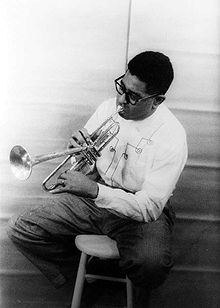
musicians, with Dizzy Gillespie
Dizzy Gillespie
John Birks "Dizzy" Gillespie was an American jazz trumpet player, bandleader, singer, and composer dubbed "the sound of surprise".Together with Charlie Parker, he was a major figure in the development of bebop and modern jazz...
, Mario Bauza
Mario Bauza
Mario Bauzá was an important Cuban musician. He was one of the first to introduce Latin music to the United States by bringing Cuban musical styles into the New York jazz scene...
, Machito
Machito
Machito , born as Francisco Raúl Gutiérrez Grillo, was an influential Latin jazz musician who helped refine Afro-Cuban jazz and create both Cubop and salsa music...
and Stan Kenton
Stan Kenton
Stanley Newcomb "Stan" Kenton was a pianist, composer, and arranger who led a highly innovative, influential, and often controversial American jazz orchestra. In later years he was widely active as an educator....
among some of the most notable contributors. The style was originally called "Cubop". The original musical development largely took place in North America rather than Cuba itself, as Cuban musicians toured in New Orleans and other North American cities.
History
Afro-Cuban jazz started with the meeting of the Cuban trumpet/saxophonist Mario BauzáMario Bauza
Mario Bauzá was an important Cuban musician. He was one of the first to introduce Latin music to the United States by bringing Cuban musical styles into the New York jazz scene...
with Dizzy Gillespie
Dizzy Gillespie
John Birks "Dizzy" Gillespie was an American jazz trumpet player, bandleader, singer, and composer dubbed "the sound of surprise".Together with Charlie Parker, he was a major figure in the development of bebop and modern jazz...
in the late 1930s in the Cab Calloway
Cab Calloway
Cabell "Cab" Calloway III was an American jazz singer and bandleader. He was strongly associated with the Cotton Club in Harlem, New York City where he was a regular performer....
orchestra. In due course Gillespie formed his own big band to try to broaden the appeal of bebop. He asked Bauzá to introduce him to "one of those tom-tom [sic] players" (meaning a conga
Conga
The conga, or more properly the tumbadora, is a tall, narrow, single-headed Cuban drum with African antecedents. It is thought to be derived from the Makuta drums or similar drums associated with Afro-Cubans of Central African descent. A person who plays conga is called a conguero...
player). Bauzá introduced Gillespie to the legendary Cuban conguero Chano Pozo
Chano Pozo
Chano Pozo was a percussionist, singer, dancer and composer who played a major role in the founding of Latin jazz...
. It was in the Gillespie band that Chano Pozo wrote the famous number Manteca.
Gillespie started a movement known as Cubop, which included American jazz greats such as the alto saxophonist Charlie Parker
Charlie Parker
Charles Parker, Jr. , famously called Bird or Yardbird, was an American jazz saxophonist and composer....
, who, with the tenor player Flip Phillips, was on the original recording of Chico O'Farrill
Chico O'Farrill
Arturo "Chico" O'Farrill was a composer-arranger best known for his work in the Latin idiom, although he also composed straight-ahead jazz pieces and even symphonic works....
's Afro Cuban Jazz Suite. Another great Cuban conguero famous in jazz circles was Mongo Santamaría
Mongo Santamaría
Ramón "Mongo" Santamaría Rodríguez was an Afro-Cuban Latin jazz percussionist. He is most famous for being the composer of the jazz standard "Afro Blue," recorded by John Coltrane among others. In 1950 he moved to New York where he played with Perez Prado, Tito Puente, Cal Tjader, Fania All...
, who worked for Pérez Prado
Perez Prado
Dámaso Pérez Prado was a Cuban bandleader, musician , and composer. He is often referred to as the 'King of the Mambo'.His orchestra was the most popular in mambo...
, and the vibe player Cal Tjader
Cal Tjader
Callen Radcliffe Tjader, Jr. a.k.a. Cal Tjader was a Latin jazz musician, though he also explored various other jazz idioms. Unlike other American jazz musicians who experimented with the music from Cuba, the Caribbean, and Latin America, he never abandoned it, performing it until his...
, before setting up his own Cuban jazz group.
In the mid 1940s the mambo craze originated with the recordings of Perez Prado
Perez Prado
Dámaso Pérez Prado was a Cuban bandleader, musician , and composer. He is often referred to as the 'King of the Mambo'.His orchestra was the most popular in mambo...
, who included ideas from Stravinsky and Stan Kenton
Stan Kenton
Stanley Newcomb "Stan" Kenton was a pianist, composer, and arranger who led a highly innovative, influential, and often controversial American jazz orchestra. In later years he was widely active as an educator....
in his arrangements. The giants of this era in New York were Tito Puente
Tito Puente
Tito Puente, , born Ernesto Antonio Puente, was a Latin jazz and Salsa musician. The son of native Puerto Ricans Ernest and Ercilia Puente, of Spanish Harlem in New York City, Puente is often credited as "El Rey de los Timbales" and "The King of Latin Music"...
, Tito Rodríguez
Tito Rodriguez
Tito Rodríguez was a popular 1950s and 1960s Puerto Rican singer and bandleader. He is known by many fans as "El Inolvidable" , a moniker based on his most popular interpretation, a song written by composer Julio Gutierrez.-Early years:Rodríguez , born in Santurce, Puerto Rico,...
, and Machito
Machito
Machito , born as Francisco Raúl Gutiérrez Grillo, was an influential Latin jazz musician who helped refine Afro-Cuban jazz and create both Cubop and salsa music...
and his Afro-Cubans. Mongo Santamaría, like Chano Pozo before him, used Afro-Cuban rhythmic structure and instruments, and moved towards his own kind of Cuban jazz. The great figure of Cuban jazz in the post-World War II era was Armando Romeu Jr, who led the Tropicana
Tropicana Club
Tropicana is a world known cabaret and club in Havana, Cuba. It was launched in 1939 at Villa Mina, a six-acre suburban estate with lush tropical gardens in Havana's Marianao neighborhood.-Influence:...
's big band for many years. Also important was the great double-bass player Cachao (Israel López), who organized a number of jam sessions in Havana and New York.
Important albums
MachitoMachito
Machito , born as Francisco Raúl Gutiérrez Grillo, was an influential Latin jazz musician who helped refine Afro-Cuban jazz and create both Cubop and salsa music...
's Kenya: Afro-Cuban Jazz was released in 1958, when Afro-Cuban jazz was no longer fresh and original, and was slipping into cliché and formula, but as there are not many classic Afro-Cuban jazz albums, this is regarded by Tony Wilds of Allmusic as "essential".
Dizzy Gillespie
Afro
Kenny Dorham
Afro-Cuban
Stan Kenton
Cuban Fire!
Danilo Perez
Motherland
Michel Camilo
On Fire
Eddie Palmieri
La Verdad
Sebastian Schunke
Symbiosis
Gonzalo Rubalcaba
Mi gran pasion
Alain Pérez
"En el aire"