

Zygolophodon

Encyclopedia
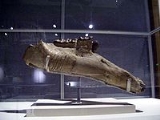
Zygolophodon is an extinct genus of African, Asian, North American, and European mastodon
that lived during the Miocene
and Pliocene
epochs. It may have evolved from Tetralophodon
. While collecting fossils in the Clarno Formation of Oregon during 1941, noted paleobotanists Alonzo W. Hancock and Chester A. Arnold
recovered the most complete Zygolophodon skull known at the time.
Mammutidae
Mammutidae is a family of extinct proboscideans that lived between the Miocene to the Pleistocene or Holocene. The family was first described in 1922, classifying fossil specimens of the type genus Mammut , and has since been placed in various arrangements of the order...
that lived during the Miocene
Miocene
The Miocene is a geological epoch of the Neogene Period and extends from about . The Miocene was named by Sir Charles Lyell. Its name comes from the Greek words and and means "less recent" because it has 18% fewer modern sea invertebrates than the Pliocene. The Miocene follows the Oligocene...
and Pliocene
Pliocene
The Pliocene Epoch is the period in the geologic timescale that extends from 5.332 million to 2.588 million years before present. It is the second and youngest epoch of the Neogene Period in the Cenozoic Era. The Pliocene follows the Miocene Epoch and is followed by the Pleistocene Epoch...
epochs. It may have evolved from Tetralophodon
Tetralophodon
Tetralophodon is an extinct gomphothere genus . Like typical gomphotheres, Tetralophodon had four tusks and a trunk. This genus of animals stood about ten feet tall and was a very widespread and successful proboscidean. Tetralophodon lived through the Miocene and Pliocene epoches...
. While collecting fossils in the Clarno Formation of Oregon during 1941, noted paleobotanists Alonzo W. Hancock and Chester A. Arnold
Chester A. Arnold
Chester Arthur Arnold was an American paleobotanist, born June 25, 1901 in Leeton, Missouri and died on 19 November 1977.He was the son of farmers Elmer and Edith Arnold. Arnolds family moved to Ludlowville, New York and he attended Cornell University with the intent to study agriculture...
recovered the most complete Zygolophodon skull known at the time.